Entryway Essentials Designed for Daily Flow, Not Clutter
Create an organized, welcoming entryway with essentials that manage shoes, coats, and daily items—without visual clutter.
Design an Entryway That Works Every Day
A functional entryway manages arrivals and exits smoothly. Use this snapshot to create clear drop-zones that stay tidy with daily use.
Entryway Size
Small entryways need compact, wall-mounted solutions, while larger spaces benefit from defined zones.
Drop-Zone Control
Designate clear spots for shoes, bags, and keys to prevent clutter from spreading.
Storage Balance
Combine open access for daily items with closed storage for visual calm.
Maintenance Reality
Entryways should reset quickly—systems must be simple and repeatable.
Entryway Design Foundations That Always Work
Before adding storage or decor, get these entryway fundamentals right. They determine whether your space feels calm—or chaotic—every day.
Flow & Sequence
- Design the entryway in the order people use it: arrive → drop → store → move on.
- Keep high-traffic paths clear and unobstructed.
- Place essentials where hands naturally reach.
Rule: If the flow breaks, clutter follows.
Access & Visibility
- Keep daily-use items visible and easy to grab.
- Avoid stacking that hides frequently used pieces.
- Use vertical space to free floor area.
Rule: Hard-to-reach storage never stays tidy
Reset Speed
- Design systems that reset in under two minutes.
- Limit the number of storage types to keep habits simple.
- Make it obvious where items belong.
Rule: If resetting takes effort, the system will fail.
Choose an Entryway Layout That Matches Your Routine
These entryway layouts focus on smooth flow, quick resets, and everyday practicality. Choose the setup that fits how you enter and exit your home.
Compact Drop Zone
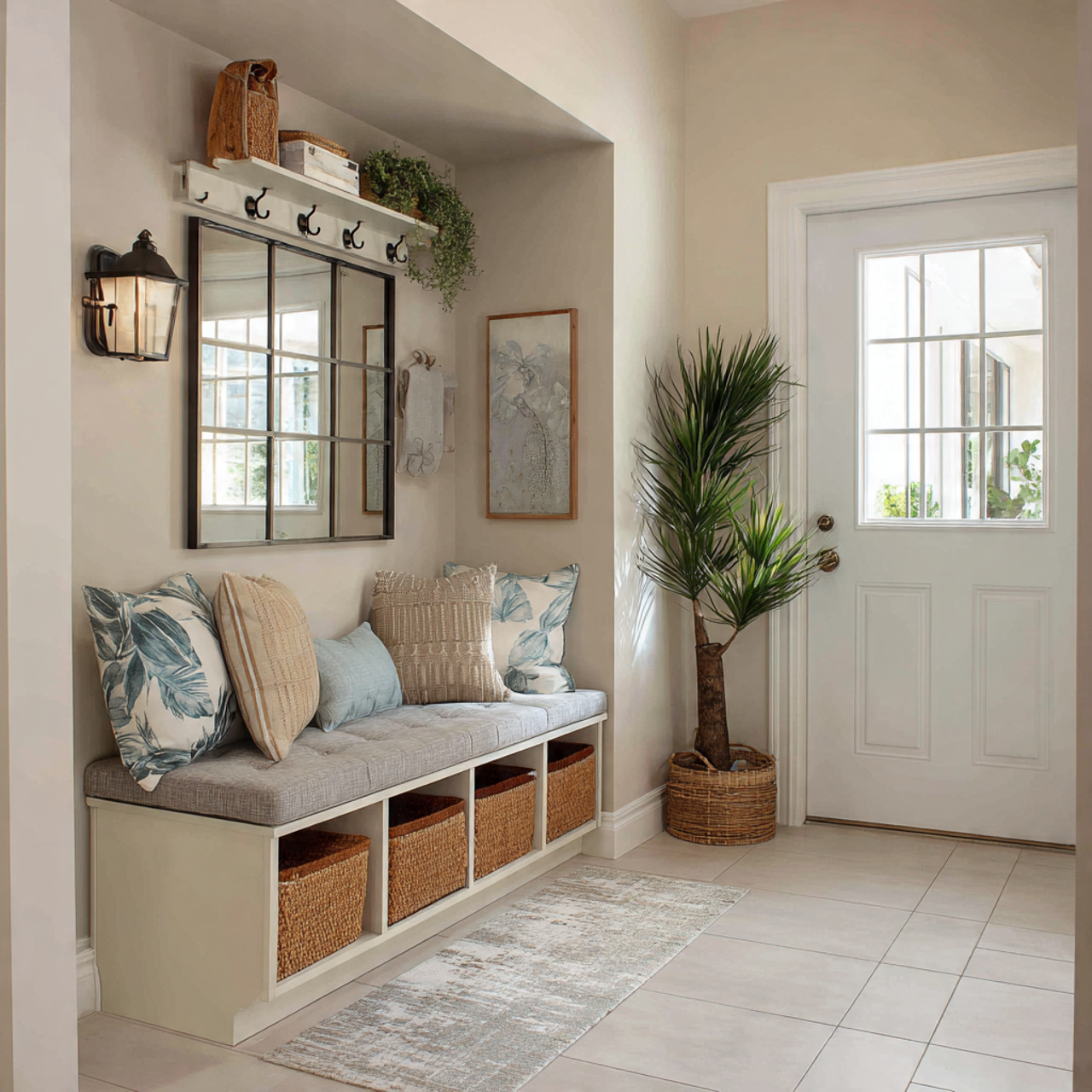
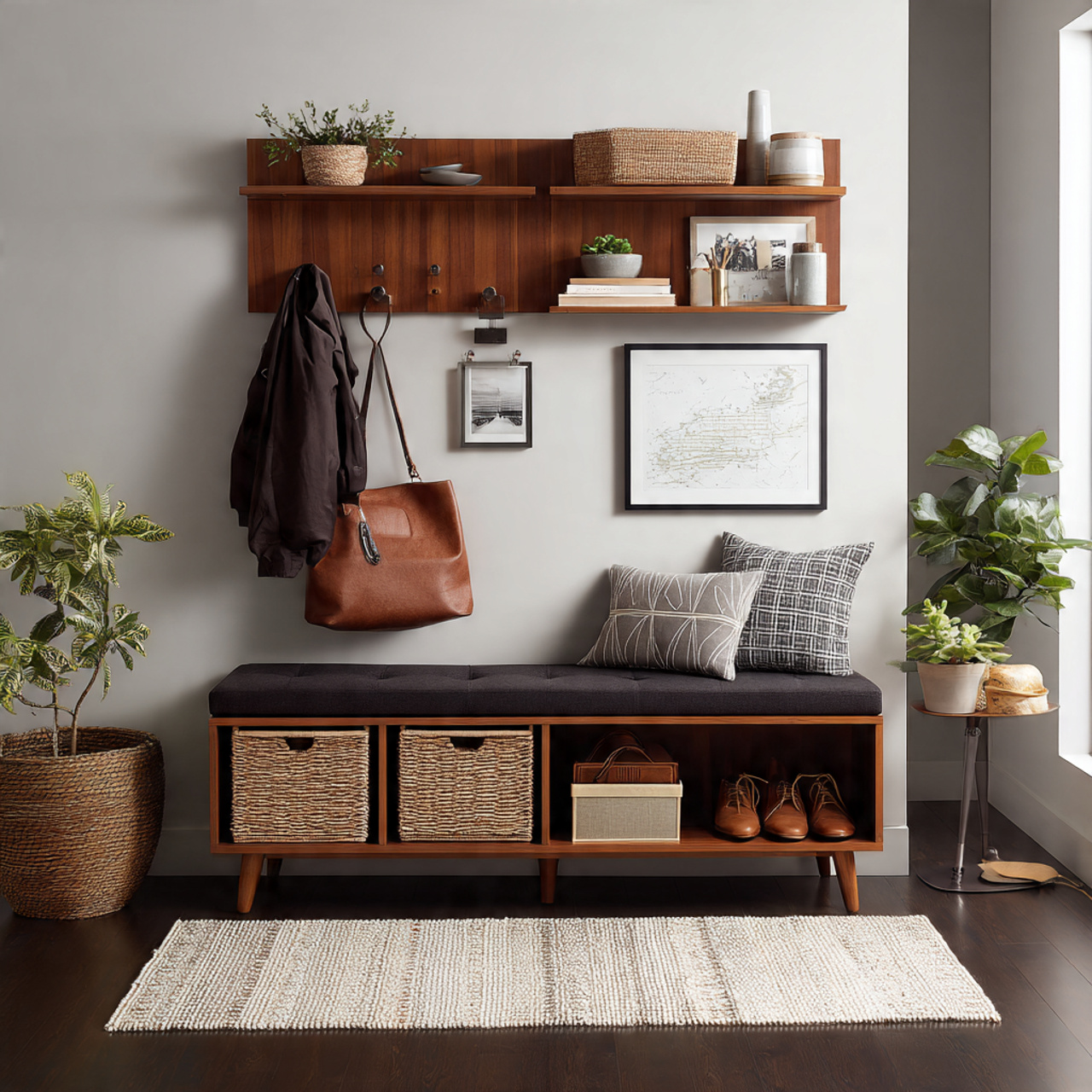
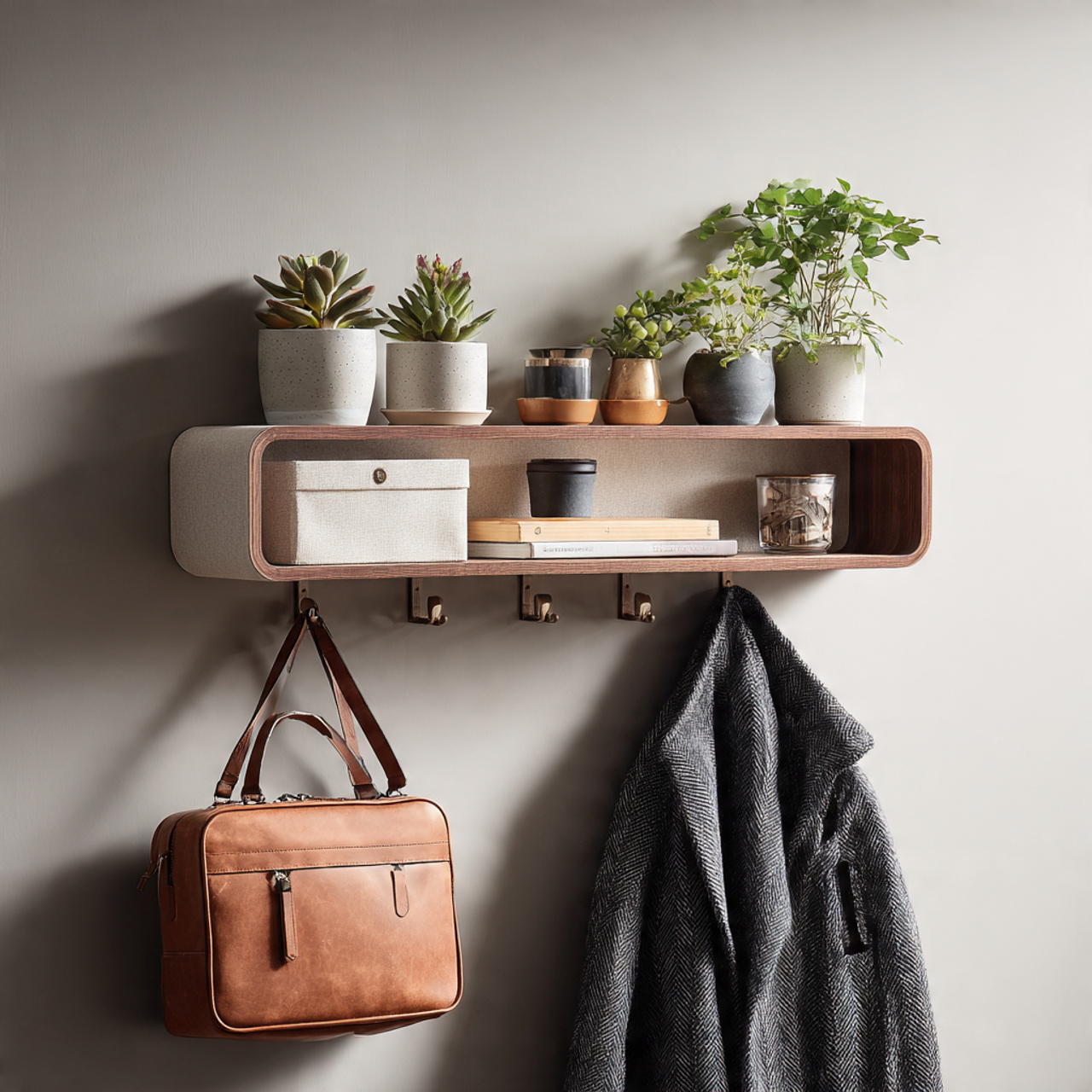
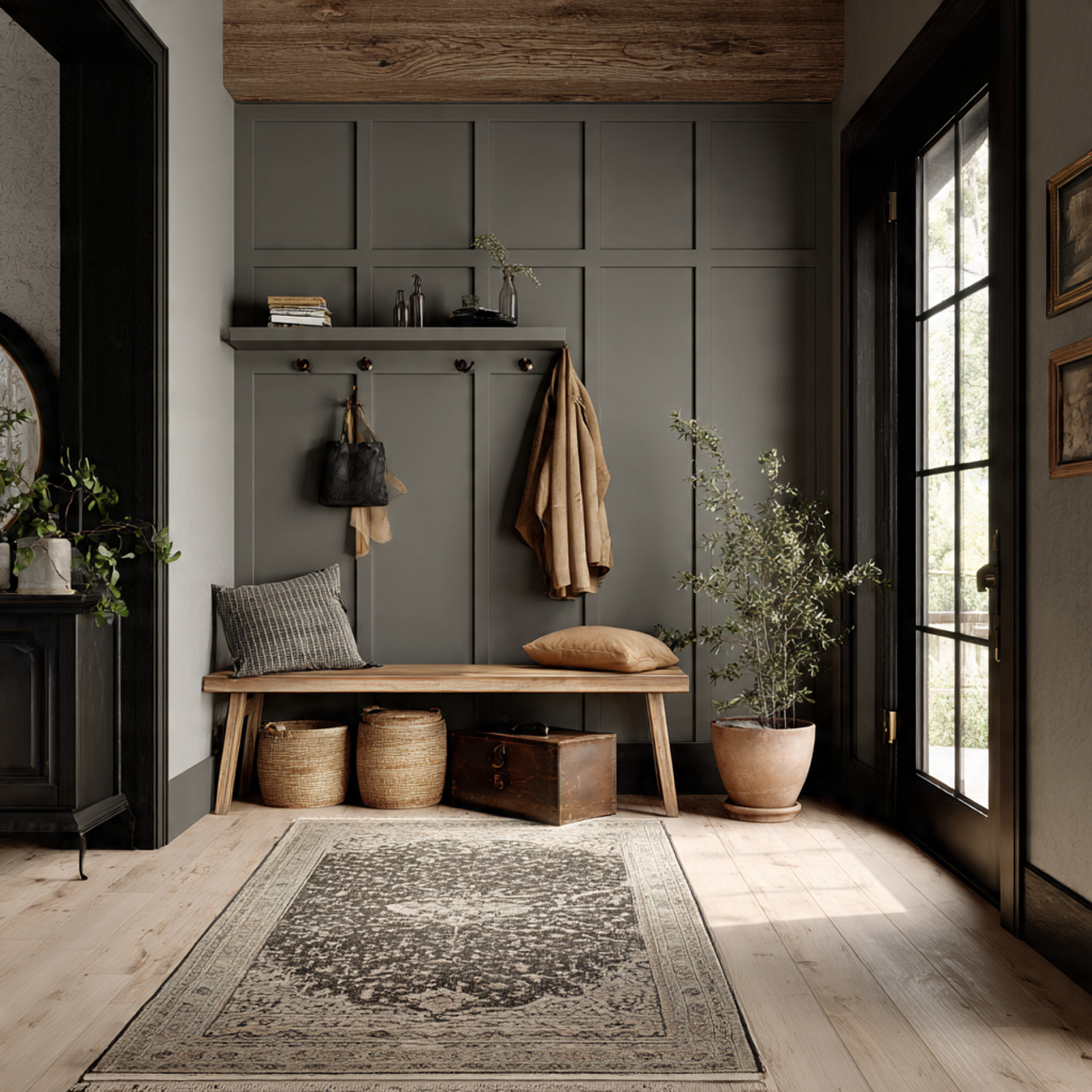
Wall hooks, a slim bench, and a small shelf manage daily items without taking floor space.
Best for:
Apartments and small entryways.
Bench + Storage
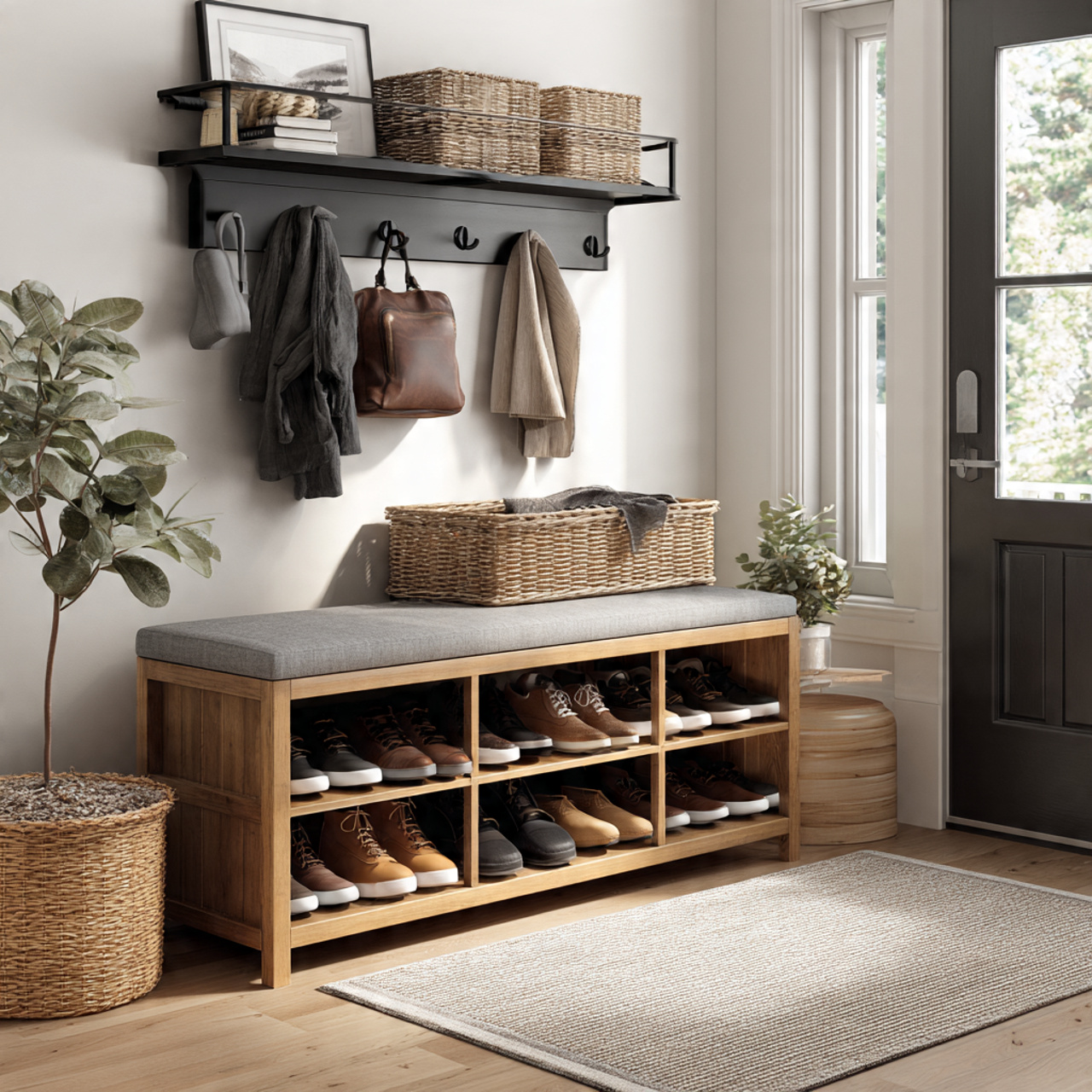
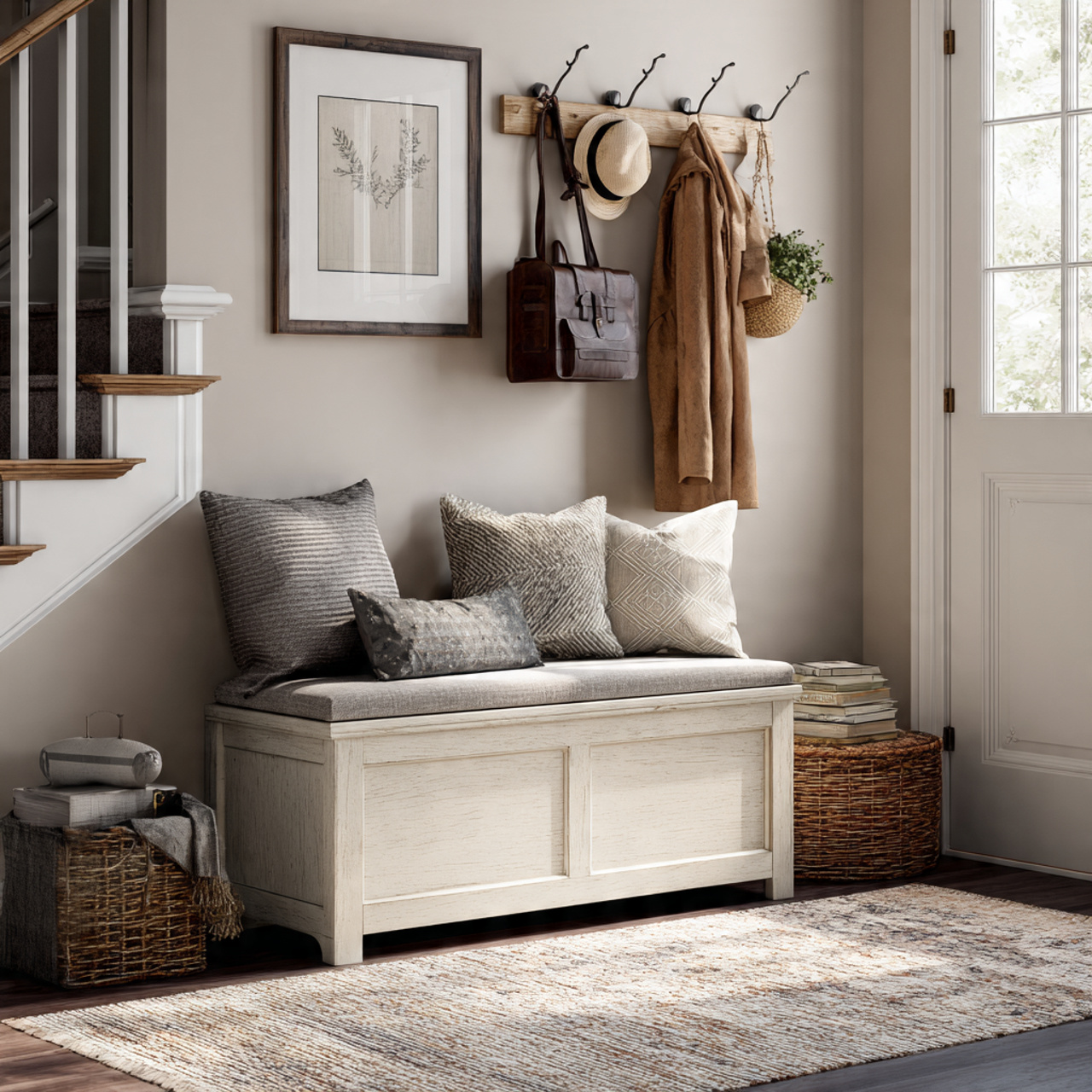
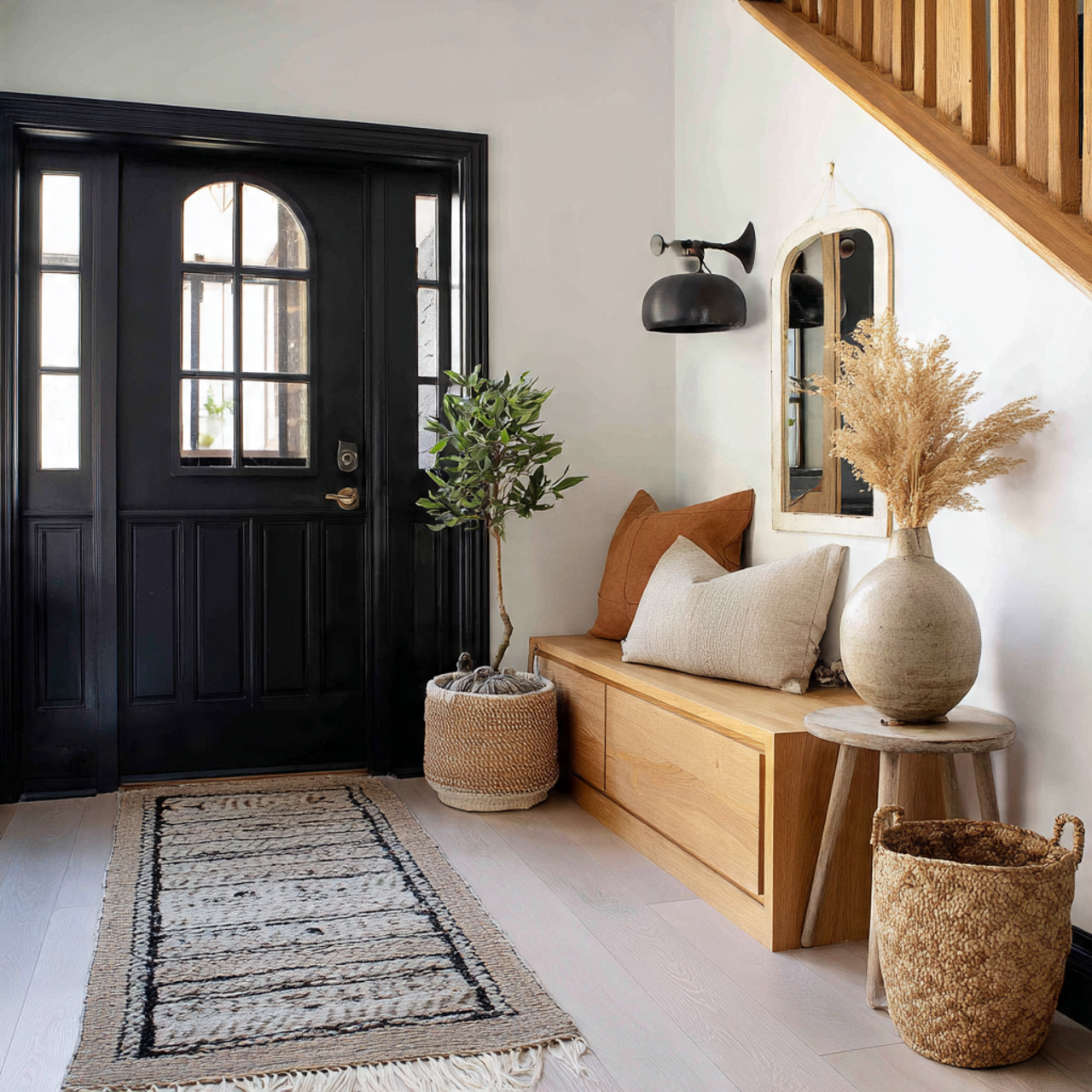
A bench with built-in shoe storage creates a clear landing spot for arrivals and exits.
Best for:
Family homes and frequent shoe use.
Open & Accessible
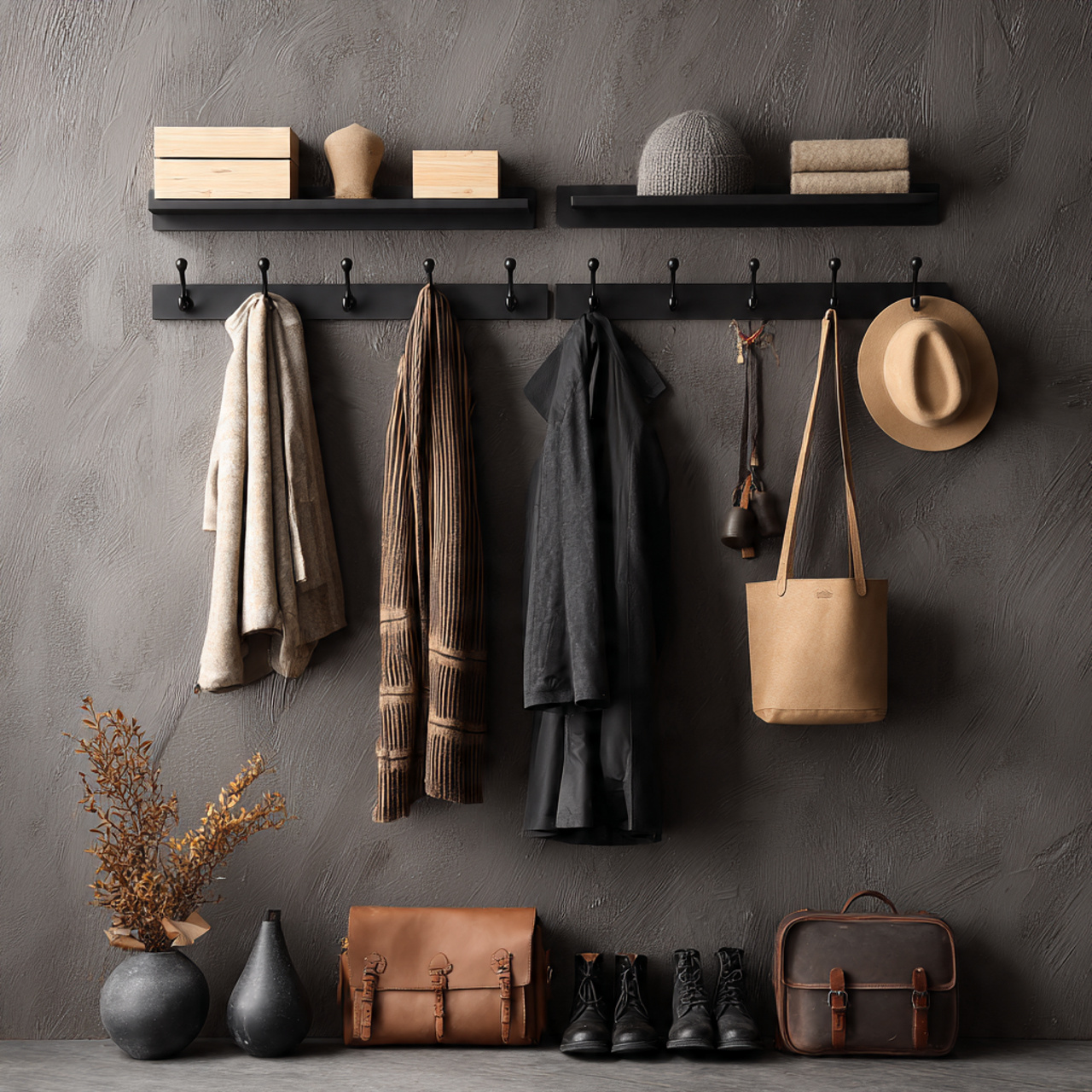
Open hooks and shelves keep daily essentials visible and easy to grab.
Best for:
Fast-paced routines and busy households.
Closed & Clean
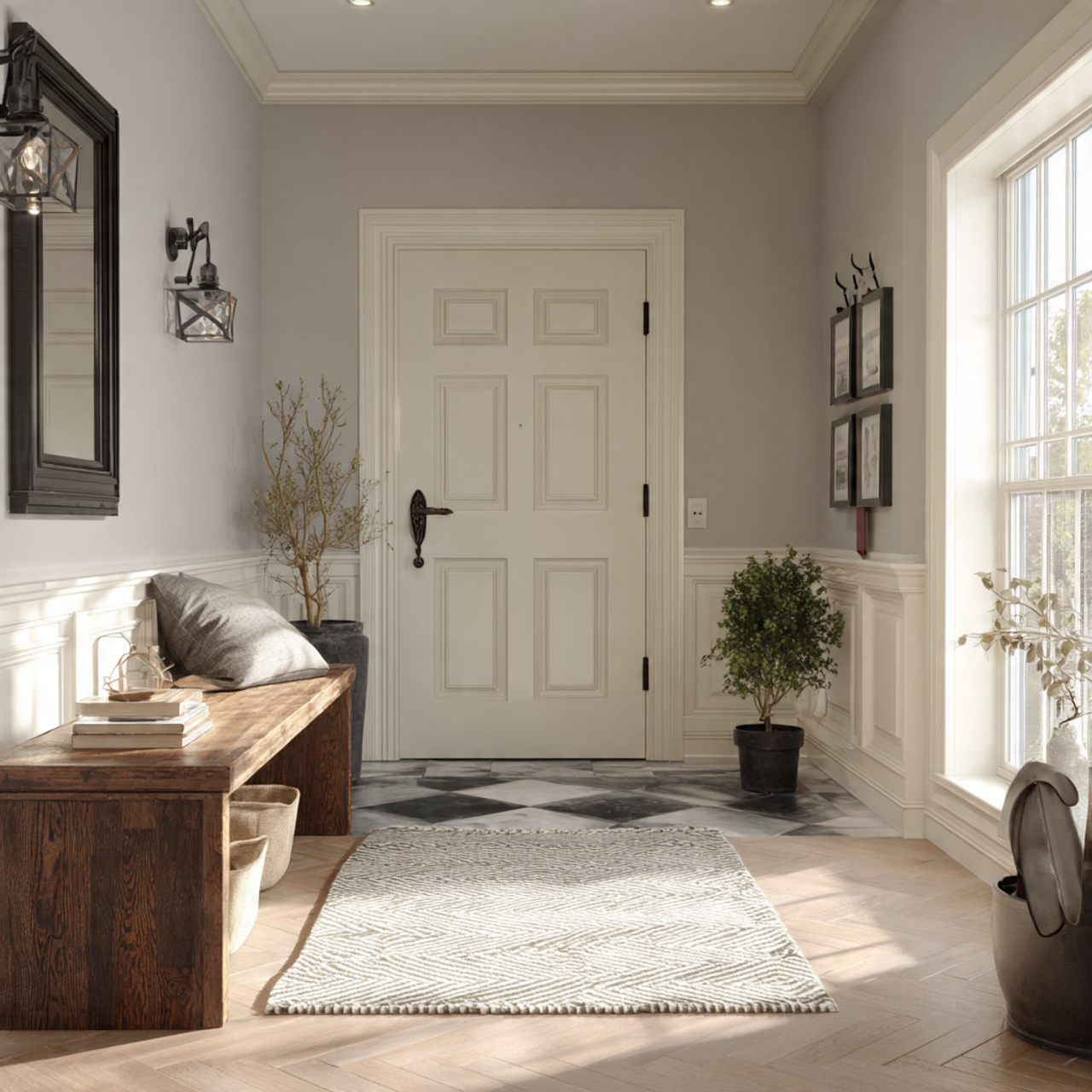
Cabinets and concealed storage keep the entryway visually calm and clutter-free.
Best for:
Homes that prefer a minimalist look.
How to Choose Entryway Essentials That Actually Work
Entryway items should support smooth arrivals and exits. Use this guide to choose essentials that reduce friction and keep clutter contained.
Shoe Storage
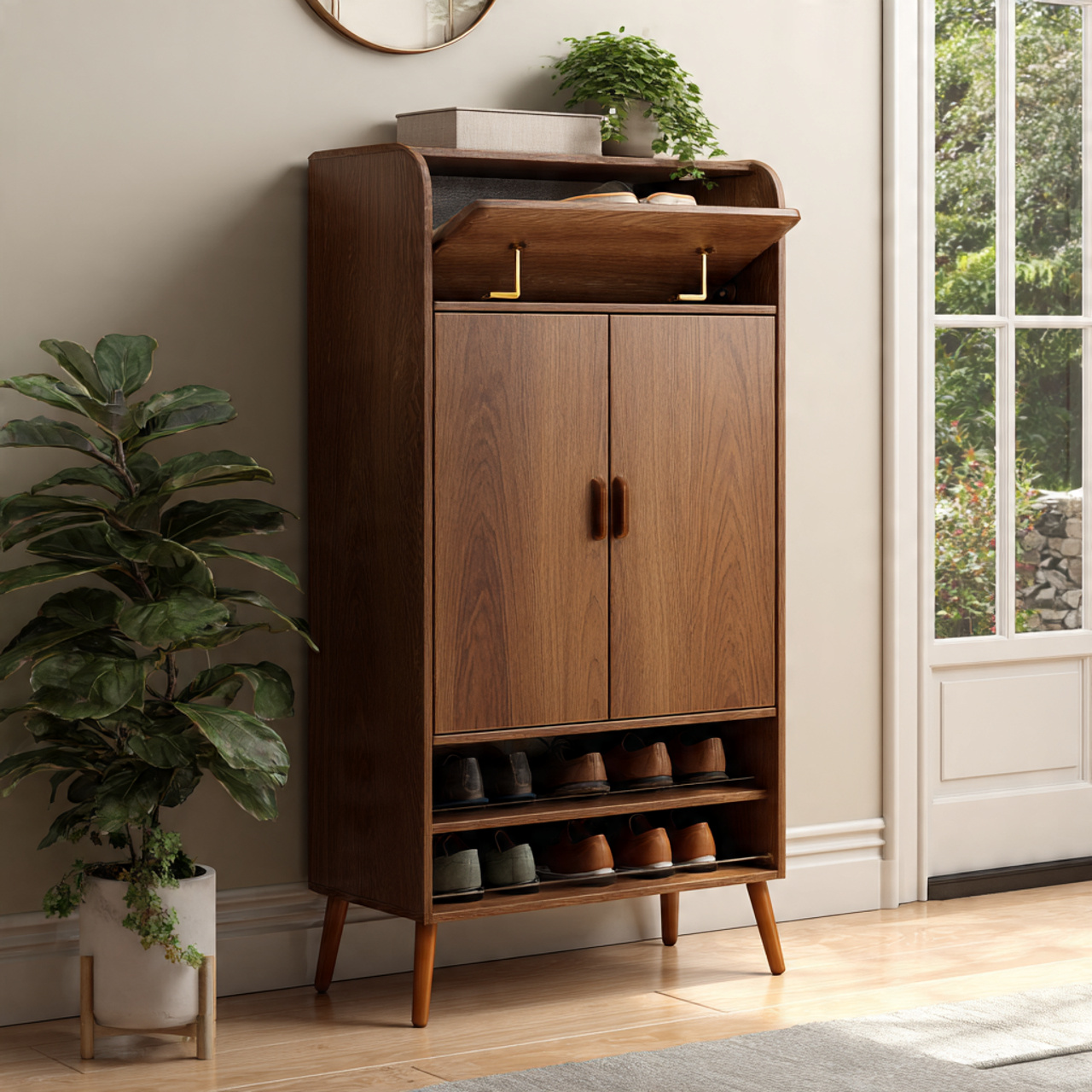
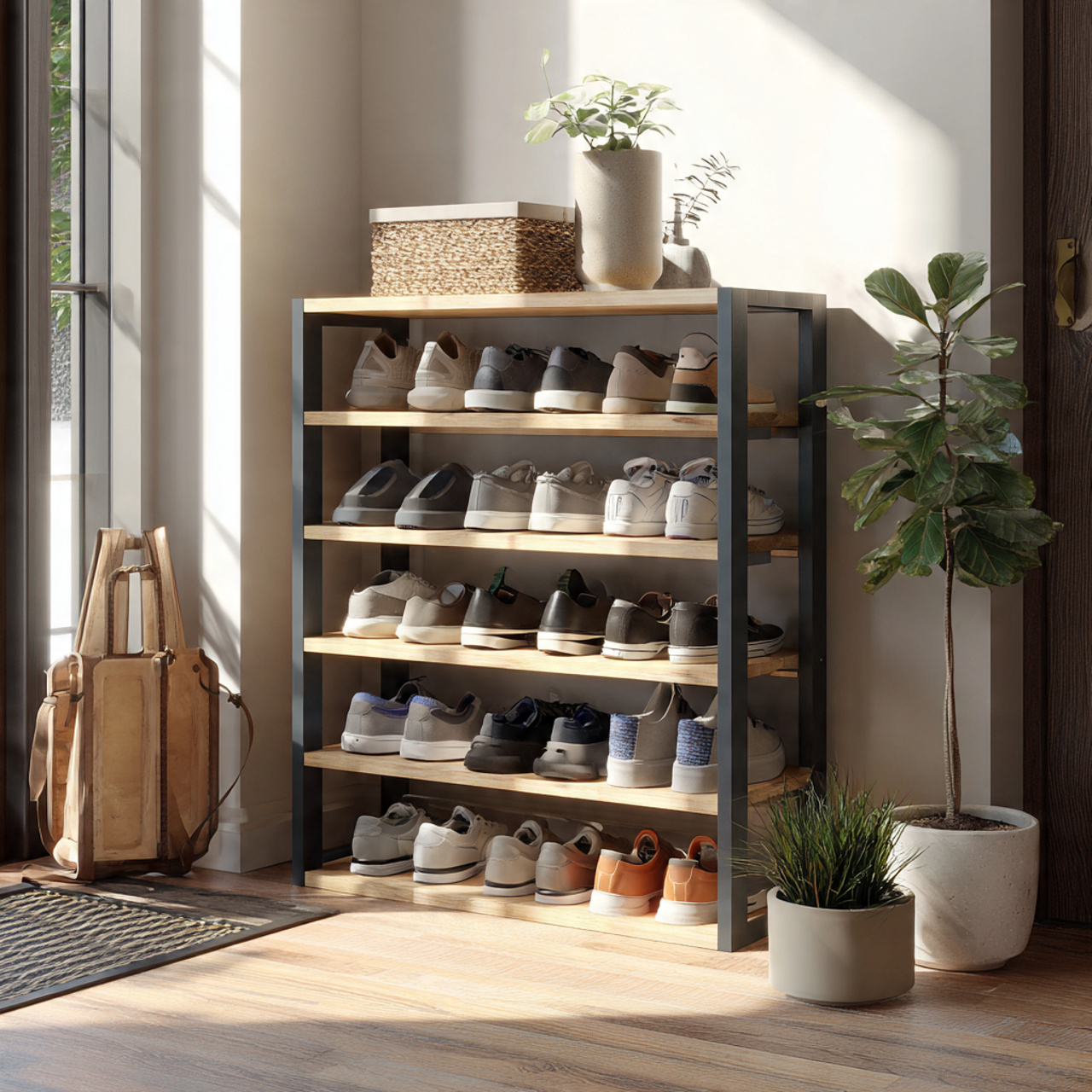
Shoes are the biggest source of entryway clutter.
- Look for:
- Slim shoe cabinets or racks
- Vertical storage for small spaces
- Easy access for daily pairs
Avoid:
Deep piles or open floor storage
Oversized units that block walkways
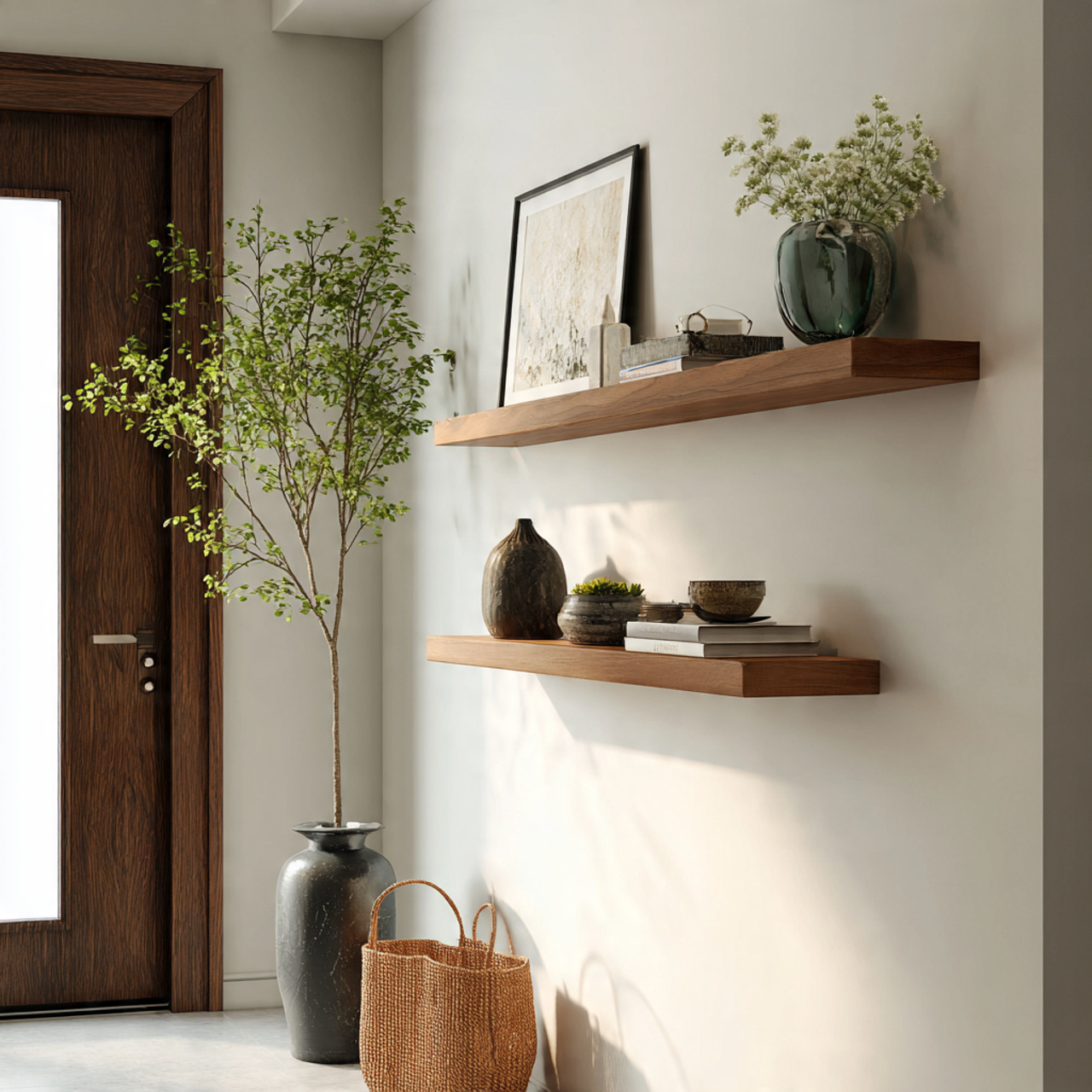
Hooks & Wall Storage
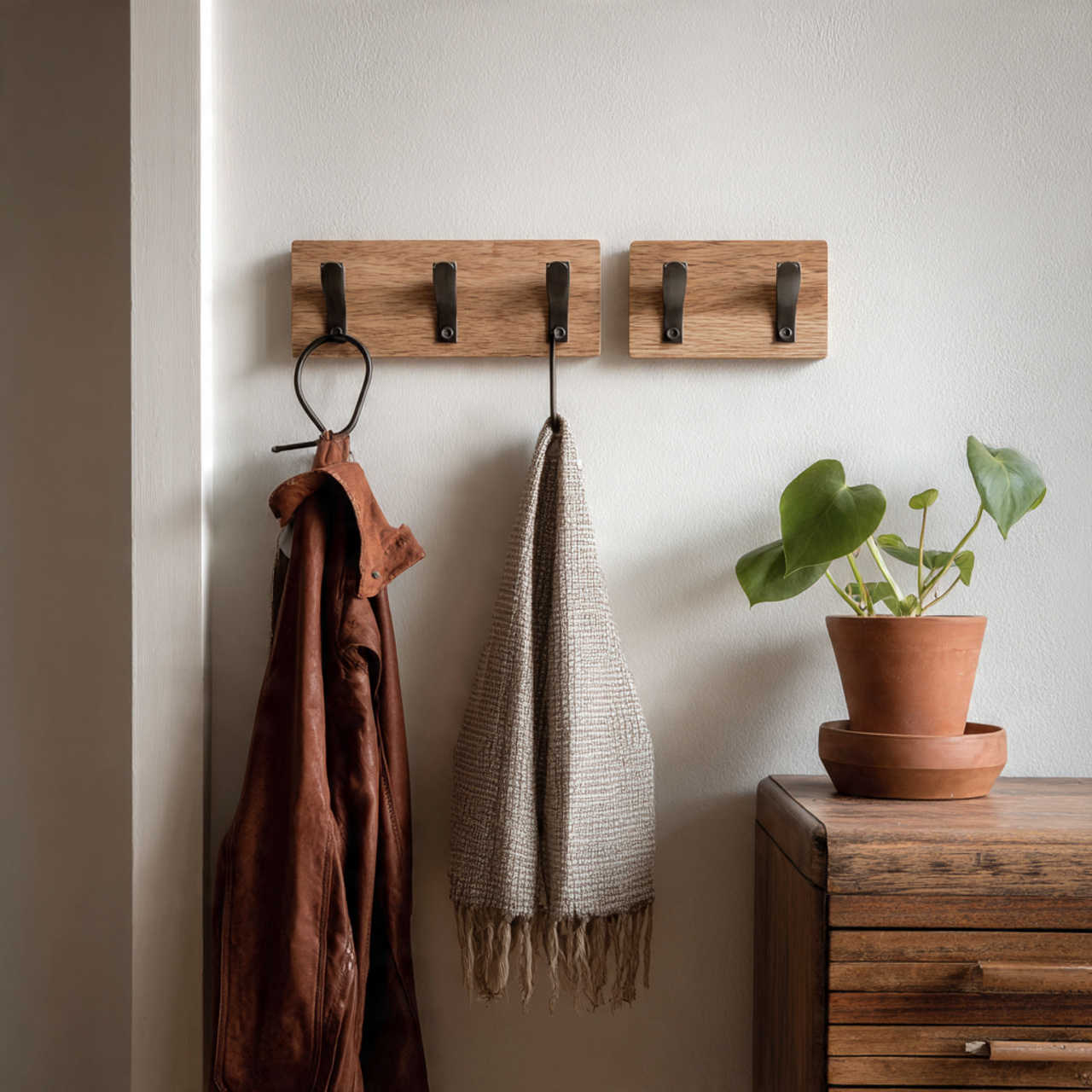
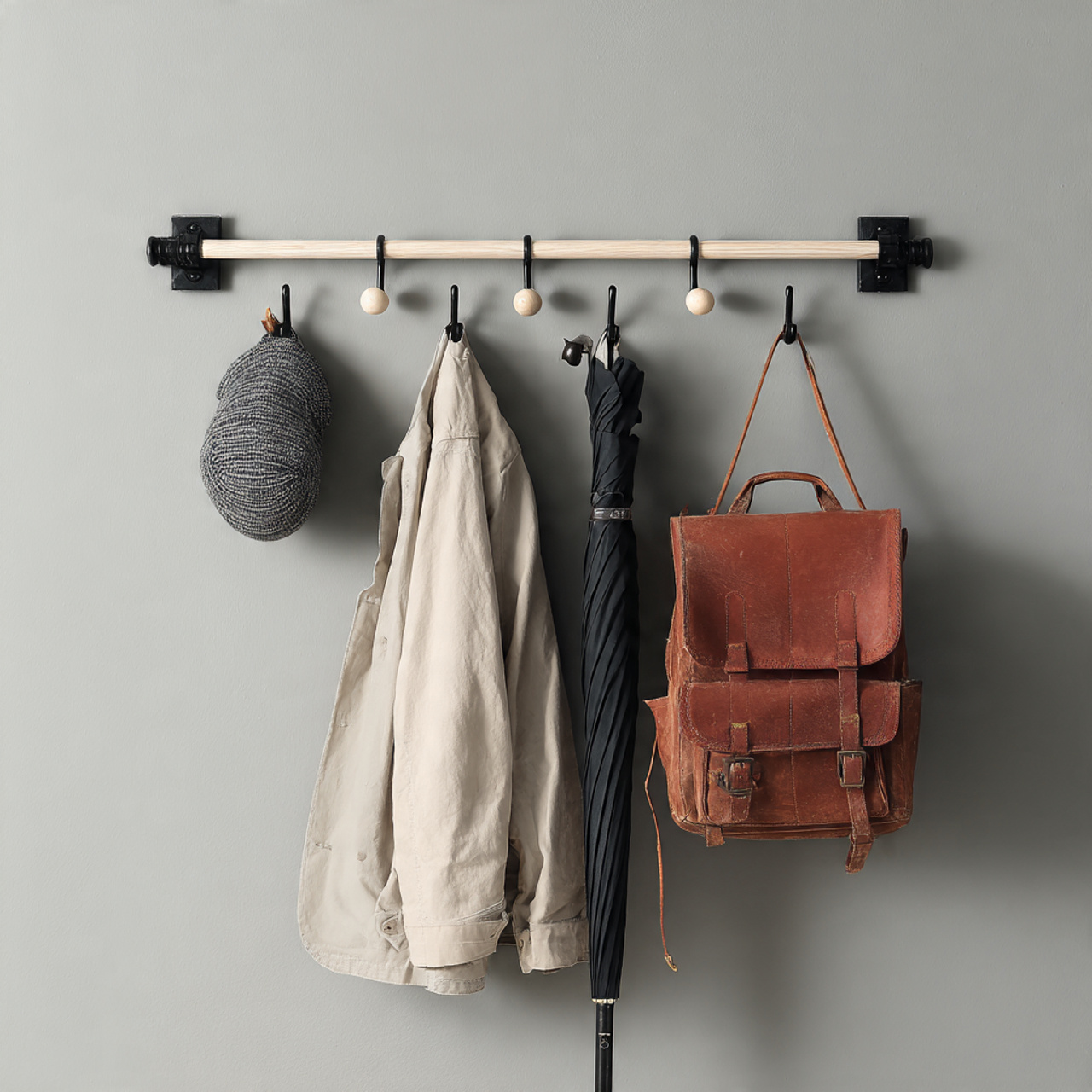
Wall-mounted storage keeps floors clear and flow uninterrupted.
- Look for:
- Sturdy hooks for bags and coats
- Multiple hooks at different heights
- Secure wall mounting
Avoid:
Weak adhesive hooks
Too many hooks in one area
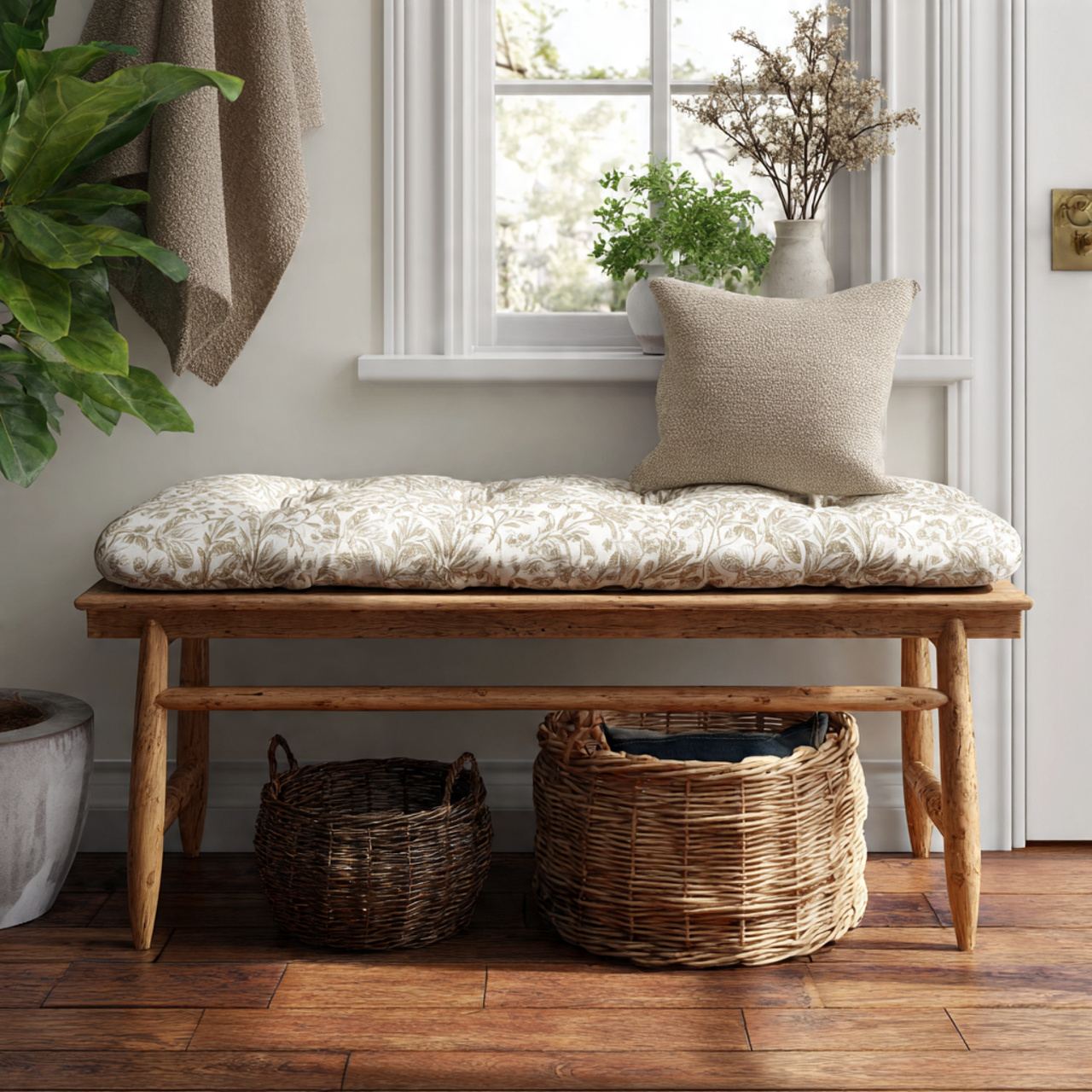
Benches & Seating
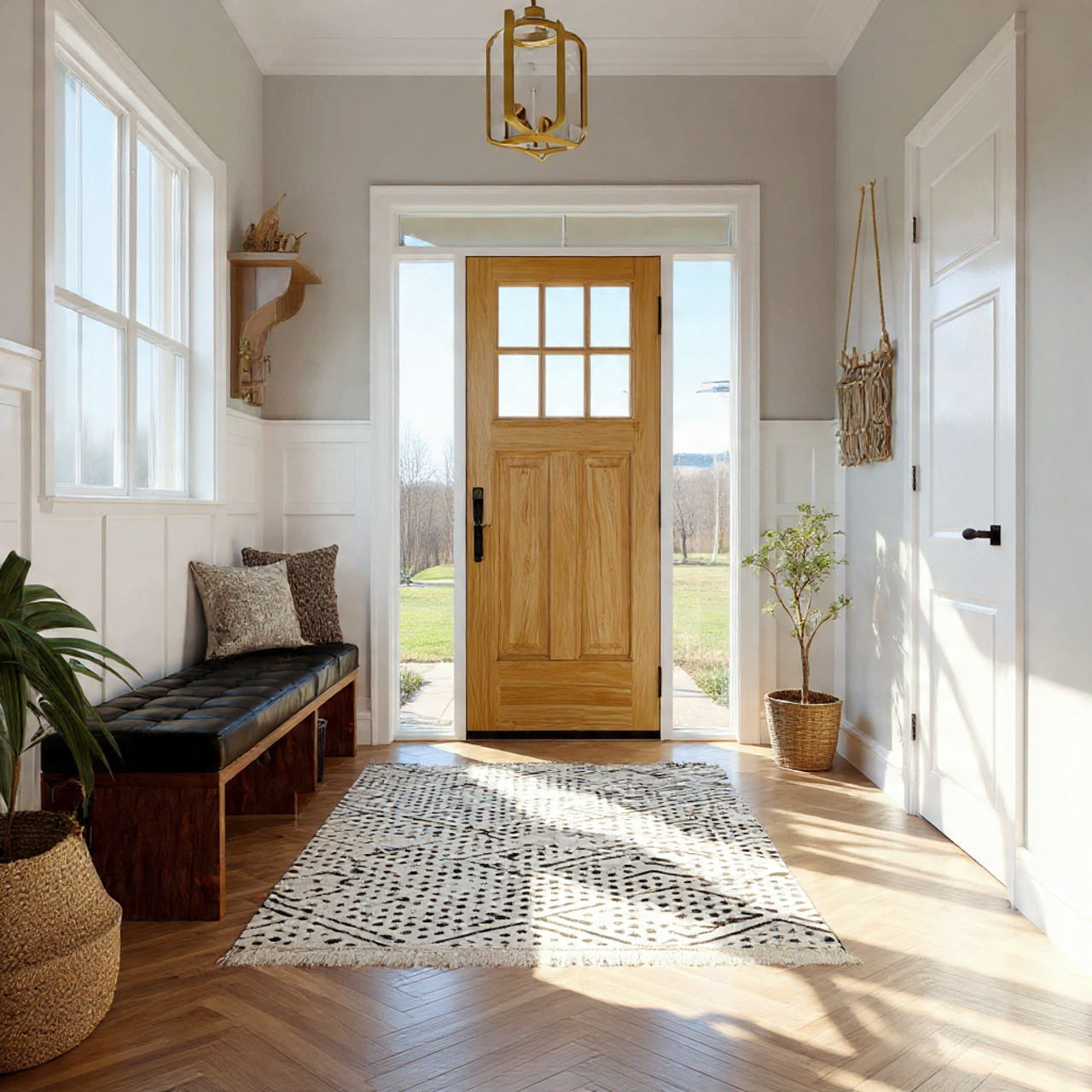
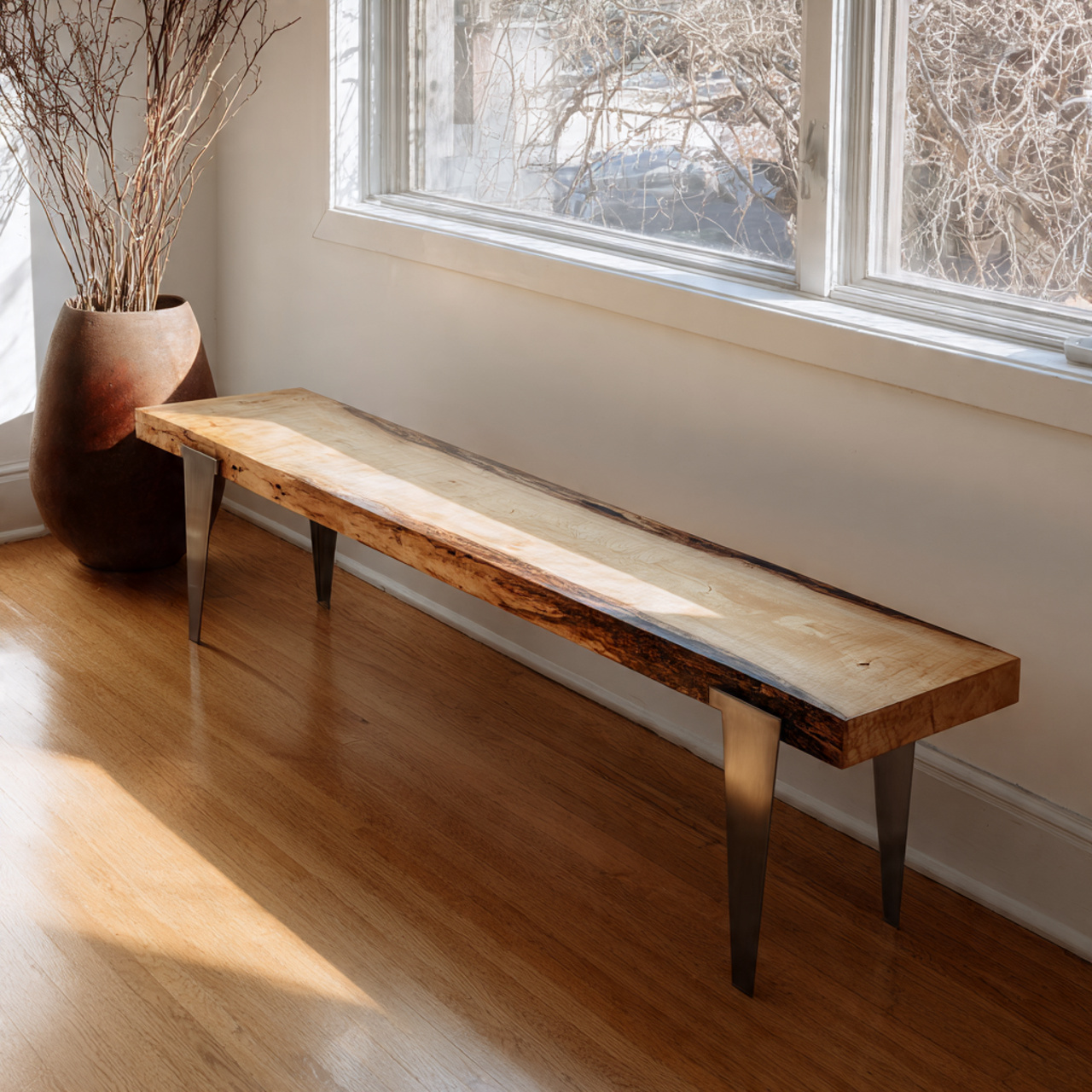
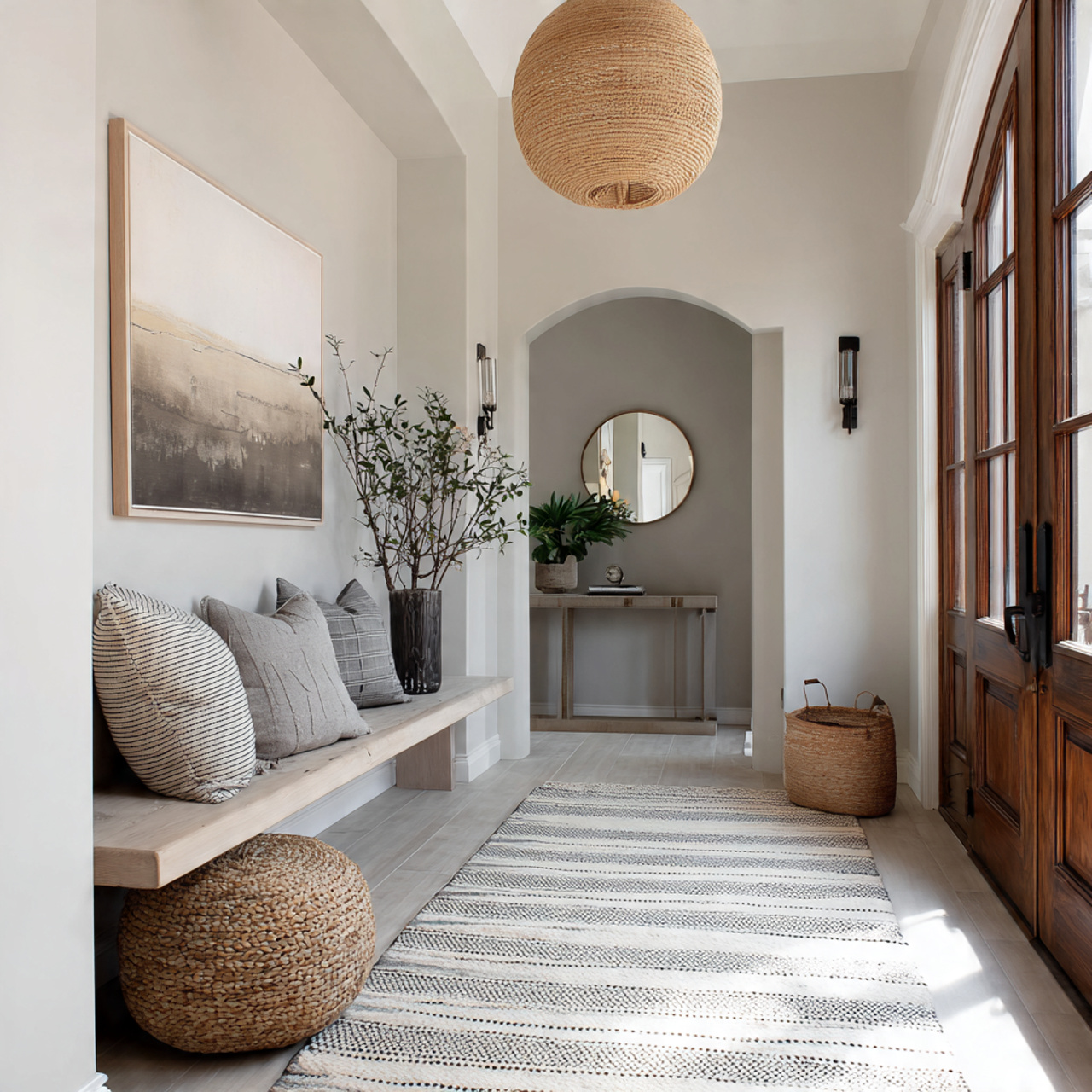
Benches provide a landing spot and make shoe changes easier.
- Look for:
- Slim benches with storage
- Comfortable seat height
- Easy-to-clean materials
Avoid:
Bulky benches that crowd the space
Upholstery that traps dirt
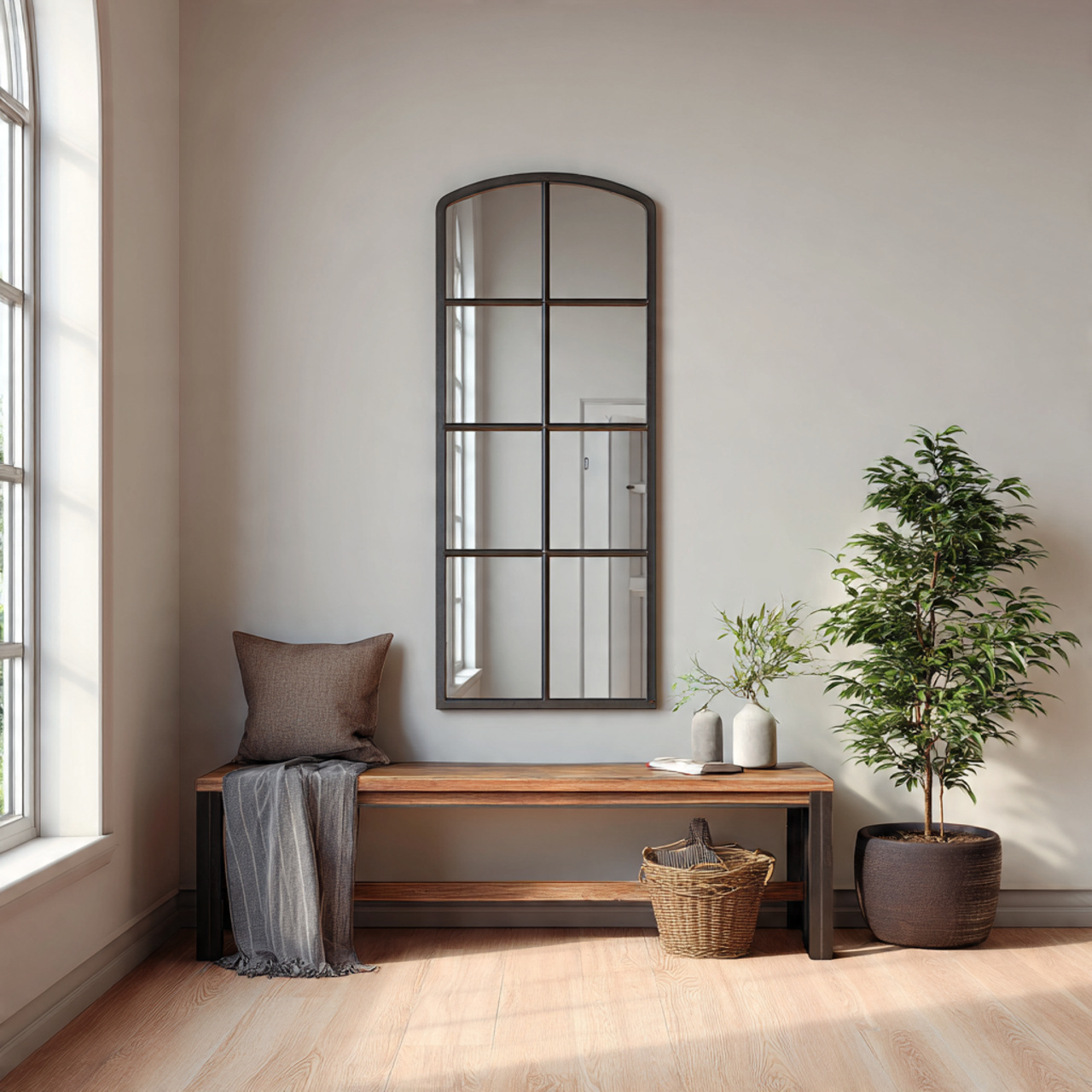
Mirrors & Small Surfaces
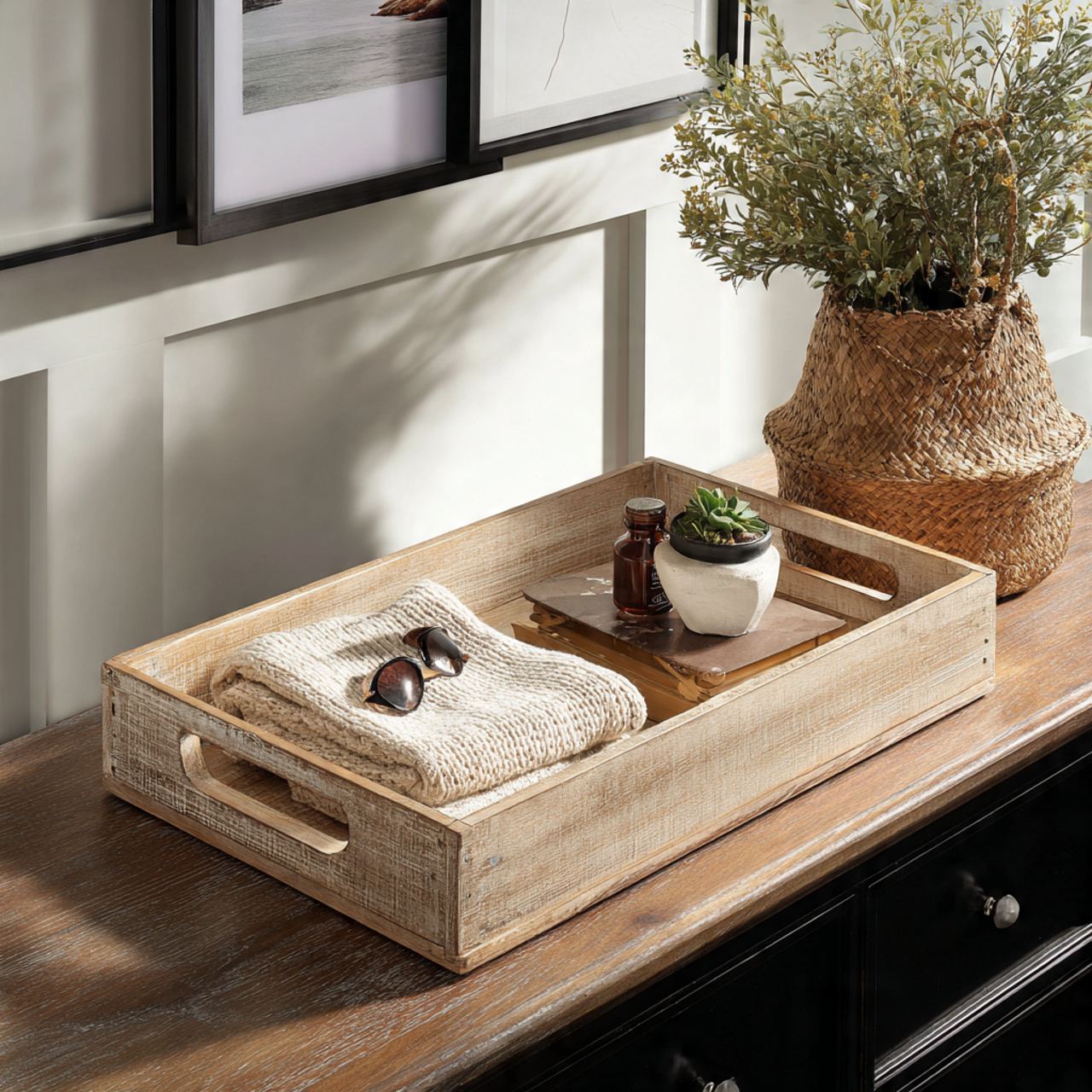
Mirrors and trays complete the entryway without adding clutter.
- Look for:
- Mirrors that reflect light
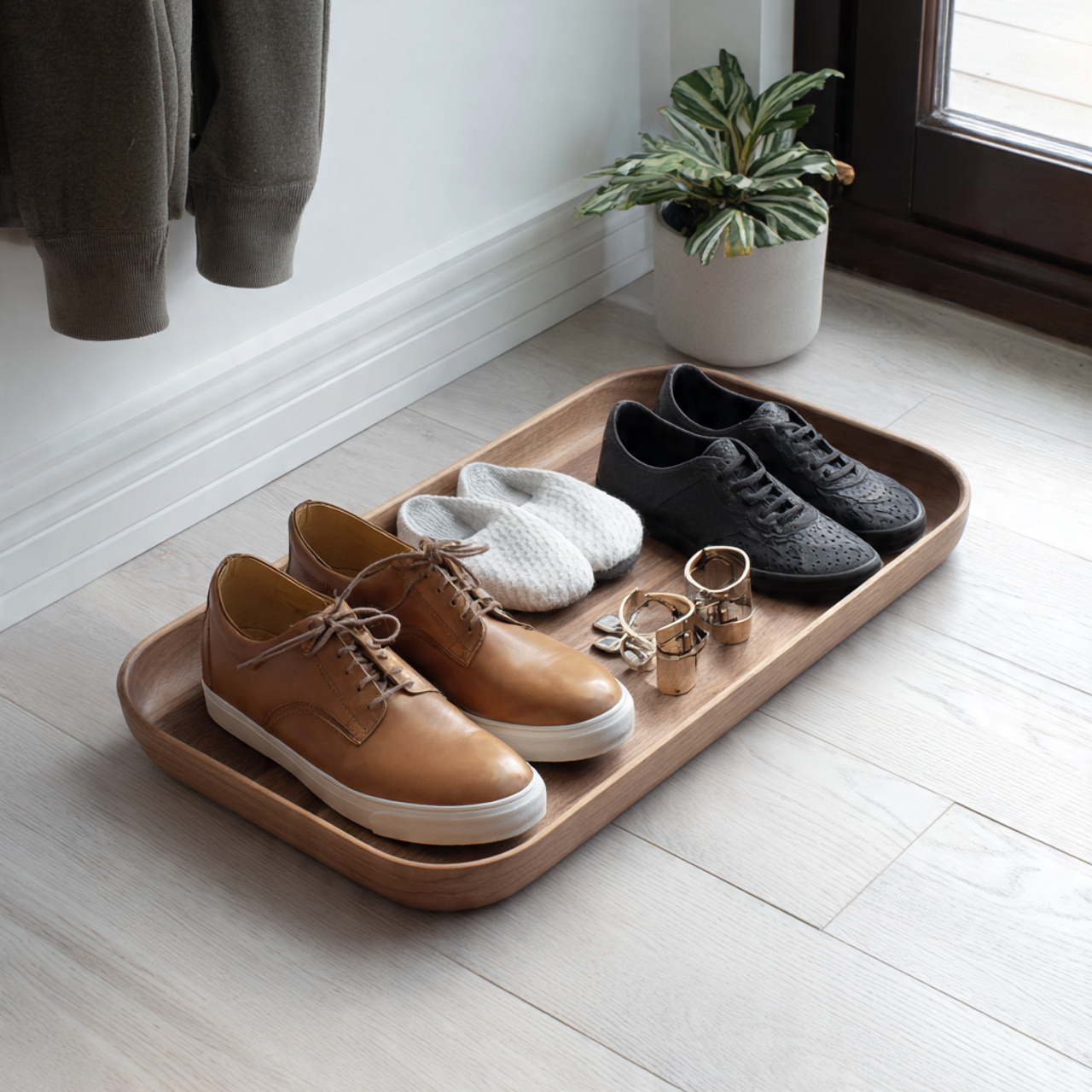
- Small trays for keys and wallets
- Wall-mounted options
Avoid:
Oversized tables
Surfaces that collect unnecessary items
Ravnora Curated Entryway Picks
Entryway essentials chosen to support daily flow—easy drop-zones, fast resets, and a welcoming first impression.
BLOCK 1 — SHOE STORAGE
Contain footwear without blocking movement.
BLOCK 2 — HOOKS & WALL STORAGE
Keep coats and bags off the floor.
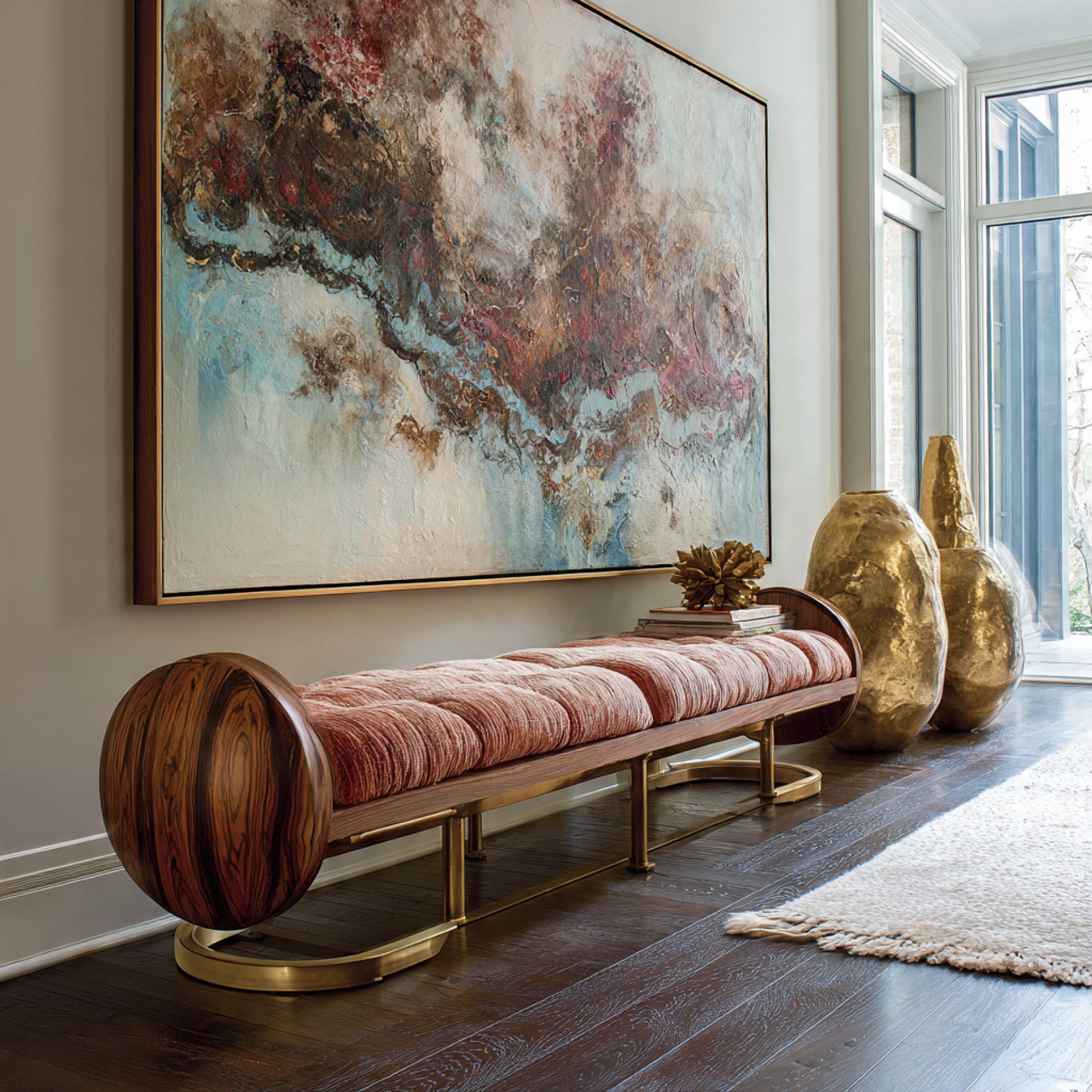
BLOCK 3 — BENCHES & SEATING
Create a clear landing spot for arrivals.
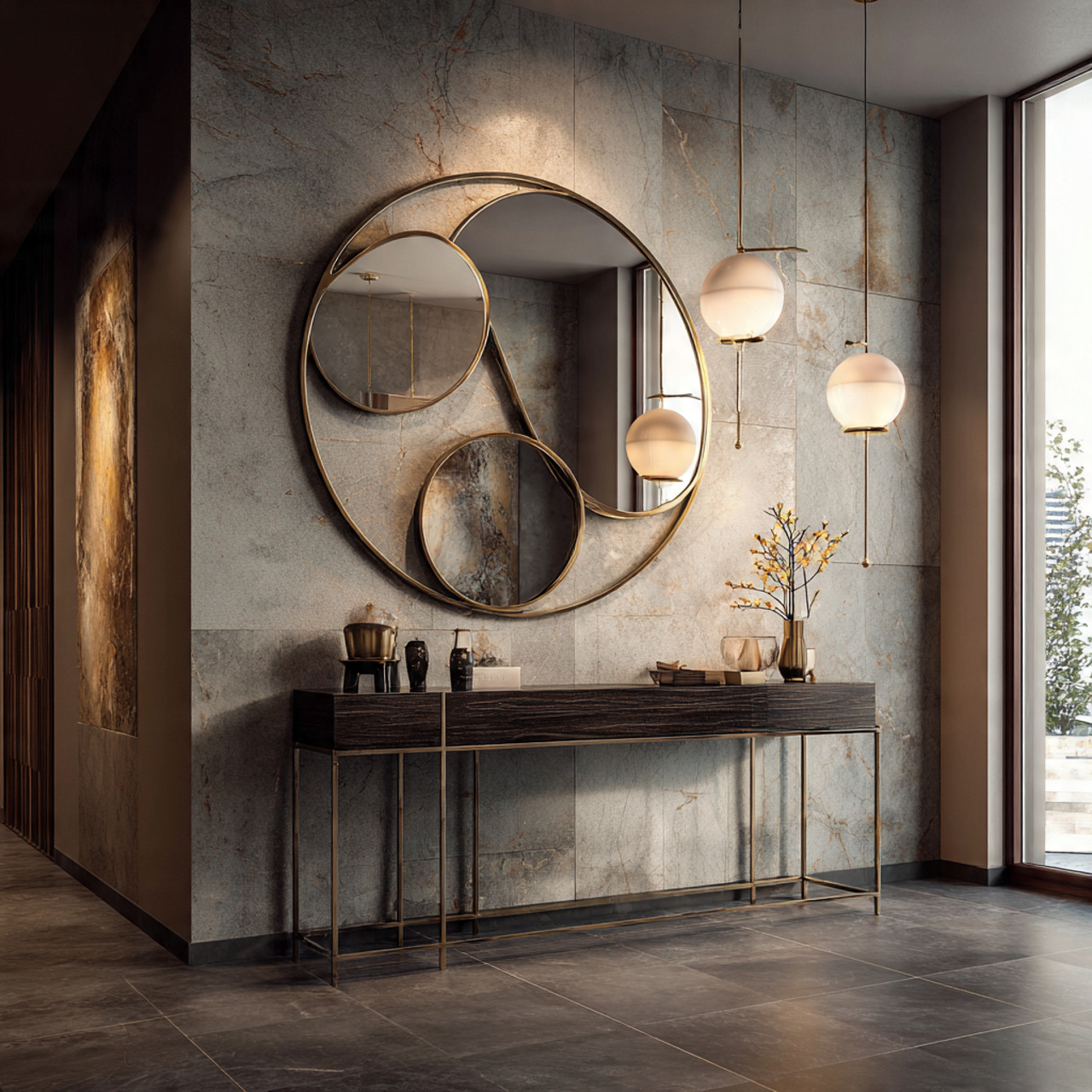
BLOCK 4 — MIRRORS & SMALL SURFACES
Finish the space without adding clutter.
Common Entryway Mistakes to Avoid
Entryways fail when flow and resets aren’t planned. Avoid these mistakes to keep the first impression calm.
❌ No defined drop-zone — items spread everywhere.
Fix: Assign one clear landing spot.
❌ Floor clutter — blocks movement.
Fix: Use wall storage.
❌ Oversized furniture — crowds the space.
Fix: Choose slim profiles.
❌ Too many hooks — visual noise.
Fix: Limit to daily needs.
❌ No reset habit — mess returns.
Fix: Two-minute nightly reset.
Save This Entryway Guide for Later
Planning an entryway takes iteration. Save this guide to revisit layouts, buying tips, and curated picks.
Explore More Entryway-Related Ideas
Home Organization Ideas —
system-first storage
Explore →
Living Room Decor Ideas —
tidy shared spaces
Explore →
Bedroom Decor Ideas —
calm storage habits
Explore →
Furniture & Shelving Ideas —
slim profiles that fit
Explore →
Get Entryway Reset Notes
Short, practical tips for smoother arrivals and exits—sent occasionally, no noise.
Entryway Essentials FAQs
Q1: What’s essential for a small entryway?
Wall hooks, a slim bench, and a mirror.
Q2: How many hooks should I use?
One per regular user plus one spare.
Q3: Are benches necessary?
Helpful for shoes; optional if space is tight.
Q4: How do I keep the entryway tidy daily?
Use clear drop-zones and a nightly two-minute reset.
Q5: Should entryway decor match the rest of the home?
Coordinate tones, prioritize function first.
Design an Entryway That Sets the Tone
A well-designed entryway supports flow, calm, and quick resets.
Use this guide as a reference and refine your setup step by step.