
Mirrors & Reflective Accents Designed to Enhance Light and Depth
Explore mirrors and reflective accents that brighten spaces, add depth, and balance rooms—without visual clutter.
Use Mirrors to Multiply Light, Not Clutter
Mirrors work best when placed with intention. Use this snapshot to enhance light and depth without creating visual noise.
Placement Logic
Place mirrors opposite or adjacent to light sources to amplify brightness.
Scale & Proportion
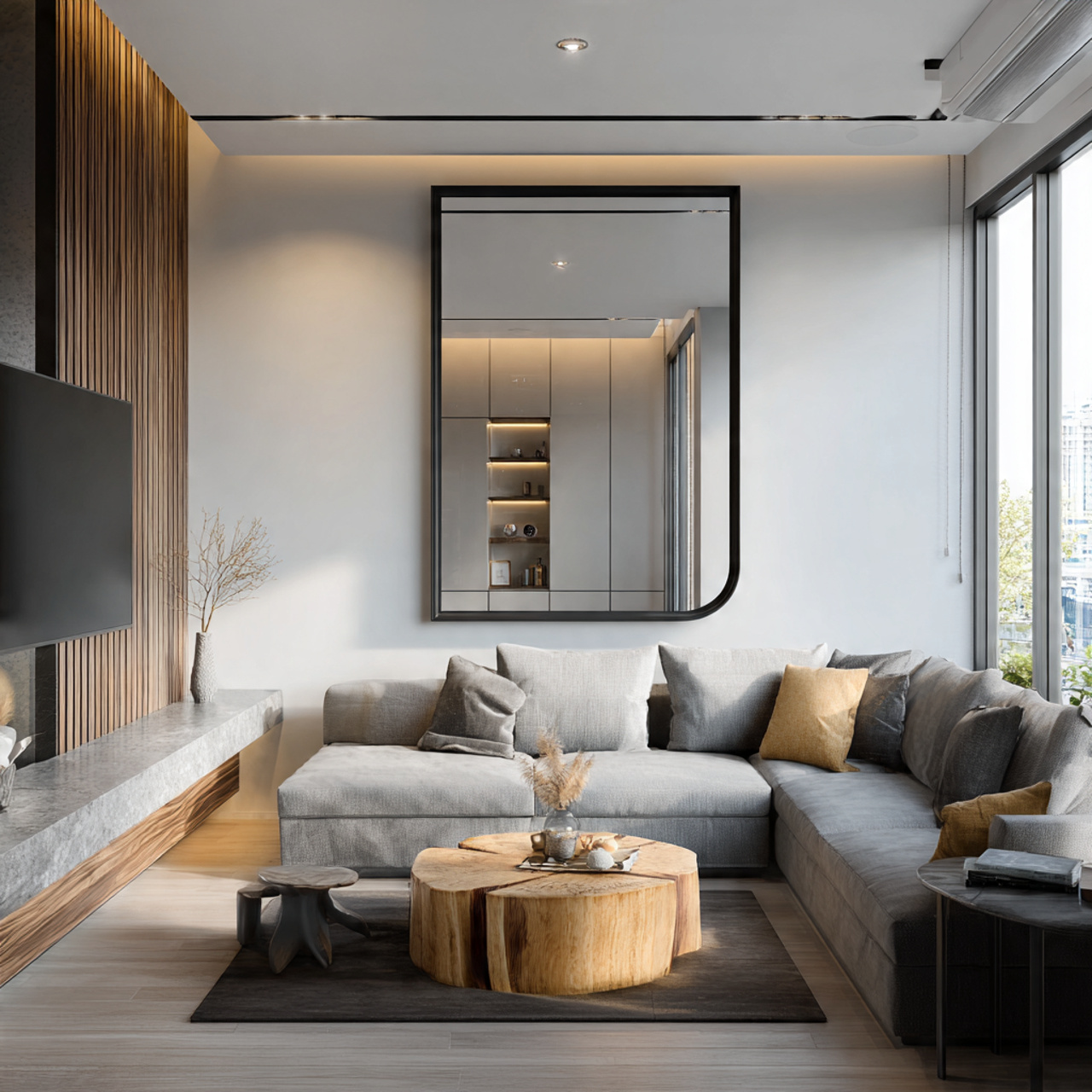
Larger mirrors create stronger impact than multiple small ones.
What to Reflect
Reflect windows, greenery, or open space—never clutter or blank walls.
Frame Restraint
Choose simple frames that support the room without stealing focus.
Mirror Foundations That Always Feel Right
Before adding mirrors for style, get these reflection fundamentals right. They determine how light travels through a space and how open it feels.
Reflect with Purpose
- Mirrors should enhance what’s already working.
- Reflections must add light, space, or visual calm.
- Avoid reflecting clutter or blank walls.
Rule: Reflect beauty, not noise.
Scale Over Quantity
- One large mirror has more impact than many small ones.
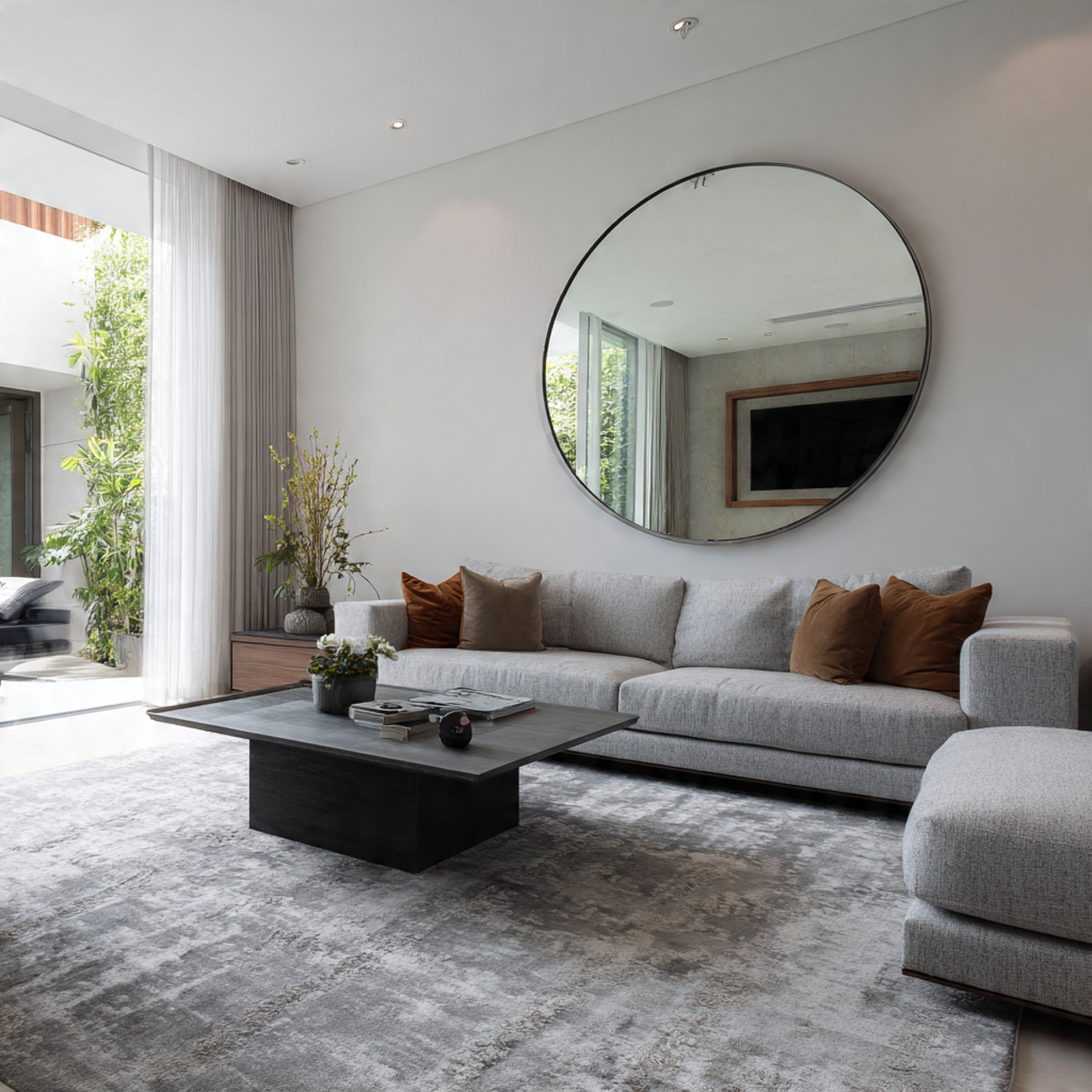
- Oversized mirrors visually expand rooms.
- Multiple small mirrors fragment space.
Rule: Bigger mirrors feel calmer.
Align with Architecture
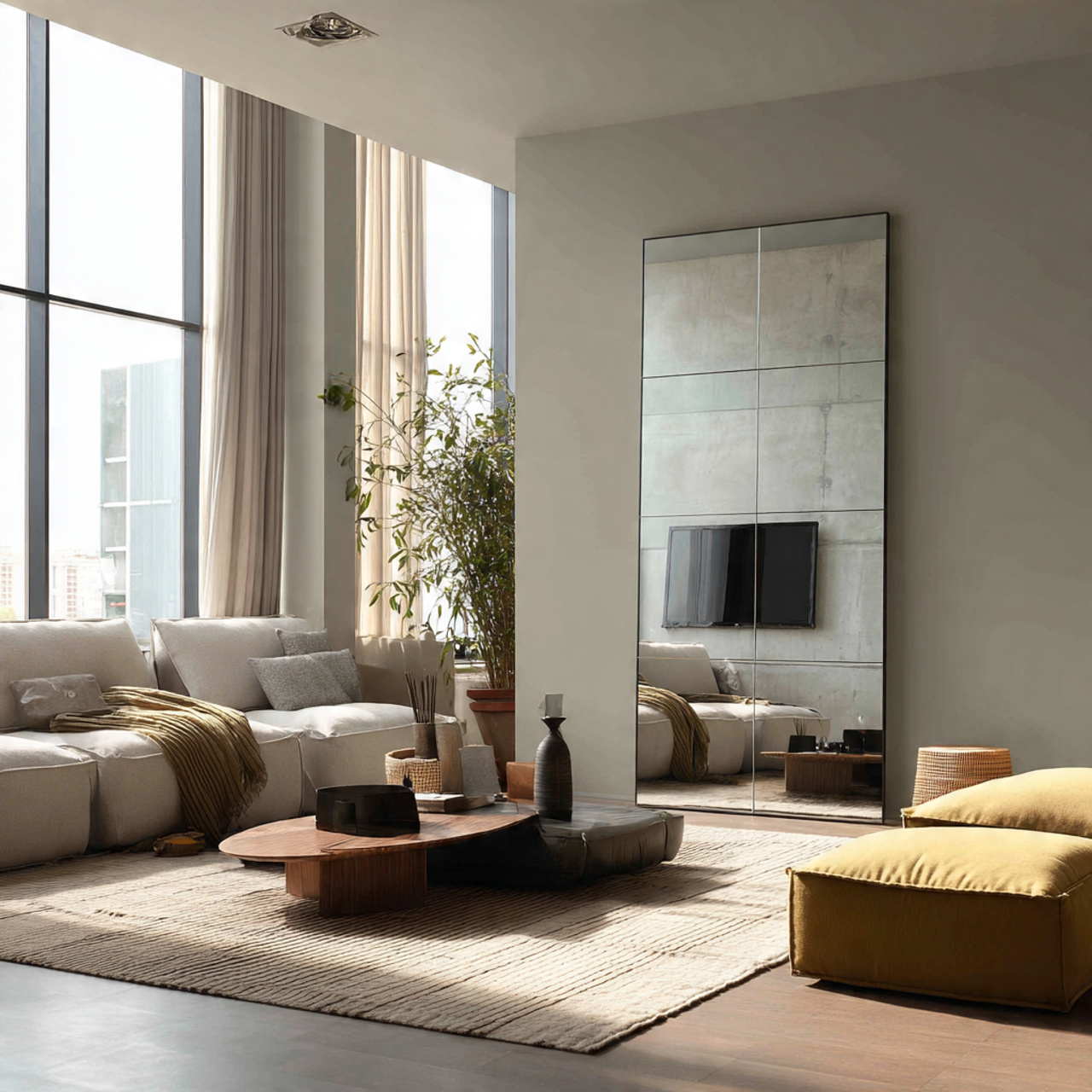
- Position mirrors in line with windows or doorways.
- Use mirrors to echo room proportions.
- Frames should complement architectural lines.
Rule: Mirrors should follow the room’s structure.
Choose a Mirror Approach That Enhances Light
These mirror approaches focus on reflection quality, scale, and placement. Choose the pathway that best supports how light moves through the room.
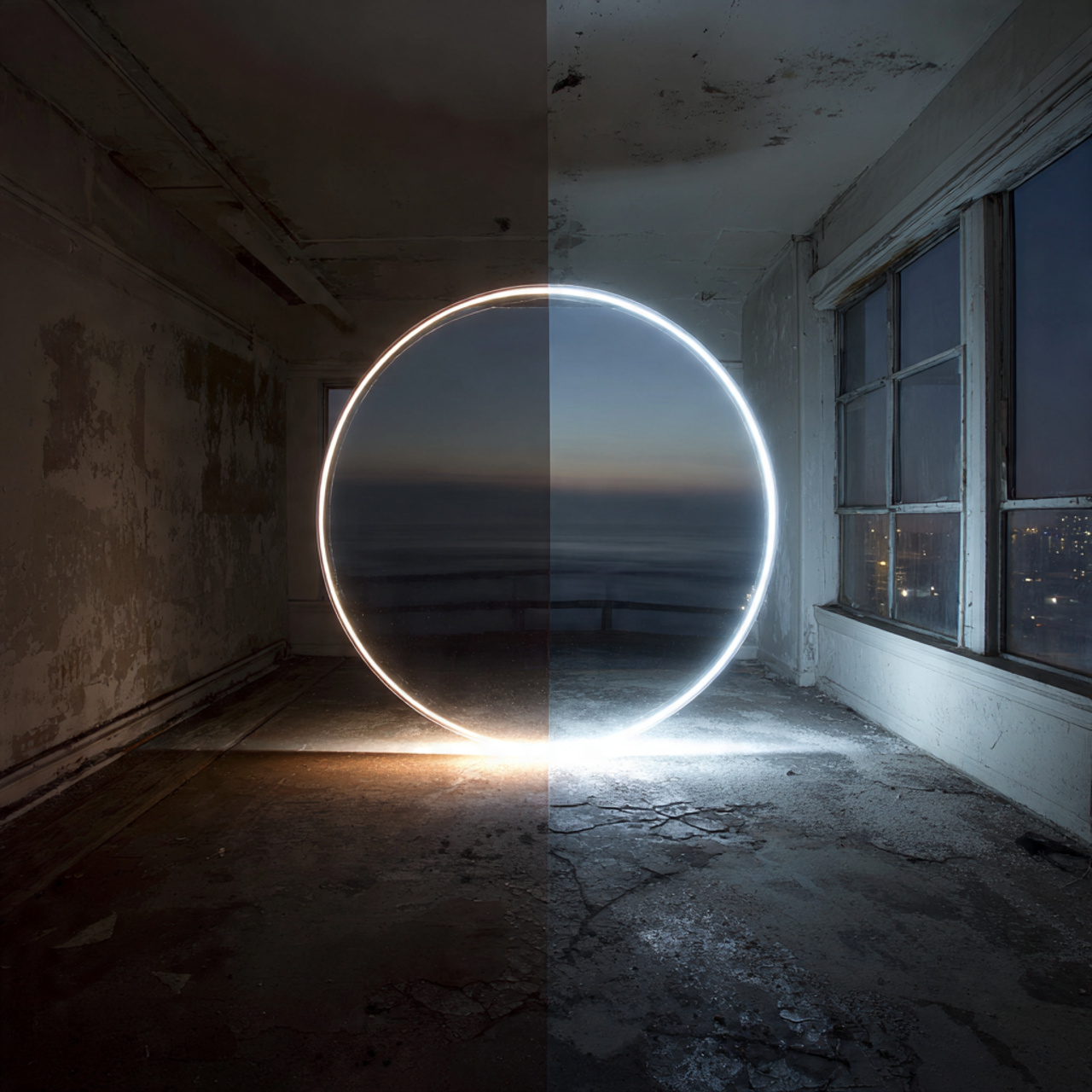
Opposite Light Source
Mirrors placed opposite windows multiply daylight and brighten rooms naturally.
Best for:
Dark rooms and small spaces.
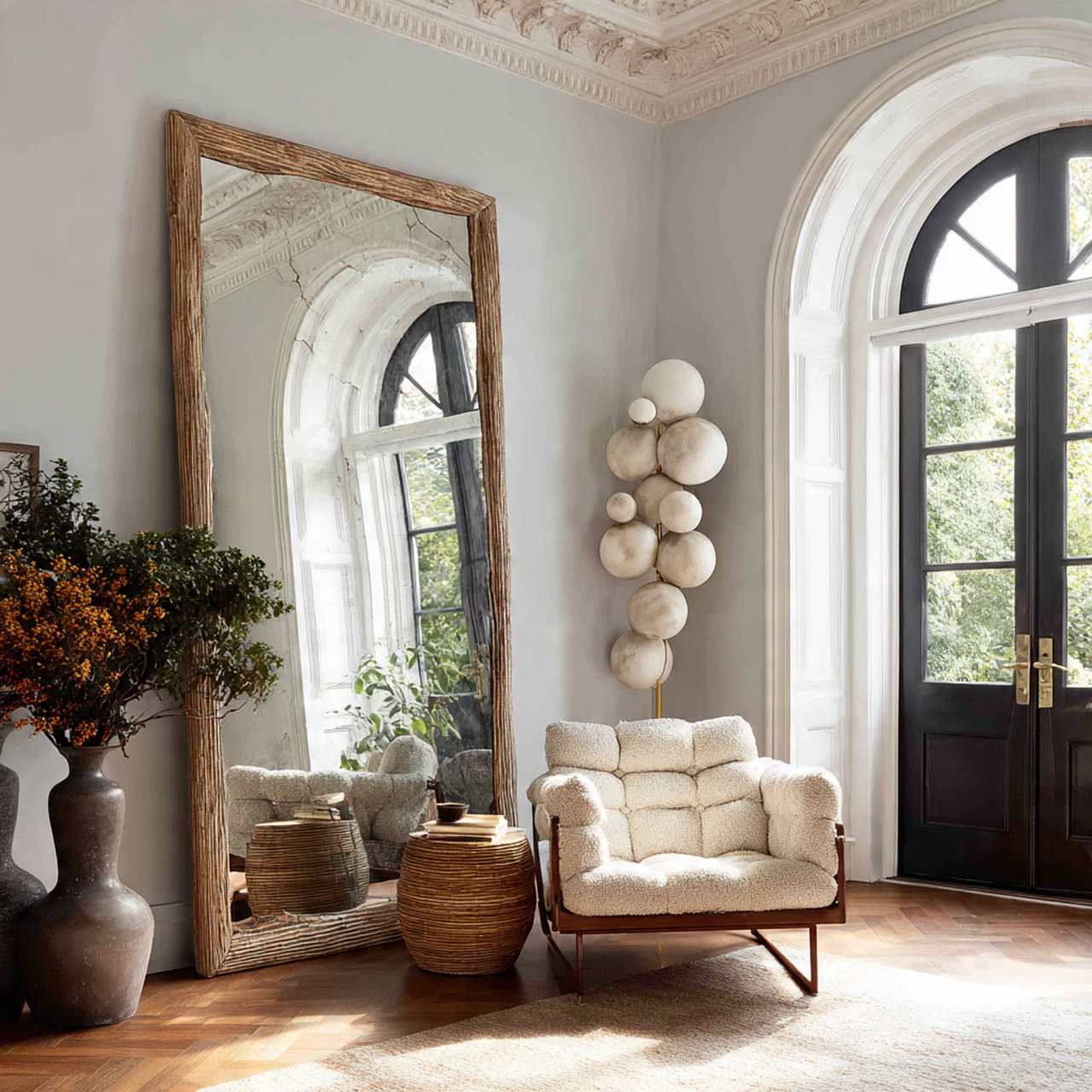
Oversized Statement
Large mirrors create depth and openness with minimal visual interruption.
Best for:
Living rooms and dining areas.
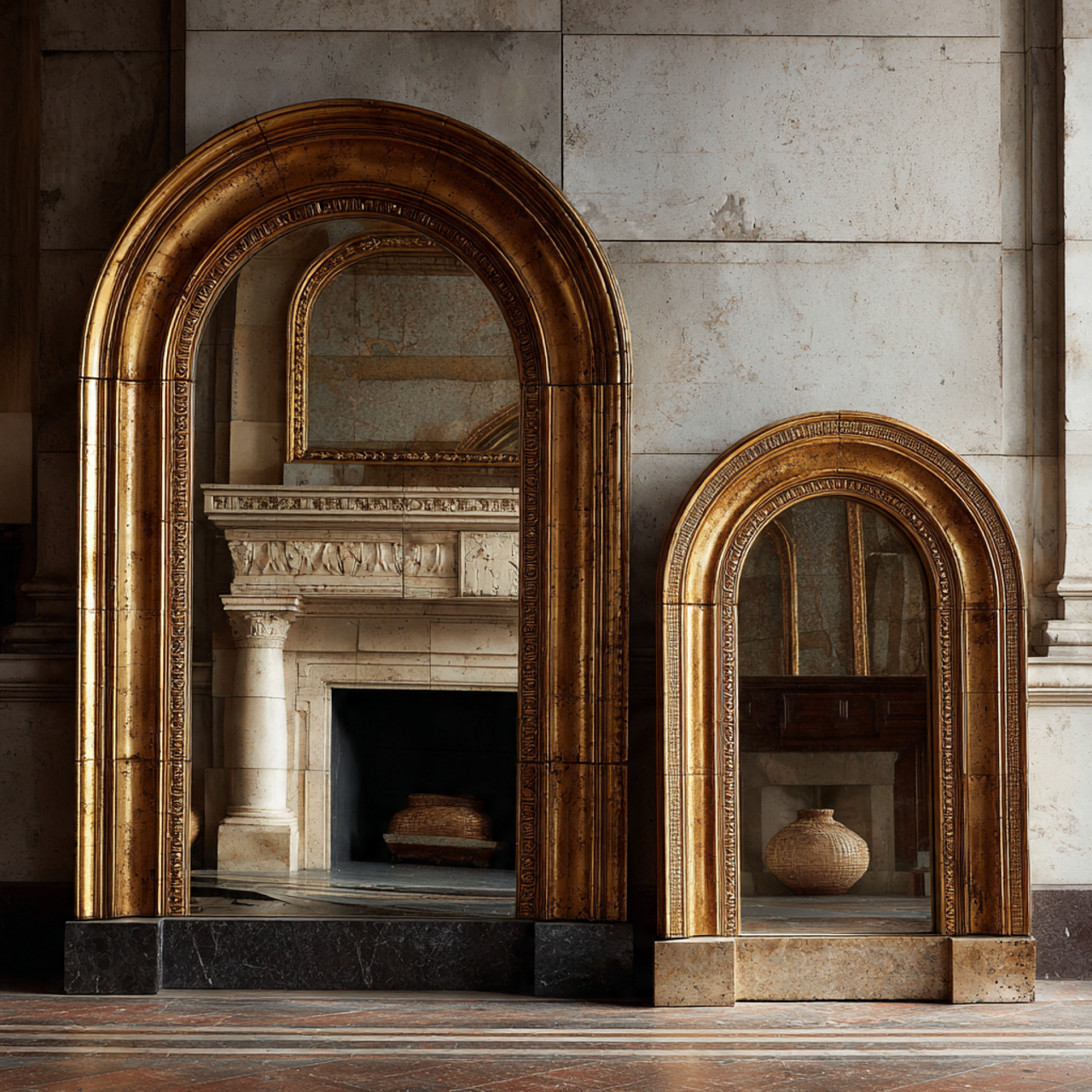
Architectural Frame
Simple frames echo doorways and windows for a cohesive look.
Best for:
Entryways and hallways.
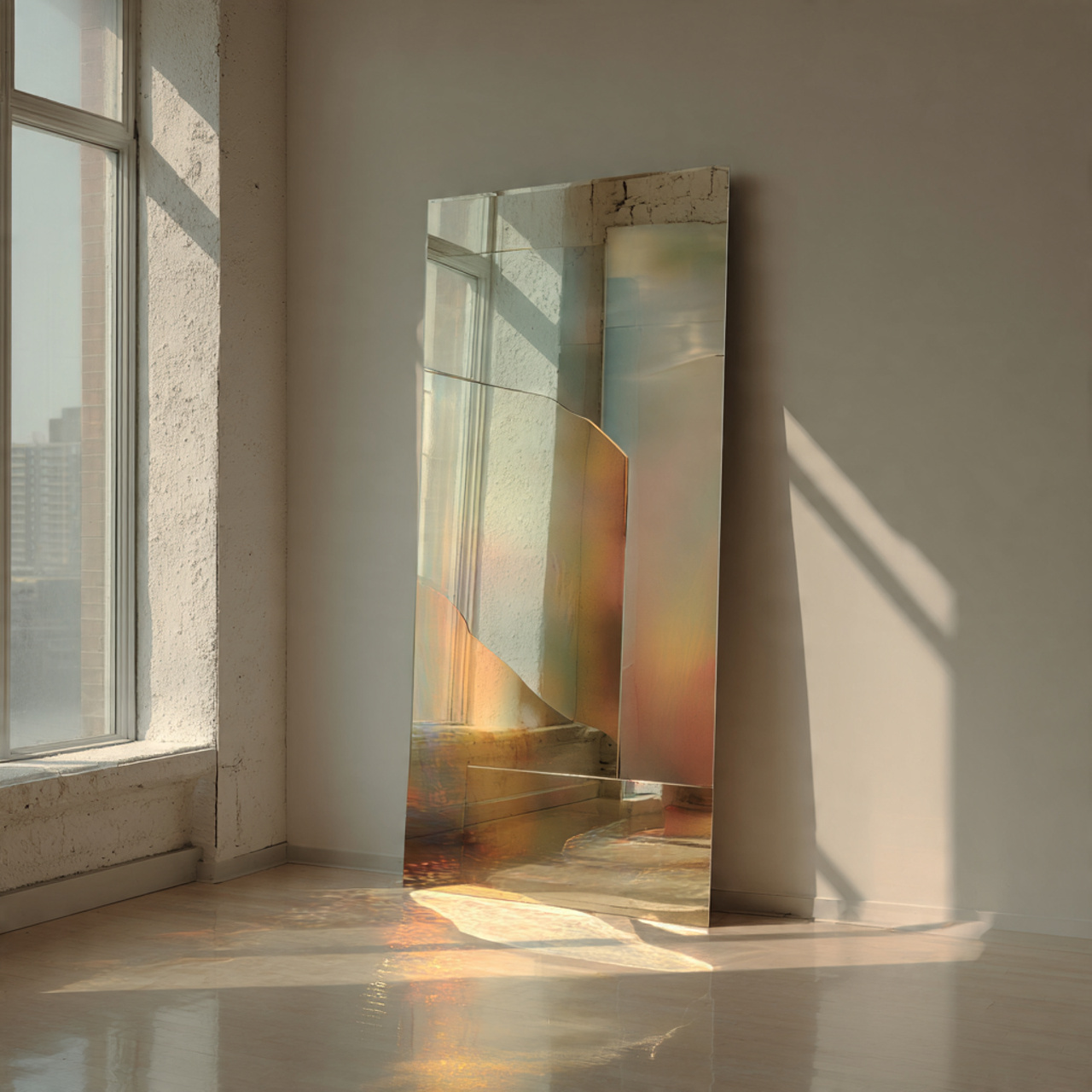
Soft Reflection
Antique or lightly tinted mirrors reduce glare while adding warmth.
Best for:
Bedrooms and calm zones.
How to Choose Mirrors That Enhance Light and Space
Mirrors should amplify light and depth without visual distraction. Use this guide to select mirrors that feel intentional, balanced, and long-lasting.
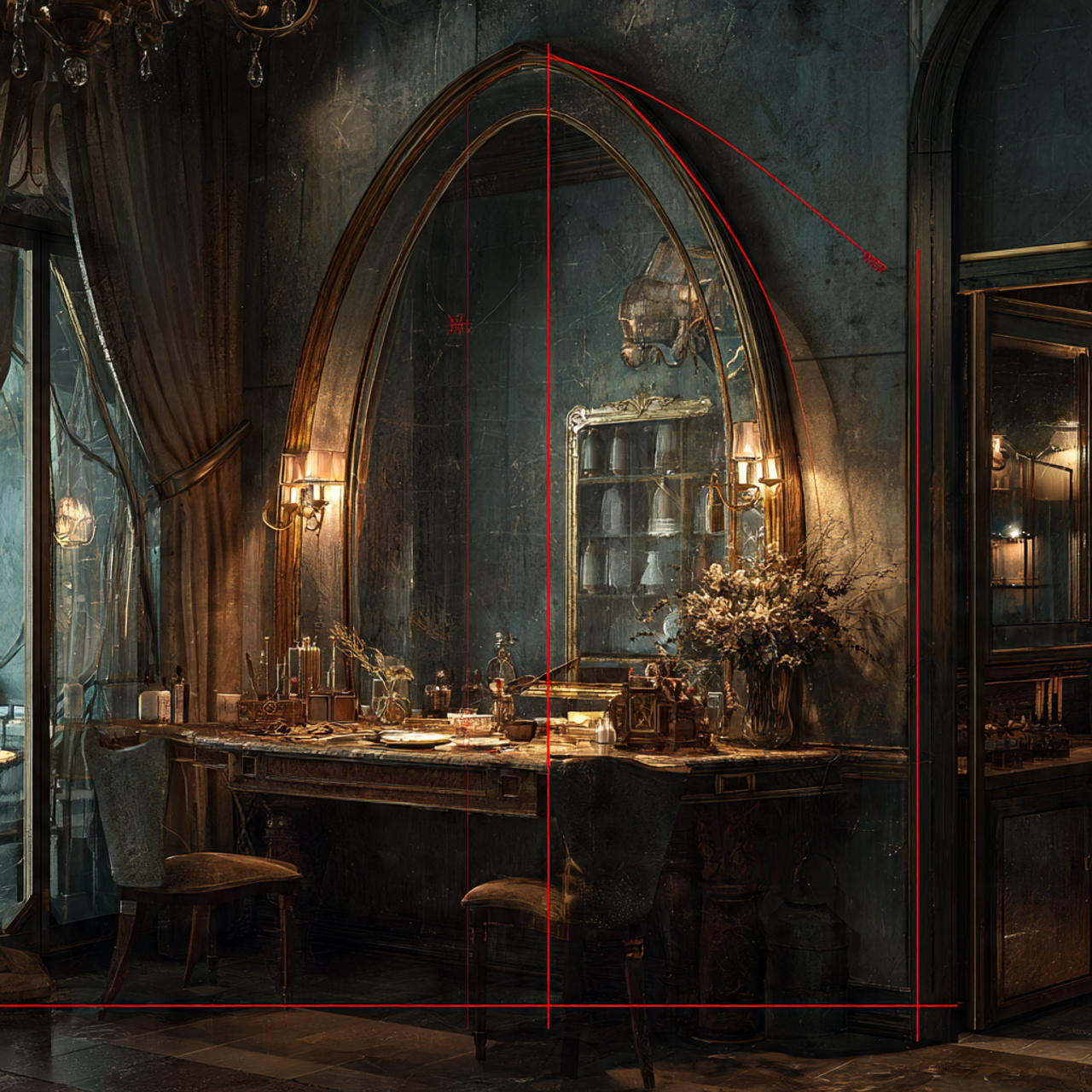
Mirror Size & Proportion
Mirror size determines how much light and space it adds.
- Look for:
- One large mirror per wall or surface
- Proportions that align with furniture below
- Height that visually extends the room
Avoid:
Small mirrors floating alone
Multiple tiny mirrors fragmenting space
Glass Quality & Reflection
Reflection quality matters more than decoration.
- Look for:
- Clear, distortion-free glass
- Subtle tint only if warmth is desired
- Even reflection without warping
Avoid:
Wavy or distorted reflections
Highly glossy finishes that cause glare
Frame Style & Finish
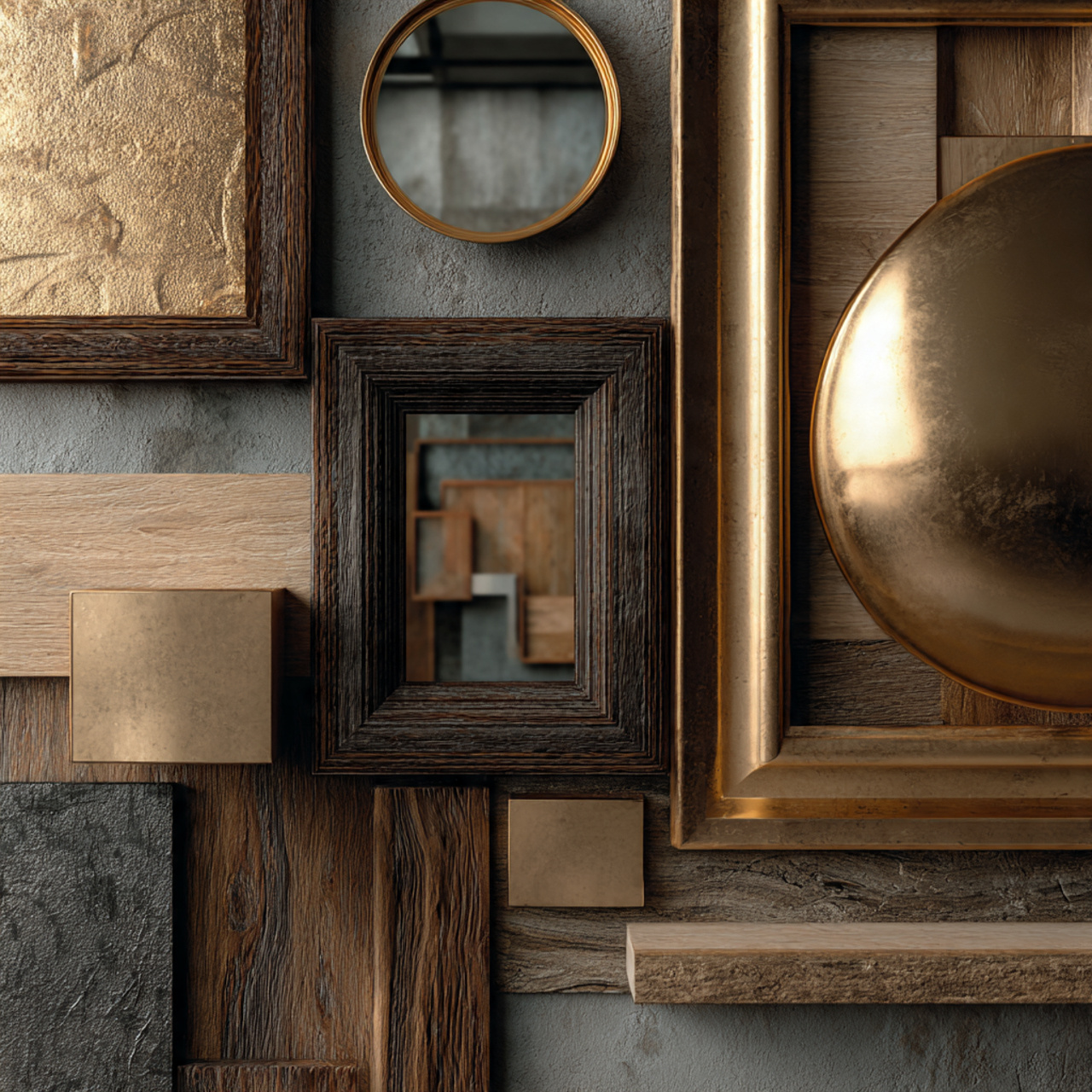
Frames should support architecture, not dominate it.
- Look for:
- Thin metal, wood, or minimal profiles
- Finishes that match nearby elements
- Calm, timeless shapes
Avoid:
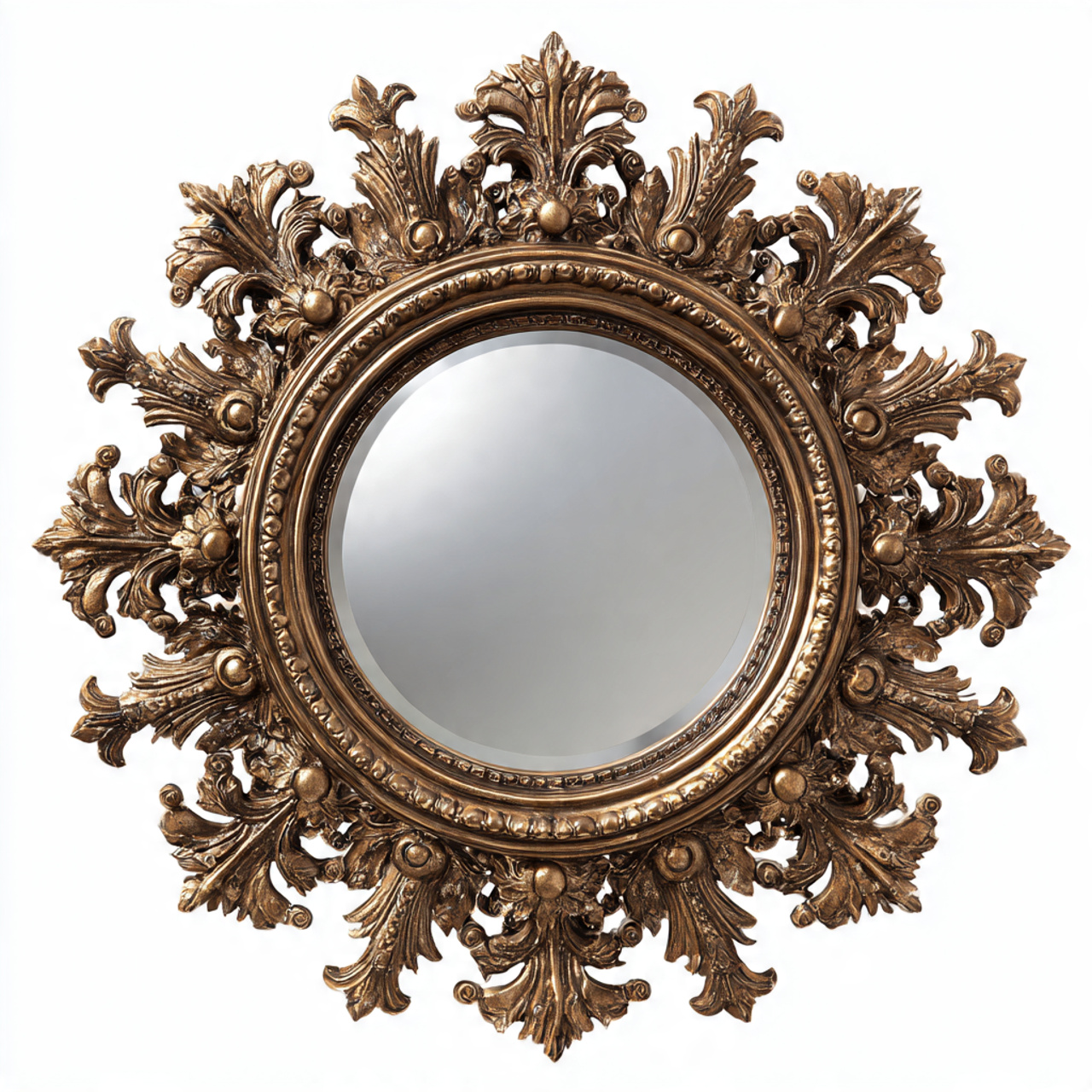
Oversized or ornate frames
High-shine finishes that draw attention
Placement & Mounting Safety
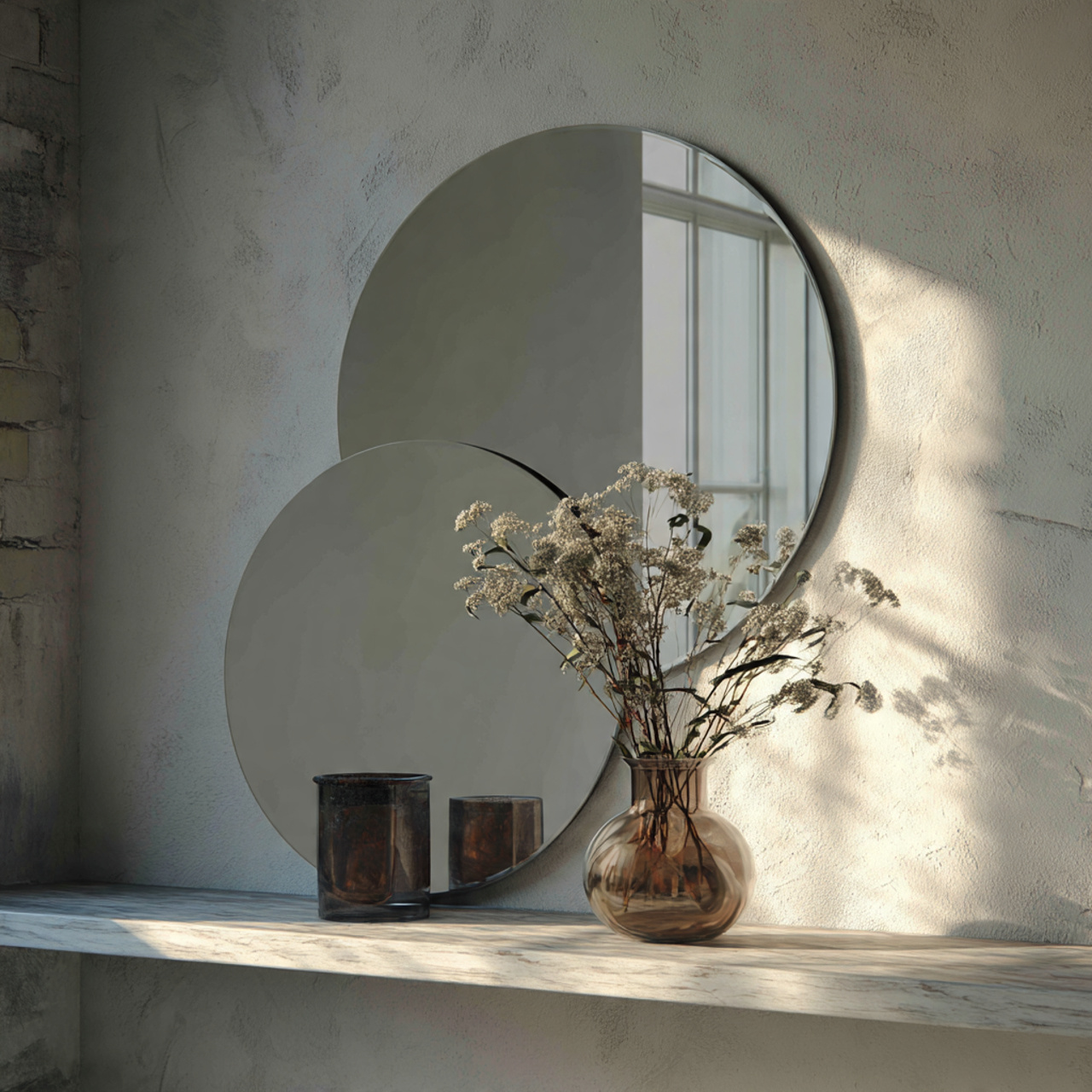
Correct mounting ensures both impact and longevity.
- Look for:
- Secure wall anchors or professional mounting
- Placement aligned with eye level or furniture
- Stable positioning away from doors or traffic
Avoid:
Leaning mirrors in high-traffic areas
Poorly secured mounts
Ravnora Curated Mirrors & Reflective Accent Picks
Mirrors and reflective accents selected to brighten rooms, add depth, and balance proportions—without glare or clutter.
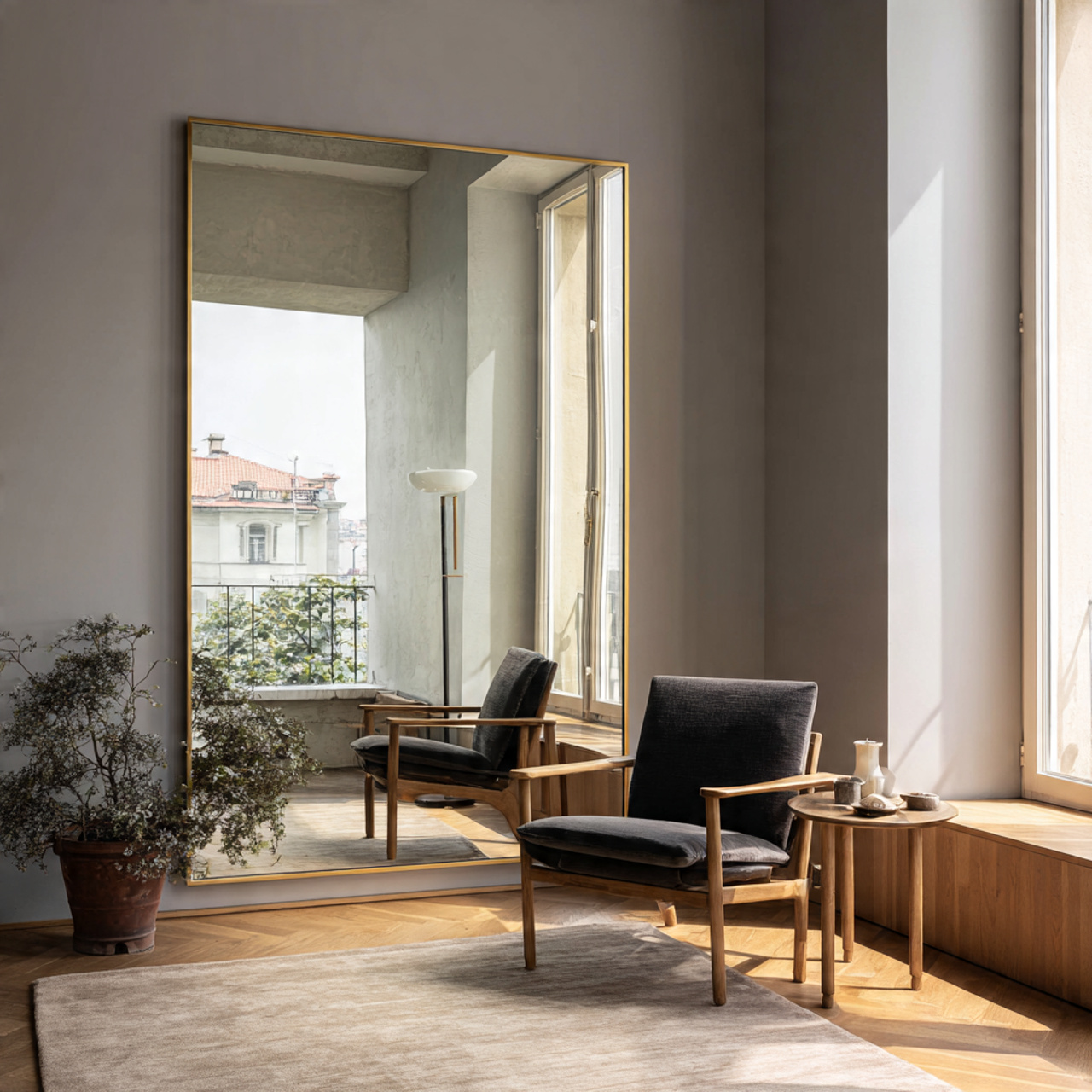
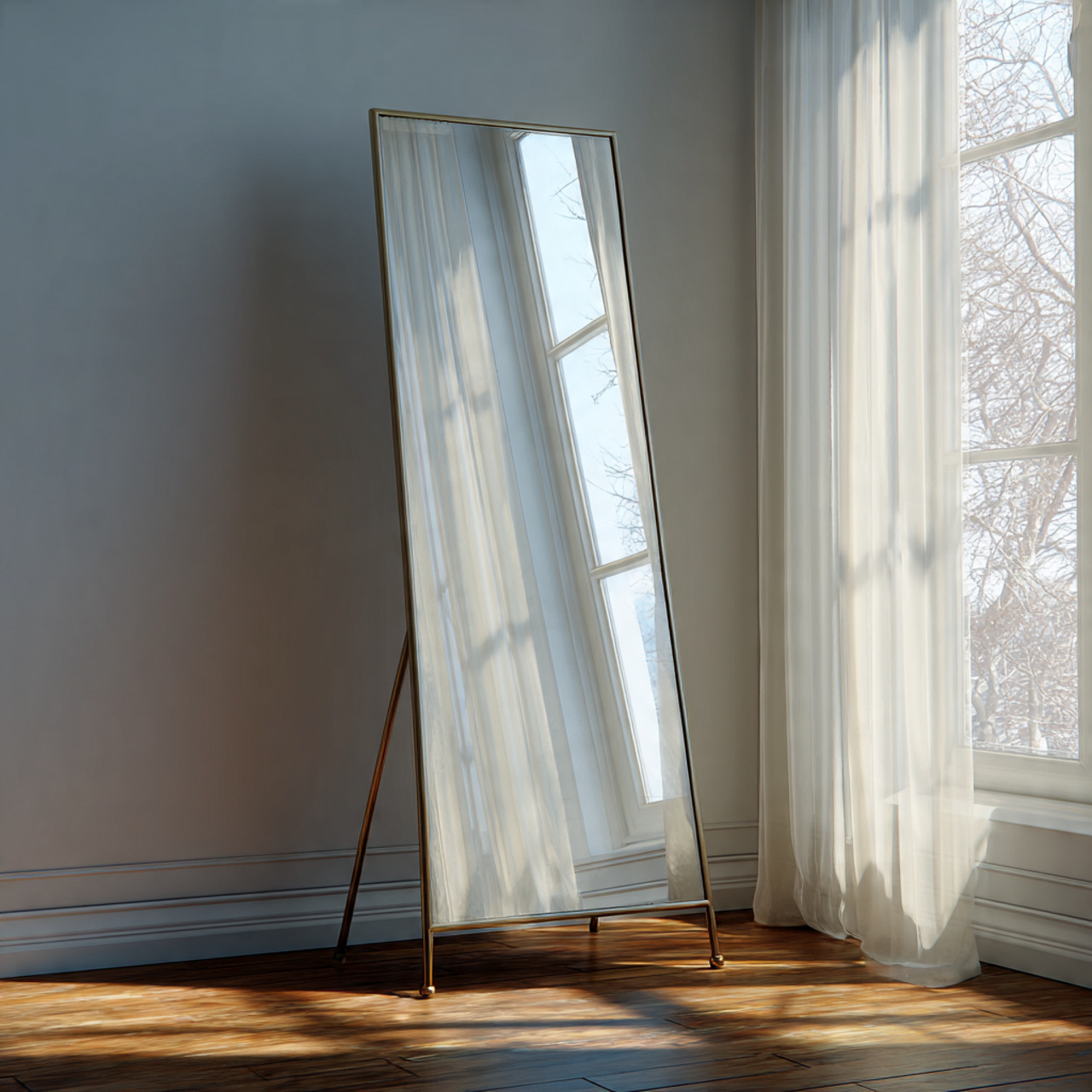
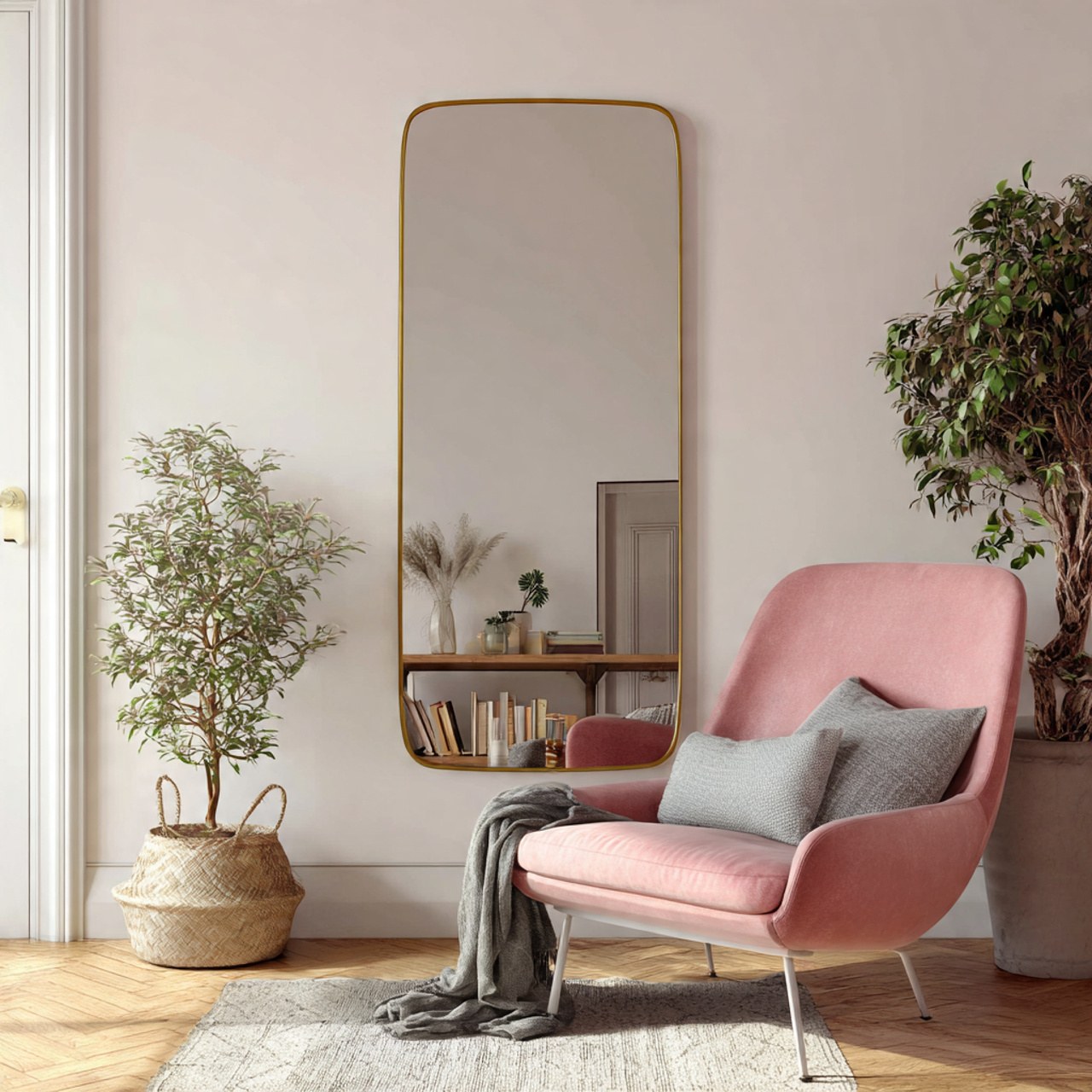
BLOCK 1 — LARGE LIGHT-AMPLIFIERS
Oversized mirrors that multiply daylight and open up rooms.
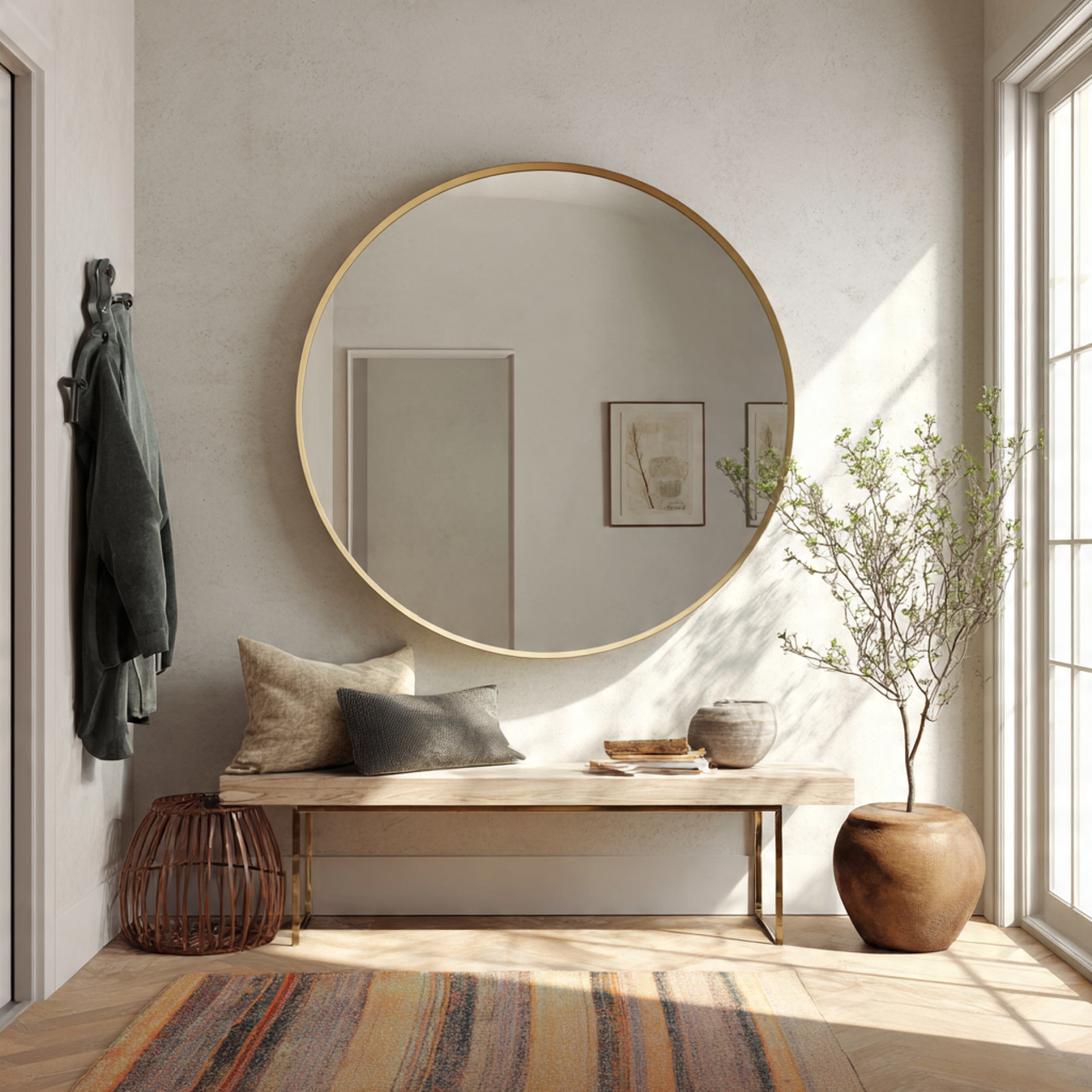
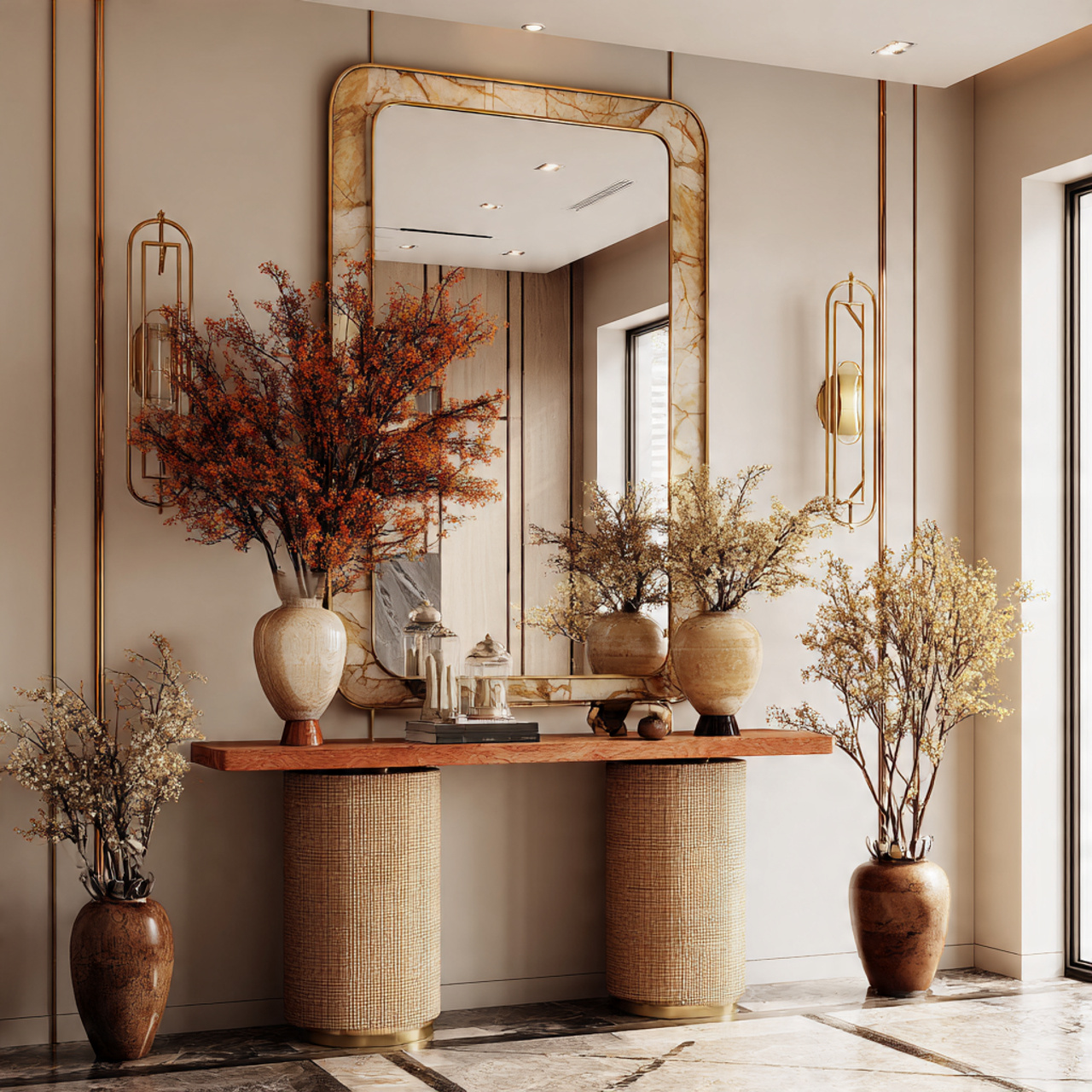
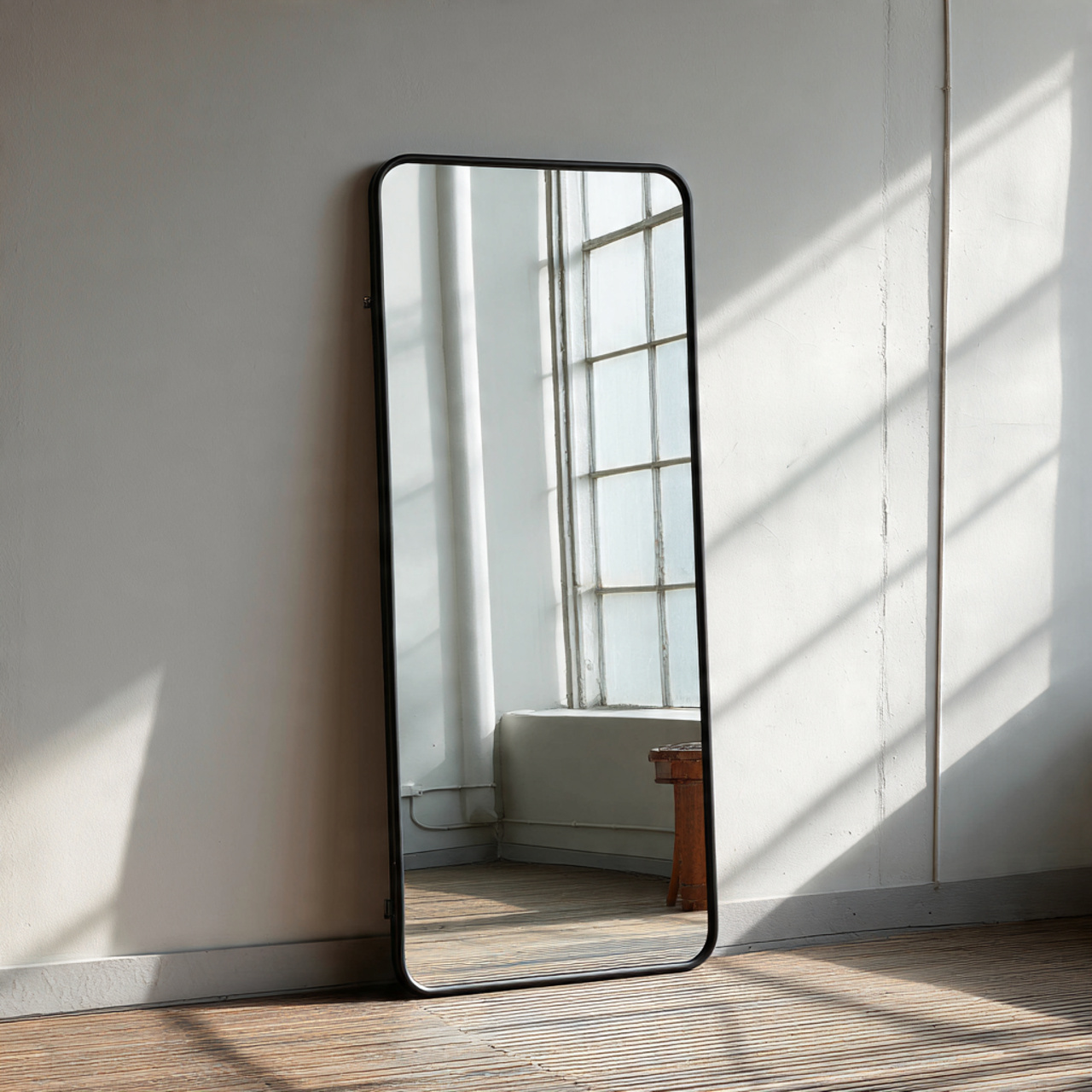
BLOCK 2 — ENTRYWAY & HALLWAY MIRRORS
Mirrors that brighten transition spaces instantly.
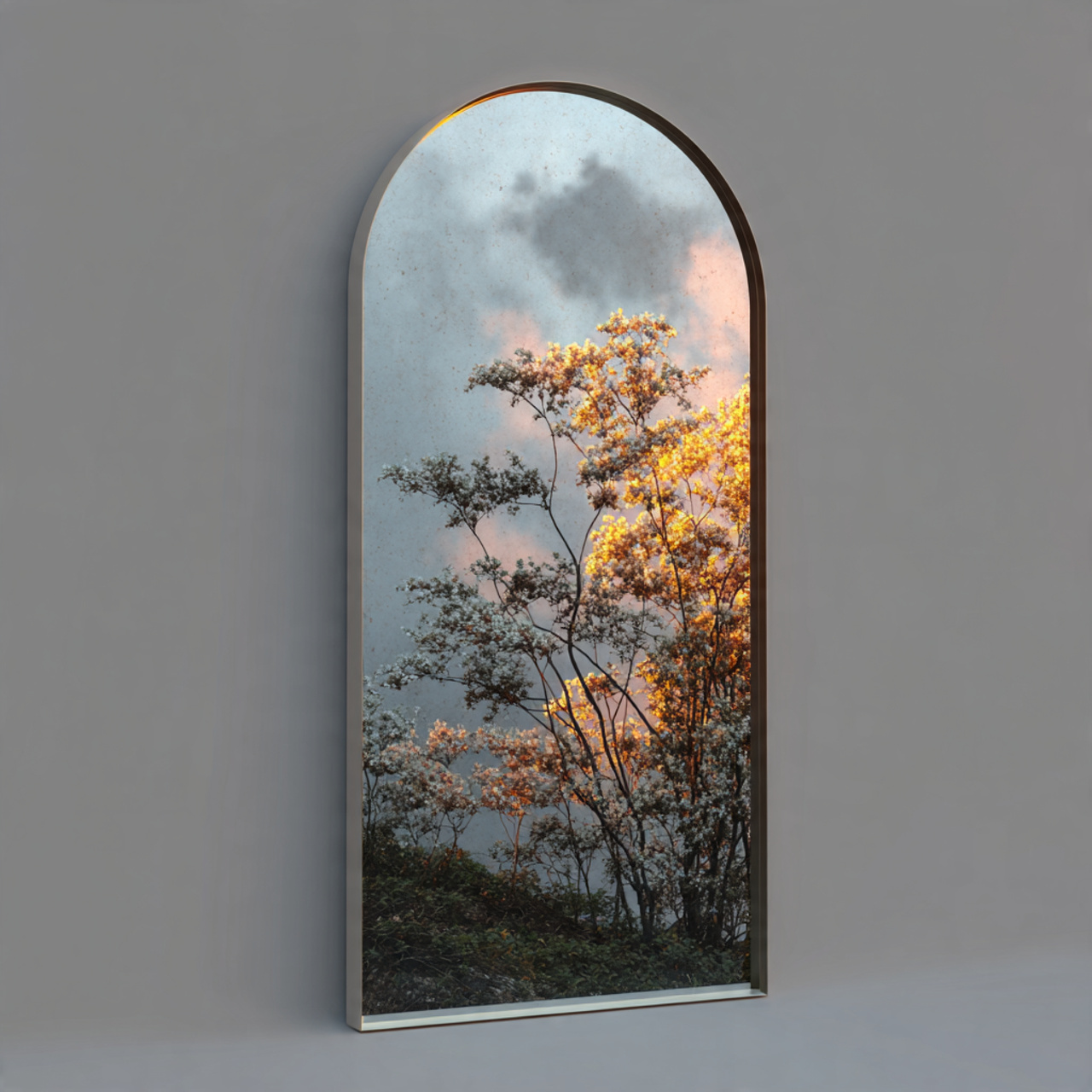
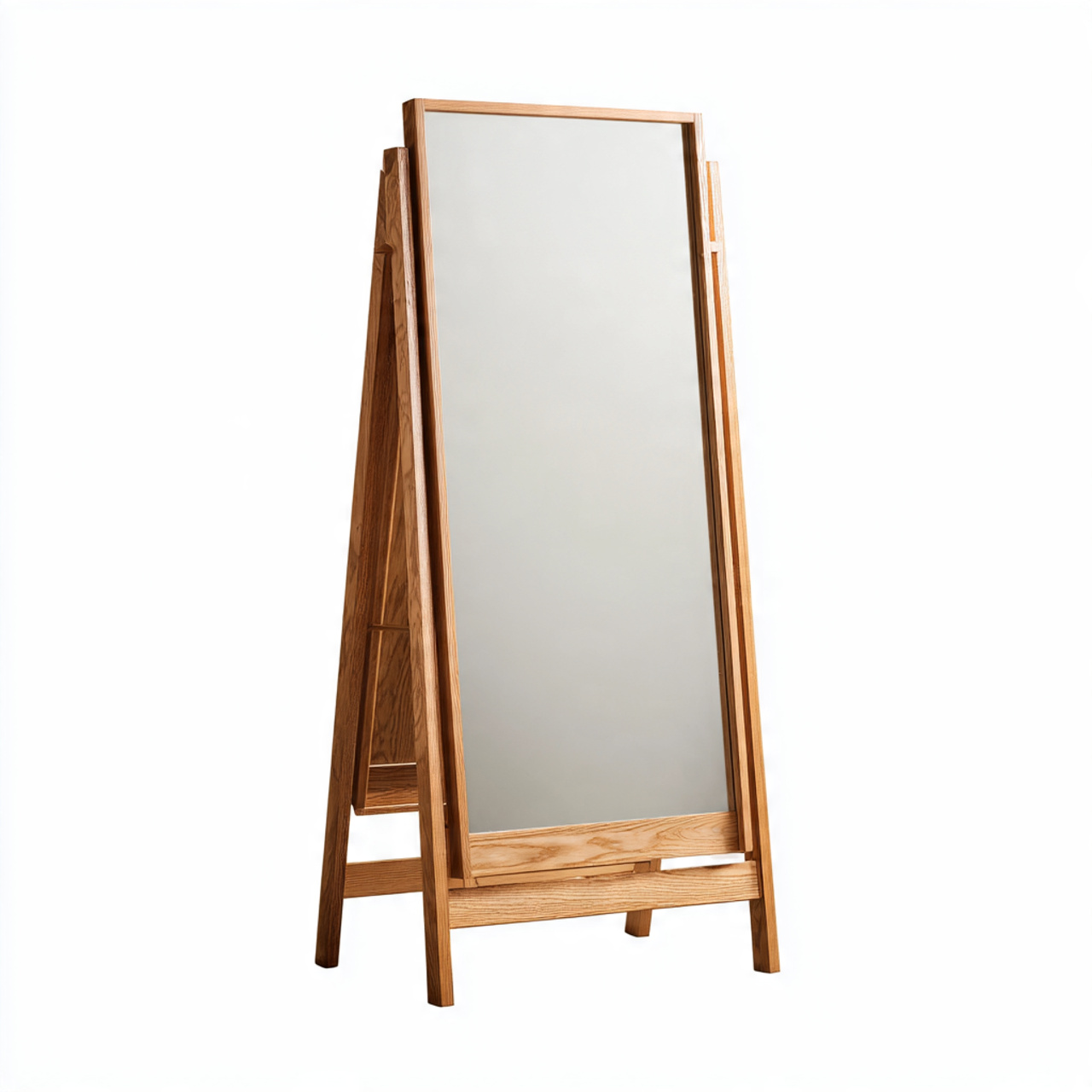
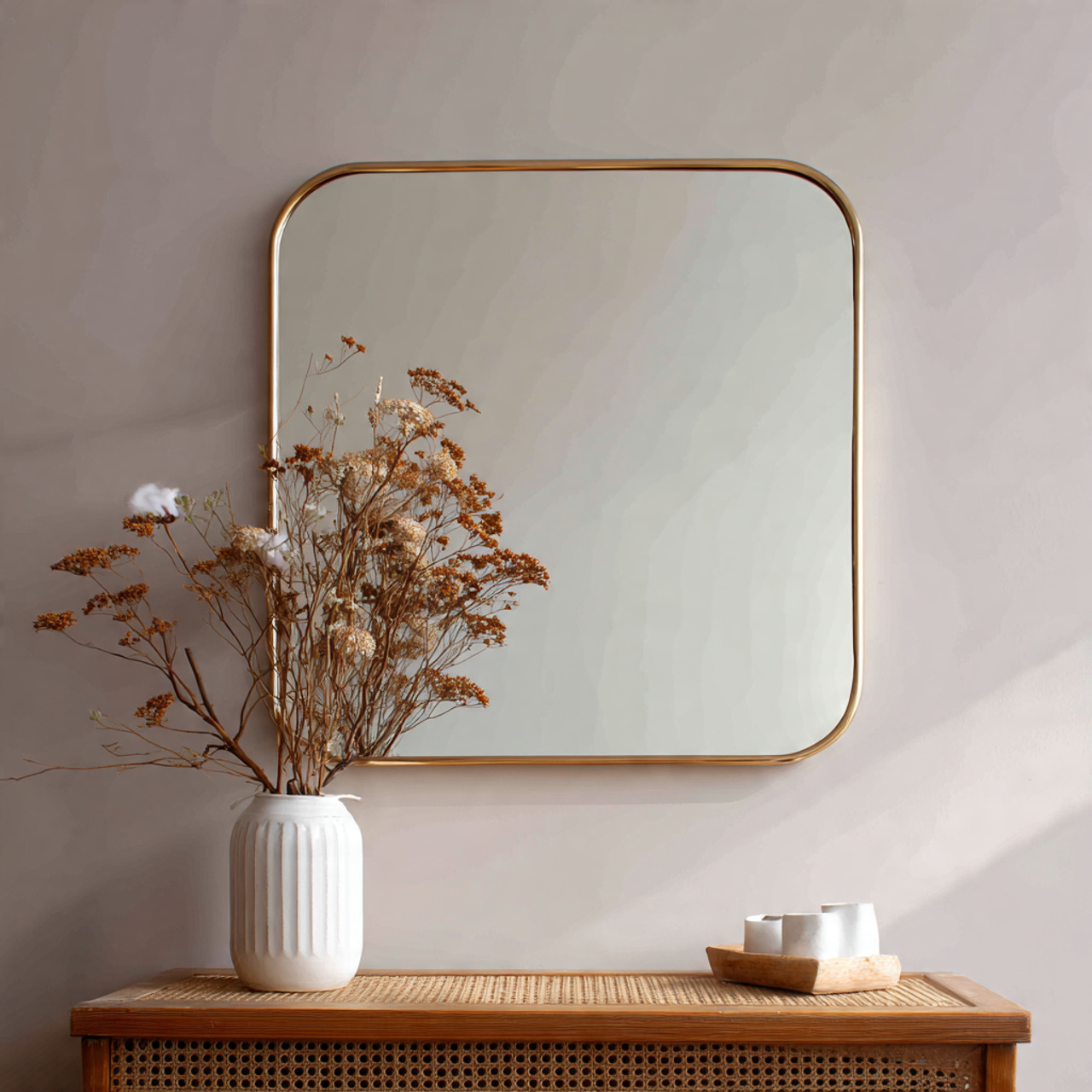
BLOCK 3 — ARCHITECTURAL & STATEMENT FRAMES
Mirrors that echo architectural lines without visual heaviness.
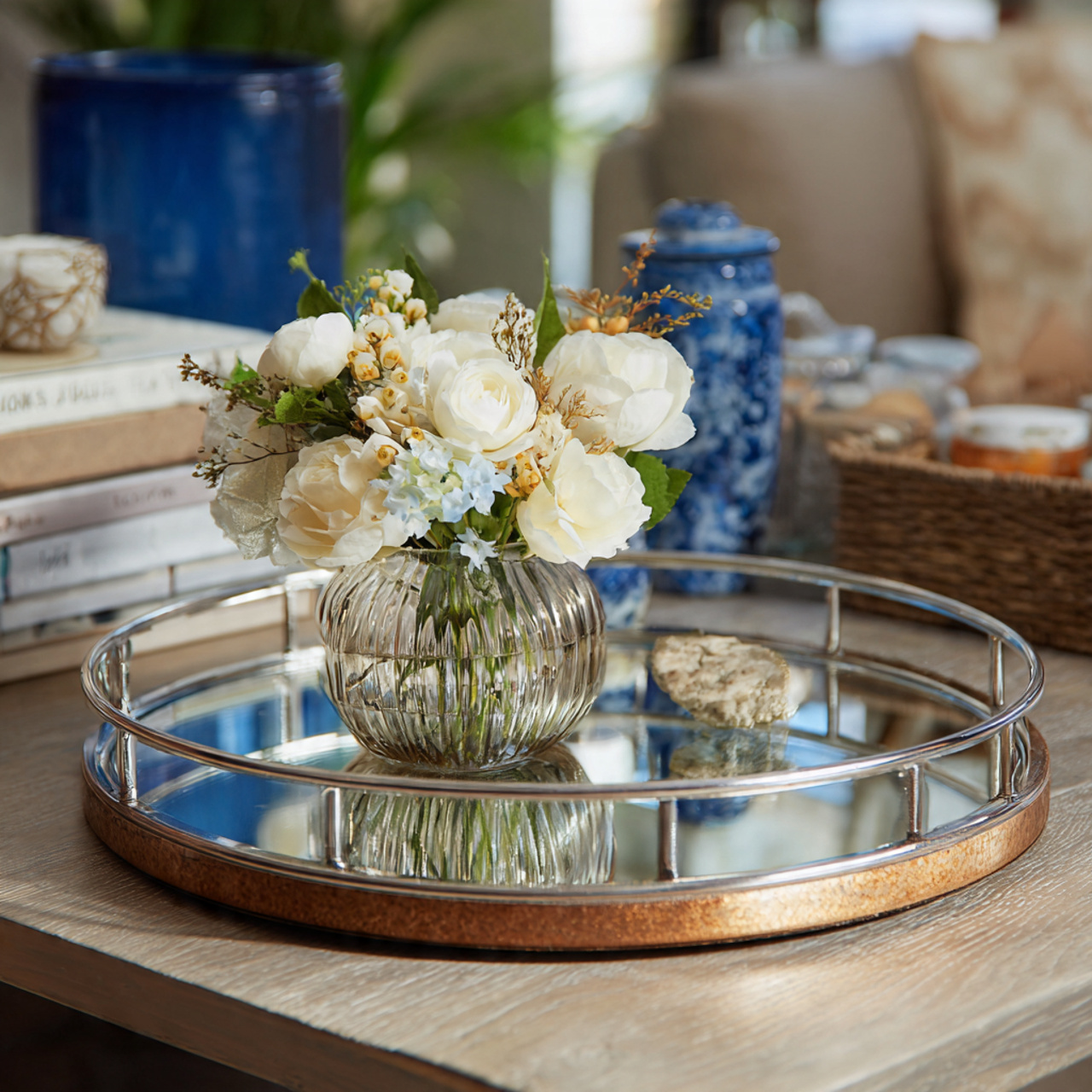
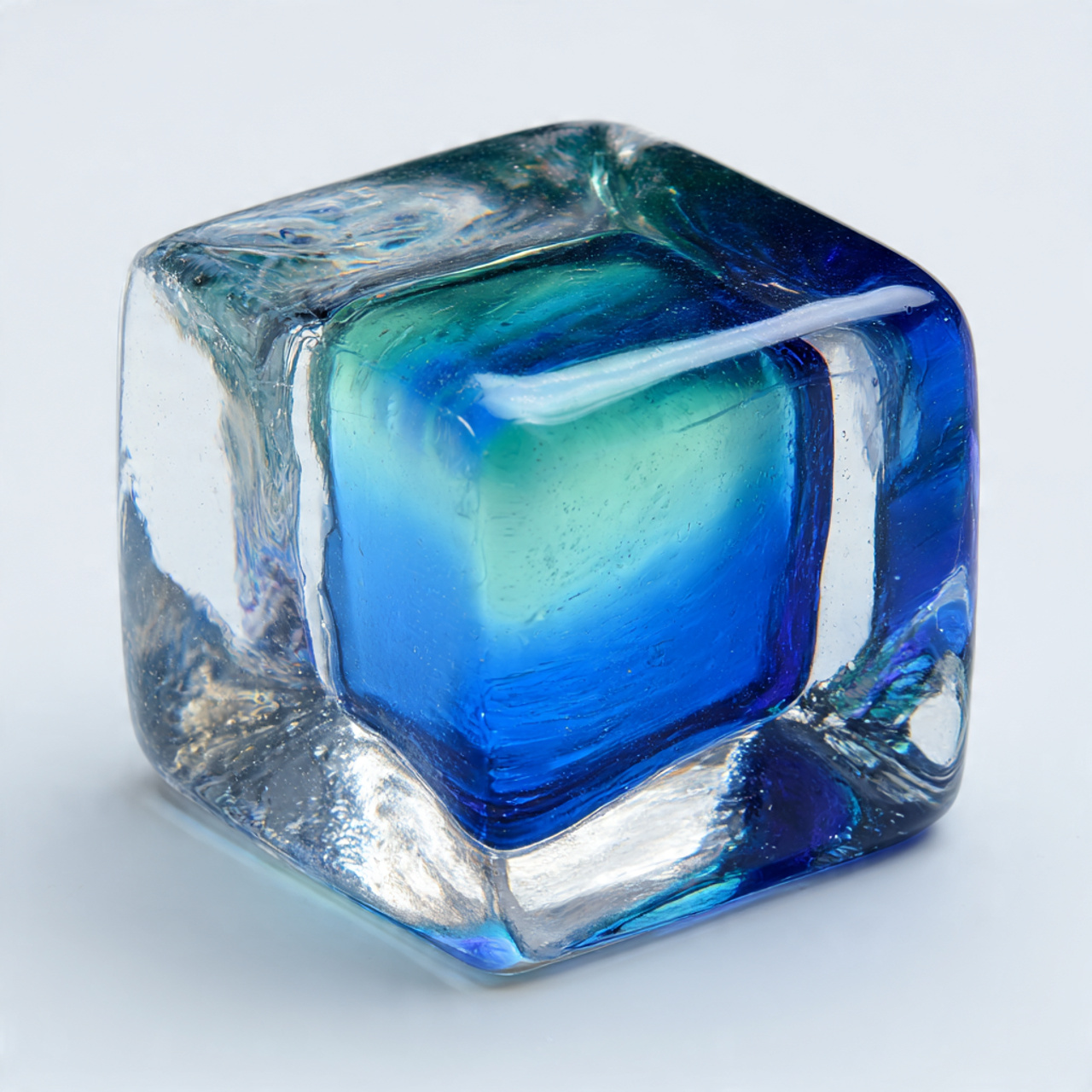
BLOCK 4 — SUBTLE REFLECTIVE ACCENTS
Supporting reflective elements that add glow, not glare.
Common Mirror & Reflection Mistakes to Avoid
Most mirror issues come from poor placement and scale. Avoid these for brighter, calmer spaces.
❌ Mirrors too small — weak impact.
Fix: Go larger.
❌ Reflecting clutter — visual noise.
Fix: Reflect light or open space.
❌ Overly ornate frames — distraction.
Fix: Choose simple profiles.
❌ Poor mounting — safety risk.
Fix: Secure properly.
❌ Too many mirrors — fragmented look.
Fix: One strong focal mirror.
Save This Mirror Placement Guide for Later
Mirror placement affects light and space. Save this guide to revisit reflection rules and curated picks.
Explore More Light-Focused Ideas
Living Room Decor Ideas —
brighter seating zones
Explore →
Bedroom Decor Ideas —
calm reflective accents
Explore →
Lighting & Lamps —
layered brightness
Explore →
Curtains & Window Styling —
natural light control
Explore →
Get Light & Reflection Notes
Occasional guidance on mirror placement, light flow, and proportion—no noise.
Mirrors & Reflective Accents FAQs
Q1: Where should mirrors be placed for best light?
Opposite or adjacent to windows.
Q2: Is bigger always better with mirrors?
Usually, yes—within proportion.
Q3: Do tinted mirrors reduce light?
Slightly, but can add warmth.
Q4: Are framed or frameless mirrors better?
Both work; keep frames simple.
Q5: How many mirrors should one room have?
One primary mirror is usually enough.
Reflect Light with Intention
Well-placed mirrors enhance light, depth, and calm.
Use this guide to open spaces without visual clutter.