
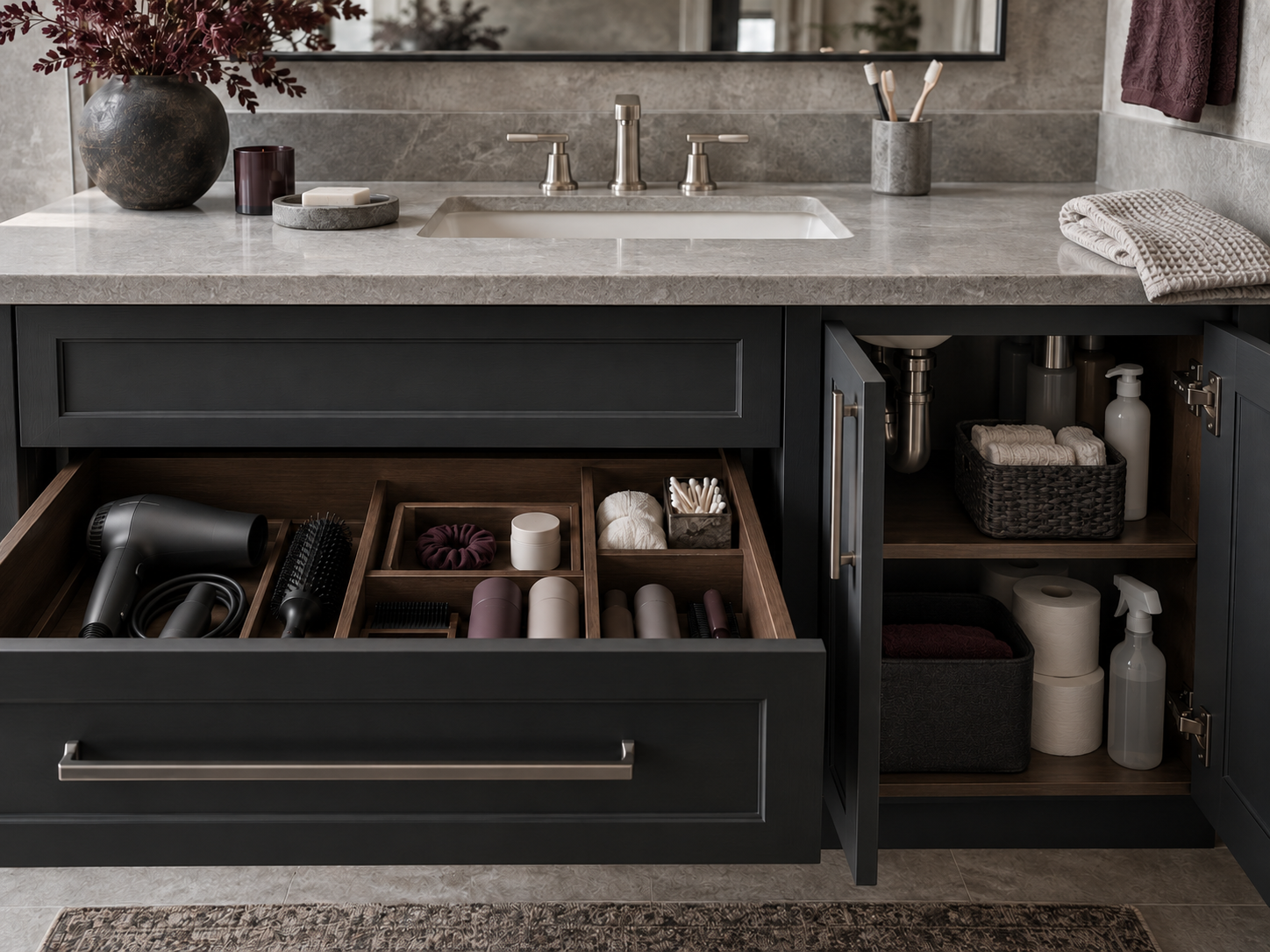
 HIDE · THE VOLUME
Let the messy categories disappear.
Hair tools, backups, paper goods and cleaning supplies should work hard below the visual field.
Bathroom Storage →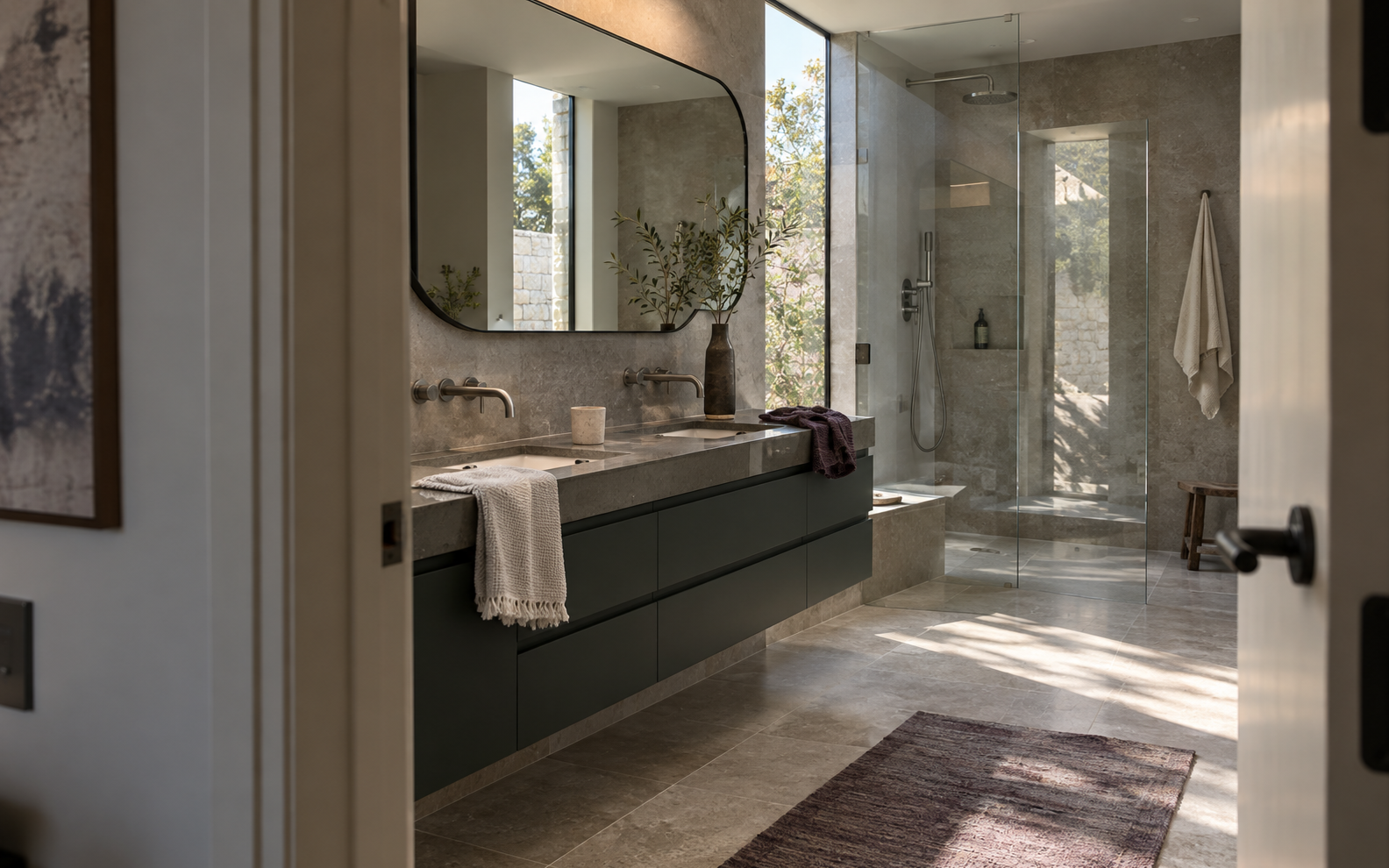
If the mirror feels wrong, the counter never stays clear, the shower keeps collecting things, or the room simply feels tight, begin where the friction happens closest to you.
Find where yours breaks downBathrooms are small enough that every mistake sits close to the body. Face, hand, water and footprint reveal which layer deserves attention first.
If reflection feels cramped, dim or visually weak, solve proportion and face-level light before adding anything else.
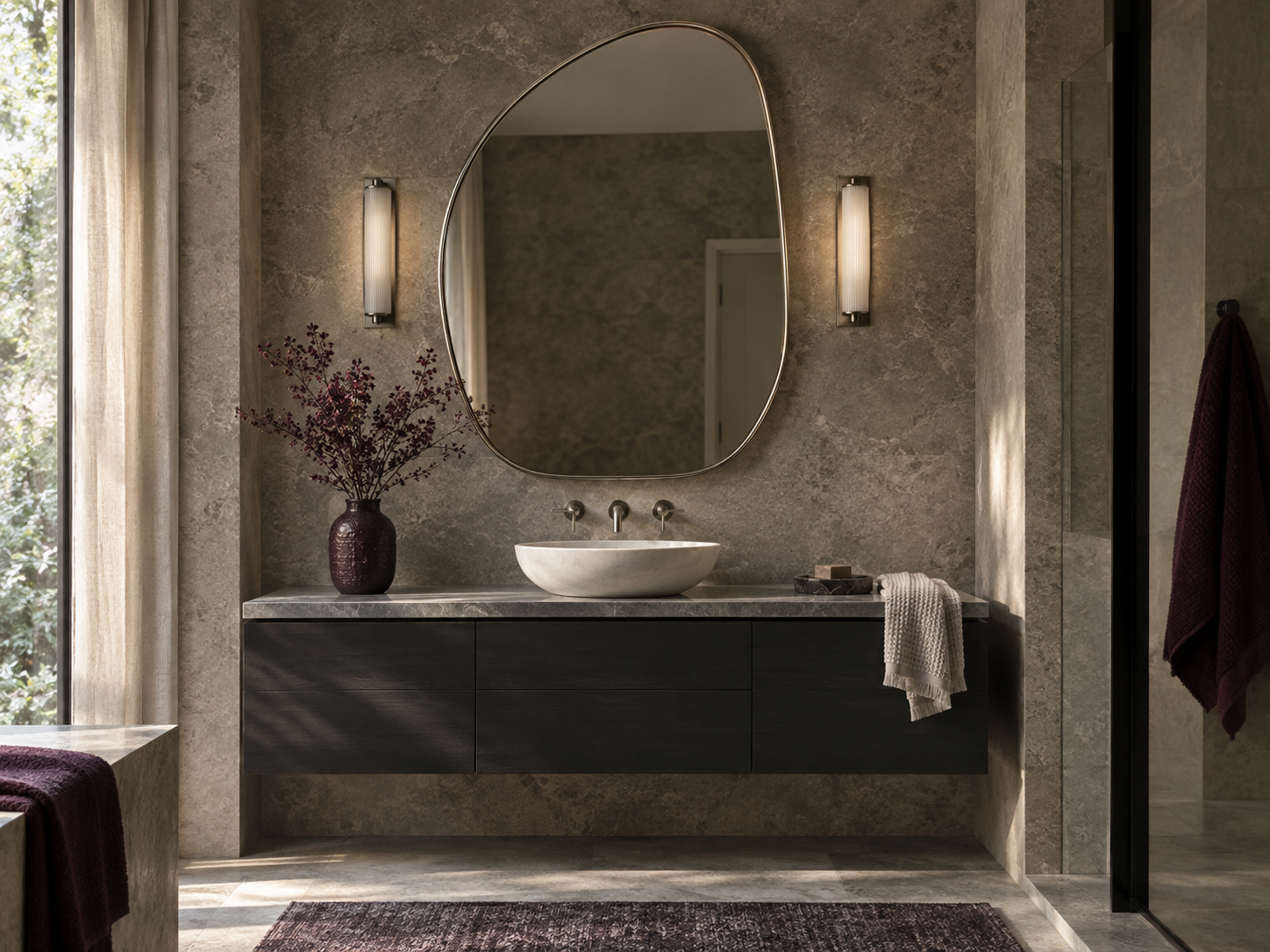
A beautiful mirror can still feel wrong when its scale or illumination fights the face. Resolve the wall as one composition, not two purchases.
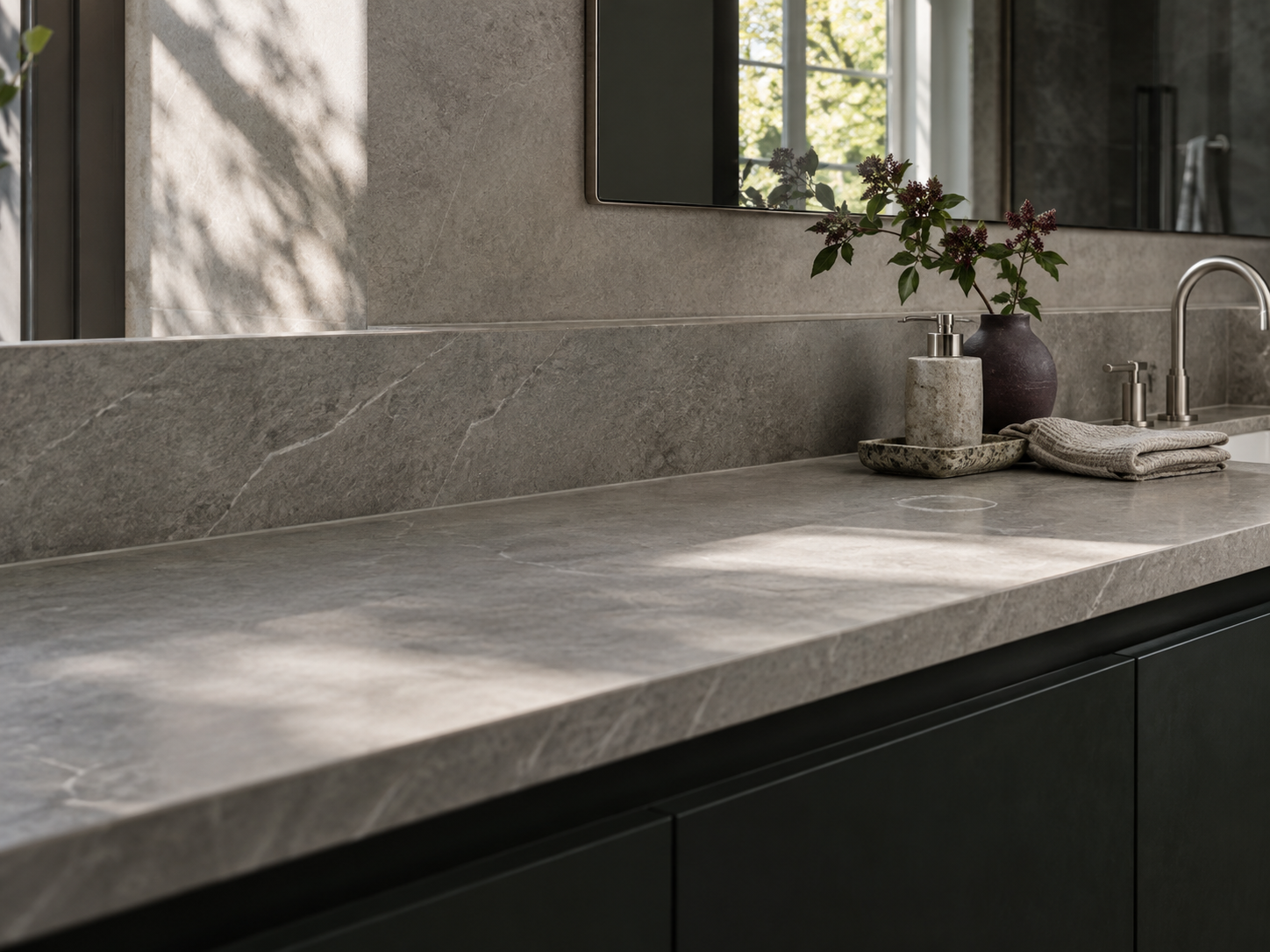
The vanity does not need to be bare. It needs a clear margin around the few things that genuinely earn the surface.
The useful distinction is not open versus closed. It is what deserves to stay visible and what should disappear when the routine is finished.
HIDE · THE VOLUMEHair tools, backups, paper goods and cleaning supplies should work hard below the visual field.
Bathroom Storage → SHOW · THE PAUSE POINTS
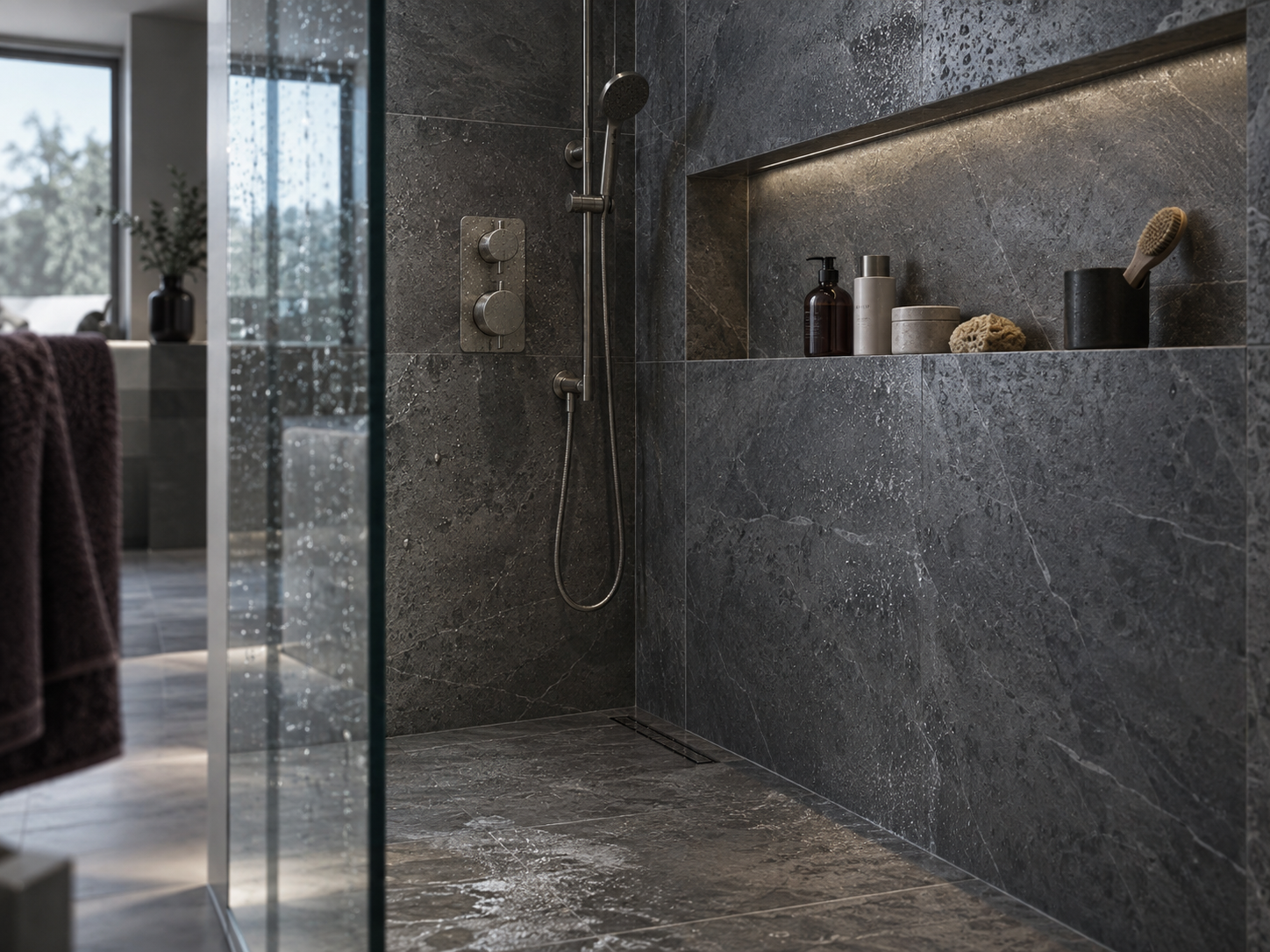
Open niches feel calm when useful objects have negative space around them and hidden storage carries the volume.
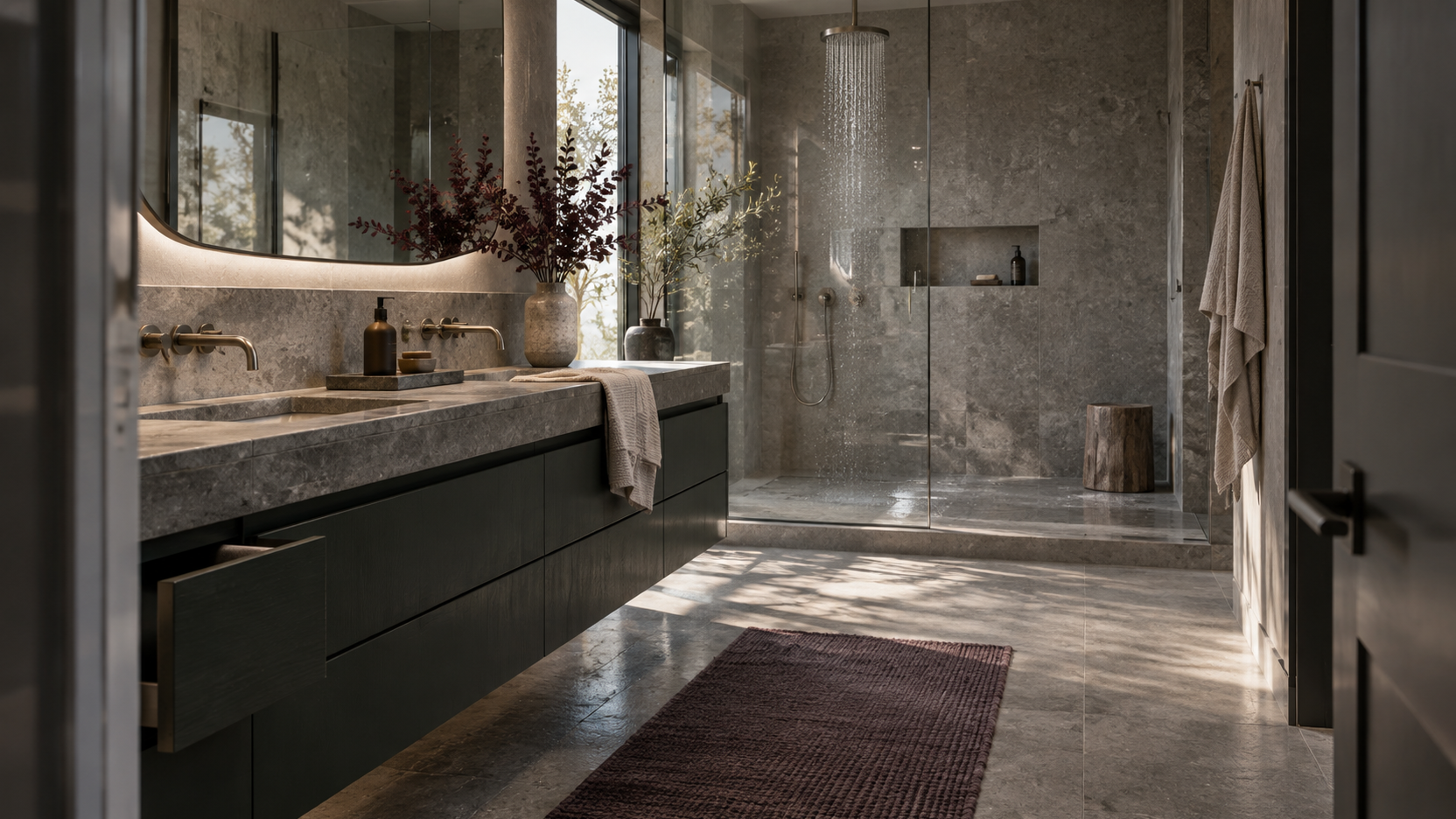
Bathroom Shelving →When bottles migrate to the floor or across multiple ledges, the shower has lost its working zone.
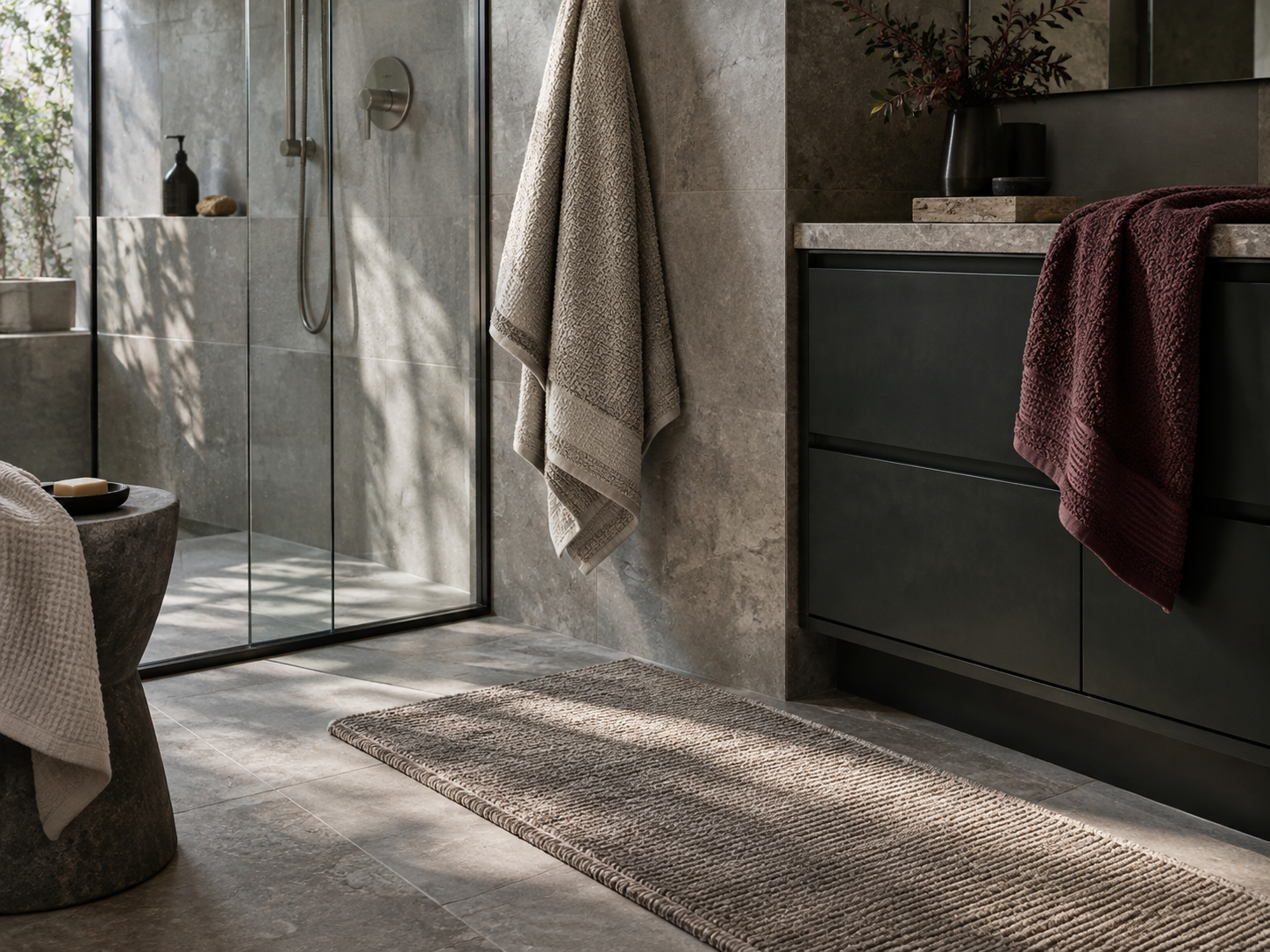
Towels and floor textiles do more than decorate. They control the handoff from wet to dry and soften a room built mostly from hard surfaces.
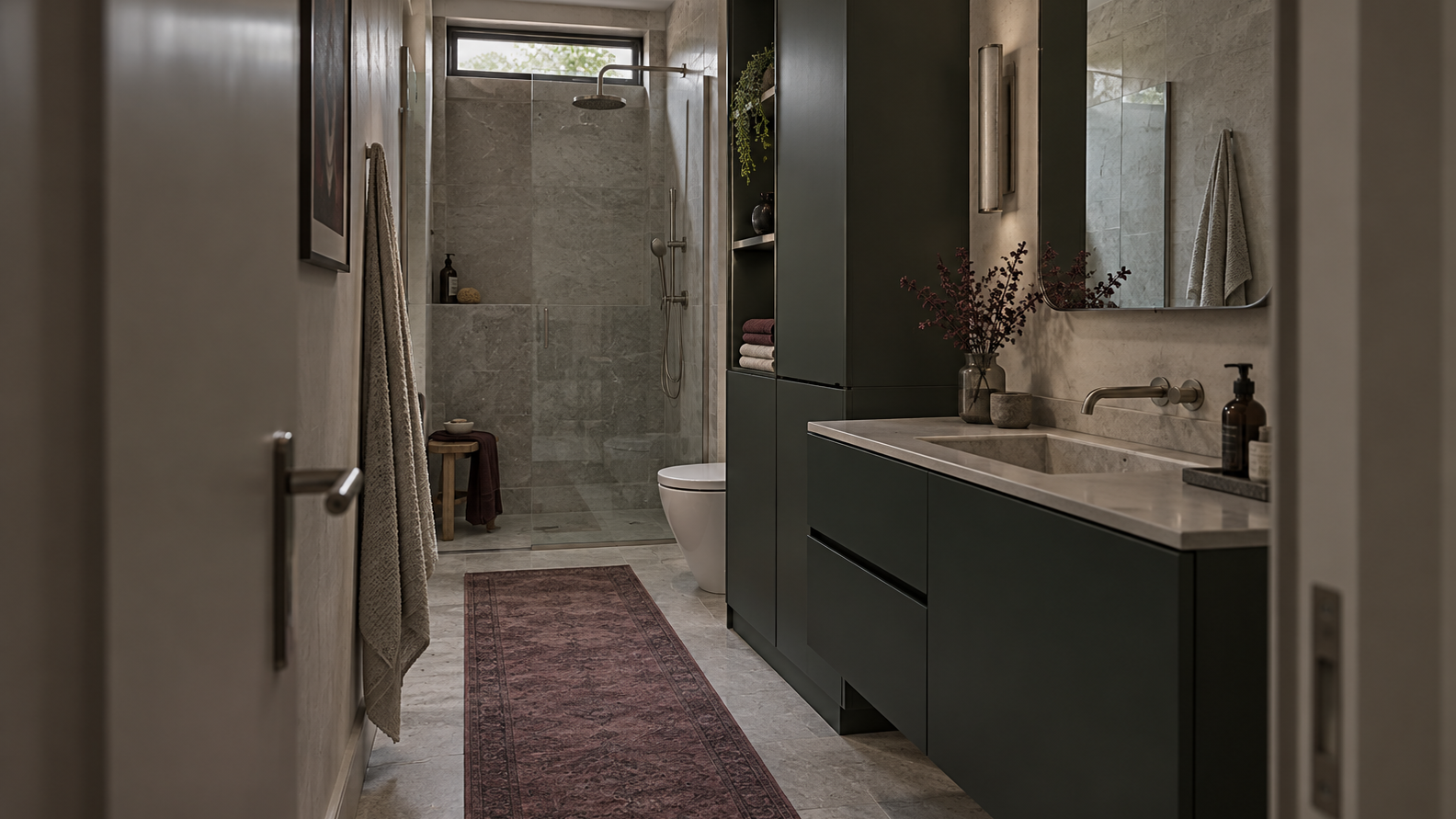
When every inch matters, push capacity upward, keep the vanity visually light and protect the route through the room.
Eight specialist guides, grouped by the physical distance where the bathroom starts to fail.

Tomorrow morning, notice the first moment that makes you reach twice, move something, or step around something. Start there.