
SMALL SPACE ORGANIZATION
Small Space Organization Ideas for a Home That Feels Bigger
Use vertical storage, hidden storage, under-bed systems, wall hooks, and multi-use furniture to organize small rooms without making them feel crowded.
- No extra floor space needed
- Best for apartments & small rooms
- Storage ideas with product potential
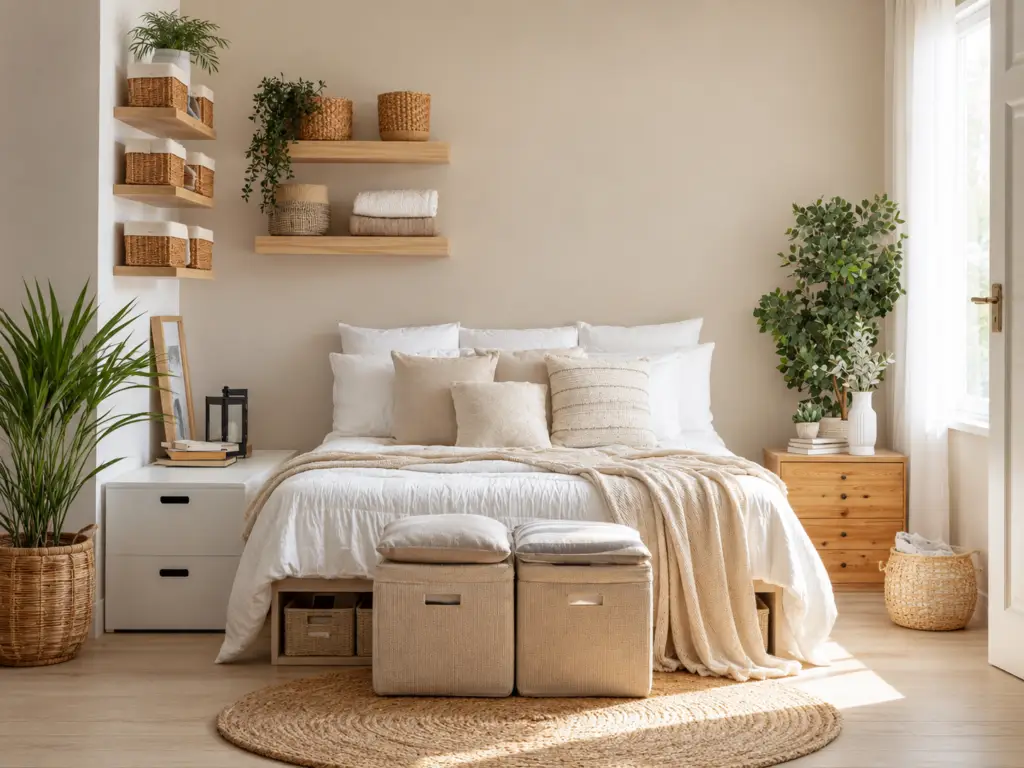
SMART RULE
Use height before floor space.
BEST STORAGE
Choose pieces that solve two problems.
SMART RULE
Use height before floor space.
BEST STORAGE
Choose pieces that solve two problems.
SMALL SPACE GUIDE
Choose the Small-Space Storage Problem You Want to Fix First
Jump to the storage idea that matches your space — whether you need more wall storage, hidden storage, under-bed storage, or room-specific organization for small homes.
Start with the rules if your space feels crowded, or jump directly to the room or storage type you need most.
SMALL HOME RULES
The Rules That Make a Small Home Feel Organized
Small-space organization works best when every item has a clear limit, a smart home, and a storage zone that does not steal valuable floor space.
TOP RULE
Do not organize around storage products. Organize around space limits
Buy storage only after you know what needs to stay, where it should live, and how often you use it.
01
EDIT FIRST
Remove before you organize
Small spaces become easier to manage when you reduce duplicates, unused items, and anything that no longer supports daily life.
02
USE HEIGHT
Go vertical before going wider
Wall shelves, tall cabinets, hooks, and stacked bins create storage without taking over valuable walking space.
03
HIDE CLUTTER
Choose closed storage for busy items
Use baskets, lidded boxes, storage benches, and cabinet organizers for items that make a room look visually crowded.
04
DAILY ACCESS
Keep everyday items closest
Store daily-use items within easy reach and move seasonal, backup, or rarely used items higher, lower, or farther away.
05
MULTI-USE
Buy storage that does more than one job
In small homes, the best products work twice — like ottomans with storage, benches with baskets, and carts that move between rooms.
06
LEAVE SPACE
Do not fill every shelf and basket
A small home feels calmer when storage has breathing room. Leave some empty space so systems stay easy to maintain.
Small-space rule: every storage product should either save floor space, hide visual clutter, or make daily access easier.
VERTICAL STORAGE IDEAS
Use Your Walls Before You Use More Floor Space
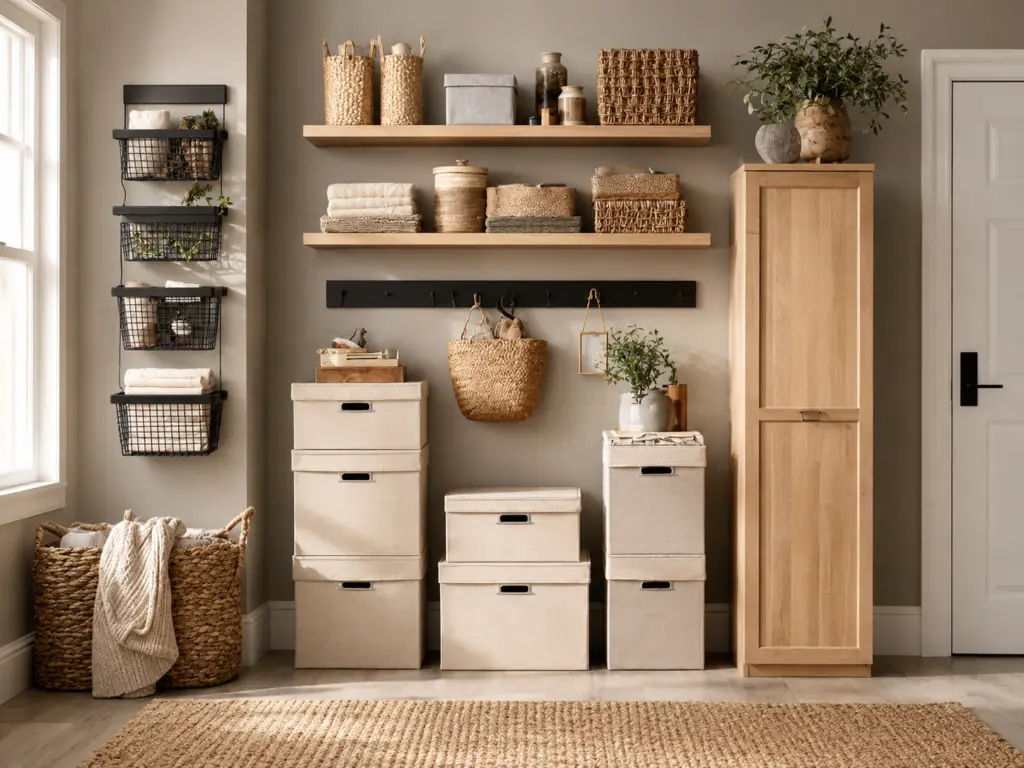
Vertical storage helps small rooms stay open by moving everyday items onto walls, shelves, hooks, and tall organizers instead of spreading them across counters and floors.
SPACE RULE
Use the wall before adding another floor unit.
Shelves, hooks, and tall organizers keep small rooms open.
SPACE RULE
Use the wall before adding another floor unit.
Shelves, hooks, and tall organizers keep small rooms open.
Install shelves above unused zones
Use floating shelves above desks, sofas, toilets, entry tables, and beds to store items without stealing floor space.
Use hooks, rails, and wall baskets
Hooks and wall baskets work well for bags, towels, cleaning tools, accessories, keys, and daily grab-and-go items.
Choose stacked storage over wide storage
Tall drawers, tiered organizers, and stacked bins give more capacity while keeping the room footprint small.
Use slim vertical cabinets in dead corners
A narrow cabinet or tower shelf can turn awkward corners, bathroom gaps, and kitchen edges into useful storage.
PRODUCT DIRECTION
Look for vertical products that add storage upward, not outward.
HIDDEN STORAGE IDEAS
Hide Visual Clutter Without Losing Easy Access
Hidden storage keeps small rooms calm by moving busy everyday items into benches, ottomans, baskets, cabinets, and closed storage zones.
DESIGN RULE
If it looks busy, hide it. If you use it daily, keep it close.
The best hidden storage reduces visual noise without making daily routines harder.
BEST FOR SMALL ROOMS
Use furniture that hides storage in plain sight
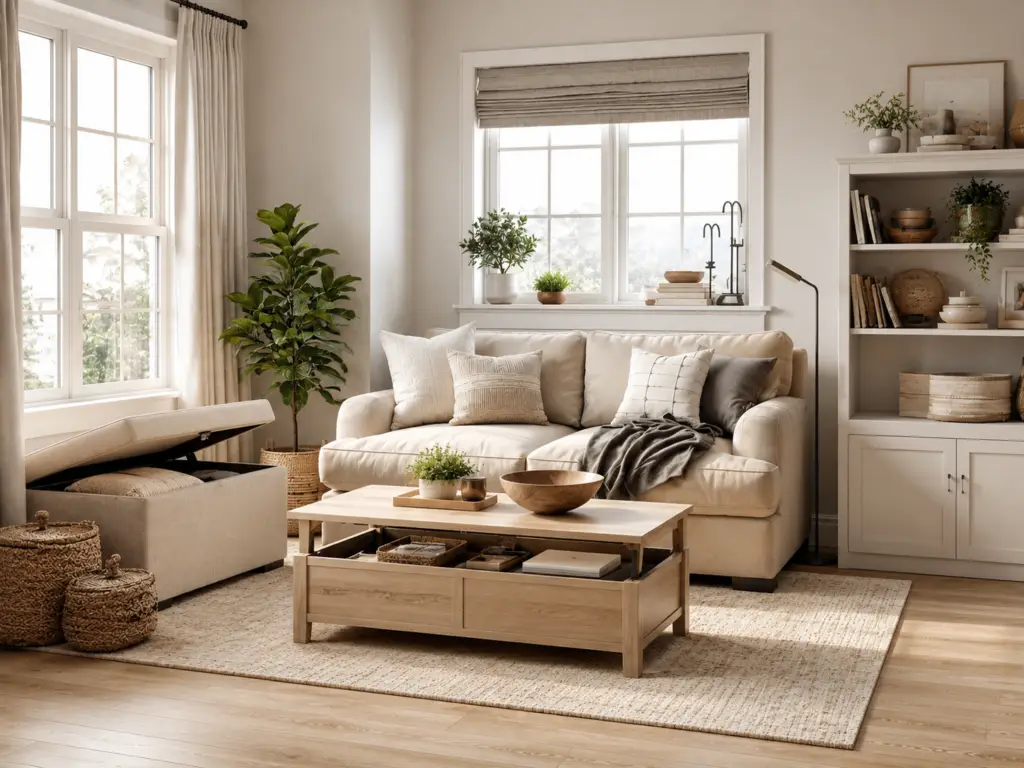
Storage benches, ottomans, and lift-top tables are ideal for small homes because they add function without adding visual clutter.
Use lidded baskets for visual clutter
Lidded baskets are ideal for blankets, toys, cords, shoes, pet items, and anything that makes a room look busy.
Choose ottomans with hidden compartments
A storage ottoman works as seating, a footrest, a coffee table, and a hidden storage zone in one compact piece.
Hide shoes and bags inside benches
A storage bench keeps entryways cleaner by giving shoes, bags, scarves, and daily items a closed home near the door.
Use lift-top tables for daily items
Lift-top coffee tables can hide remotes, chargers, notebooks, games, and small living room items without adding extra furniture.
BUYING RULE
In small spaces, hidden storage should replace clutter — not create another bulky object.
UNDER-BED STORAGE
Turn the Space Under Your Bed Into Hidden Storage
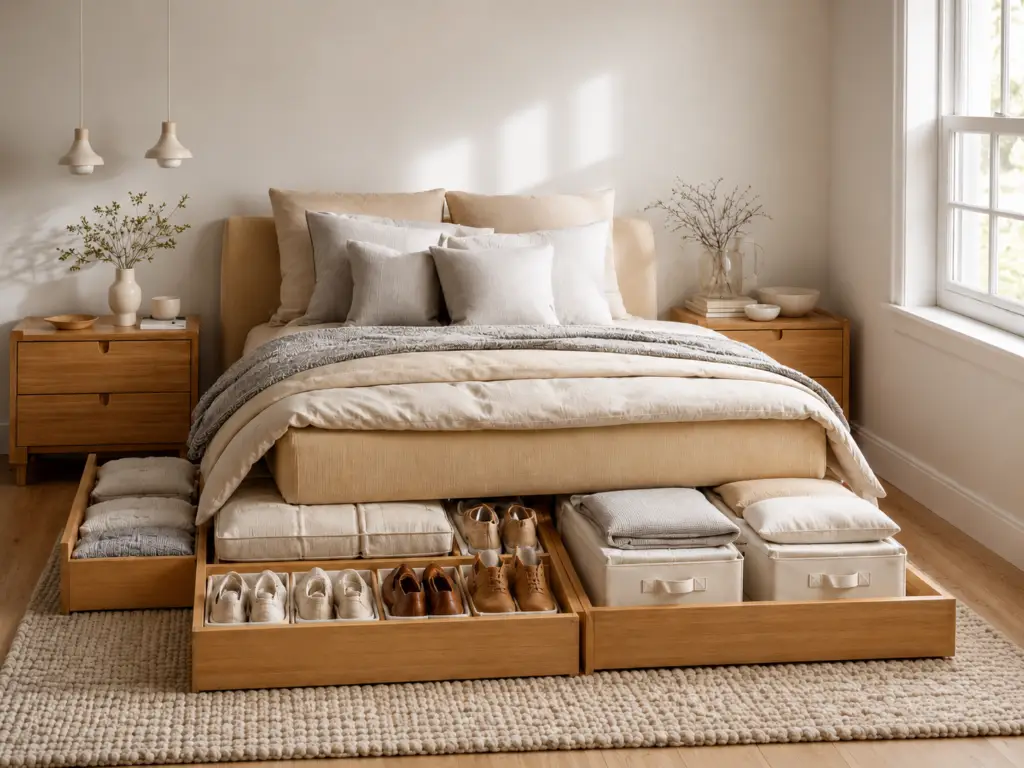
Under-bed storage is one of the smartest ways to organize small bedrooms, apartments, and guest rooms because it adds storage without adding another visible furniture piece.
Store low-use items low, and keep daily items easier to reach.
Under-bed storage works best for items you do not need every hour: extra bedding, seasonal clothes, shoes, bags, gift wrap, and backup household items.
BEST USE
Use under-bed zones for overflow, not daily clutter.
BEST USE
Use under-bed zones for overflow, not daily clutter.
Use flat bins for seasonal clothes
Low-profile plastic bins work well for sweaters, off-season clothes, backup linens, and items you want protected from dust.
Best for: seasonal clothing + linens
Choose soft bags for bedding
Fabric under-bed bags are useful for blankets, duvets, pillows, and soft items that can compress slightly.
Best for: blankets + extra bedding
Use divided organizers for shoes
Divided under-bed organizers keep shoes visible, paired, and protected without taking over closet floor space.
Best for: shoes + accessories
Pick rolling drawers for frequent access
Rolling under-bed drawers are easier to pull out, making them better for items you access weekly instead of seasonally.
Best for: frequent-use storage
SHOPPING DIRECTION
Choose under-bed storage based on access: bins for seasonal items, rolling drawers for items you use more often.
DOOR & WALL STORAGE
Use Doors and Walls to Clear Floors, Counters, and Corners
Door and wall storage helps small homes stay functional by moving everyday items onto hooks, rails, baskets, racks, and slim hanging systems instead of leaving them on open surfaces.
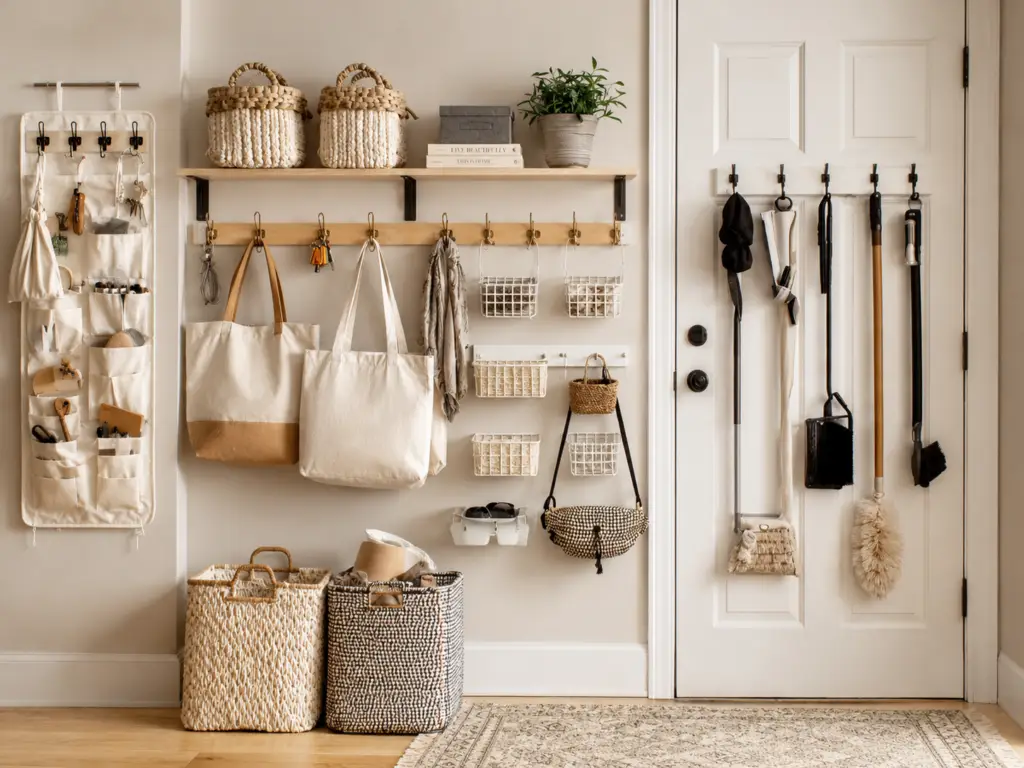
SURFACE STRATEGY
Give small items a vertical home
Hooks, rails, and over-door organizers work best for items that usually land on chairs, counters, floors, and entry tables.
If an item lands on the floor or counter every day, it probably needs a hook, rail, basket, or door organizer.
Use over-door organizers for hidden vertical storage
Use bedroom, bathroom, pantry, and closet doors for shoes, accessories, towels, cleaning items, and small overflow.
Create a drop zone with hooks and wall baskets
Add hooks for bags and jackets, then use small baskets for keys, mail, sunglasses, pet leashes, and grab-and-go items.
Move towels and toiletries off the counter
Use towel hooks, adhesive shelves, wall baskets, and over-door racks to reduce sink clutter in small bathrooms.
Use rails and magnetic storage for daily tools
Wall rails, magnetic strips, and hanging baskets help clear counters while keeping utensils, towels, and spices easy to reach.
Use door racks for hidden extra capacity
Over-door organizers are useful for shoes, toiletries, pantry items, accessories, cleaning tools, and closet overflow.
Best for: closets, bathrooms, pantries
Add hooks where clutter collects
Adhesive hooks are ideal for renters and small homes because they add storage without drilling into walls.
Best for: keys, towels, bags, tools
Use baskets for loose everyday items
Wall baskets keep small items visible but contained, making them useful for entryways, offices, bathrooms, and kitchens.
Best for: mail, toiletries, accessories
Create flexible hanging storage
Rails and peg systems are ideal when you need storage that can change as your room, routine, or product needs change.
Best for: kitchens, entryways, utility areas