
Choose Storage Products That Actually Work for Your Home
Before you buy another basket, bin, drawer divider, or label system, use this guide to understand what fits your space, what looks good long-term, and what is worth spending money on.
Measure before buying
Compare materials
Avoid common mistakes
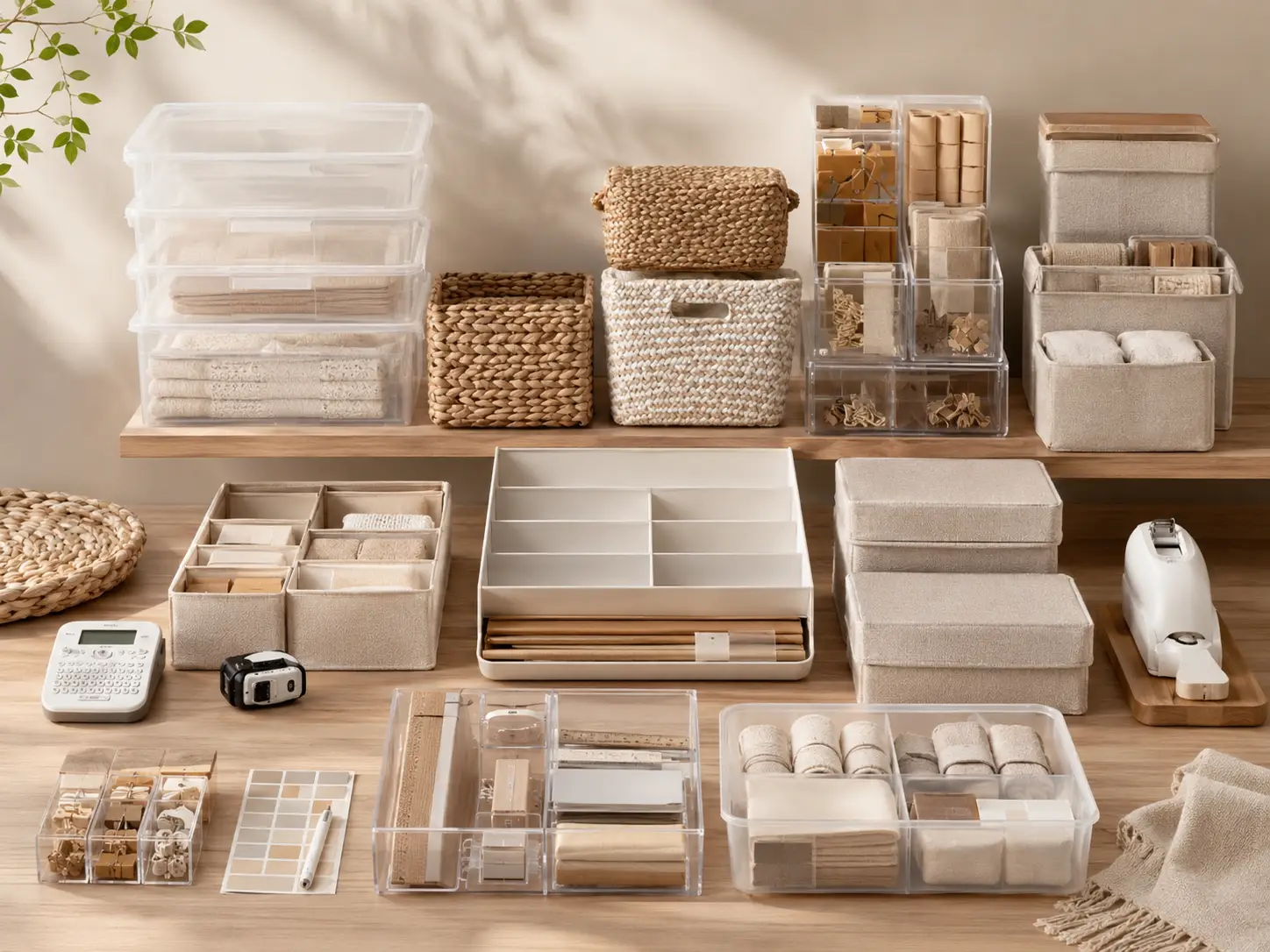
Best for small spaces
Avoid wrong-size bins
Compare clear vs opaque
Amazon checklist included
Storage Bins
Measure depth first
Drawer Dividers
Choose adjustable
Labels
Keep categories simple
Baskets
Best for visible zones
What Are You Trying to Choose?
Jump to the part of the guide that matches your buying decision — whether you are comparing bins, choosing labels, selecting drawer dividers, or checking what not to buy.
Best place to start
Start with “Choose Storage Products” if you are not sure what type of organizer your space actually needs.
Plastic vs Fabric vs Wood Storage:
Which Material Should You Buy?
Storage material affects how the product looks, cleans, lasts, and fits into the room. Plastic is practical, fabric feels soft, and wood looks more premium in visible spaces.
Plastic Storage
Plastic storage works best in areas where cleaning, visibility, moisture resistance, and durability matter more than decorative styling.
Pantry
Bathroom
Under-sink areas
Garage
Kids’ supplies
Avoid cheap thin plastic for heavy products or visible living spaces.
Choose plastic when the storage needs to be easy to clean and practical.
Fabric Storage
Fabric bins work well in closets, bedrooms, nurseries, and soft storage zones where the organizer should feel lighter and less rigid.
Closets
Bedrooms
Kids’ rooms
Linen storage
Dresser shelves
Avoid fabric in damp areas or spaces where spills are common.
Choose fabric when the room needs soft visual storage without a hard plastic look.
Wood Storage
Wood storage works best when the product will stay visible and should look like part of room design instead of hidden utility storage.
Entryways
Living rooms
Open shelves
Home offices
Display storage
Avoid wood in wet areas unless the product is sealed or designed for moisture
Choose wood when the storage needs to feel decorative, durable, and elevated.
Closet
Fabric bins
Entryway
Wood or woven storage
Bathroom
Plastic or sealed bamboo
Living Room
Wood, woven, or fabric
Garage
Heavy-duty plastic
Buy plastic for cleaning and moisture, fabric for softness, and wood for visible style.
The more visible the storage is, the more the material matters.
Choose the material based on where the product will live. Hidden zones can prioritize function, while open rooms should prioritize finish, texture, and visual calm.
Where to Save and Where to Spend on Organization Products
Not every organizer needs to be expensive. Some storage products can be simple and budget-friendly, while others are worth upgrading because they stay visible, get daily use, or need to last longer.
Hidden Utility Storage
Choose budget-friendly options for storage that stays inside cabinets, closets, garages or utility zones where appearance matters less.
Garage bins
Under-sink organizers
Backup supply containers
Cleaning product caddies
Seasonal storage boxes
If it is hidden and not decorative, function matters more than finish.
Daily-Use Organizers
Use mid-range products for organizers you touch often, because weak materials, poor sizing, or bad lids quickly become frustrating.
Drawer dividers
Pantry bins
Laundry organizer
Closet shelf bins
Bathroom drawer trays
If you use it daily, buy for durability and ease of use.
Visible Storage Pieces
Spend more on storage that stays visible in the room, because these products affect the overall style, calmness, and finished look of the space.
Woven baskets
Wood storage furniture
Entryway organizers
Open-shelf containers
Decorative storage boxes
If the storage is visible, the material and finish matter more.
Buying the cheapest option for daily-use products can lead to broken handles, warped bins, weak lids, and organizers that need replacing too soon.
Buying expensive decorative storage for hidden areas can waste money when a simple, functional product would work just as well.
01
Upgrade First
Visible baskets and open-shelf storage
02
Buy Mid-Range
Drawer dividers and pantry bins
03
Keep Budget
Garage, seasonal, and backup storage
04
Check Quality
Handles, lids, hinges, and stacking strength
05
Avoid Overspending
Hidden bins that nobody sees daily
Spend more where the organizer is visible or used daily. Save money where the storage is hidden, temporary, or purely functional.
What Not to Buy When Choosing Home Organization Products
Some organizers look useful online but create more clutter, waste money, or fail in real rooms. Avoid these buying mistakes before adding storage products to your cart.
01
Bins Before Measuring
Do not buy storage bins before measuring shelf depth, drawer height, cabinet width, or under-bed clearance.
Measure first, then choose the product size.
02
Too Many Tiny Containers
Small containers can make organizing harder when every item needs its own separate space.
Use broader categories before adding small dividers.
03
Pretty Storage With No Function
Decorative baskets and boxes can look good but fail if they are hard to open, too small, or awkward to use daily.
Buy for use first, then style.
04
Weak Adhesive Hooks
Cheap adhesive hooks often fail with towels, bags, tools, or heavier bathroom and entryway items.
Check weight capacity and surface type.
05
Mixed Styles for Visible Storage
Random baskets, bins, and boxes can make open shelves look busier instead of calmer.
Use matching materials in visible zones.
06
Storage Without a Category
Buying organizers without knowing what category they hold often creates more empty containers and more confusion.
Define the category before buying the organizer.
Instead of buying more storage, first decide what the product must hold, where it will live, how often it will be used, and whether it will be visible.
Avoid products that only look organized online. Buy organizers that fit your measurements, categories, daily routine, and room style.
Use This Amazon Checklist Before Buying Organization Products
Before you buy storage bins, baskets, drawer dividers, labels, hooks, or organizers, check the details that usually decide whether the product works in your actual home.
Before you click buy
Check the details that product photos do not always show
A product can look perfect in a listing but still fail because of sizing, material, lid type, weak handles, poor stacking, or bad fit in your room.
Check before buying
The best organizer is the one that fits your space, survives daily use, and supports your routine.
01
Measure width, depth, and height
Compare the product dimensions with your shelf, drawer, closet, or cabinet before buying.
02
Check material quality
Look for sturdy plastic, structured fabric, sealed wood, strong bamboo, or durable metal depending on the zone.
03
Check quantity and pack size
Make sure the set includes enough pieces for the full category, not just one small area.
04
Check lid type
Decide if you need open access, snap lids, hinged lids, stacking lids, or no lids at all.
05
Check stackability
Stackable products are useful only if the base, lid, and height work in the actual space.
06
Read reviews with photos
Customer photos reveal size, color, finish, durability, and real-home use better than polished product photos.
07
Check return policy
Organization products often fail because of fit, so easy returns matter.
08
Check room style match
For visible storage, make sure the color, texture, and material match the room’s existing decor.
Always check customer photos before buying. Real photos often show the true size, material finish, color tone, and how the product looks outside staged listing images.
Now that you know how to compare storage products, explore organization product categories with a clearer buying strategy.
Home Organization Buying Guide FAQ
Use these answers to choose storage products with more confidence before buying bins, baskets, drawer dividers, labels, hooks, or organizers for your home.
Good organization products solve repeat problems
Before buying, ask whether the product fixes a real daily problem, fits the space, and makes the category easier to maintain.
Buy for the problem, not just the picture
Match the organizer to the room
Check size, material, and reviews first
If the product does not fit your space, category, or routine, it is not the right organizer.
What storage products should I buy first?
Start with the areas that create the most daily friction. For most homes, that means pantry bins, drawer dividers, bathroom organizers, entryway baskets, closet bins, and labels for shared categories. Do not buy everything at once. Fix the highest-use zones first.
Are clear bins better than baskets?
Clear bins are better for hidden or semi-hidden zones where visibility matters, such as pantries, cabinets, under-sink areas, and craft storage. Baskets are better for visible spaces like living rooms, entryways, bedrooms, and open shelves where visual calm matters more.
Are expensive organization products worth it?
Premium organizers are worth it when the product is visible, used daily, or expected to last for years. Save money on hidden utility storage, seasonal bins, and garage containers. Spend more on visible baskets, wood storage, sturdy drawer systems, and daily-use organizers.
How many storage bins do I need?
Buy fewer than you think at first. Start by grouping items into broad categories, then buy enough bins for those categories. Extra empty bins often create more clutter because they invite random storage instead of intentional organization.
Should I buy labels before or after organizing?
Buy labels after you decide your categories. Labels work best when the system is already clear. If you label too early, you may end up with overly specific categories that are hard to maintain.
Should I buy labels before or after organizing?
Avoid buying without measuring, choosing products only because they look good, ignoring review photos, buying too many small containers, and mixing too many styles in visible areas. Always check dimensions, material, reviews, lid type, and room fit.
What is the best storage material for visible rooms?
For visible rooms, wood, woven baskets, structured fabric, and neutral decorative boxes usually look better than basic plastic. Plastic can work well in hidden zones, but visible spaces need storage that matches the room’s texture, color, and style.
What is the best way to organize a small home?
In a small home, prioritize vertical storage, hidden storage, under-bed storage, door storage, and multi-use organizers. Choose fewer products that solve clear problems instead of adding too many containers that make the space feel tighter.
Best first purchase
Drawer dividers or pantry bins, depending on your biggest daily problem.
Best visible storage
Woven baskets, wood boxes, or structured fabric bins.
Best hidden storage
Clear bins, plastic containers, and stackable utility boxes.
Best buying rule
Measure first, choose category second, buy product third.
The right organizer should fit your space, match the category, support your routine, and look appropriate for the room where it will live.
BUY SMARTER, ORGANIZE BETTER
Build a Storage System That Works Before You Buy More Products
Use this buying guide to choose organizers that fit your space, match your categories, support your daily routine, and make your home feel calmer long-term.
Measure first
Buy by category
Choose by room style
BUY SMARTER, ORGANIZE BETTER
Before buying, check these four things
Does it fit the exact space?
Does it match the category?
Will it be easy to maintain?
Does it look right if visible?
If the answer is yes to all four, the product is much more likely to work in your real home.