
Sleep Control
Sleep-Dark Window
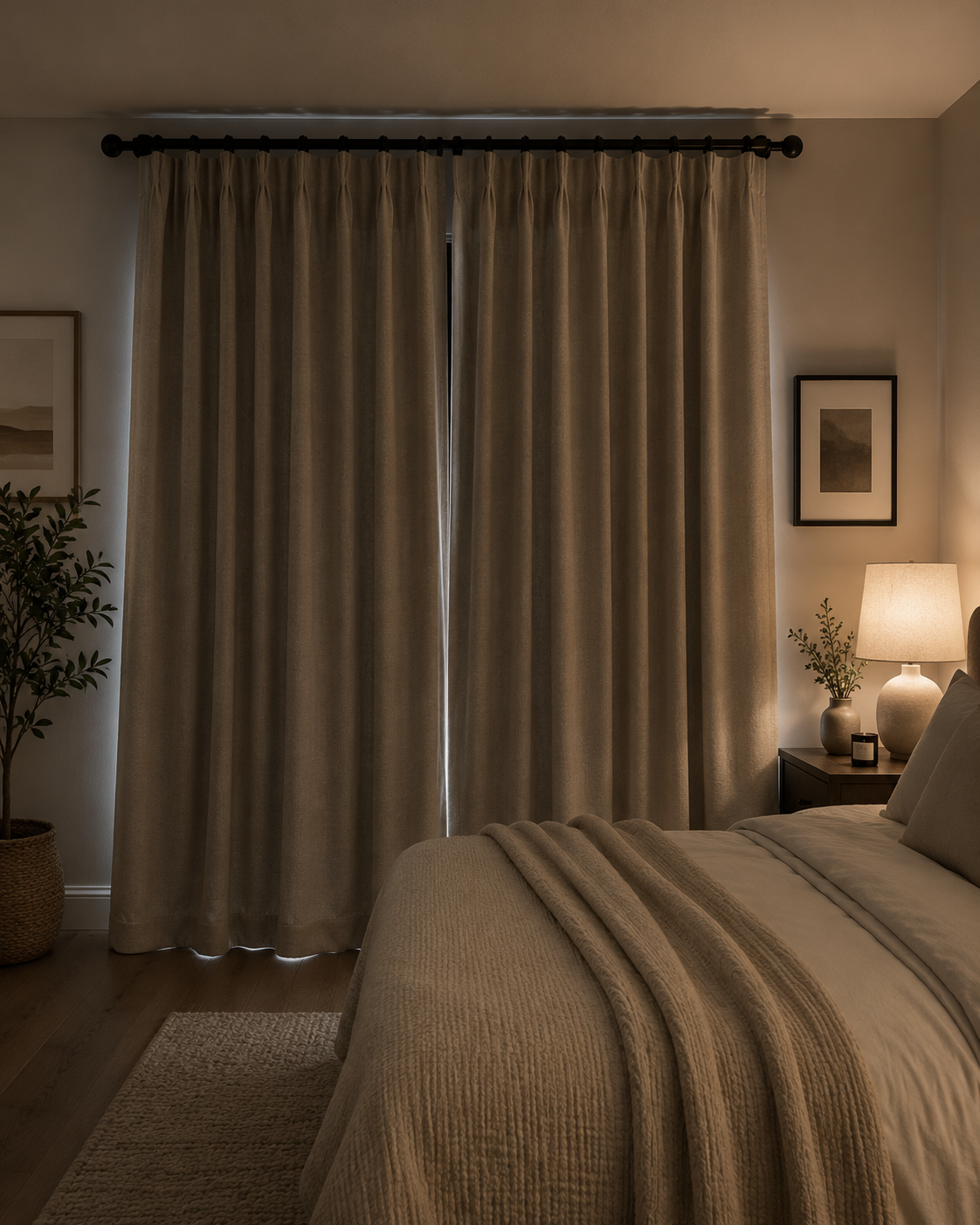
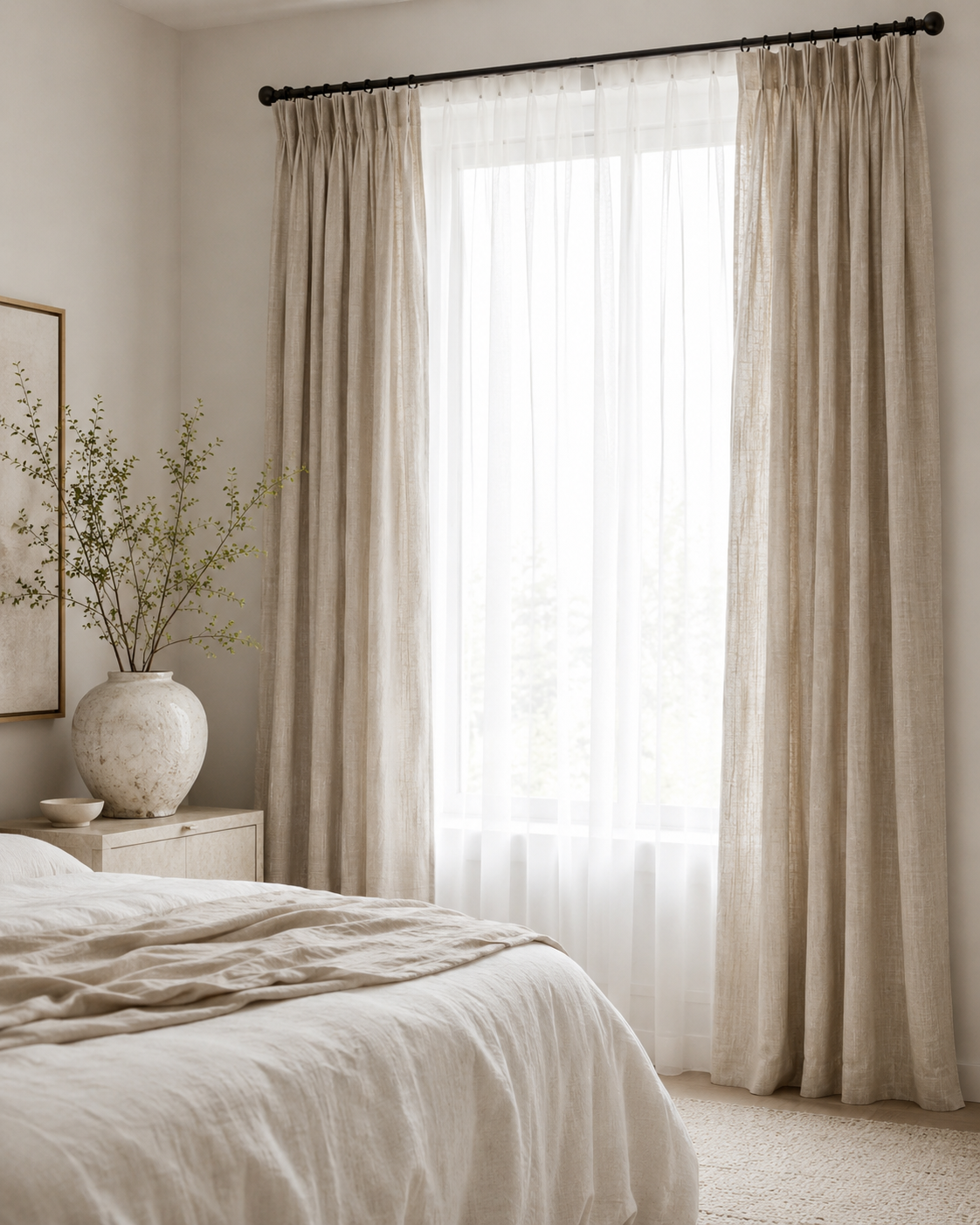
Start with the four pieces that make the window feel finished: blackout control, sheer daylight, linen texture, and matte black hardware. Bedroom curtains work best when opacity, daylight, fabric weight, and rod placement are planned as one complete window system.
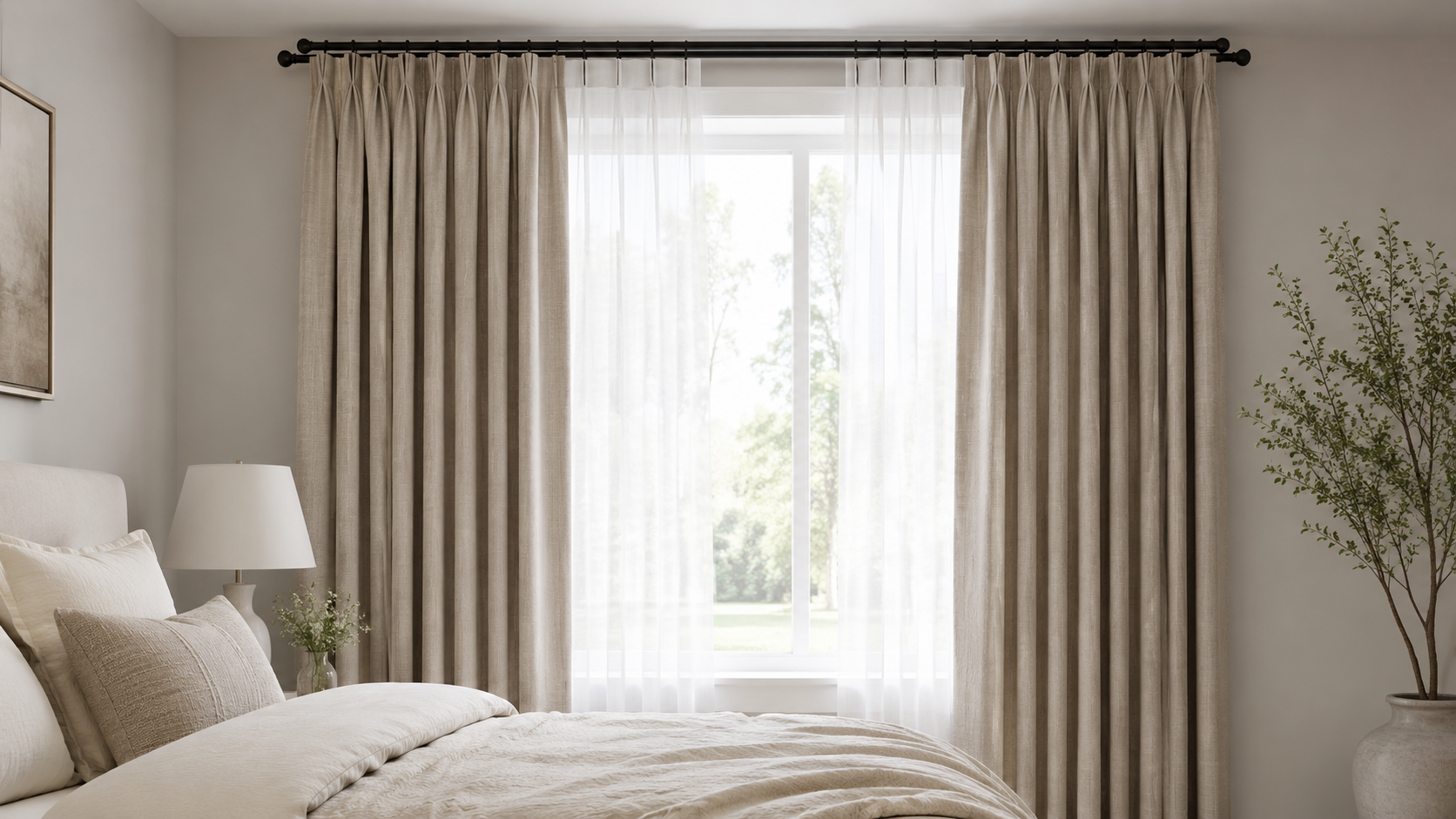
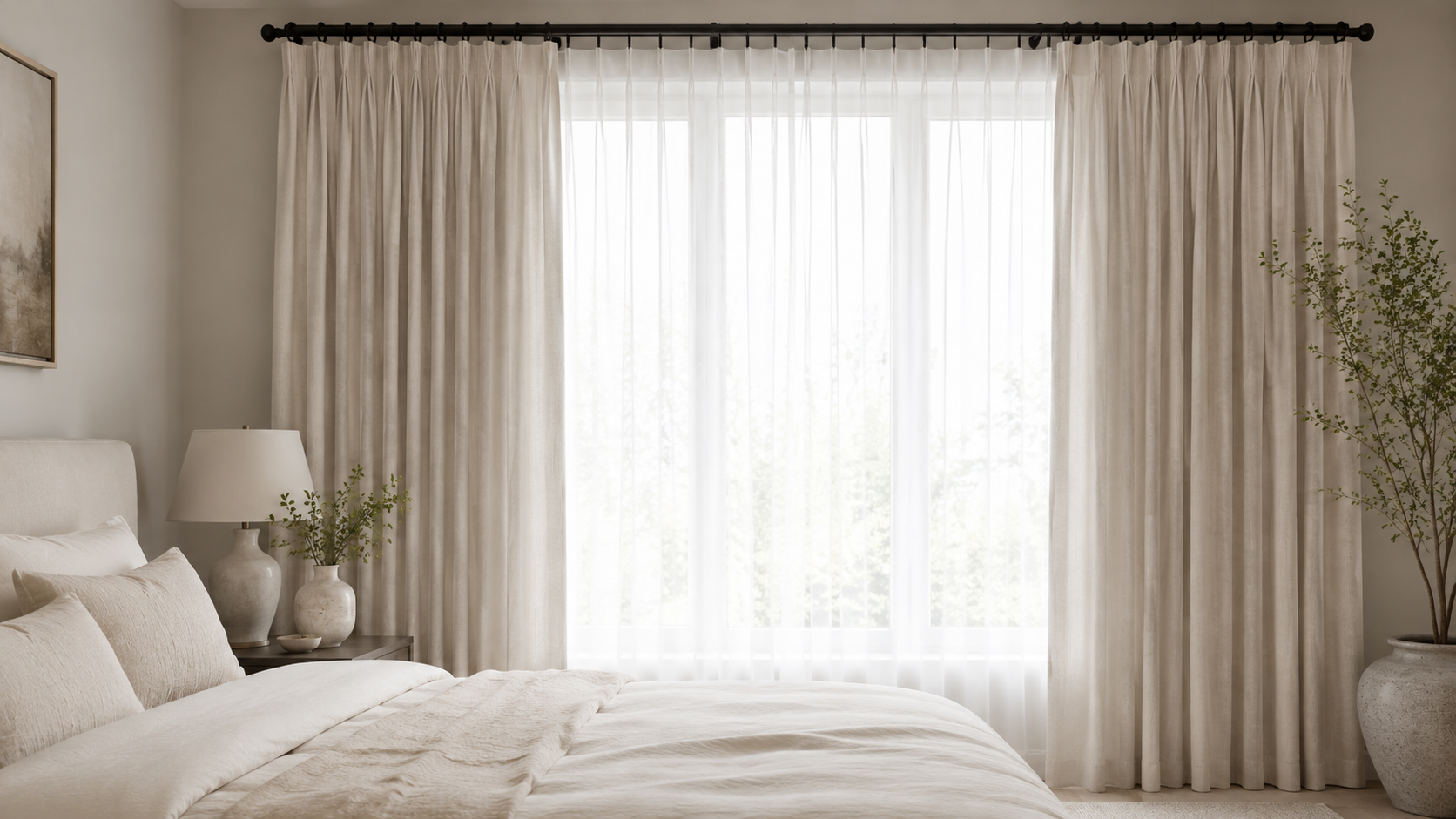
A finished bedroom window built around pleated linen, filtered sheers, black rings, and a double rod system. This combination keeps the room bright by day, private by night, and visually calmer because every layer has a clear role.
Use this section like a sample table: blackout, linen, sheer, velvet, thermal lining, rods, rings, tiebacks, and holdbacks. Each product role solves one part of the bedroom window, from sleep control to soft daylight and final styling detail.
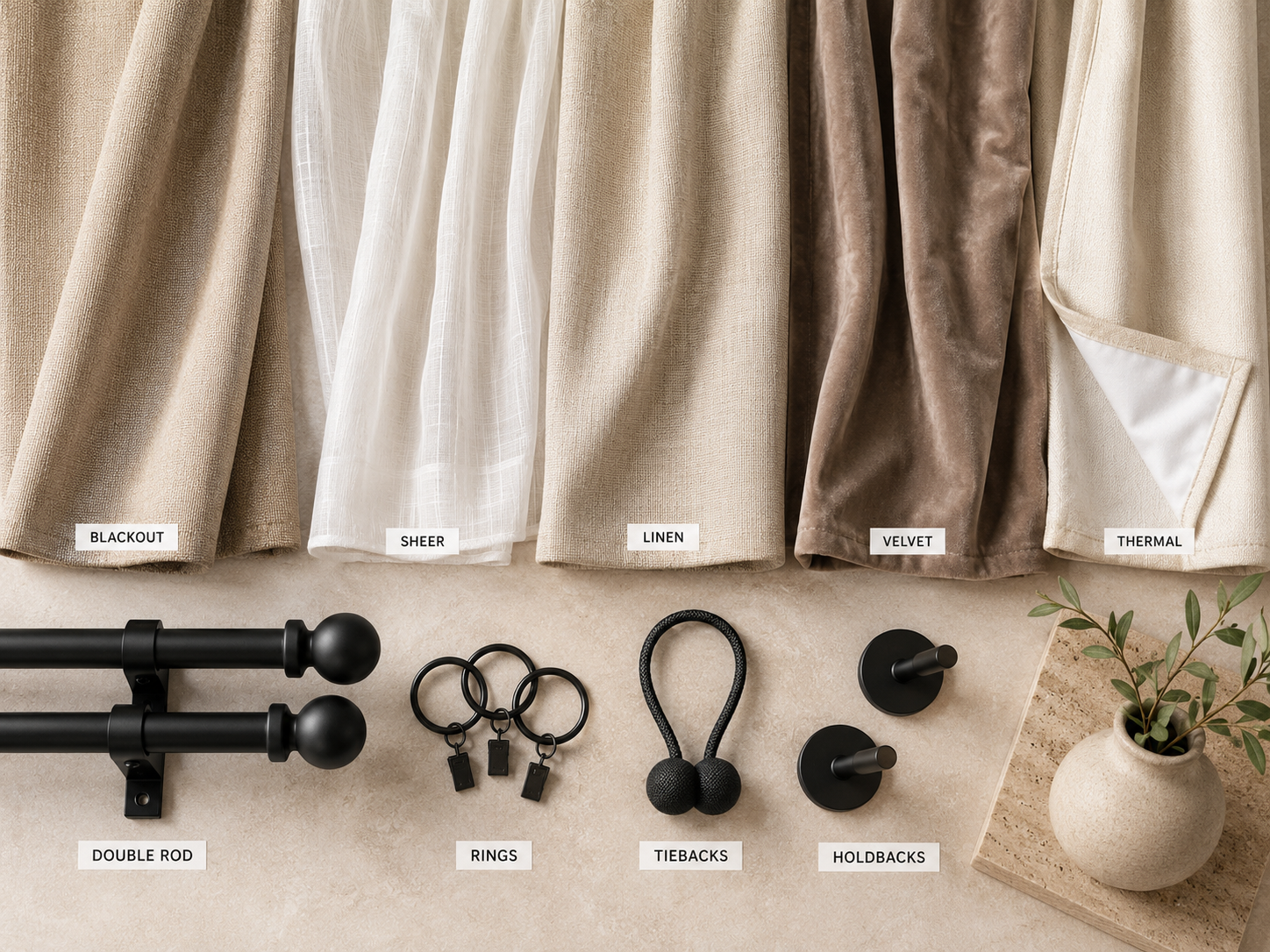
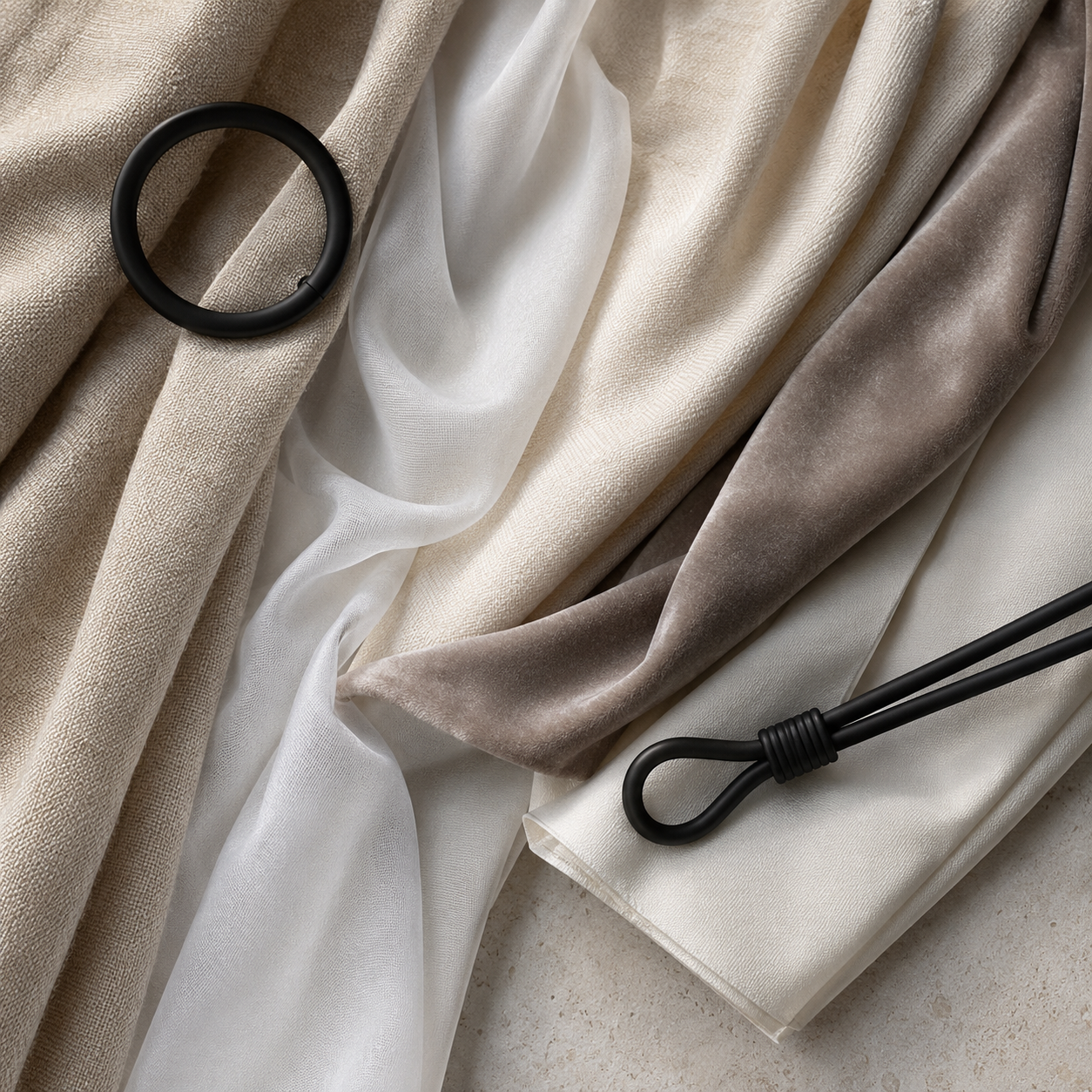
Use blackout curtains for sleep, sheer curtains for daylight, linen curtains for everyday softness, velvet curtains for weight, and hardware for the finished line. Keep the palette quiet so the bedroom window supports the bed instead of fighting it.
Choose by the job your window needs to perform: darker sleep, softer morning light, or a more finished hotel-style drape. These bedroom curtains paths keep the page visual, but they also help the buyer move quickly toward the right Amazon product group.
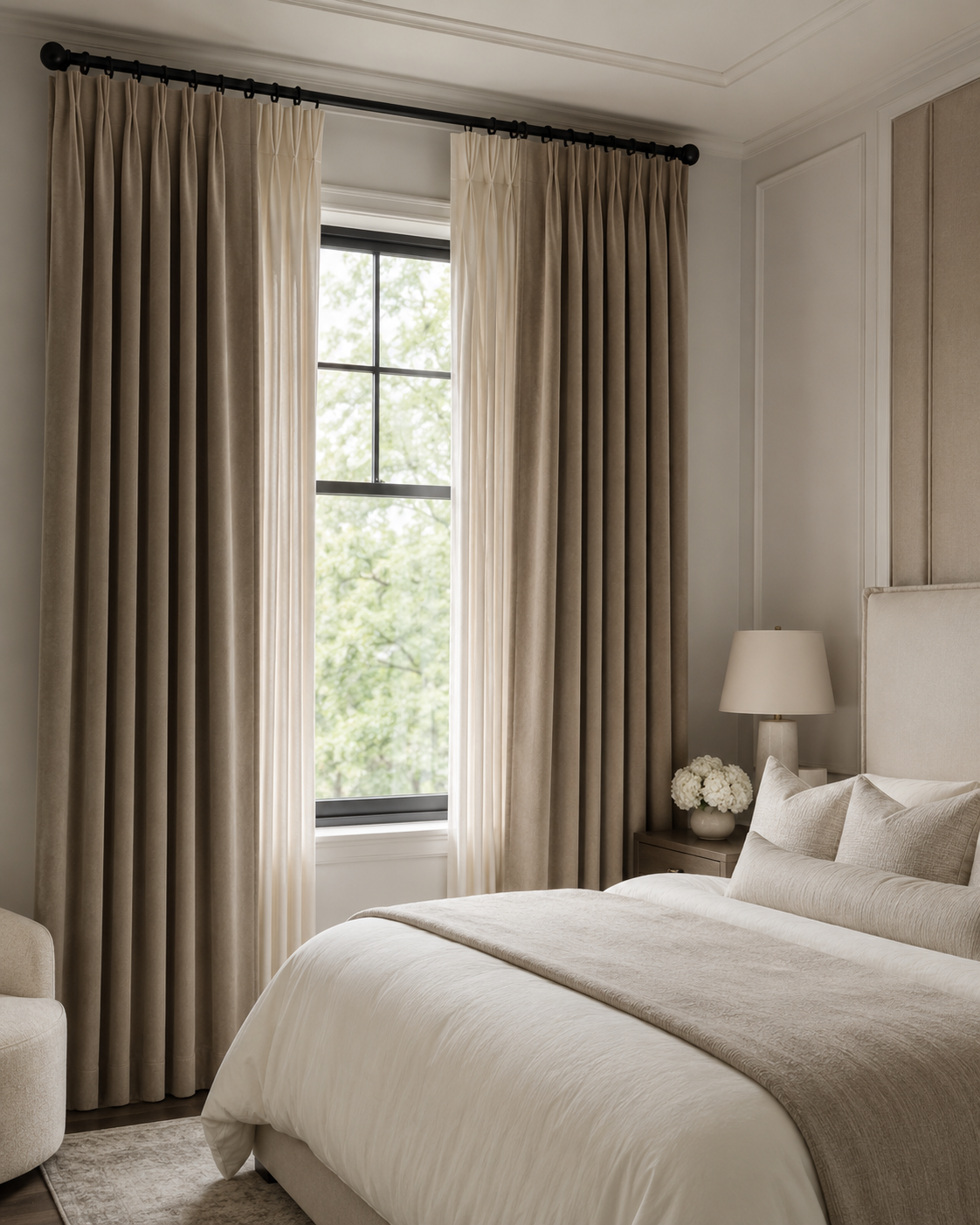
Use this fast rail for extra blackout coverage, curtain rings, holdbacks, and tiebacks. These small pieces make bedroom curtains look more intentional without forcing another full product section.