
One layer
Simpler hardware and fewer pieces. Best when your main requirement is clear—darkness, softness or visual finish.
1 curtain job1 rod / trackFaster installation
Explore standard rod 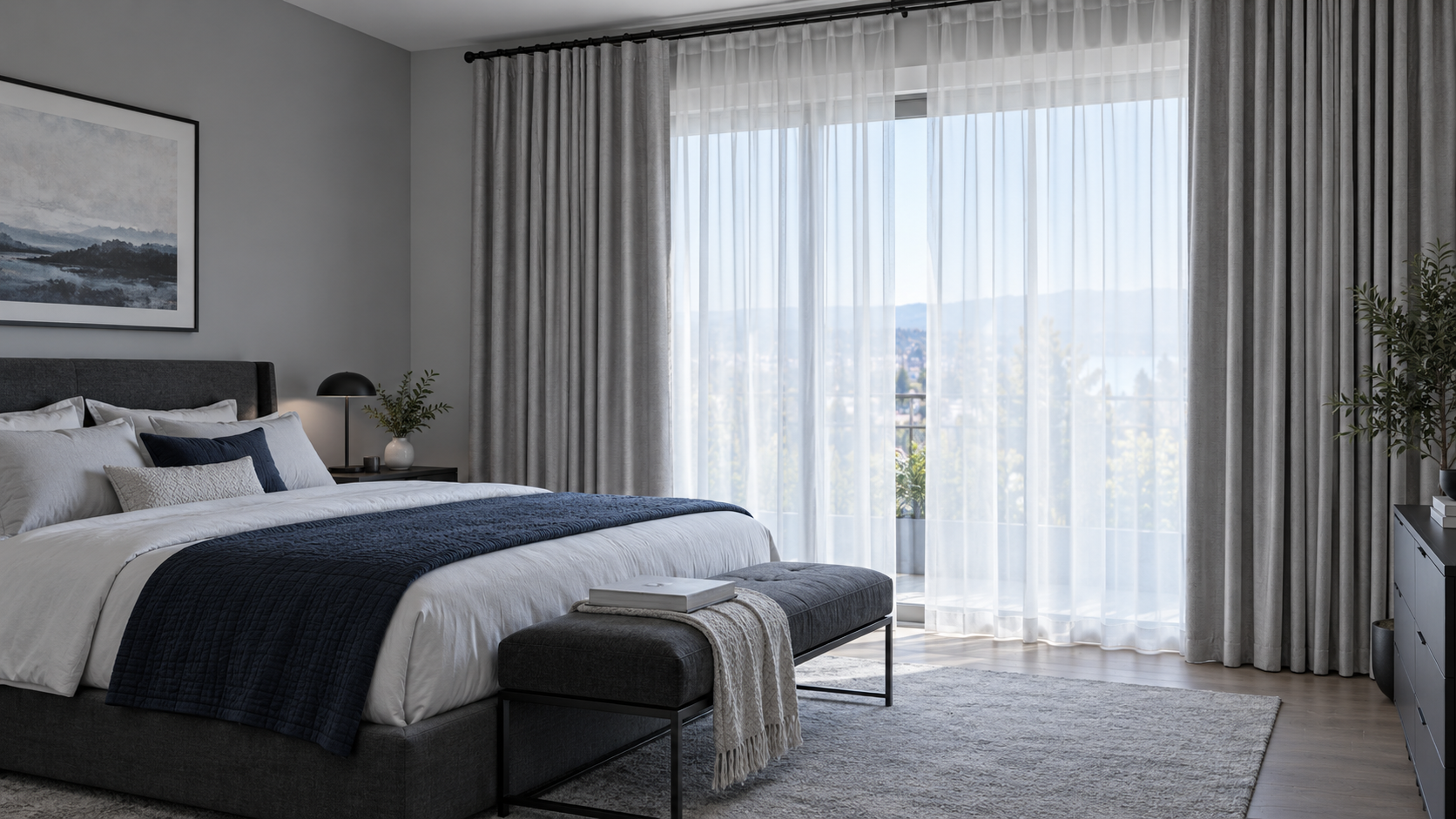
Bedroom Curtains
If streetlight reaches the pillow, sheers feel exposed at night, or the window still looks unfinished, start with the job your window is failing.
Start Here
Choose the frustration you notice first. The page will point you toward the decision that fixes it rather than sending you straight into a product grid.
Choose the situation that sounds most like your bedroom.
Night ↔ Morning
Switch the same room between sleep darkness, soft morning privacy and layered control. Products appear only where they execute the decision.
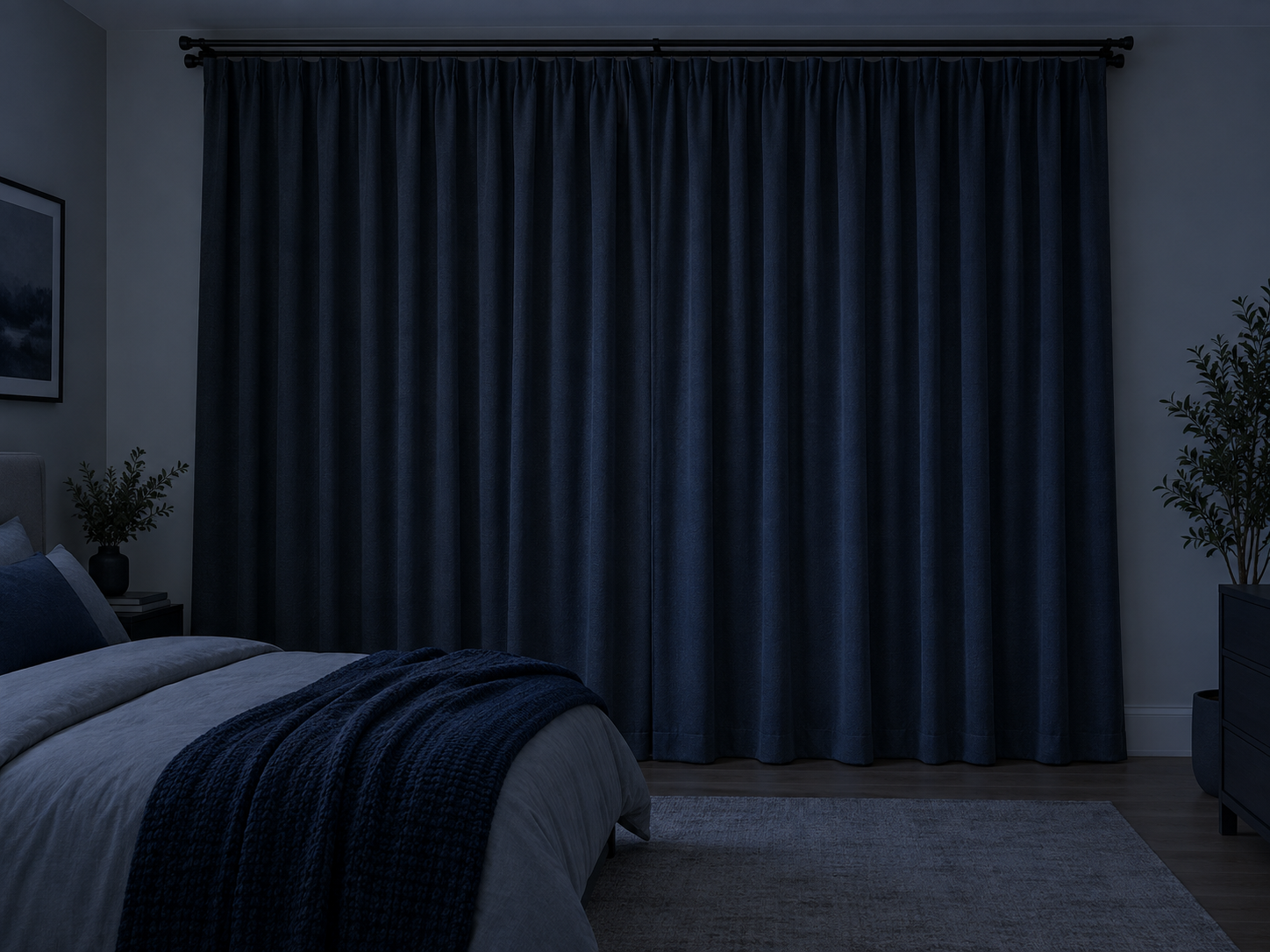
Make the room visually quiet first. Full coverage, enough fabric width and edge control matter more than decorative complexity.
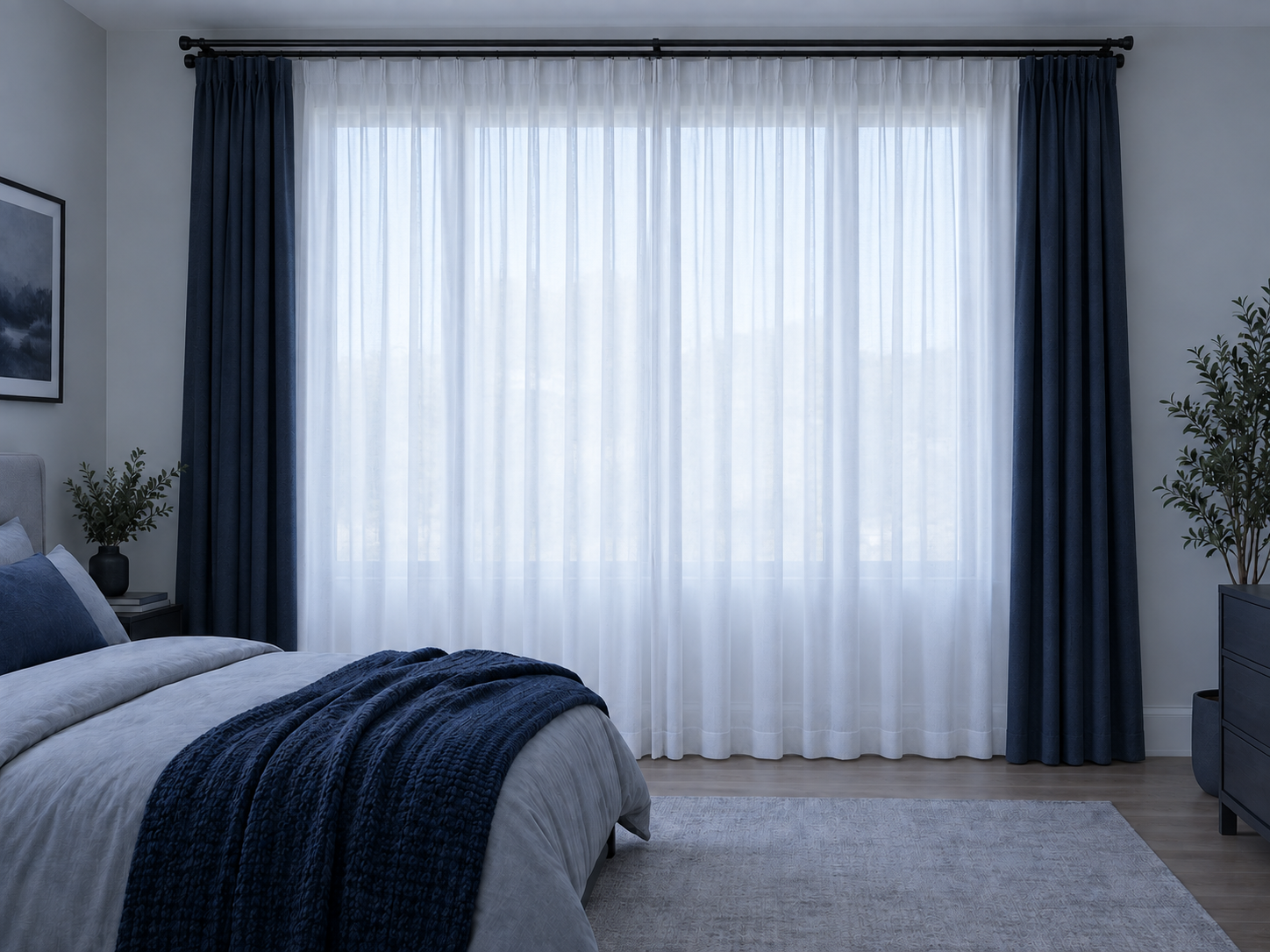
Keep useful daylight while taking the edge off exposure. The important question is whether this layer also needs to protect privacy after dark.
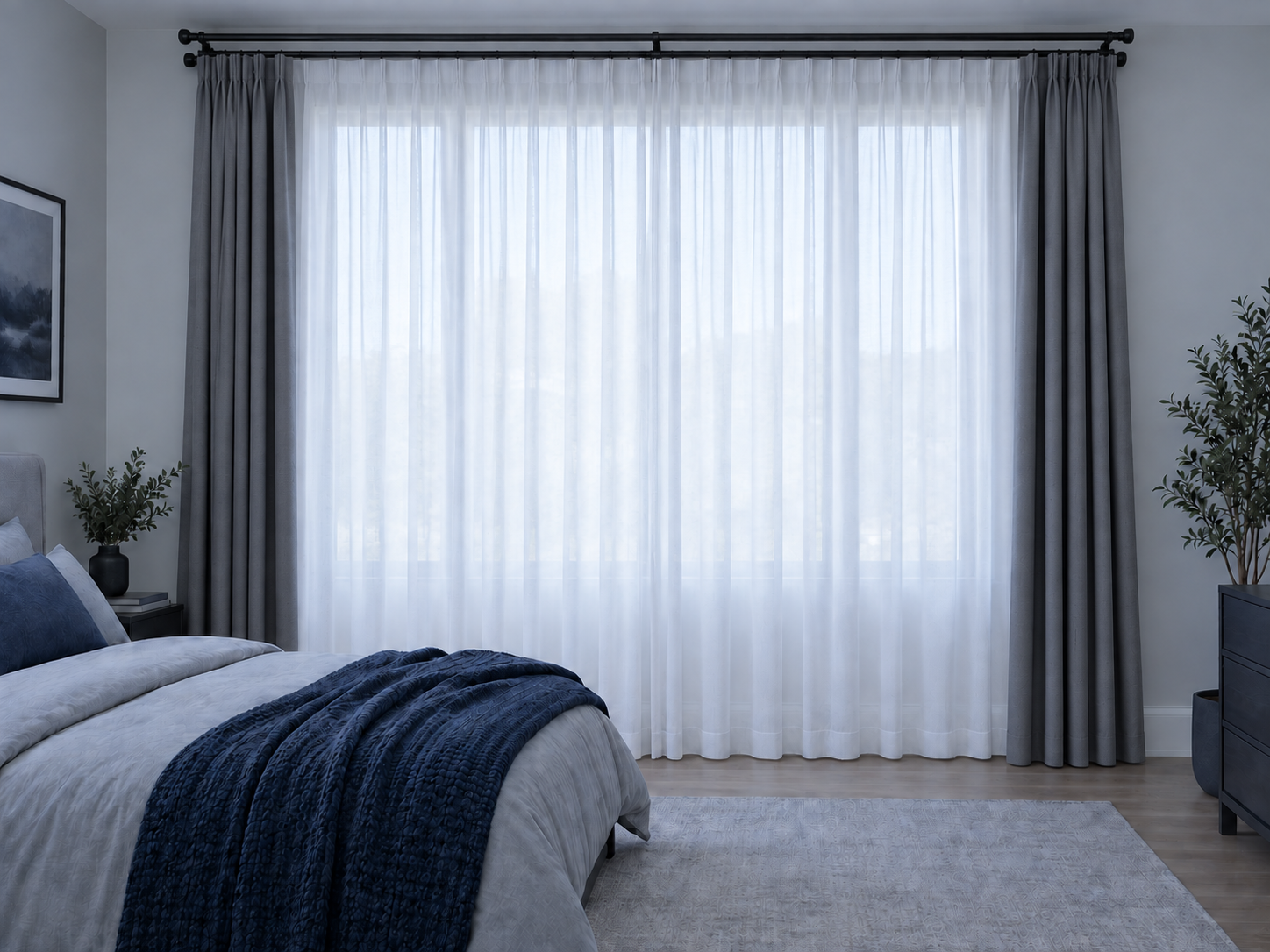
Let one fabric handle daytime softness and the second handle nighttime control. It is more hardware, but each layer gets a clearer job.
Window-Wall Fit Test
The same opening can look cramped or architectural depending on where the rod begins, ends and how low the fabric falls.
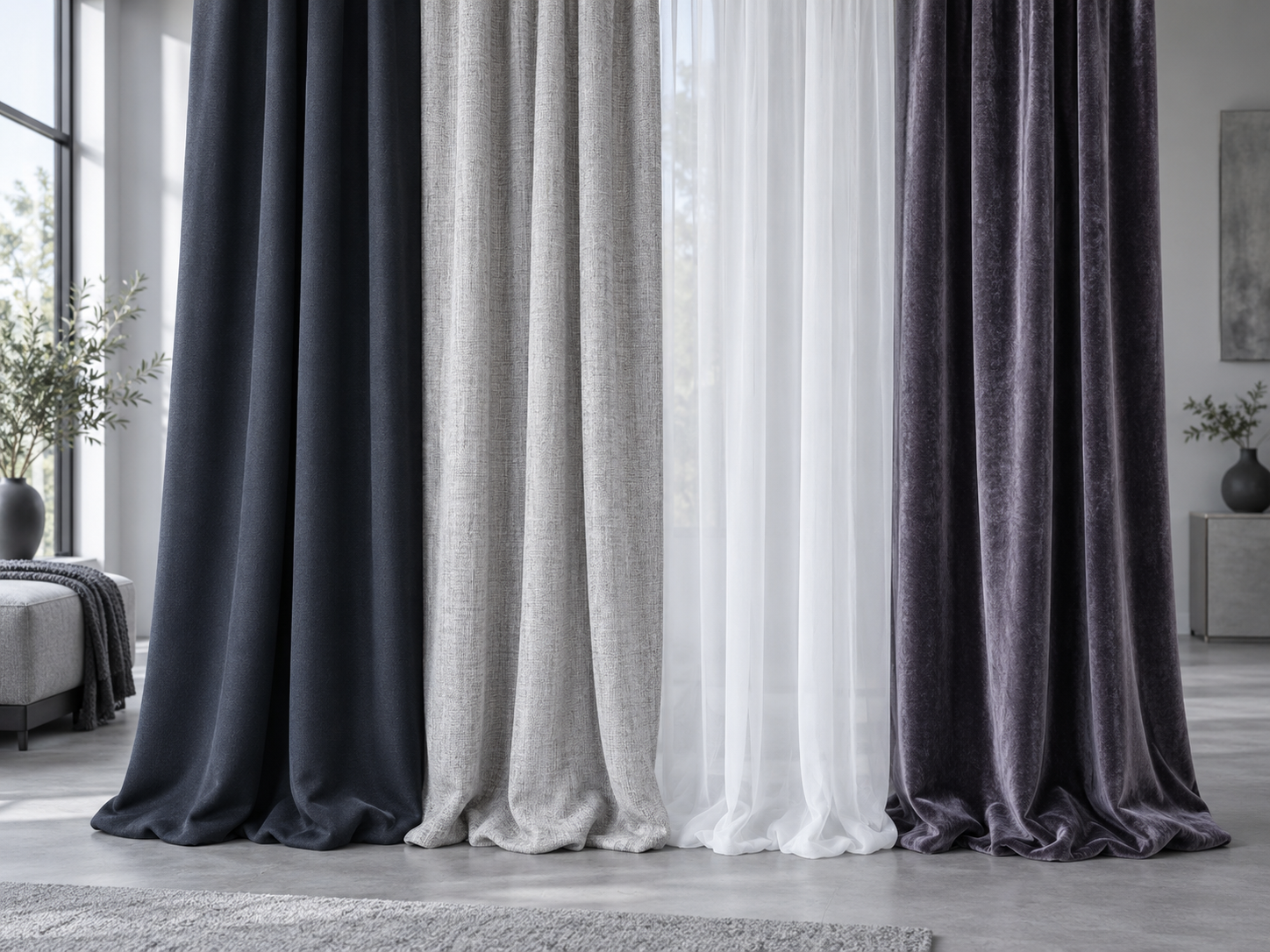
Fabric Physics
Price is not the first decision. Opacity, visual weight and how the fabric behaves with daylight tell you more about whether it belongs in your bedroom.
One Layer or Two?
If you want privacy by day and darkness at night, layering is often clearer than asking one compromise fabric to do everything.
Simpler hardware and fewer pieces. Best when your main requirement is clear—darkness, softness or visual finish.
More control across the day. Use the inner fabric for filtered daylight and the outer layer for the room's night-time job.
Light-Leak Map
Tap the place where light is escaping. The fix changes depending on whether the problem is mounting height, side return, panel overlap or floor clearance.
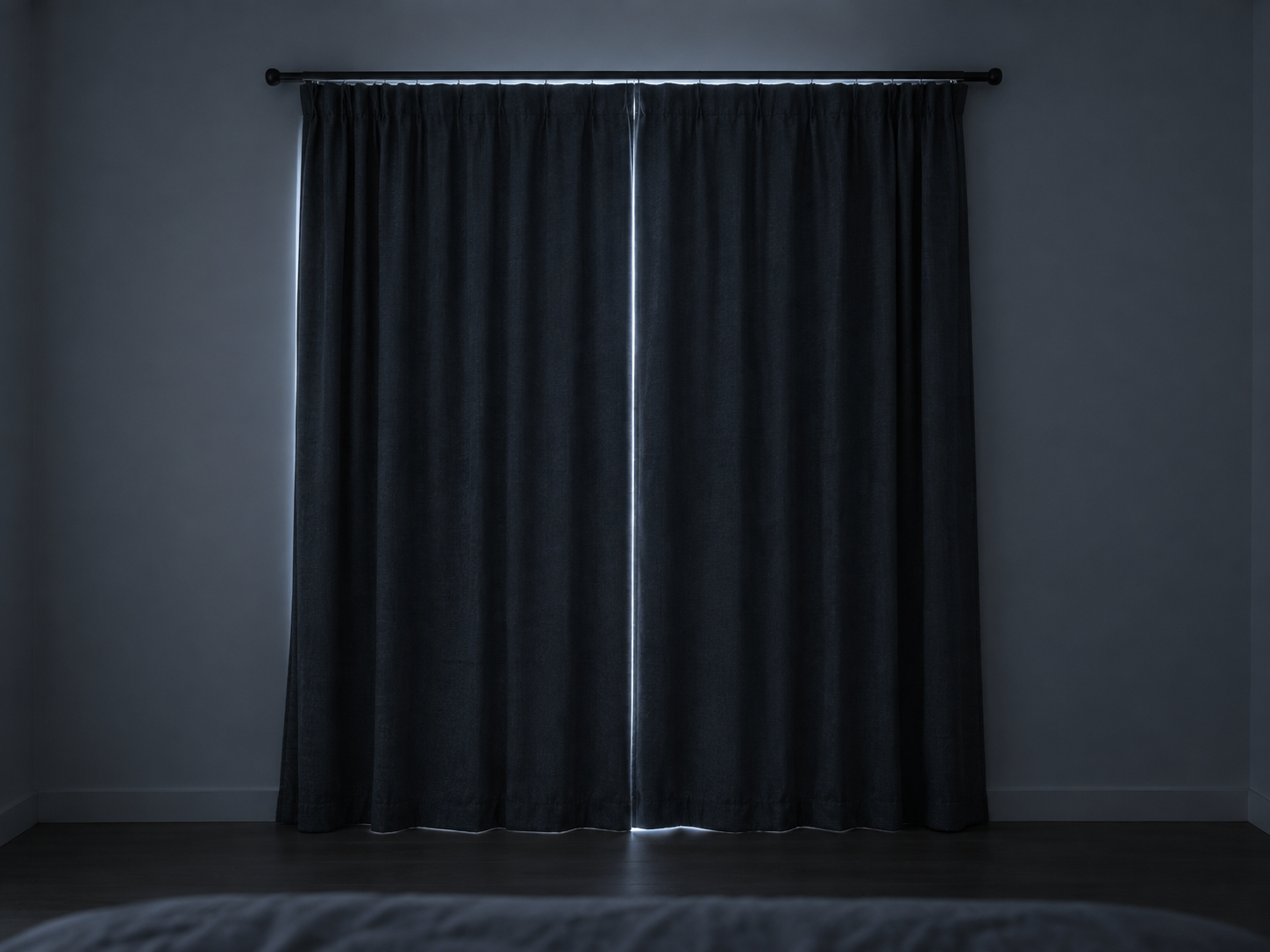
Selected zone
Light above the curtain usually points to mounting geometry. Raising the treatment or using a ceiling-track route can reduce the exposed area above the fabric.
Explore ceiling trackResolved Bedroom Windows
These are outcomes, not style labels. Each one solves a different combination of sleep, daylight and architectural finish.
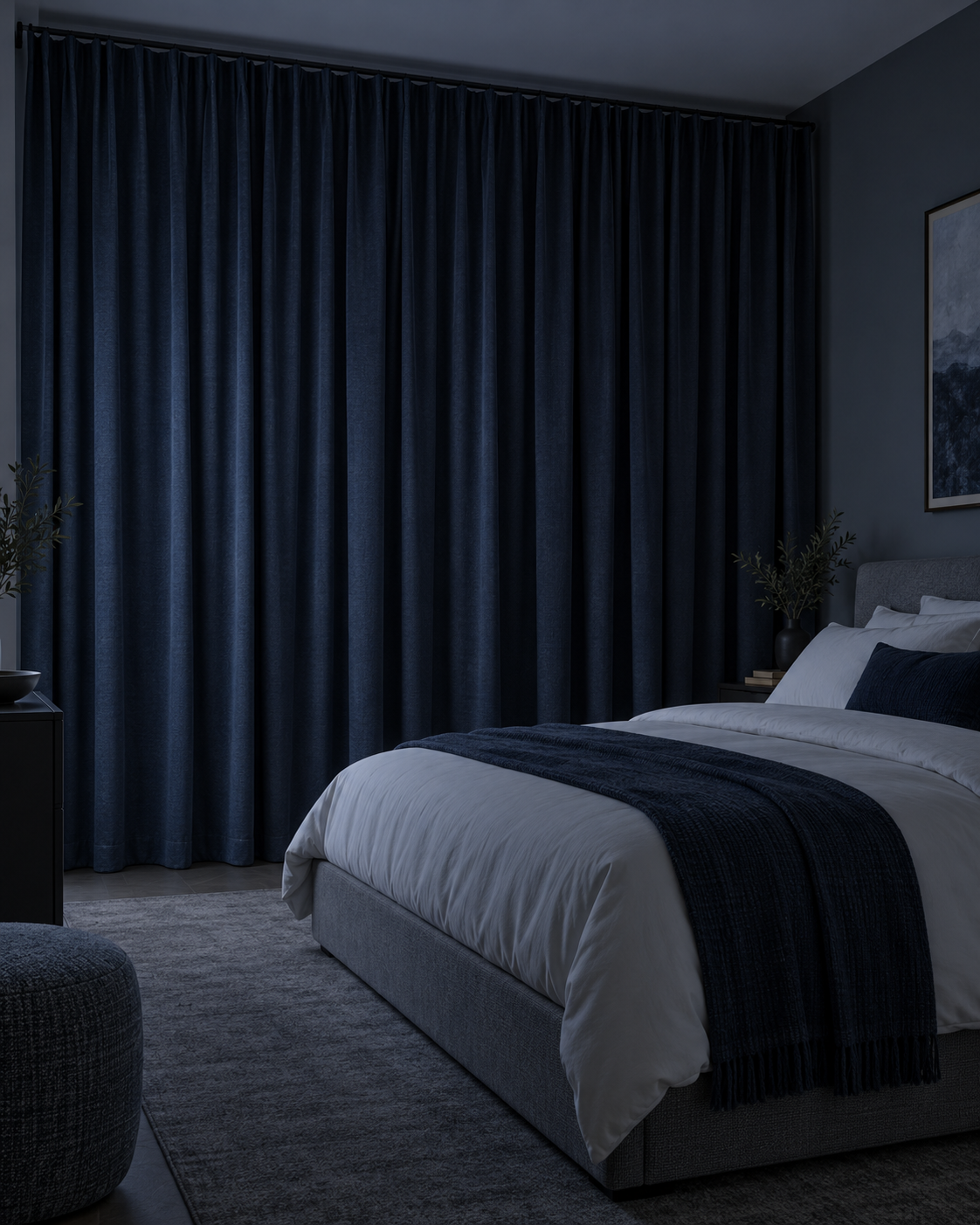
For the bedroom that still feels awake after the lights go out. Coverage and edge control do the psychological work here.
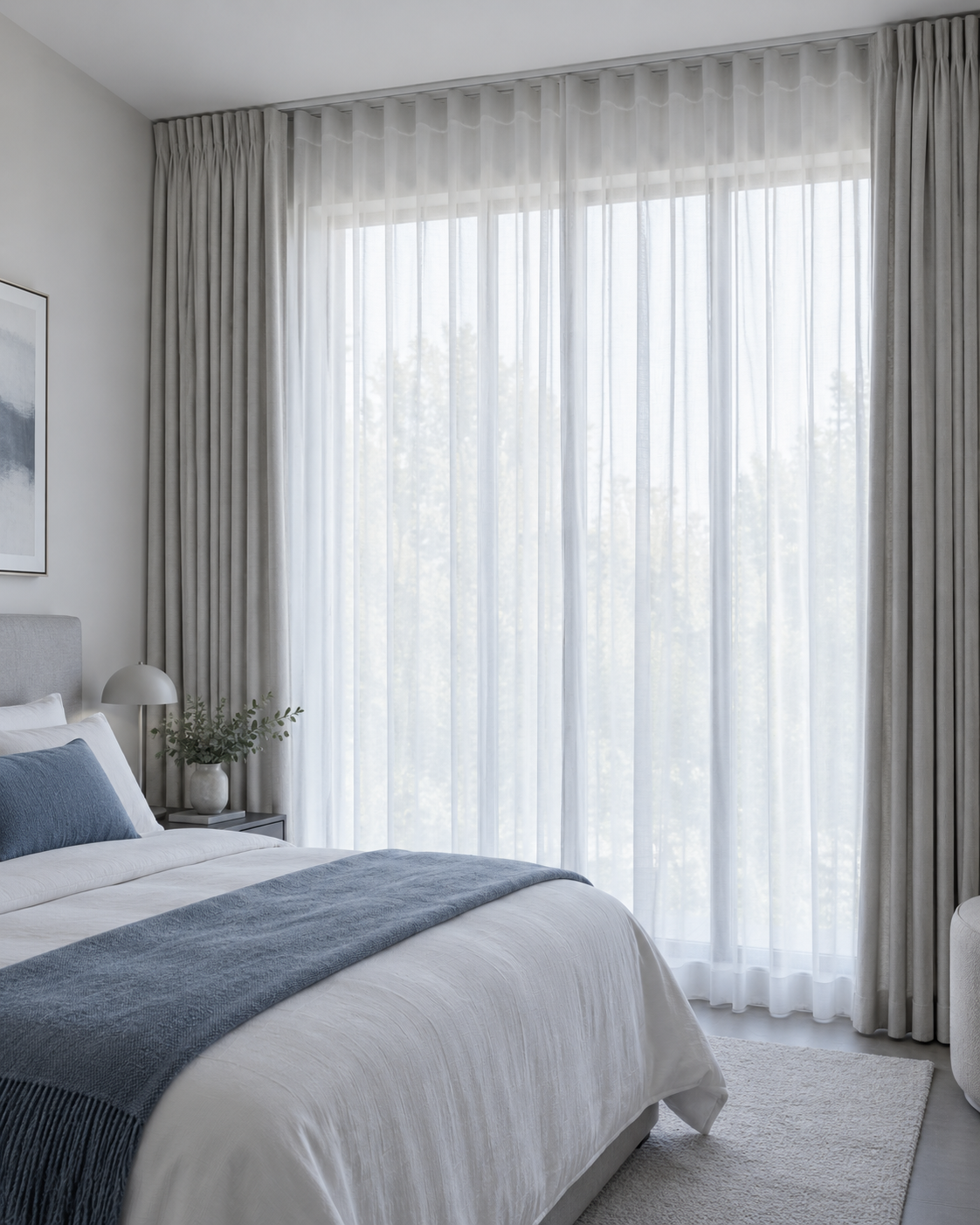
For privacy without turning daytime into permanent dusk. Keep the room bright, but make the window feel calmer.
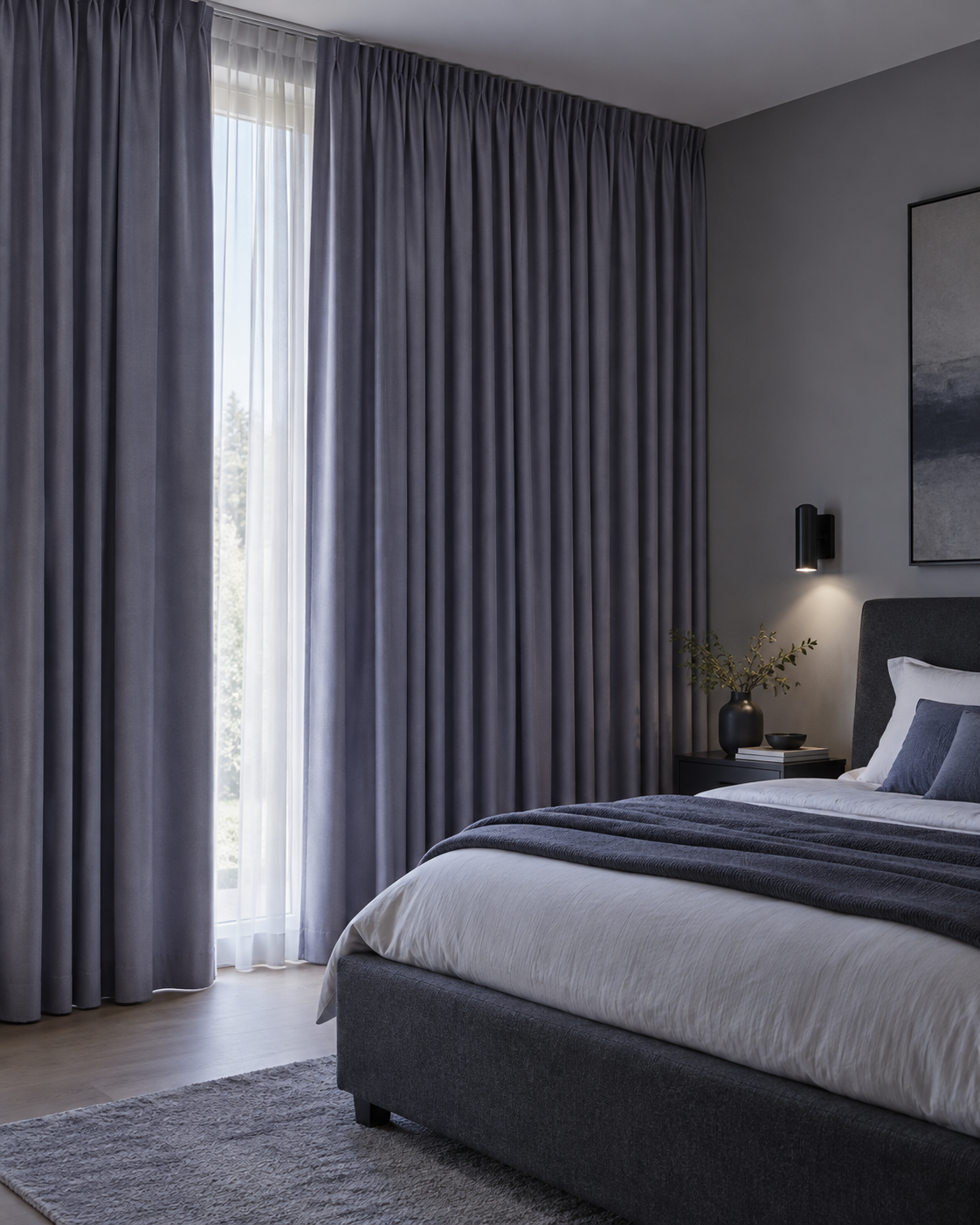
For a window that should make the whole wall feel taller, quieter and more intentional rather than merely decorated.
The Ravnora Edit
These are the strongest starting points from the complete collection. Their titles describe the job they perform—not the company printed on the listing.
Blackout that reads softer in the room.
A more architectural blackout treatment.
A familiar, low-complexity blackout route.
For broad openings where multiple narrow panels create too many seams.
Softens exposure while keeping useful daylight.
Adds deeper textile presence to a restrained bedroom.
Targets side light leakage by returning the curtain toward the wall.
For floor-to-ceiling treatments and difficult wall mounting.
60-Second Curtain Check
Tap each item once you have verified it. This is the difference between buying a curtain and planning a finished window.
Complete Bedroom Curtain Library
The library stays collapsed until you need it. This is retrieval, not another giant storefront.
Search titles and roles. Matching families open automatically.
No matching product role found. Try a broader word such as blackout, sheer, rod or renter.
Once the Window Feels Right
Continue where the room is most likely to feel unresolved after the window is fixed.