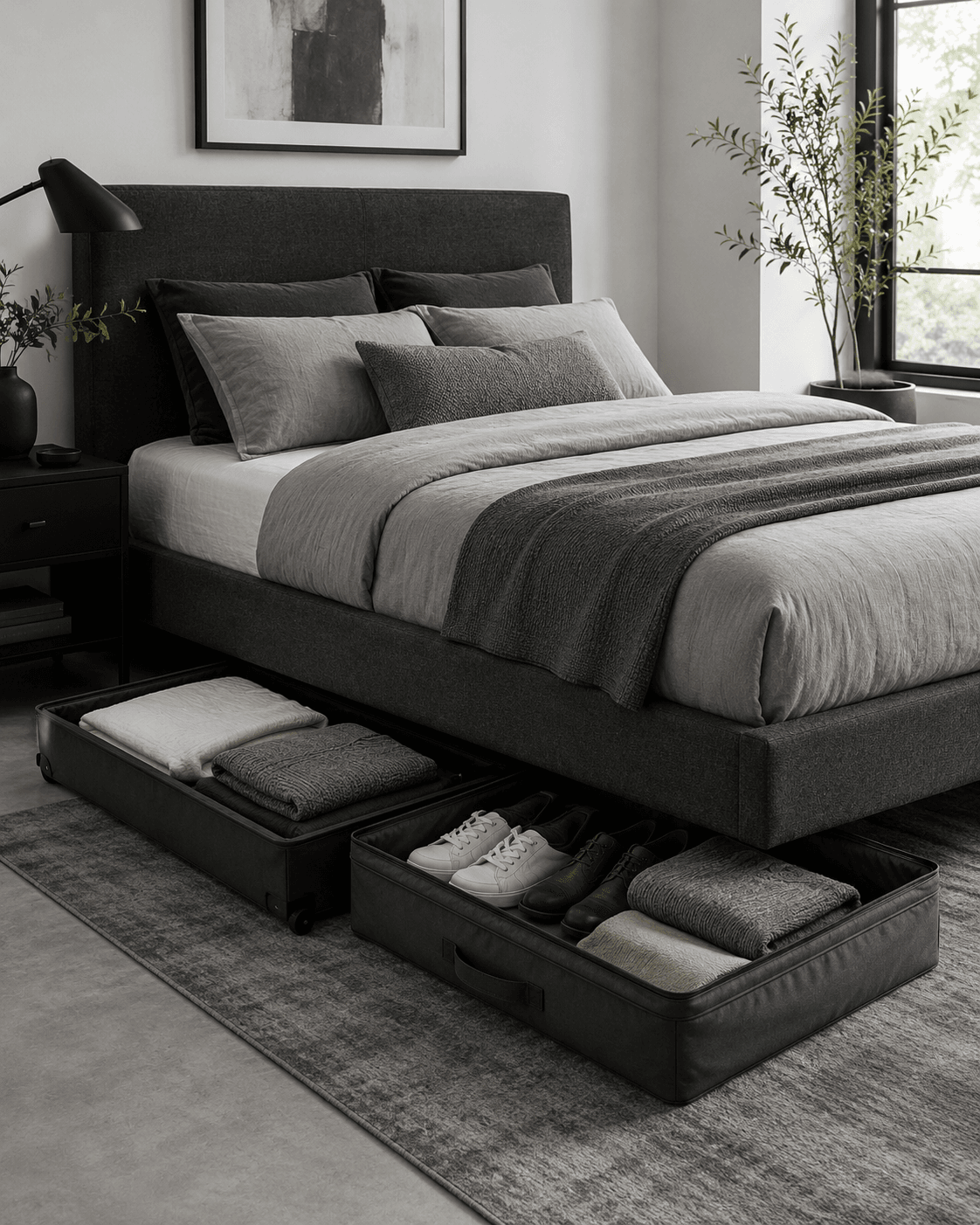
Nothing has a home.
Even after a reset, clothes, bedding or shoes still have nowhere sensible to go. That is a capacity problem.
Full railsOverflowing drawersSeasonal bedding with no home
Add Capacity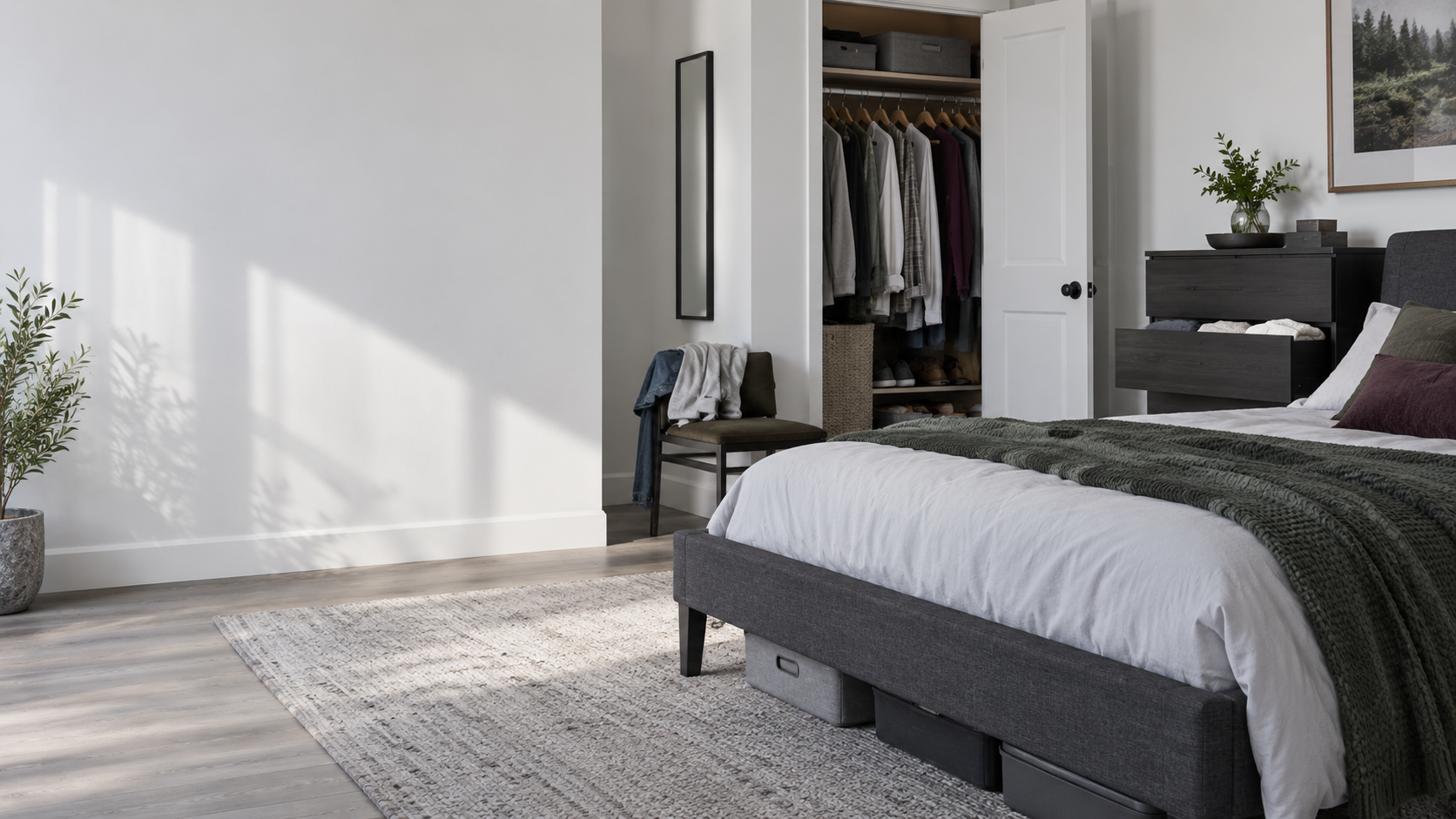
Chair pile? Packed closet? Wasted space under the bed? Start with the pressure point—not another random organizer.
Pick the place that keeps losing control. We’ll show the first move—and the two product types most likely to solve that exact pressure point.
One targeted correction usually beats buying several organizers that never address the source.
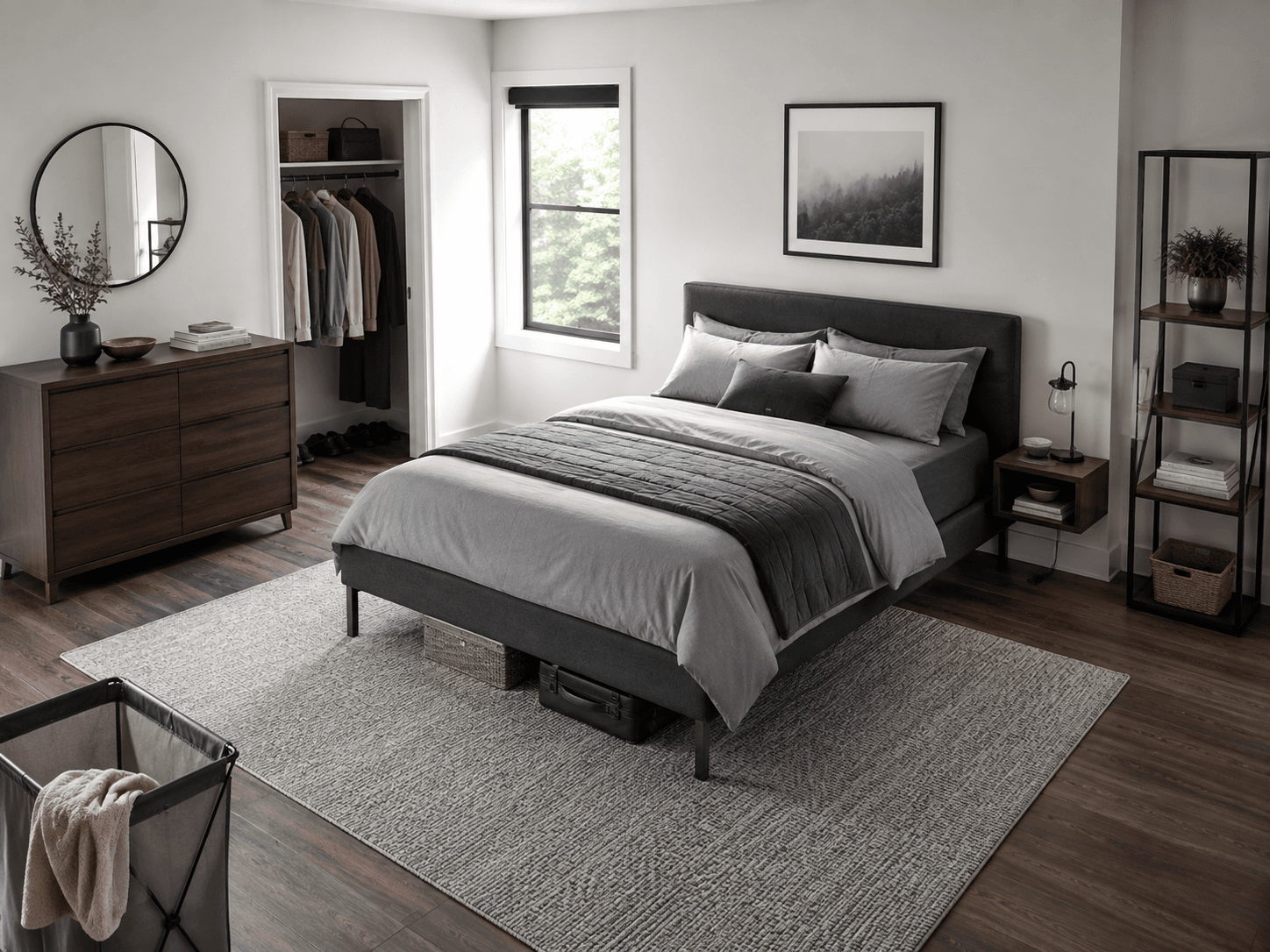
Choose the pressure point
If clothing truly has nowhere to live, add meaningful capacity. If it fits but disappears into piles, fix the rail, shelf, door or floor zone first.
Bedroom storage gets easier when you stop treating those as the same problem.
Even after a reset, clothes, bedding or shoes still have nowhere sensible to go. That is a capacity problem.
Space exists, but categories collapse, surfaces refill and everyday items never make it back. That is a control problem.
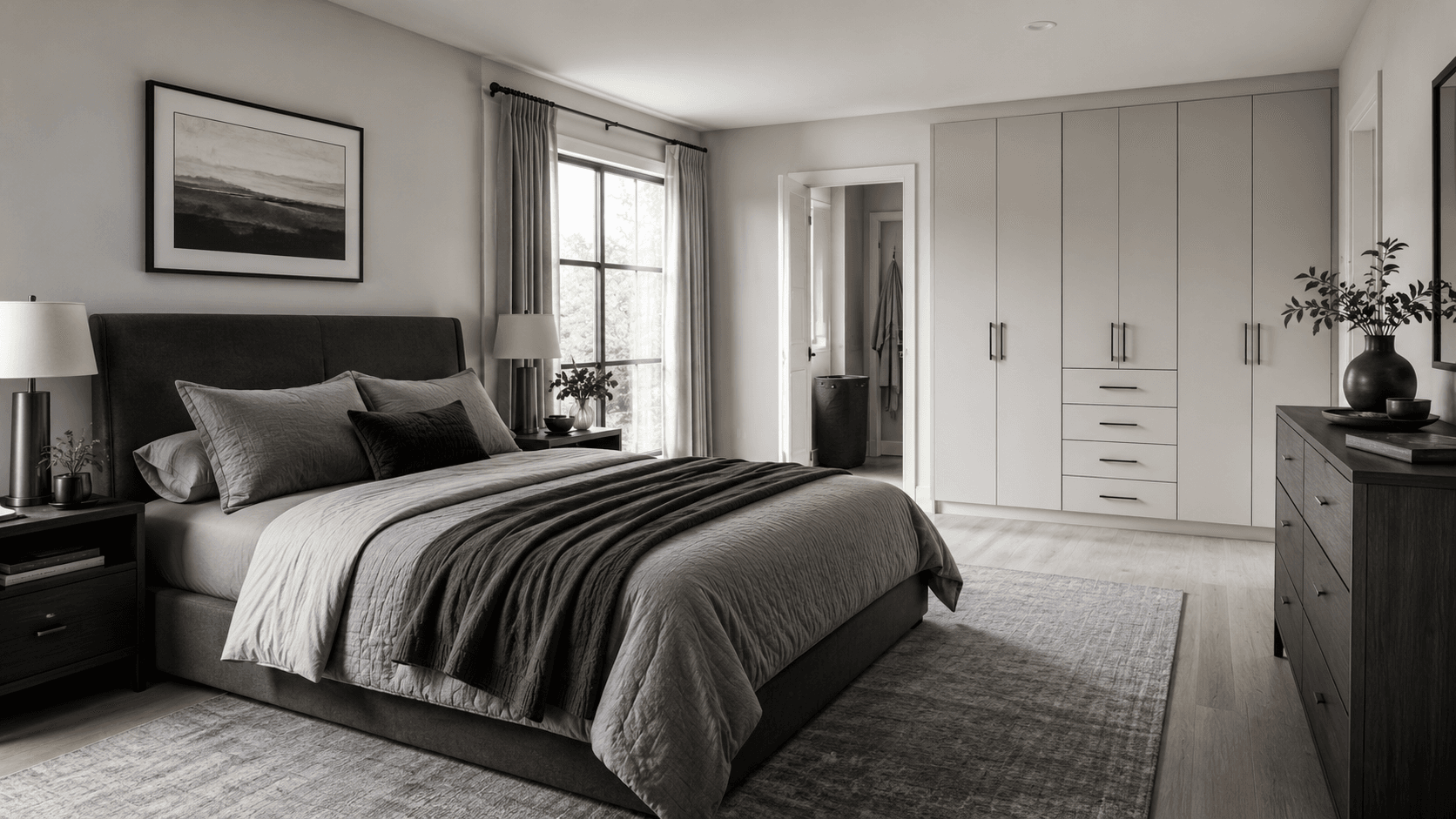
Choose one meaningful storage move before adding a collection of smaller fixes. Protect walking space, drawer travel and door swing while you do it.
Clothing and bedding create more pressure than tiny categories.
A storage unit that blocks the room creates a new problem.
The goal is visible calm, not furniture everywhere.
Use these only when organization cannot create enough capacity on its own.
Best when you need substantial hidden capacity without adding another freestanding piece.
Check first: bed footprint, lift clearance and assembly requirements.
Check the Fit ↗Best when the room genuinely lacks enough hanging and shelf space.
Check first: wall width, height and garment clearance.
Explore the Setup ↗Best when you want a more integrated wall-based closet system.
Check first: available wall span and installation needs.
See the System ↗Best for everyday clothing that needs closed, easy-access drawer zones.
Check first: width, drawer travel and anchoring guidance.
Explore This Pick ↗Best for turning closet floor space into flexible secondary drawer storage.
Check first: fit beneath rails and inside the planned zone.
See How It Fits ↗Best for spare bedding and soft goods when the bed-end zone has breathing room.
Check first: walking clearance around the open bench.
See the Storage ↗A closet rarely needs every organizer. Choose the rail, shelf, door or floor—and only solve that layer.
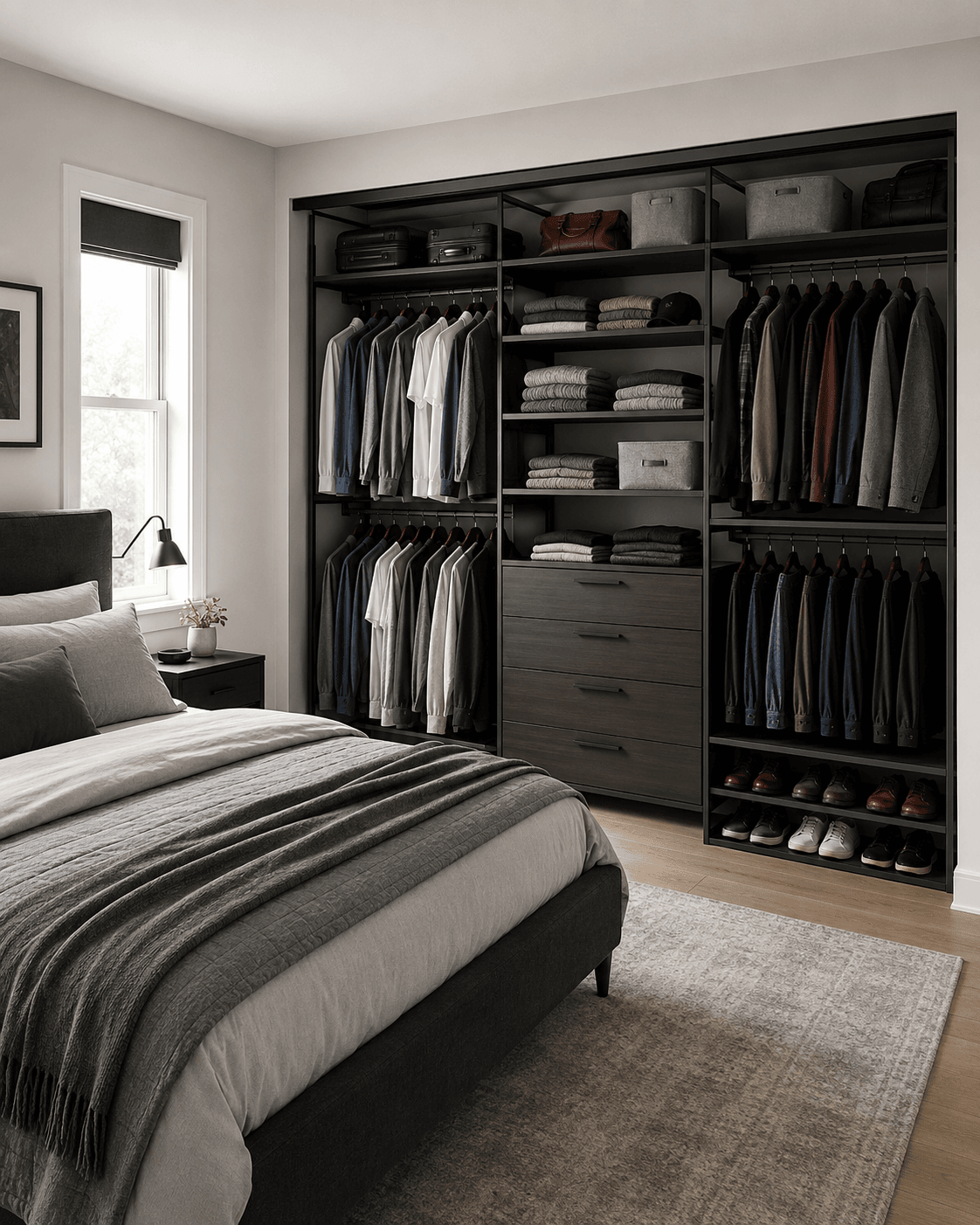
Which part breaks down?
Standardize hanger width or create a second hanging level before expanding the whole closet.
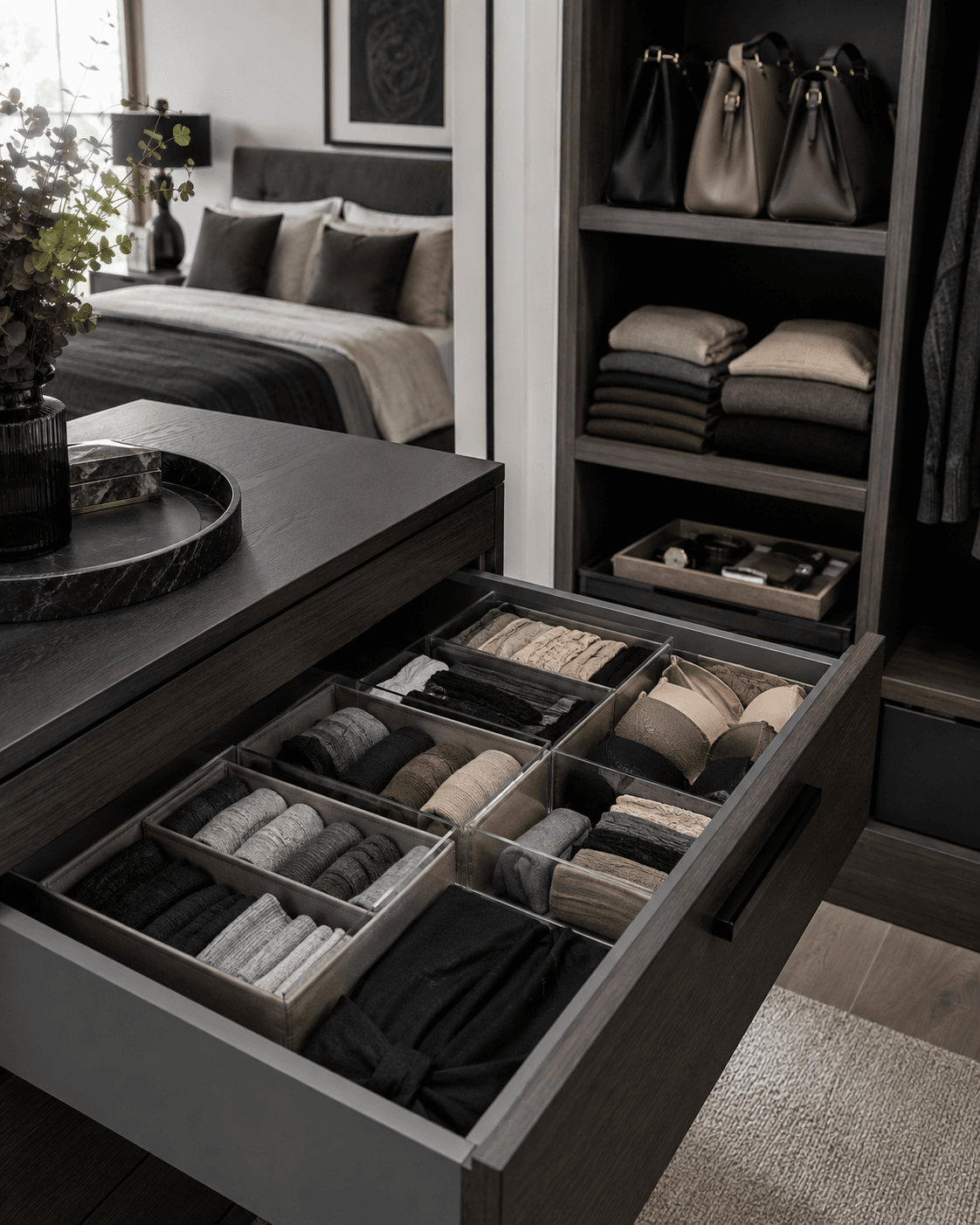
Socks need cells. Mixed folded clothing often needs adjustable divisions. Jewelry and shaped garments benefit from purpose-built containment. Easy drawers can stay simple.
Use fixed cells where small items migrate.
Flexible drawers change with what you own.
If a drawer already resets easily, leave it alone.
Each solves a different failure mode—no duplicate organizers just to fill the rail.
For socks, underwear, ties and other small categories that mix together.
Check first: drawer depth and usable height.
Explore This Pick ↗For small rolled items that disappear inside deeper drawers.
Check first: cell size against what you actually fold.
See the Layout ↗For moving jewelry off the dresser and into a controlled drawer zone.
Check first: tray footprint versus available drawer area.
Explore the Tray ↗For mixed categories when fixed compartments would be too restrictive.
Check first: divider span and drawer-wall height.
See Options ↗For shaped garments that benefit from staying separated.
Check first: compartment width for your folded size.
Check the Fit ↗Bedside clutter and clothes-on-the-chair clutter are often route problems, not discipline problems.
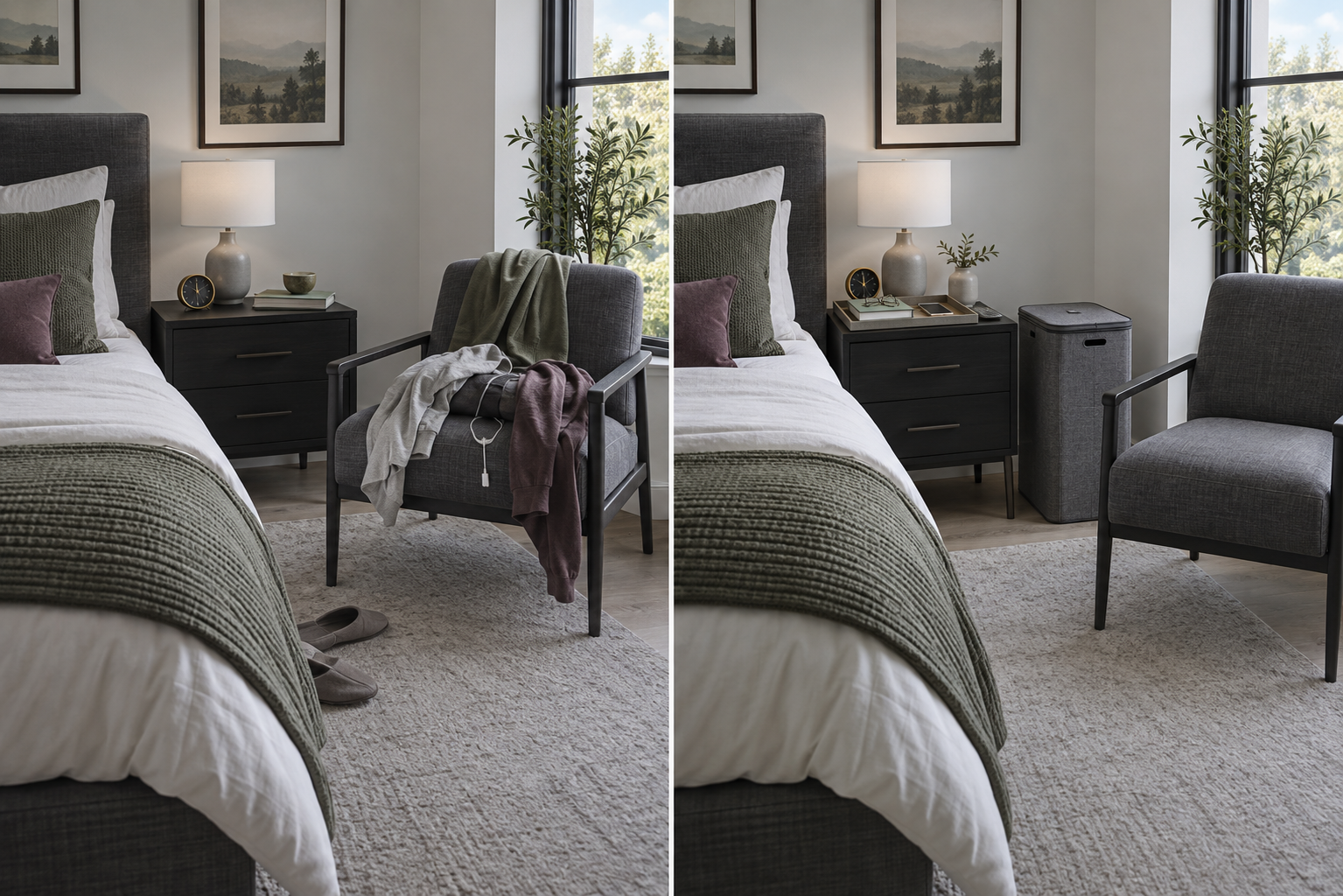
What keeps getting left out?
Phone, glasses, charger and book should not need a full dresser. Use the smallest bedside solution that holds the real routine.
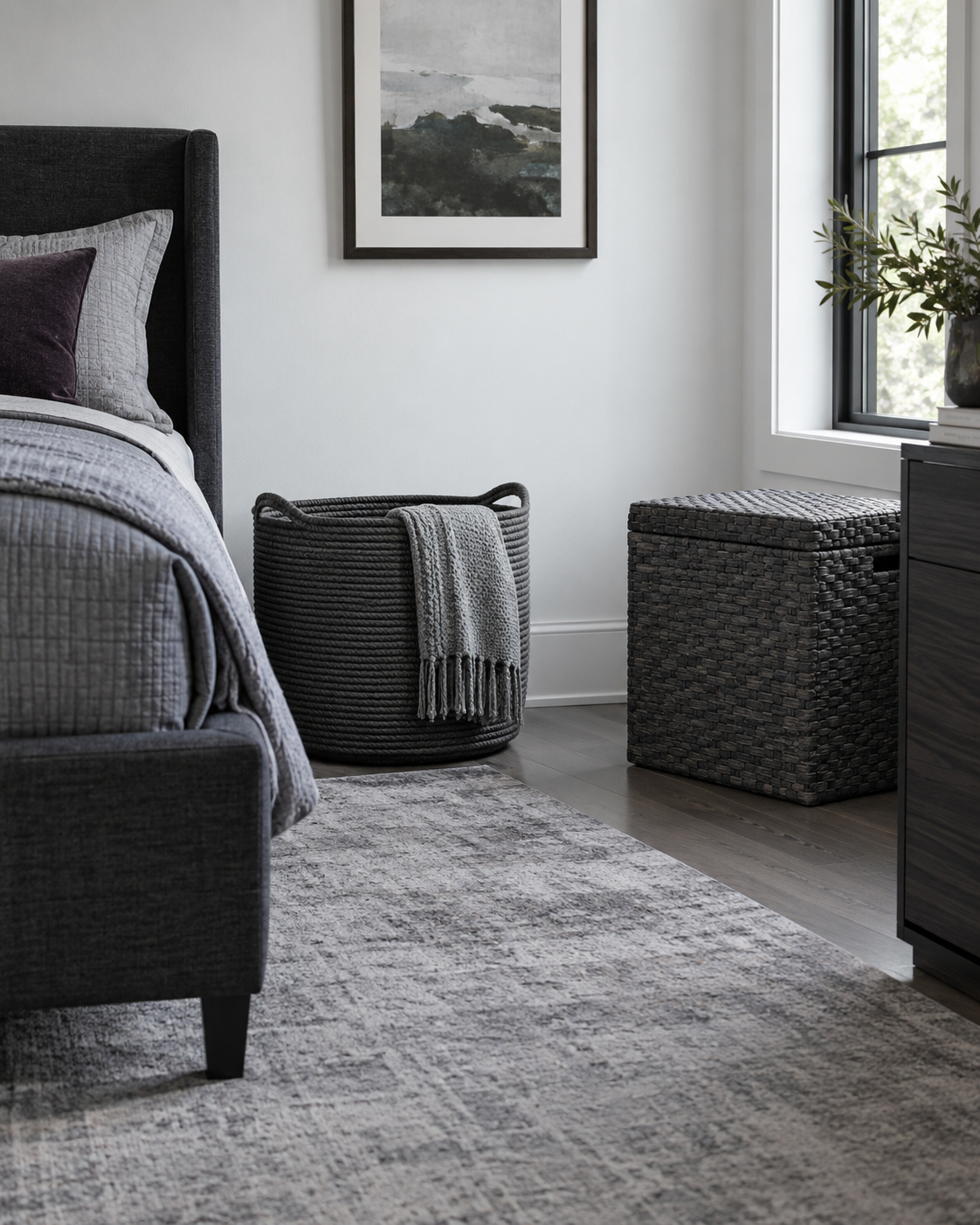
Use open storage for attractive soft goods you reach often. Use closed storage when the contents create visual noise.
For throws and soft goods that look calm even when visible.
Trade-off: open storage asks the contents to stay visually tidy.
See the Basket ↗For soft belongings you want nearby without seeing every item.
Trade-off: closed storage is calmer but less instant to scan.
Explore This Pick ↗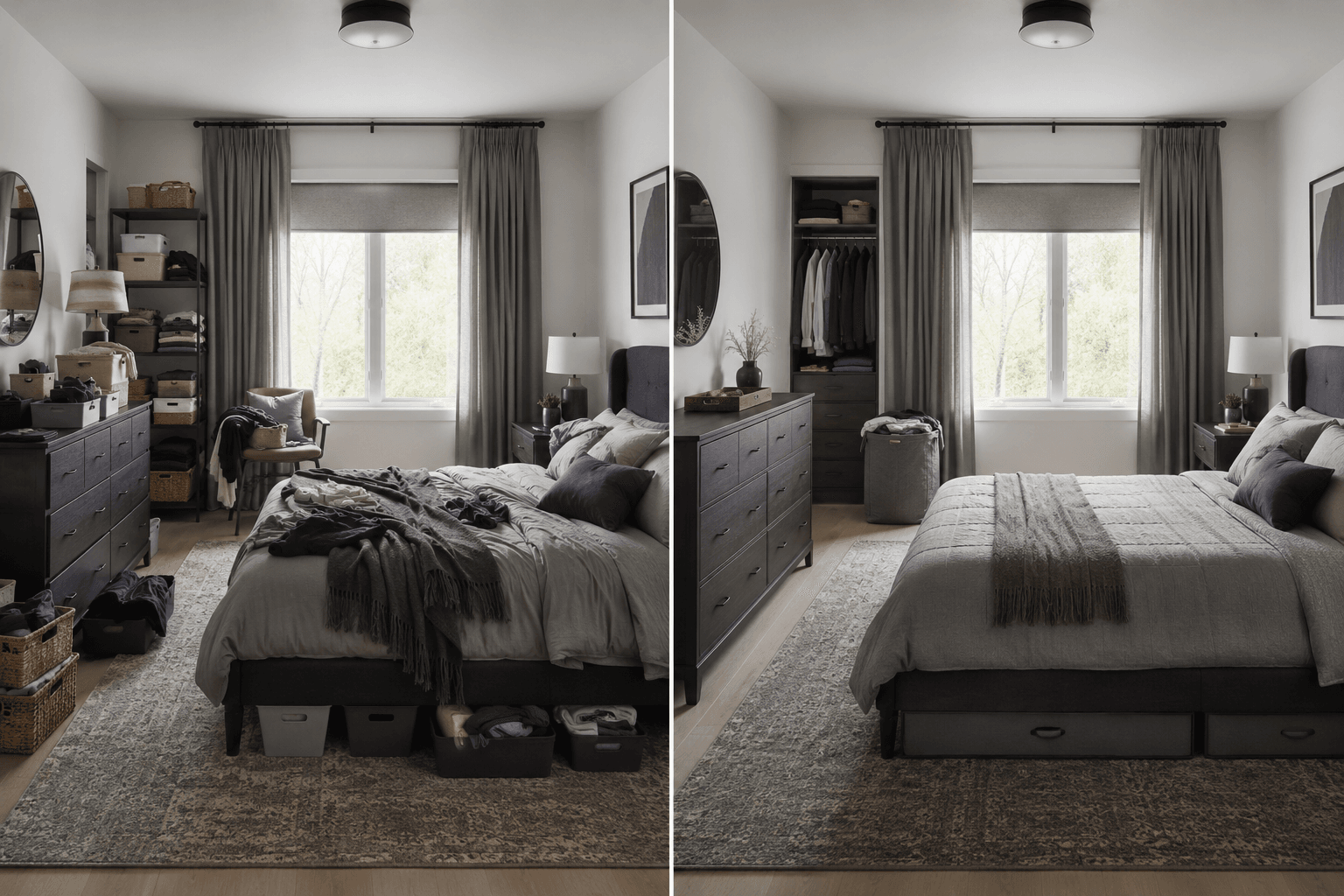
Fix the system before multiplying the organizers.
Add several small baskets when clothing volume already exceeds the room.
Add one meaningful capacity move first.
Use every open surface as temporary storage.
Put the daily-use home on the route where the item naturally lands.
Fill a narrow room with multiple shallow pieces simply because they fit.
Use height, doors and the bed footprint while protecting circulation.
Choose what you’re considering. We’ll show the checks that matter before you click.
What are you adding?
Use this only after you understand the route. Search by words like “shoe,” “drawer,” “bedside,” “wall,” or “hamper,” or open one storage family.
Collapsed by default so the page stays a decision guide, not a catalogue.
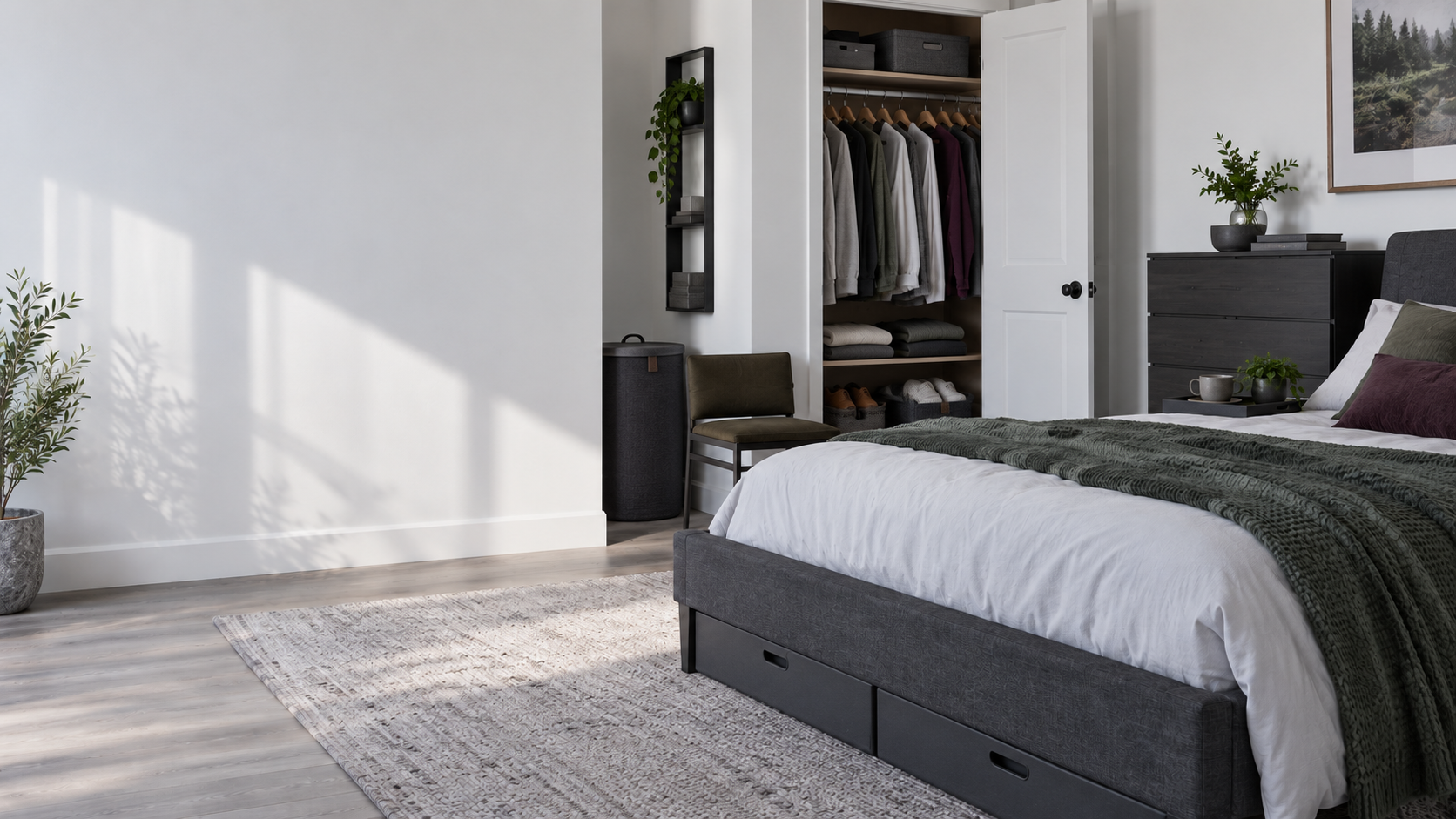
A calm bedroom does not need storage everywhere. It needs enough capacity, hidden space for lower-priority belongings, and easy homes for the things you use every day.
Continue with the next problem that changes how the room functions or feels.