
Statement
One strong piece. The easiest route to keep visually quiet.
See statement route →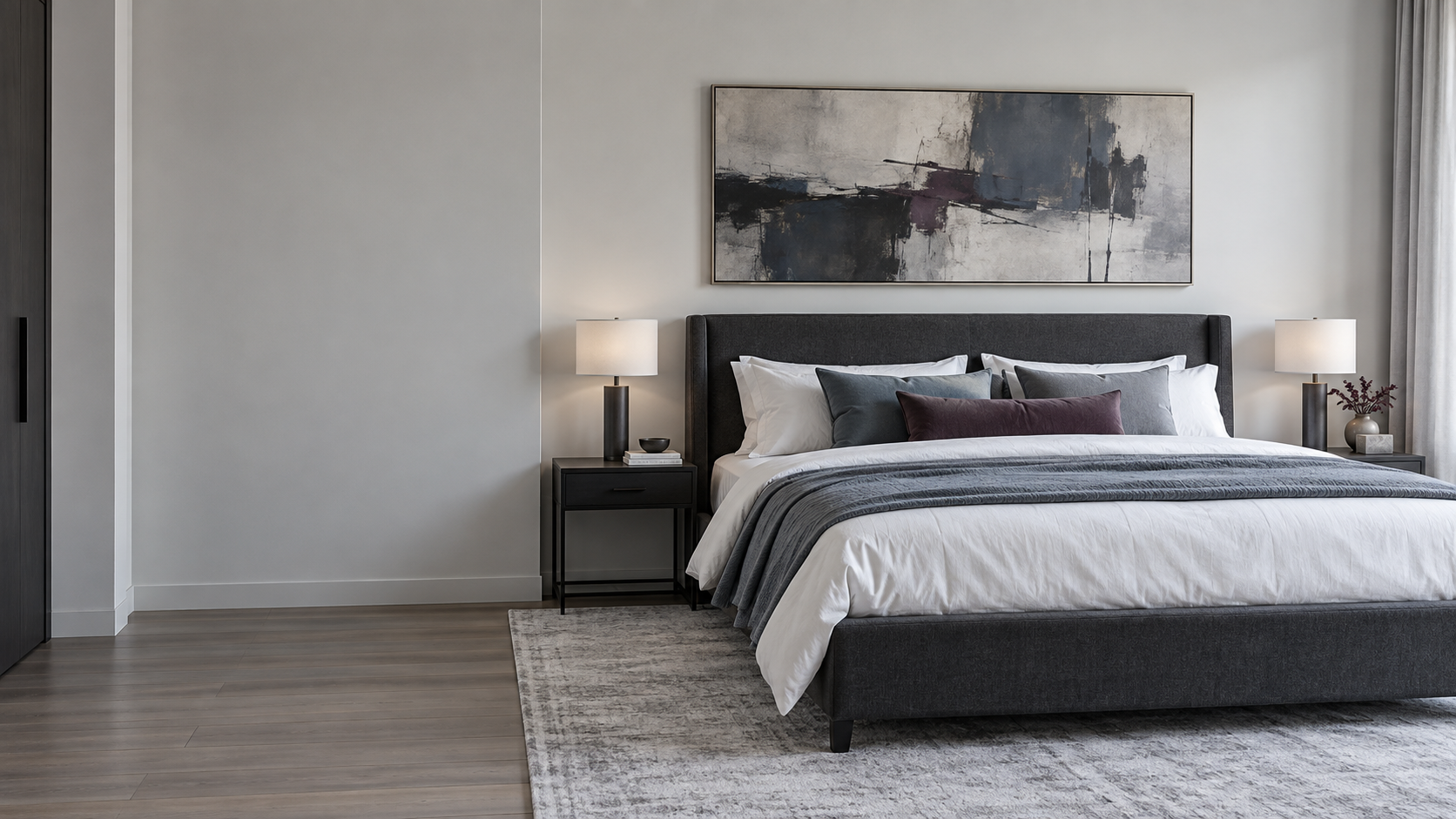
Too-small art. A blank wall. Too many little pieces. Start with what feels wrong—then build one composition that belongs to the room.
The fastest way to a better wall is to name the failure first. Choose the situation that feels most like your bedroom.
Affiliate disclosure: As an Amazon Associate, Ravnora Decor may earn from qualifying purchases. Product links may open on Amazon.
Switch the wall strategy and watch the room find its hierarchy. One decision changes; everything else stays grounded.
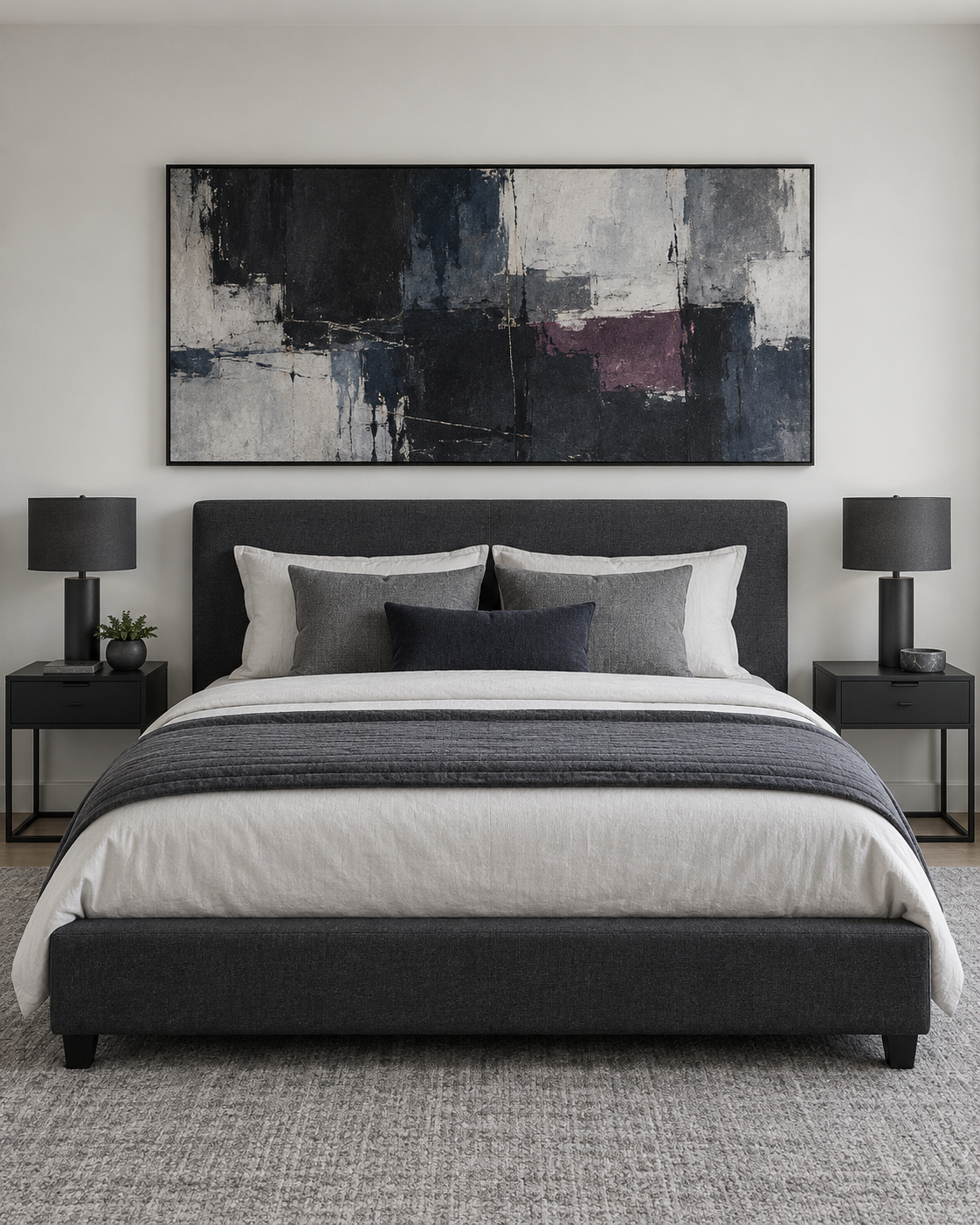
Use one decisive composition when the bed needs a focal point but the room does not need more visual objects.
Beautiful wall decor still feels wrong when its visual width is too timid for the furniture below it. Scale is the first form of confidence.
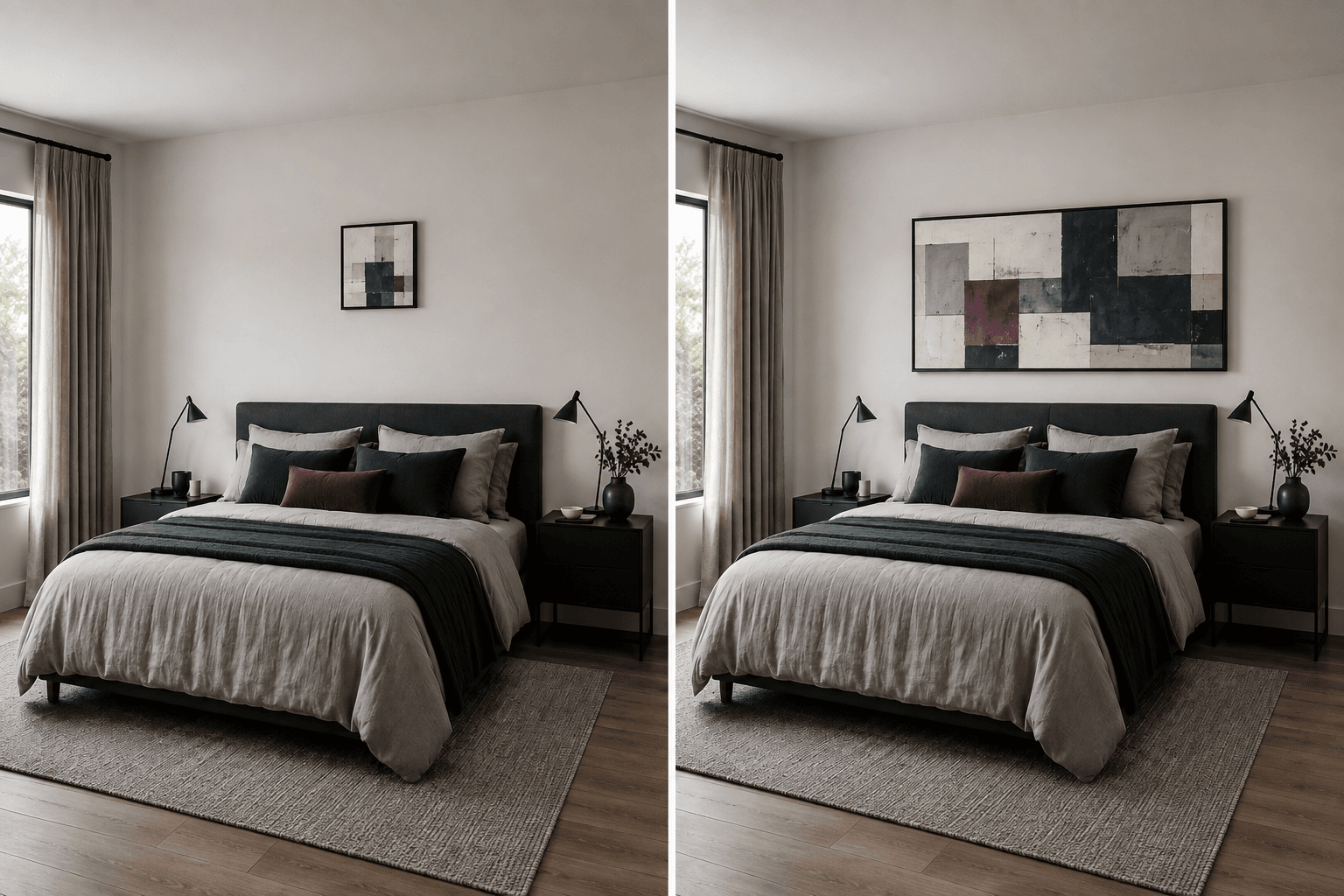
Choose the bed and composition. This is a design starting range—not a universal mounting rule.
A single piece in this range usually reads as intentionally connected to a queen bed without consuming the entire wall.
Also verify headboard width, ceiling height, nearby sconces/windows and the actual product dimensions before mounting.
Choose the visual job first: one focal shape, a rhythm, a collection, reflection, softness or a display line. Then choose the object.
One strong piece. The easiest route to keep visually quiet.
See statement route →More reach than one compact frame, while staying controlled.
Find art sets →Several images, but one clear outer silhouette.
See gallery route →Best when the wall can become useful as well as decorative.
See mirror route →Softens a room dominated by rectangles, glass and hard frames.
See textile route →Useful when the art changes more often than the wall should.
Find ledges →Ten high-clarity starting points across scale, reflection, display, texture, lighting and dimension—each with a reason to exist.
These four combinations are deliberately edited. Build enough to resolve the wall, then protect the negative space.
One substantial artwork with focused picture light. No gallery around it.
Use five larger frames instead of fifteen tiny ones when calm matters.
Useful on a dresser wall when reflection and art should share one zone.
Let one textile supply softness. Do not surround it with more small décor.
The visual luxury is restraint: one focal answer, supporting function, and enough quiet wall left around both.
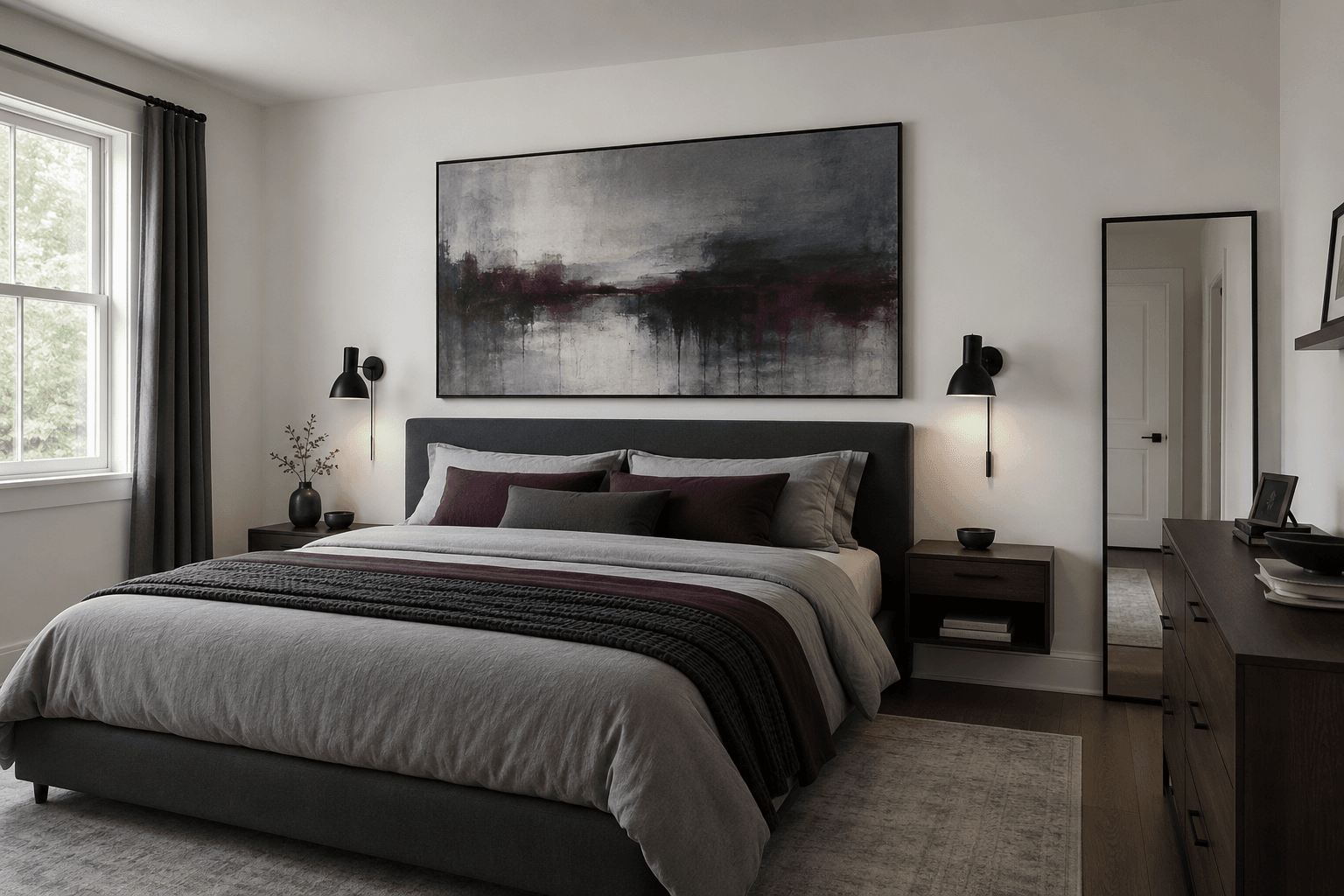
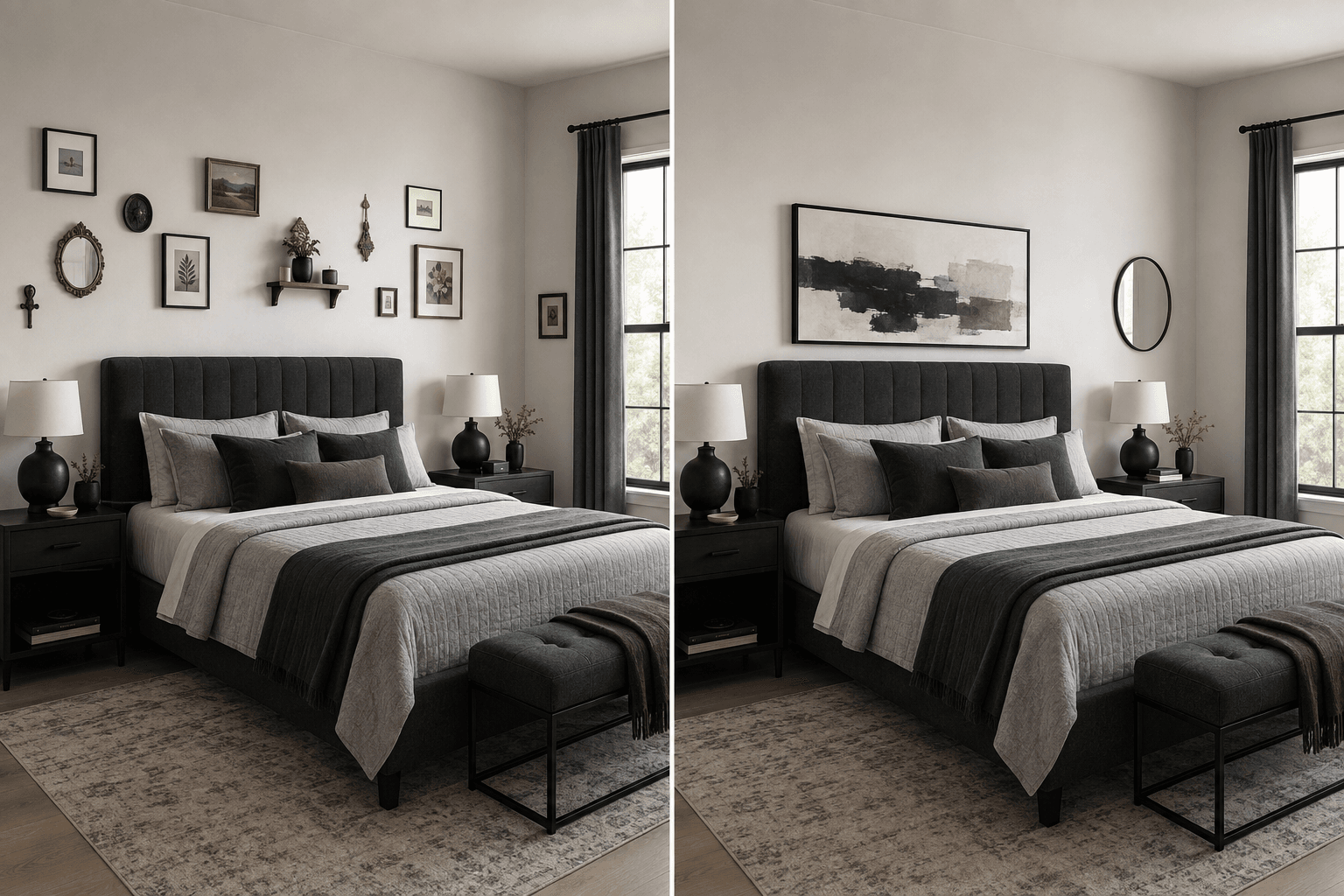
When every small object asks for attention, nothing feels important. Editing restores hierarchy faster than adding another piece.
Build enough total visual width to connect the composition to the furniture.
Make one grouping with a deliberate outer edge—or remove some pieces.
Keep the composition visually related to the furniture beneath it.
Give one wall dominance and let the secondary walls stay quieter.
Skip the marketplace feeling. Open only the family that solves the wall job you have already identified.
Tap each check only after you have verified it for your real wall and the current product listing.
Keep the momentum: solve the next room layer without undoing a wall decision that already works.