
Round
Softens hard cabinetry and tile lines. Expect less usable reflection area at the corners.
Bathroom Mirrors
Set the wall proportion, choose the right configuration, then decide whether the mirror also needs light, storage or close-up function.
As an Amazon Associate, Ravnora Decor may earn from qualifying purchases. Product links open on Amazon.

Ravnora Mirror Fit
Use the room—not the product thumbnail—to choose your starting route.
Configuration First
A double vanity does not automatically demand two mirrors. Choose the wall composition that suits the sinks, lighting and available width together.
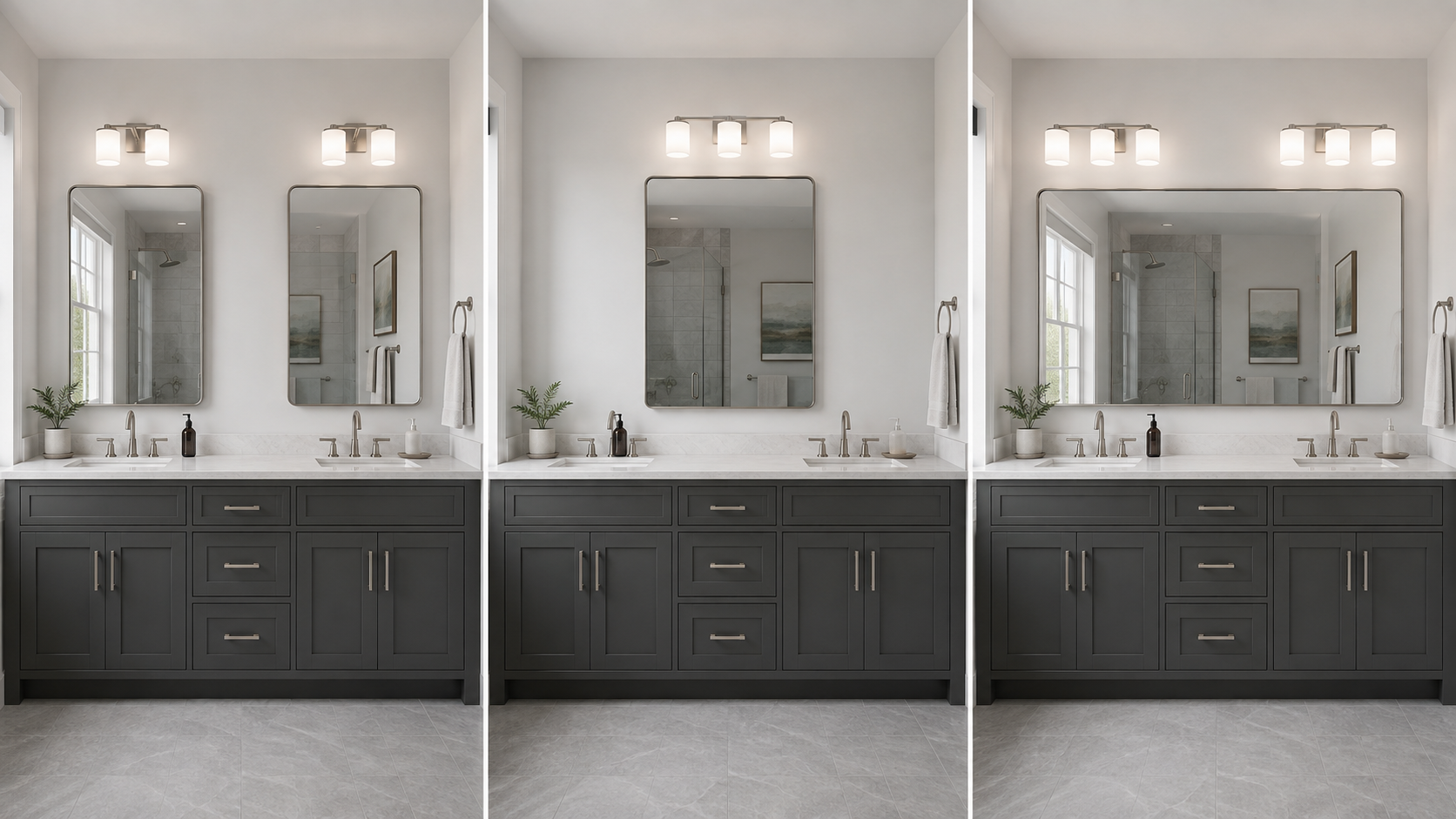
Same vanity. Different mirror architecture.
Useful when each sink needs a clear visual zone or lighting must sit between and beside the mirrors.
Creates a continuous reflection and can make a long vanity wall feel calmer and more architectural.
Works only when the usable reflection and wall composition remain intentional.
Shape Changes the Wall
Once the footprint works, shape can soften, stretch or sharpen the vanity composition.
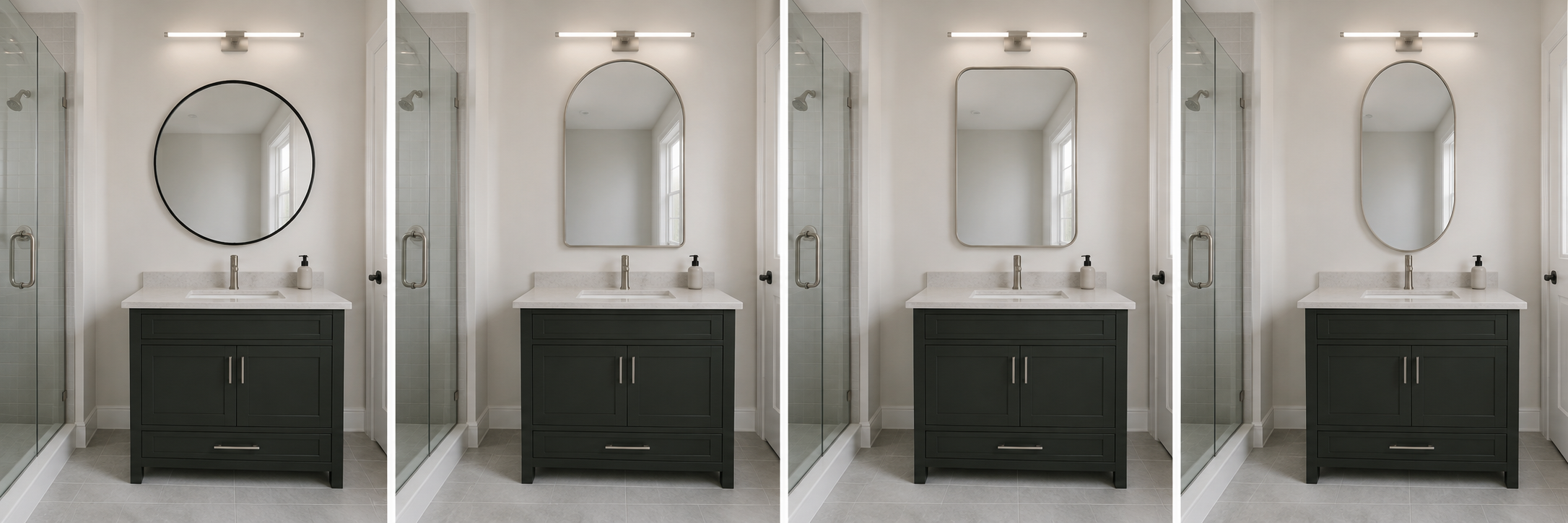
Softens hard cabinetry and tile lines. Expect less usable reflection area at the corners.
Adds vertical emphasis without the decorative weight of a heavily shaped frame.
The balanced route: generous reflection area with a softer edge than a sharp rectangle.
Useful when the wall needs a slimmer visual line or a more elongated silhouette.
Function Before Features
Do not pay for extra function unless it solves a real bathroom friction point.
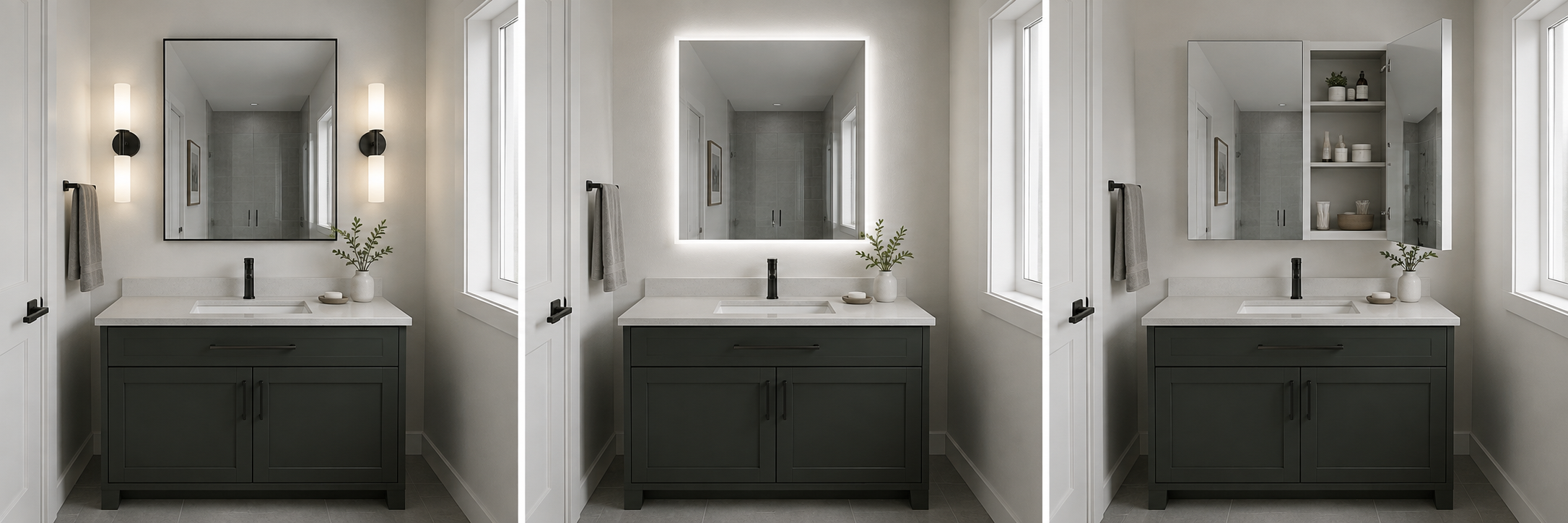
Best when separate lighting and storage already work. Spend the decision on scale, shape and finish.
Useful when the mirror zone needs controlled task illumination. Verify wiring and actual dimensions.
Turn wall depth into daily capacity. Check cabinet depth, door swing and recessed-versus-surface installation.
Add pivot, magnification or shower-specific reflection as supporting tools—not the main vanity focal point.
The Ravnora Edit
Start with the mirror family that matches your wall. Then compare sizes and current options on Amazon.
Swipe horizontally to compare picks →
Use when the vanity needs a softer silhouette and clear matte-black definition.
Rounded corners keep a practical rectangle from feeling visually hard.
A strong route when the wall needs height without an ornate frame.
Use the gold frame as one deliberate room note rather than matching every metal.
A compact illuminated route when the mirror itself needs to contribute useful light.
A genuinely wider illuminated route for larger single vanities or shared mirror zones.
Useful when storage matters more than making the frame a decorative feature.
A larger wall-storage route when one cabinet needs to serve a broader vanity zone.
Ravnora Finish
The mirror, lighting, counter and storage should read as one resolved wall.
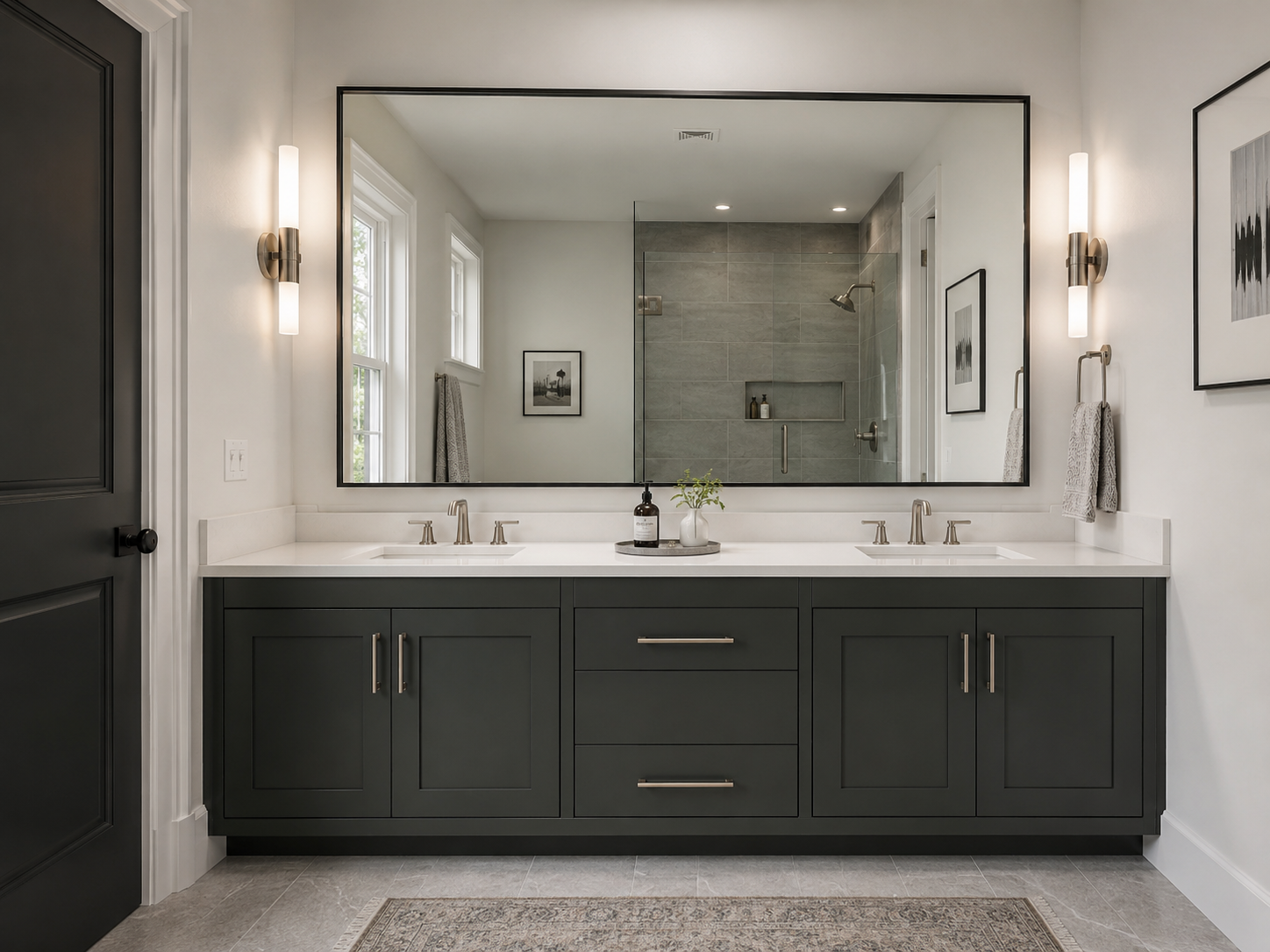
Prioritize clear reflection and restrained frame weight.
See the balanced rectangle →Use one wide reflection when continuous visual width makes more sense than separate mirrors.
See the wide LED route →Let the mirror wall absorb the things that keep spreading across the counter.
See the wide cabinet →Keep the main vanity mirror simple; add magnification only where the routine needs it.
See close-up options →Mistake → Better Move
Scale and clearance usually matter before decorative detail.

A mirror that looks substantial online can disappear over a wider vanity.
Confirm width and height against the vanity, faucet and lighting before buying.
The mirror and fixture need visible breathing room.
Mirror, lights, faucet and backsplash should solve the wall together.
Explore by Mirror Job
Once your route is clear, compare alternatives inside the product family that actually fits it.
Use these when reflection is the main job and silhouette does the visual work.
Swipe horizontally to compare →
More vertical reflection for taller wall zones.
A narrower black-framed route for compact vanities.
A broader pill shape with a restrained warm-metal edge.
Same warm-metal idea in a smaller footprint.
Useful when the reflection should feel broad while the frame visually disappears.
A standard-scale frameless route with a more visible beveled perimeter.
Vertical shape for smaller single-vanity walls.
Useful where a controlled tilt adds practical viewing flexibility.
A warmer adjustable alternative when pivot function genuinely helps.
Choose these only when illumination is part of the mirror decision—not merely a novelty feature.
Swipe horizontally to compare →
Useful when the wall needs a lit perimeter without a visible metal frame.
A standard vanity format with both front and rear illumination.
Combines integrated illumination with a stronger architectural outline.
Use the wall when countertop clutter—not mirror style—is the real problem.
Swipe horizontally to compare →
Fits a smaller storage need without dominating the vanity wall.
A more architectural storage route with adjustable interior shelving.
Combines concealed storage with close-up routine support.
Uses vertical wall height when width is limited.
These should support the routine quietly rather than compete with the main vanity mirror.
Swipe horizontally to compare →
Useful when close-up tasks need both magnification and localized light.
A more permanent close-up solution for a dedicated routine zone.
A non-integrated-light route when magnification is the only extra job.
A compact supporting mirror for close grooming tasks.
A small no-drill reflection tool for shower routines.
A larger adjustable shower-specific option with its own anti-fog approach.
Ravnora Check
A two-minute wall check can prevent the most expensive mirror mistakes.
Next Ravnora Decision
The next useful move is usually lighting, counter control or nearby storage—not another mirror.