
If pulling one chair out blocks the room, solve the footprint before adding anything else.
Check movement →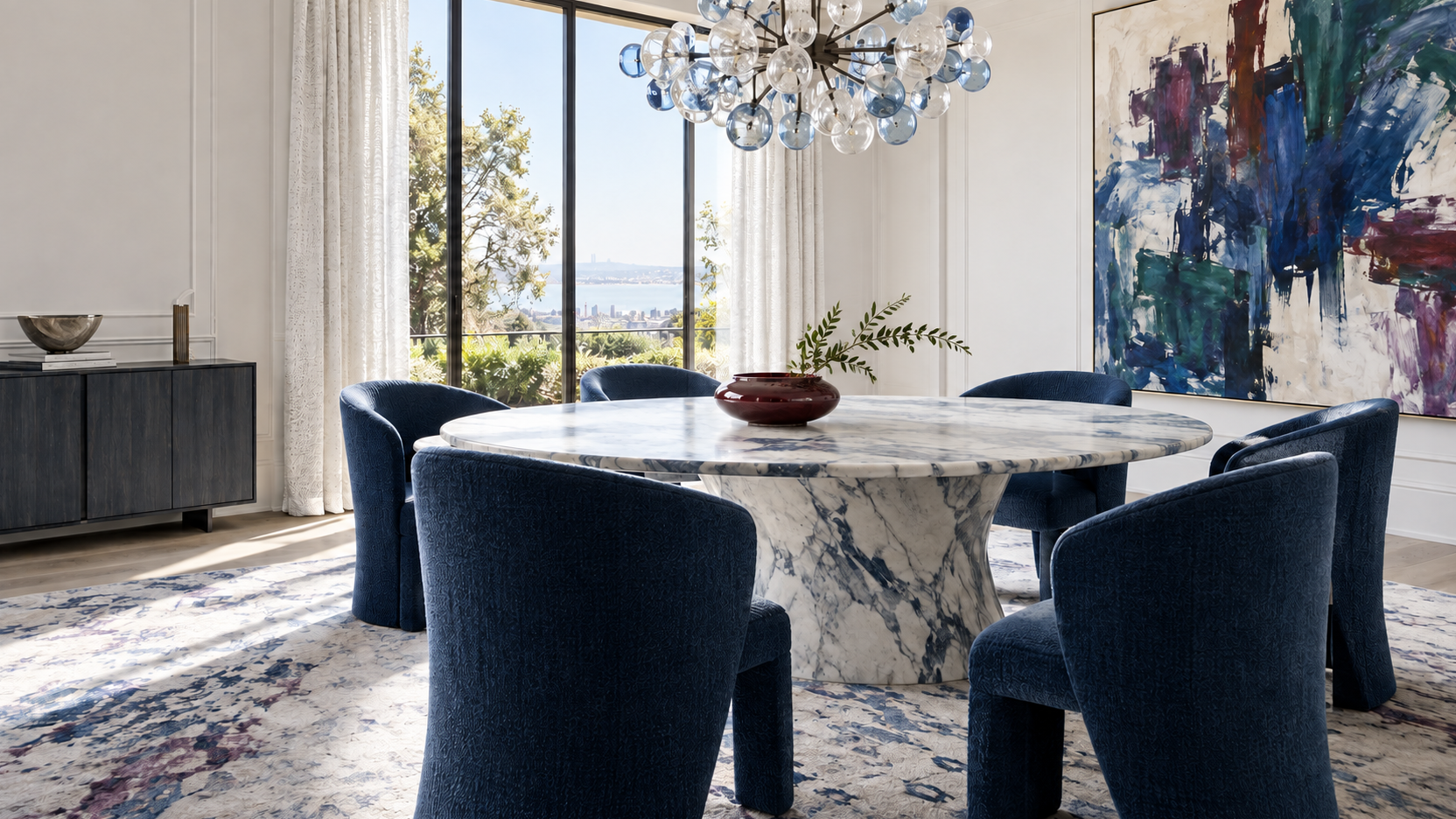
Dining room decor ideas
Build the room from the table out.
If the room feels unfinished, cramped or flat after dark, the answer is rarely “more decor.” Find the layer that is making everything else work harder.
Read the room seated
Sit down. What do you notice first?
A dining room reveals its problems from the chair: movement below, atmosphere above, unfinished edges around you, or a table surface doing too much.
A dining group can look visually stranded even when every individual piece is beautiful.
Compare the floor frame →The room can work perfectly in daylight and lose all presence once the sun goes down.
Switch day to dinner →Windows, storage and the seated sightline quietly decide whether the room feels complete.
Read the perimeter →Dining Room Orbit
Build the room from the table outward.
The table is the center of gravity. Choose the layer that feels wrong and the room tells you where to go next.
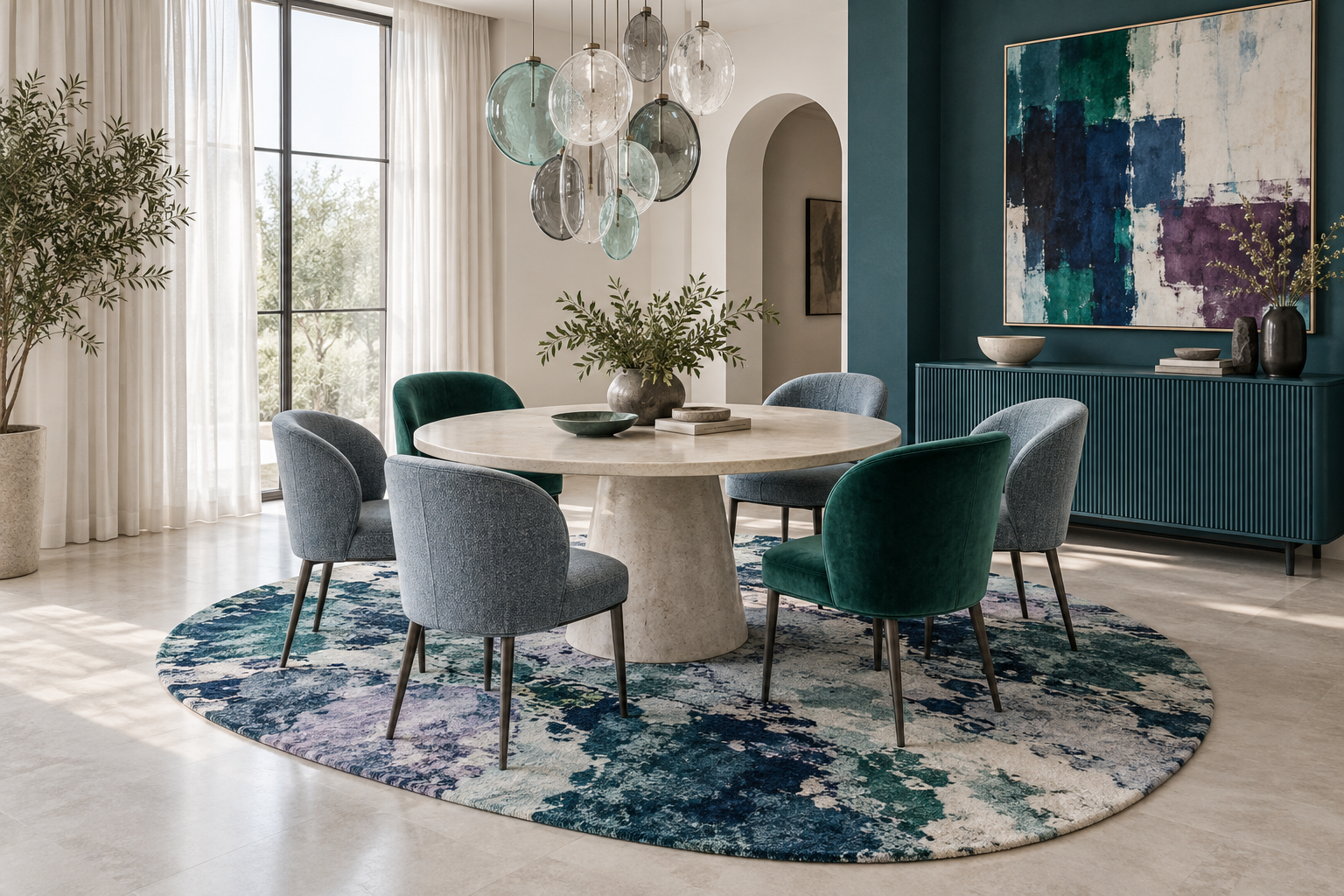
Center · Furniture
The table sets the room’s gravity.
If scale, seating or placement is wrong, every layer around it has to compensate.
Fix the center →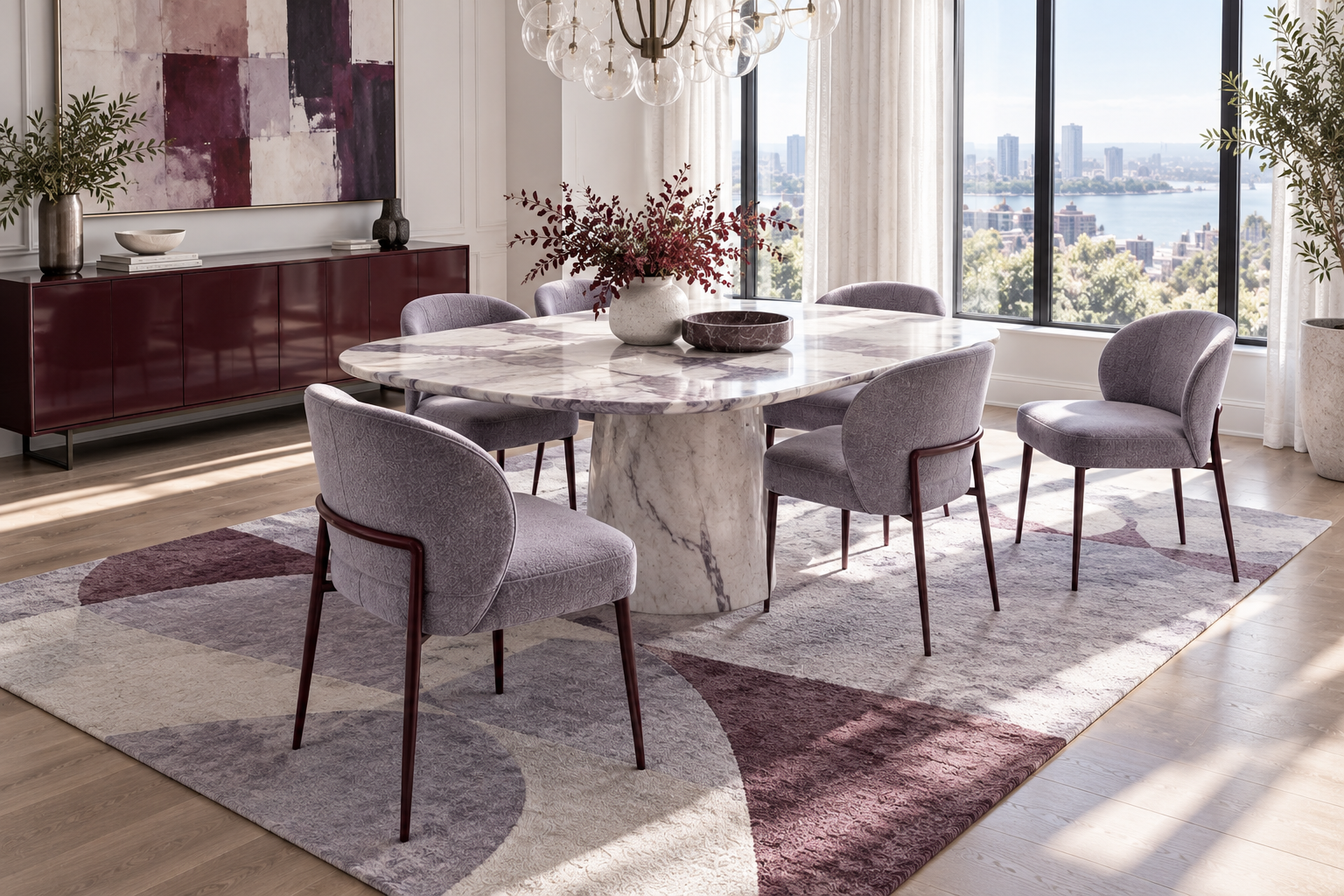
Movement before decoration
A dining room is bigger than its tabletop.
A table can technically fit and still make the room feel cramped. The real footprint includes pulled-back chairs and the path people need to move around them.
Chair pull-back expands the room you actually need.
Table only
In real use
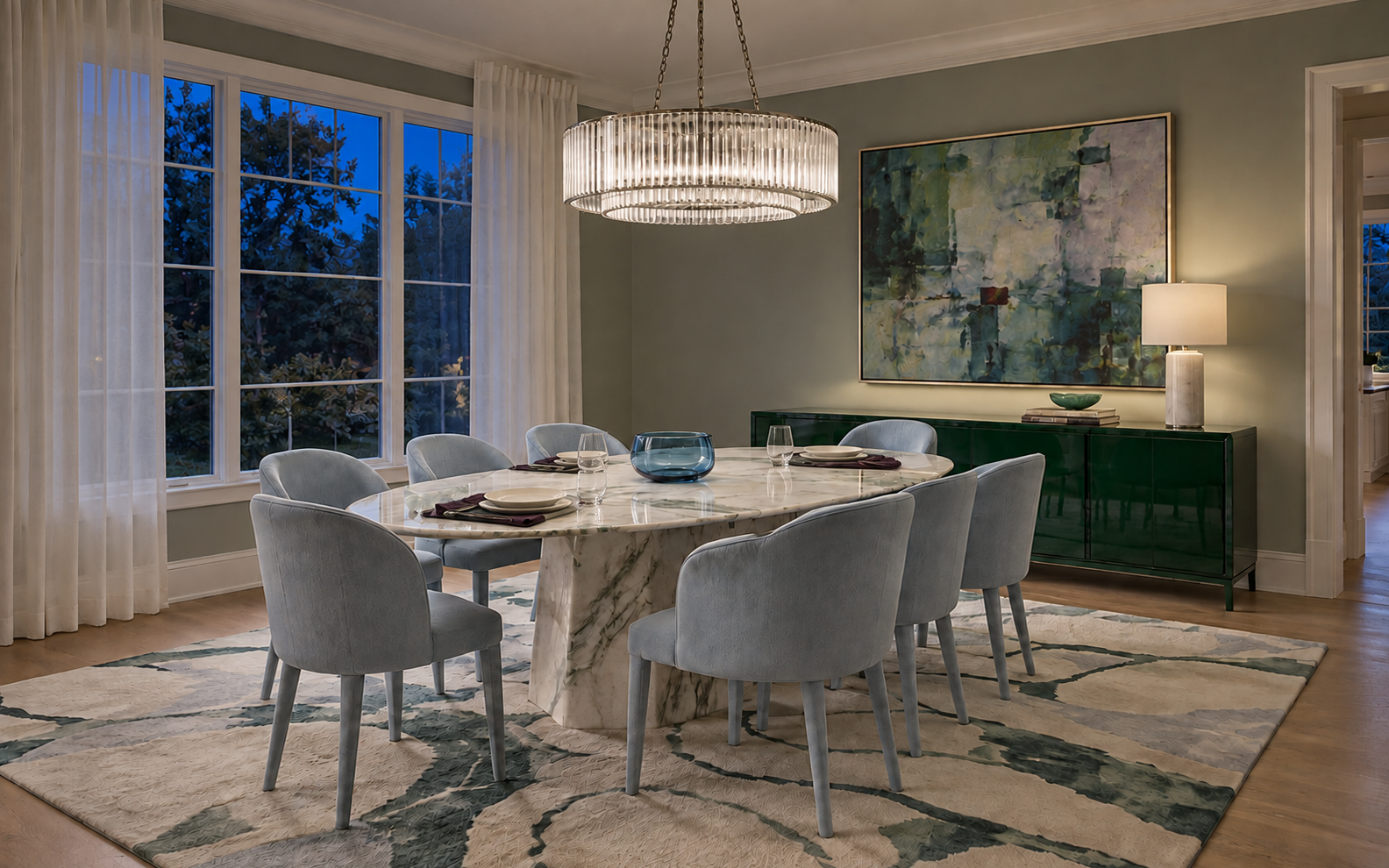
Frame it twice
Below gives it a boundary. Above gives it a mood.
The rug defines the dining zone in plan. The light defines it in the evening. One room, two different jobs.
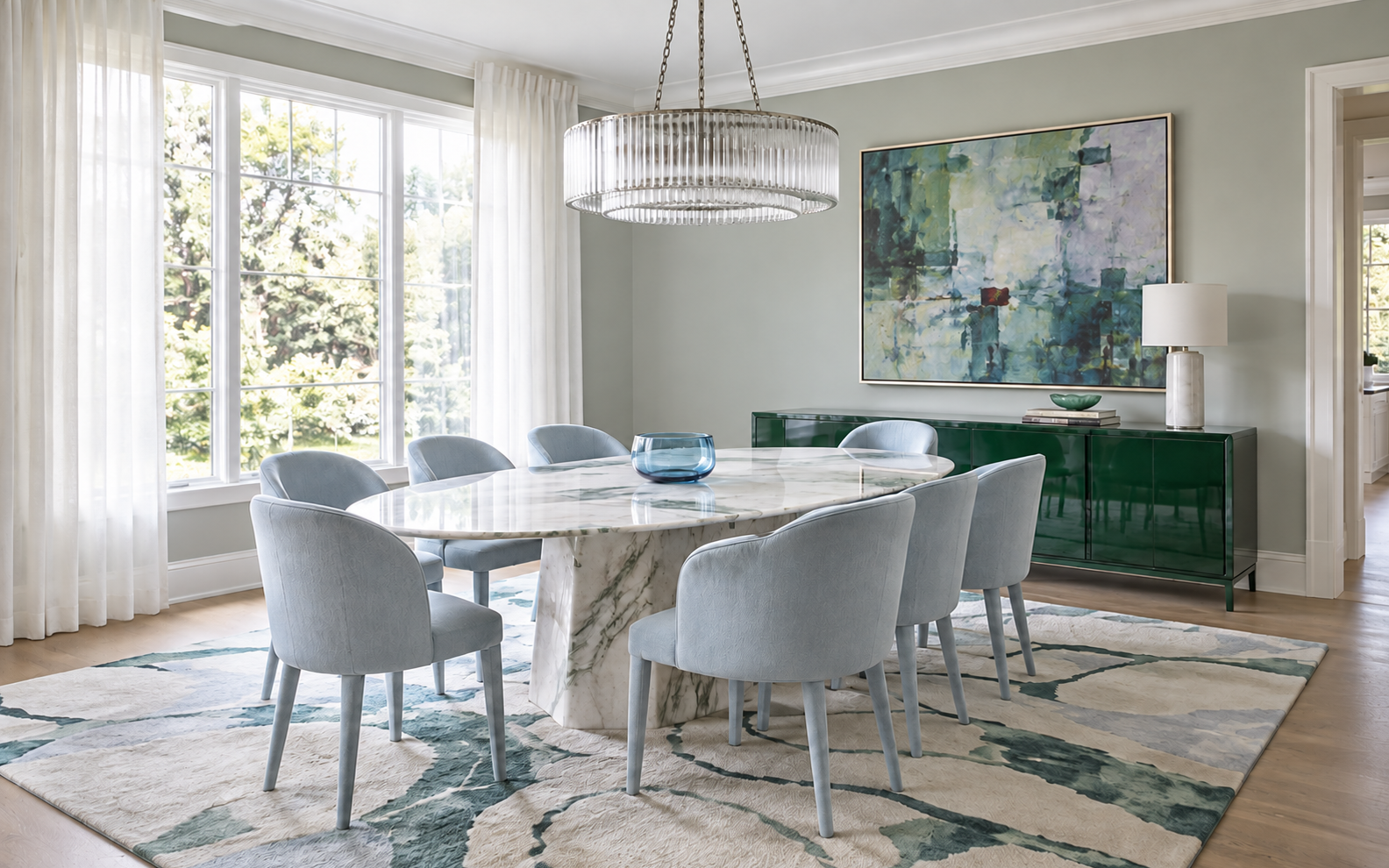
The closest visual layer
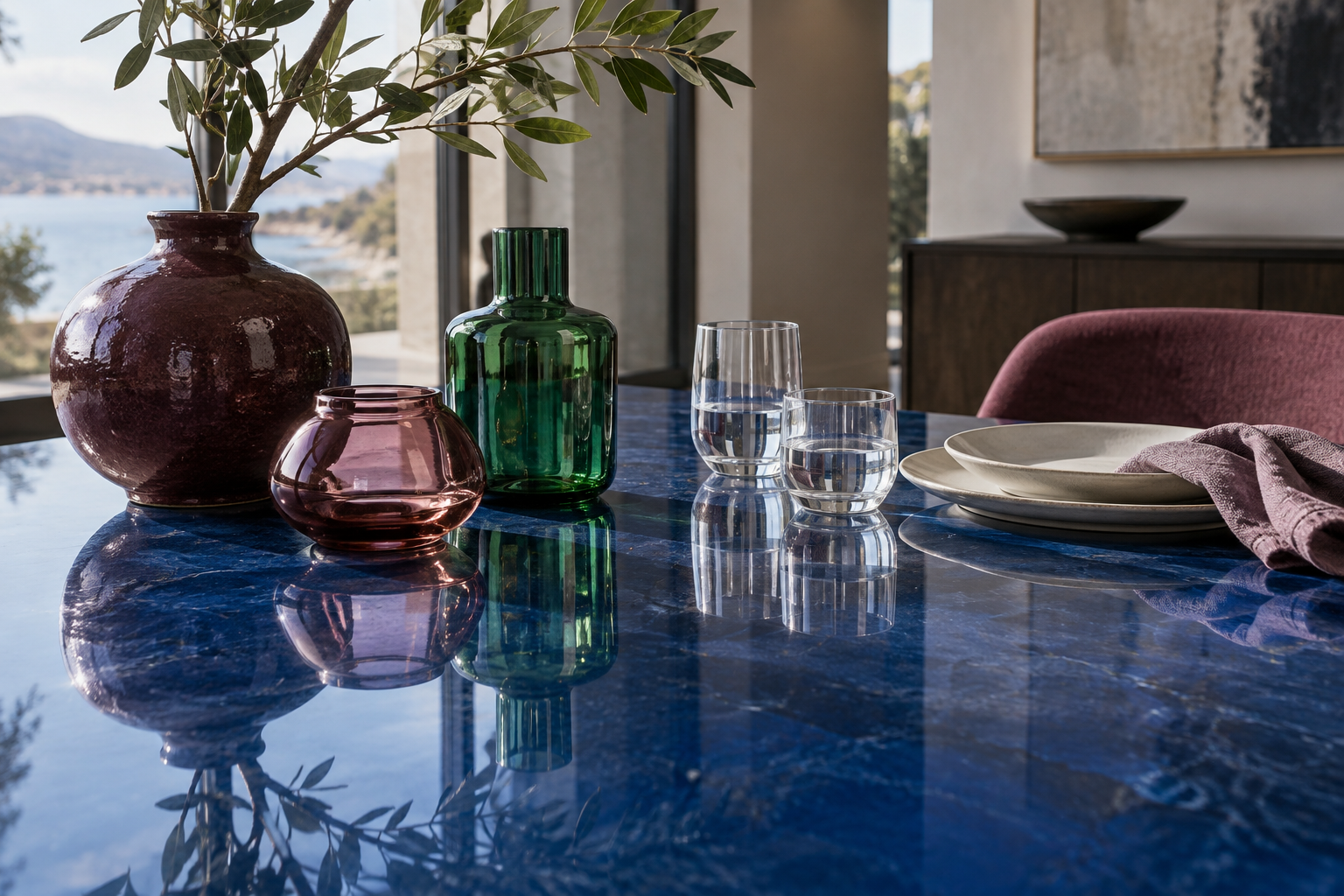
The final twenty percent happens on the table.
A dining table should look intentional when nobody is eating—and still be easy to clear when people are. Restraint gives the surface room to feel expensive.
Style the table surface →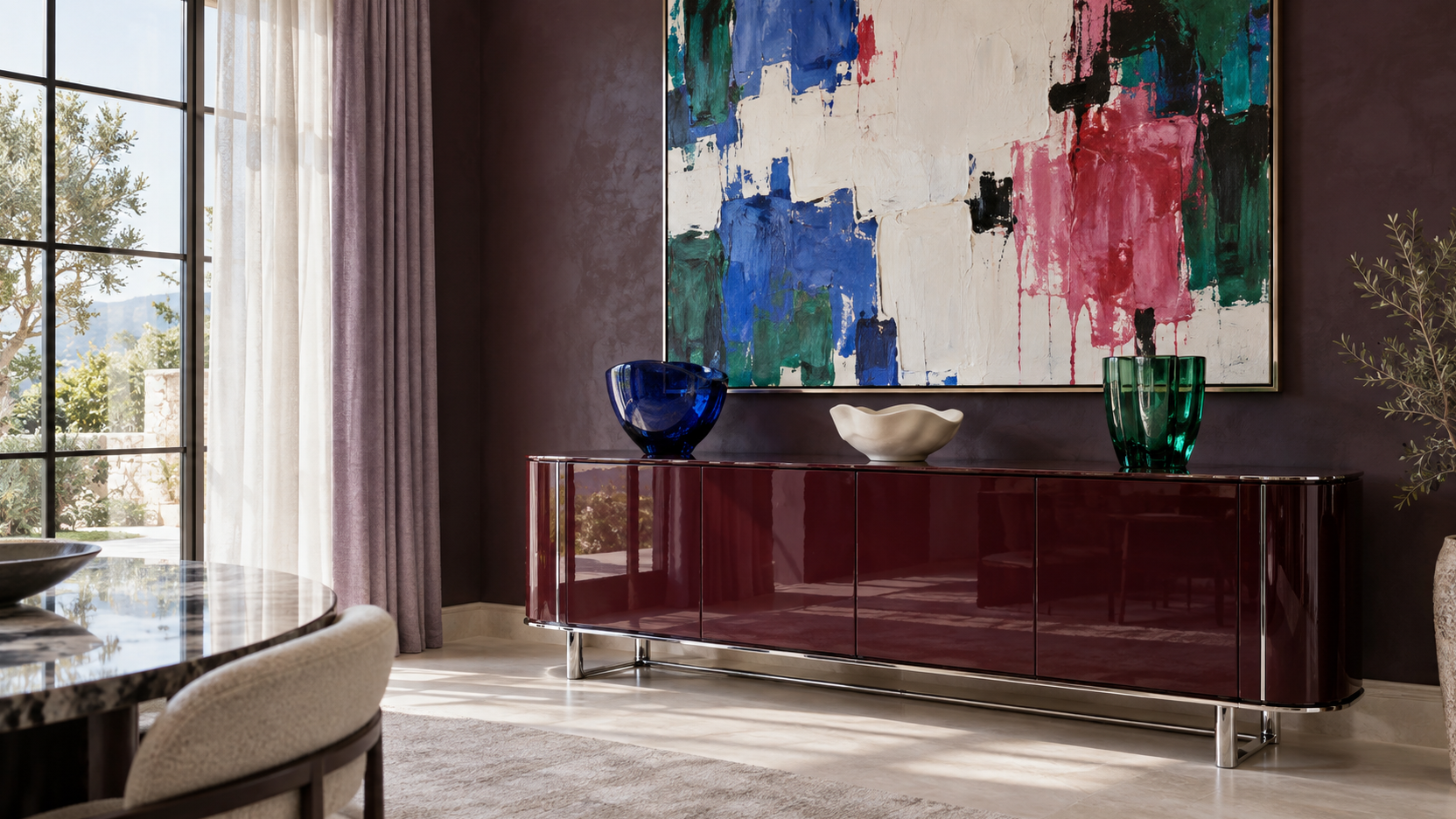
The quiet work
The perimeter is why the room feels finished.
The center gets attention. The edges create completion: soften the window, clear the table, and finish the view you actually see while seated.
Small room, stricter decisions
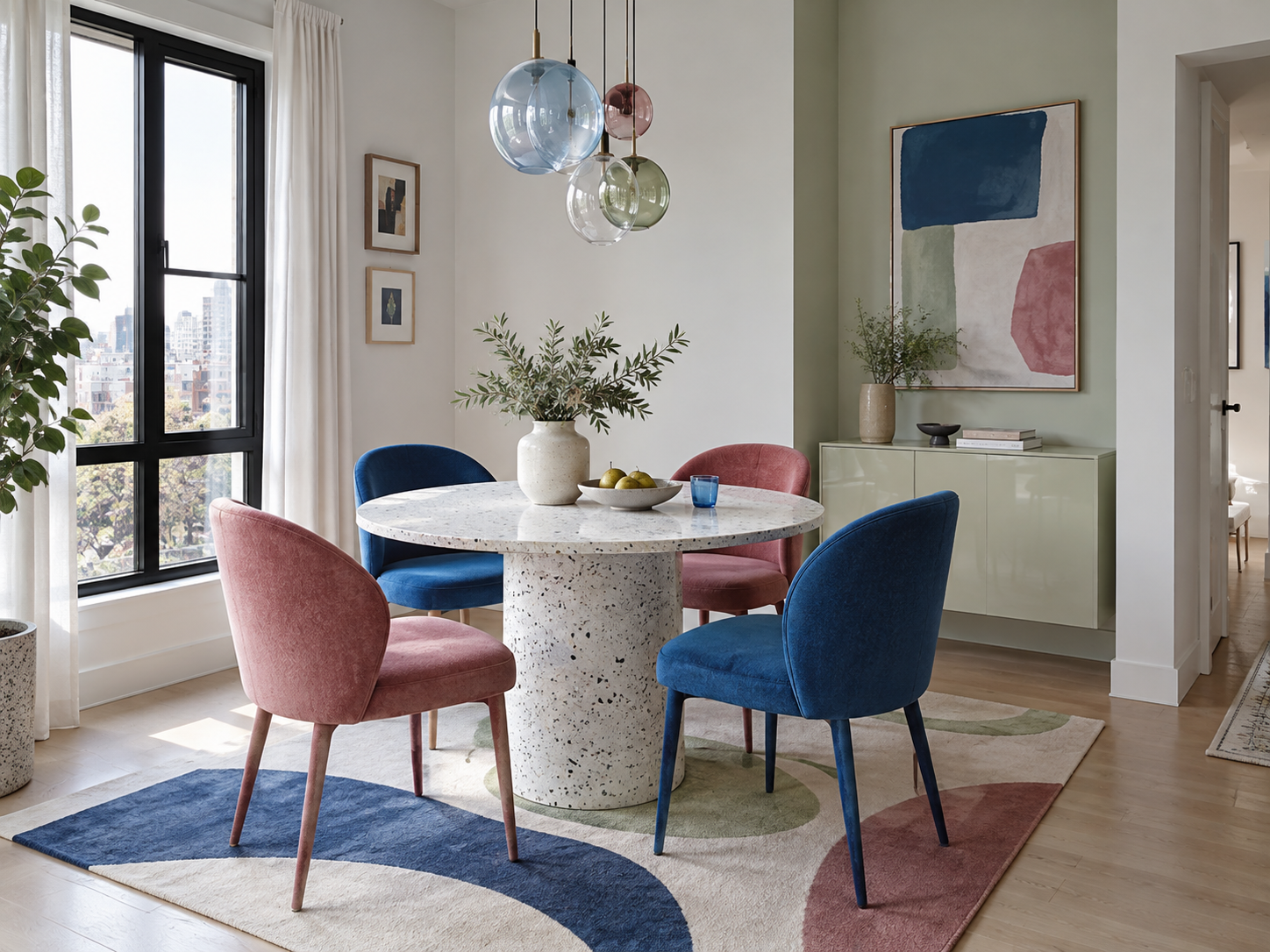
When the room is small, every inch joins the conversation.
Small dining rooms do not need timid design. They need sharper geometry: cleaner circulation, lighter visual weight, useful storage and fewer competing decisions.
- Protect the chair pull-back zone first.
- Use shape and pedestal space to free movement.
- Keep storage shallow and the room visually intentional.
Choose the unresolved layer
What still feels wrong?
Start with the problem you notice—not the category name. The right specialist guide is the one that solves the room’s next bottleneck.
01
The center feels out of scale.Dining Room Furniture
→
02
The table is bare—or permanently cluttered.Dining Table Decor
→
03
Dinner goes flat after dark.Dining Room Lighting
→
04
The table group looks like it is floating.Dining Room Rugs
→
05
The window feels harsh or unfinished.Dining Room Curtains
→
06
The table keeps becoming storage.Dining Room Storage
→
07
The seated view still feels unfinished.Dining Room Wall Decor
→
08
Every wrong piece affects movement.Small Dining Room Solutions
→
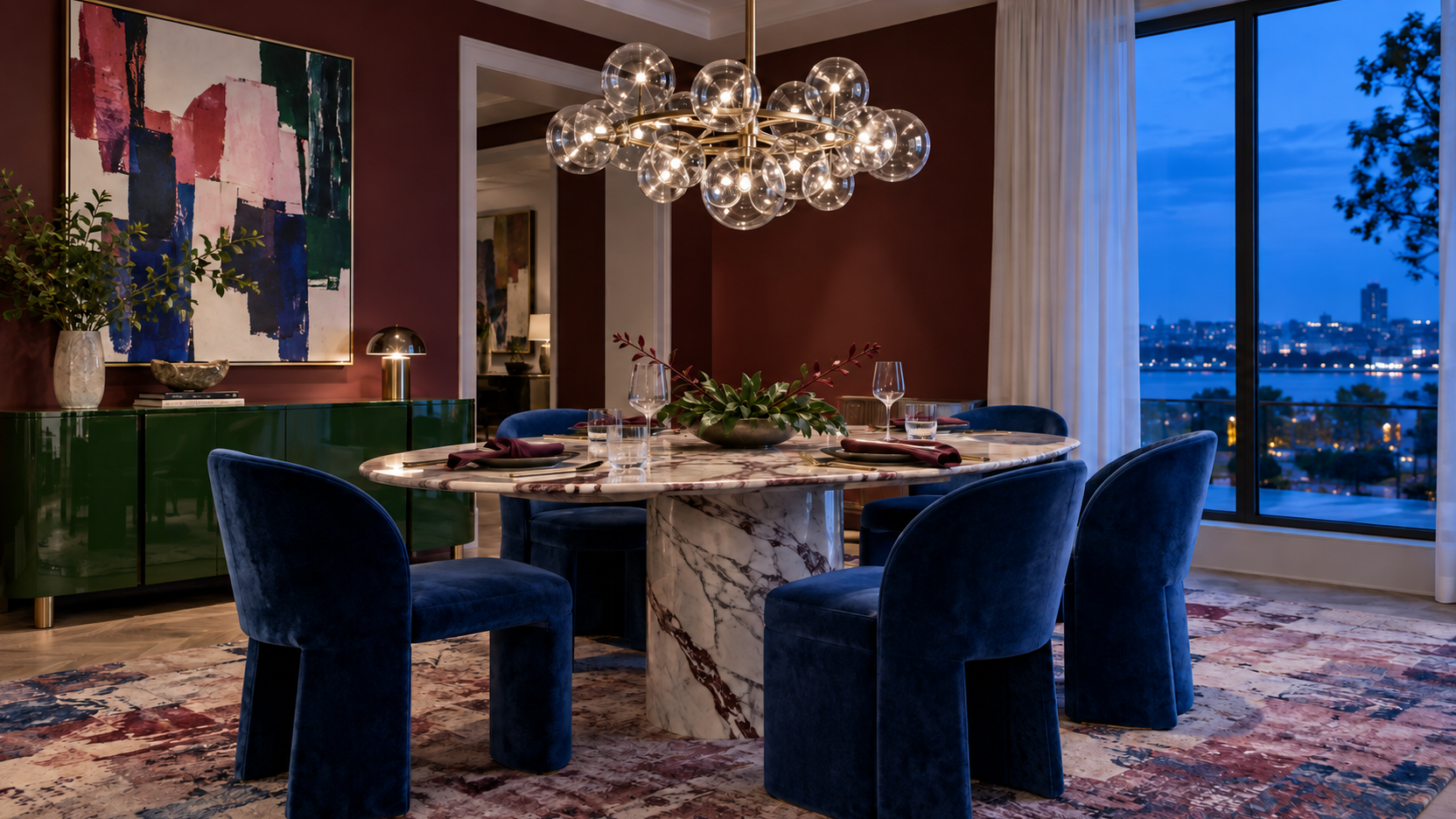
The room before anyone arrives
You do not have to redo the whole room.
Fix the layer that is making everything else work harder. Once the center, movement, light and perimeter agree, the room starts feeling intentional.
Choose your next dining-room layer →