
If movement feels awkward, solve body and clearance first.
Check chair fit →
Home office decor ideas
Build a home office around how you actually work.
Start with the friction you notice every day: an uncomfortable chair, a crowded desk, screen glare, an unfinished background, or simply not enough room.
The work radius
Four zones decide whether work feels easy.
Your body, your hands, your eyes and your reset routine each occupy a different radius around the desk. Find the one creating friction.
Body before styling
Your chair and desk should move as one system.
Before judging color, art or accessories, test the three places where bad geometry becomes impossible to ignore.
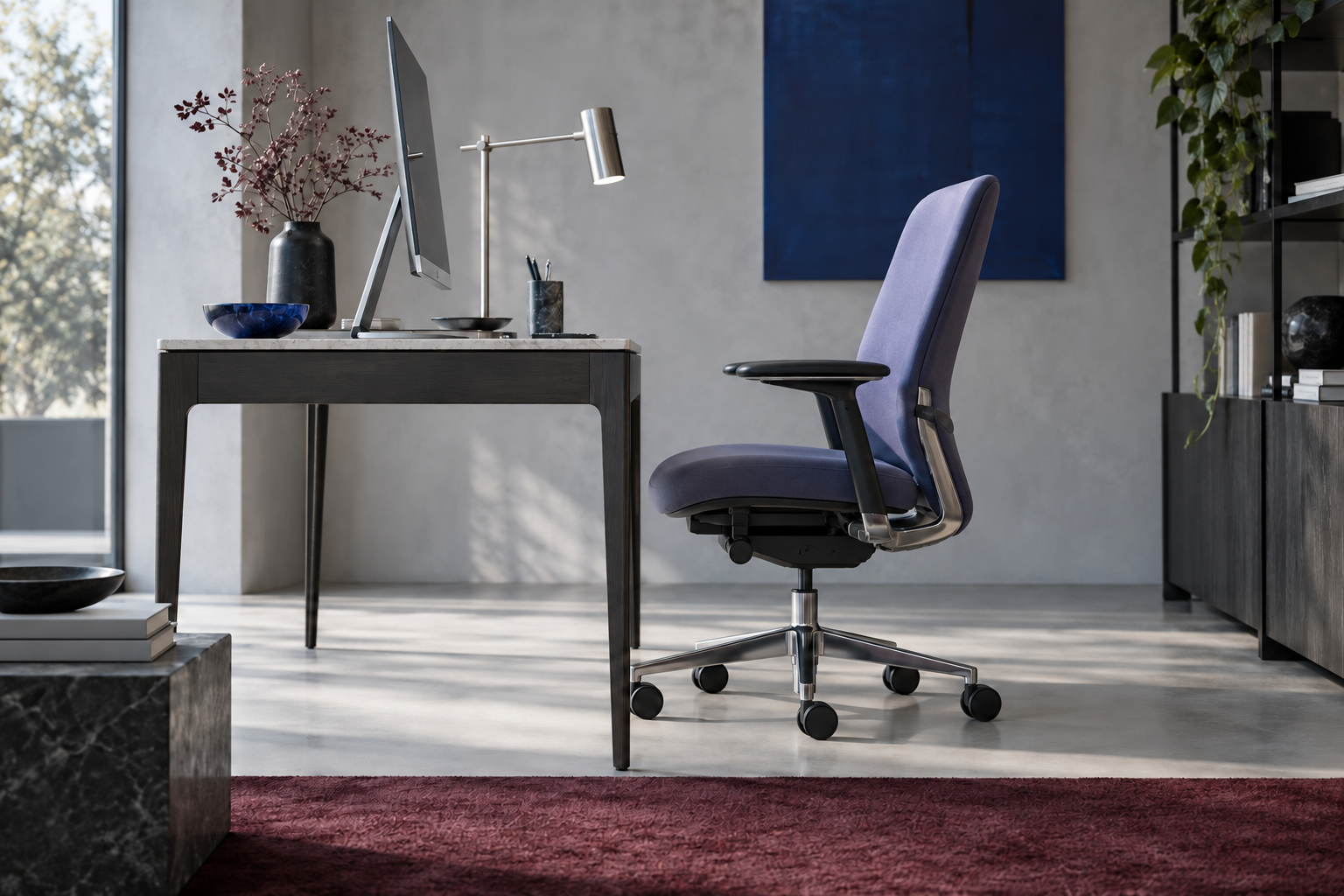
01 · Pull backCan the chair leave the desk without colliding with the room?
02 · Tuck inDo the arms, seat and knees actually belong under this desk?
03 · Work hereIs the surface deep and wide enough for the work you really do?
The reach field
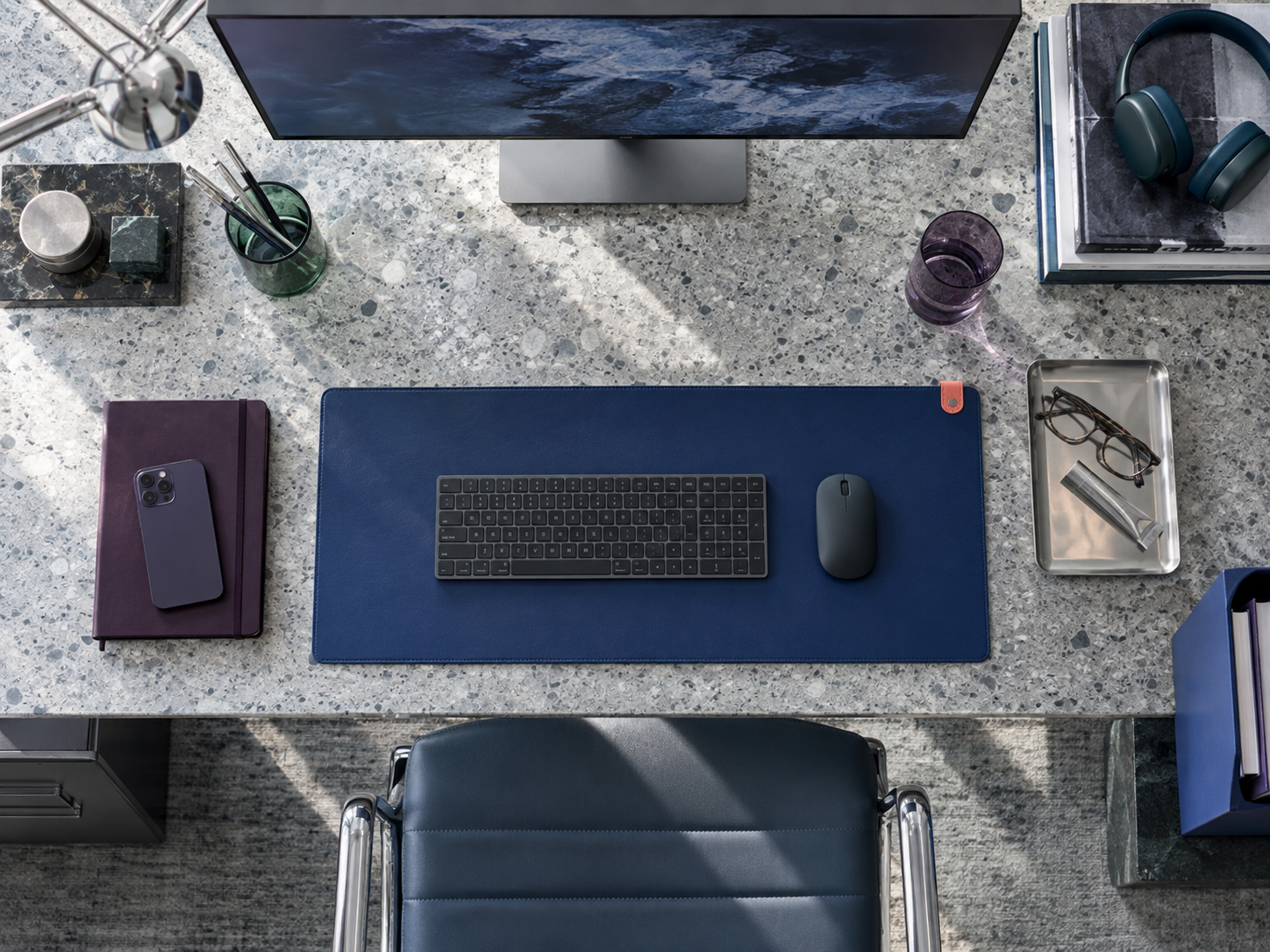
If you touch it constantly, it earns reach.
Keep active tools closest. Move supporting tools outward. Let storage take over before the desktop becomes the room.
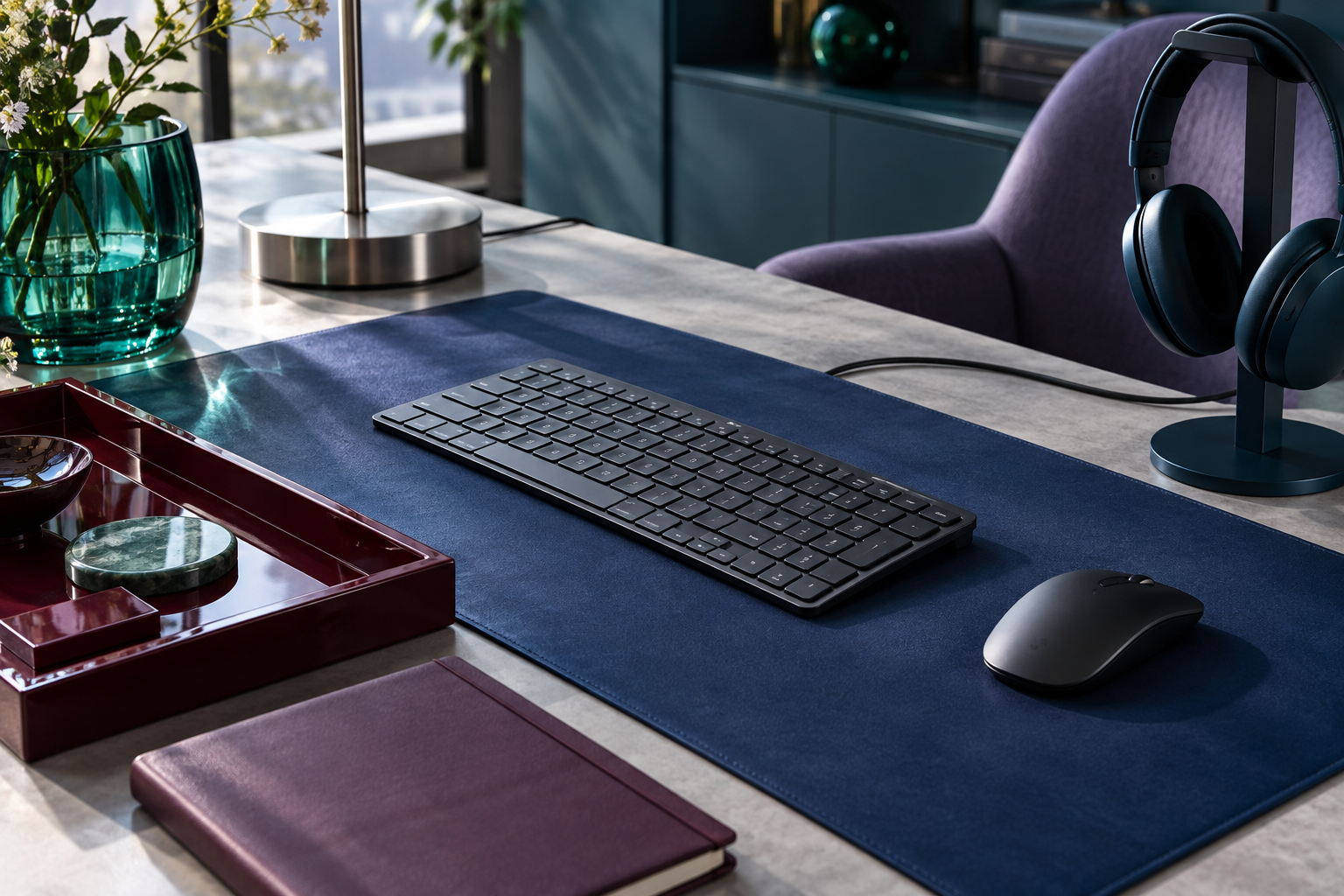
NOW — the work directly in front of you.If it supports the task in progress, it can stay. Everything else should move outward.
Desk accessories →
Storage →Screen · window · lamp
One office. Two lighting shifts.
By day, control the window. After dark, build the light around the task. Good office light should help the work instead of competing with it.
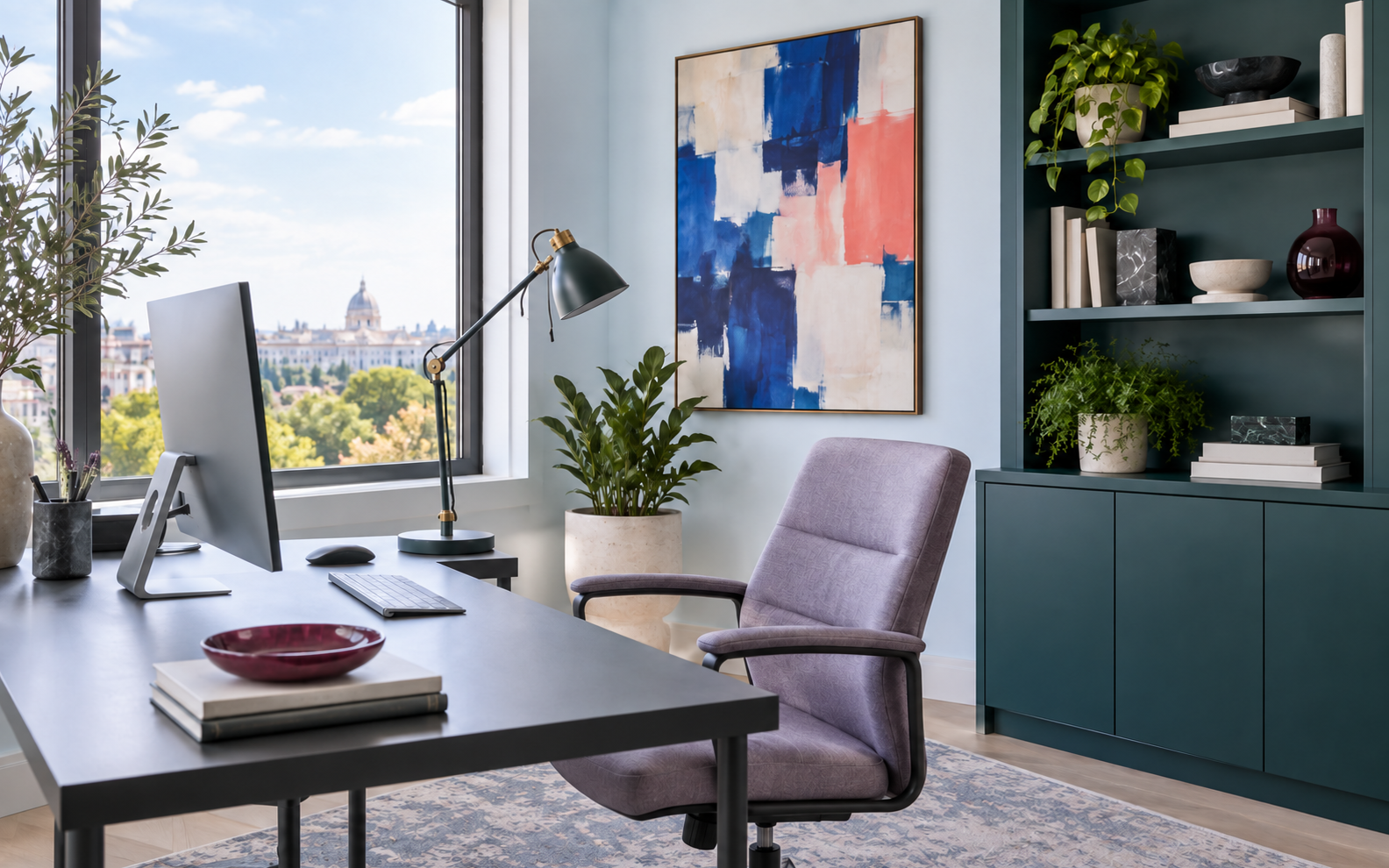
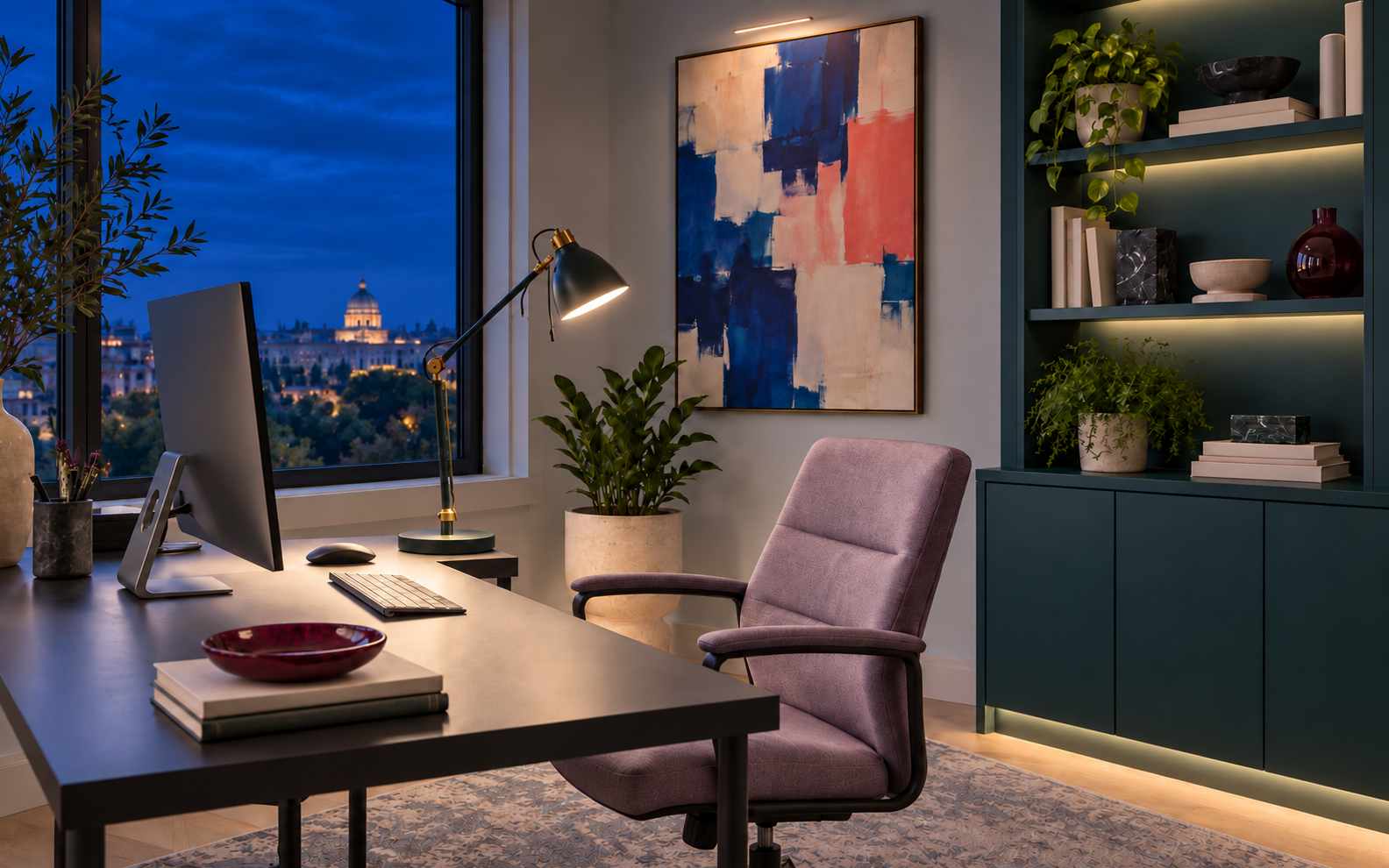
01 · WindowKeep the brightest daylight beside the screen—not directly behind it.
02 · TaskPut focused light where the hands actually work.
03 · DepthAfter dark, give the background a softer second layer.
Still fighting glare or flat evening light?Fix the lighting plan →
What your eyes—and camera—see
Design the view behind you.
One anchor, useful depth and enough quiet space can make the whole office feel finished without filling every inch.
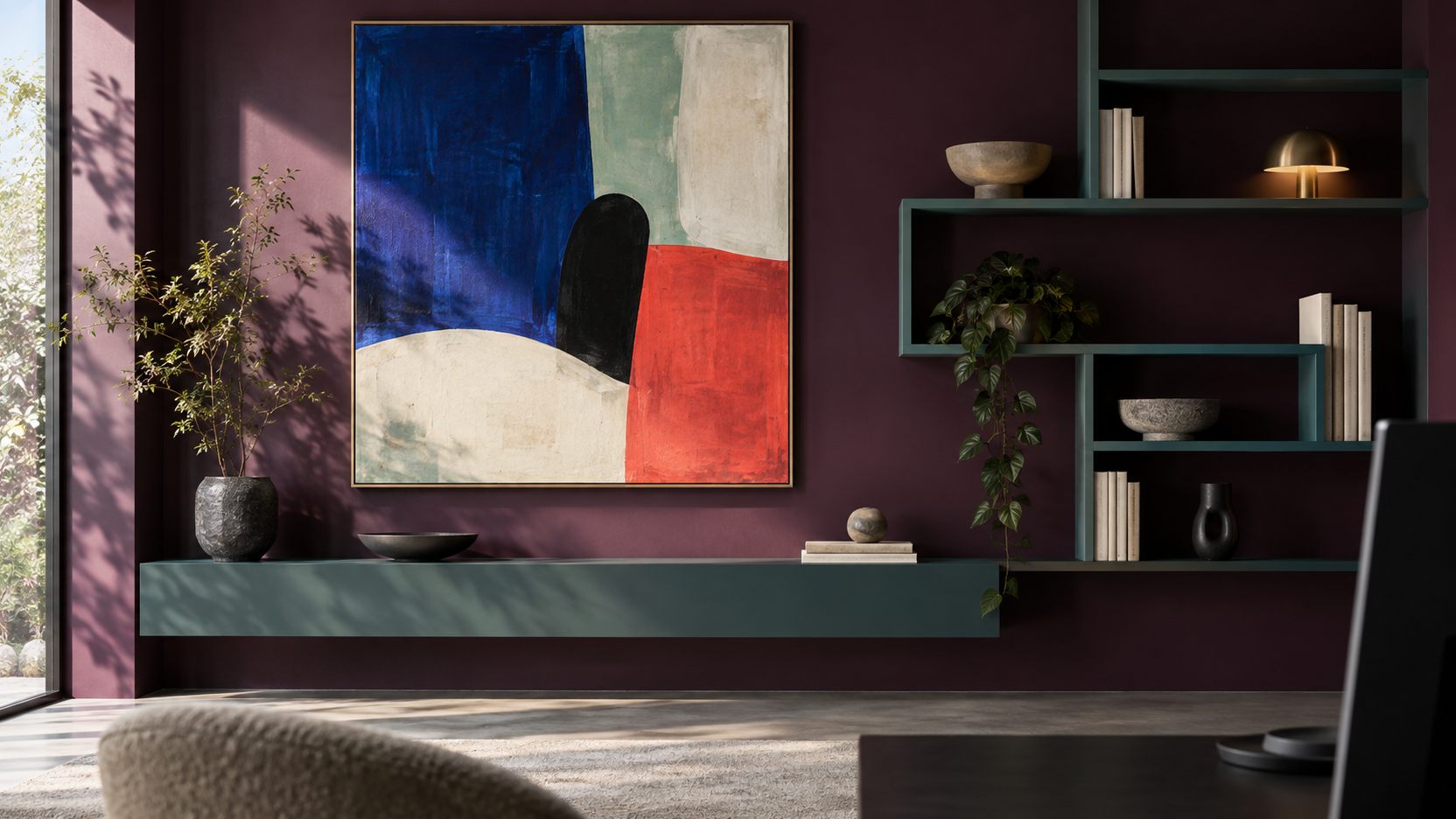
01 · AnchorOne visual center.Let the wall have a focal point instead of many competing moments.
02 · DepthUseful shelving.Add dimension only where the storage earns its footprint.
03 · QuietRoom to breathe.Negative space keeps the background from becoming another task.
The off switch
A workday should leave the room when you do.
The goal is not a sterile desk. It is a visible reset: close the task, clear the active surface and give unfinished work a place to wait.
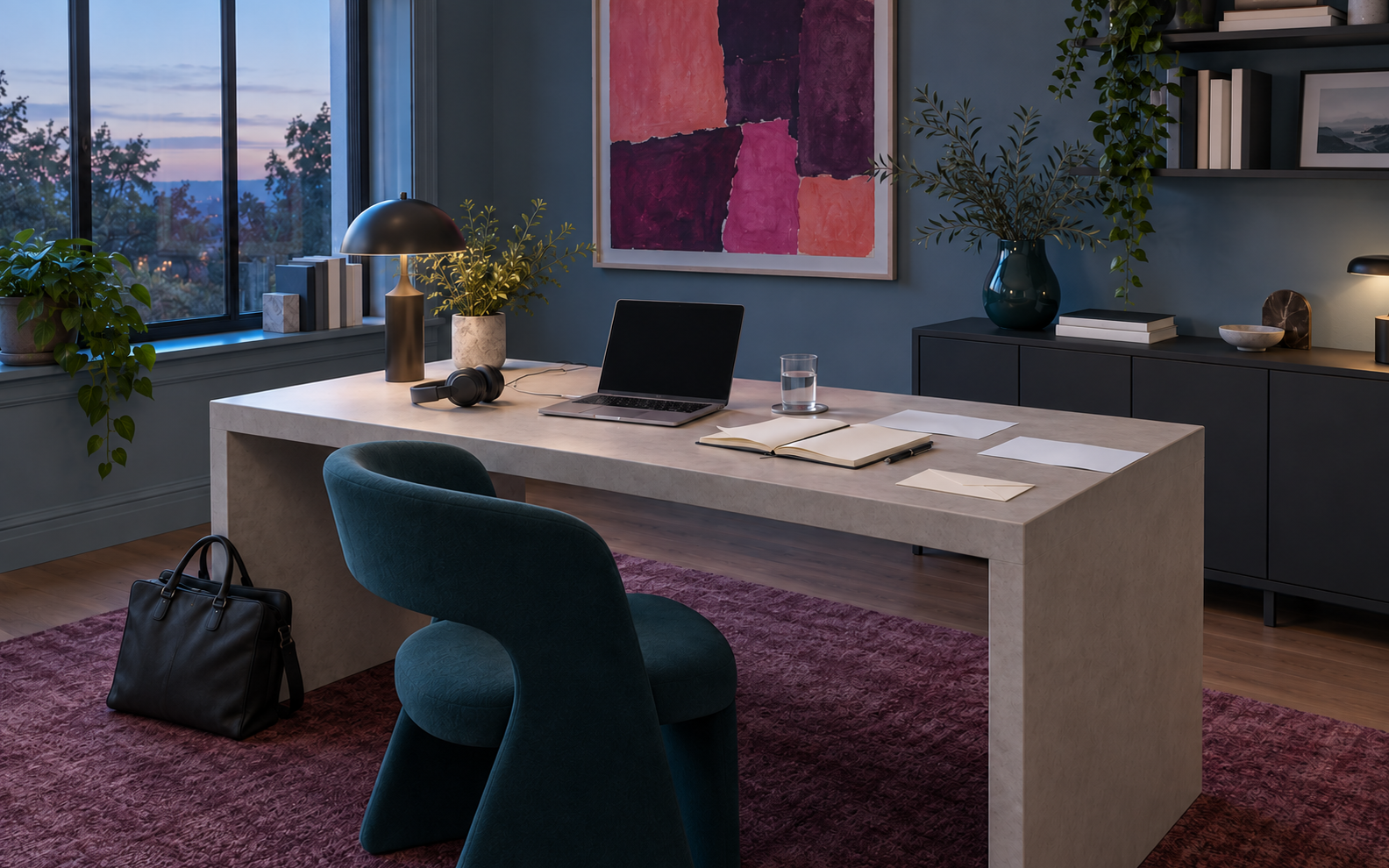
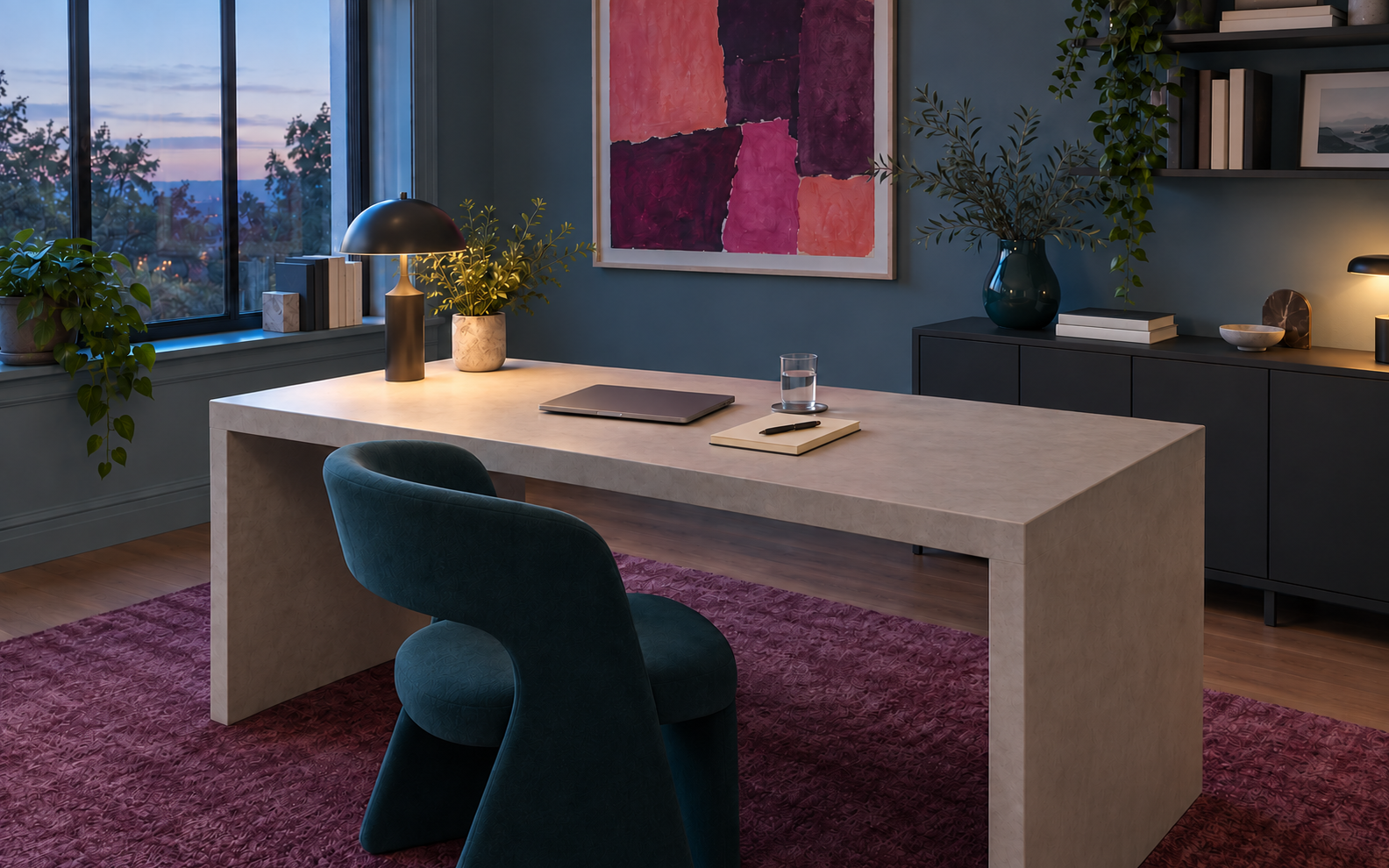
01 · CloseEnd the active task.
02 · ClearReturn the immediate surface.
03 · ContainGive unfinished work a real home.
Build the reset with storage →When every inch matters
Small should change the geometry—not lower the ambition.
A compact office gets better when every layer has one job and the wall works harder than the floor.
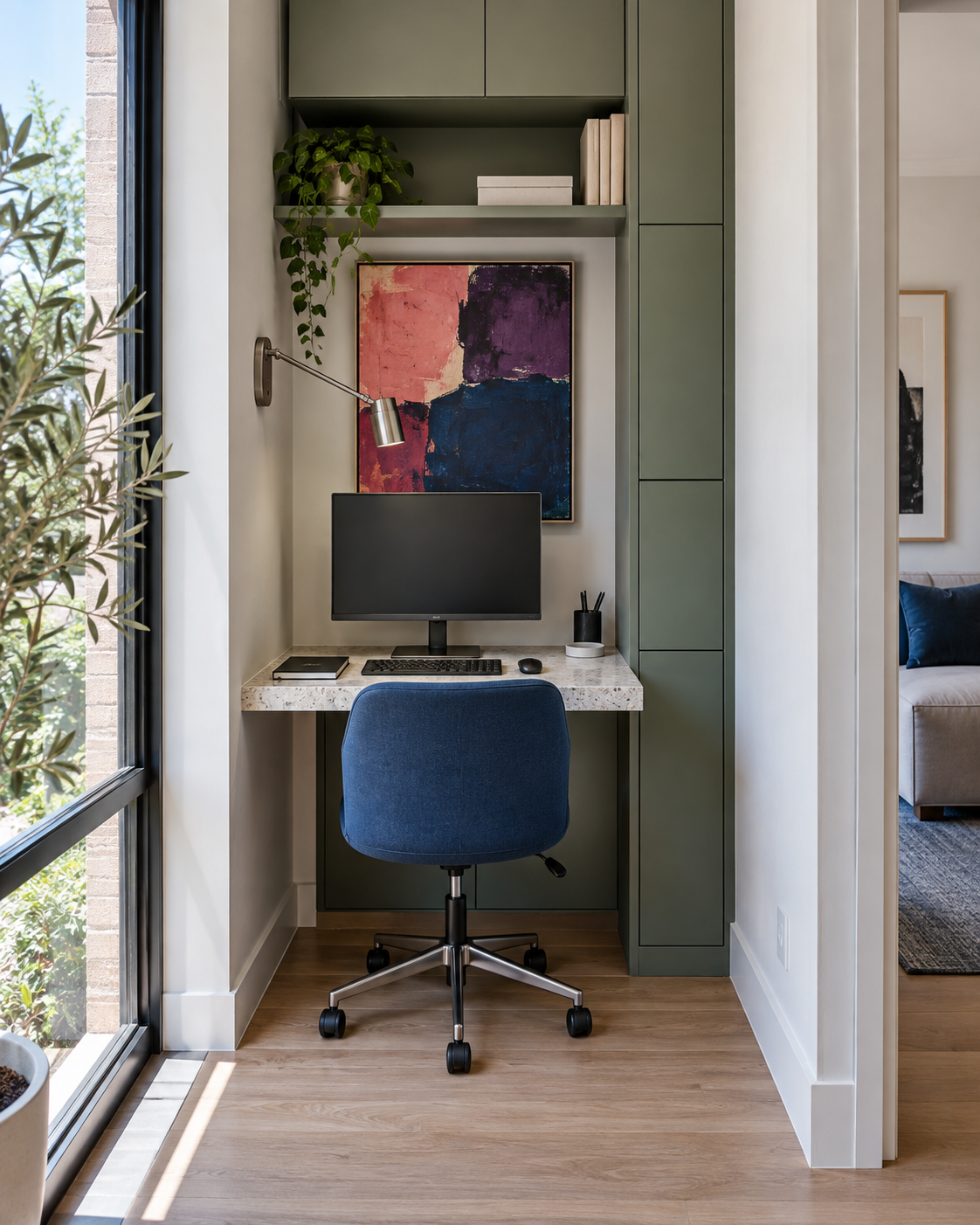
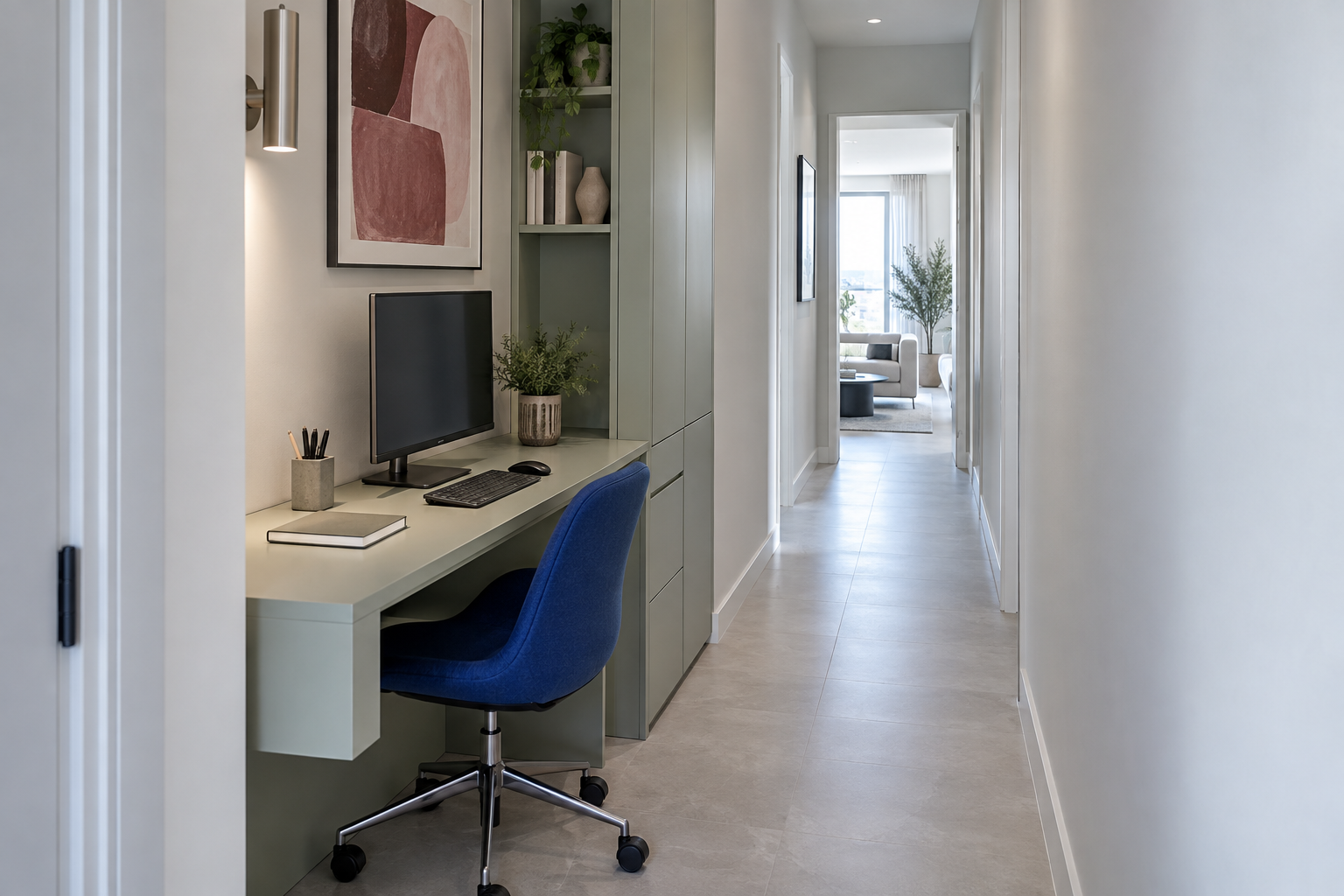
01Shallow.Control depth before chasing more storage. Every extra inch should earn itself.
02Vertical.Build usefulness upward instead of farther into the room.
03Clear.Protect chair movement and the route beside the desk before adding anything else.
Same room, different priorities
Choose the office you actually need.
A focus-first office, a camera-ready office and a compact command center should not be solved in the same order.
Deep focusSolve the physical friction before you decorate the room.
If sitting, reaching or screen light keeps pulling your attention away, styling is not the first move.
The 60-second office test
Test the room before you add to it.
Five quick observations usually reveal the next bottleneck more accurately than another round of inspiration.
If not, the surface system is working too hard.
Fix the immediate reach →Glare and flat evening light point to the lighting layer.
Read the lighting plan →An unfinished sightline needs one visual anchor or useful depth.
Finish the sightline →If not, storage is still the unresolved layer.
Build the reset →Choose by symptom
What still interrupts the workday?
Start with the friction you notice—not the category name. The specialist guide should solve the next bottleneck.
Home Office Desks
The surface or scale feels wrong.
Start here when the desk is too deep, too small or simply wrong for the actual work.
Open desk guide →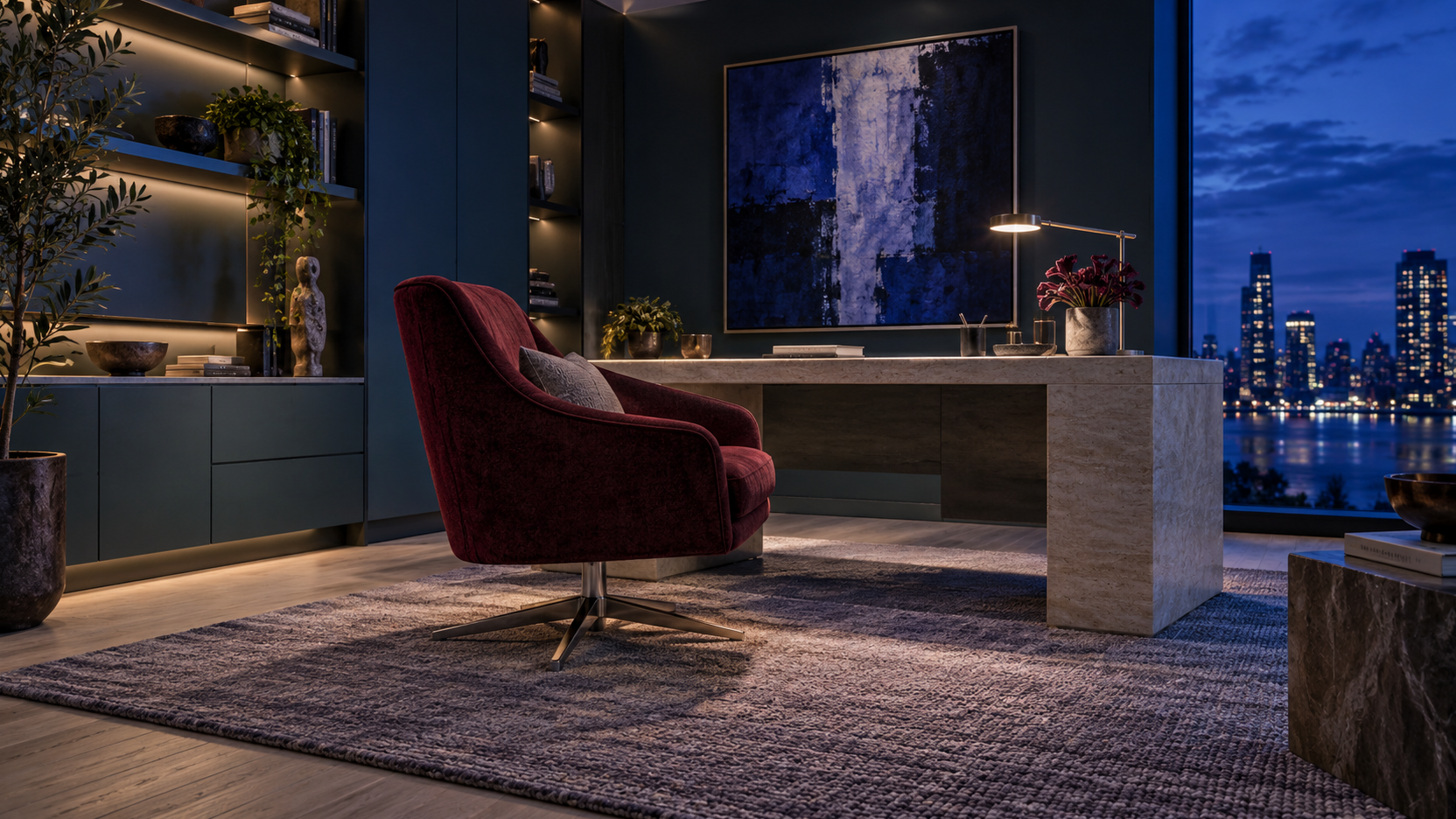
The payoff
The room should still feel like yours when work is done.
Comfort where you sit. Clarity within reach. Light that works after dark. A reset that lets the office disappear instead of taking over the room.