Wall Décor & Art
Designed to Anchor and Express Spaces
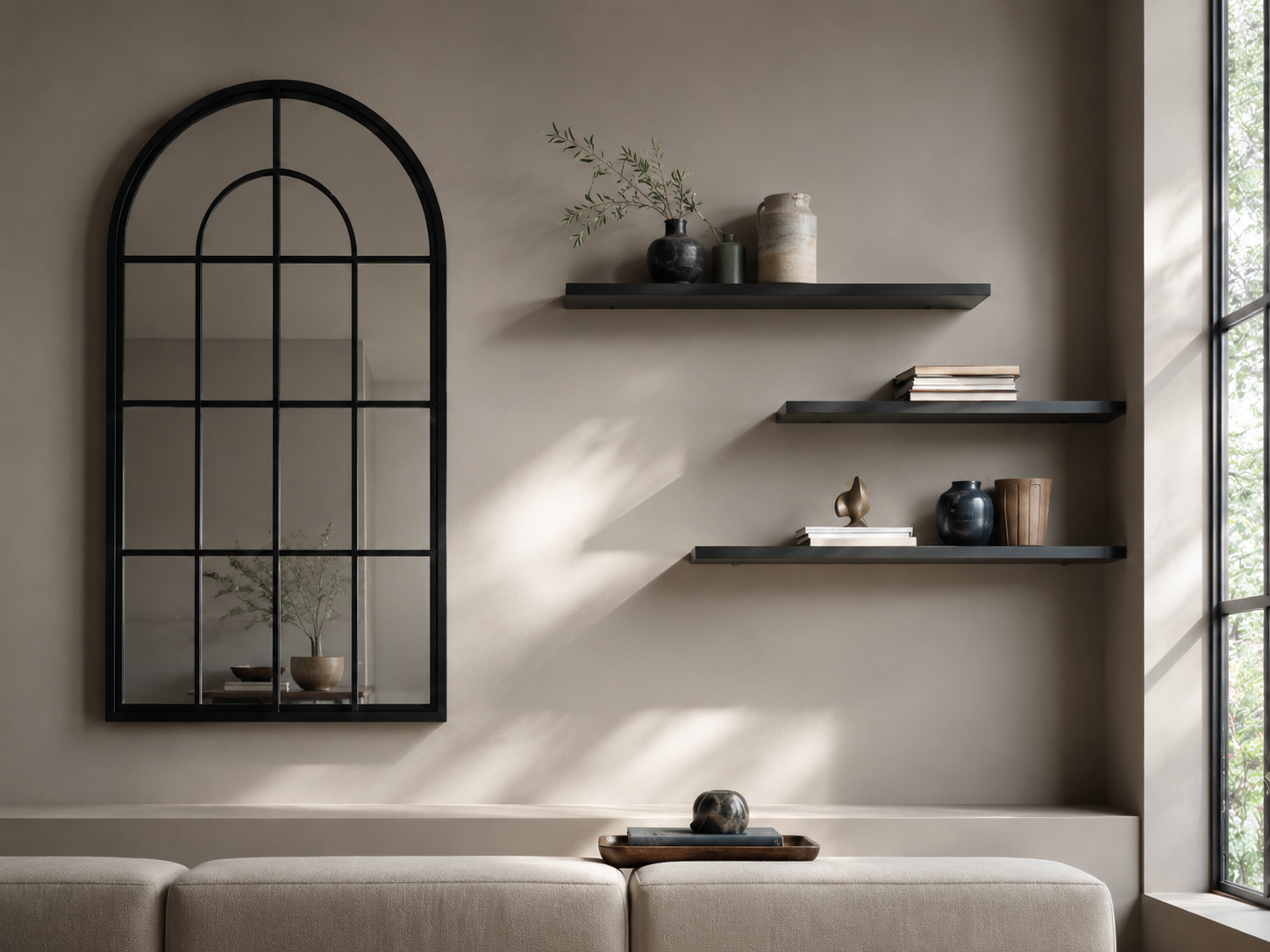
Explore wall décor and art that create focal points, balance proportions, and tell a visual story—without overwhelming the room.
Get Wall Art Size and Placement Right
Wall décor should feel anchored and intentional. Use this snapshot to size, hang, and space art with confidence.
Correct Scale
Wall art should span at least two-thirds the width of the furniture below it.
Hanging Height
Center artwork at eye level, not at the ceiling or furniture edge.
Spacing Rules
Keep consistent gaps between frames to avoid visual clutter.
Visual Balance
Balance art with furniture and wall space, not just the frame size.
Wall Composition Foundations That Always Work
Before choosing frames or art styles, get these wall fundamentals right. They determine whether a wall feels curated or chaotic.
Anchor First
- Start with one dominant piece or focal point.
- Supporting pieces should relate to the anchor.
- Anchors create clarity and hierarchy.
Rule: One wall, one anchor.
Rhythm & Alignment
- Consistent spacing creates visual rhythm.
- Align frames to a shared edge or centerline.
- Random placement breaks flow.
Rule: Align before you decorate.
Negative Space
- Empty wall space gives art room to breathe.
- Crowding reduces impact.
- Fewer pieces feel more intentional.
Rule: Space is part of the design.
Choose a Wall Composition That Feels Intentional
These wall approaches focus on focal hierarchy, spacing, and balance. Choose the pathway that fits the room’s function and scale.
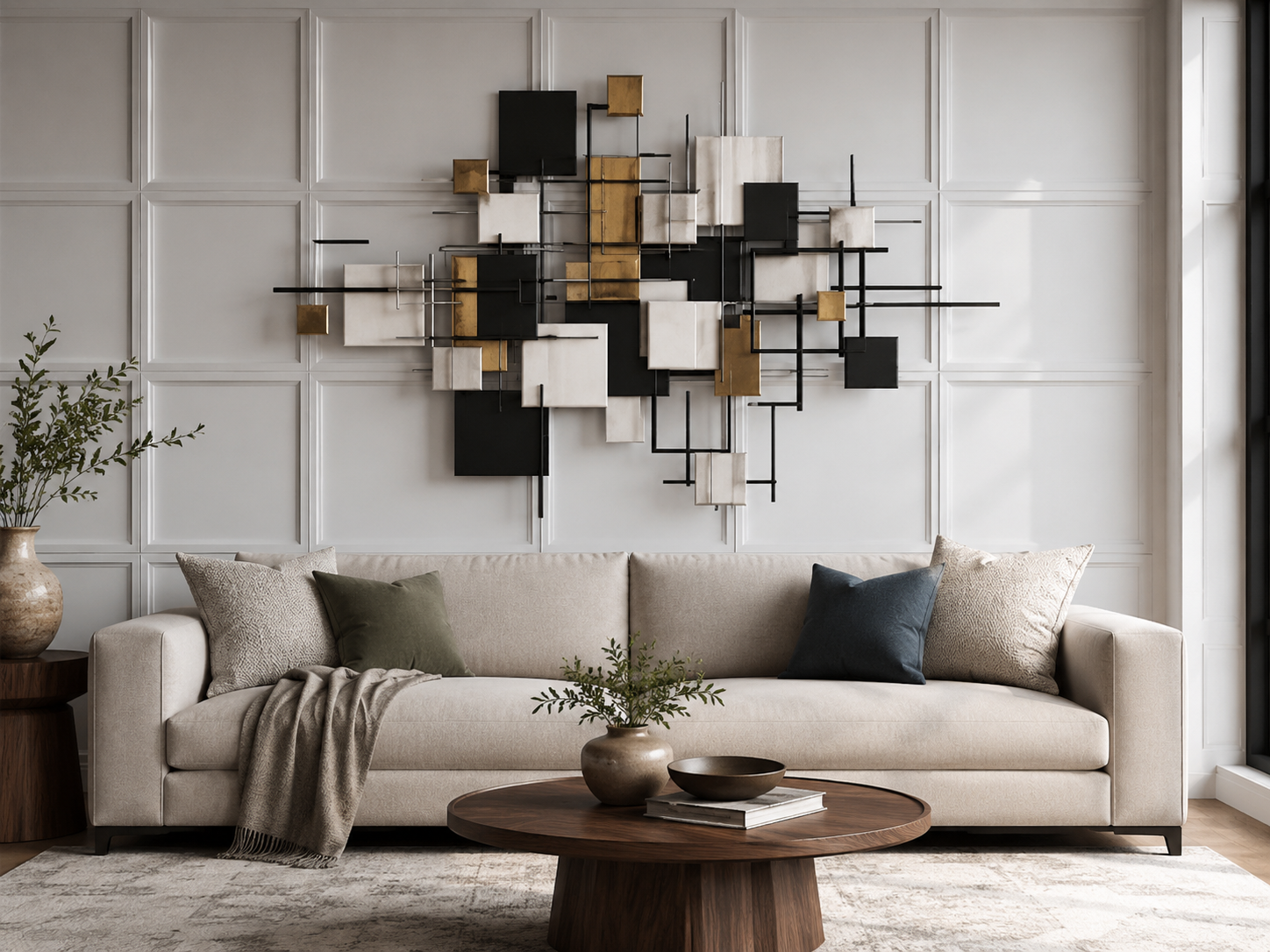
Single Statement
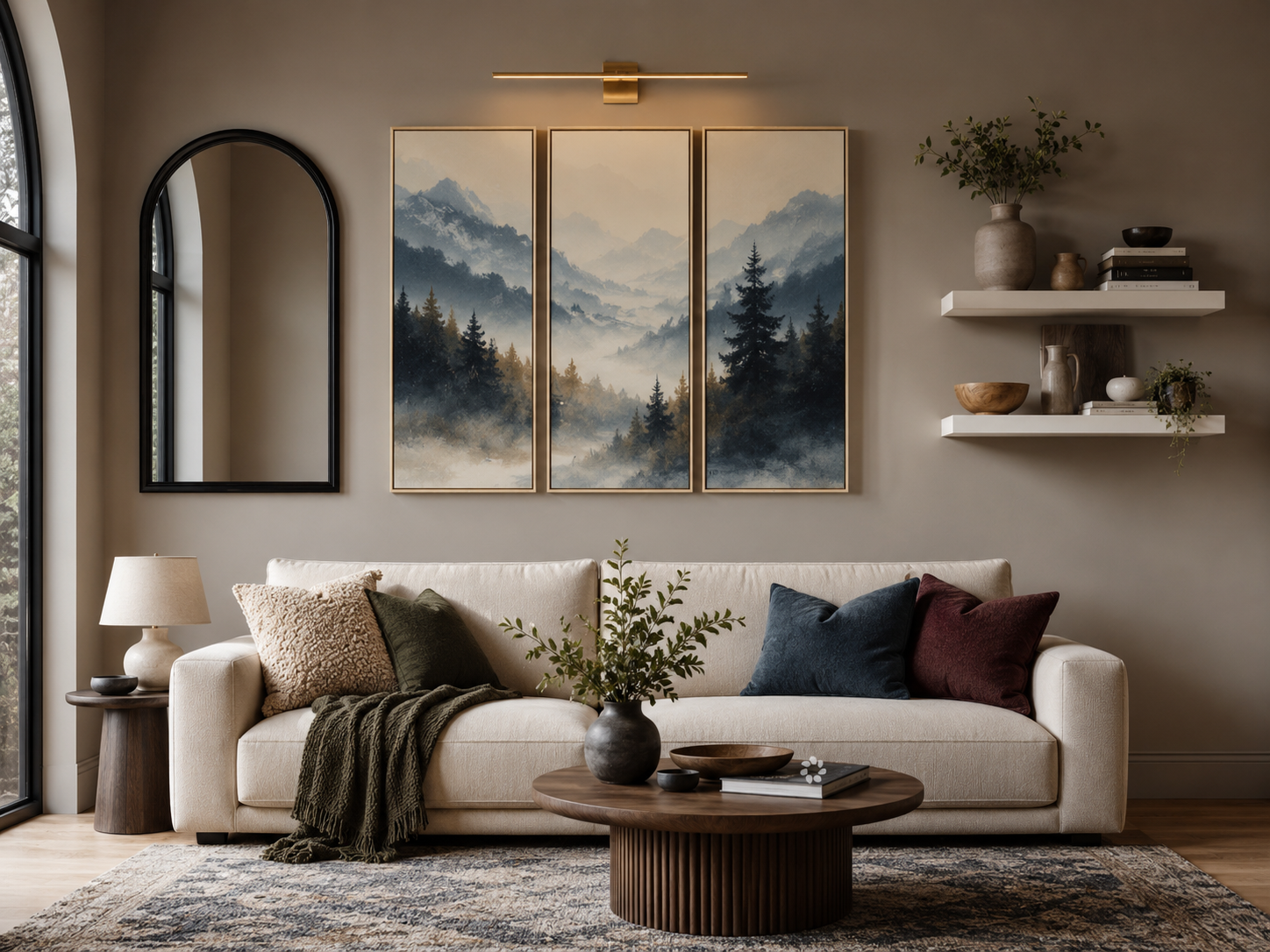
One large piece anchors the wall and defines the space.
Best for:
Living rooms and feature walls.
Balanced Pair
Two pieces of equal visual weight create symmetry and calm.
Best for:
Bedrooms and console walls.
Controlled Gallery
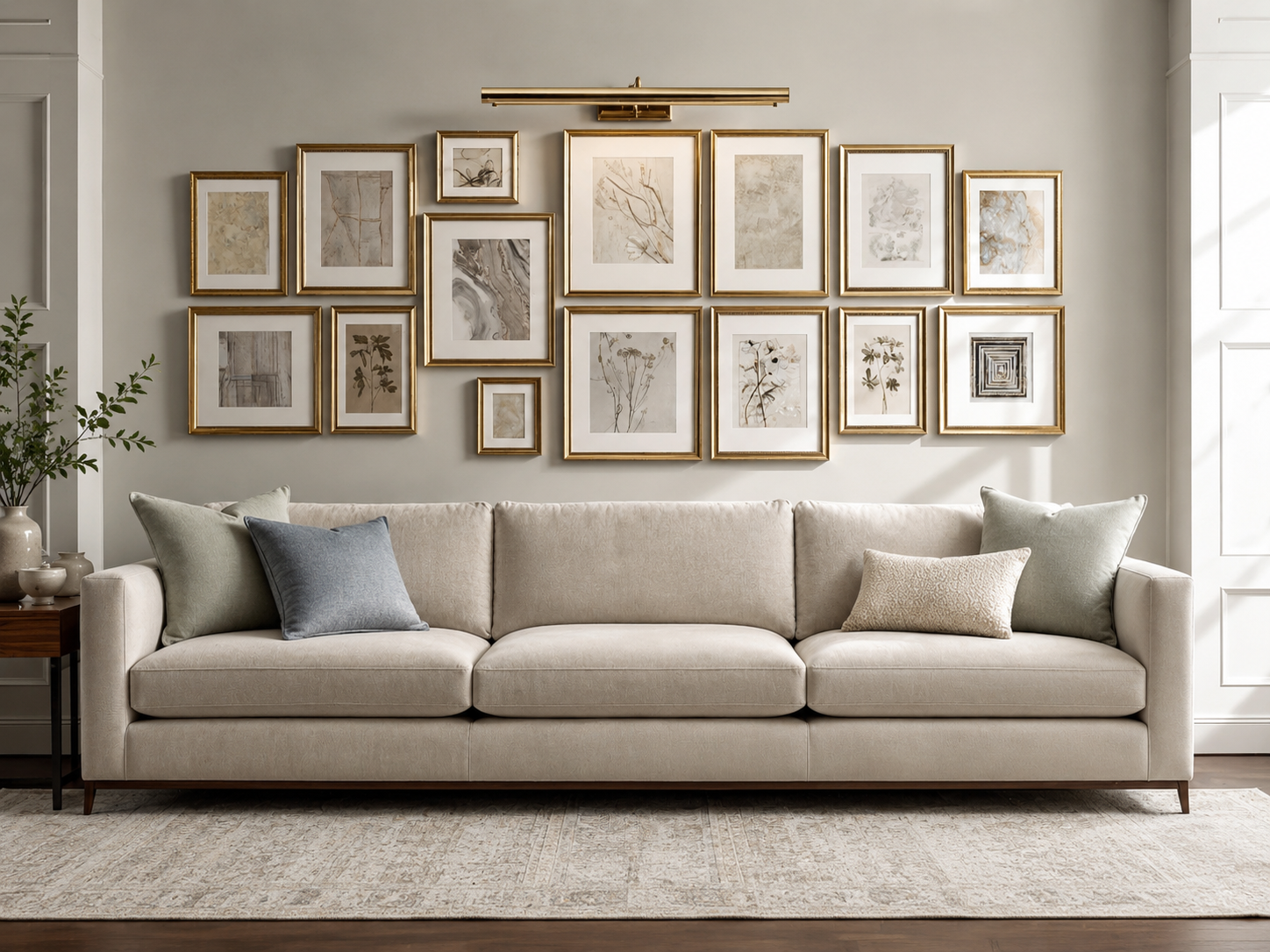
Multiple pieces arranged with consistent spacing and alignment.
Best for:
Hallways and stair walls.
Horizontal Flow
Art arranged in a line to visually widen the room.
Best for:
Dining rooms and long walls.
How to Choose Wall Art That Feels Intentional
Wall décor should feel proportionate, well-finished, and calm to live with. Use this guide to choose art that anchors walls and ages well.
Art Size & Proportion
Scale determines whether wall art feels grounded or lost.
- Look for:
- Art that spans 60–75% of furniture width below
- Larger pieces for open walls
- Grouped sets treated as one visual unit
Avoid:
Small frames floating on large walls
Art that’s narrower than the furniture beneath
Framing & Finish
Frames affect how refined art appears.
- Look for:
- Simple frames in wood, metal, or matte finishes
- Consistent frame style across a grouping
- Neutral tones that support the artwork
Avoid:
Ornate or glossy frames that distract
Mixing unrelated frame styles on one wall
Material & Print Quality
Material choice impacts longevity and visual depth.
- Look for:
- Canvas, textured paper, or archival prints
- Soft, non-reflective surfaces
- Subtle color palettes
Avoid:
Highly reflective glass in bright rooms
Thin paper without backing
Mounting & Longevity
Secure mounting preserves both art and walls.
- Look for:
- Proper wall anchors for weight
- Hardware that allows easy leveling
- Placement away from moisture or heat
Avoid:
Adhesives for heavy art
Frequent re-positioning that damages walls
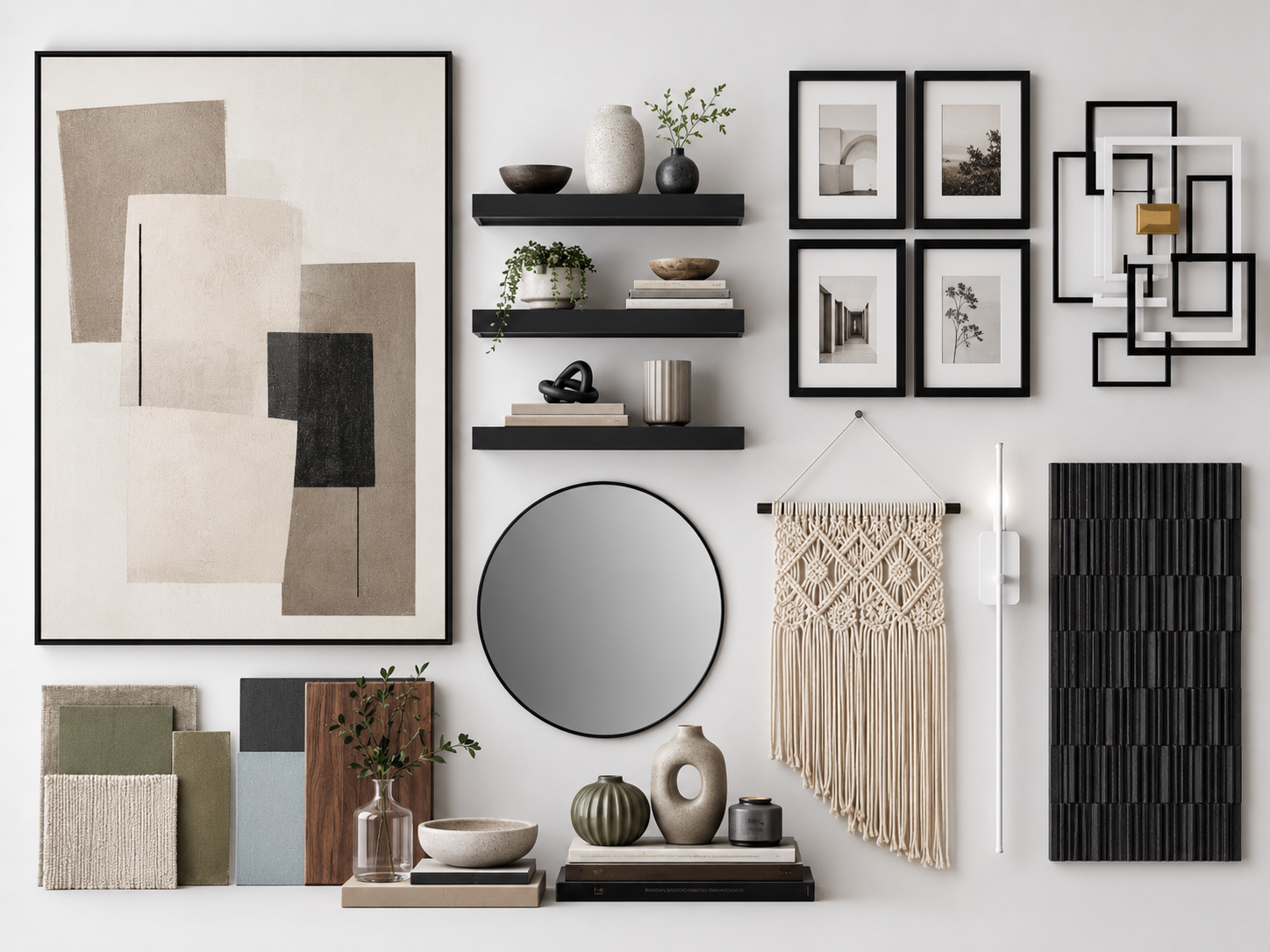
Ravnora Curated Wall Décor & Art Picks
Art and wall décor selected for proportion, clarity, and visual balance—designed to anchor walls without clutter.
BLOCK 1 — LARGE STATEMENT ART
Single pieces sized to anchor furniture and define the wall.
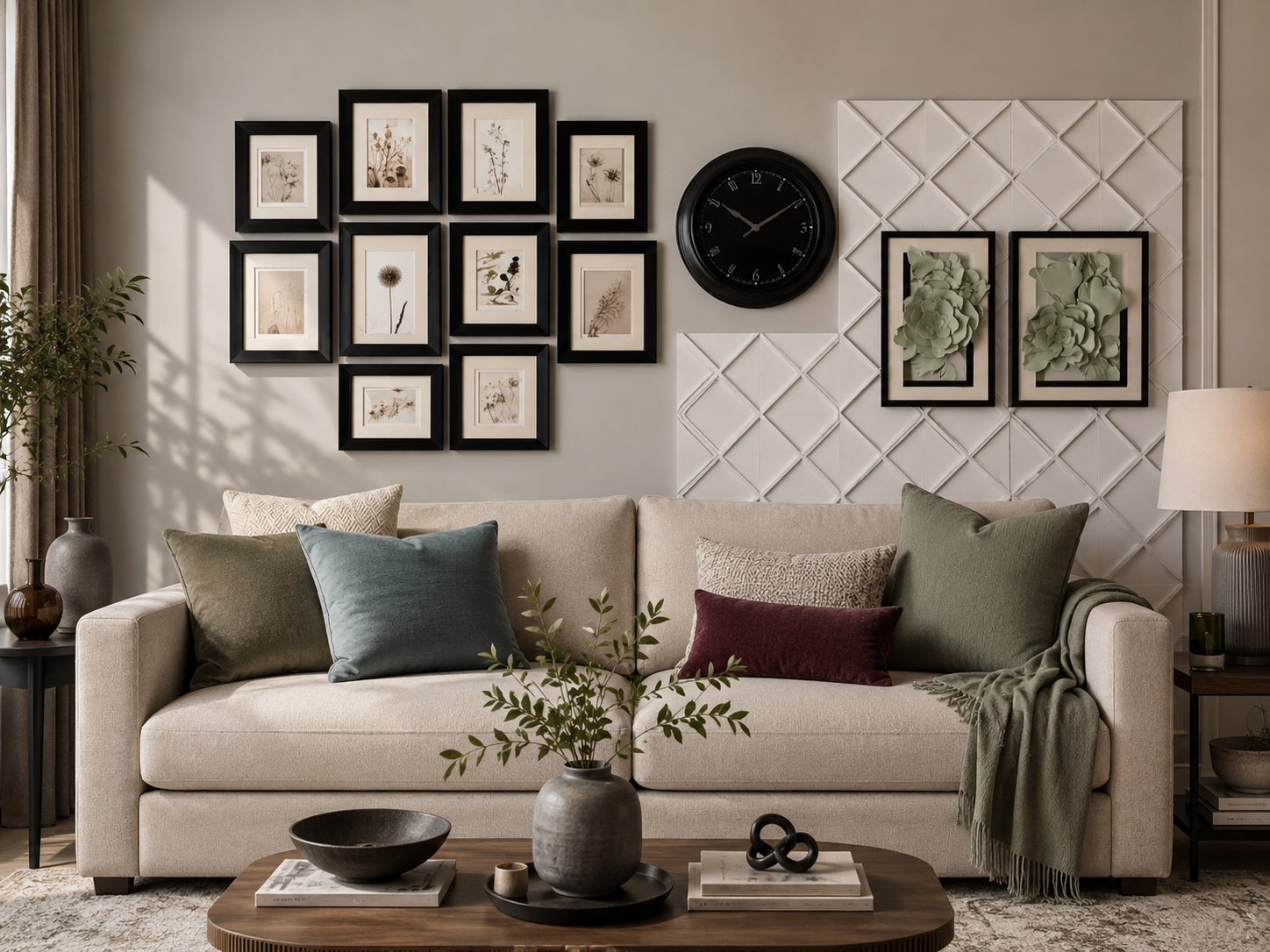
BLOCK 2 — BALANCED PAIRS & SETS
Paired or grouped art that reads as one composition.
BLOCK 3 — CONTROLLED GALLERY PIECES
Gallery-style selections with consistent scale and spacing.
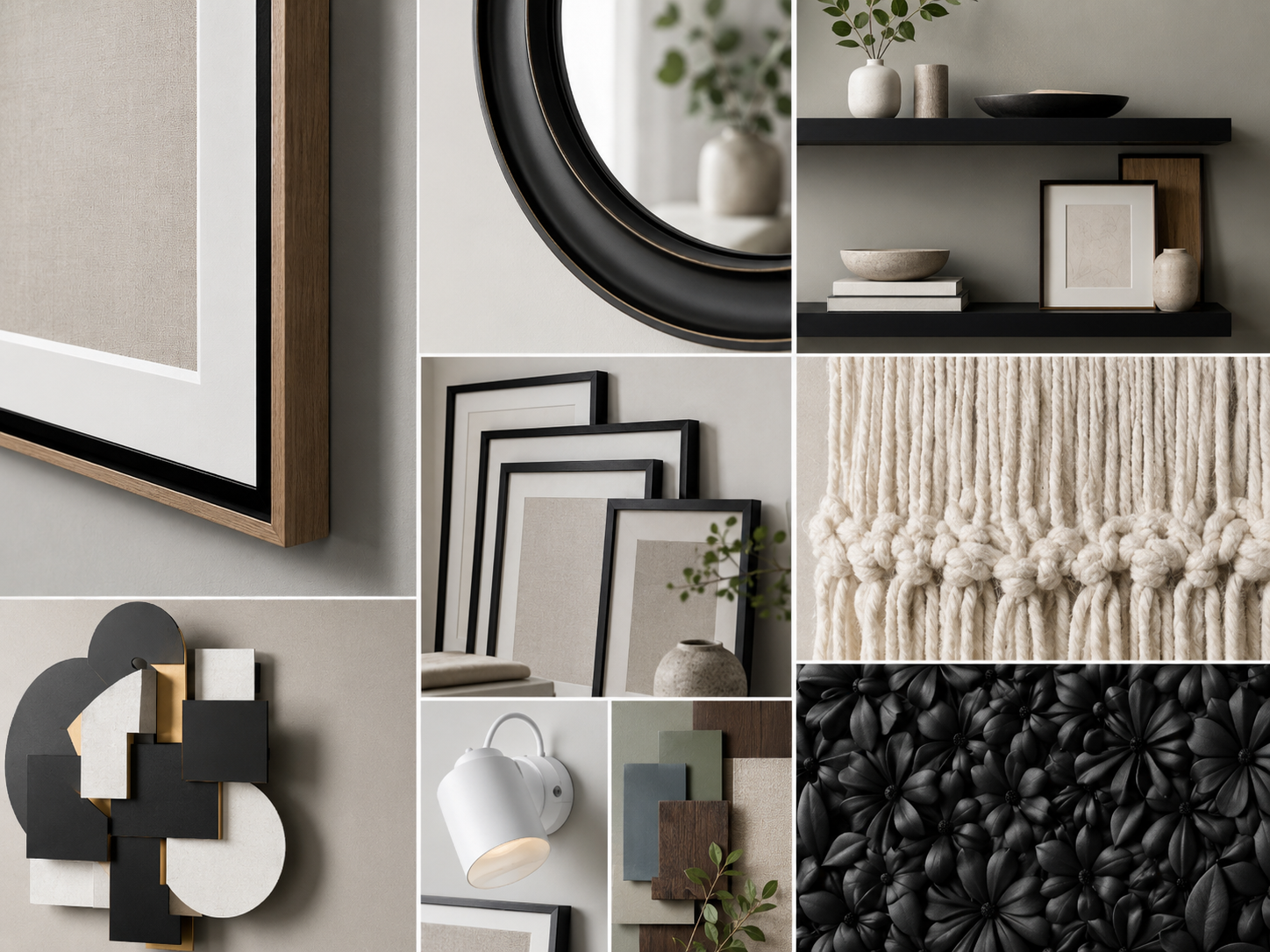
BLOCK 4 — WALL ACCENT DETAILS
Supporting elements that add texture without noise.
Common Bedroom Decor Mistakes to Avoid
❌ Art too small — looks lost.
Fix: Increase scale.
❌ Hanging too high — disconnects from furniture.
Fix: Center at eye level.
❌ Random spacing — visual chaos.
Fix: Align and space evenly.
❌ Overcrowding — no breathing room.
Fix: Fewer, stronger pieces.
❌ Mismatched frames — cluttered look.
Fix: Keep finishes consistent
Save This Wall Art Placement Guide
Correct scale and spacing transform walls. Save this guide to revisit composition rules and curated picks.
Explore More Visual Balance Ideas
Living Room Decor Ideas —
anchored focal points
Explore →
Bedroom Decor Ideas —
calm wall styling
Explore →
Mirrors & Reflective Accents —
balance and depth
Explore →
Lighting & Lamps —
highlight art properly
Explore →
Get Wall Styling Notes
Occasional guidance on art scale, spacing, and composition—quiet and practical.
Wall Décor & Art FAQs
Q1: How big should wall art be?
About 60–75% of furniture width below.
Q2: How high should art be hung?
Center at eye level.
Q3: Can I mix art styles?
Yes, if scale and spacing stay consistent.
Q4: Are gallery walls always busy?
No—when spacing is controlled.
Q5: Do frames matter?
Yes, simple frames age best.
Let Walls Speak with Intention
Thoughtful wall décor creates focus, balance, and expression.
Use this guide to style walls with clarity and confidence.