
Follow the floor.
If the easiest walking route keeps bending around furniture, the room is spending too much floor space on permanent pieces.
Decision: protect circulation before adding capacity.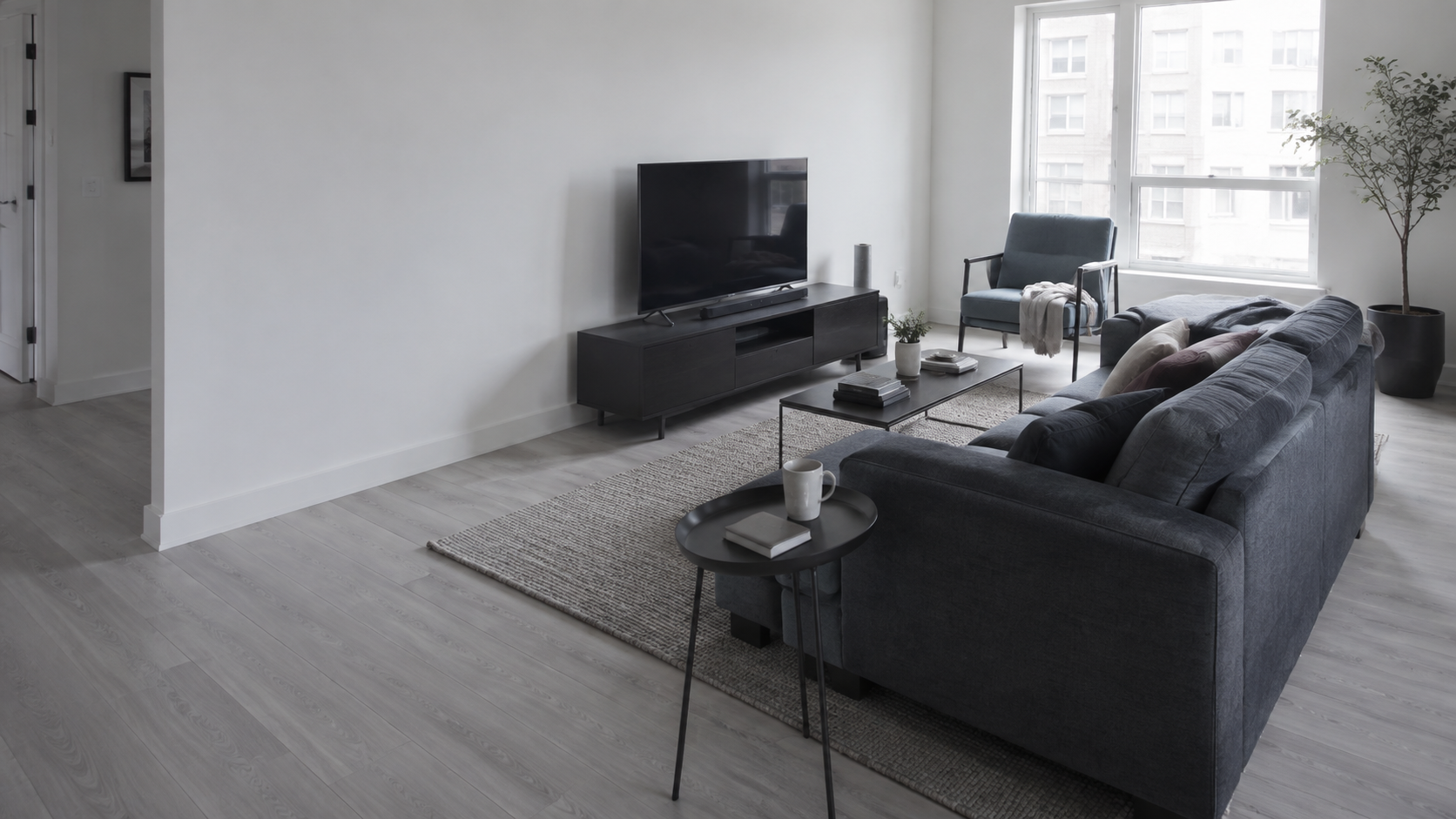
Living room furniture
If the sofa blocks the walk, seats point away from each other, or every surface keeps filling up, the room is asking for a better furniture plan — not simply more furniture.
Protect floor space, add the right kind of seating, and give everyday things a useful place to land.
Start with the problem you keep noticing
Choose one situation. The page will take you to the furniture route that solves it.
Read the room first
Before comparing furniture styles, look at what the room is already making difficult. That usually reveals the next useful role.
If the easiest walking route keeps bending around furniture, the room is spending too much floor space on permanent pieces.
Decision: protect circulation before adding capacity.If everyone can sit but nobody naturally faces anyone else, the room has a relationship problem rather than a seat-count problem.
Decision: add direction, not just another chair.If mugs, remotes, blankets, chargers, and books keep landing in the same places, those places are telling you where reach or storage is missing.
Decision: solve repeated friction where it actually happens.The floor-space budget
This is the decision most furniture pages skip. A sleeper spends space when opened. A recliner spends space behind and in front. Storage spends space when doors or lids move. Choose which function deserves that territory.
As an Amazon Associate, Ravnora Decor may earn from qualifying purchases. Product links may open on Amazon.
Spend less floor area on the anchor and add only reach pieces that can move away.
A smaller primary seat when open floor matters more than maximum capacity.
A standard sofa route for smaller rooms that need more than a loveseat but less bulk.
A close-reach surface when you want the table to come to the seat instead of occupying the center.
Increase capacity without turning every open edge into permanent furniture.
A flexible anchor when you want lounge capacity without committing to the largest footprint.
A high-capacity anchor for rooms that can afford a larger seating commitment.
A conversation-heavy sectional when multiple seats need to face into one shared zone.
Judge the furniture in both everyday mode and fully opened guest mode.
A guest-ready anchor when the living room sometimes needs to become a sleeping zone.
A one-seat convertible route when a full sleeper sofa would consume too much room.
A lower-footprint convertible route for occasional sleep needs and flexible rooms.
Let the furniture solve storage where it already occupies the room.
A modular anchor when hidden storage is part of the seating brief.
A central surface when the room also needs work height and concealed storage.
A softer central piece when hidden storage matters more than a hard tabletop.
Anchor lab
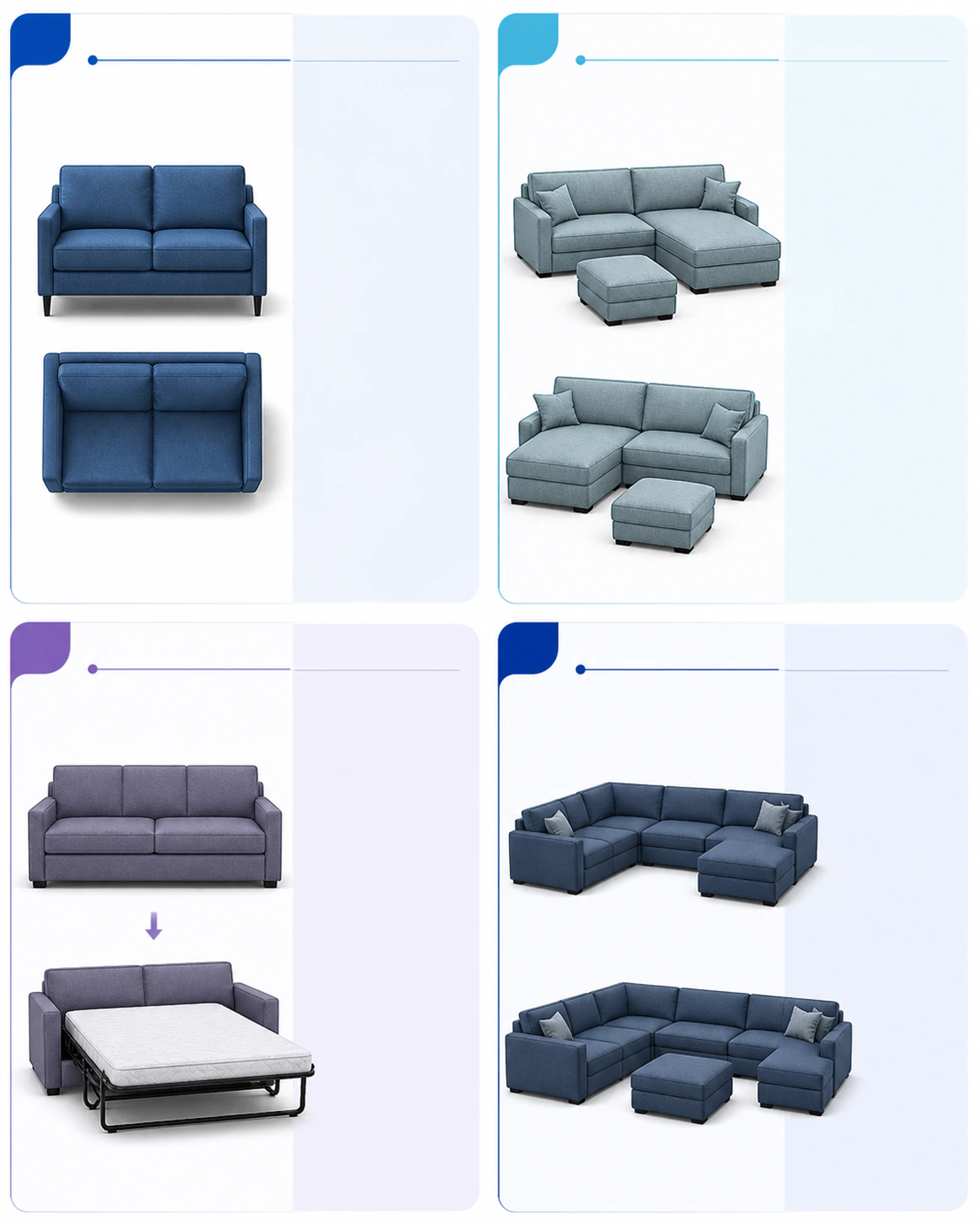
The anchor decides how much floor remains, how many people the room can hold, and what every second piece has to work around.
Lowest anchor commitment of these four routes. Useful when open floor matters more than maximum seating.
Check the compact fitAdd lounge capacity without immediately jumping to the biggest sectional footprint.
Explore the flexible anchorUseful when overnight function matters, but only if the room can still work in the fully opened state.
Check the sleeper routeHighest seating commitment here. It makes sense only when the room, delivery route, and circulation can support the scale.
See the family route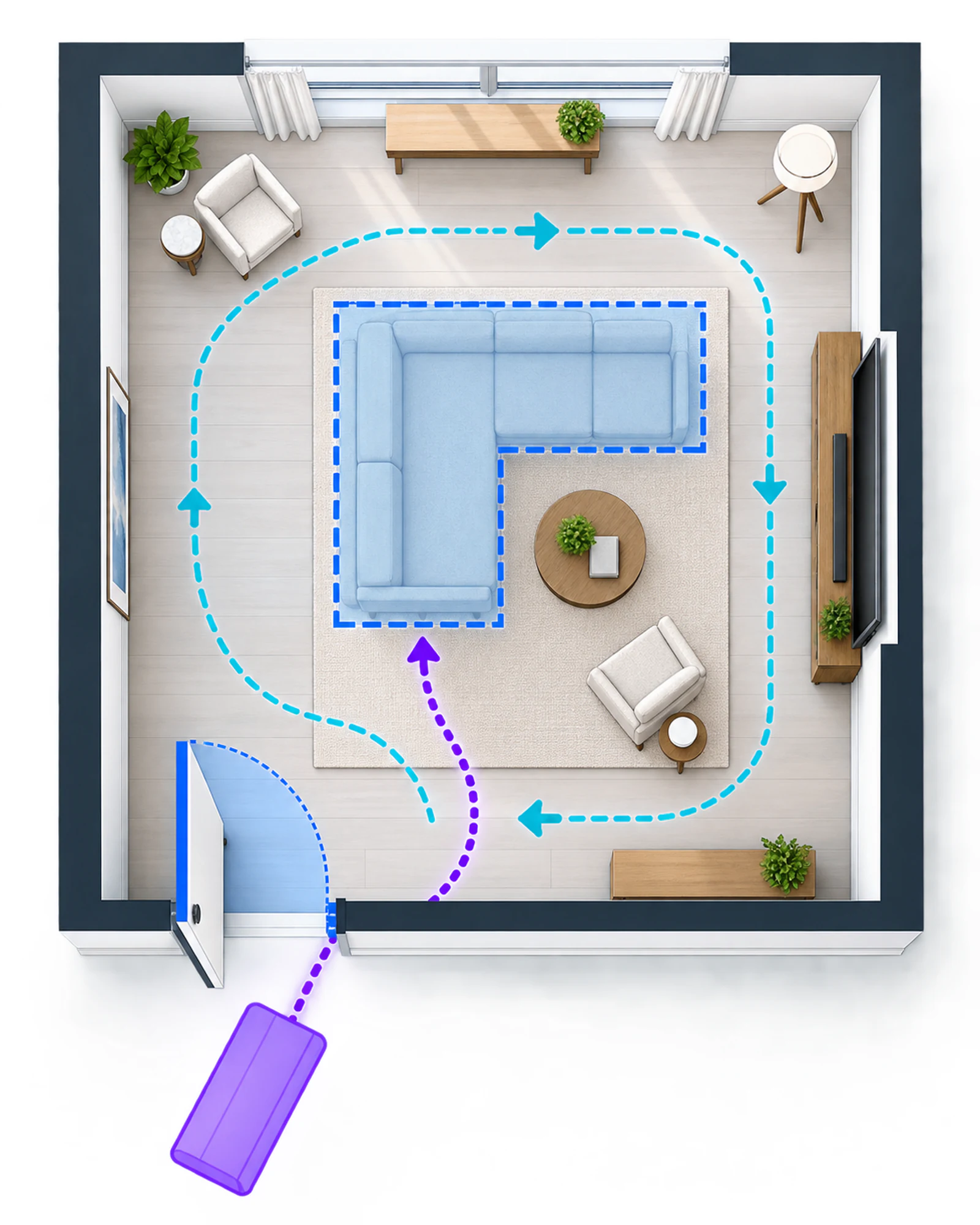
Before you order
A piece can fit the wall and still fail the home. Check how it gets in, how much room it occupies assembled, and what happens when it moves.
If the furniture fits only while everything is closed, it does not really fit the way you plan to use it.
The second-piece test
Do not fill an empty corner because it is empty. Add the next piece only when it solves a repeated use problem.
Use this route when the sofa works, but conversation still leaves someone without a comfortable place.
A small secondary seat for corners that need function without visual bulk.
A flexible chair when people need to turn between conversation, window, or screen.
A roomier swivel seat when comfort matters and the rotation path can be reserved.
A defined accent-chair route when the room benefits from a more architectural silhouette.
Choose the center by circulation first, then storage and work behavior.
A central surface when curved edges make movement around seating feel easier.
A central surface when the room also needs work height and concealed storage.
Flexible surfaces that separate when needed and compress when the room needs space back.
A conventional rectangular center surface when hidden storage is part of the job.
A small surface can solve daily friction without spending the center of the room.
A close-reach surface when you want the table to come to the seat instead of occupying the center.
A visually light end surface when the room needs somewhere close for a drink or lamp.
A slim reach surface for the narrow space beside a sofa or chair.
A true living-room end table when device charging belongs beside the seat.
Use closed storage where visible clutter repeatedly gathers.
A softer central piece when hidden storage matters more than a hard tabletop.
A small hidden-storage piece when blankets or remotes need a home close to seating.
A broad closed-storage route when the living room needs visual calm and concealed capacity.
A mixed-storage route for rooms that need both visible display and concealed clutter control.
Choose the least visual and physical weight that still handles the TV, cables, and storage job.
A smaller media route when the TV wall should not visually dominate the room.
A substantial media anchor when the screen wall also needs storage and cable planning.
A media route when you need TV support without a full-width console.
A combined media route when the screen wall is also intended to become a focal feature.
Movement pattern
A living room cannot maximize open floor, face-to-face conversation, storage, and seating capacity at the same time. Pick the behavior you want to protect.
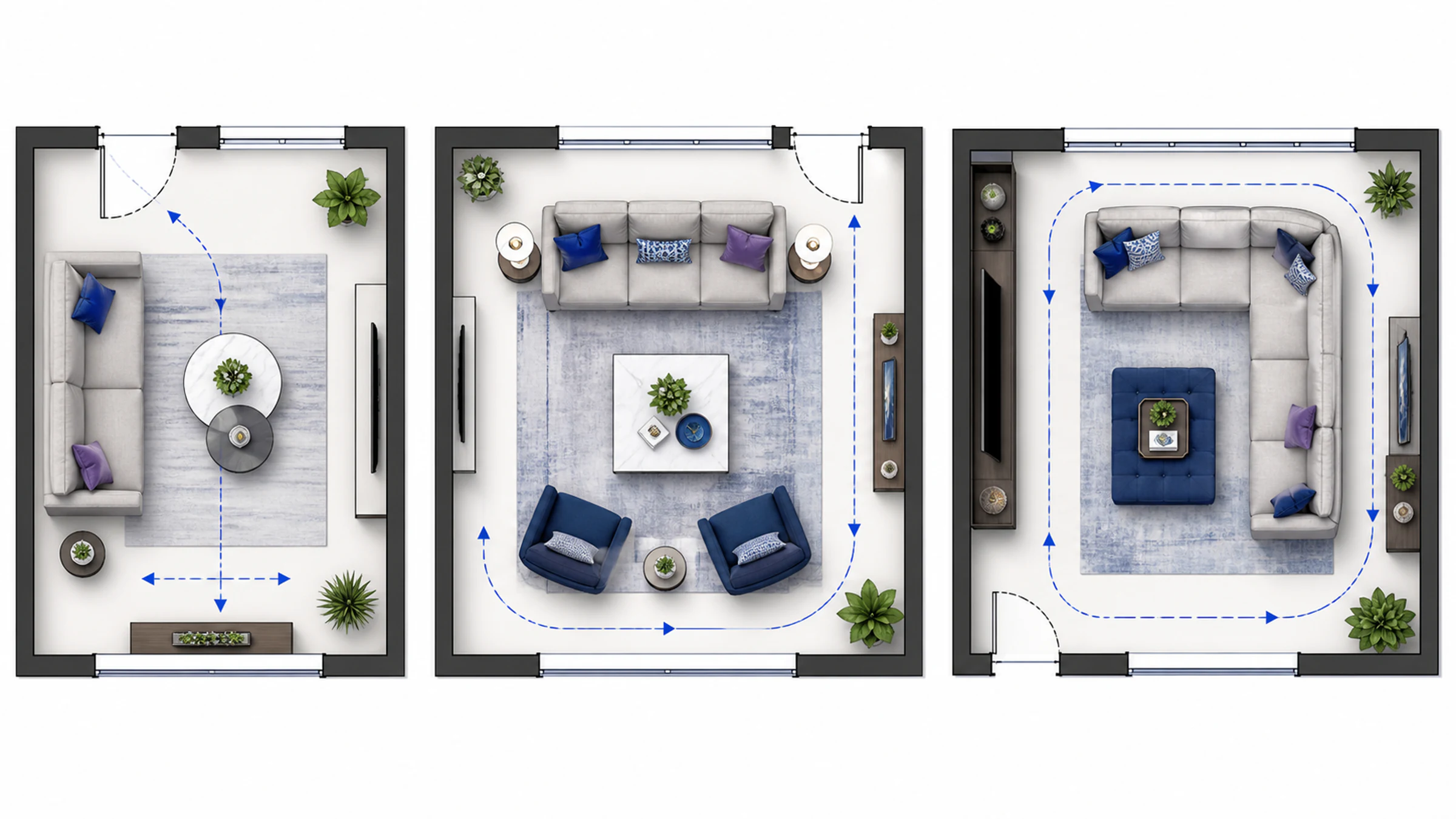
A smaller anchor, movable surfaces, and one secondary seat preserve the room’s easiest walking path.
A smaller primary seat when open floor matters more than maximum capacity.
A close-reach surface when you want the table to come to the seat instead of occupying the center.
Flexible surfaces that separate when needed and compress when the room needs space back.
Use flexible chairs and a softer center so seats can face each other without blocking circulation.
A flexible chair when people need to turn between conversation, window, or screen.
A defined accent-chair route when the room benefits from a more architectural silhouette.
A central surface when curved edges make movement around seating feel easier.
Let the anchor, central piece, and one closed-storage unit do most of the containing.
A flexible anchor when you want lounge capacity without committing to the largest footprint.
A broad closed-storage route when the living room needs visual calm and concealed capacity.
A softer central piece when hidden storage matters more than a hard tabletop.
Build around the anchor
A chair, table, ottoman, console, or media unit earns its place only when it makes a real activity easier.
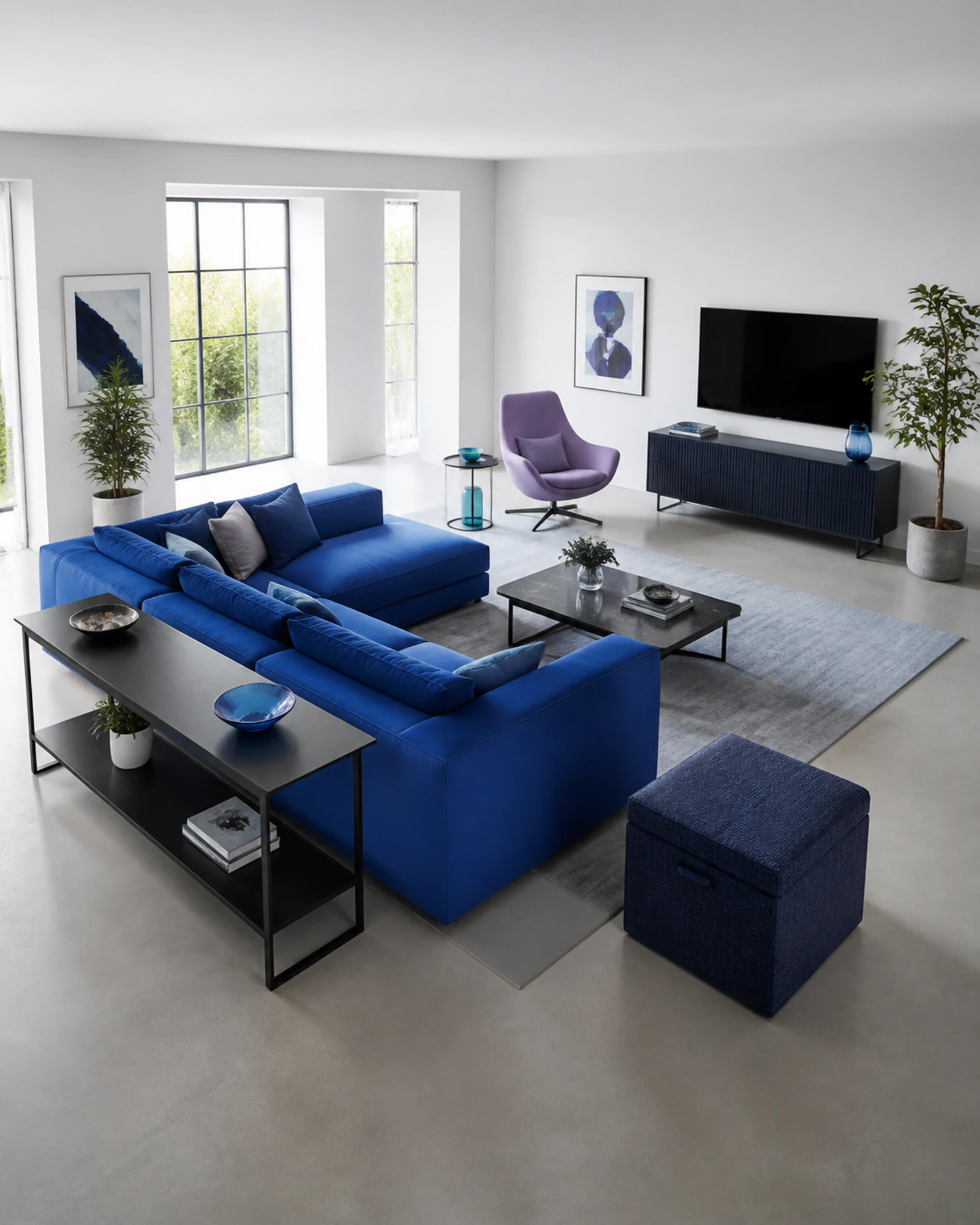
Five pieces that earn a clear role
Adds a real conversation seat without turning the room into another sofa zone.
Earns the center by combining a surface, work height, and concealed storage.
Earns a wall when media storage and cable planning are genuinely needed.
Replaces a hard center with softer storage when the room benefits from flexibility.
Uses the narrow strip behind seating instead of spending another open floor zone.
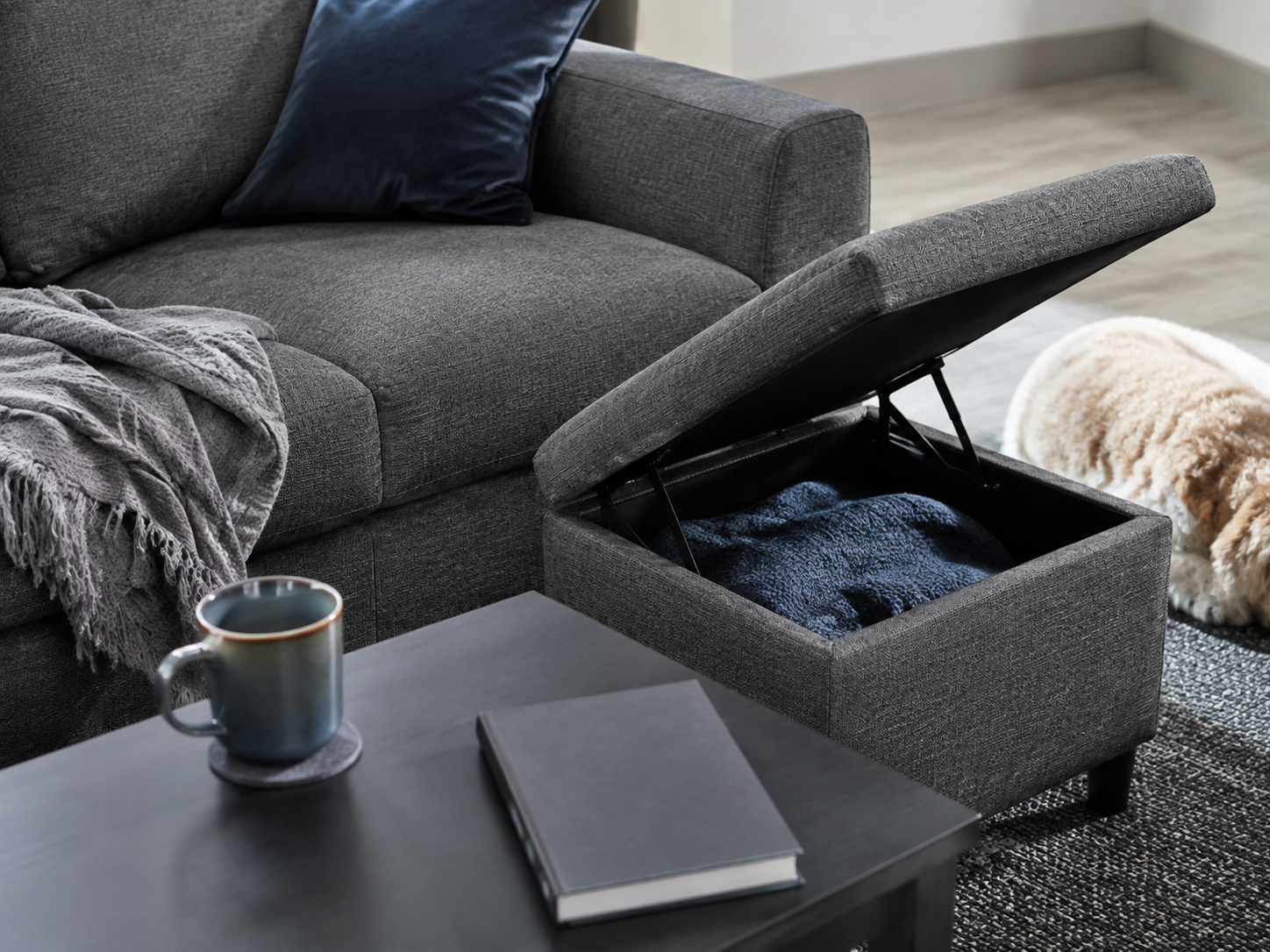
Household reality
The useful question is not whether a material sounds premium. It is whether the exact current listing matches how your home really uses the piece.
Check the exact upholstery, care information, covers if stated, seat configuration, and current dimensions on the listing.
Do not assume stain resistance, pet resistance, weight capacity, included pieces, or material performance unless the current product listing explicitly supports it.
Ravnora furniture edit
These are not “best overall” claims. They are twelve different furniture jobs worth recognizing before you open the complete 60-product finder.
A smaller primary seat when open floor matters more than maximum capacity.
A flexible anchor when you want lounge capacity without committing to the largest footprint.
A guest-ready anchor when the living room sometimes needs to become a sleeping zone.
A flexible chair when people need to turn between conversation, window, or screen.
A manual motion seat when one position needs dedicated lounging comfort.
A central surface when the room also needs work height and concealed storage.
A close-reach surface when you want the table to come to the seat instead of occupying the center.
A narrow surface for otherwise-unused space behind seating.
A smaller media route when the TV wall should not visually dominate the room.
A broad closed-storage route when the living room needs visual calm and concealed capacity.
A softer central piece when hidden storage matters more than a hard tabletop.
A one-seat convertible route when a full sleeper sofa would consume too much room.
Complete furniture finder
All 60 unique products live here. The page stays calm because the inventory is organized by the furniture job, not dumped into one endless storefront grid.
A smaller primary seat when open floor matters more than maximum capacity.
A straightforward full-size sofa route for rooms that do not need sectional geometry.
A deeper casual sofa route when lounging comfort matters more than a compact profile.
A sofa-scale motion route when more than one person wants reclined seating.
A softer visual route for rooms that suit a relaxed, low-structure sofa silhouette.
A standard sofa route for smaller rooms that need more than a loveseat but less bulk.
A second full-size sofa route when shape and seat feel matter more than added functions.
A flexible anchor when you want lounge capacity without committing to the largest footprint.
A high-capacity anchor for rooms that can afford a larger seating commitment.
A high-capacity sectional route when seating and concealed storage need to work together.
A modular route for relaxed seating when a softer lounge-first profile suits the room.
A conversation-heavy sectional when multiple seats need to face into one shared zone.
A modular anchor when hidden storage is part of the seating brief.
A large L-shaped route when the room can support one dominant seating edge.
A maximum-capacity route for larger rooms where family seating is the primary job.
A guest-ready anchor when the living room sometimes needs to become a sleeping zone.
A sectional route that adds an overnight function without giving up everyday seating.
A multifunction guest route combining seating, sleeping, and hidden storage.
A one-seat convertible route when a full sleeper sofa would consume too much room.
A lower-footprint convertible route for occasional sleep needs and flexible rooms.
A small secondary seat for corners that need function without visual bulk.
A flexible chair when people need to turn between conversation, window, or screen.
A roomier swivel seat when comfort matters and the rotation path can be reserved.
A visually open secondary chair when you want seating without a blocky silhouette.
A defined accent-chair route when the room benefits from a more architectural silhouette.
A coordinated lounge route when one seat also needs dedicated foot support.
A generous single-seat route when comfort is worth spending more floor space.
A low, relaxed lounge route when the room can support a deeper horizontal seat.
A decorative secondary seat when one chair needs to carry more visual personality.
An exposed-frame chair route when visual openness matters as much as extra seating.
A manual motion seat when one position needs dedicated lounging comfort.
A powered motion seat when the room can support both recline clearance and a cord plan.
A multi-motion chair when turning and rocking matter alongside recline.
A central surface when the room also needs work height and concealed storage.
A central surface when curved edges make movement around seating feel easier.
A round center table when a second tier earns its extra visual weight.
Flexible surfaces that separate when needed and compress when the room needs space back.
A lighter nesting route for temporary surfaces that move with the seating.
A conventional rectangular center surface when hidden storage is part of the job.
A visually light end surface when the room needs somewhere close for a drink or lamp.
A close-reach surface when you want the table to come to the seat instead of occupying the center.
A compact end-table route when one small footprint needs two usable levels.
A slim reach surface for the narrow space beside a sofa or chair.
A true living-room end table when device charging belongs beside the seat.
A narrow surface for otherwise-unused space behind seating.
A console route when hidden drawer storage matters as much as the top surface.
A minimal-depth console when the gap behind seating is useful but extremely narrow.
A decorative console route when the room needs a surface without another heavy cabinet.
A substantial media anchor when the screen wall also needs storage and cable planning.
A smaller media route when the TV wall should not visually dominate the room.
A media route when you need TV support without a full-width console.
A combined media route when the screen wall is also intended to become a focal feature.
A vertical storage route when the room needs display capacity without another low cabinet.
A broad closed-storage route when the living room needs visual calm and concealed capacity.
A mixed-storage route for rooms that need both visible display and concealed clutter control.
A corner-focused vertical storage route when an unused edge can carry display instead of floor furniture.
A softer central piece when hidden storage matters more than a hard tabletop.
A low-commitment soft piece that can shift between footrest and casual extra perch.
A small hidden-storage piece when blankets or remotes need a home close to seating.
A longer soft-storage route when one piece needs to contain, perch, and support the room.
The 60-second furniture check
The listing is where you verify facts. This final room check makes sure those facts work together in your actual space.
Selection method: Ravnora organizes these products by the room job they can help execute. This is research-based editorial guidance, not hands-on testing. Product details and commercial information can change; verify the exact current listing before purchase.