
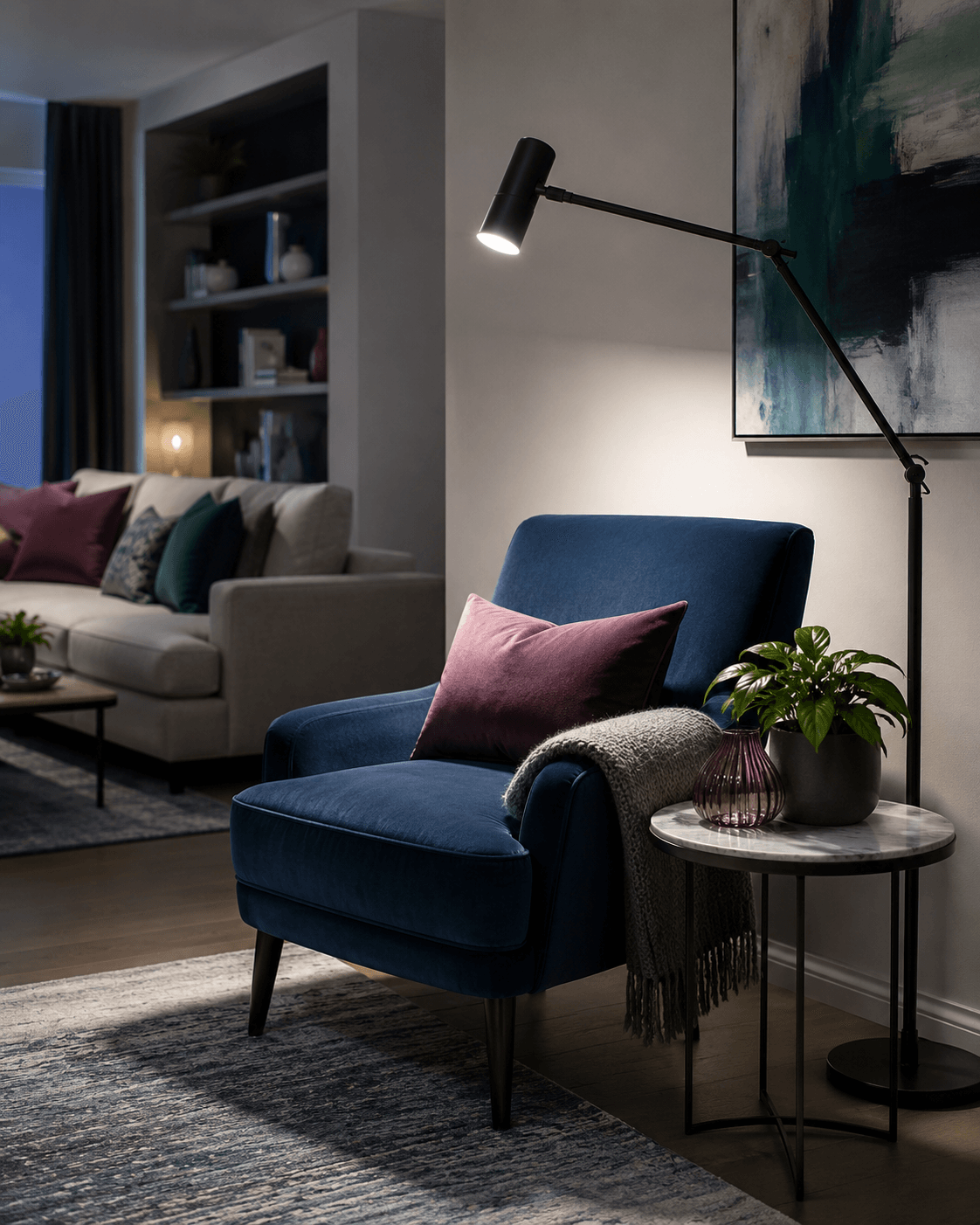
The room can be bright. The chair can still be dark.
When the problem belongs to one activity, move the light to the activity instead of brightening the whole ceiling.
A bright room can still have a dark chair, a flat sofa, lost artwork or an uncomfortable TV wall. Start with the place that feels wrong after sunset.
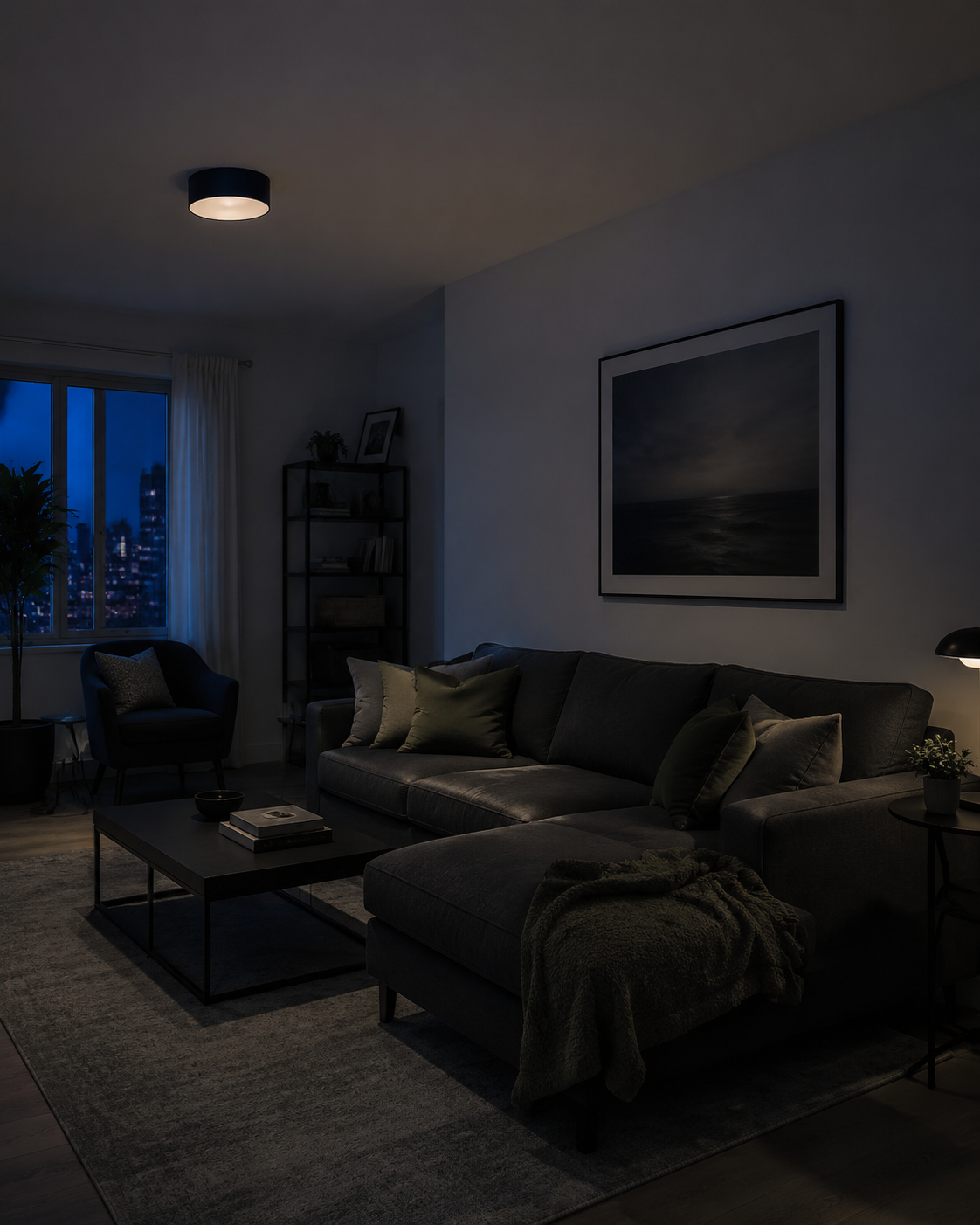
The room does not need “more lighting” everywhere. It needs the right job in the right place.
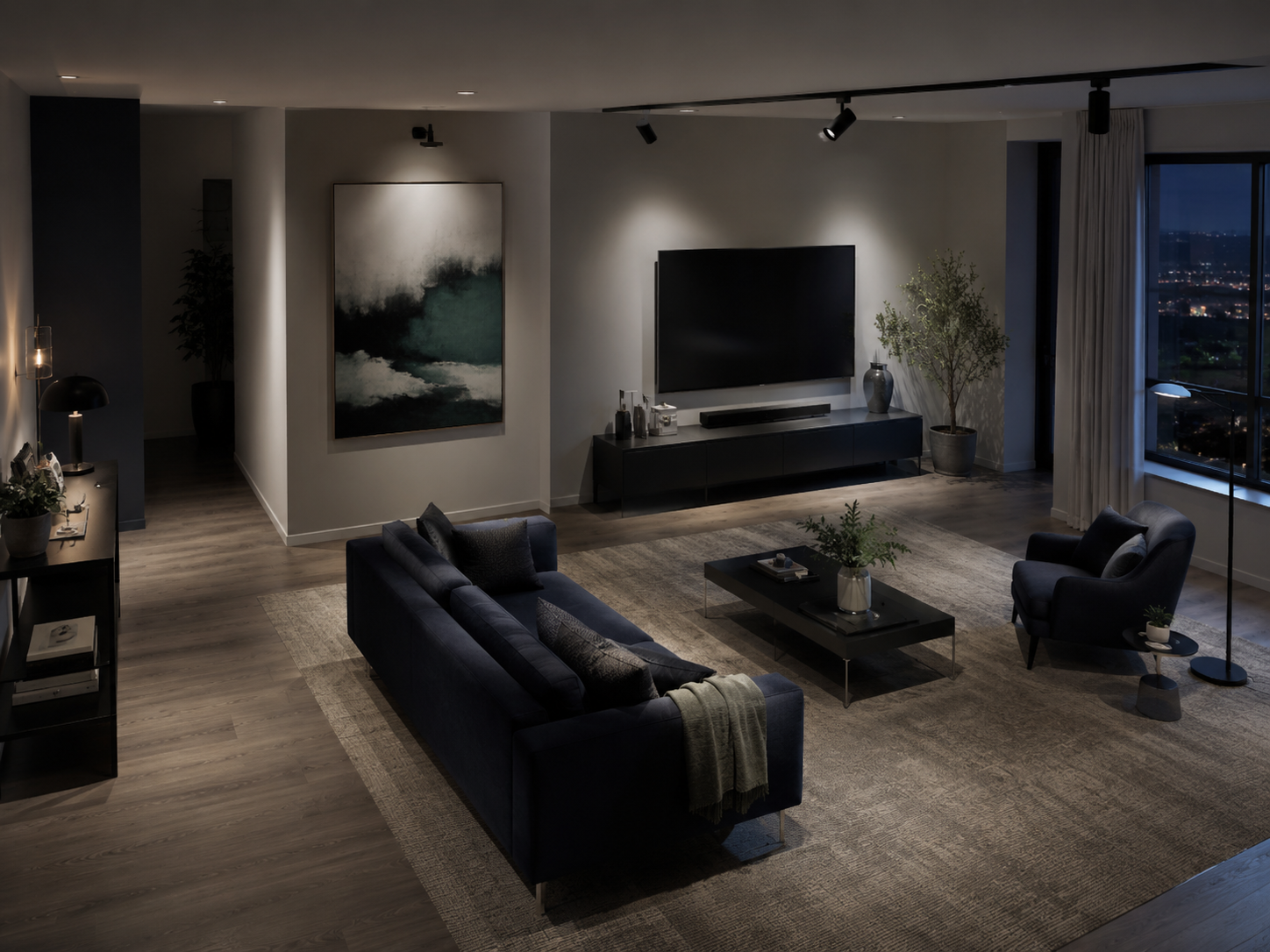
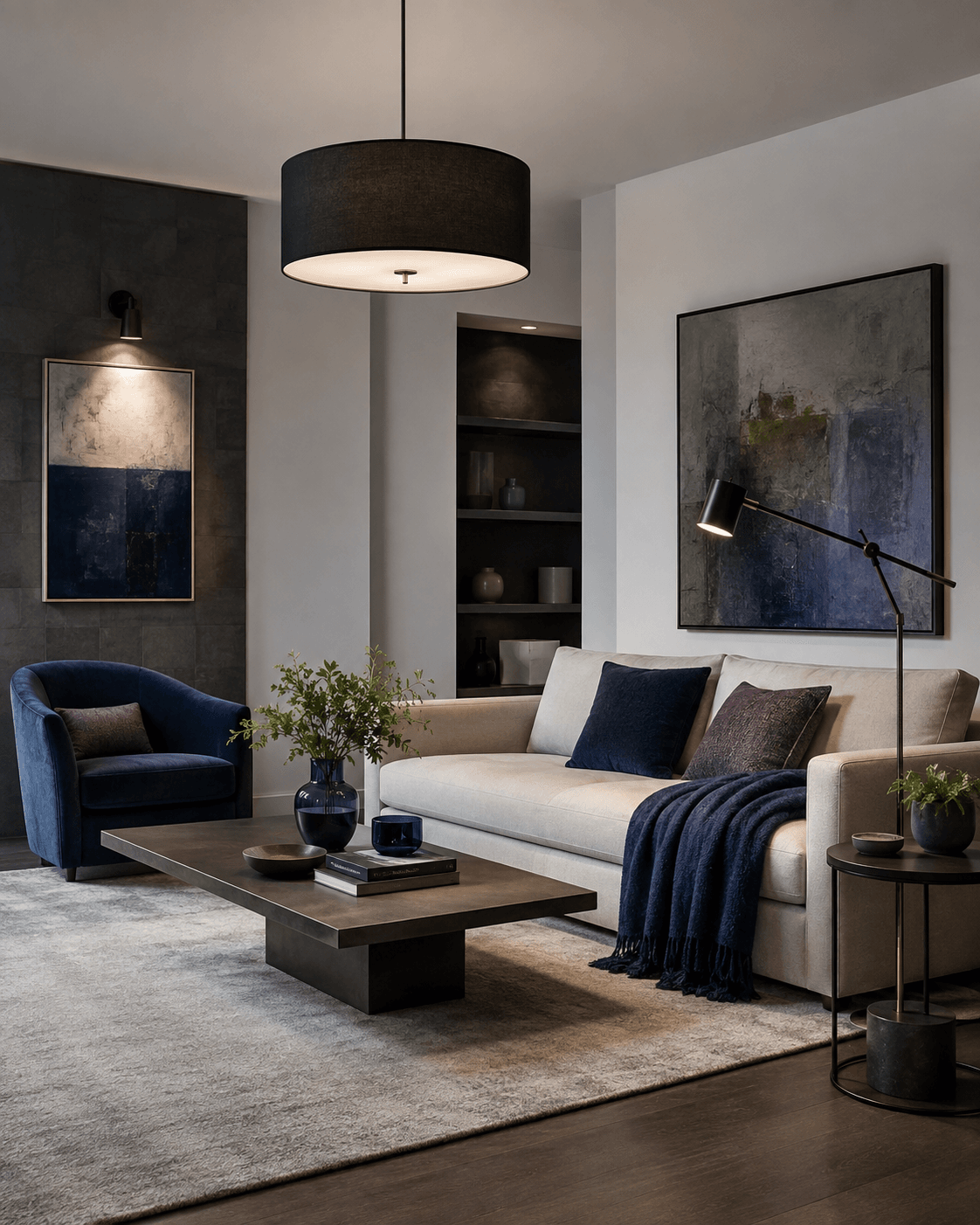
You do not need three mandatory fixtures. You need enough sources to handle background light, the activity and the visual focus.
When the problem belongs to one activity, move the light to the activity instead of brightening the whole ceiling.
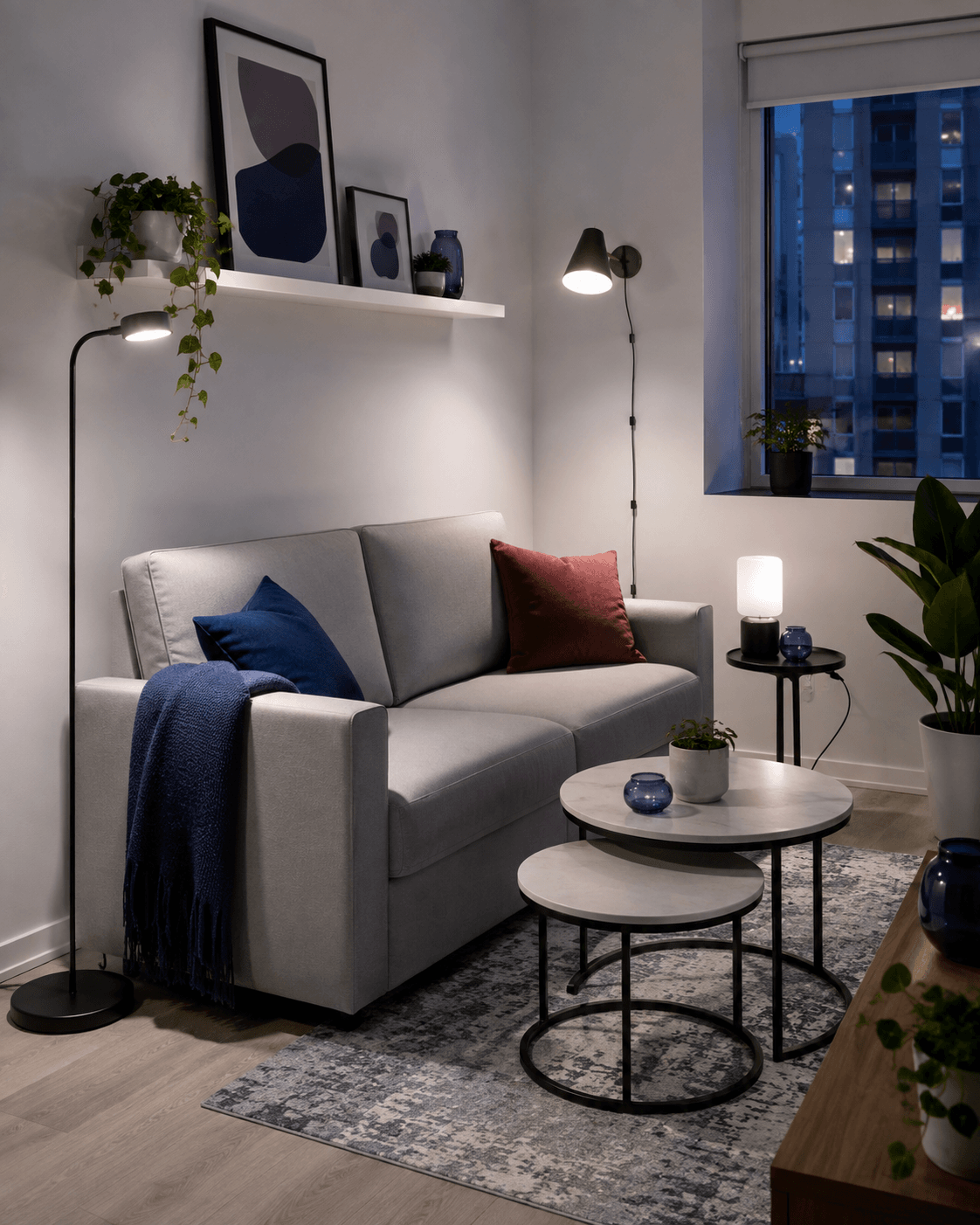
Build with plug-in, rechargeable and portable sources first. Hardwiring is not the starting assumption.
A beautiful fixture is still the wrong fixture if its base, arm, cord, drop or sightline fights the room.
Check the base footprint, shade or arm reach, nearby furniture and where the cord reaches the outlet.
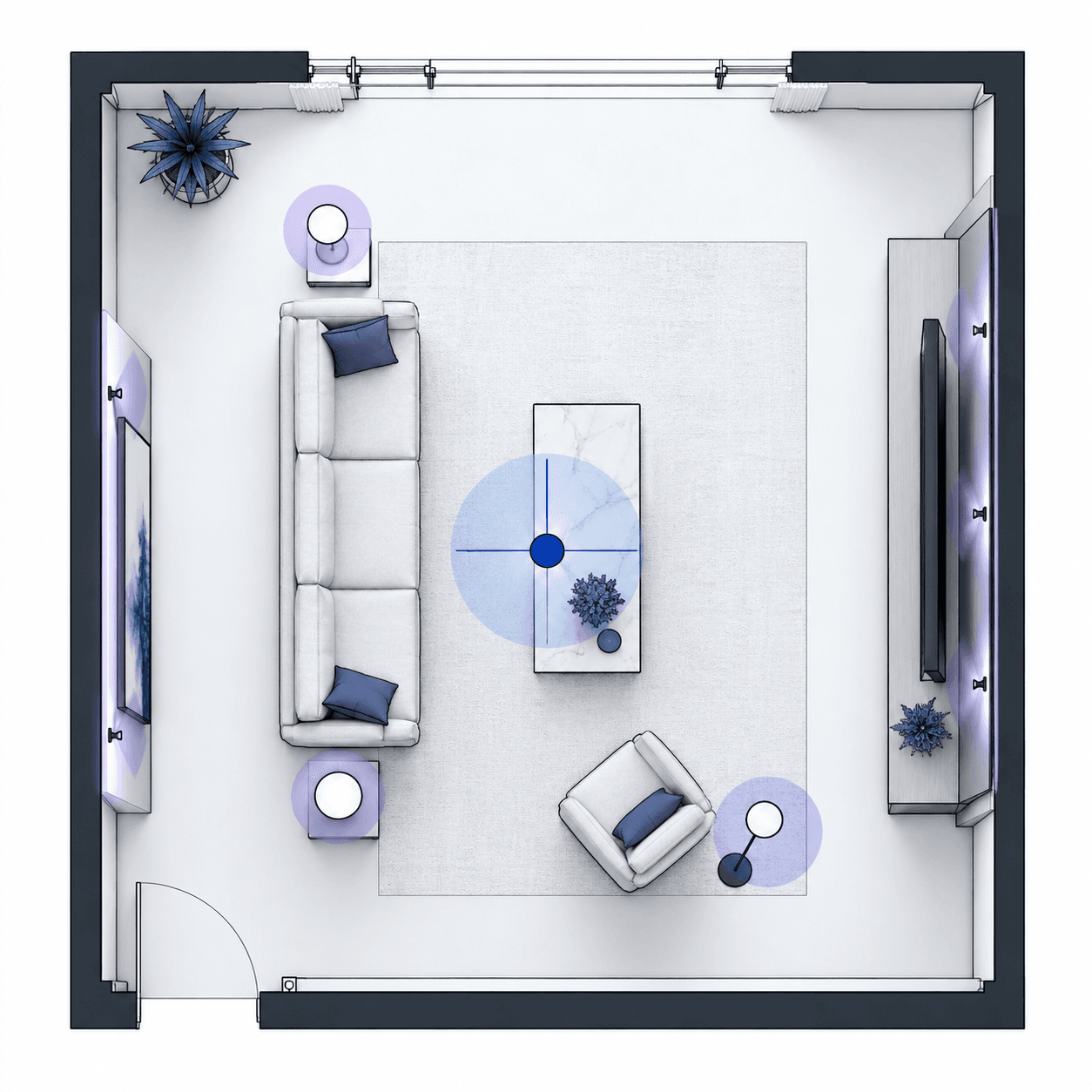
Different fixture types can belong together when they share a visual logic and each one earns a different job.
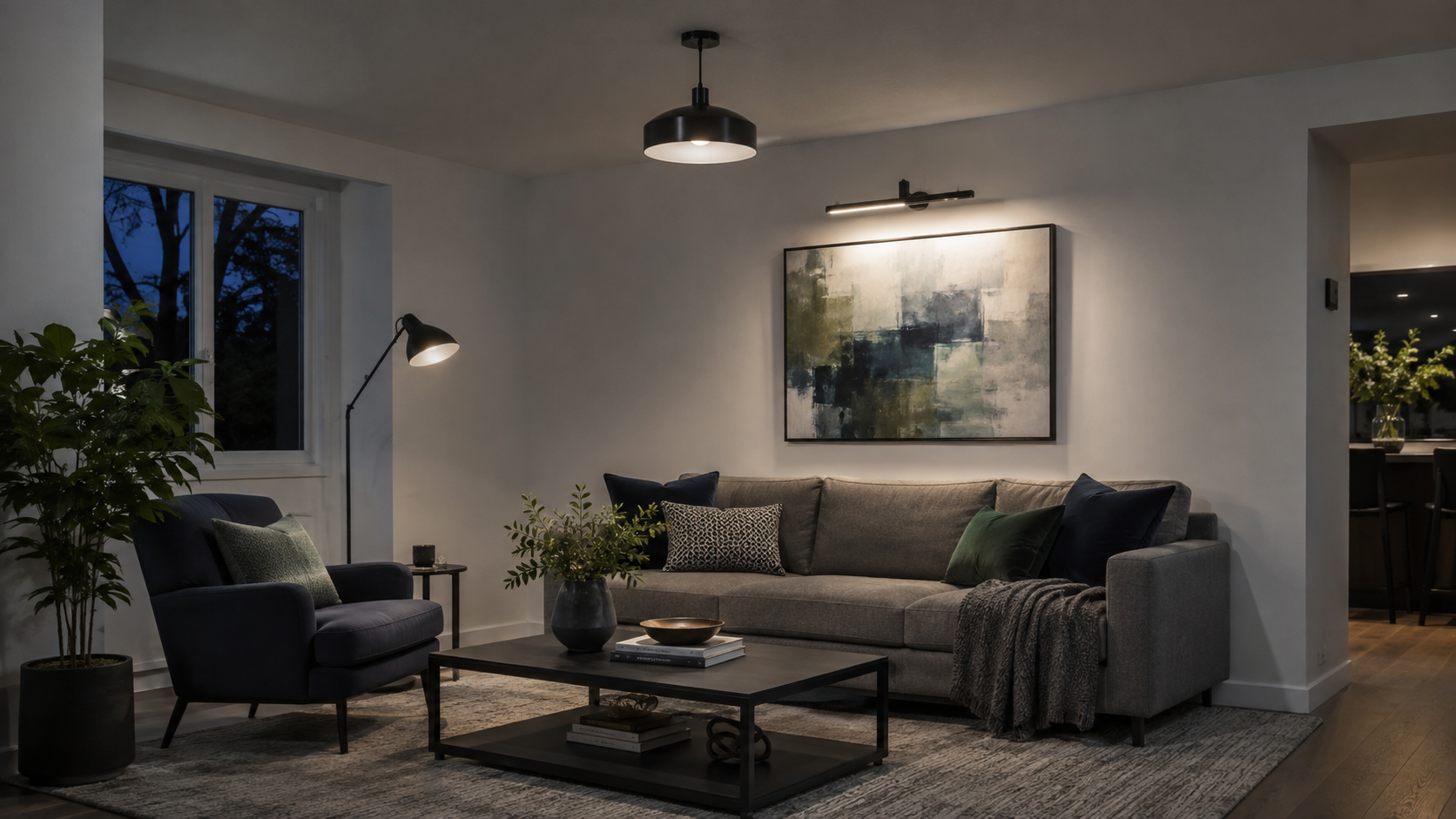
Build broad light, activity light and one flexible secondary source.
Keep the chair useful without making the whole room brighter.
Combine an overhead anchor, sofa reach and a wall layer.
The goal is not one perfect brightness level. The same room can emphasize different layers as the activity changes.
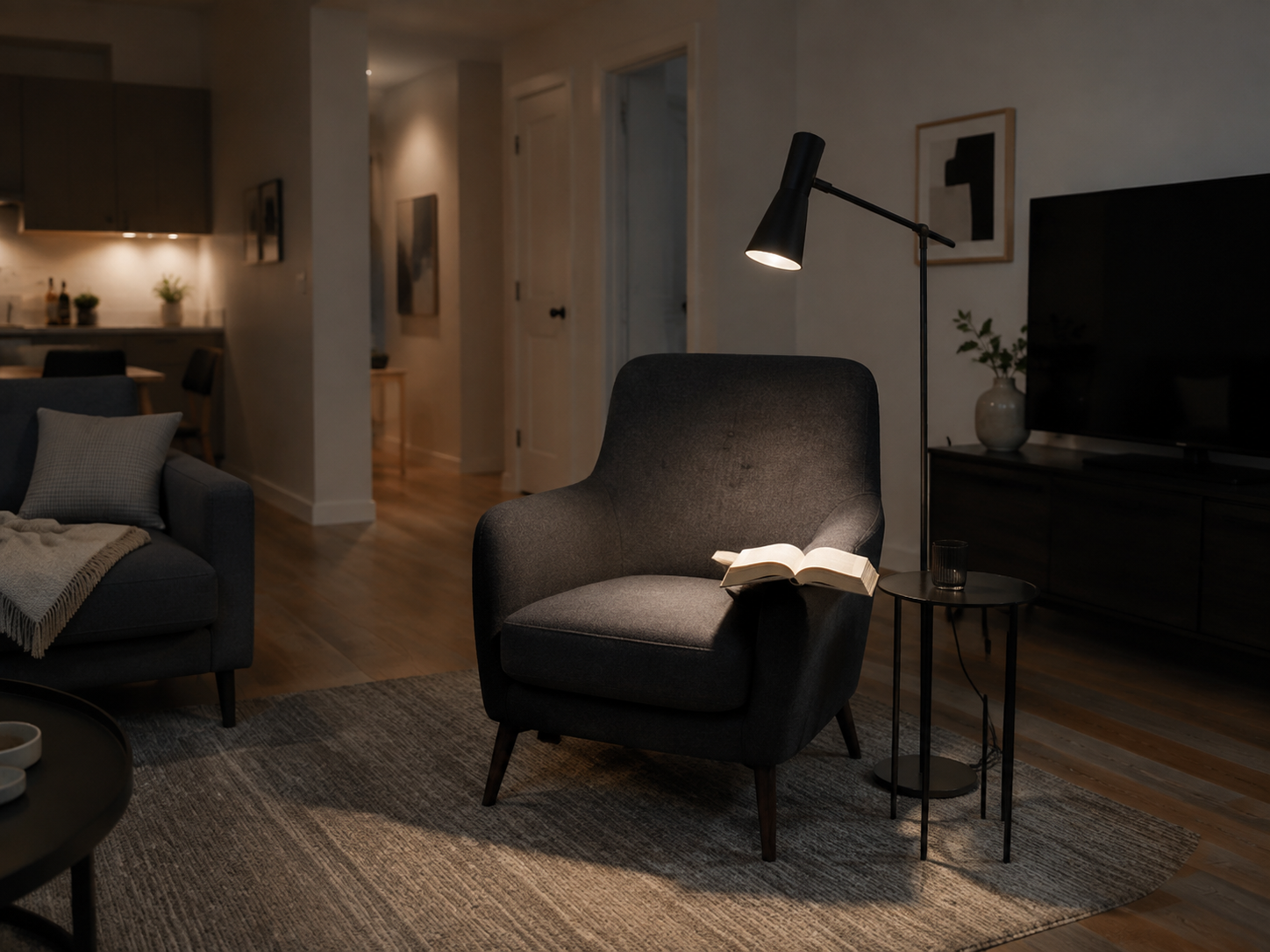
Compare the seated sightline before adding another source near the media wall.
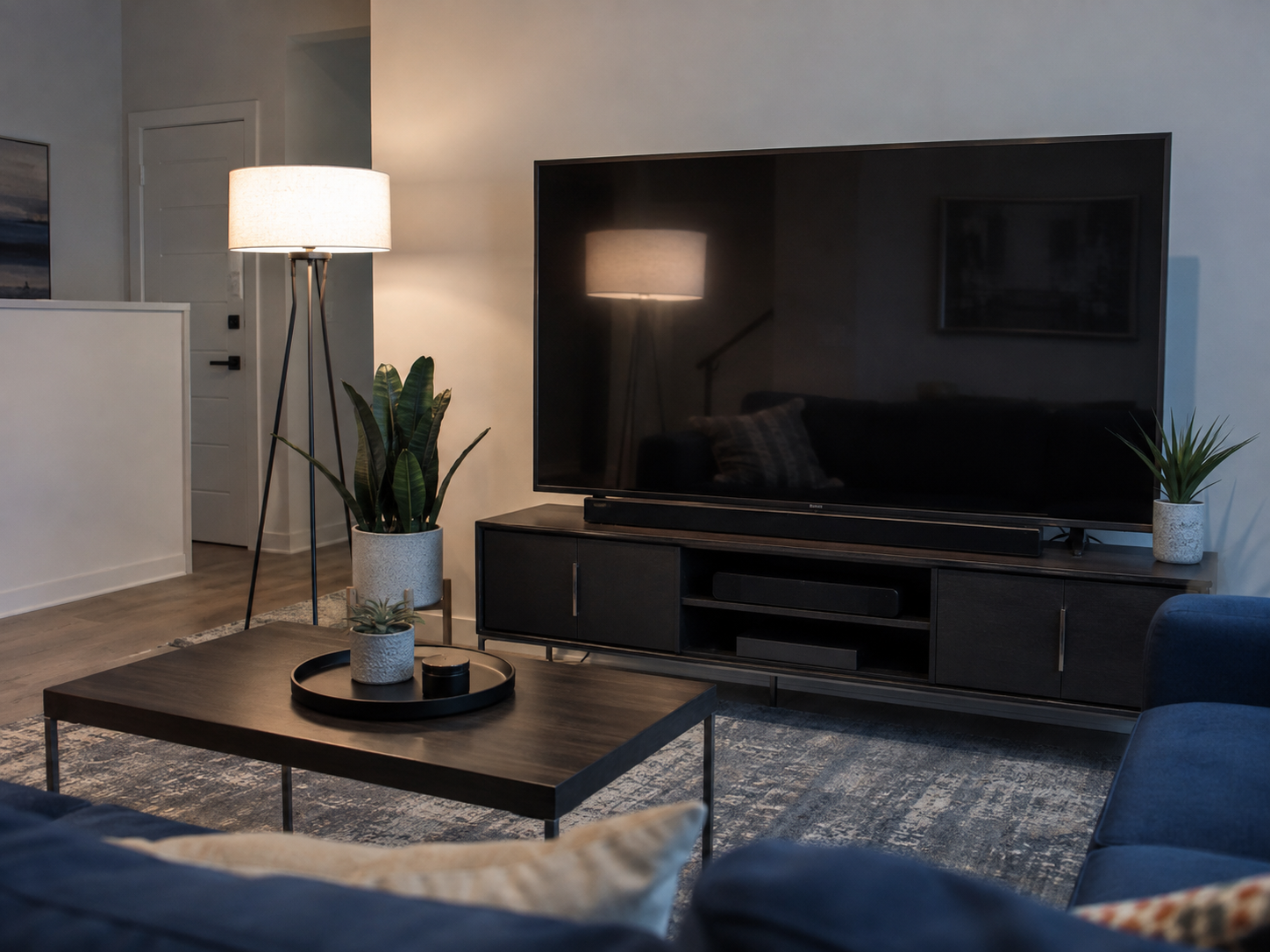
A bright source enters or reflects into the viewing line, so the screen fights the room.
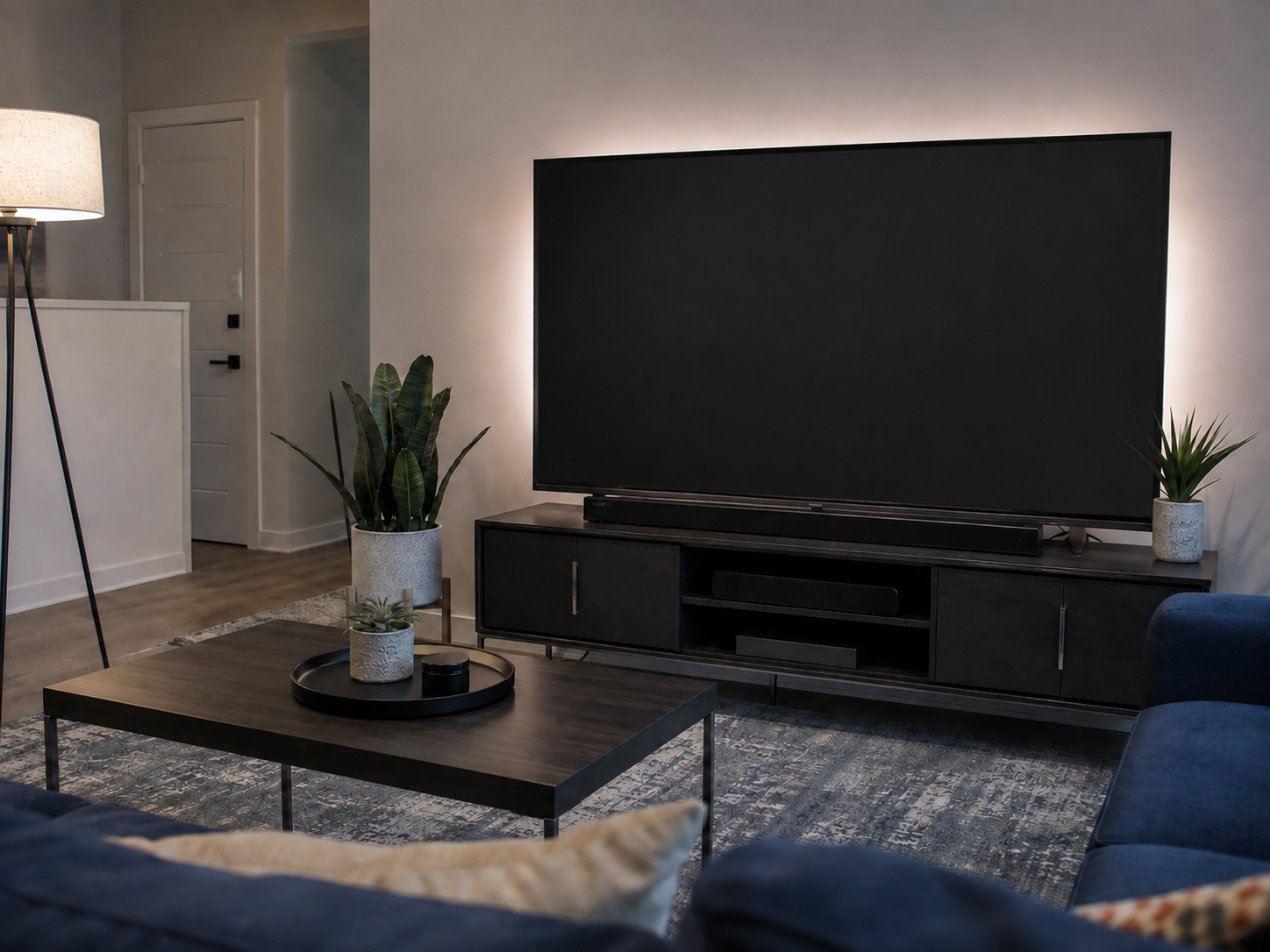
Move the source off-axis and use restrained side or backlight to preserve depth without the reflection.
This is retrieval, not a second storefront. Each product earns a distinct job in the room.
The current product listing is the source of truth. Check what matters for the exact fixture type you are considering.