

Keep the room bright
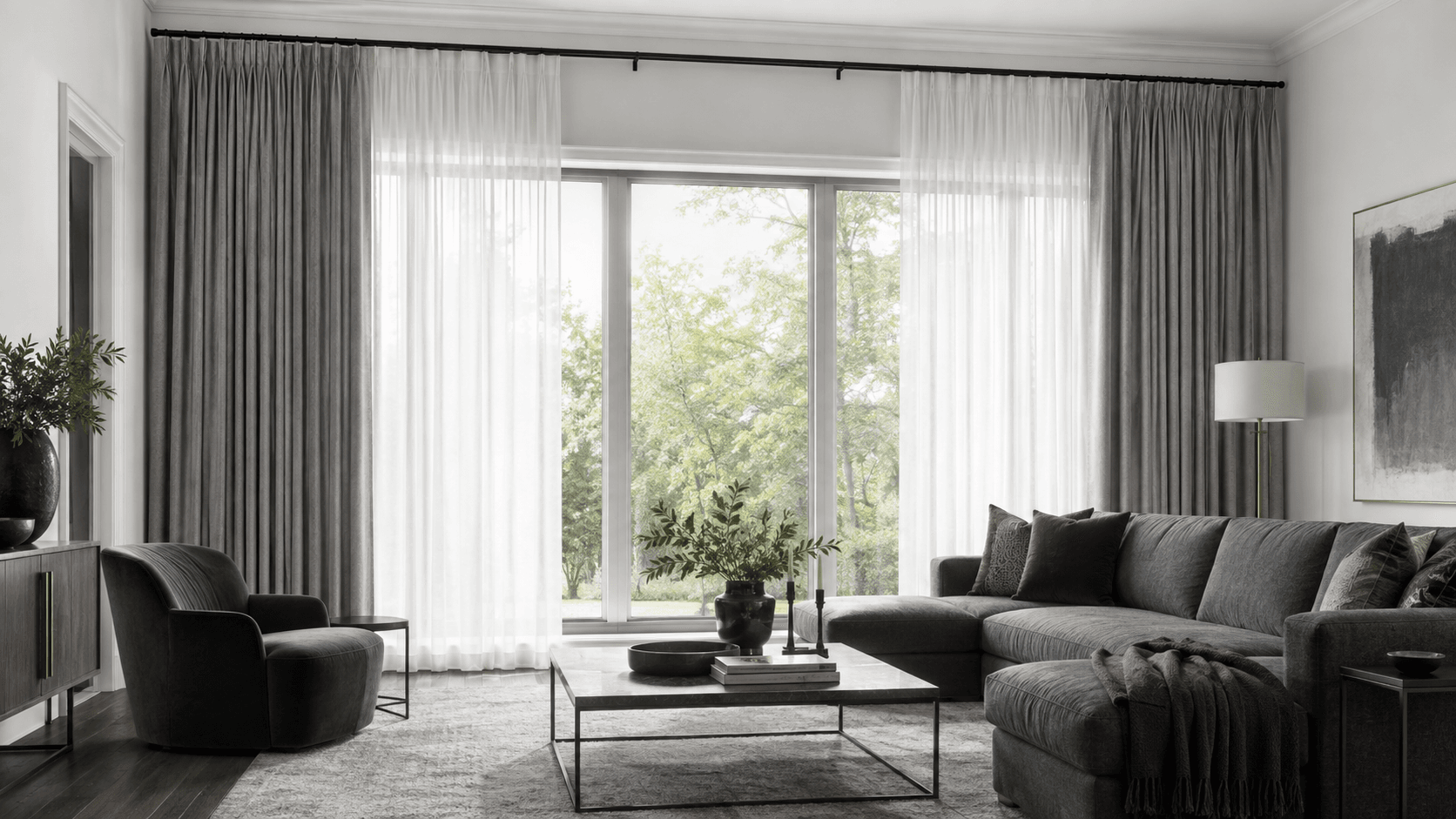
Soft daylight
Use a light-filtering or sheer treatment when the window should soften light without visually closing the room.
Living room curtains
Too exposed, too dark, too short-looking, or too skimpy? Start with what feels wrong, then build the curtain system around that.
Choose the job
Choose the function and visual weight before color. These routes put useful product options in front of you immediately.
As an Amazon Associate, Ravnora Decor may earn from qualifying purchases. Product links may open on Amazon.
Keep the room bright
Use a light-filtering or sheer treatment when the window should soften light without visually closing the room.
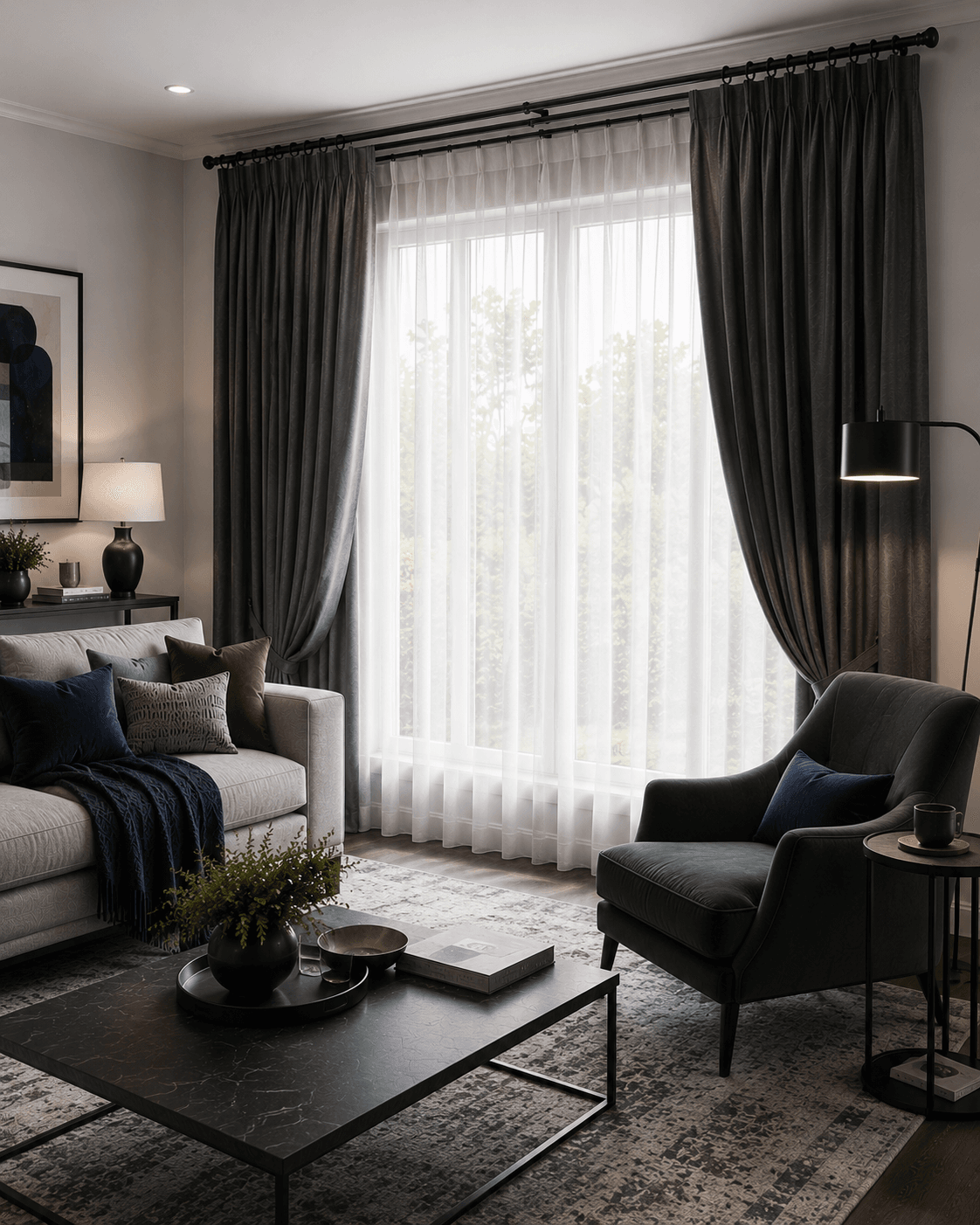
Change with the day
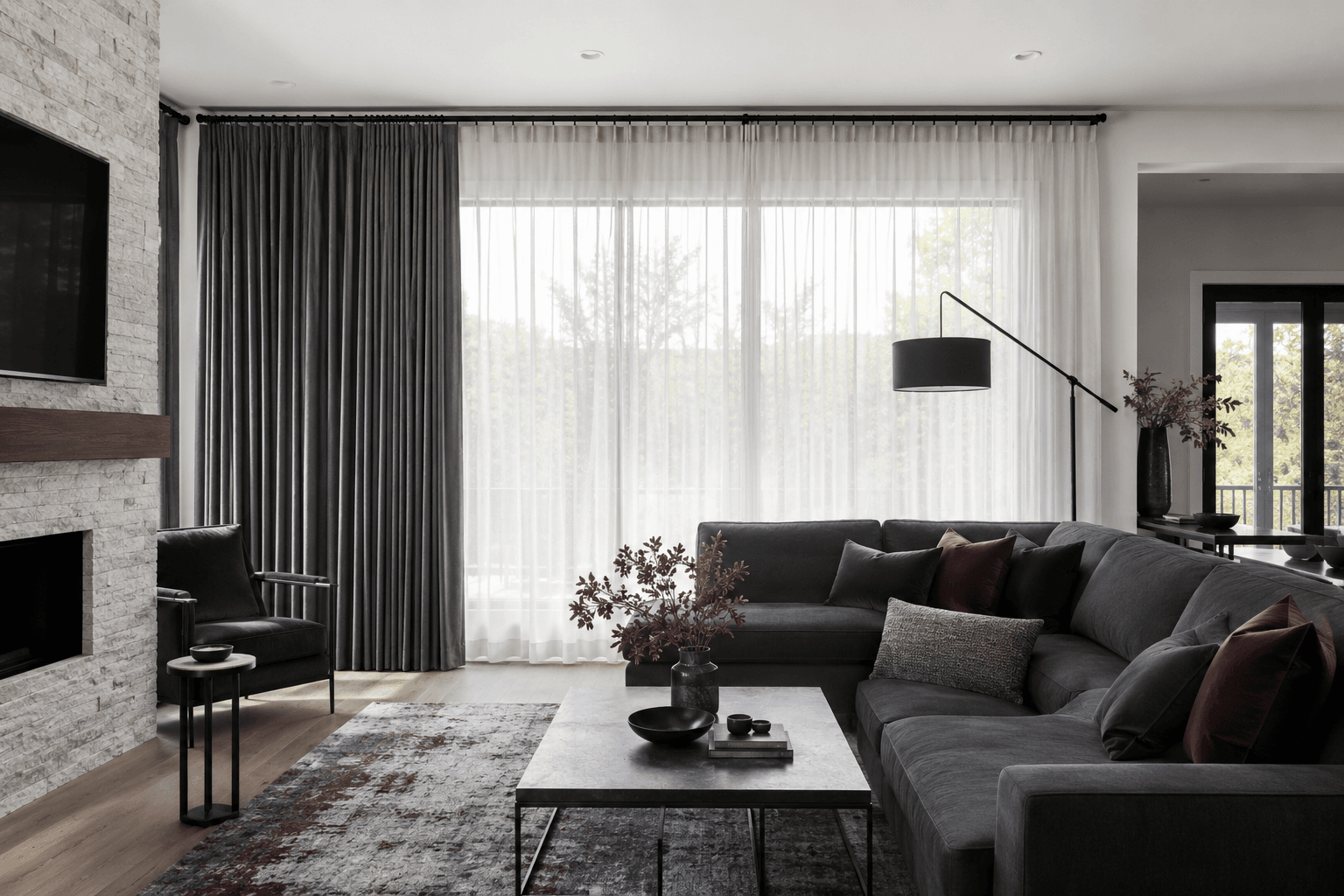
Run a sheer inner layer independently from a stronger outer curtain so daylight and evening privacy are separate decisions.
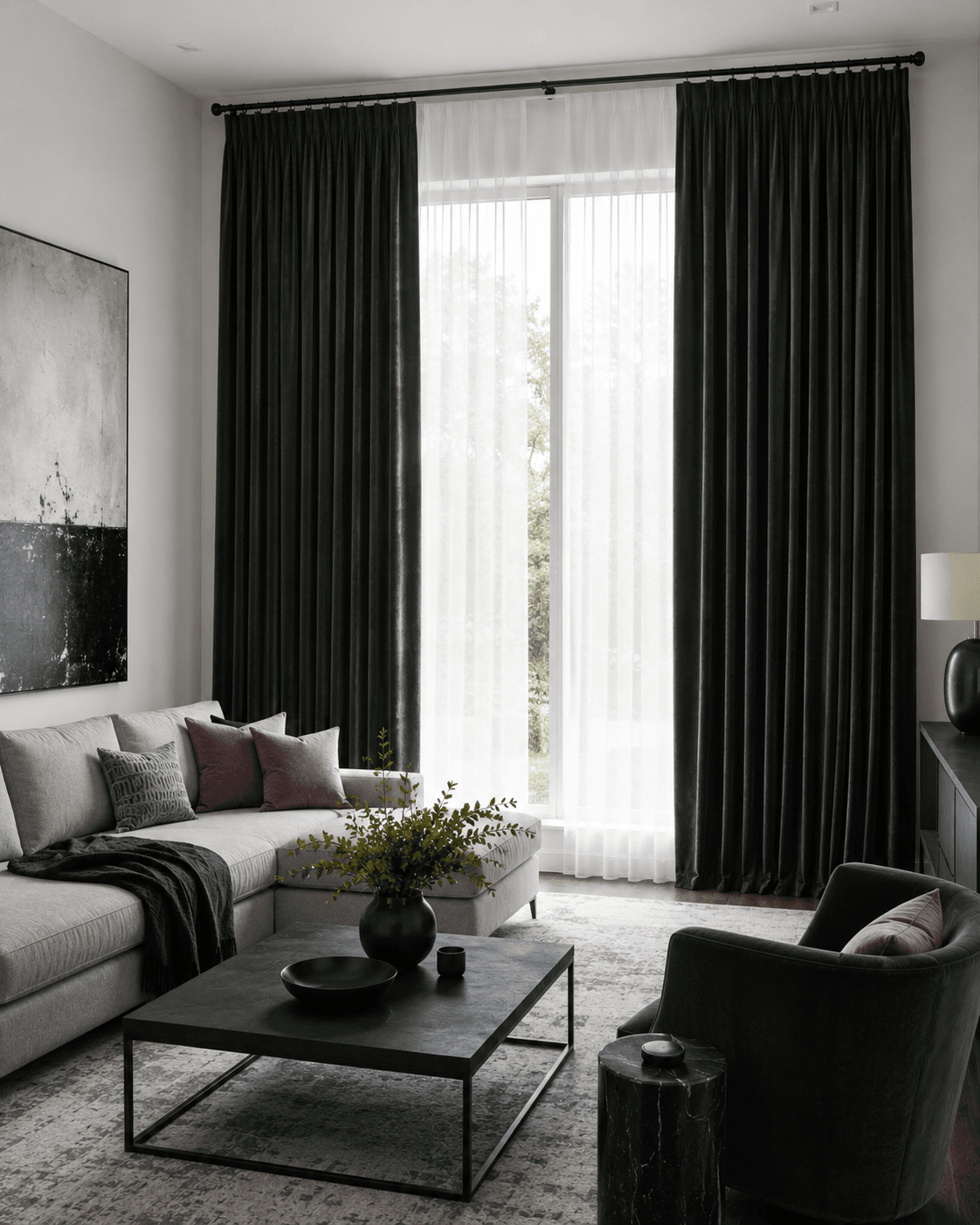
Make the window visible
Use deeper color or heavier fabric when the window should add visual structure instead of disappearing into the wall.
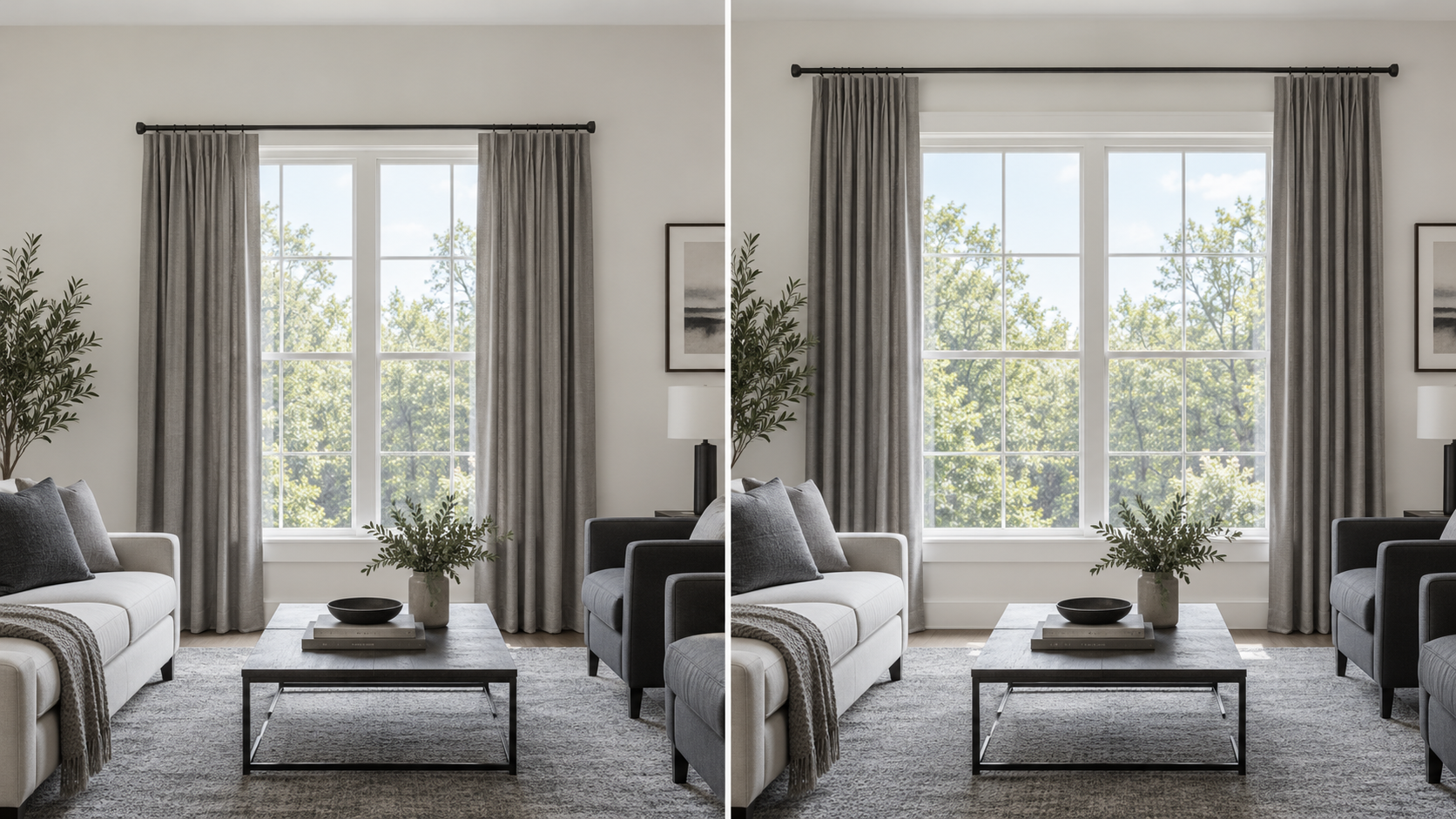
Move the curtain line
A rod that stops close to the frame forces open curtains to sit over the glass. Moving the line higher and wider gives the curtain somewhere to stack and changes the wall proportion.
Calculate the system
Turn the opening into a working rod span, combined fabric width and approximate panel quantity. Measurements below are in inches.
Measure the opening or outer frame consistently.
Edit this to match actual free wall space.
Use the selected listing's stated flat panel width.
Planner formula: rod span = window width + both side extensions. Combined fabric width = rod span × fullness.
Working specification
Based on a 72-inch window, 6-inch extension per side and 2× fullness.
Before ordering: confirm whether the listing is sold per panel or as a pair, plus finished length, heading style, rod diameter, bracket/support needs and actual wall conditions.
Use the room through a day
A strong living-room treatment is not one static look. It should make sense when the room is bright, softly screened and fully private.
Outer panels should have enough side space to stack away from more of the glass. The room keeps the architectural opening instead of losing it behind fabric.
Build the wall in layers
Tap the layer that is causing uncertainty. The product should answer that physical job—not just look attractive in isolation.
Choose this layer for privacy, room-darkening, thermal behavior and the visual frame around the opening. Confirm width, length, heading and pack quantity before anything else.
When the opening is not standard
This is where generic curtain advice breaks down. Treat the actual geometry first.
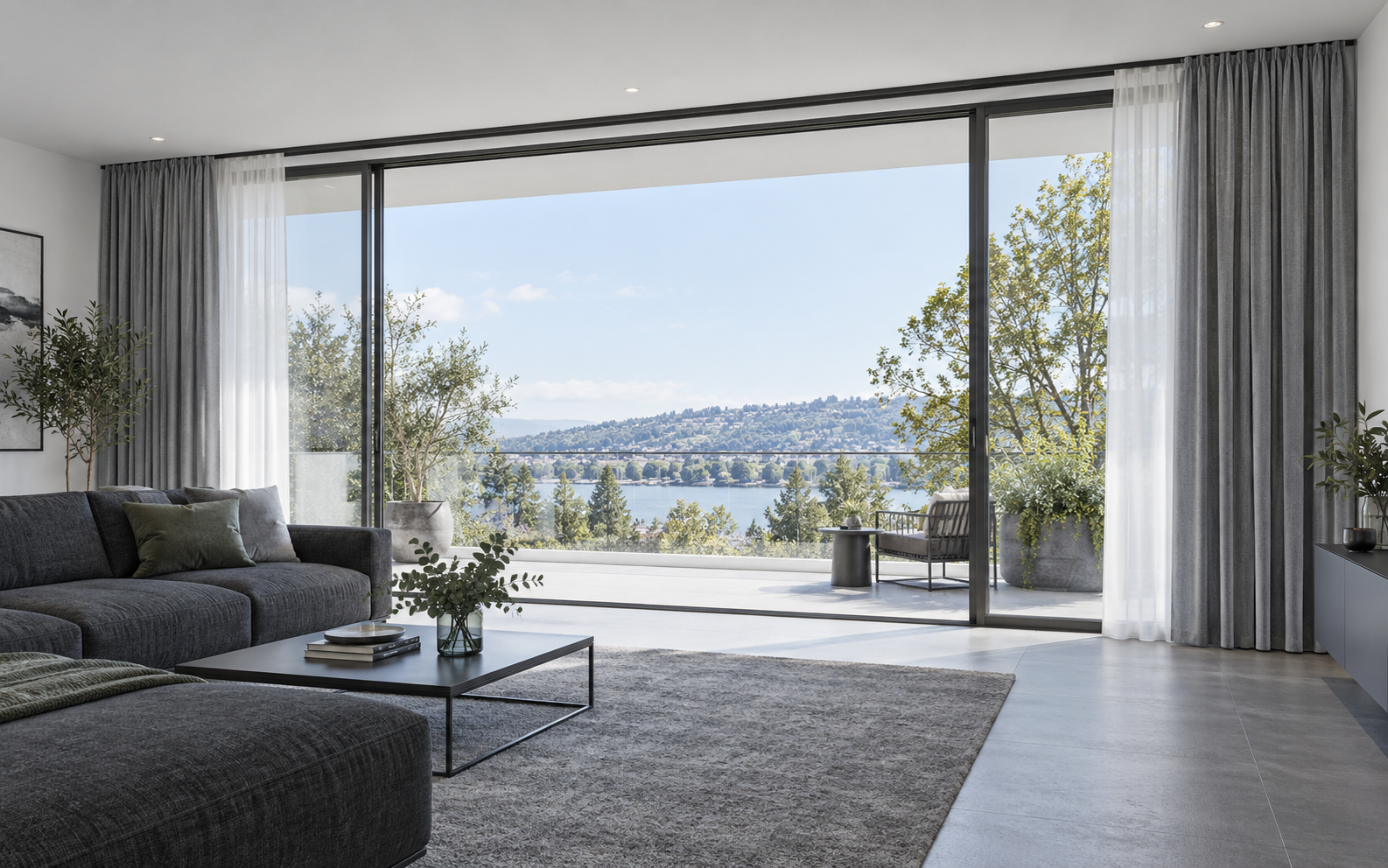
Wide opening
Sliding doors and broad glass walls benefit from fewer extra-wide panels or a track/traverse system that moves fabric across a long span.
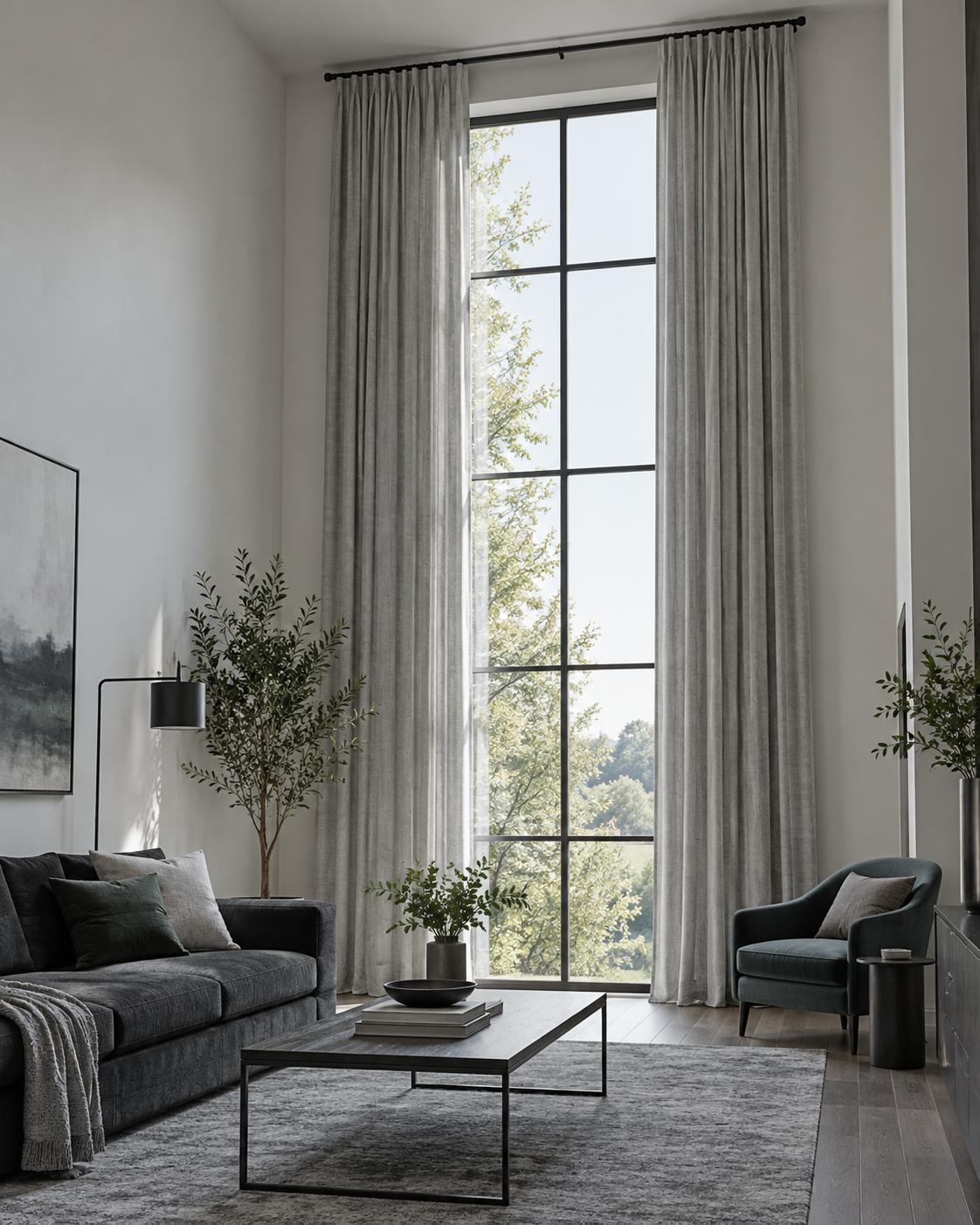
Tall window
Measure from the actual hanging point to the intended floor relationship. A standard length should not force a visibly short finish.
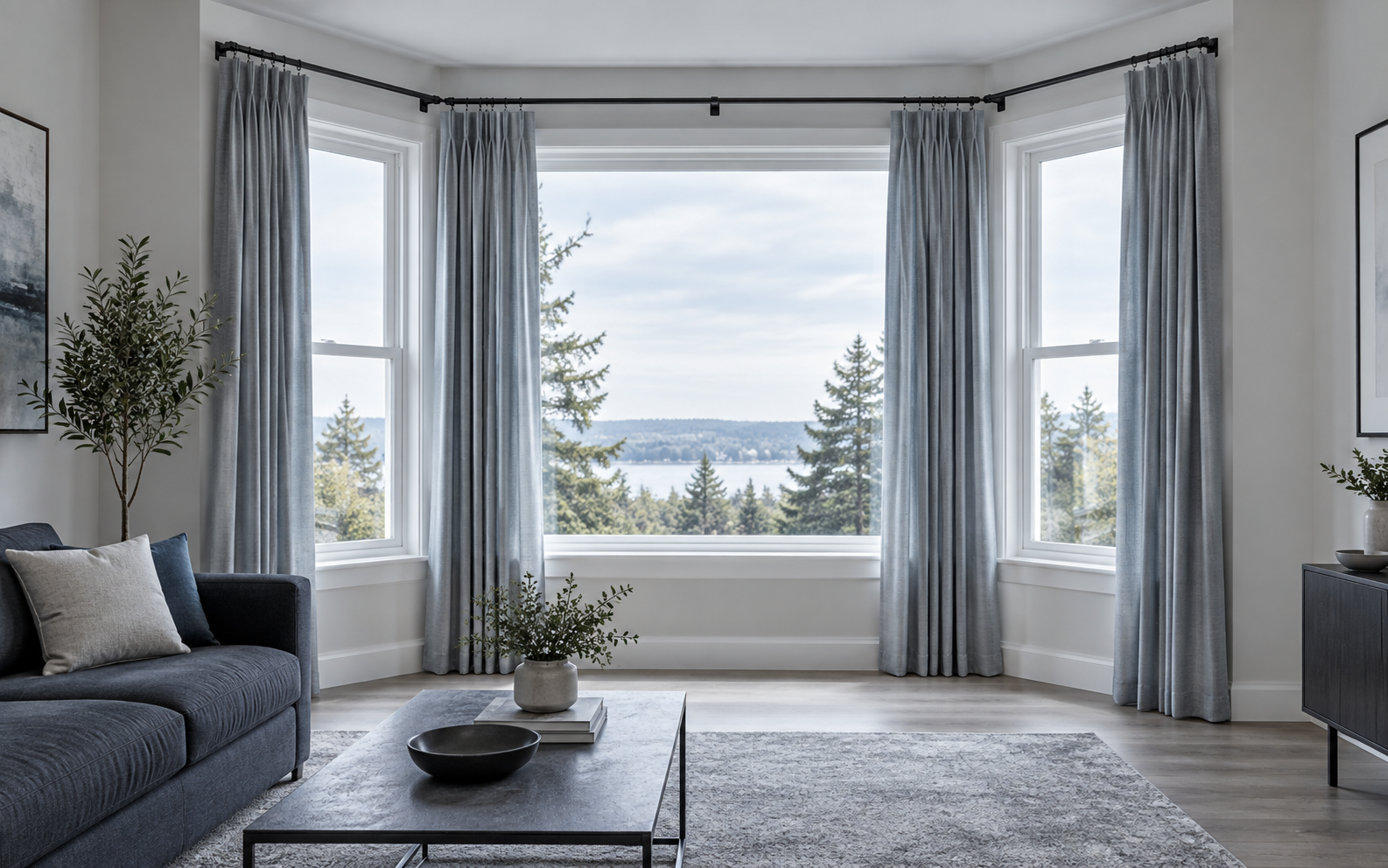
Bay / corner geometry
A bay system needs articulated joints and bracket positions that respect the actual window planes.
The Ravnora edit
This is the shortlist. The complete 18-product retrieval library comes later for unusual windows, hardware and finishing details.
Best when the room needs fabric presence without a heavy visual block.
Check: width, length, heading and pack quantity.
Explore ↗Best as an inner layer when daylight should remain the priority.
Check: total width, length and heading compatibility.
See options ↗Best when a sheer is too light but full blackout is more control than the room needs.
Check: selected opacity, dimensions and panel quantity.
Check fit ↗Best when strong privacy/control needs a more structured top line.
Check: hooks, header setup, dimensions and hardware load.
Explore ↗Best when the curtain is expected to add a heavier insulated layer at the window.
Check: dimensions, fabric construction and live listing claims.
Review ↗Best for sliding doors and broad spans where many narrow panels would feel fragmented.
Check: one-panel width, finished length and support weight.
Check size ↗Best when high mounting or tall glazing requires a length beyond standard living-room sizes.
Check: exact hanging-point-to-floor length.
Check length ↗Best for wide openings or a cleaner track-led treatment rather than a decorative rod.
Check: total span, mount type, carriers and included parts.
Check system ↗Finish the vertical line
Do not buy length from a generic rule. Measure from the actual hanging point and choose the floor relationship the room can support.
Useful when everyday movement, cleaning or floor irregularity makes a small visible clearance practical.
A precise relationship where the curtain visually reaches the floor without obvious excess fabric.
More relaxed visual weight, but it should look deliberate rather than like the wrong length was ordered.
Curtain mistake clinic
Choose the mistake that resembles your room. The stage shows the underlying decision that needs correcting.
Better move: give the fabric somewhere to stack beyond more of the glass where the wall allows it. This improves open-window daylight and changes the perceived proportion.
Curtain Fit Passport
A product listing is only useful after the room conditions are known. Check the four zones below against the exact listing you intend to buy.
Opening, wall space and finished drop.
Width, quantity and maintenance.
How the curtain actually hangs.
The rod/track and the wall around it.
Complete retrieval library
Use this only after the earlier decisions. The library is for precise retrieval, not another endless storefront.
Continue the room
Once the curtains are solved, move to the next decision that changes balance, evening light or circulation.
Important: the planner is a working estimate, not structural or installation advice. Measure the actual room, follow the hardware manufacturer's instructions, use fixings suitable for the wall or ceiling type, and verify dimensions, included parts, material, care and compatibility on the live product listing before purchase.