
Top-opening
Best when the wall above stays clear
Useful for cushions and bulkier pieces when the lid can open freely without meeting a sill, rail or furniture edge.
See a low option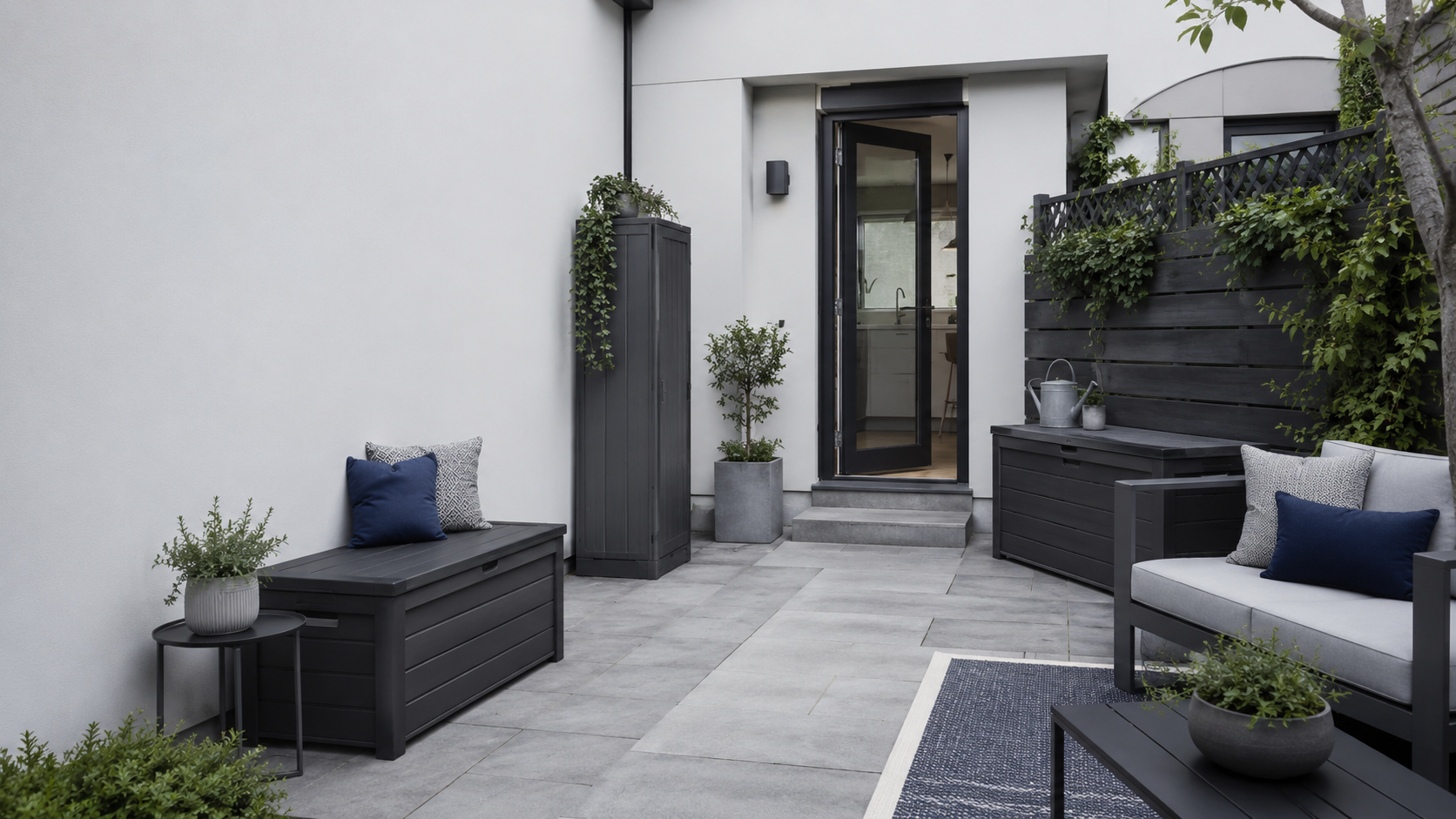
Outdoor storage, rethought
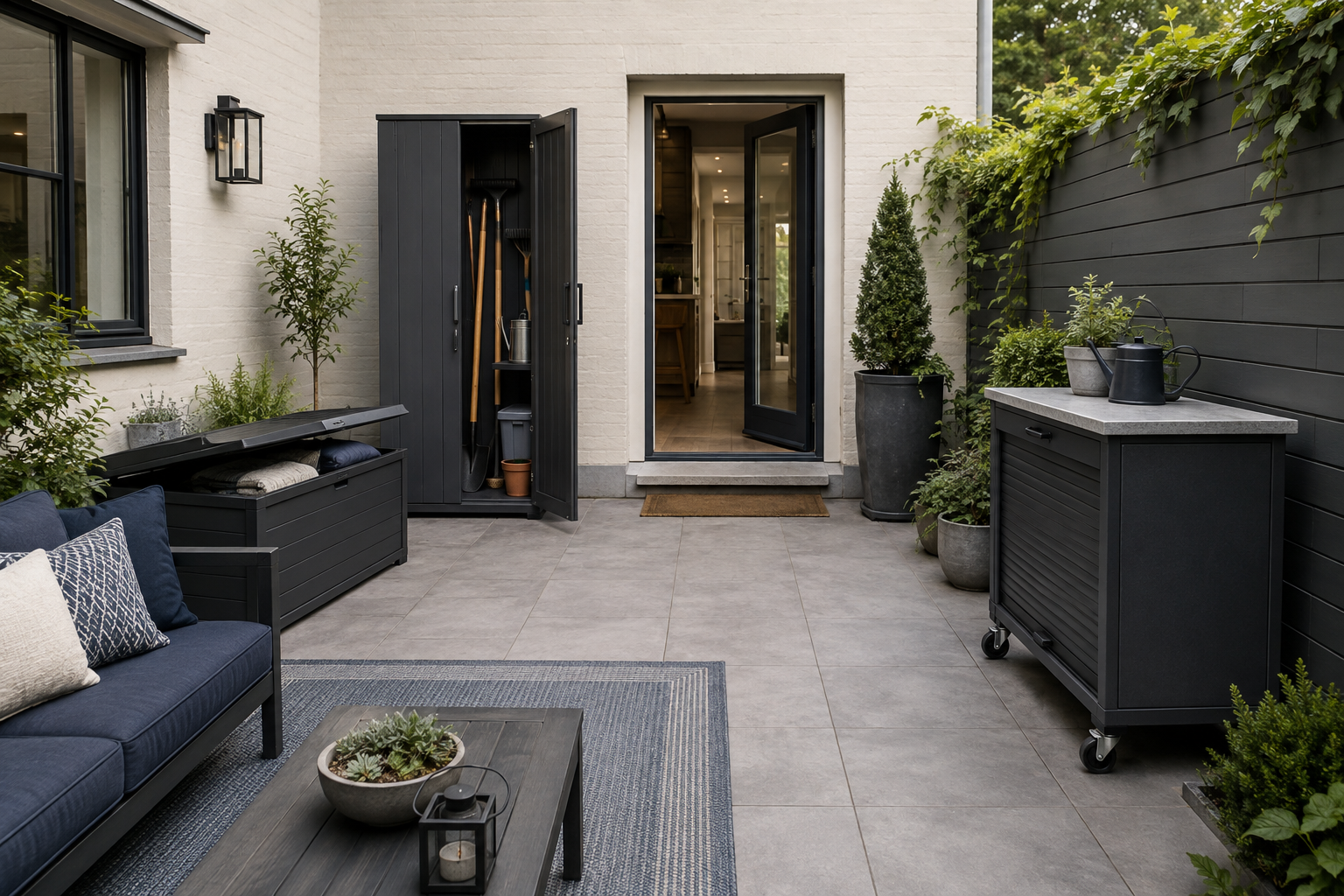
Choose what deserves floor space, what should use height, and what should move—while keeping the doorway and main walk line clear.
Store by frequency + footprint
Then decide how much floor the storage deserves. The goal is not maximum capacity—it is the right storage shape in the right place.
As an Amazon Associate, Ravnora Decor may earn from qualifying purchases. Product links may open on Amazon.
Your route
A small low container keeps frequently used pieces reachable without turning the patio into a storage wall.
Check: lid clearance and whether the footprint leaves the door line clear.
The first placement rule
Storage can fit on paper and still make the patio harder to use. Keep the door swing, the first step outside, and the route to the seating zone visually open.
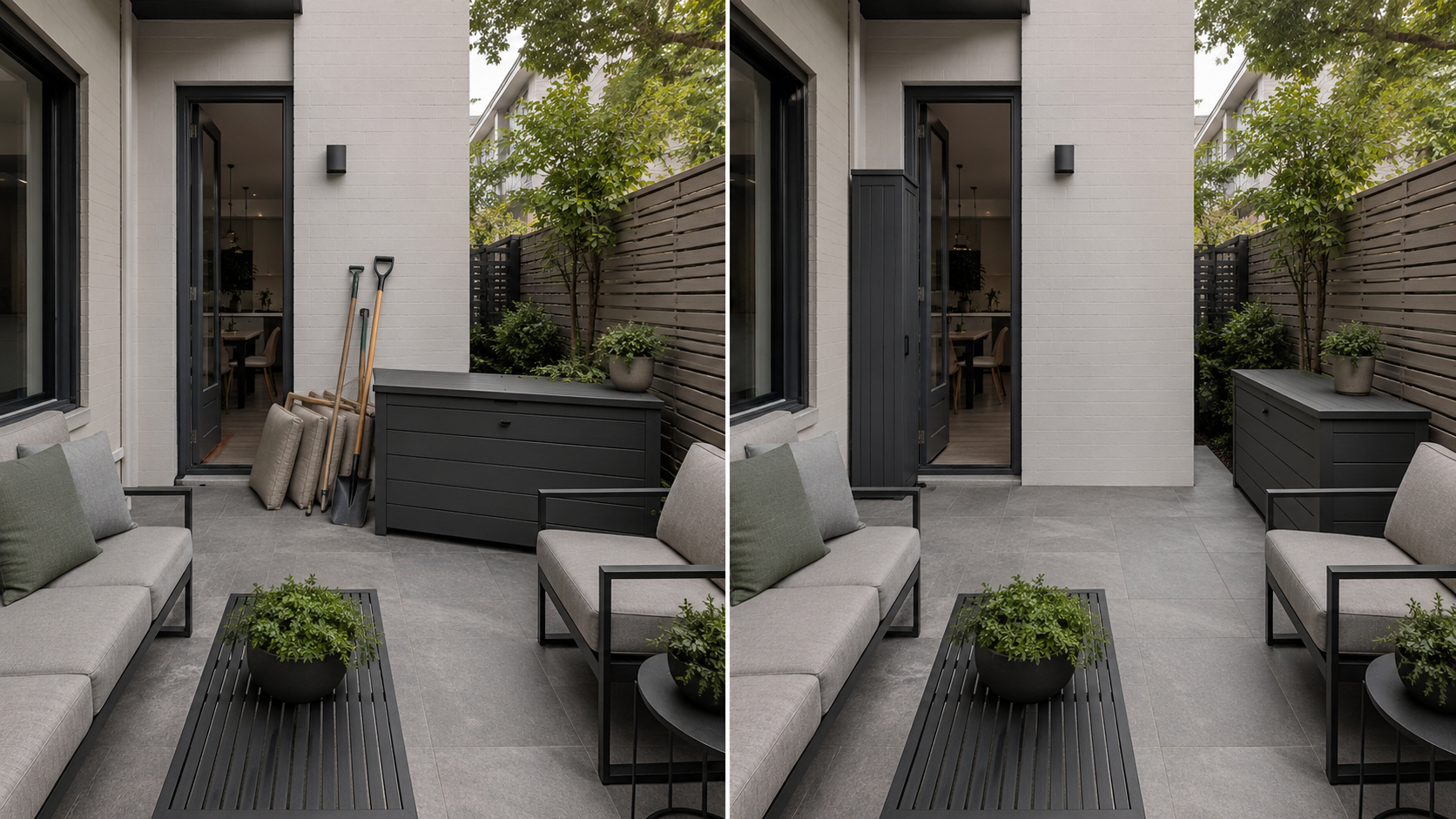
The route bends around the box, tools and loose pieces.
The same patio feels calmer because the center remains usable.
Access changes the footprint
The box itself is only half the space. A lid needs room above it; cabinet doors need usable floor in front of them.
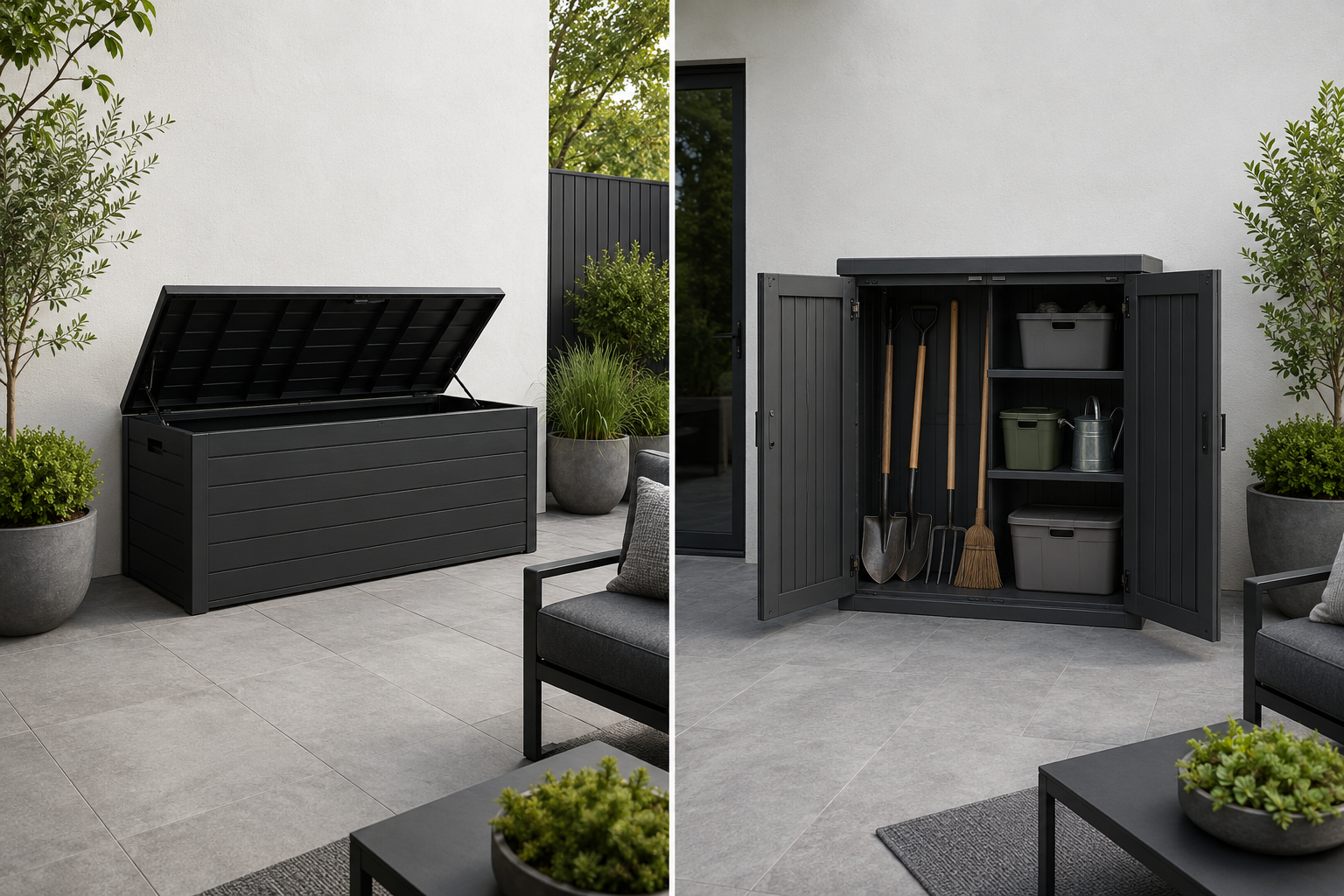
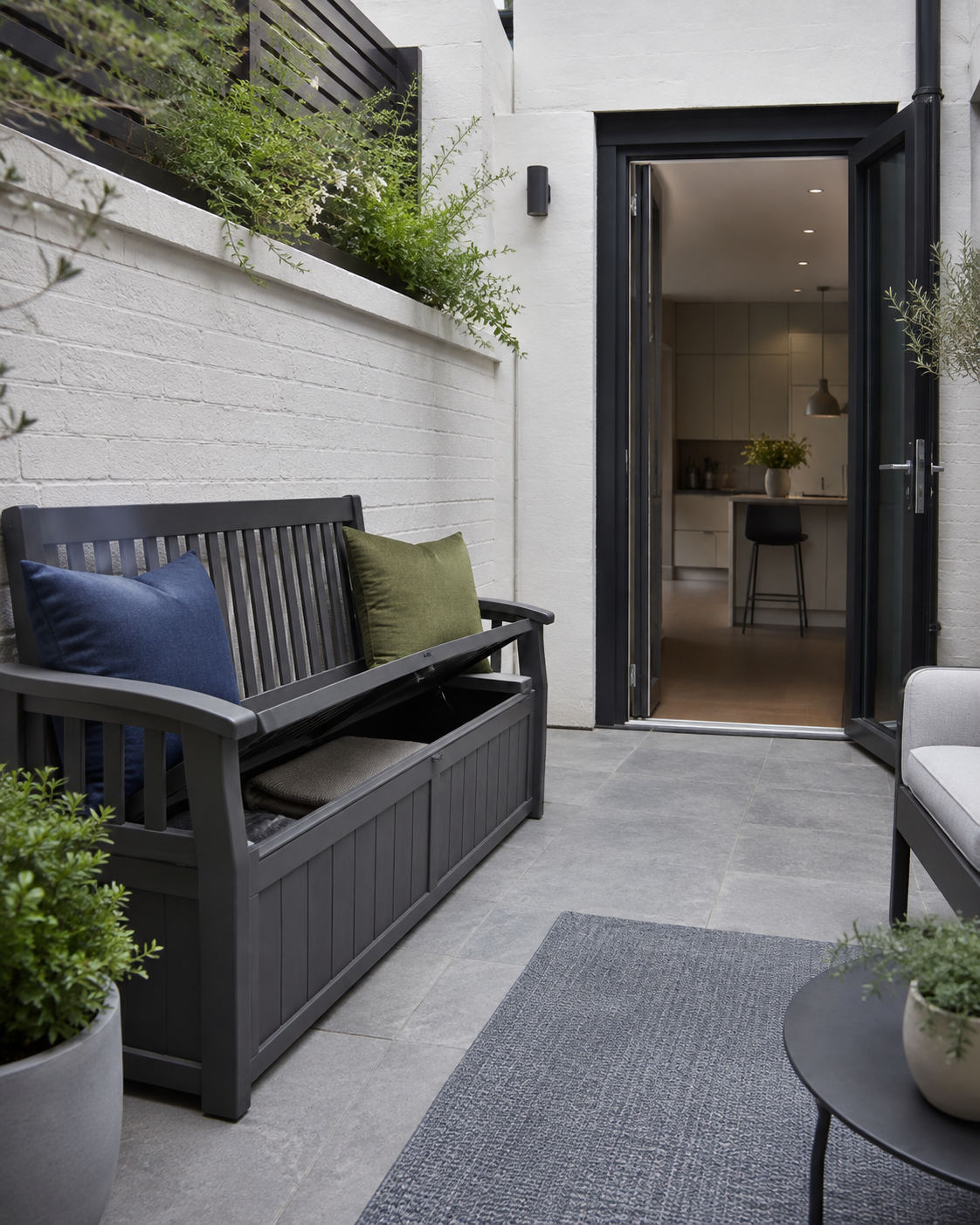
Route 01 · Bench storage
A storage bench makes the most sense when seating is already part of the plan. Keep it on the perimeter and treat its opening clearance like furniture clearance.
You need hidden storage but would otherwise use the same wall for an extra seat.
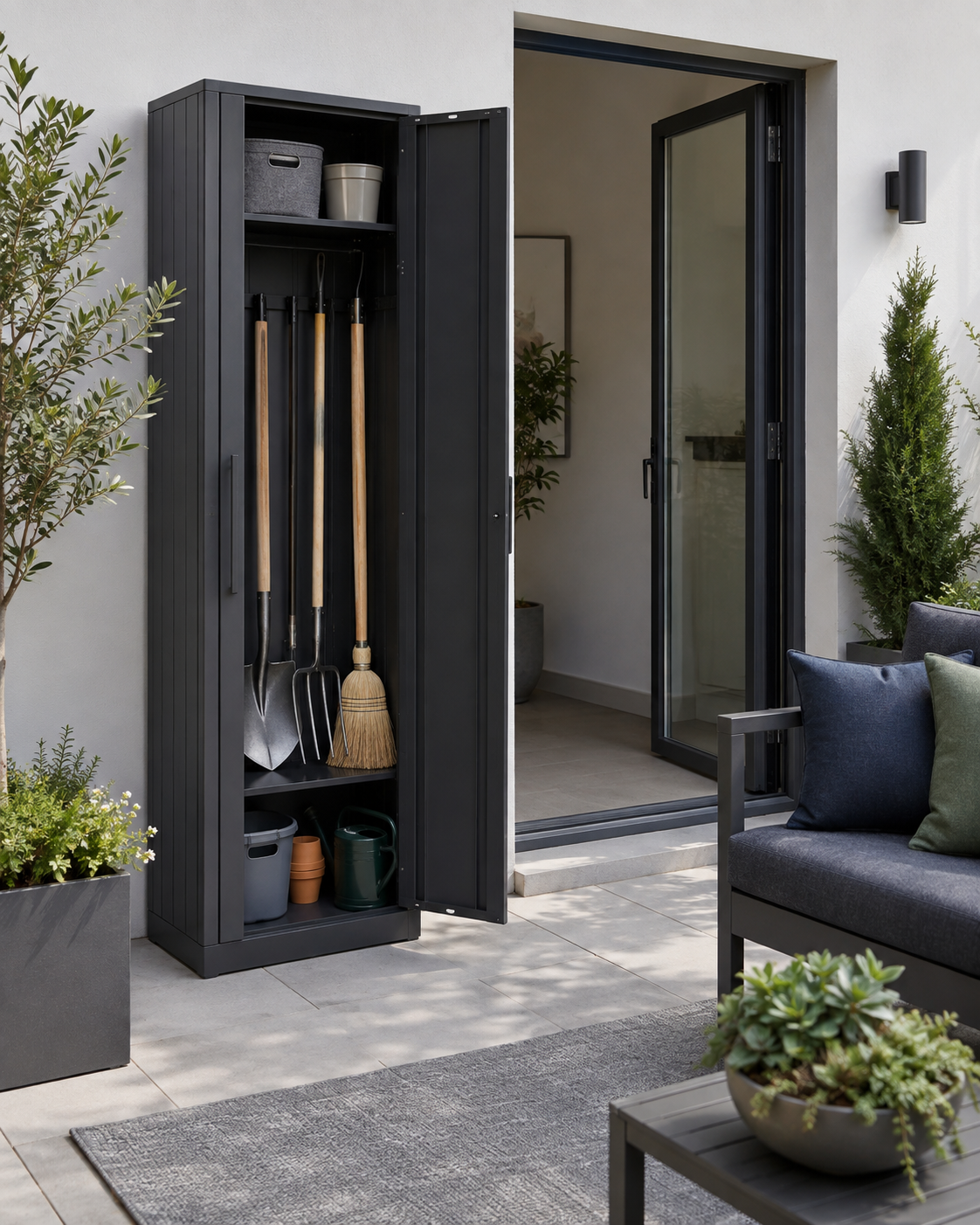
Route 02 · Vertical utility
Long tools and stacked supplies do not need a wide horizontal box. A tall cabinet concentrates storage against the wall and can free the route beside it.
Confirm total height, door swing, shelf configuration and manufacturer outdoor-use guidance before buying.
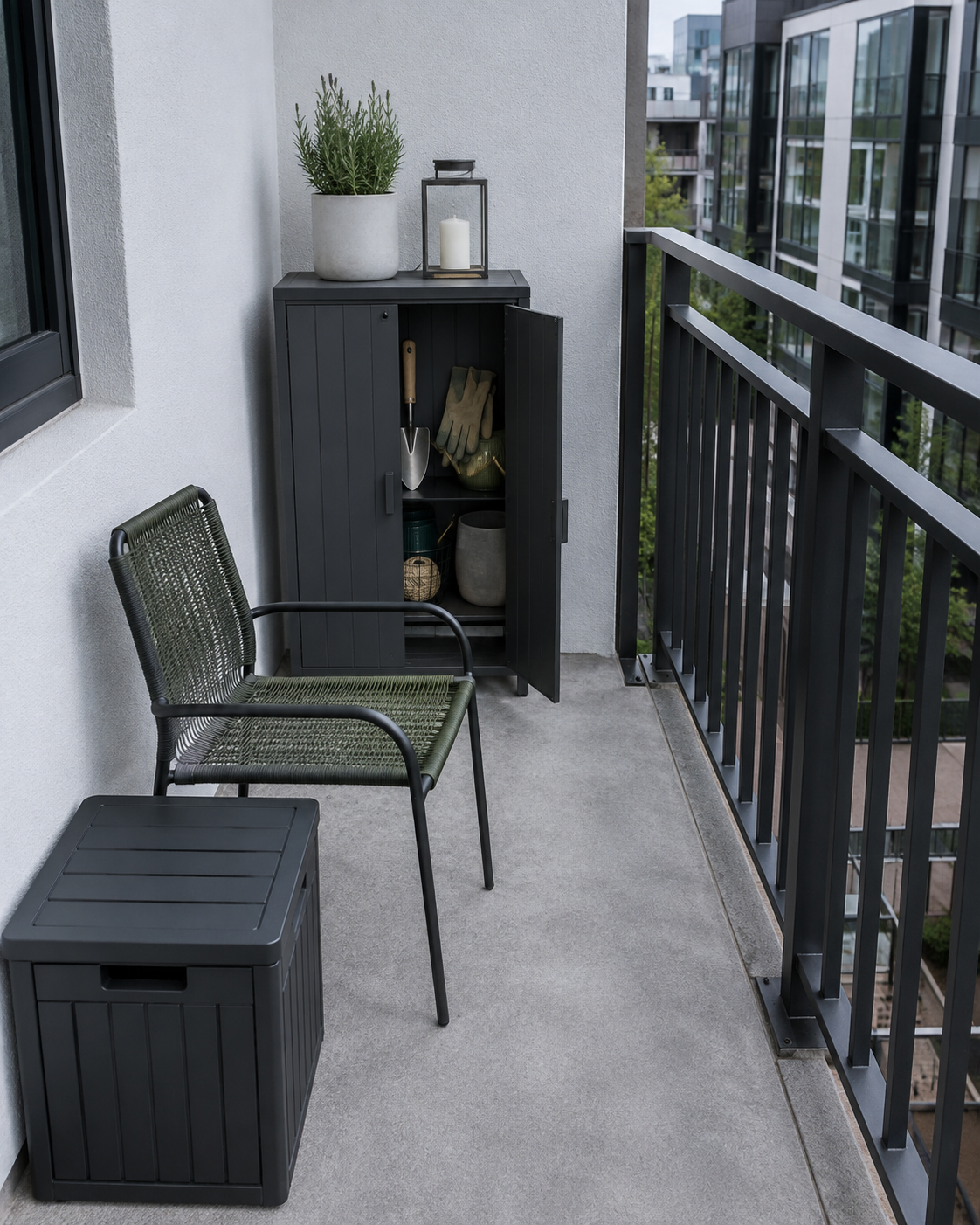
Route 03 · Compact reset zone
Do not solve small-space clutter with one oversized container. Split the job: a compact front-access cabinet for daily tools, then a small box for loose pieces or portable reserve.
When a large deck box would consume the center of the balcony or compete with the chair zone.
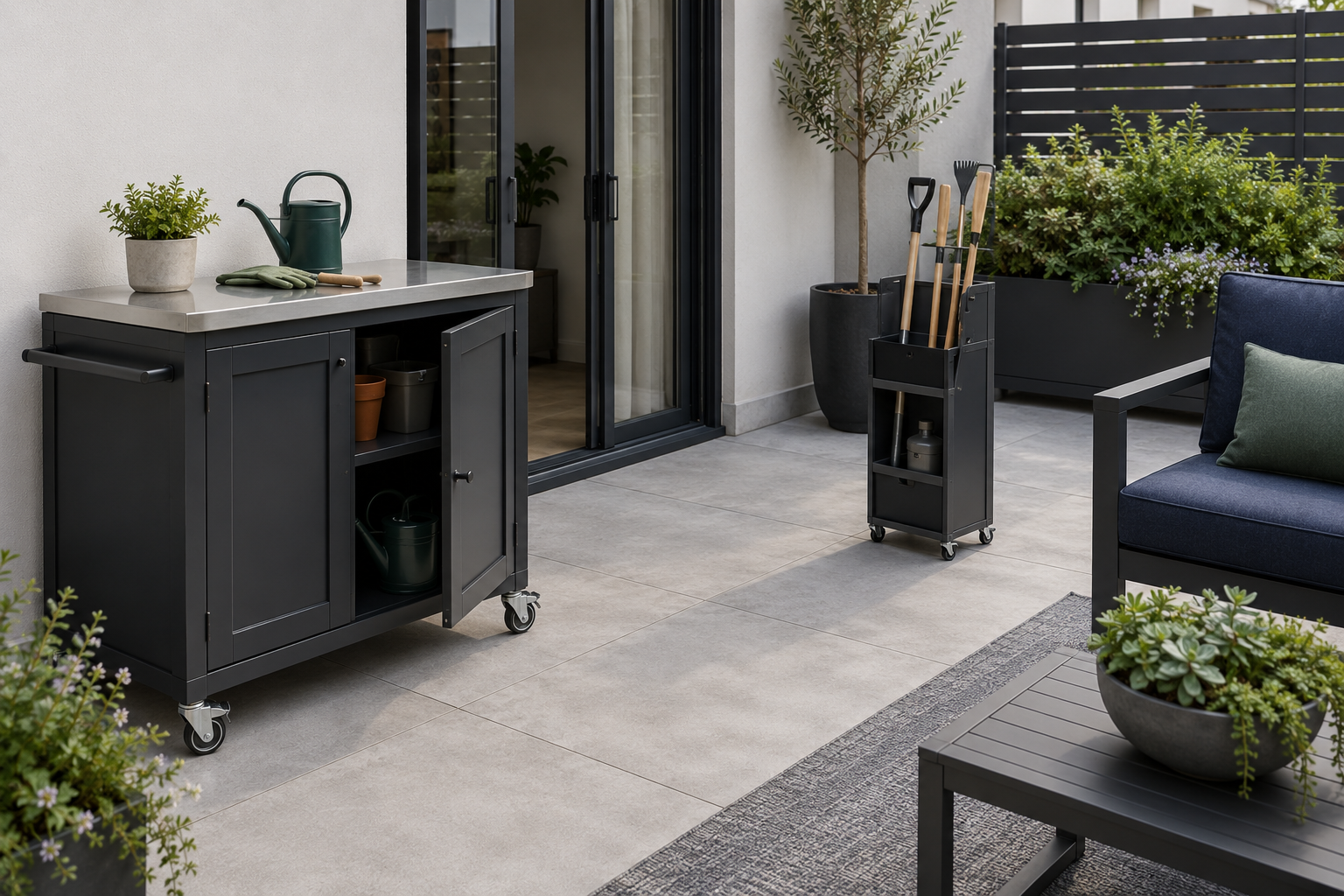
Match the clutter to the format
Think about the thing that never seems to have a home. Its shape usually tells you which storage family to open.
Complete retrieval library
Open only the family that matches your route. Product names are shortened for scanning; verify current dimensions, configuration, listed capacity, material/care information and manufacturer outdoor-use guidance on the destination page.
Six storage families. Each one solves a different footprint or access problem.
20 unique productsFor a smaller drop zone close to the activity area.
ViewFor a low storage route that still needs useful volume.
See optionsFor a larger cushion or gear zone without jumping to the biggest footprint.
ExploreFor high-volume storage where the patio can genuinely spare the width.
Check fitAnother high-volume route for a long perimeter wall.
ViewFor a perimeter seat that also conceals outdoor pieces.
ExploreFor visitors who want the storage to read clearly as seating.
See optionsFor a seat-capable storage format with a simpler silhouette.
ViewFor a bigger wall where storage volume matters as much as the seat function.
Check fitFor a relatively narrow wall zone that needs full-height storage.
ExploreFor substantially more vertical storage where the wall can support a deeper footprint.
Check fitFor a shorter-depth vertical route when floor area is limited.
ViewFor a larger equipment load where a full vertical footprint genuinely fits.
See optionsFor front access at a lower height along a usable wall.
ExploreFor a cabinet route that should feel calmer beside outdoor furniture.
See optionsFor frequently reached supplies where a narrow daily-access zone is more useful than one large chest.
Check fitFor loose outdoor pieces that need one compact home near the activity area.
ExploreFor gear that benefits from being contained and moved rather than permanently displayed.
See options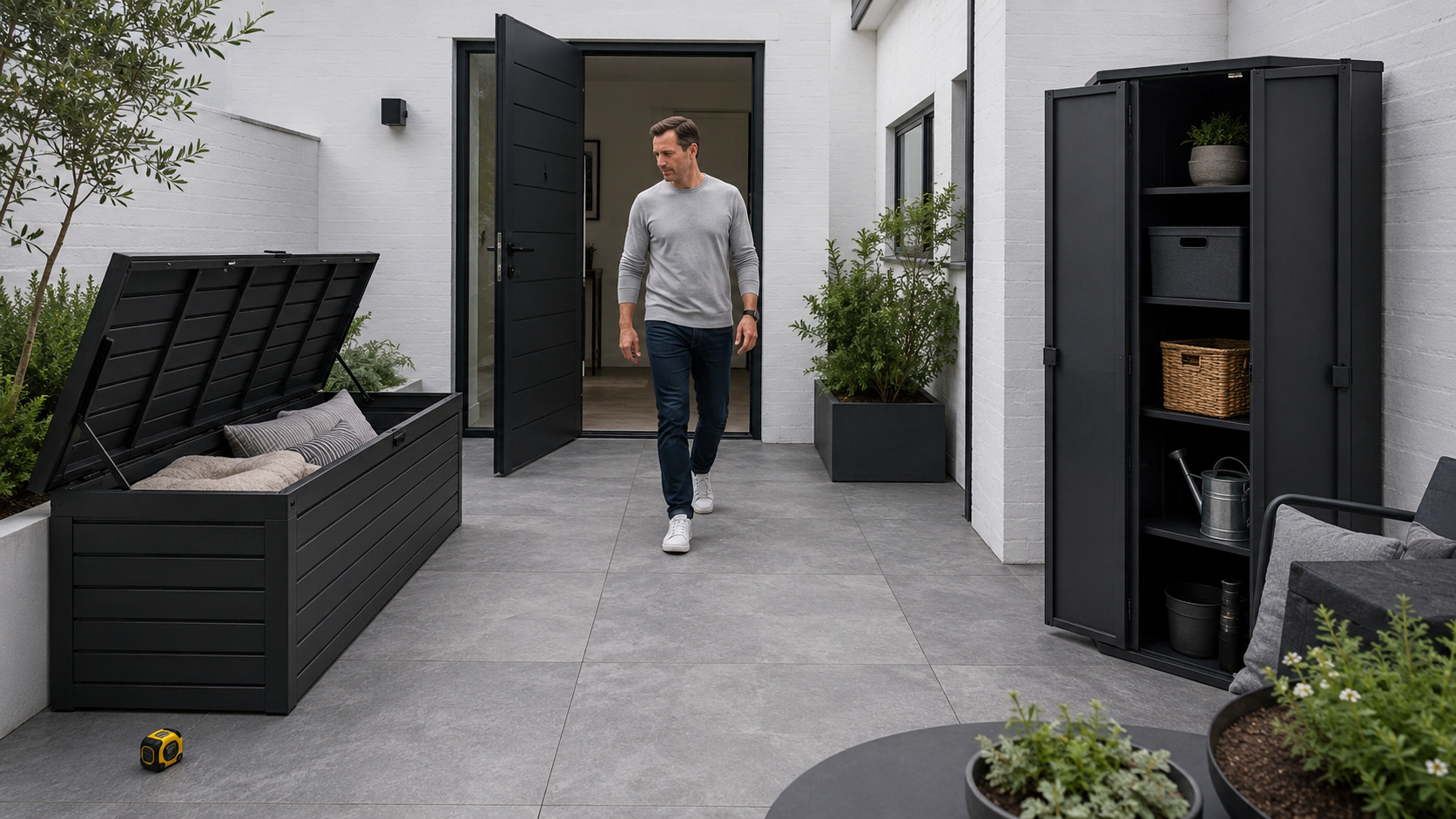
Before you click
Do not measure the patio with everything closed. Test the room at its most demanding moment.
Make sure storage does not compete with the first step outside.
Count the lid lift or cabinet-door swing as real space.
The path should still feel direct, not like an obstacle course.
Confirm current dimensions, configuration, capacity details, care information and manufacturer outdoor-use guidance before purchase.
Keep solving the patio
Once clutter has a home, the next useful move is usually more floor, better seating, or more privacy—not more storage.
Back to the Balcony & Patio hub →