
Soft Daylight
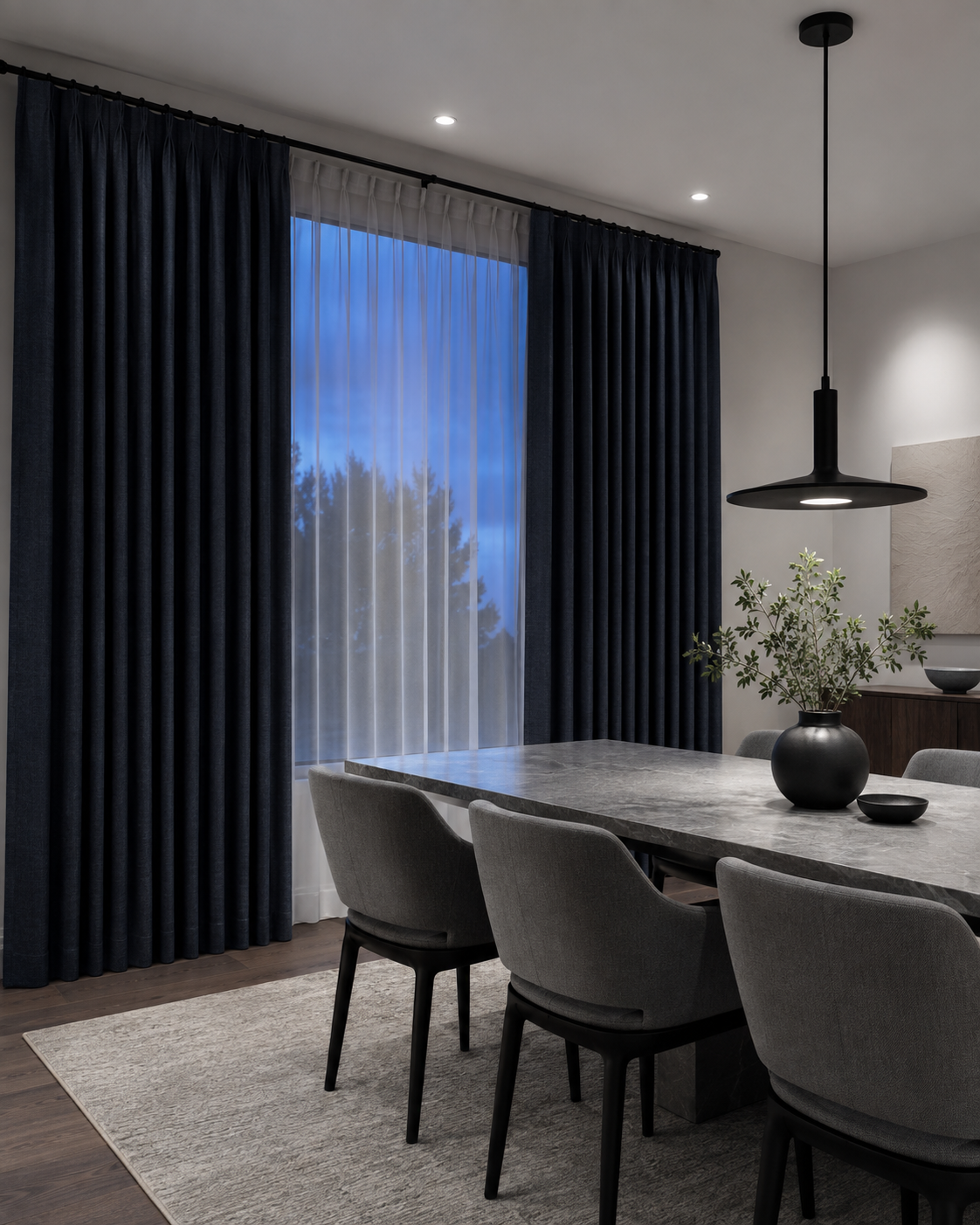
Semi-sheer fabric softens a bright window while keeping the dining room visually open.
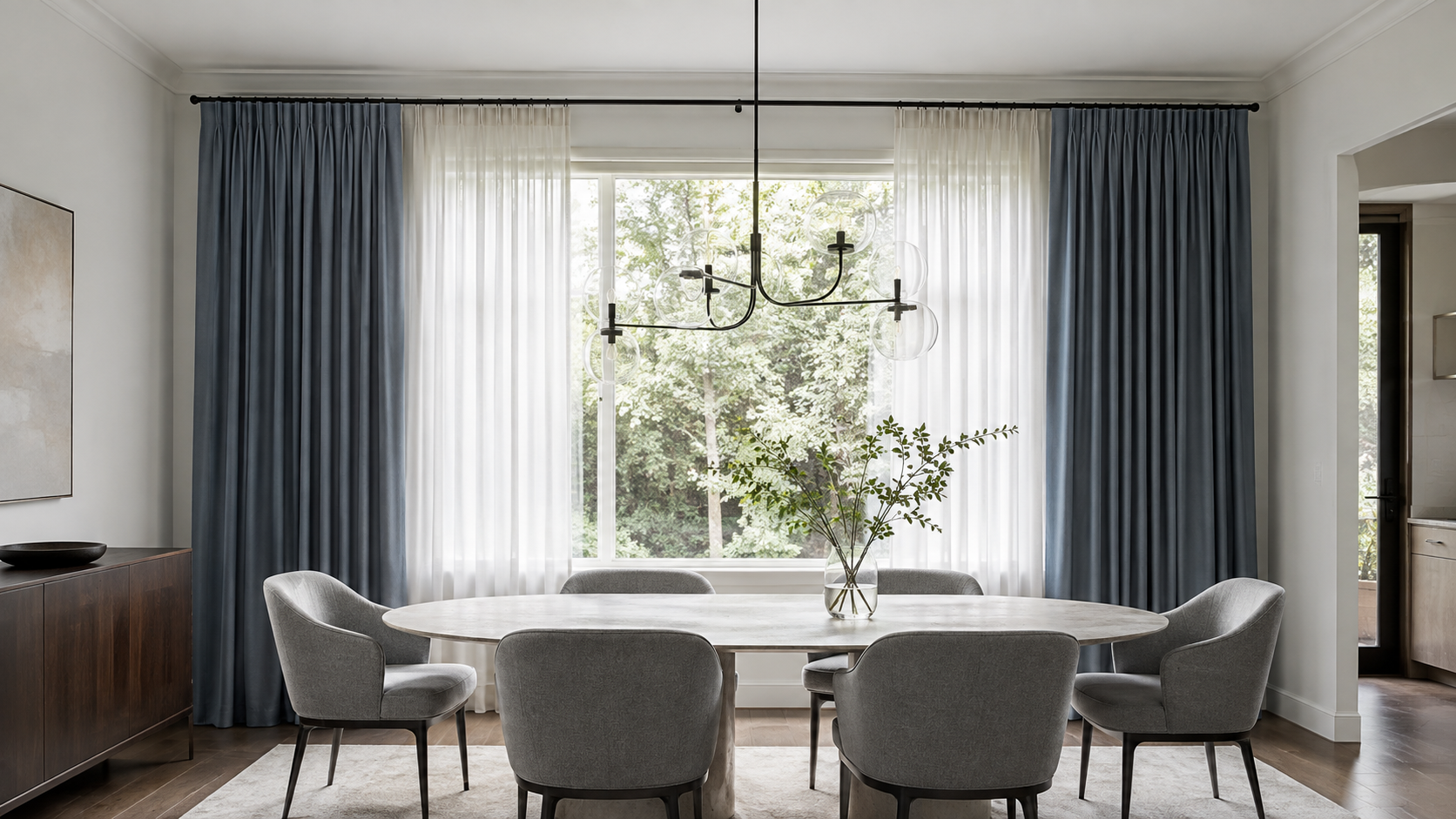
Choose the light, privacy, length and mounting route first. Then shop the curtain that actually fits the room.
You do not need a curtain style yet. Pick the problem you actually want to solve.
Use this quick planner to create a practical starting target for rod width, fullness, length and opacity.
The right opacity matters more than chasing a style name.
Semi-sheer fabric softens a bright window while keeping the dining room visually open.
Denser linen-look treatments obscure the view more effectively without turning the room dark.
Blackout or room-darkening panels make more sense when direct sun is the real problem.
Pair a lighter inner layer with an outer curtain when the room needs different privacy levels across the day.
Look at the relationship between curtain scale, light and the dining area—not only the fabric color.
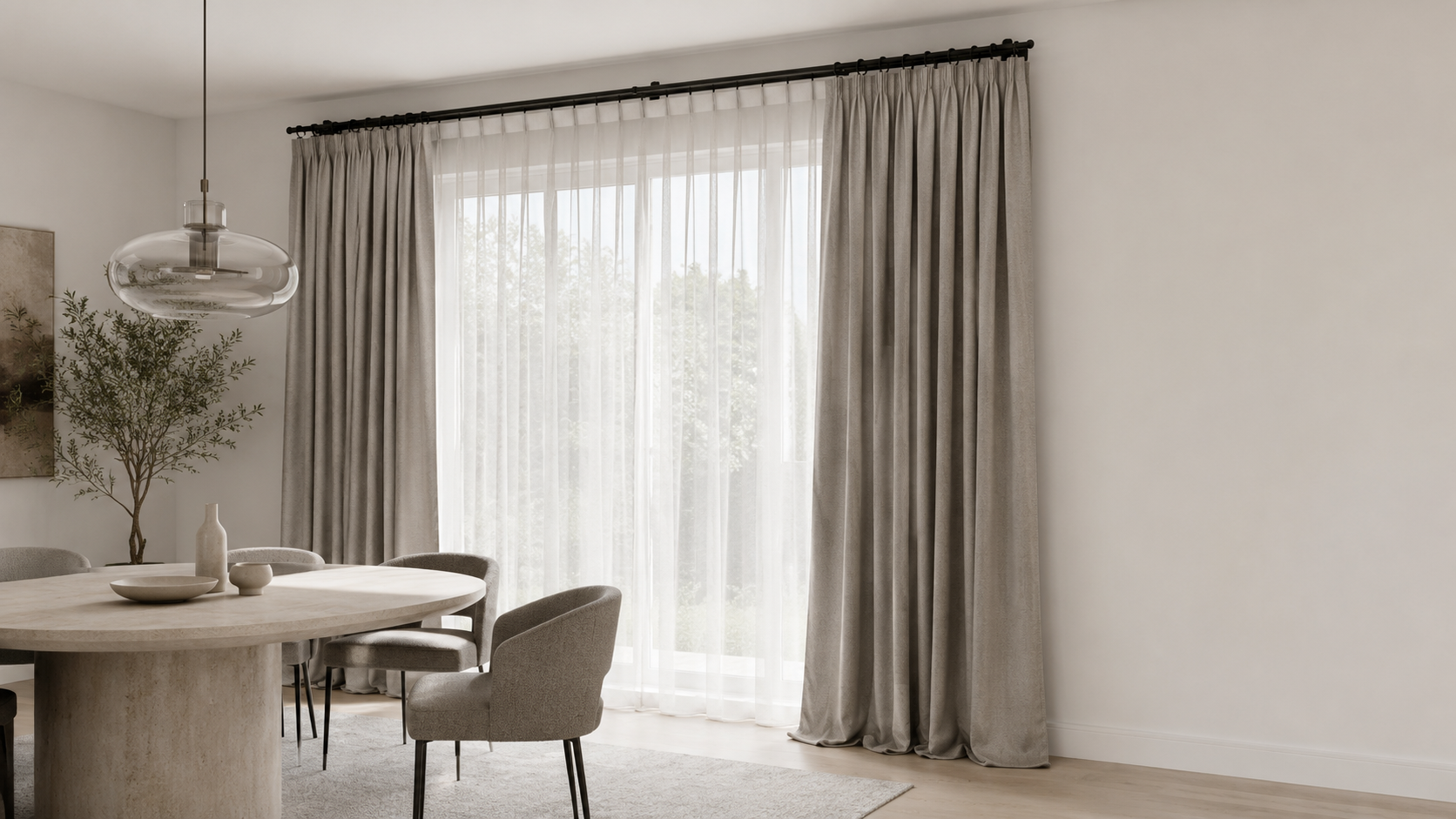
Separate the soft-light layer from the heavier outer curtain so the window can change with the time of day.
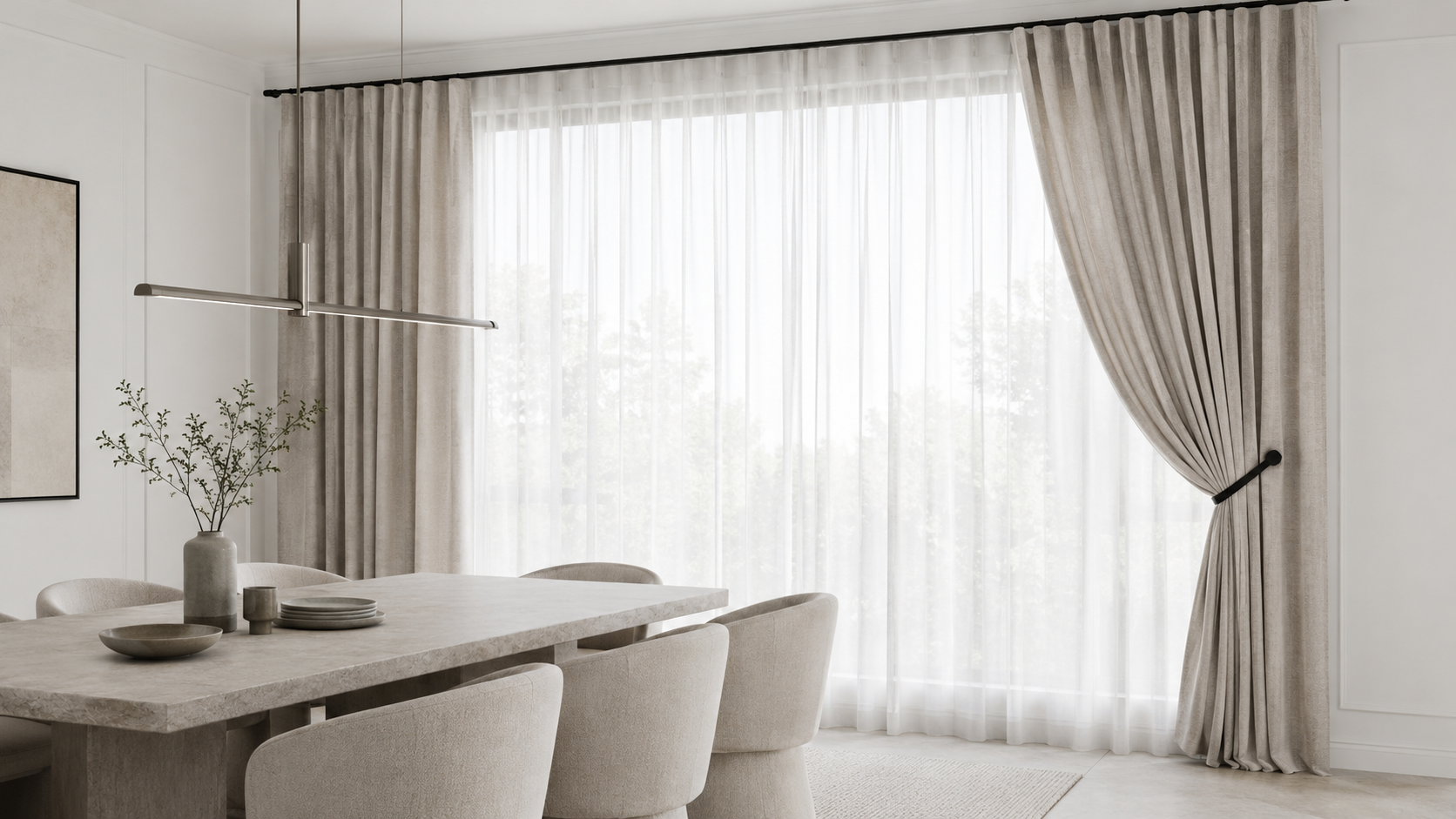
A longer curtain frame can make the window feel more intentional without competing with the table.
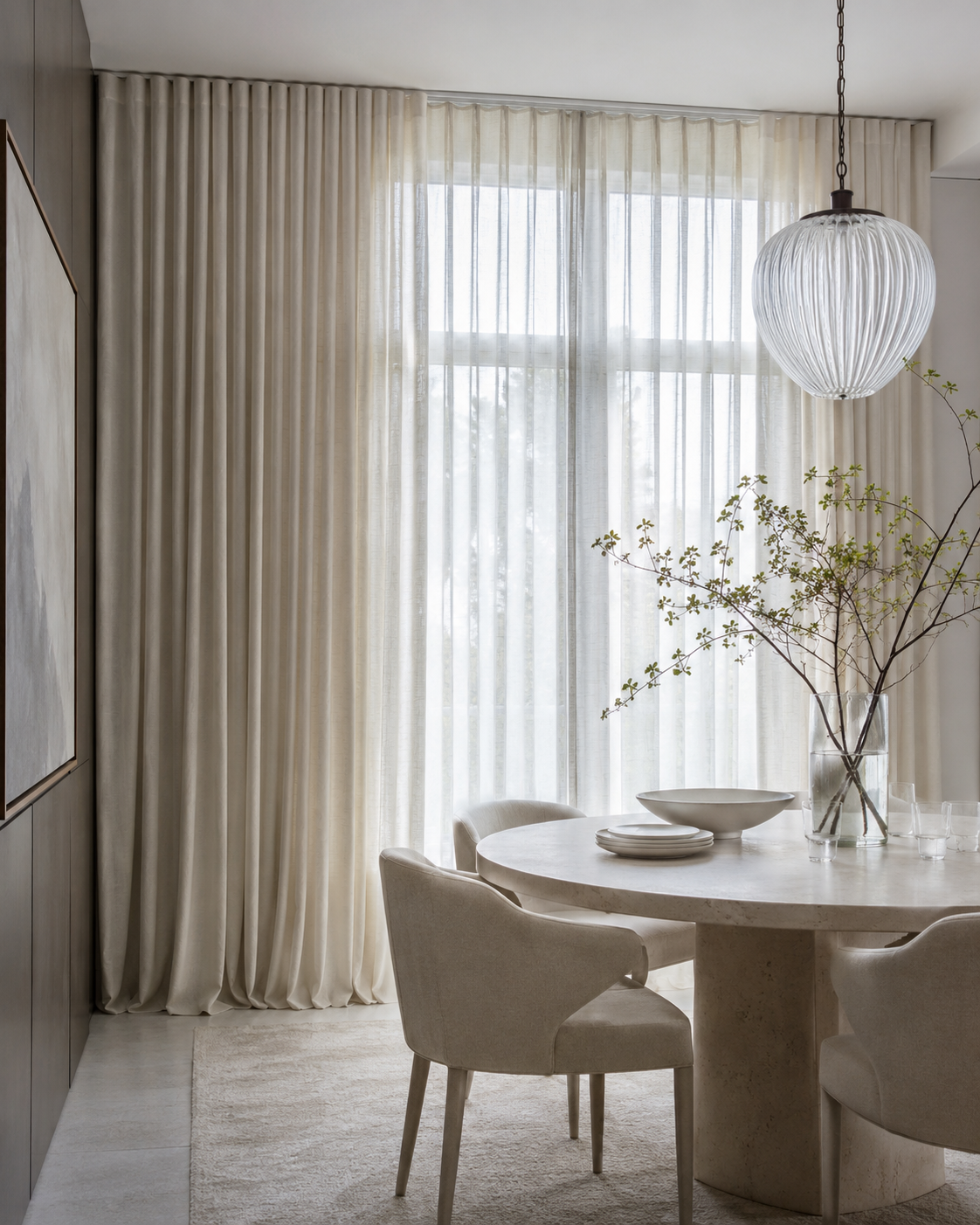
Use lighter filtering fabric when the window already has enough privacy and daylight is worth preserving.

A café-height treatment can protect seated privacy while leaving more of a smaller window visually open.
The shortlist is intentionally smaller than the old page. Redundant options were removed so each recommendation earns its place.
A tailored semi-sheer route for diffusing daylight without losing the clean pleated heading.
A straightforward linen-look pair for adding softness without making the dining room feel visually heavy.
More privacy than a typical airy sheer while keeping a textured, residential linen-look appearance.
A longer two-panel treatment for rooms where standard 84-inch curtains would visually stop too early.
The one pattern route in the edit: restrained enough to add character without turning the window into visual noise.
A compact 26 × 36-inch café-style treatment that keeps more of the upper window open to daylight.
A tailored blackout pair for standard-height installations where glare and evening exposure are the main problems.
The same strong privacy idea in a longer route for windows where an 84-inch panel would finish too high.
A more substantial textured single-panel route when the room needs stronger visual weight and reduced light.
A broad two-panel treatment selected for patio doors and expansive dining-room openings where narrow panels create gaps.
A streamlined one-inch rod for wider standard installations where a short decorative rod will not provide enough span.
A separate front and back rod allows a sheer layer to operate independently from the outer curtain.
A flexible hanging option when you want black hardware continuity and easier panel adjustment.
A restrained finishing detail for keeping panels clear of the window when more daylight is wanted.
A renter-oriented 28–47-inch route when holes are undesirable and the curtain load remains appropriate for the mounting method.
Three routes use the same shortlist in combinations that make sense together.
Start with a lighter inner curtain, then add independent outer coverage.
Use the longer panel only after the rod height confirms that a standard 84-inch curtain will finish too high.
Use partial-height fabric when the real goal is seated privacy rather than covering every inch of glass.
Rod stops at the window edge.Give the panels somewhere to stack beside the glass instead of covering it when open.
Panel width barely equals the window.Use enough combined fabric width to create visible fullness when the curtains are closed.
Length chosen before mounting height.Decide where the rod will actually sit, then measure to the floor.
Blackout chosen for every window.If privacy is already good, a lighter curtain may preserve more useful daylight.
Heavy drapery on light-duty no-drill hardware.Match the fabric load and wall surface to the hardware rather than forcing a renter solution.
Pattern competes with everything else.If the rug, chairs or wall already carry pattern, let the curtain become the quieter layer.
A beautiful curtain in the wrong configuration is still the wrong curtain.
Move to the next decision that has the strongest visual relationship with the curtains.
As an Amazon Associate, Ravnora Decor may earn from qualifying purchases. Product links may open on Amazon.