
Use the wall before another footprint.
A closed wall-mounted cabinet gives small pieces a home without entering the chair path.
Review wall-mounted storage ↗The smartest storage plan starts with two realities: what keeps landing on the table, and how much room is left when the chairs pull out.
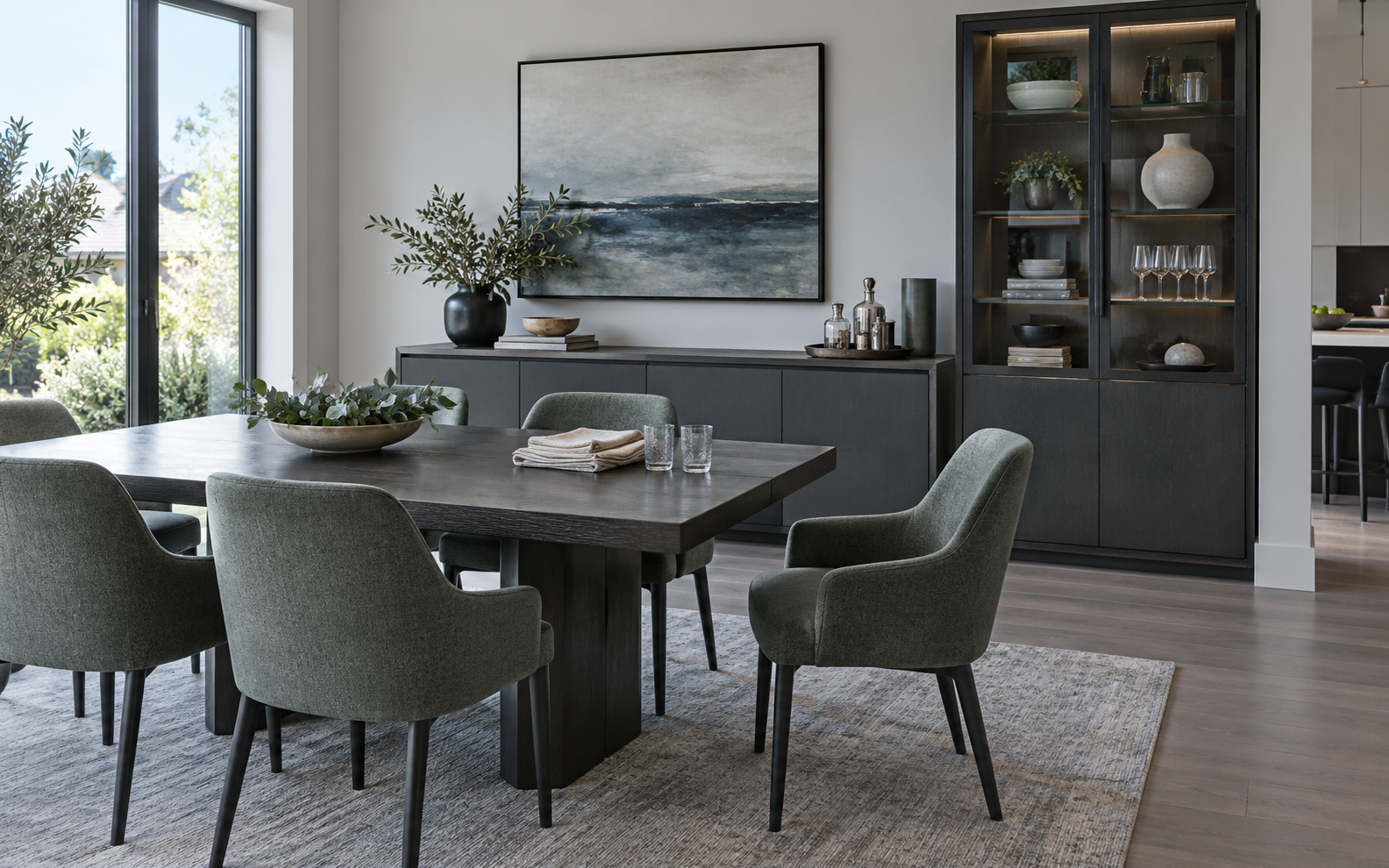
Choose the thing that keeps migrating onto the table. The room usually tells you what storage job it is missing.
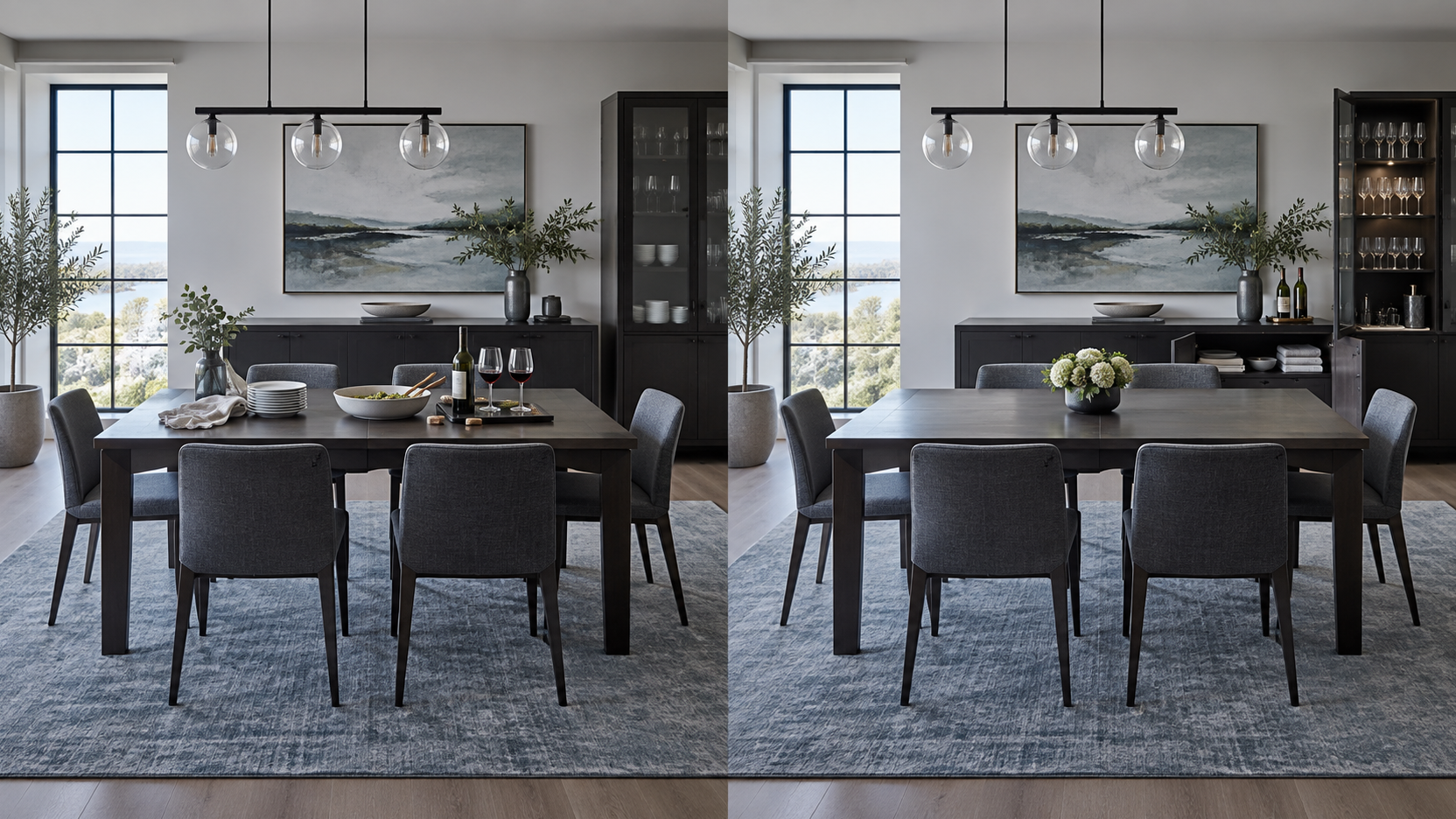
Closed storage is the calmer first move when plates, linens and mixed serving pieces are what keep collecting on the table.
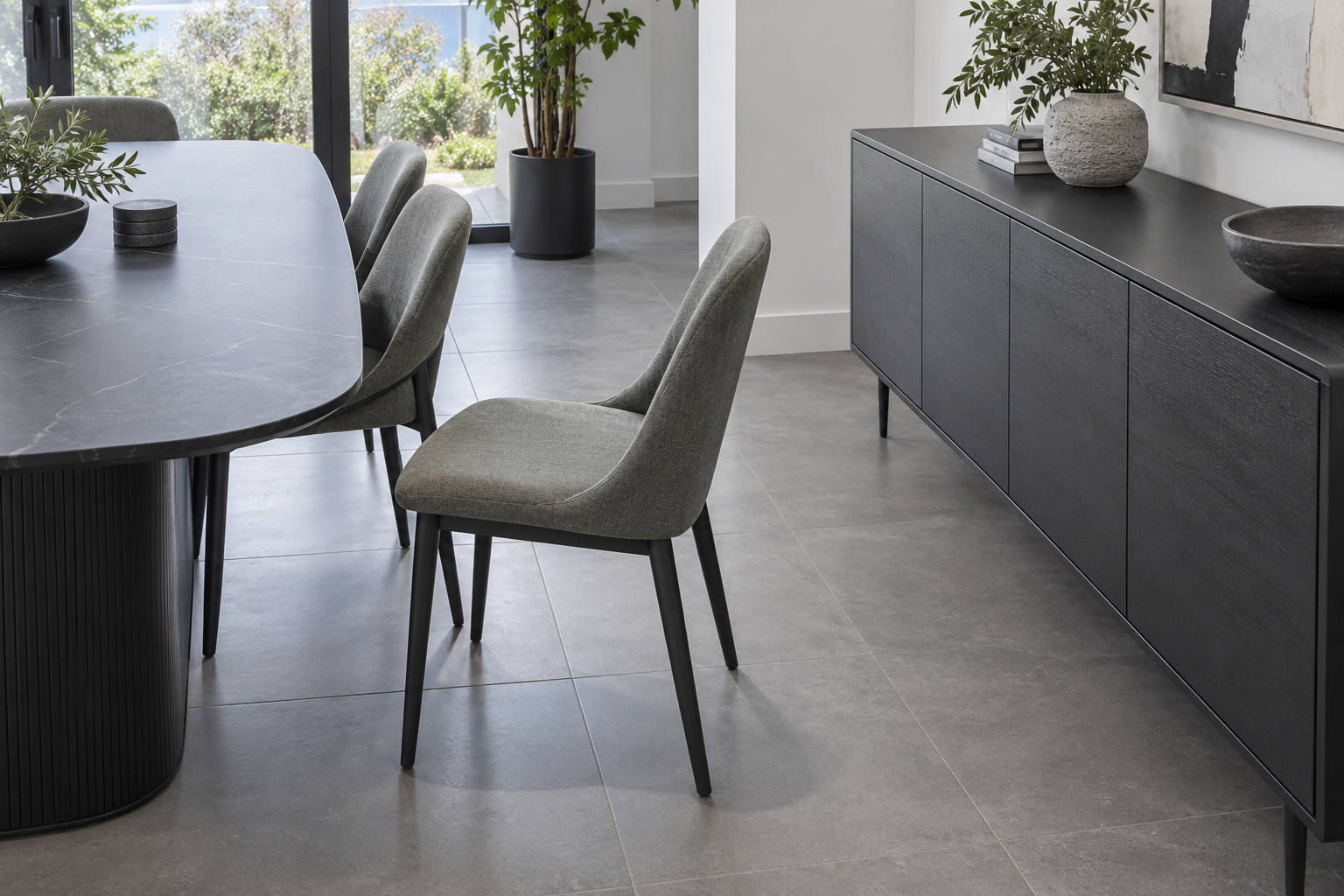
Measure the dining room while a chair is actually pulled out. A cabinet that looks perfect with everything tucked in can quietly erase the walking path.
When circulation is tight, a shallow cabinet can solve more than a larger sideboard because it keeps the route around the chair usable.
Check the shallow option ↗These are four situations where the right architecture matters more than choosing another attractive cabinet.
A closed wall-mounted cabinet gives small pieces a home without entering the chair path.
Review wall-mounted storage ↗A slim tall cabinet can create real capacity where a conventional sideboard simply will not fit.
Inspect the tall slim option ↗Corner storage can absorb display pieces without competing for the straight wall your table already depends on.
Explore corner storage ↗A rolling cart works when drinks, dessert or serving pieces need to travel instead of permanently occupying a wall.
See the movable setup ↗The strongest dining rooms usually hide the visual noise, display only the pieces worth seeing, and keep serving easy.
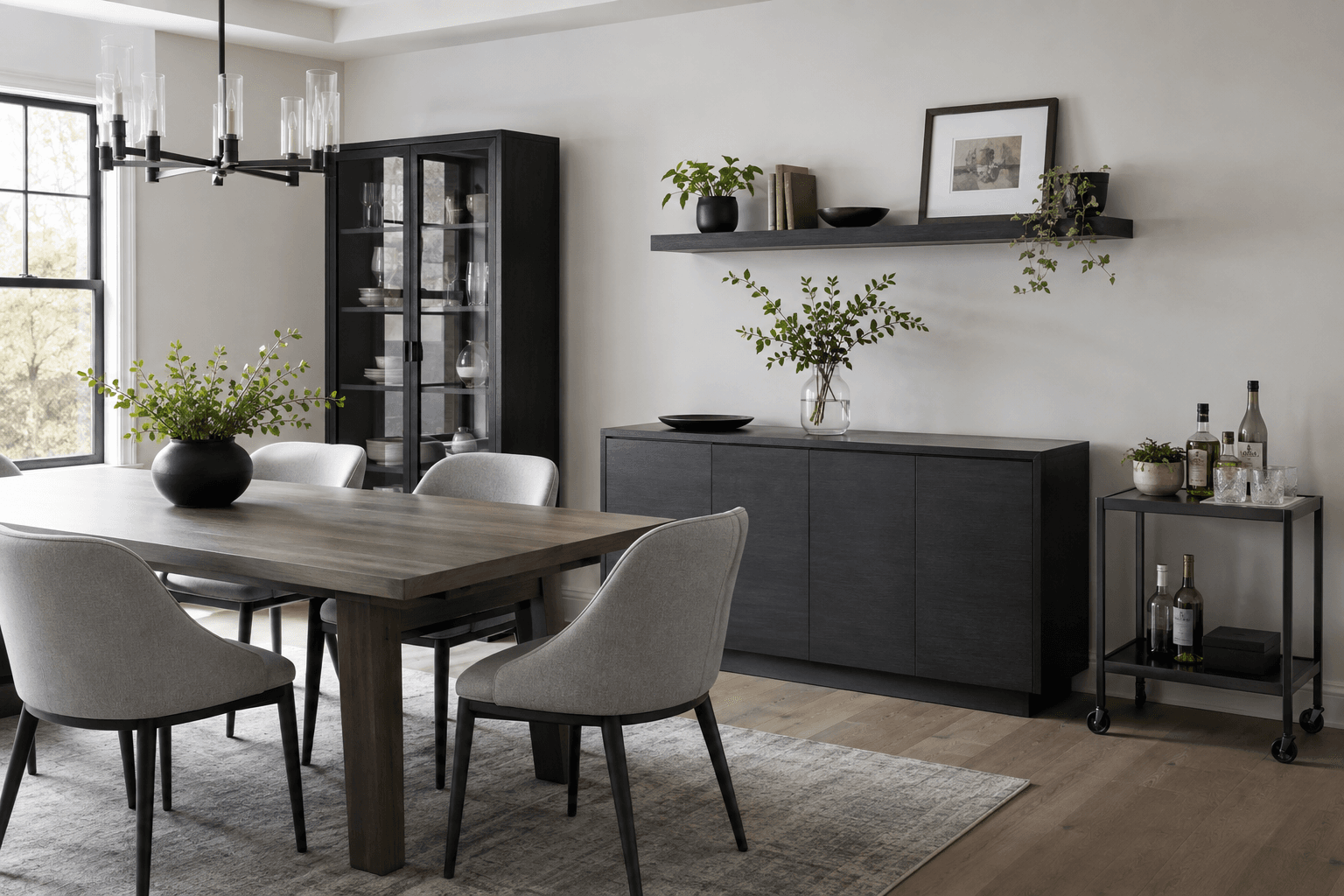
Closed storage is strongest when mixed dinnerware, linens and supplies would otherwise make the room feel visually busy.
Three decisions are enough to narrow the category before product listings start competing for your attention.
With tight circulation, depth matters more than maximum capacity. Start with a shallower closed cabinet and protect the route behind a pulled-out chair.
Tap a zone. Each one solves a different dining-room problem without pretending every wall needs the same cabinet.
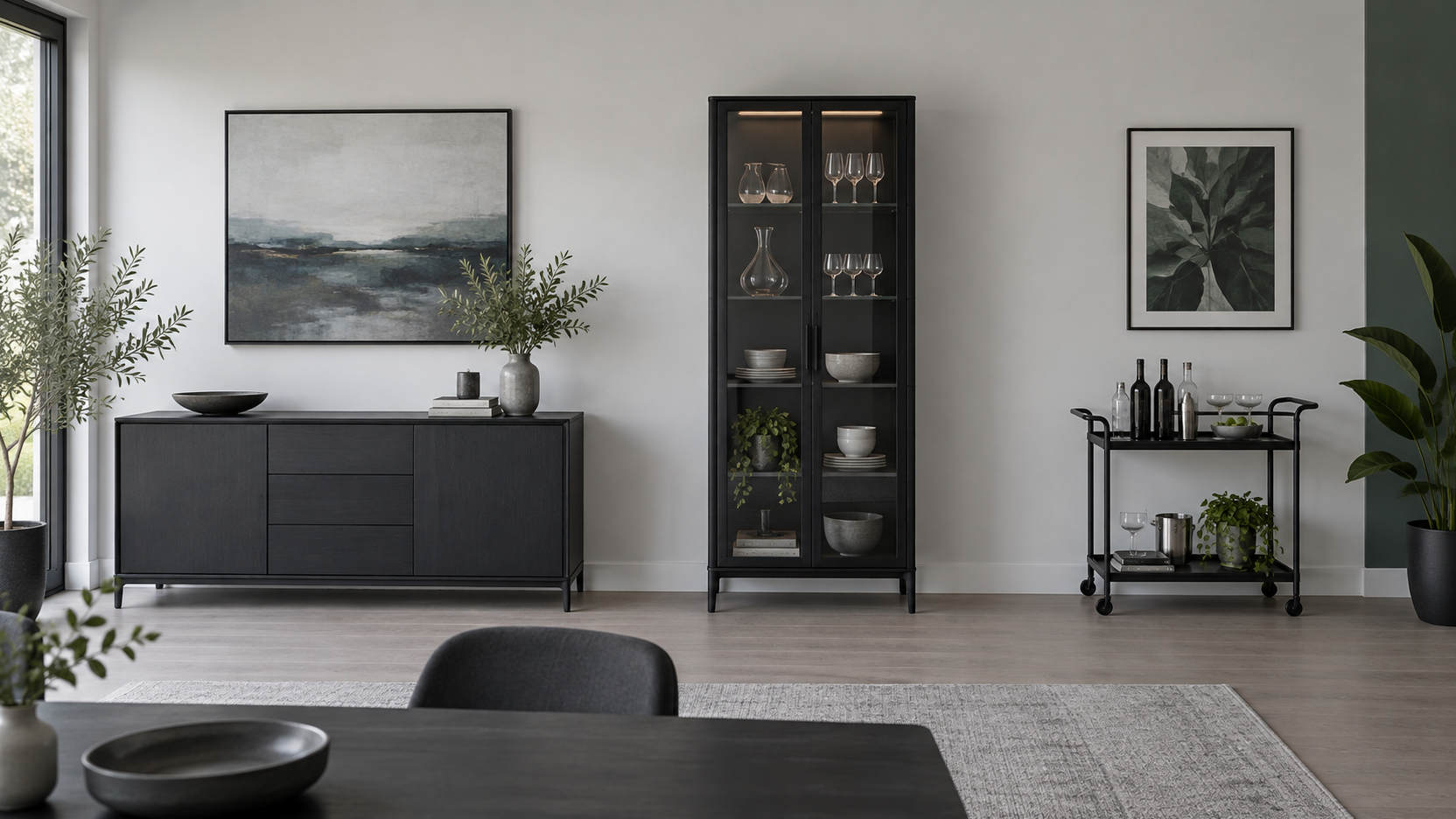
This is the room's visual reset button: mixed dinnerware and linens disappear, while the top remains useful for serving.
Inspect this role ↗Filter by the problem you are solving. Brand names stay out of the way; the room decision comes first.
Best when one furniture piece needs to hide dinnerware and still earn its place as a serving surface.
For the short wall that still needs concealed capacity without turning into a furniture block.
For a larger dining wall that can carry one strong storage anchor instead of several small pieces.
When selected glassware deserves visibility but the room cannot spare a long run of wall.
For the collection that needs a visible edit up top and a quieter backup zone behind doors.
Best when bottles, glasses and bar tools deserve one permanent destination near the dining zone.
For the narrow wall where a dedicated drinks zone still needs to feel intentional.
For service that needs to move between kitchen and dining room instead of owning a permanent wall.
For the wall that has width—but almost no spare depth once the nearest chair is pulled out.
For a dining room with almost no horizontal run left but useful vertical space still available.
Tap the part of the cabinet that keeps becoming difficult. The fix is often much smaller than another piece of furniture.
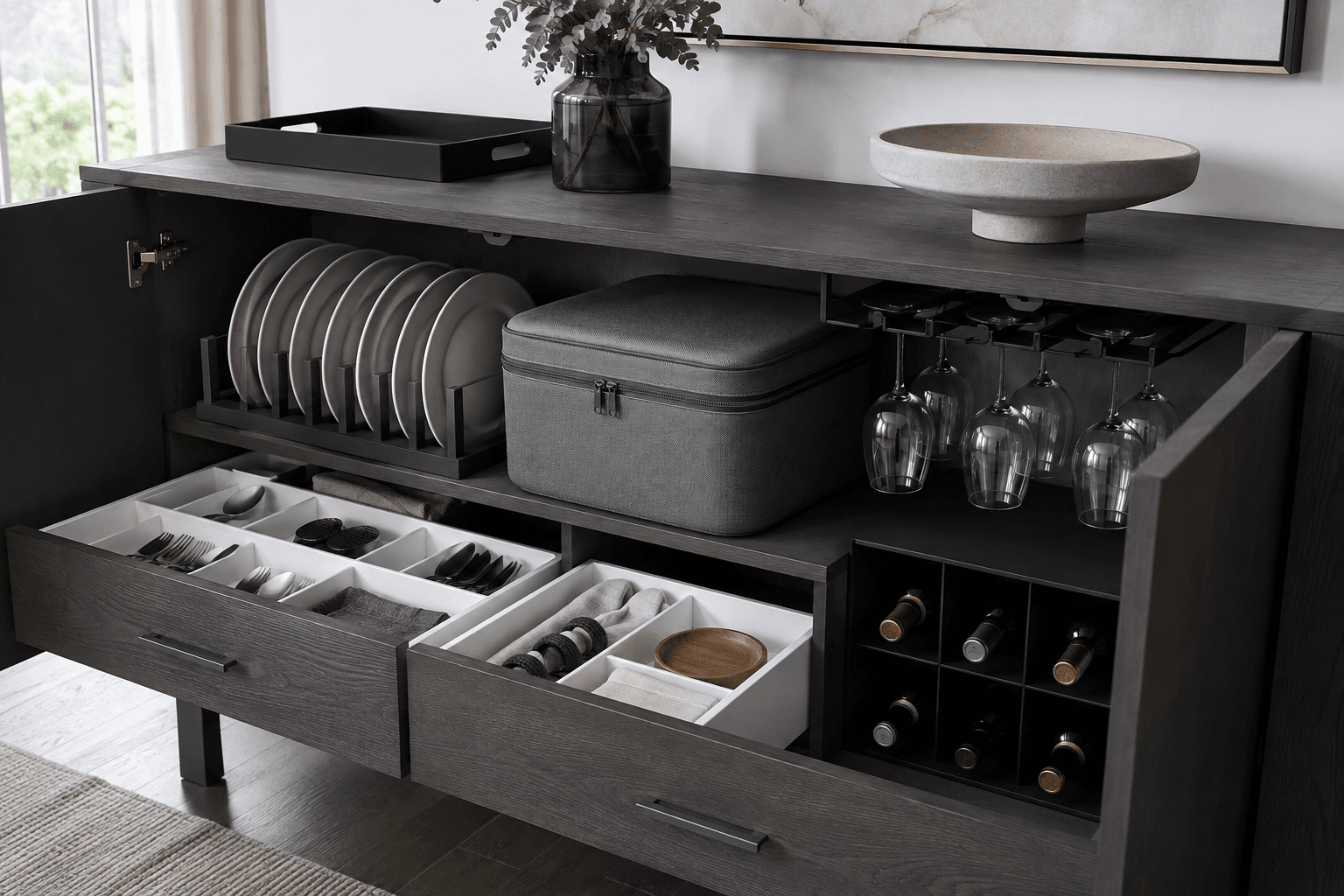
Vertical separation keeps everyday plates and shallow serving pieces easier to reach without rebuilding the cabinet.
Start with one anchor. Add only the supporting pieces that solve a real job in the room.
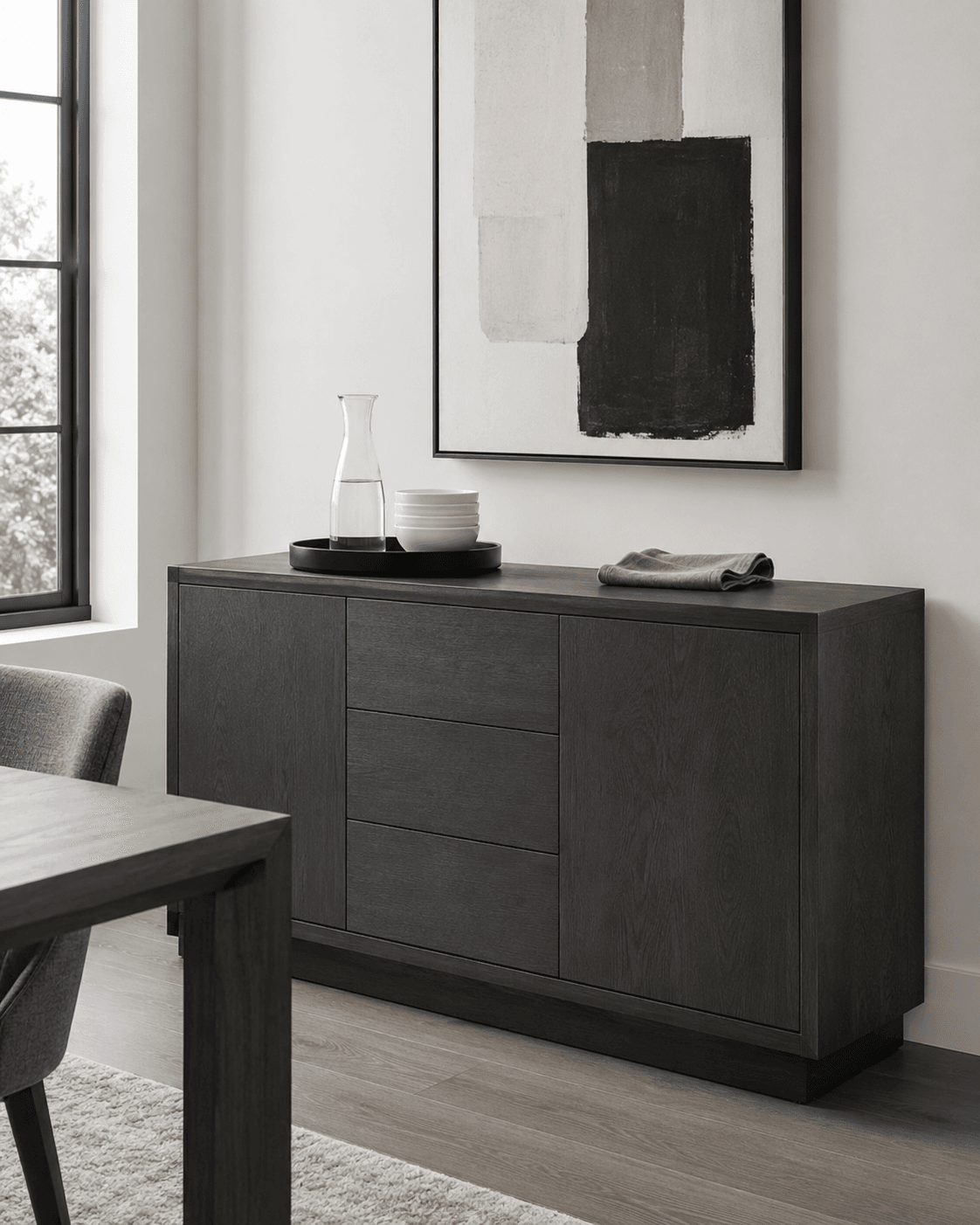
Hide the everyday mix, organize what is inside, and keep the top clear enough to become a serving surface when dinner starts.
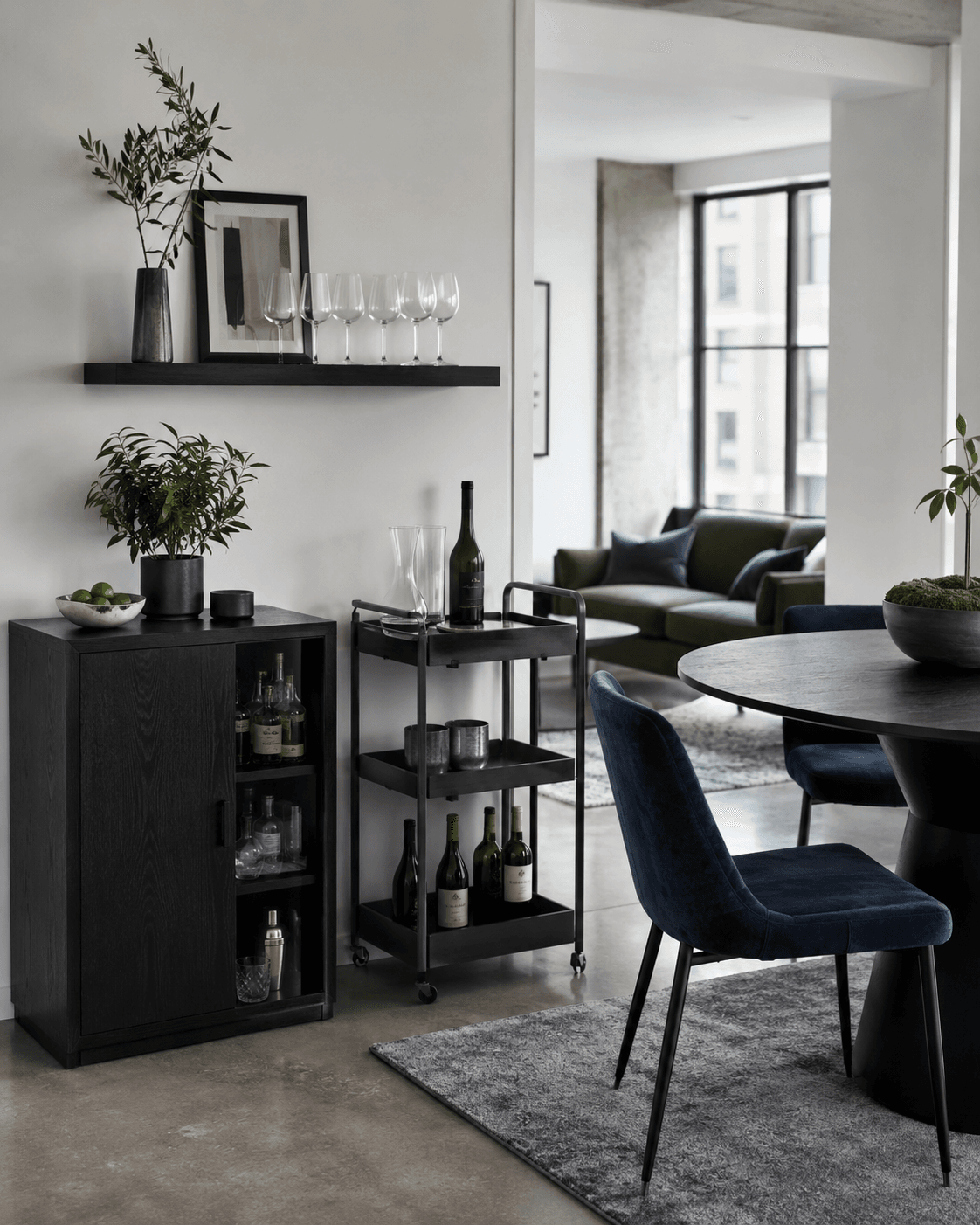
Keep the fixed cabinet narrow, then let the cart and internal organizers absorb the flexible part of hosting.
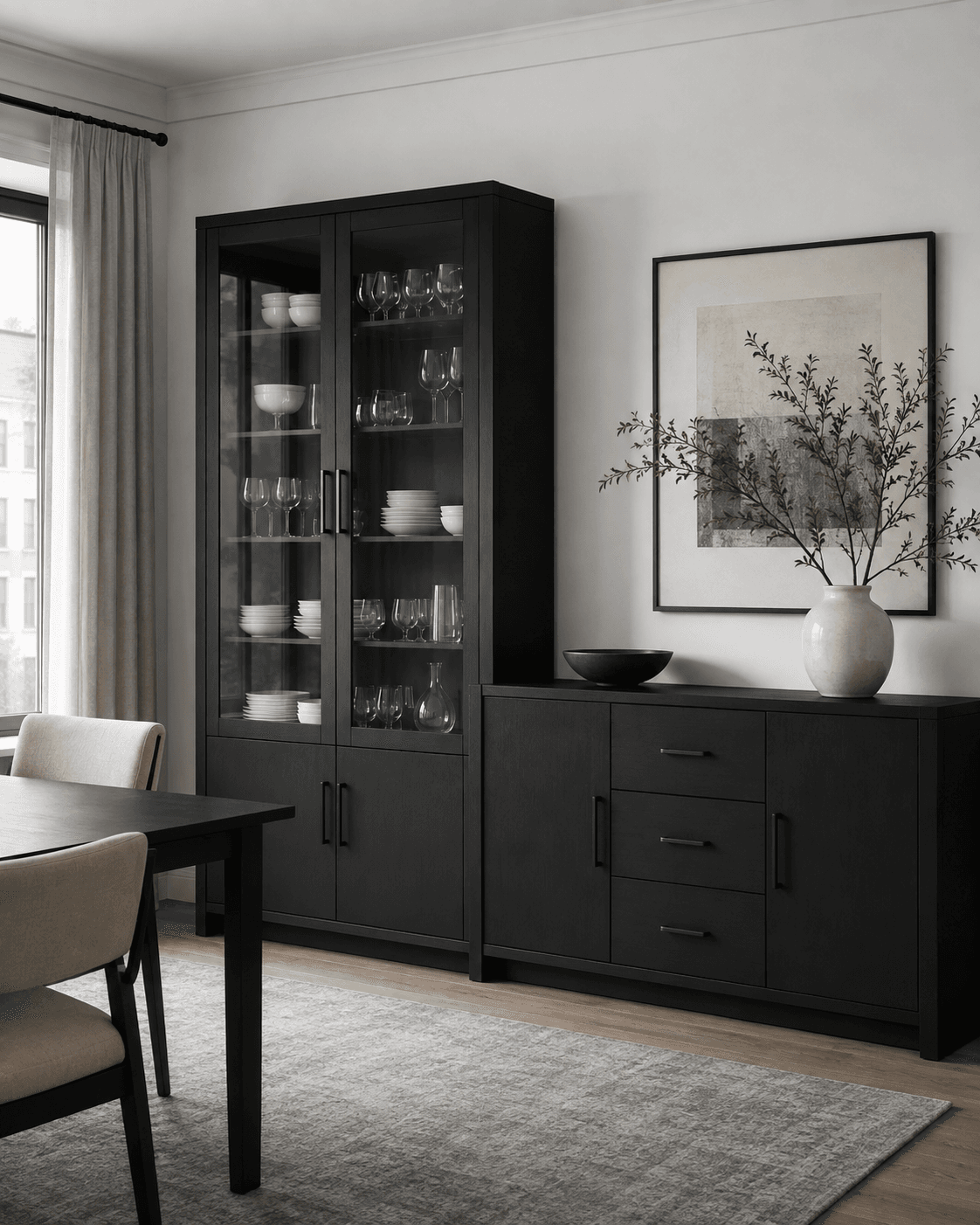
Let the pieces worth seeing become part of the room while backup dinnerware, cases and drawer clutter disappear.
The most expensive storage mistake is often not the product. It is measuring the wrong version of the room.
Measure again with the nearest chair pulled out and someone walking behind it. That is the footprint you actually live with.
Display a controlled edit. Put backup pieces, packaging and visual noise behind solid doors so the room can still breathe.
Your largest platter, tallest bottle and widest stem base matter more than an exterior silhouette once the cabinet arrives.
Doors, drawers, pull-outs and the main storage anchor affect the room every day.
Small organizers do not need to be decorative heroes. They need to fit and make access easier.
Use this as a precision lookup, not another storefront. Open only the family your room actually needs.
Main concealed anchor with a useful serving surface.
Check dimensions ↗Short-wall concealed storage for smaller dining rooms.
Explore the compact fit ↗A wide dining wall can carry one stronger anchor.
Review the wide size ↗Depth-first storage when chair circulation is the real constraint.
Inspect the shallow fit ↗Vertical storage with a dedicated serving / hosting zone.
Explore the hutch layout ↗Narrow vertical storage when horizontal wall space is nearly gone.
Review the slim footprint ↗Vertical visibility for selected glassware and dinnerware.
Inspect the display layout ↗Visible edit plus closed backup storage in one system.
Explore configurations ↗A long wall display zone above a buffet or serving station.
Review shelf options ↗Use a neglected corner instead of another straight wall.
Explore the corner fit ↗Closed storage that protects floor space and chair circulation.
Review mounting details ↗Open vertical storage for edited ceramics and serving pieces.
Inspect the vertical setup ↗A permanent hosting destination for bottles, glasses and tools.
Review hosting storage ↗Dedicated drinks storage for a narrower dining wall.
Explore the compact bar ↗Flexible service that moves between kitchen and dining room.
See the rolling setup ↗Compact bottle storage without committing to bar furniture.
Review bottle capacity ↗Separates plates and shallow serving pieces vertically.
Check organizer fit ↗Keeps occasional flatware grouped and protected.
Inspect compartment size ↗Uses otherwise empty space beneath a shelf for glasses.
Check stemware fit ↗Brings the back of a deep cabinet into reach.
Review cabinet fit ↗Creates another usable level inside a cabinet.
Check shelf height ↗Protects seasonal or special-occasion dinnerware.
Review storage sizes ↗Turns broad drawers into clear serving and linen zones.
Check drawer fit ↗Protects delicate glasses that do not need daily access.
Inspect storage capacity ↗Reclaims lightweight vertical space without another permanent organizer.
Explore the extra shelf space ↗Tap each item as you verify it. The goal is simple: know what must be true in your room before a product listing becomes a purchase.
Continue with the decision that most directly changes how the dining room works or feels next.