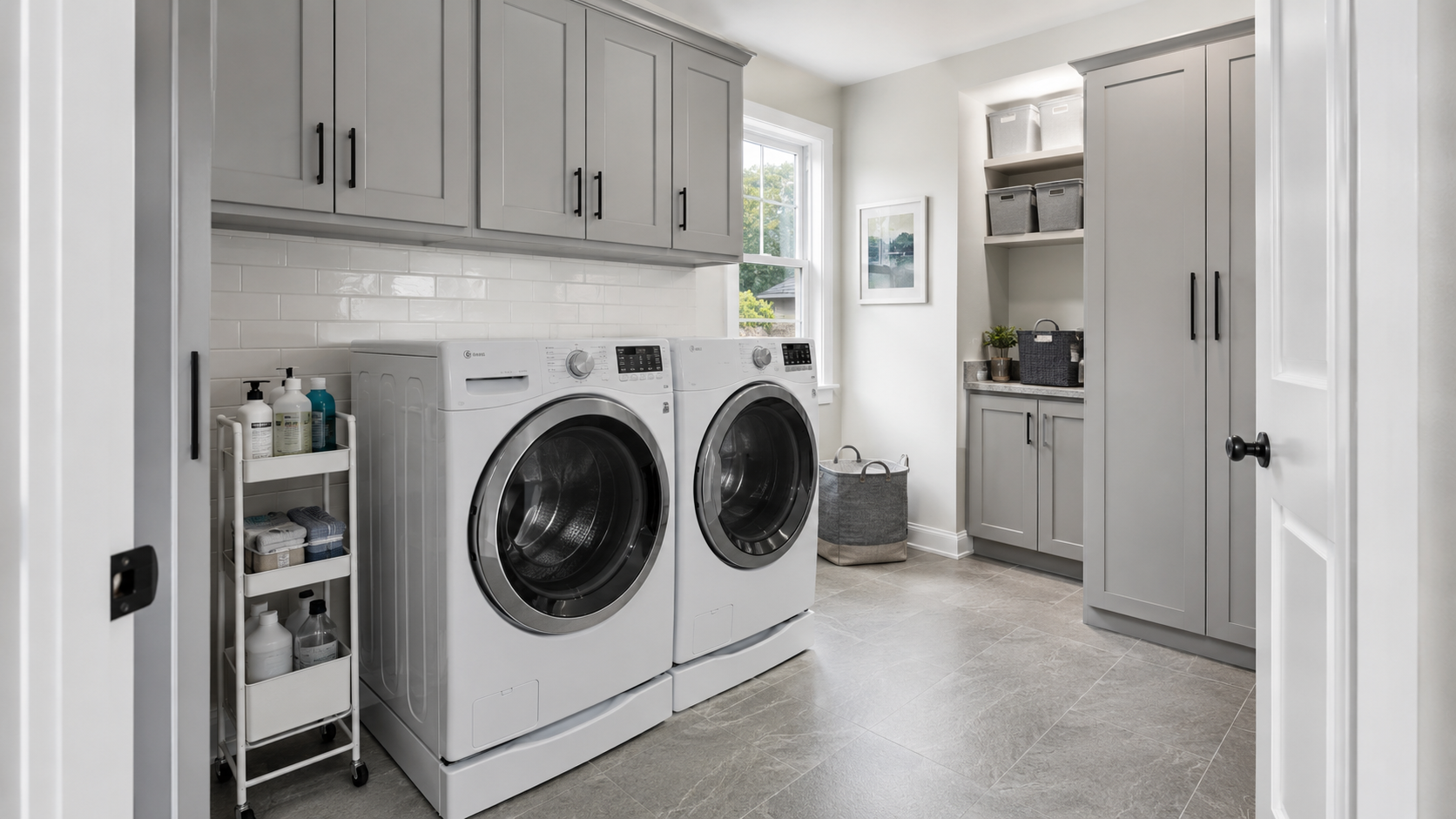
Slim Rolling Cart
Best when a narrow side position can stay movable during the routine.
Explore
Laundry Room Storage
Clear the washer, dryer and working surfaces by giving every stored item the right access distance.
The Storage Traffic Map
Daily supplies need almost no friction. Backups can move farther away. Visual clutter can disappear behind doors.
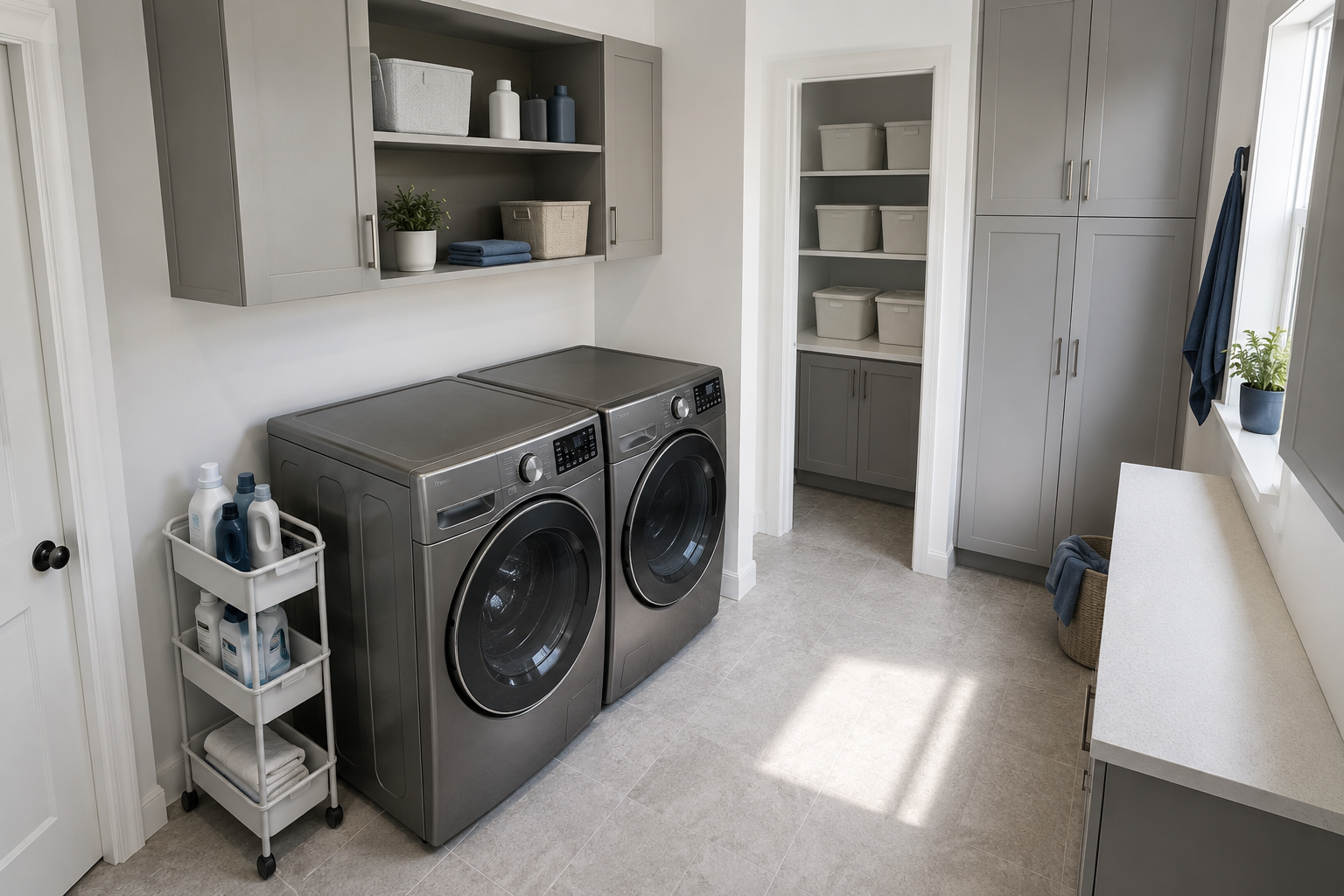
Use open, rolling or handled storage for supplies you reach for during the normal laundry cycle.
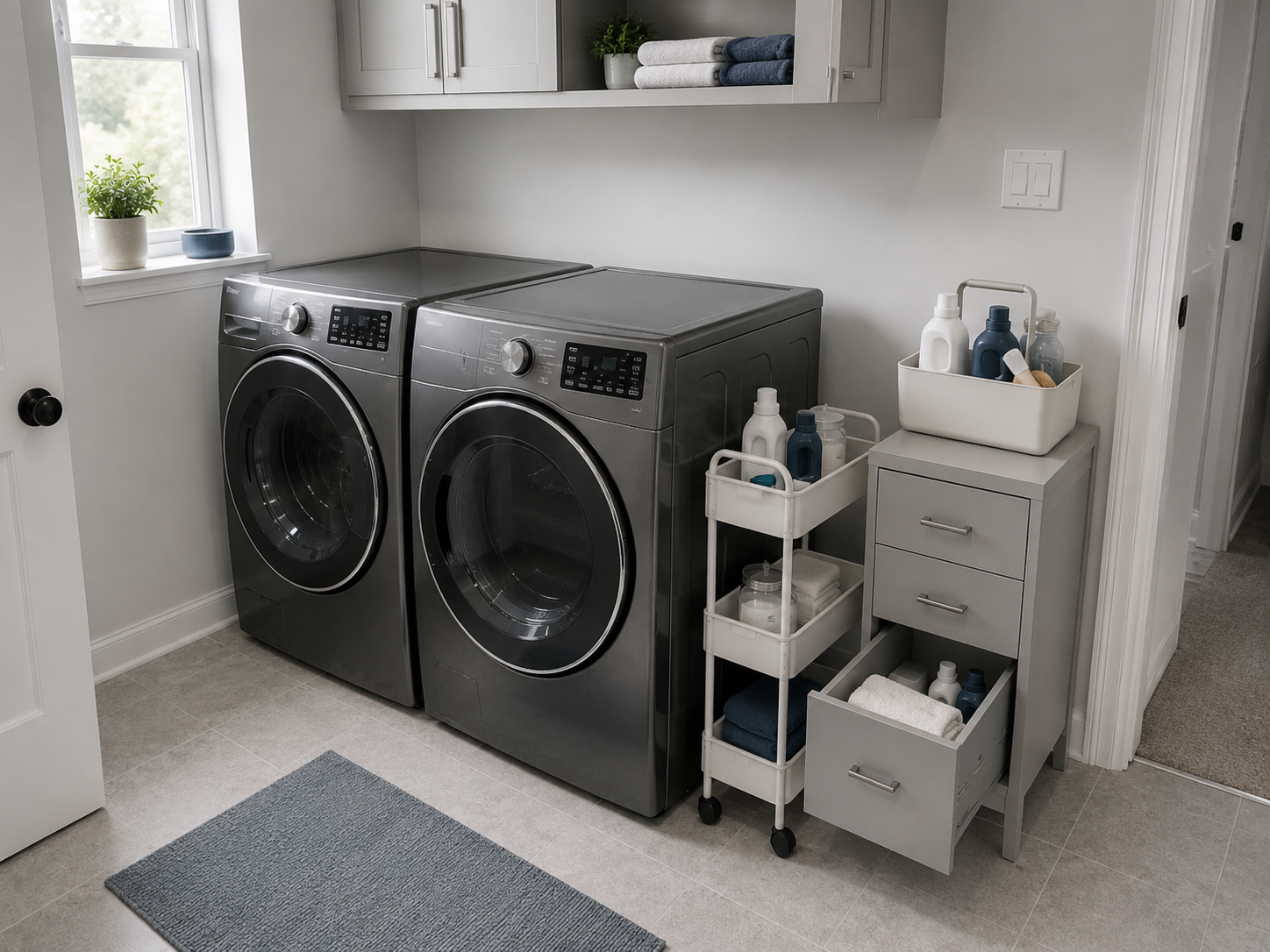
01 · Daily Reach
Routine supplies belong beside the cycle—not on top of it. Favor storage you can open, pull or carry without setting up the room first.
Execution rail — swipe or scroll
Best when a narrow side position can stay movable during the routine.
ExploreBest when small routine items need separation without a broad footprint.
See DetailsBest when the routine benefits from one removable group of supplies.
Check Options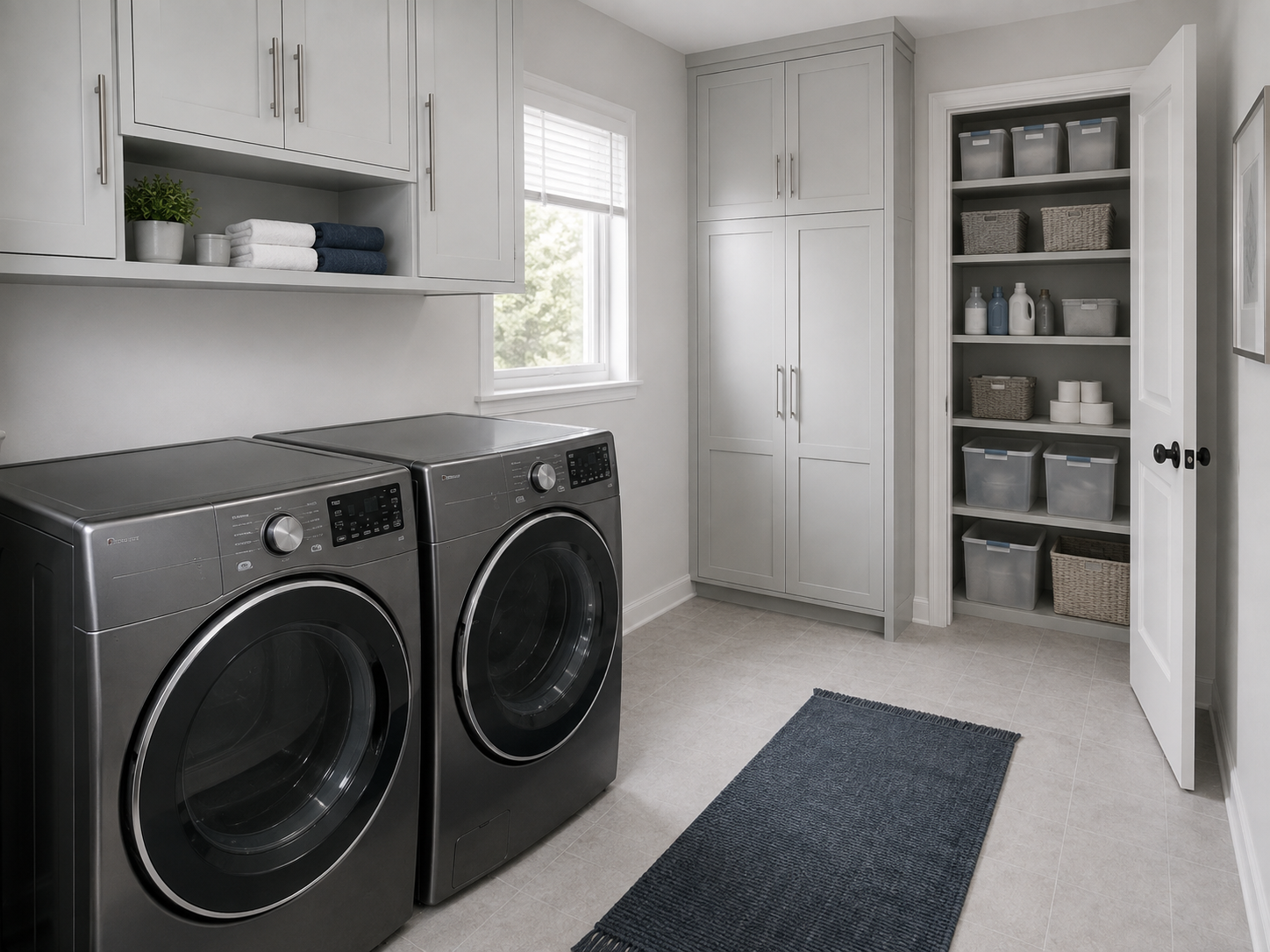
02 · Bulk Reserve
Refills and bulk supplies can move farther from the machine because they are not part of every cycle. Give the closest positions to what you actually touch most.
Reserve forms — swipe or scroll
Best when backup supplies need a visually quieter secondary home.
See OptionsBest when the room needs a dedicated location for larger backup volume.
Check OptionsBest when reserve storage should stay contained without becoming oversized.
Explore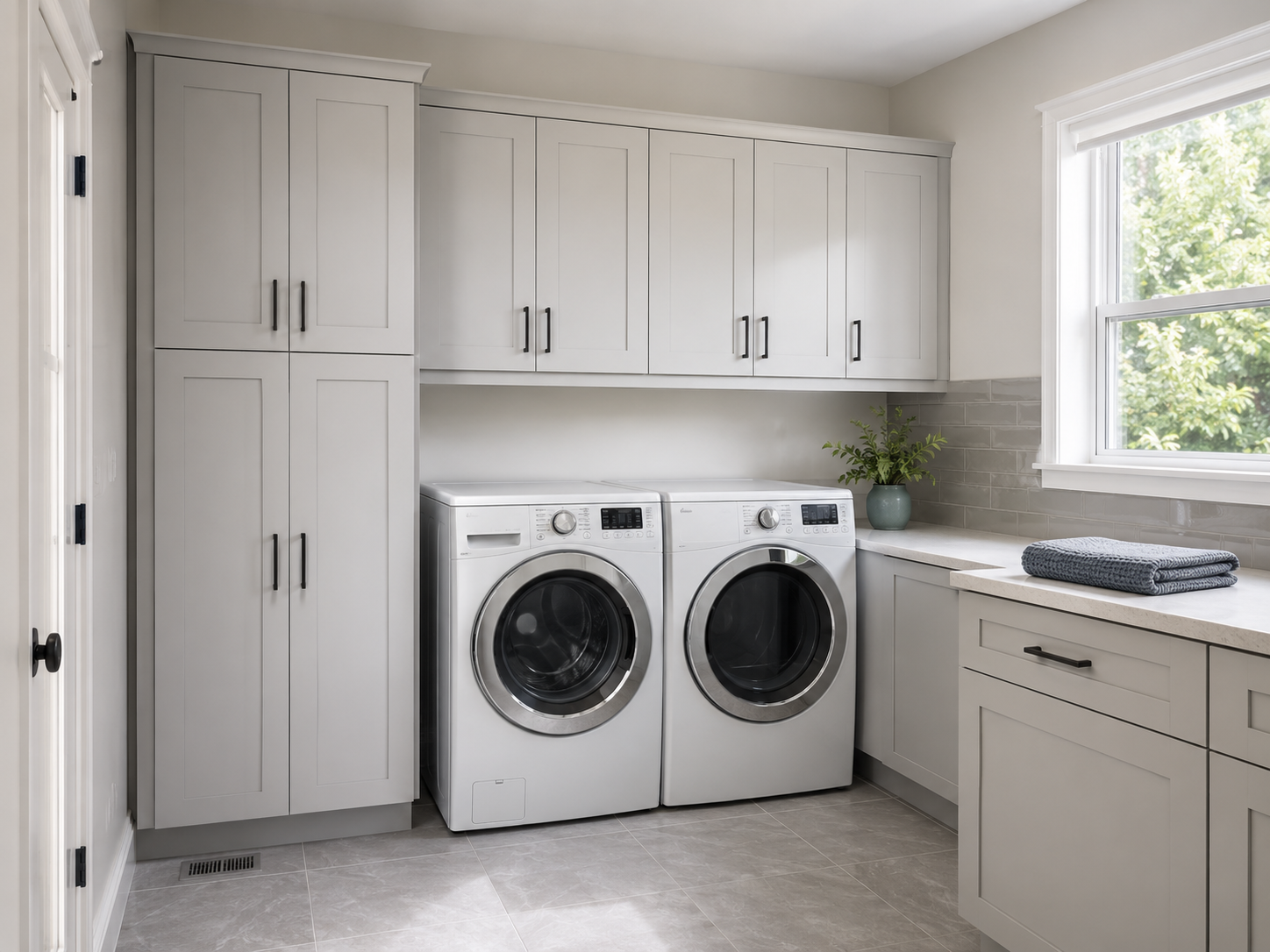
03 · Closed Reset
Closed storage earns its footprint when it removes scattered supplies from sight while doors, controls and work surfaces remain easy to use.
Closed forms — swipe or scroll
Best when general supplies need concealed vertical capacity.
ExploreBest when concealed storage belongs below the main working height.
See DetailsBest when the room can recover wall capacity without using more floor area.
Check OptionsMeasure With Everything Open
A storage plan can look perfect while everything is closed and fail the moment a door, drawer or cart moves into the aisle.
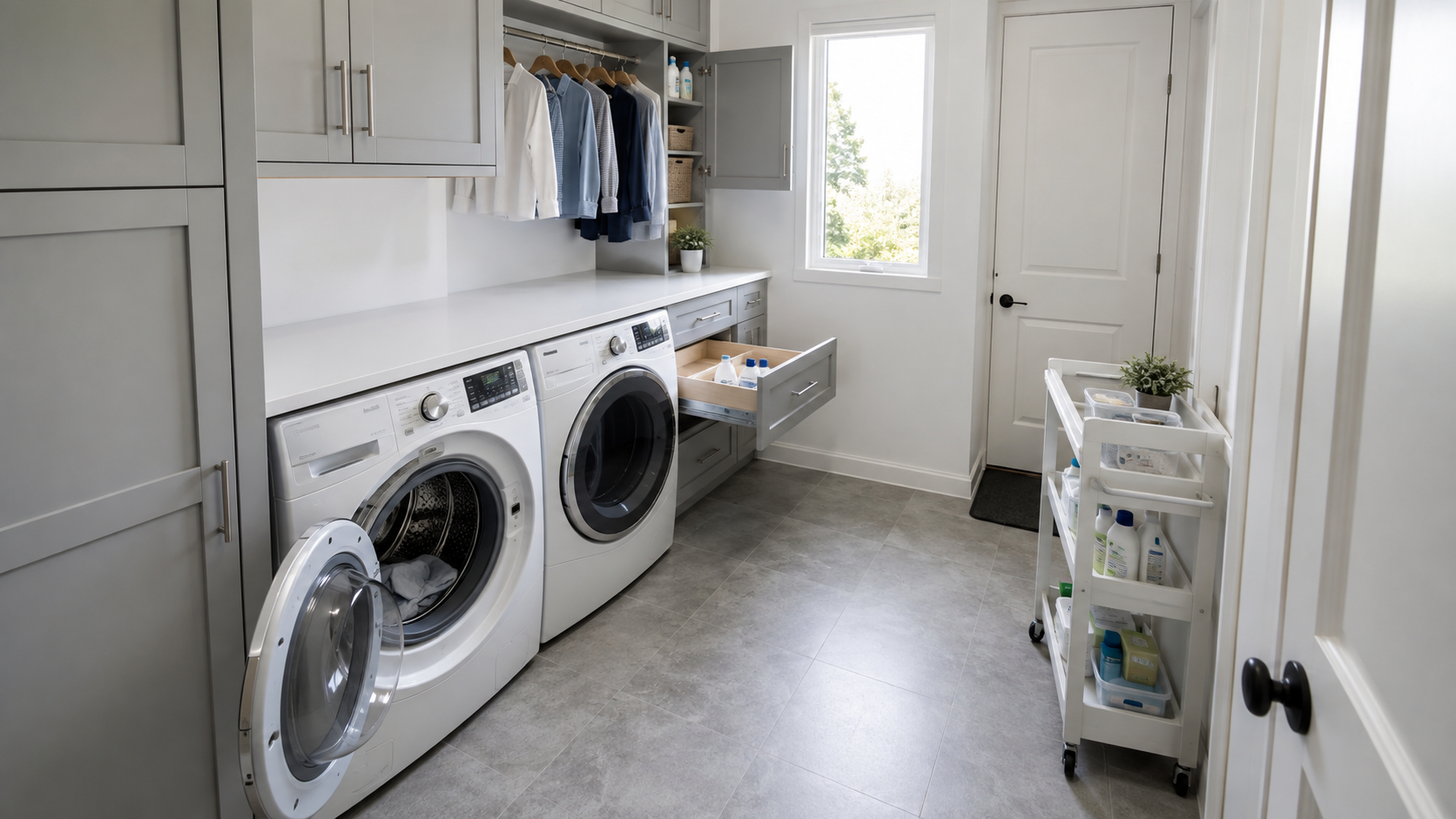
Check the room with the door or lid in the position you actually use.
Pull drawers and carts into their working positions rather than measuring them parked.
Confirm doors can move without fighting the appliance or another storage element.
Keep a usable route through the room while the system is active.
Choose the Storage Form
The useful question is not “Which organizer looks good?” It is “Which form handles this access problem with the least friction?”
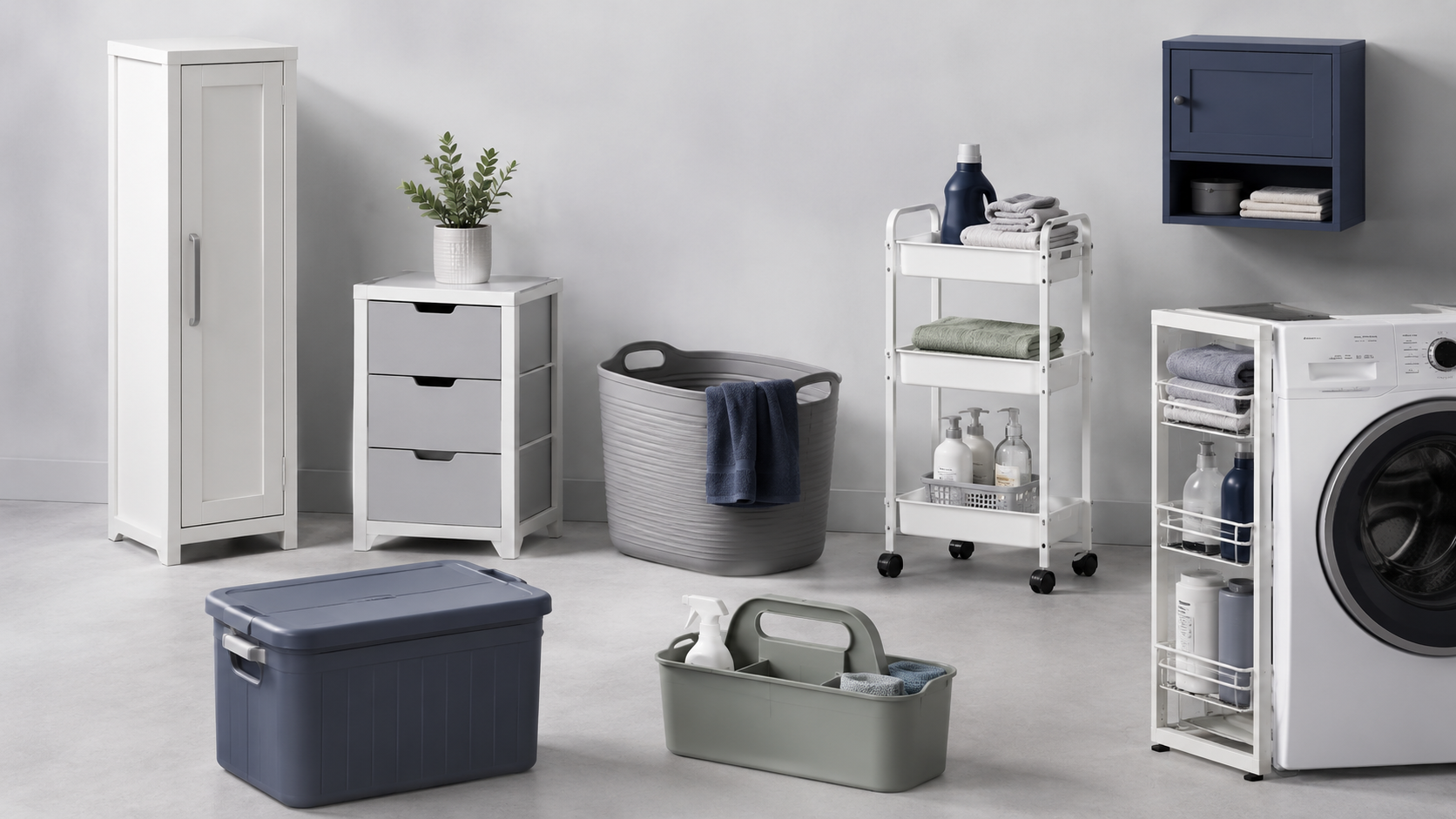
Choose this when visual clutter should disappear behind doors.
Choose this when small categories need separation and quick access.
Choose this when supplies need grouped containment and easy retrieval.
Choose this when storage must move into and out of the working route.
Choose this when a side or over-appliance zone can carry useful capacity.
Choose this when floor space is tighter than usable wall area.
Choose this when backups can live outside the prime reach zone.
Choose this when a small supporting category needs one controlled home.
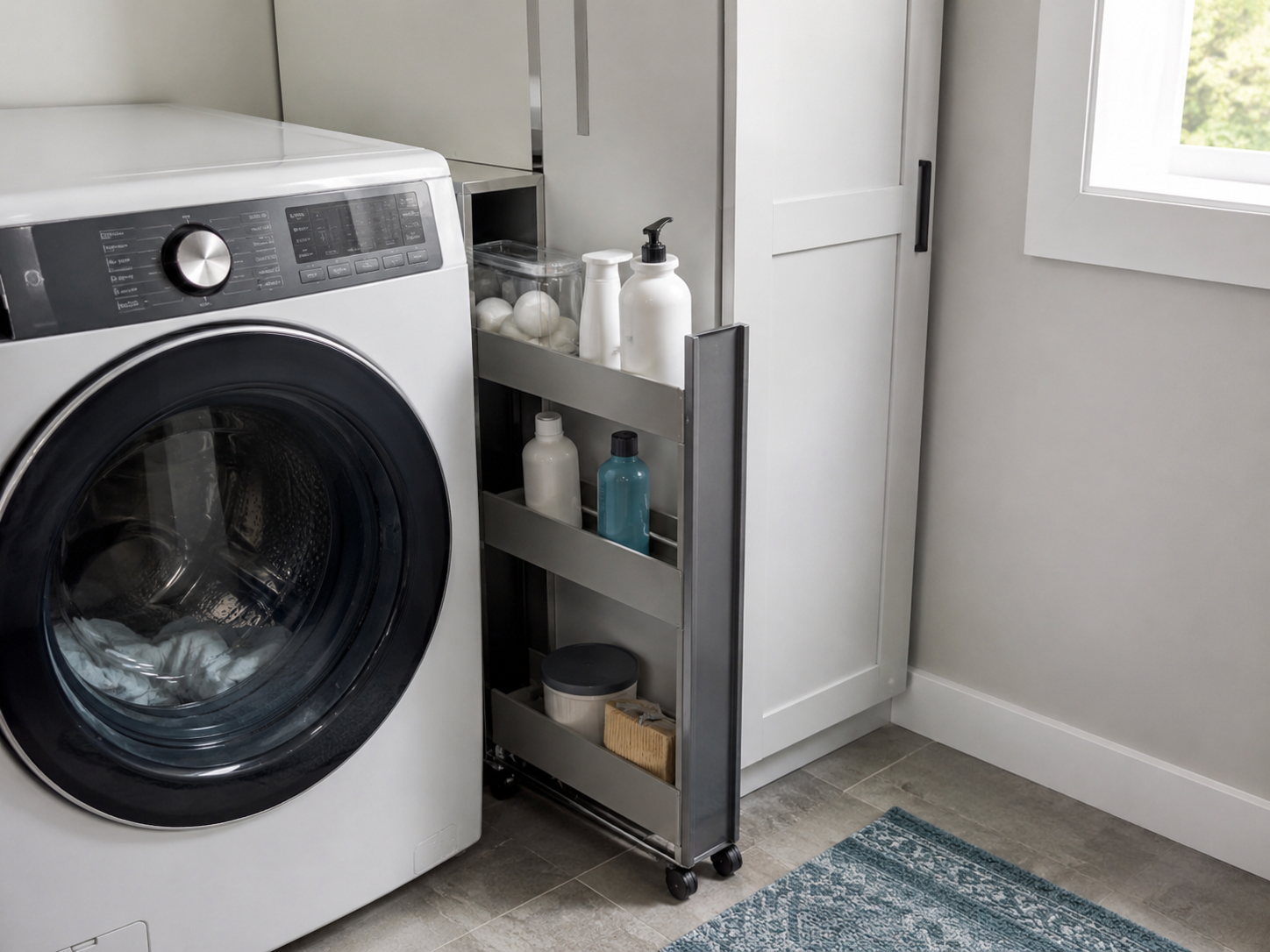
The Narrow-Gap Lab
Side gaps and appliance-adjacent zones can create useful capacity—but only when the storage can pull out, the machine can still open and the route stays usable.
Three compact routes — swipe or scroll
For a narrow floor gap where the unit still has a clear pull-out route.
ExploreFor vertical appliance-area capacity when clearances and access work.
See OptionsFor a tighter appliance setup that can support a dedicated vertical form.
Check OptionsThe 25-Pick Storage Library
The complete inventory stays collapsed so the page remains a decision tool instead of turning into a 25-card catalogue.
Concealed vertical storage for general laundry supplies.
Recovers an otherwise awkward corner with enclosed capacity.
Concealed storage below the main working height.
Adds concealed capacity where a broad cabinet is unsuitable.
A slim drawer format for separating smaller supplies.
Combines contained storage with mobility around the work zone.
A broader compact drawer form for grouped everyday storage.
Groups shelf-level supplies into clear retrieval zones.
Contains backup supplies in a visually quieter format.
Open handled storage for categories that benefit from easy removal.
Open-access containment when grouped supplies still need quick reach.
A narrow mobile form for daily supplies near the appliance zone.
Targets a tighter side gap while preserving mobile access.
A broader rolling solution for supplies that move with the task.
Uses vertical space around an appliance without turning its top into storage.
A compact adjacent format for small frequently used items.
A compact vertical solution for a more constrained appliance setup.
Concealed wall-level storage for supplies that should stay out of sight.
Open wall access for lighter supplies and small utility categories.
A smaller wall-storage form for controlled open access.
A larger-format reserve home for backup laundry supplies.
Contained reserve capacity in a more moderate footprint.
A smaller contained format for separating backup categories.
A portable group for routine supplies that move together.
Uses an available shelf zone for a smaller utility category.
Will It Work During Laundry?
Tap each check after you have confirmed it for the exact product and your exact laundry setup.
Finish the Wash-Day System
The storage map clears the machines. Now continue with the part of wash day that still creates friction.