
Too many small pots.
Individual containers spread visual noise and create multiple obstacles.
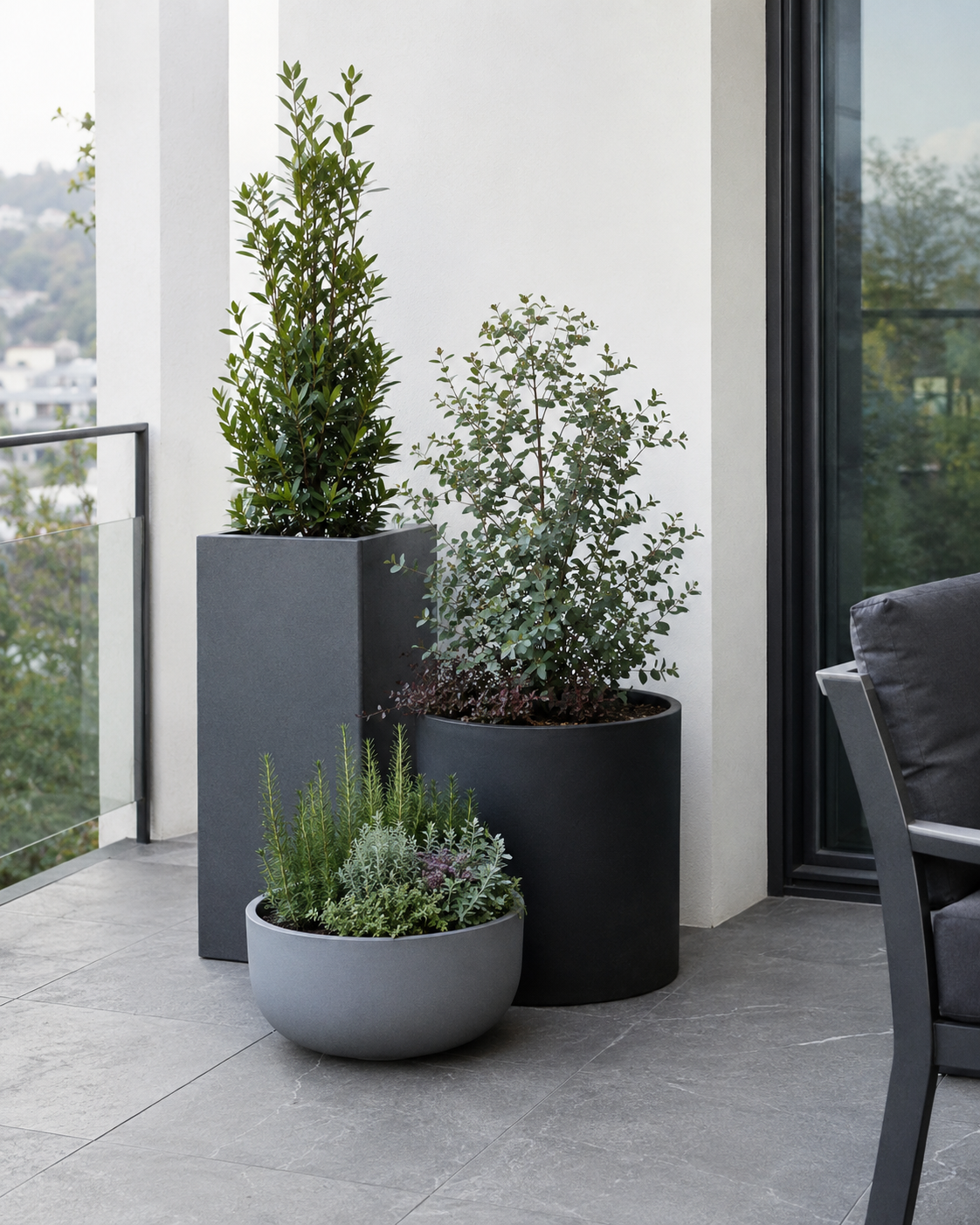
Better: one composed cluster.
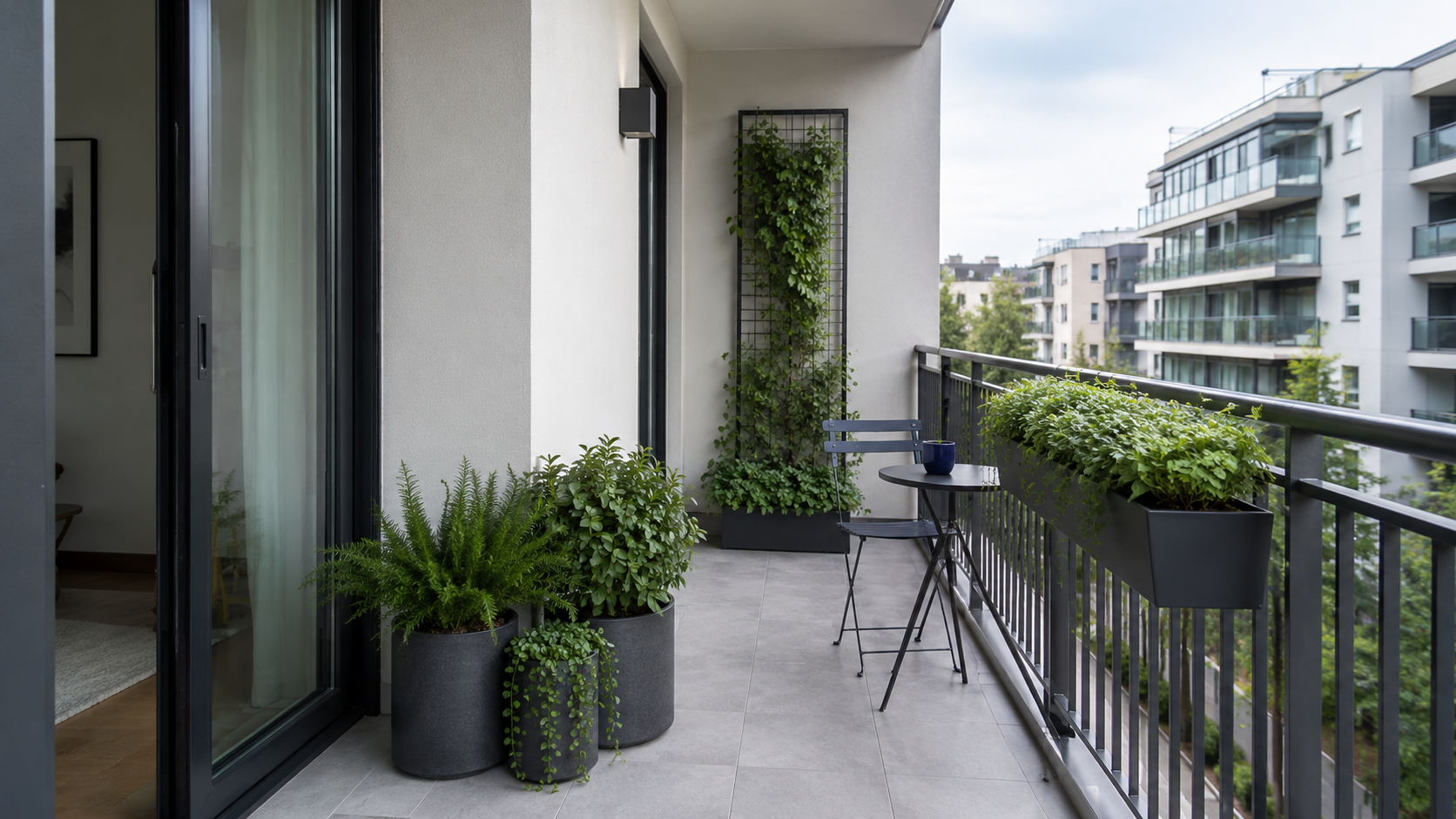
Outdoor planters · start with placement
If pots keep stealing the walkway, choose the surface first. Floor, railing, wall or vertical growth each solves a different space problem.
01 · Planting footprint switchboard
Tap a location. The balcony changes, the space rule changes, and the first products change with it.
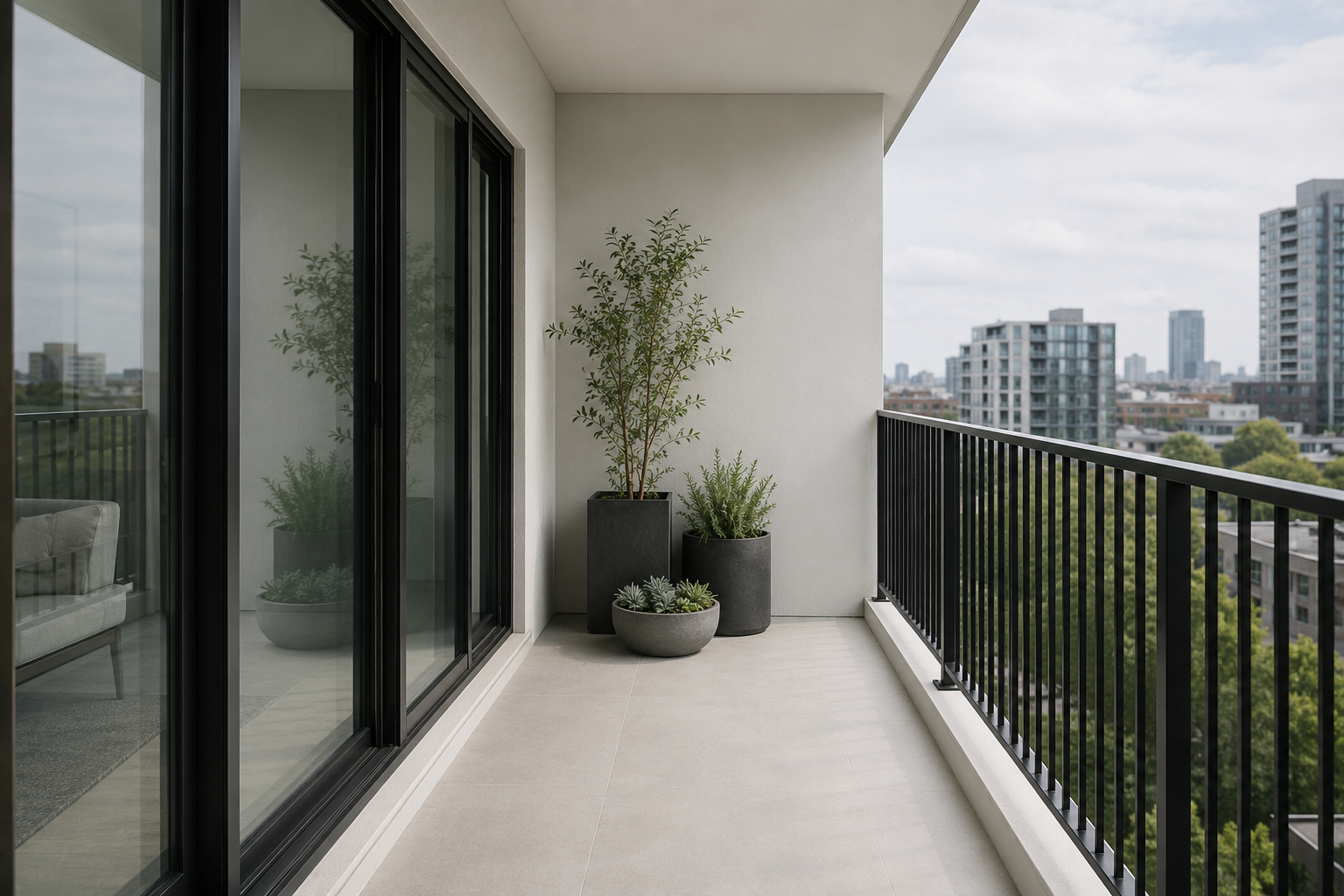
Floor planters work best when several heights become one corner composition instead of separate obstacles along the route.
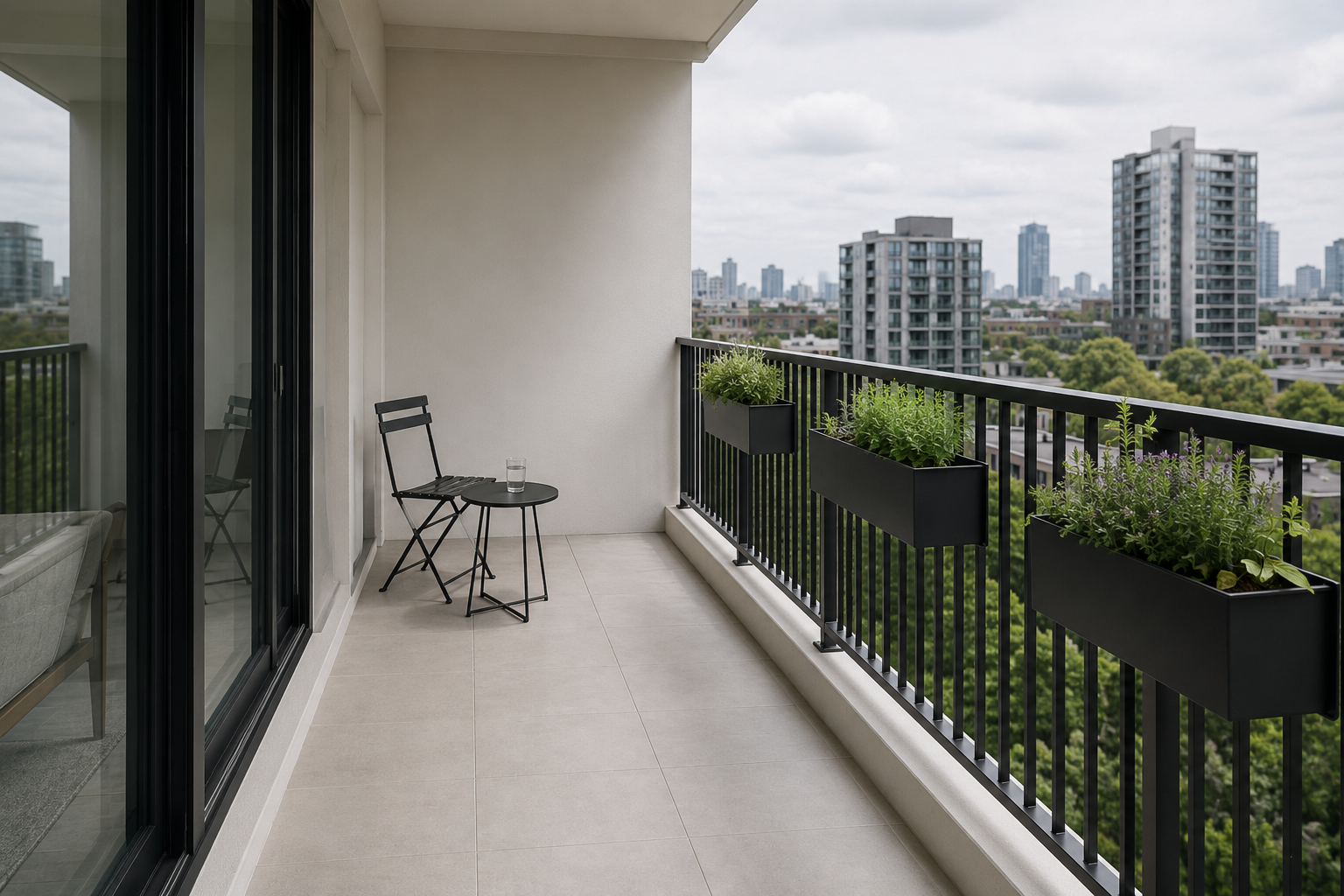
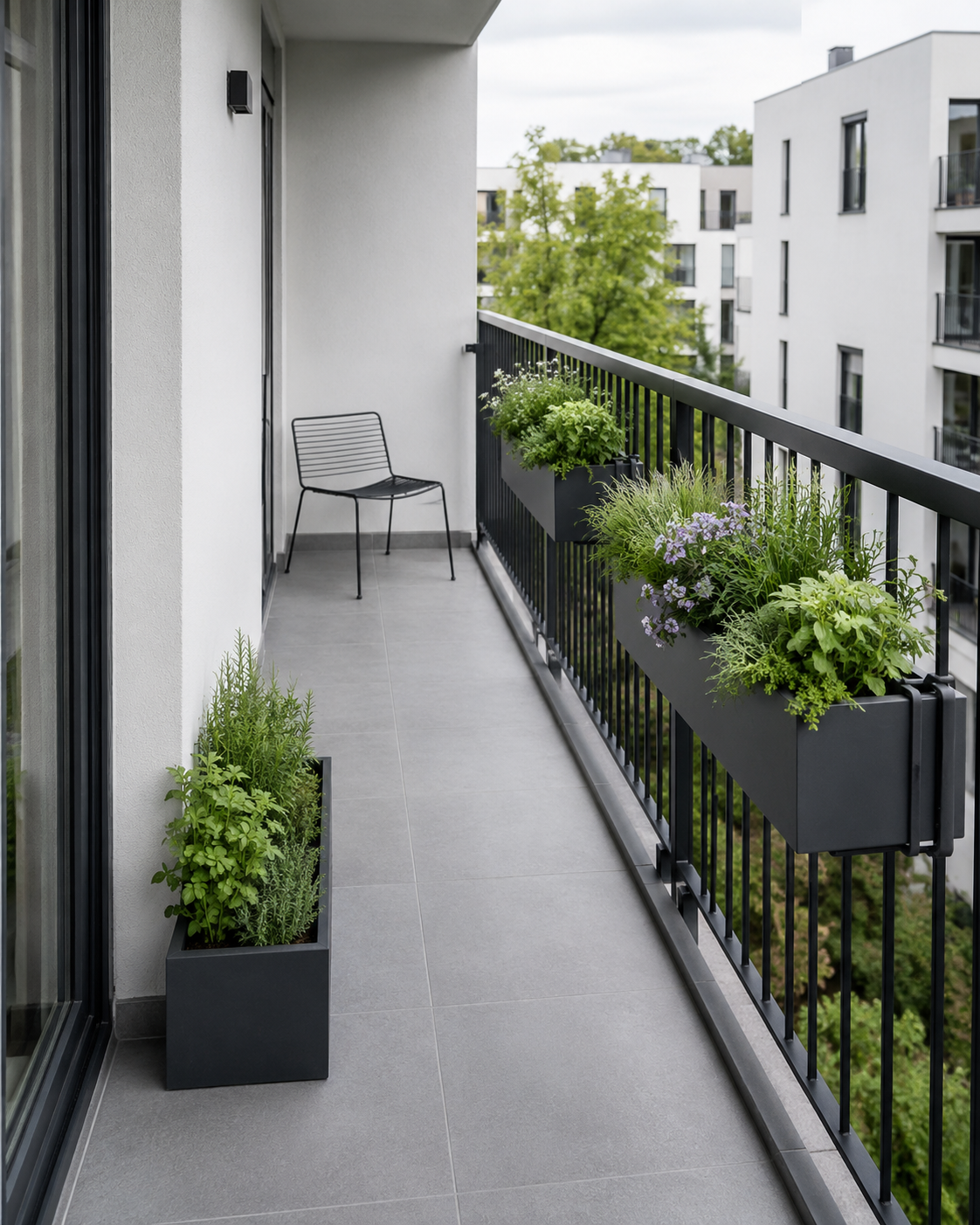
Railing planters can return floor area to circulation, but the exact bracket, railing profile and attachment method must match the real balcony.
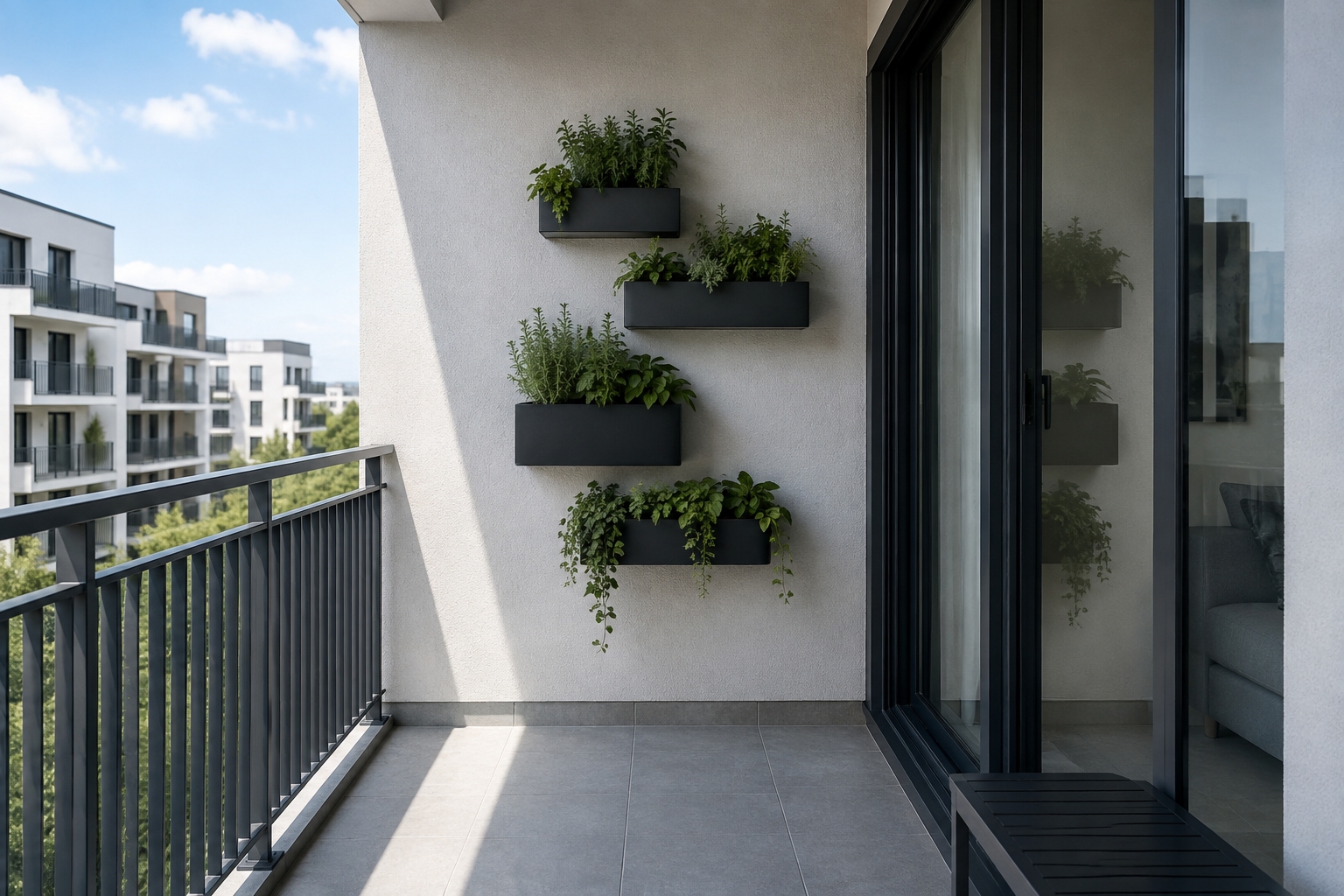
Wall planters protect the floor, but projection depth, mounting surface and filled weight matter more than the thumbnail.
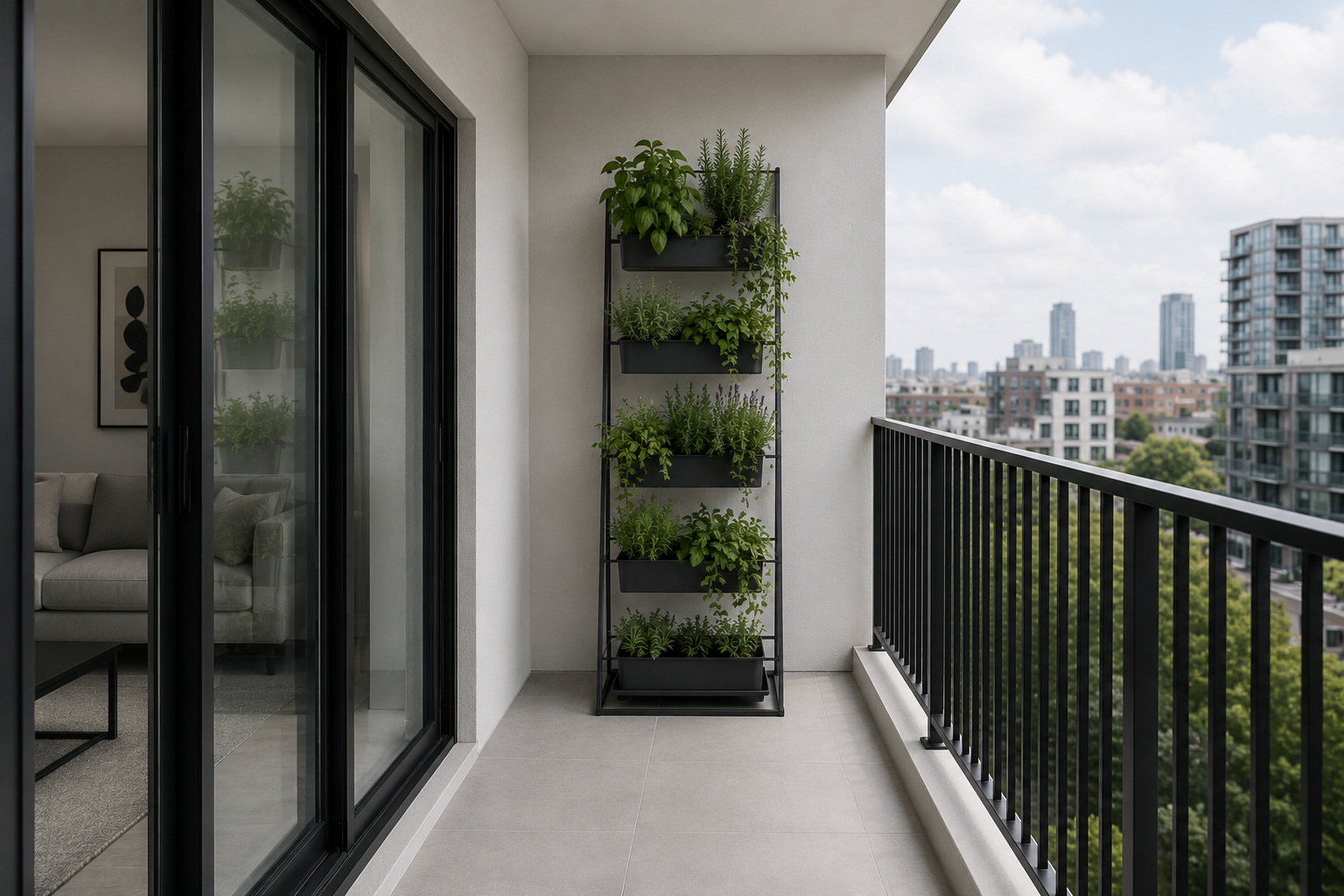
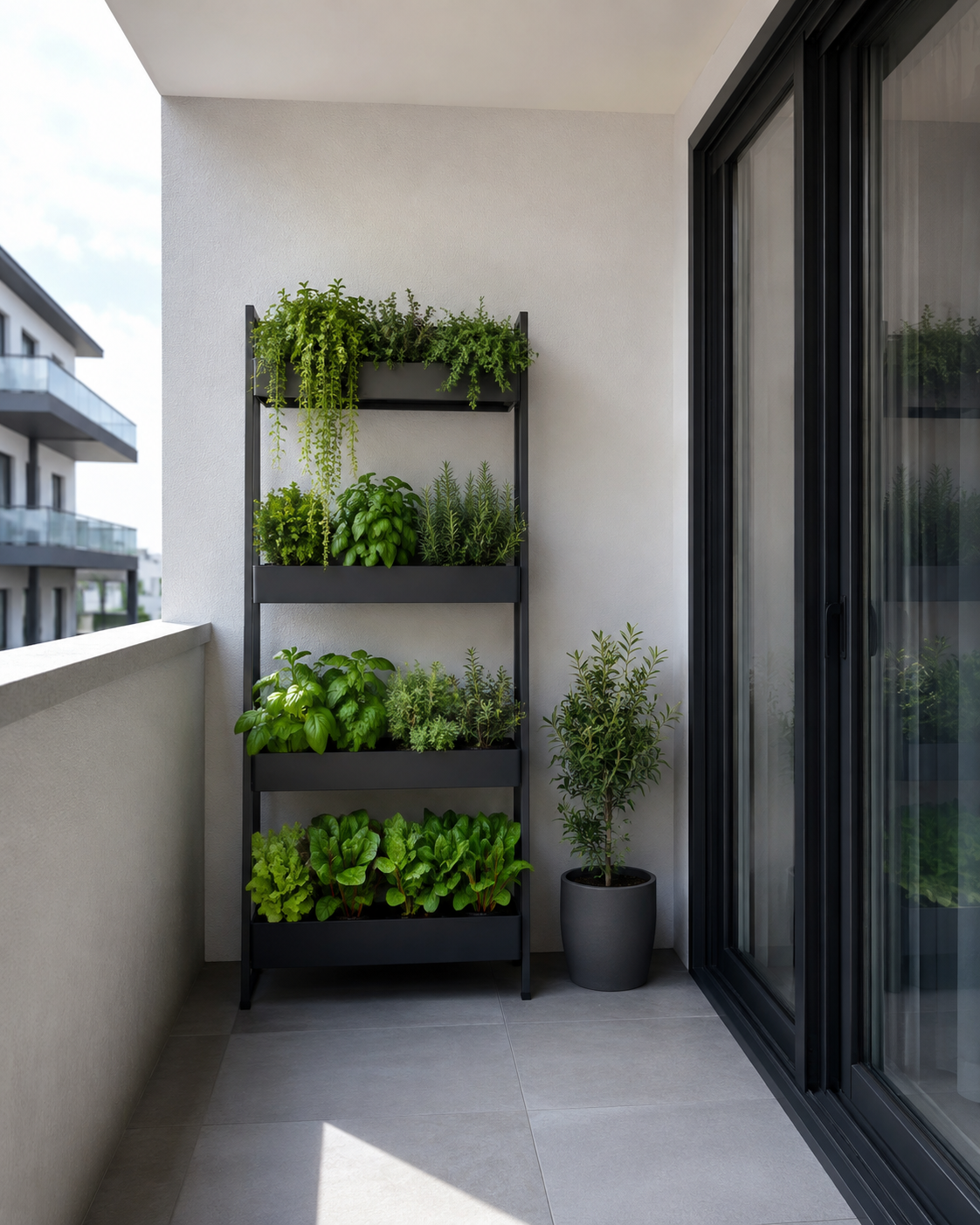
A vertical system earns its footprint when it holds several planting levels inside one controlled zone instead of multiplying floor pots.
As an Amazon Associate, Ravnora Decor may earn from qualifying purchases. Product links may open on Amazon.
02 · Protect circulation
A balcony can feel greener and larger at the same time when planters live on the perimeter instead of interrupting the route from the door.
Protect the opening and the first step outside before placing anything decorative.
Concentrate greenery where the floor, wall or railing can carry the visual weight.
If a chair, planter or watering task blocks movement, the composition is not finished.
03 · Four surfaces, four failure modes
Use the placement rule to eliminate a bad fit before style becomes persuasive.
Individual containers spread visual noise and create multiple obstacles.
Railing shapes, widths and permitted mounting methods vary.
A deep wall planter can still steal shoulder or walking clearance.
A tall system only works when its base, load and intended placement suit the location.
04 · Route 01 · Floor cluster
Use a tall anchor, a fuller middle vessel and one low planter. The difference in height matters more than buying several matching pots.
05 · Route 02 · Vertical green
Vertical systems trade spread for height. The best route depends on whether you want stacked pots, a mobile tower or separate troughs inside one frame.
06 · Route 03 · Railing edge
Railing planters make sense when the attachment works for the actual railing and the planted edge stays controlled rather than covering every available span.
07 · Maintenance changes the choice
A beautiful planter still fails if the planting volume, watering access or growing setup does not fit daily life.
Choose this route when regular checking and watering are already part of the plan.
Compare the current reservoir, drainage and setup guidance rather than assuming every self-watering format works the same way.
Use a dedicated grow station when access, grouping and usable planting space matter more than a sculptural vessel.
08 · The planter edit
Use this as the fast map. Open the complete family only after you know what the placement needs to do.
You have one corner or long edge that can hold a composed cluster without interrupting circulation.
Open 6 floor options →You want greenery without consuming floor area and the railing can support the intended attachment.
Open 4 railing options →A blank vertical plane is available and mounting plus projection depth are both workable.
Open 3 wall options →You need more growing capacity from one controlled footprint rather than many separate pots.
Open 4 vertical options →Maintenance is the limiting factor and the reservoir system suits how you actually care for plants.
Open 3 maintenance options →Edible growing, access and organization matter more than creating a decorative statement.
Open 3 utility options →You already own suitable pots and only need controlled height without adding another planter system.
Open 2 stand options →09 · Before you fill it with soil
Product details and building conditions can change. Confirm the current listing and the real balcony before purchase or installation.
Keep door movement, walking clearance, drains and daily access visible.
Check the selected variant against the actual floor, wall or railing space.
Filled planters become substantially heavier; verify the intended supporting surface and current guidance.
Review the product's current drainage or reservoir setup and where excess water can safely go.
For wall and railing products, confirm the exact attachment method, hardware and property rules.
Check current manufacturer/listing guidance for the exact variant and intended placement.
10 · Complete 25-product library
The families stay stacked vertically. When one opens, its products run horizontally so the page never becomes a long catalogue.
Use as the highest vessel in a concentrated floor cluster.
ViewA fuller round silhouette for the middle of a grouped composition.
SeeA second tall route when a tapered footprint suits the edge better.
ExploreCreates the front, lower layer of a staggered floor arrangement.
ViewFor a long perimeter where one continuous vessel is cleaner than several pots.
CheckA quieter round format for filling the middle scale of a cluster.
SeeA restrained rectangular profile for a controlled edge.
ViewA rounder silhouette for a less linear railing composition.
SeeUseful when several smaller planted moments fit the rail better than one long trough.
ExploreFor greater linear coverage; confirm the selected bracket and railing compatibility.
CheckA small multi-planter composition for a controlled vertical patch.
ViewA two-piece wall/fence route for a wider planted line.
SeeA larger linear wall composition; verify filled support and mounting before use.
CheckA classic stackable format for several planting levels in one footprint.
ViewA second stacked route with a different scale and configuration.
SeeA movable vertical format when flexibility matters to the placement plan.
ExploreSeparate planting troughs organized inside one freestanding structure.
CheckA larger structured vessel where the reservoir system is part of the buying decision.
ViewA smaller pair for maintenance-led planting without a large footprint.
SeeA linear self-watering format for herbs or smaller grouped planting.
CheckA larger utility route for a patio with enough floor area to support it.
ViewA divided grow station that prioritizes access and plant organization.
SeeA slimmer herb-growing format for a tighter outdoor edge.
Explore11 · Continue the outdoor room
Once greenery has a clear home, the next decision is usually the boundary, the wall or the remaining space pressure.