
The wall is visible, but nothing tells your eye where to land.
Use one anchor before considering filler. The anchor can be sculptural, green, reflective, or architectural.
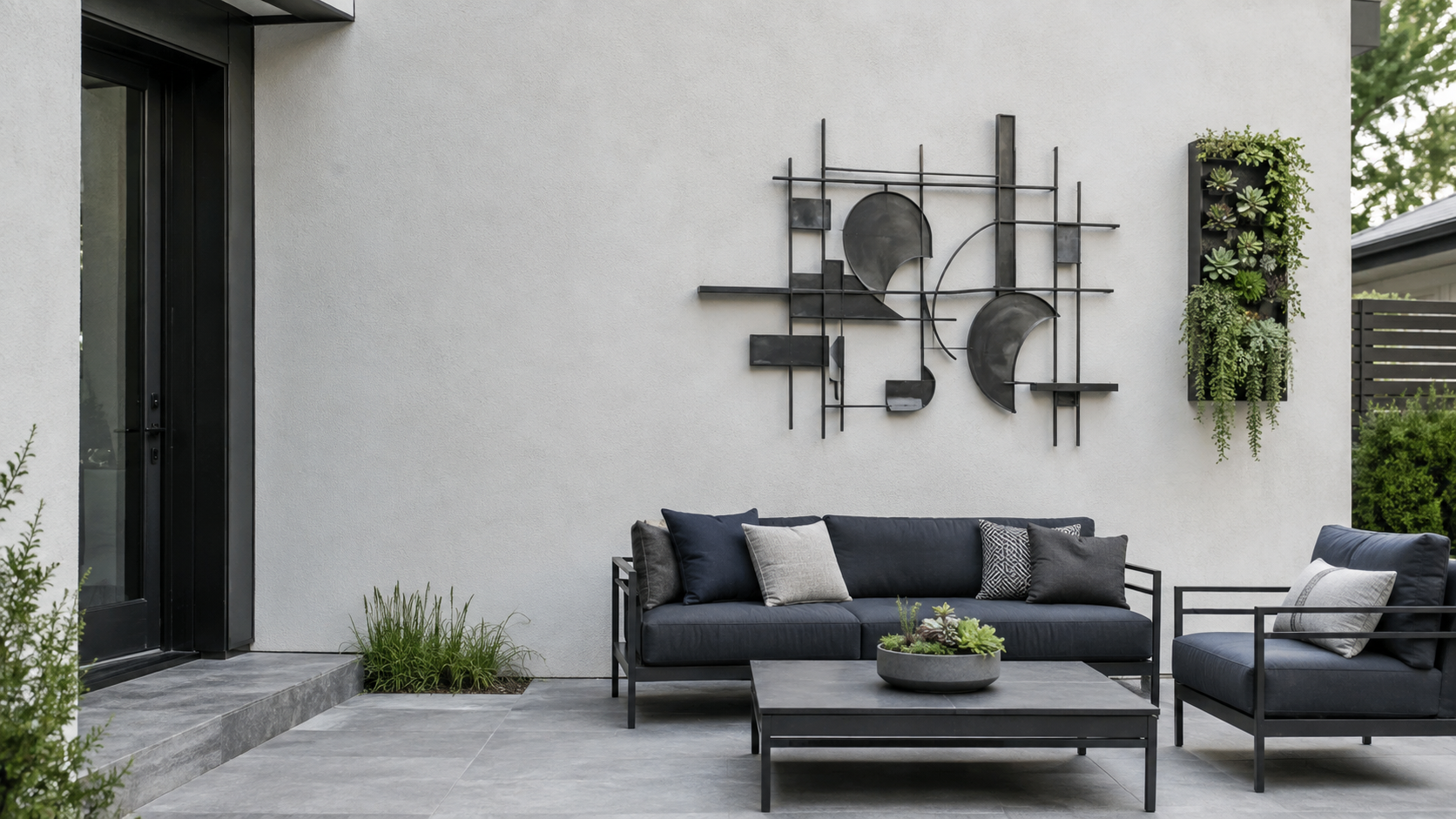
Start with the wall condition—not the product. Choose one focal direction, test its scale against the usable wall, then leave enough clear edge for the patio to keep breathing.
The fix is rarely “add more decor.” It is usually about choosing the wall’s job, protecting circulation, and giving one move enough scale to read from the room.
Use one anchor before considering filler. The anchor can be sculptural, green, reflective, or architectural.
Move visual interest upward with wall greenery, mounted planters, a trellis, or a contained vertical composition.
Keep one edge deliberately clear. That empty strip is part of the composition, not wasted space.
Affiliate disclosure: As an Amazon Associate, Ravnora Decor may earn from qualifying purchases. Product links may open on Amazon.
The products become easier to judge once you know whether the wall should feel graphic, alive, or architecturally quiet.
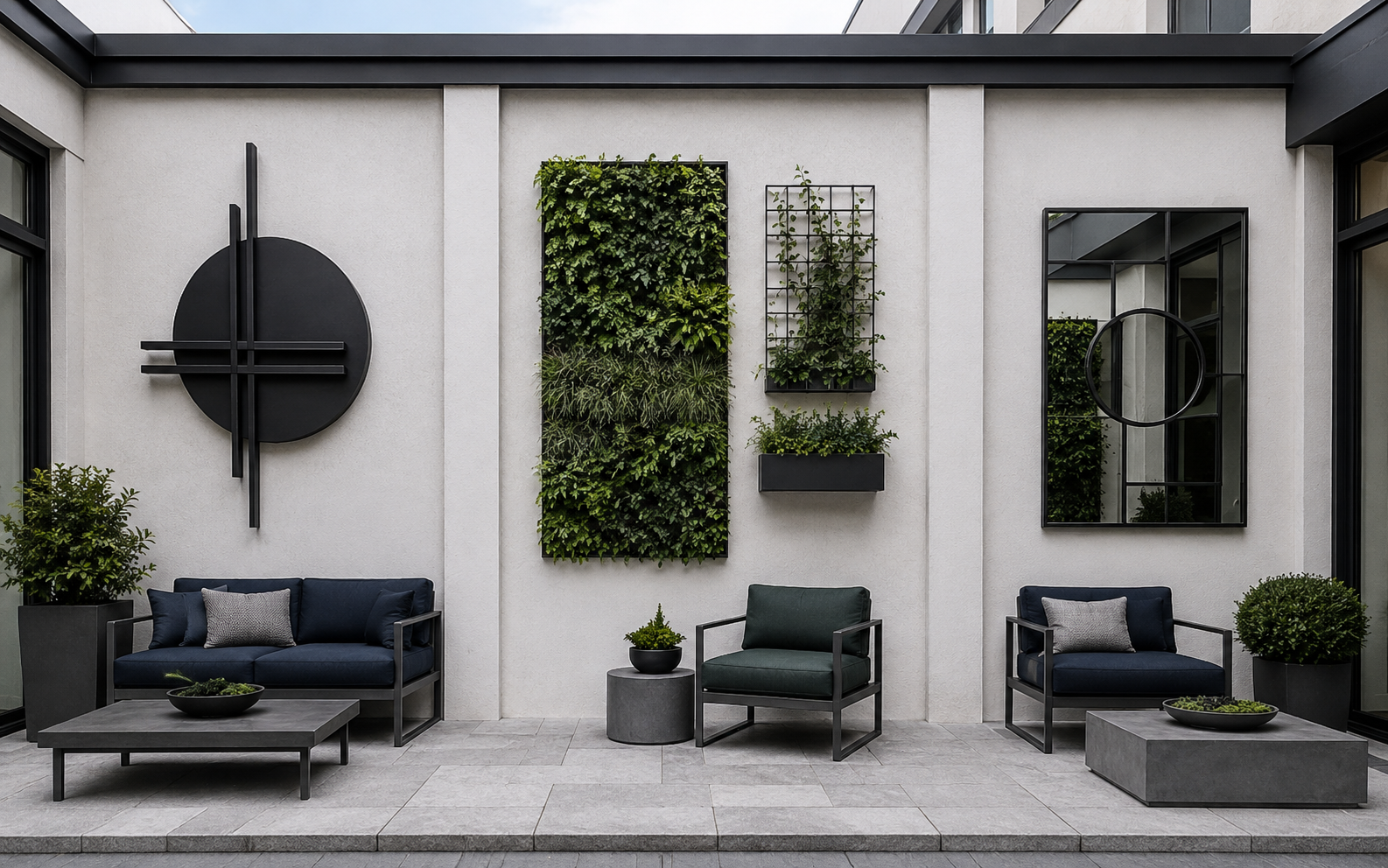
Best when the wall is broad enough for a real focal anchor and the surrounding furniture already feels controlled.
Use one dominant form, then support it with one quieter line or small accent.
A beautiful piece can still be wrong if the usable wall is smaller than it looks—or if the selected spot is more exposed than the product can comfortably handle.
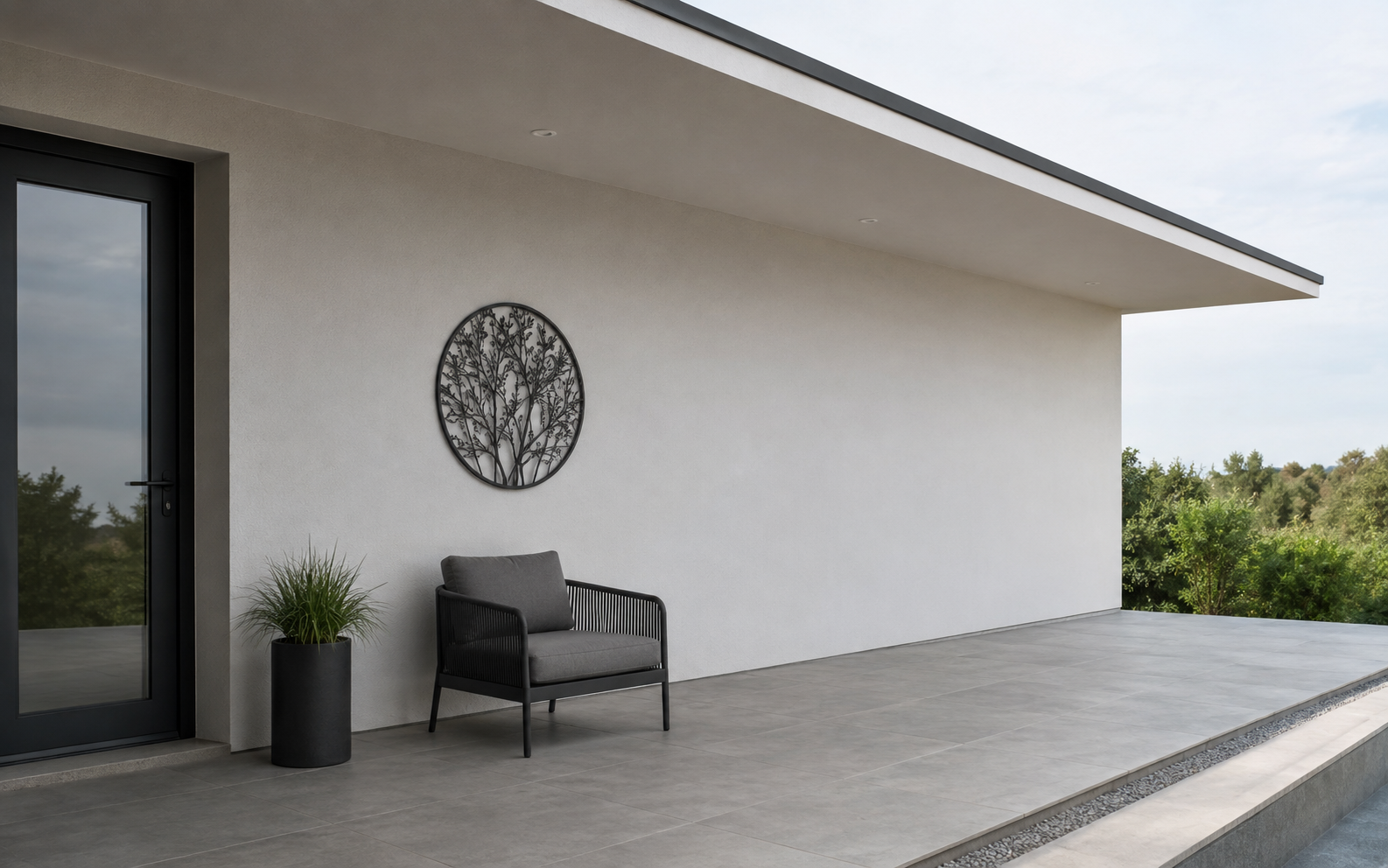
You have the broadest choice. A defined focal piece, mounted planter, or layered composition can work without filling the whole wall.
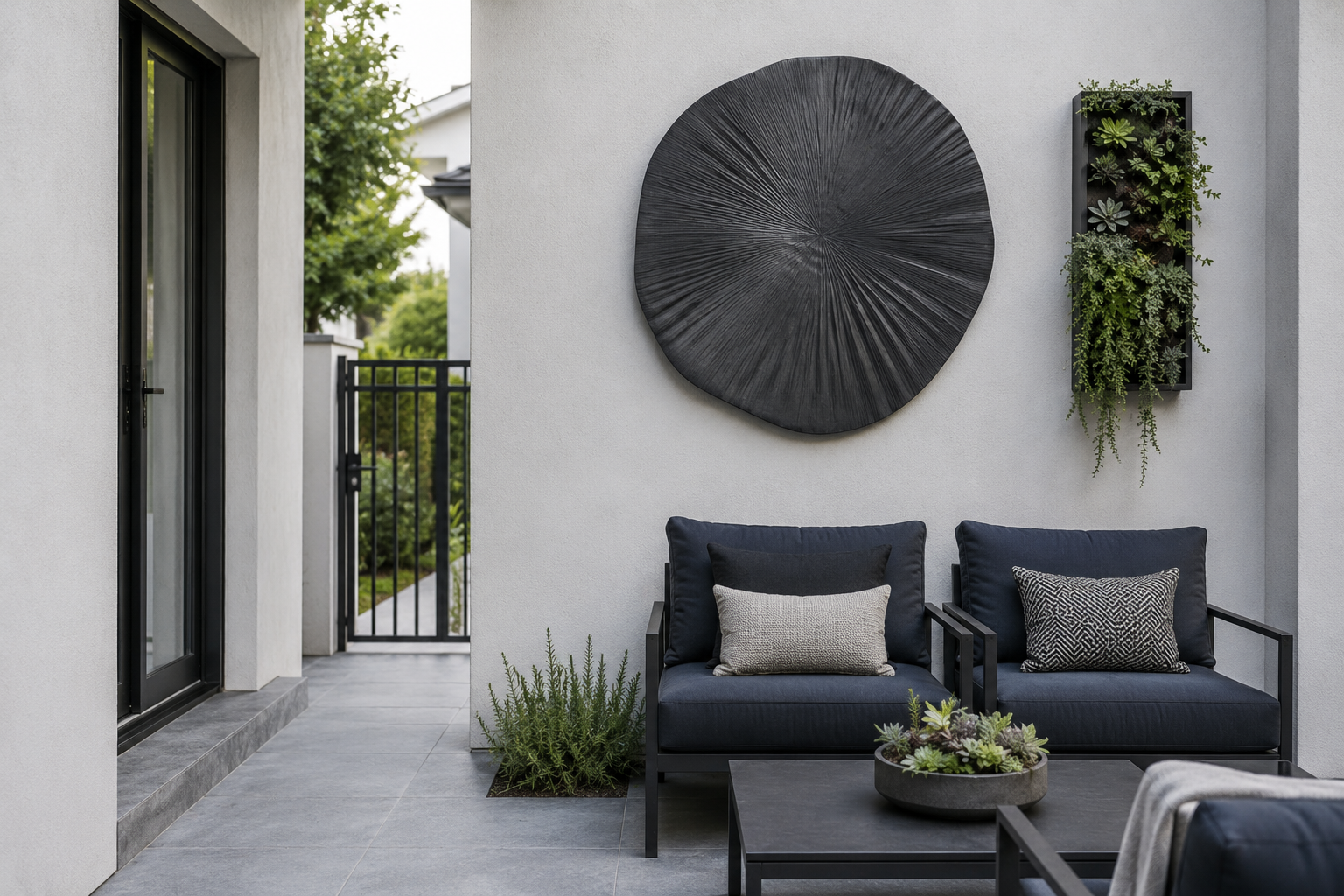
Let one object carry most of the visual weight: art, mirror, green block, or architectural panel.
Add one quieter companion that reinforces the anchor without becoming another focal point.
Leave the wall beside the doorway, gate, or primary walking line deliberately unfilled.
Each family changes the wall differently. Use this elevation as a visual index, then jump straight to the family that solves your wall condition.
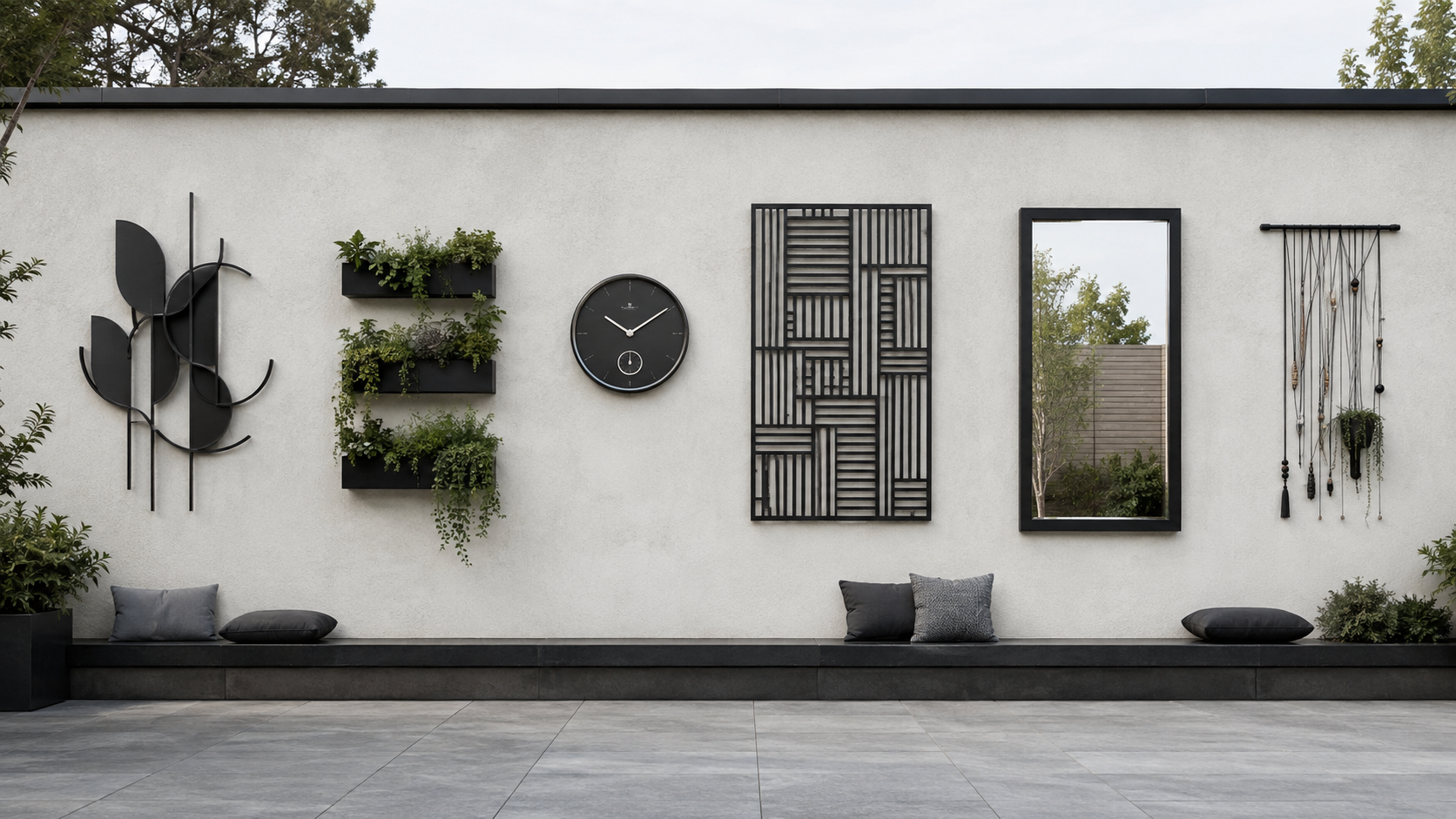
A sculptural wall is strongest when the anchor has breathing room. The support piece should change the silhouette—not compete for attention.
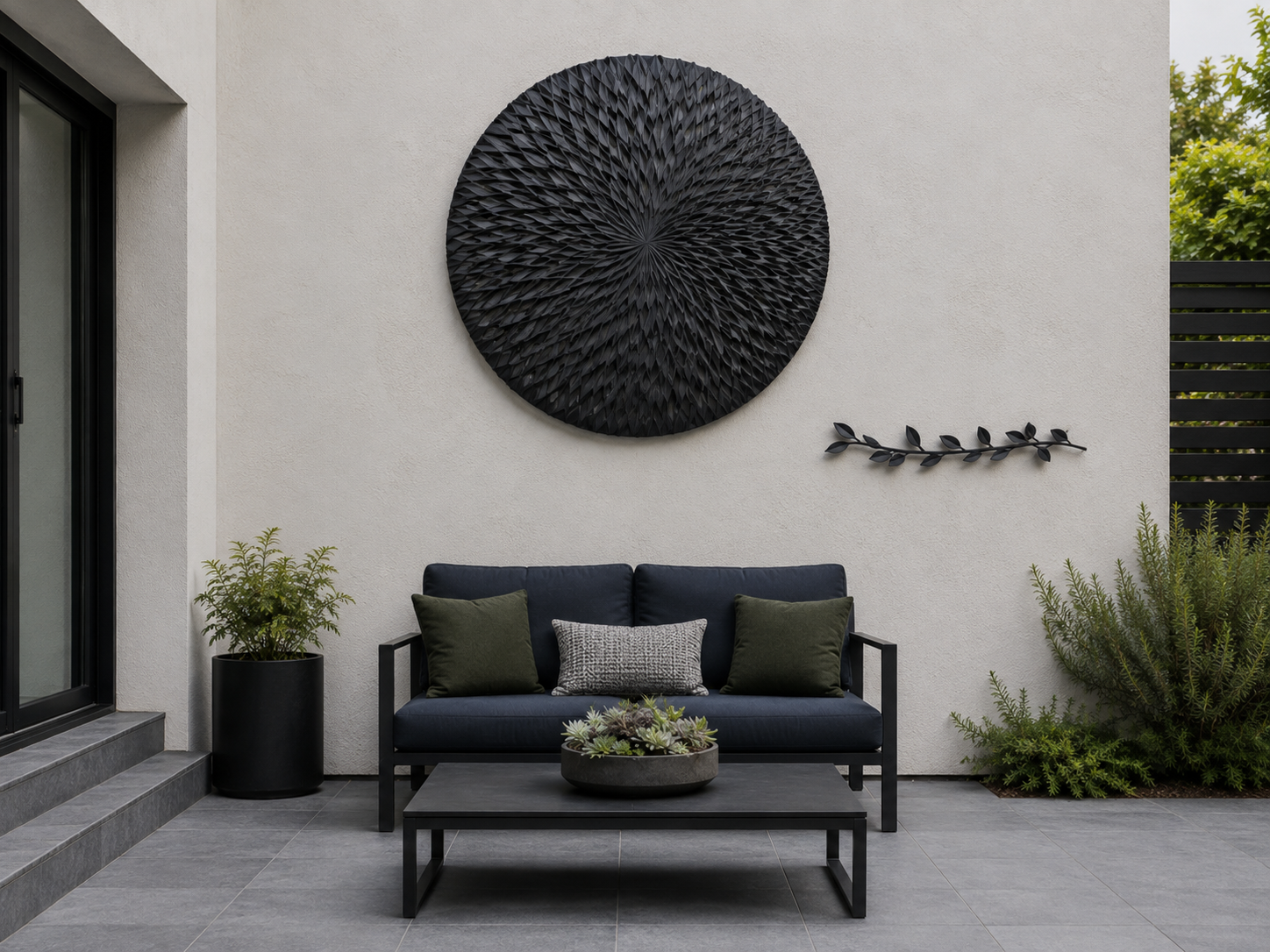
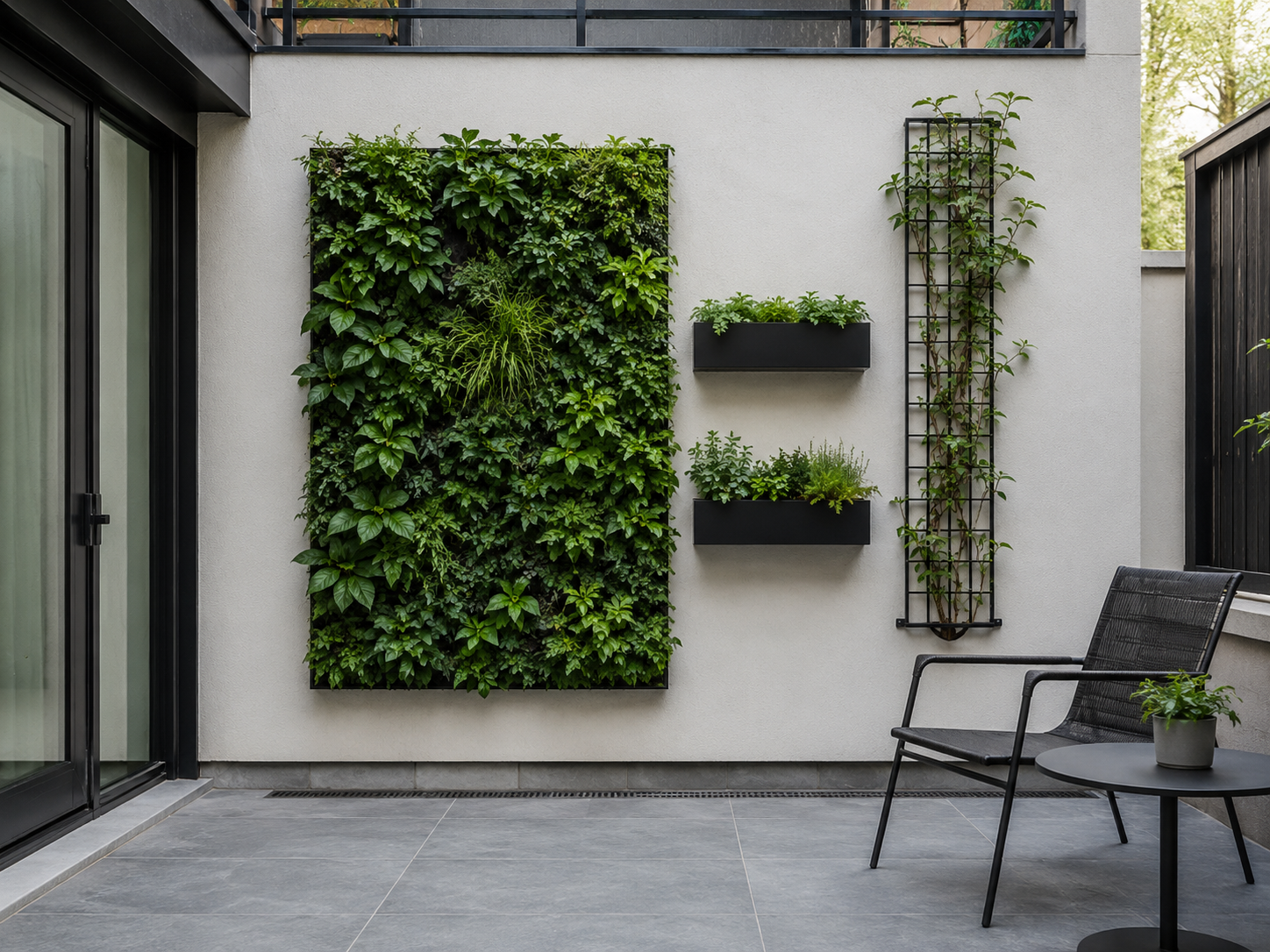
Build one contained green zone, then use a mounted planter or trellis to add structure. The open floor is part of the payoff.
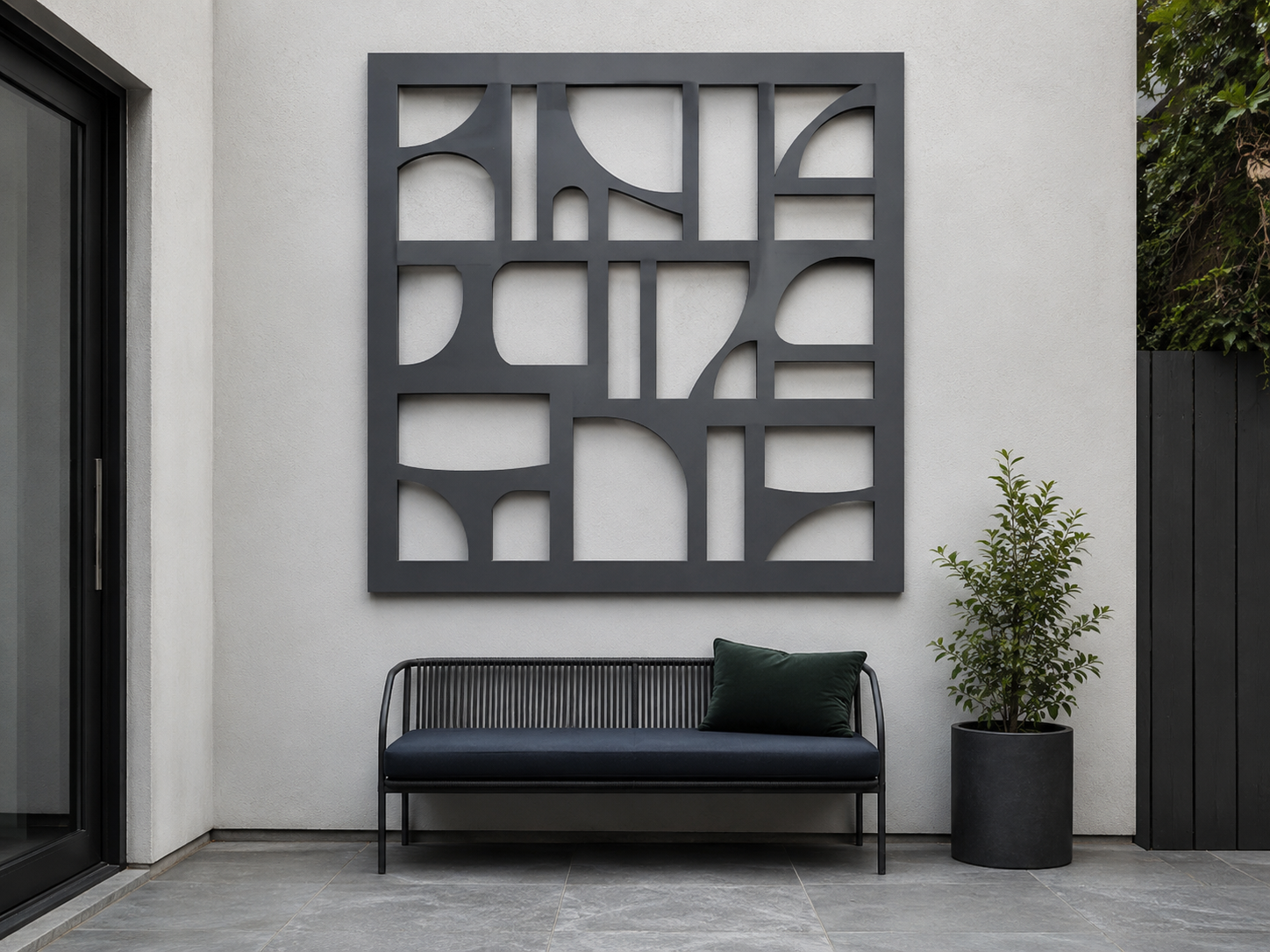
Choose this route when you dislike busy garden styling. The wall becomes calmer through one flat architectural gesture or one reflective focal piece.
Confirm the wall, the real product size, the exposure, and the clearance before you purchase or drill.
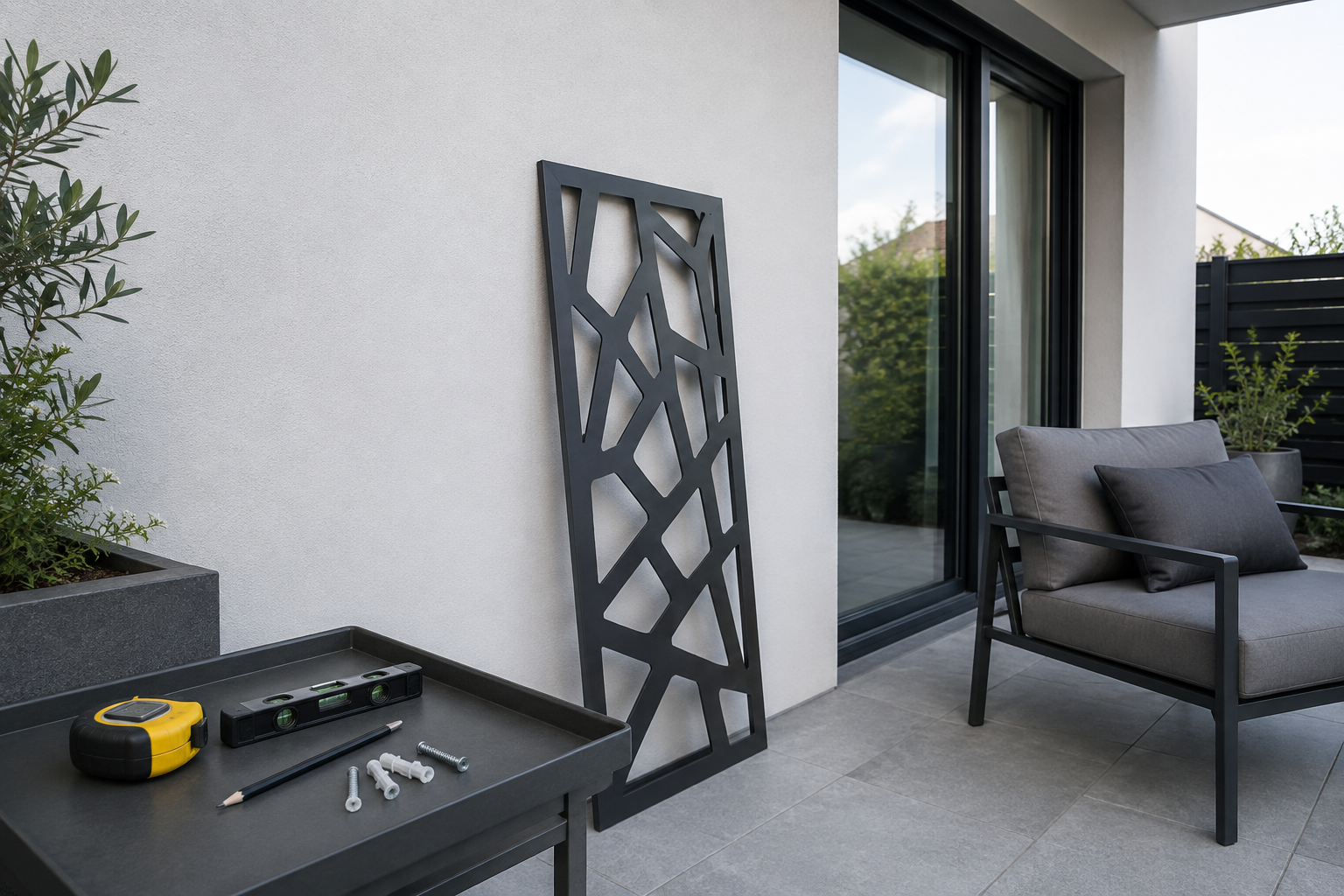
Check the actual substrate and the mounting guidance for that product. Stucco, masonry, siding, and other surfaces require different fixing decisions.
Verify the selected variant’s complete width, height, depth, and configuration on the current listing.
Confirm whether the chosen spot is sheltered or more exposed, then verify the listing’s outdoor-use and material information.
Keep door swing, sliding-door tracks, gate movement, seating access, and the main walking line clear.
Verify what mounting components are included and what the current listing says about installation.
Recheck the current option, availability, seller information, price, finish, and included pieces immediately before purchase.
Open only the family you need. The families stay vertical; products inside each family swipe horizontally on desktop, tablet, and mobile.
A wider decorative composition for a broad blank wall.
Explore ↗A large circular focal direction for a main seating wall.
View ↗A radial silhouette for a cleaner, graphic wall composition.
See details ↗A long horizontal motif for a wider, lower wall zone.
Explore ↗A smaller organic support piece for a secondary wall area.
View ↗Creates a larger rectangular green focal zone without using the floor.
Explore ↗An alternate foliage surface for a contained green-wall direction.
View ↗A smaller decorative planter direction for a supporting green moment.
See details ↗A wall-first planting vessel for herbs or restrained trailing greenery.
Explore ↗A compact functional wall object for a lighter utility accent.
View ↗A larger combined wall readout for a more functional focal direction.
See details ↗A smaller secondary utility accent for a wall that does not need another focal piece.
Explore ↗A large-format architectural wall treatment for the quiet route.
Explore ↗A lighter decorative layer with openwork visual space.
View ↗A long architectural accent for a wide horizontal wall zone.
See details ↗A lighter linear piece for supporting a larger anchor.
View ↗A wall-mounted climbing structure for the green route.
See details ↗A smaller grouped decorative note for secondary wall space.
Explore ↗