
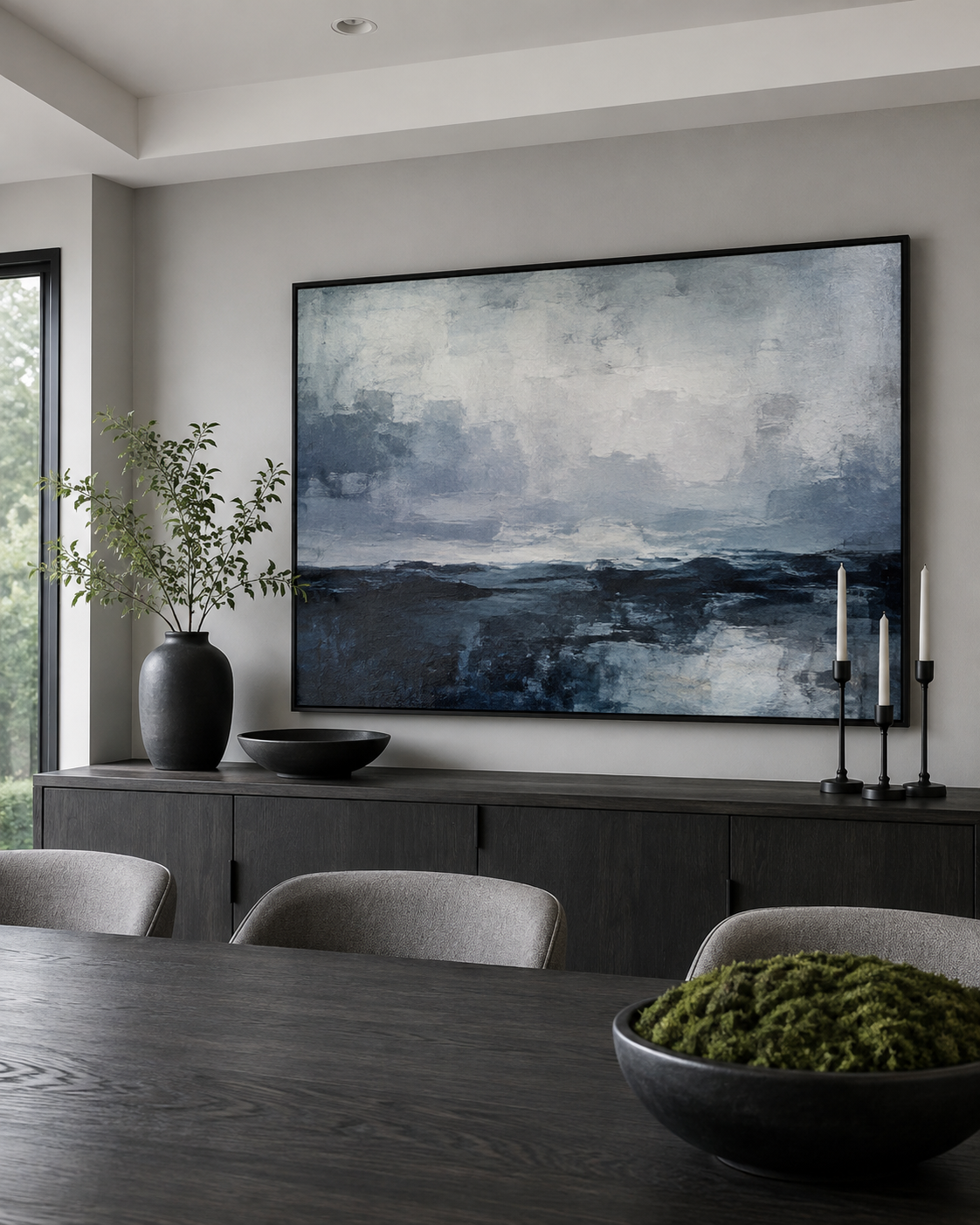
Statement Art
Use one large composition when the room needs a clear anchor more than additional detail.
See art picksDining Room Wall Decor
Start with scale and purpose—not more objects. Find the wall move that fits your room, then shop only the pieces that support it.
30-second room read
Pick the closest problem. The page will point you toward the wall strategy most likely to solve it.
Your recommended route will appear here.
Ravnora wall scale planner
Use this as a fast starting range. Real rooms still need clearance for trim, sconces, switches and nearby furniture.
Suggested decorative span
43–58 in.
For a 72-inch sideboard, start around 60–80% of the furniture width. Treat that as the full visual composition—not necessarily one object.
See a matching routeSee the solution
Choose the visual logic first. Products become much easier to judge once you know what the wall is meant to do.
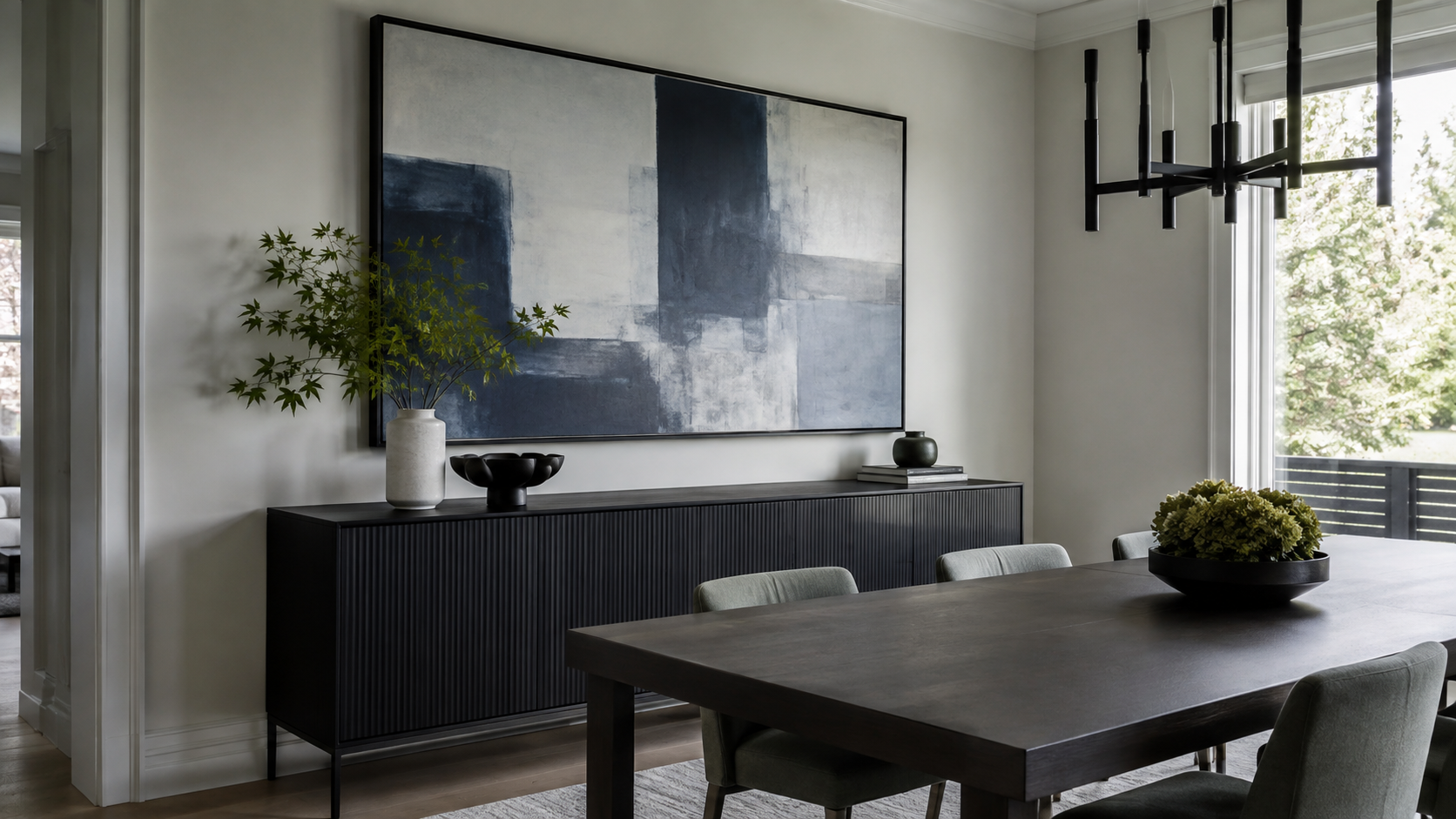
Use one large composition when the room needs a clear anchor more than additional detail.
See art picks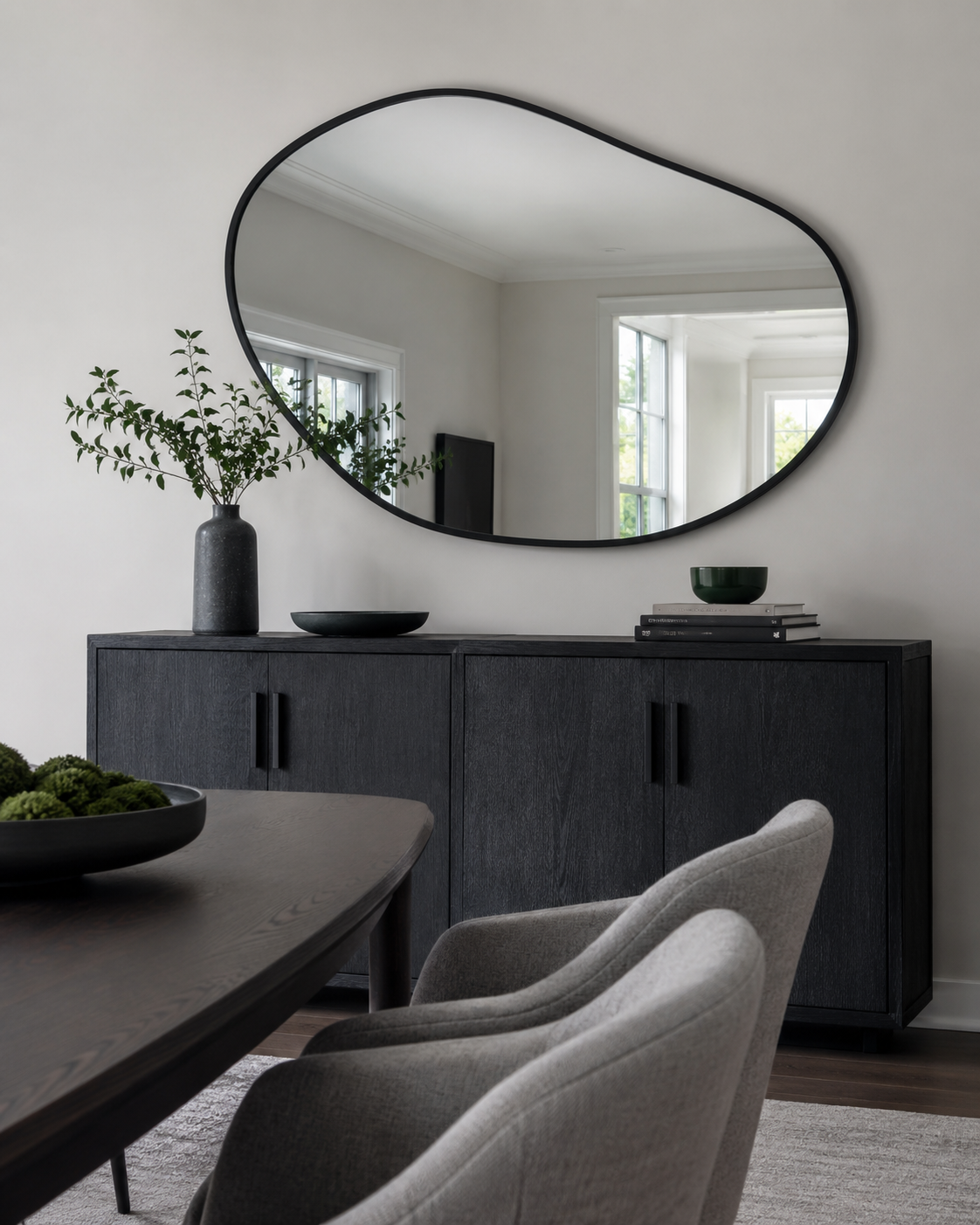
Best when you want the wall to feel lighter or more architectural without introducing another artwork palette.
See mirror picks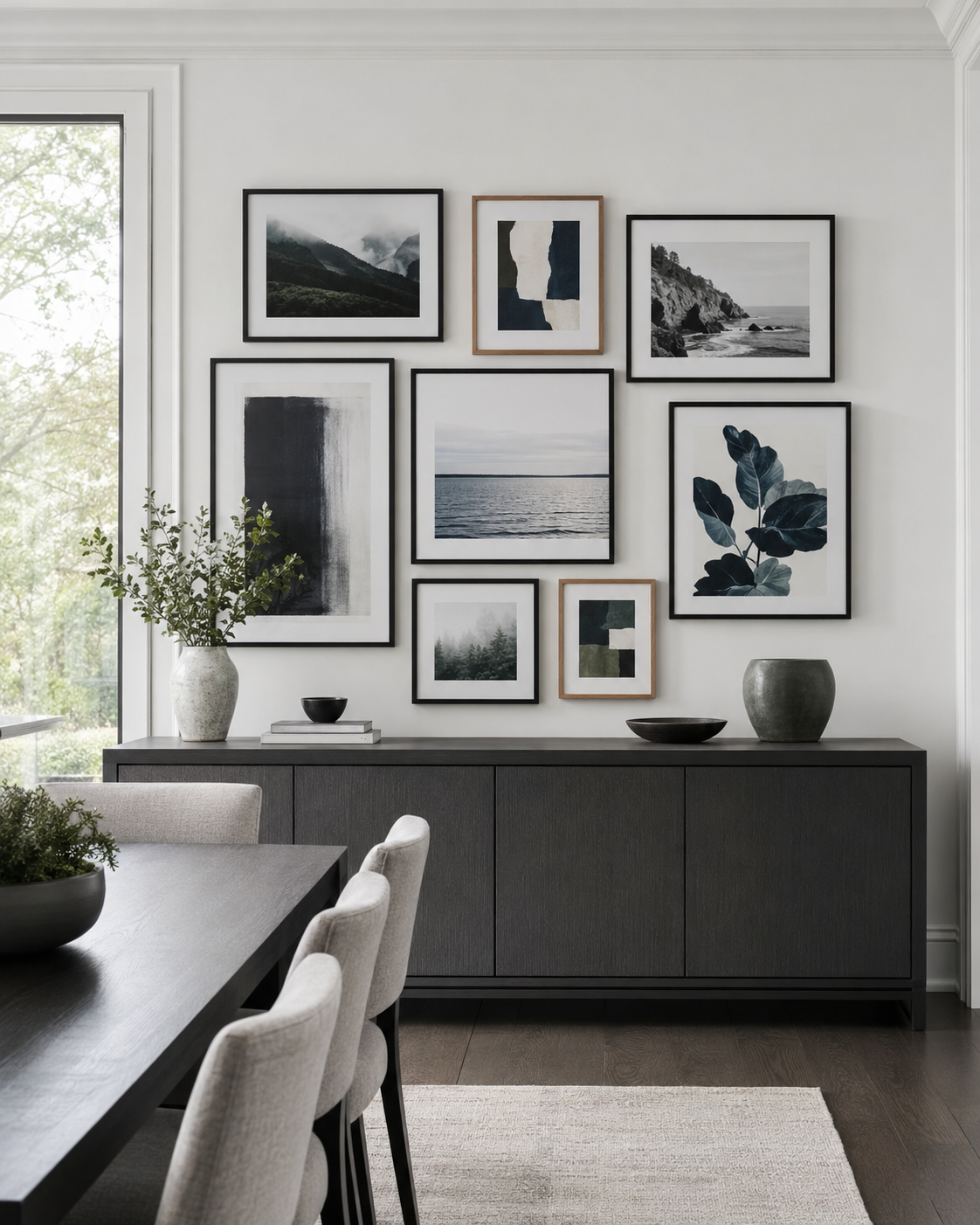
Use repetition, spacing and a controlled frame family so collected pieces read as one decision.
See gallery picks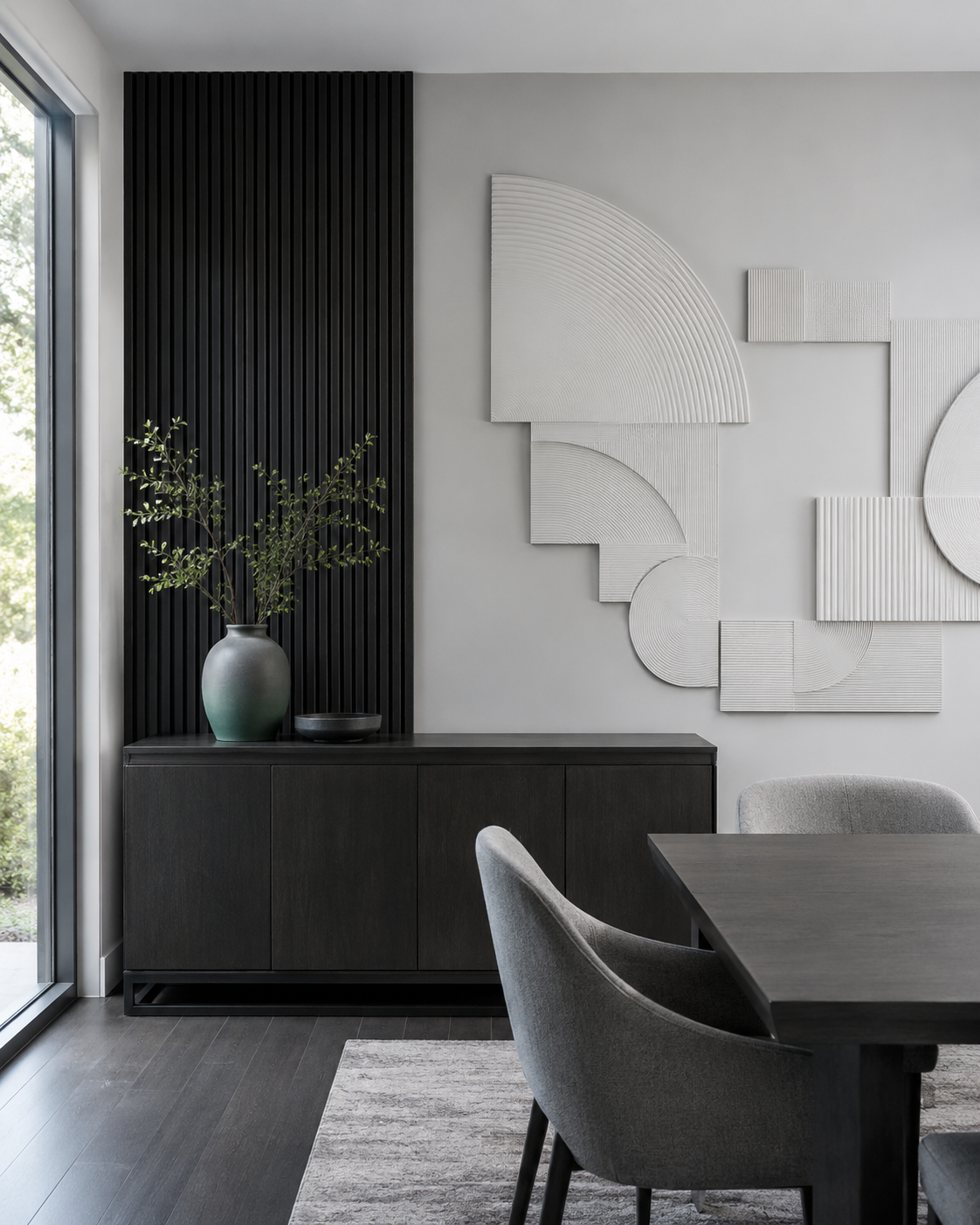
Let relief, fluting or sculptural form create the focal point when flat framed art is not enough.
See dimensional picksChoose your route
The best-looking option can still be wrong if it requires more installation, maintenance or visual attention than you want.
The Ravnora Edit
No product is here simply to increase inventory. Pick the wall route first, then compare only the products that execute it.
Build the complete wall
Use these when you want a finished direction without stacking unrelated decorative objects.
Mistake → better move
Before changing style, check whether the wall decor simply looks too small, too scattered or too crowded around the furniture below it.
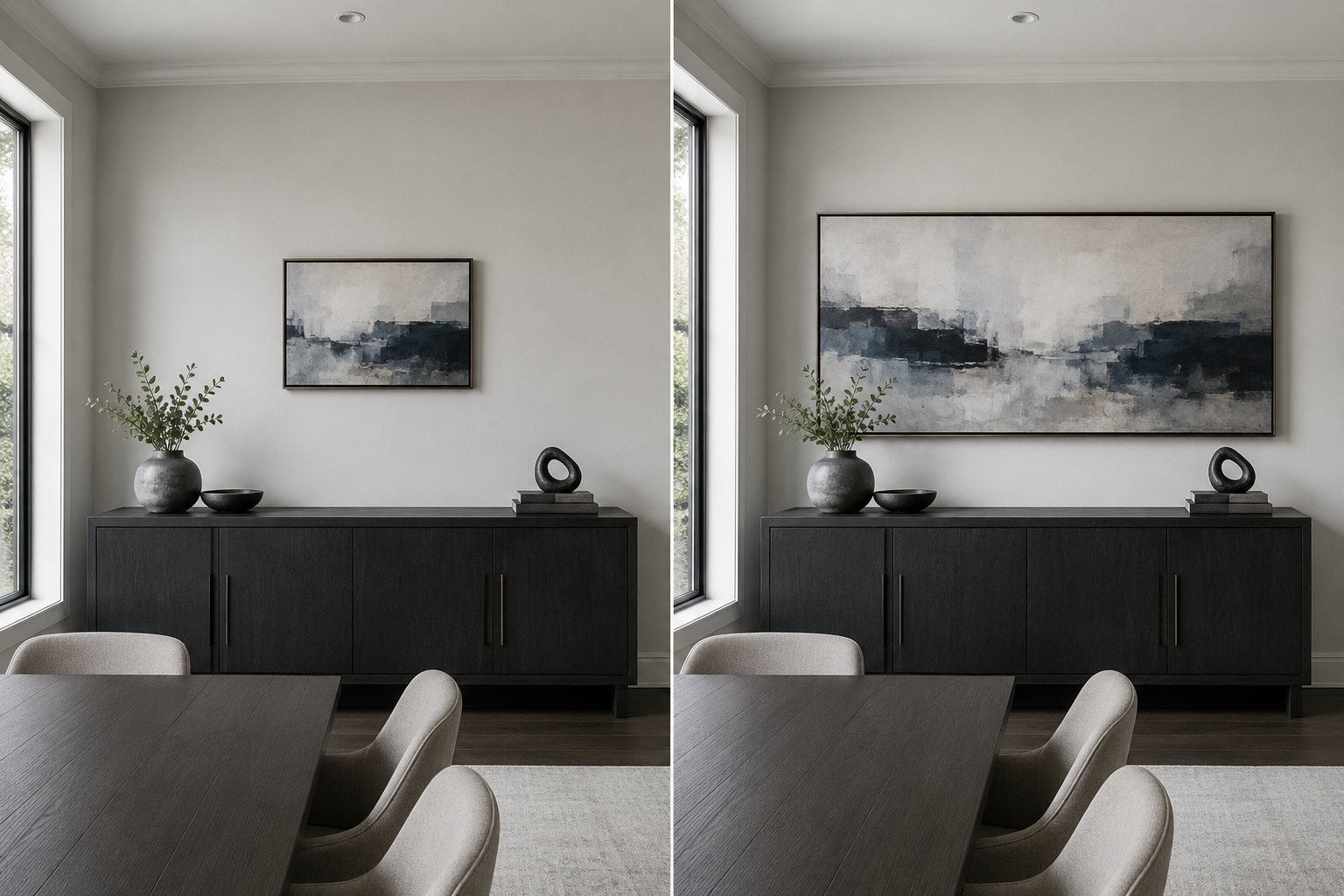
Judge the art against the sideboard or wall span, not against the frame by itself.
Art above a sideboard should read as part of the same visual unit rather than floating near the ceiling.
Fewer, larger elements generally create a calmer dining-room focal wall.
A mirror doubles what it sees. Make sure the reflected view deserves more visual attention.
The Ravnora Check
Five minutes of verification can prevent the most common wall-decor regrets.
Use the installed furniture width and actual clear wall area—not a rough estimate.
Match mounting hardware to the wall type and the product's actual weight.
For mirrors, stand where guests sit and inspect what the mirror will repeat.
Account for switches, sconces, trim, cabinet doors and anything placed on the sideboard.
For fluting or 3D panels, decide where the treatment begins and ends before adhesive goes on the wall.
Picture lights should illuminate the art without creating distracting hot spots or reflections.
Mock the full arrangement on the floor or with paper templates before drilling multiple holes.
Review the Amazon listing's current dimensions, materials, mounting details and return terms before checkout.
Finish the dining room
Once the focal wall is settled, the next best move is usually lighting, storage, furniture balance or the table itself.
Affiliate disclosure: As an Amazon Associate, Ravnora may earn from qualifying purchases. Amazon links on this page open in a new tab. Product details, dimensions, availability and return terms can change; verify the current Amazon listing before purchasing.