
SeatGive each person one coherent visual unit before thinking about shared pieces.
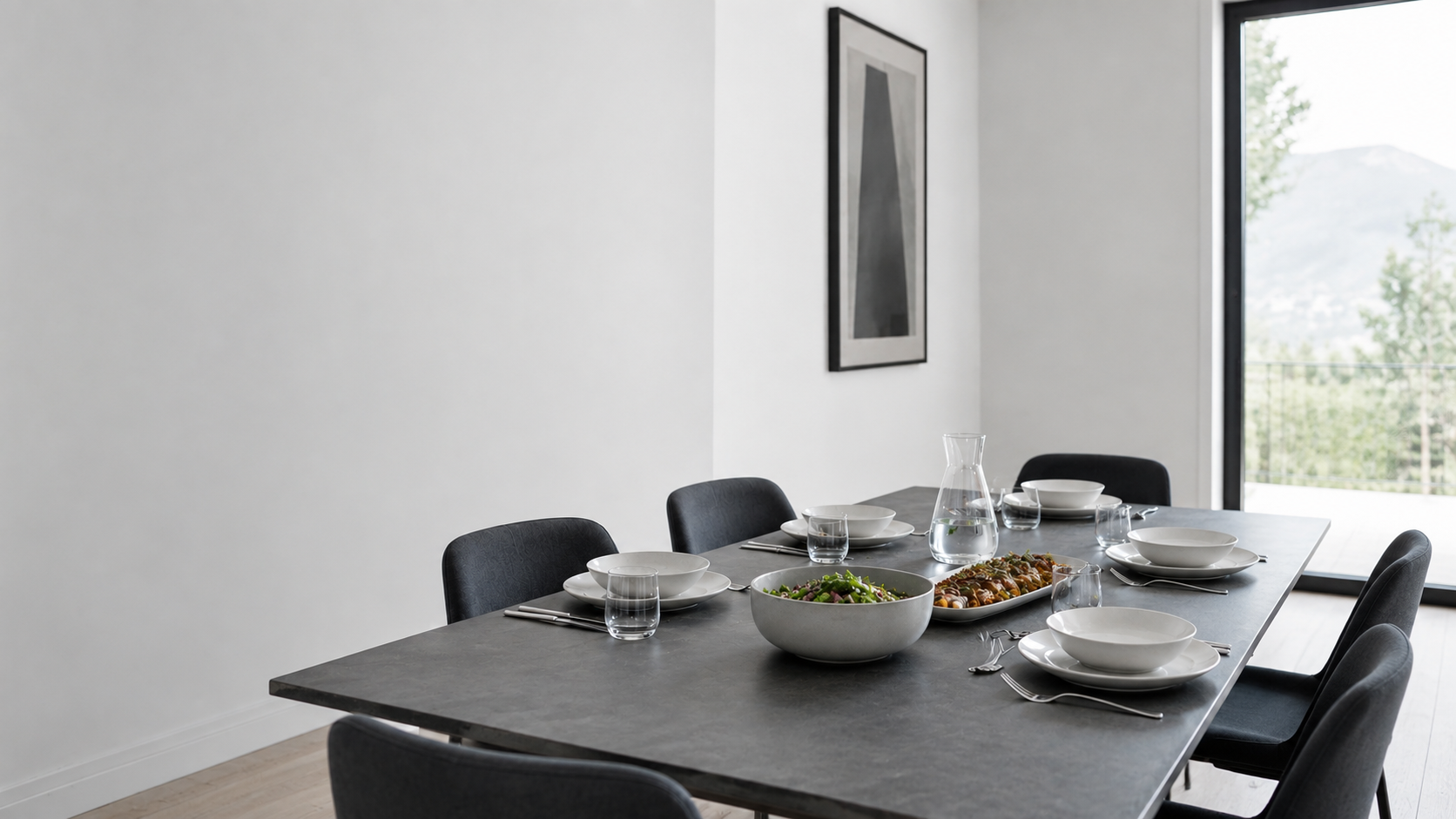
Dinnerware & Serveware
Build the table from the seat inward.
Everything can look good separately and still feel busy together. Start with one complete place setting, protect the shared center, then add only what the meal actually needs.
- The center gets crowded
- My sets do not feel related
- Hosting needs more room
- I keep adding finishes
The table anatomy
Seat. Pass. Finish.
A calm table has three territories. Solve them in that order and the mix of plates, bowls, glass and serving pieces becomes much easier to control.
PassReserve the center for food and water that people genuinely need to reach.
FinishUse texture, height or a small accent only after the functional footprint works.
Seat zone
Finish last
Affiliate disclosure: As an Amazon Associate, Ravnora Decor may earn from qualifying purchases. Product links may open on Amazon. Room images on this page are conceptual styling references; linked products may differ in appearance.
Seat-to-center builder
How many are sitting down?
More seats do not require more decoration. They require stricter control of the shared footprint.
2 seats · lightest center
Keep the center almost empty.
One compact shared vessel or carafe is usually enough to make a two-seat table feel complete without turning it into a display.
Use one bowl + one water route.
Four seats can support a deeper shared bowl, but the center still needs visible gaps so serving pieces can be moved and passed.
Increase serving capacity, not clutter.
At six seats, prioritize one larger dinnerware service and low, directional serveware. Extra height should remain optional.
Start smaller
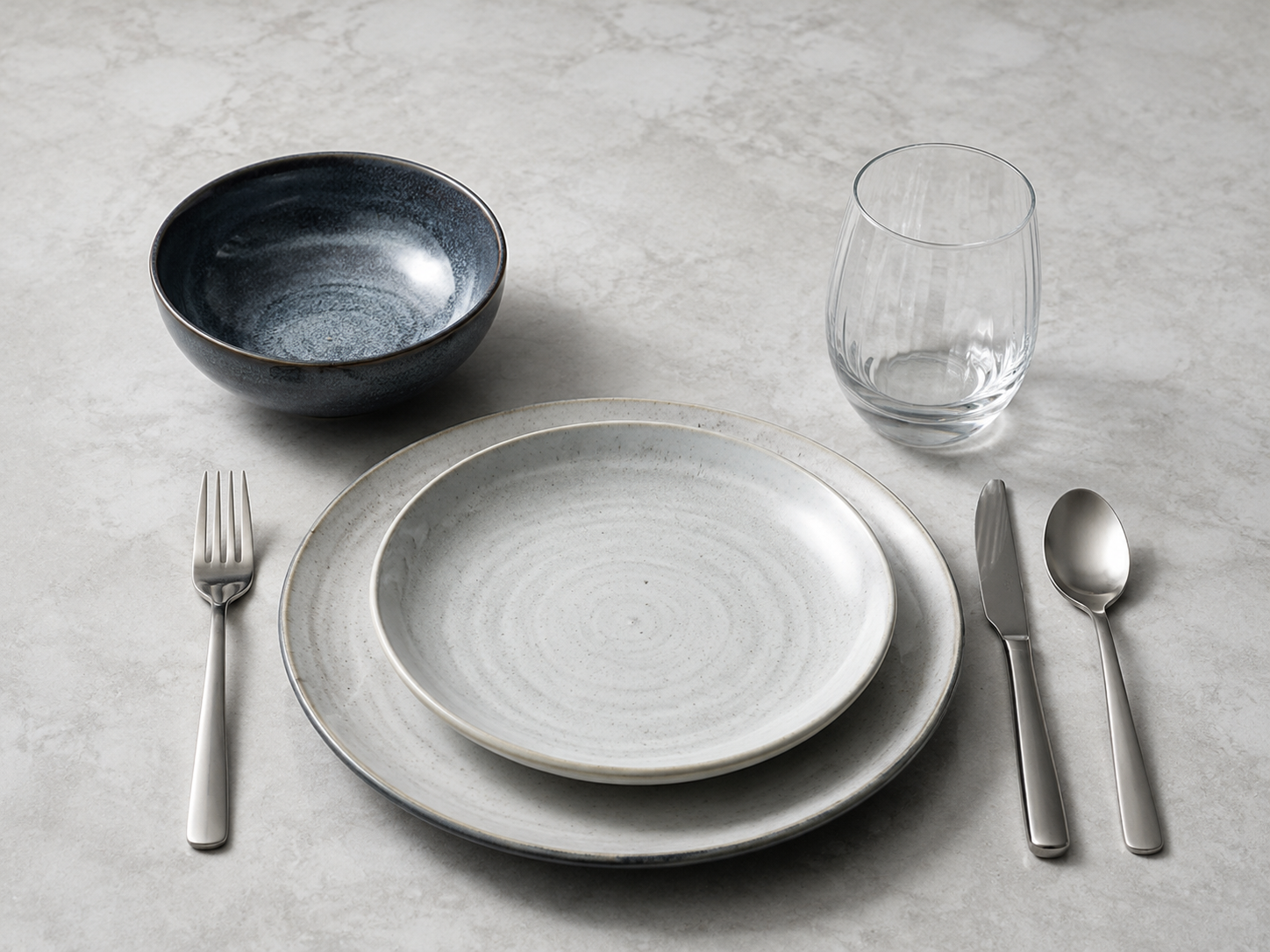
Build one complete seat.
If one place setting works, the rest of the table has a visual language to repeat. That is more useful than buying every matching piece at once.
- Dinner plate establishes the silhouette.
- Shallow plate or bowl adds the second useful layer.
- Glass keeps the transparent layer visually light.
- Flatware finishes the seat without adding another material family.
White porcelain dinnerware set
A clean foundation when you want the seat to stay visually quiet.
Explore ↗Wide matte-white pasta bowls
A broader bowl profile for meals that do not need a deep vessel.
Check options ↗18 oz ribbed highball glasses
A clear texture layer that adds interest without another color.
Explore ↗20-piece stainless flatware set
A simple metallic finish for the everyday seat.
See details ↗Shared footprint
Protect the pass line.
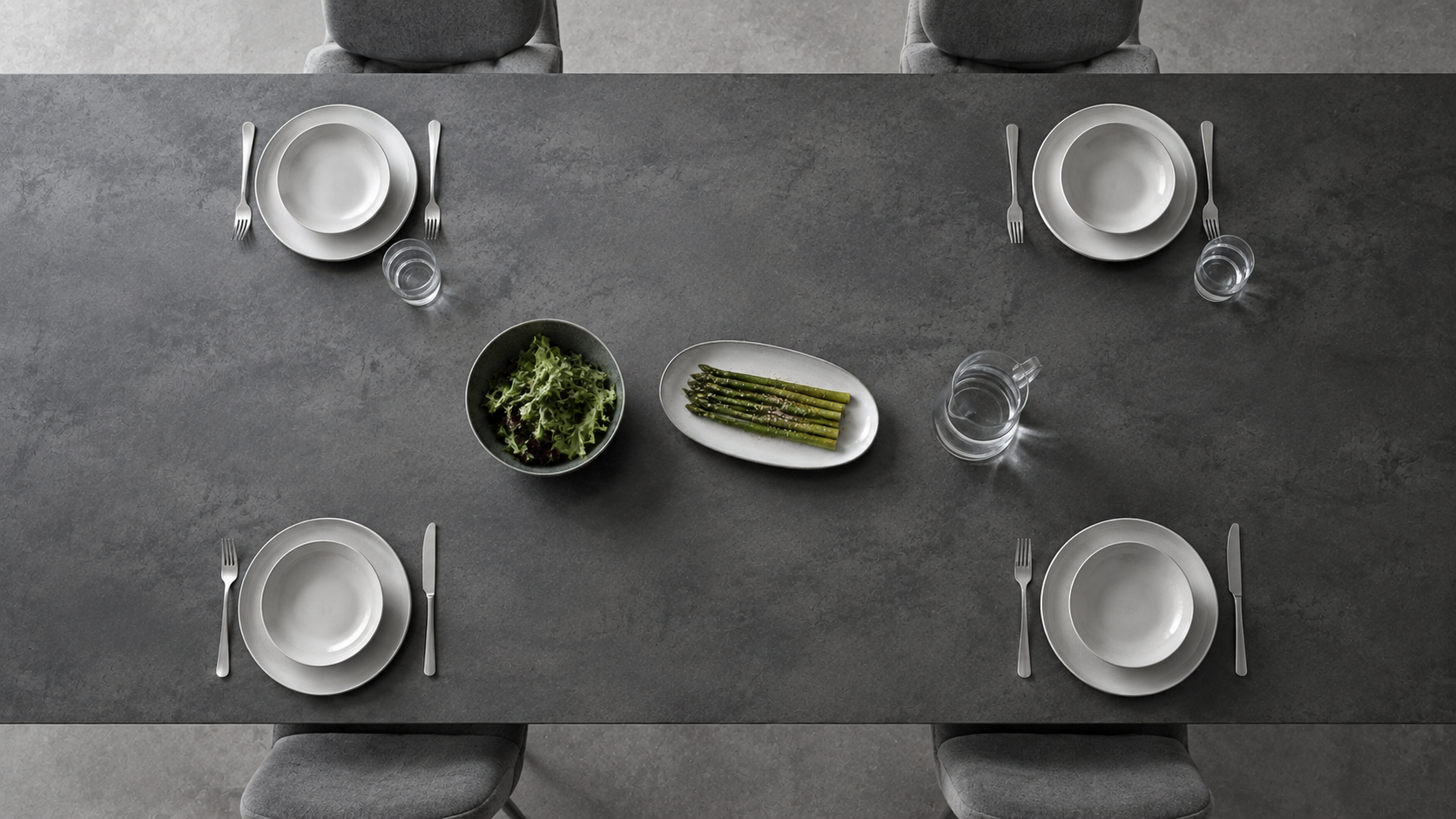
The center is not a storage shelf. Shared bowls, platters and water should form a route that people can reach without forcing every open inch to carry something.
 Seat
Pass
Seat
01Personal settings stay inside their own footprint.
02Shared food lives in a compact center route with real gaps.
03Water stays reachable without becoming a tall centerpiece.
Everyday route
Repeatable beats impressive.
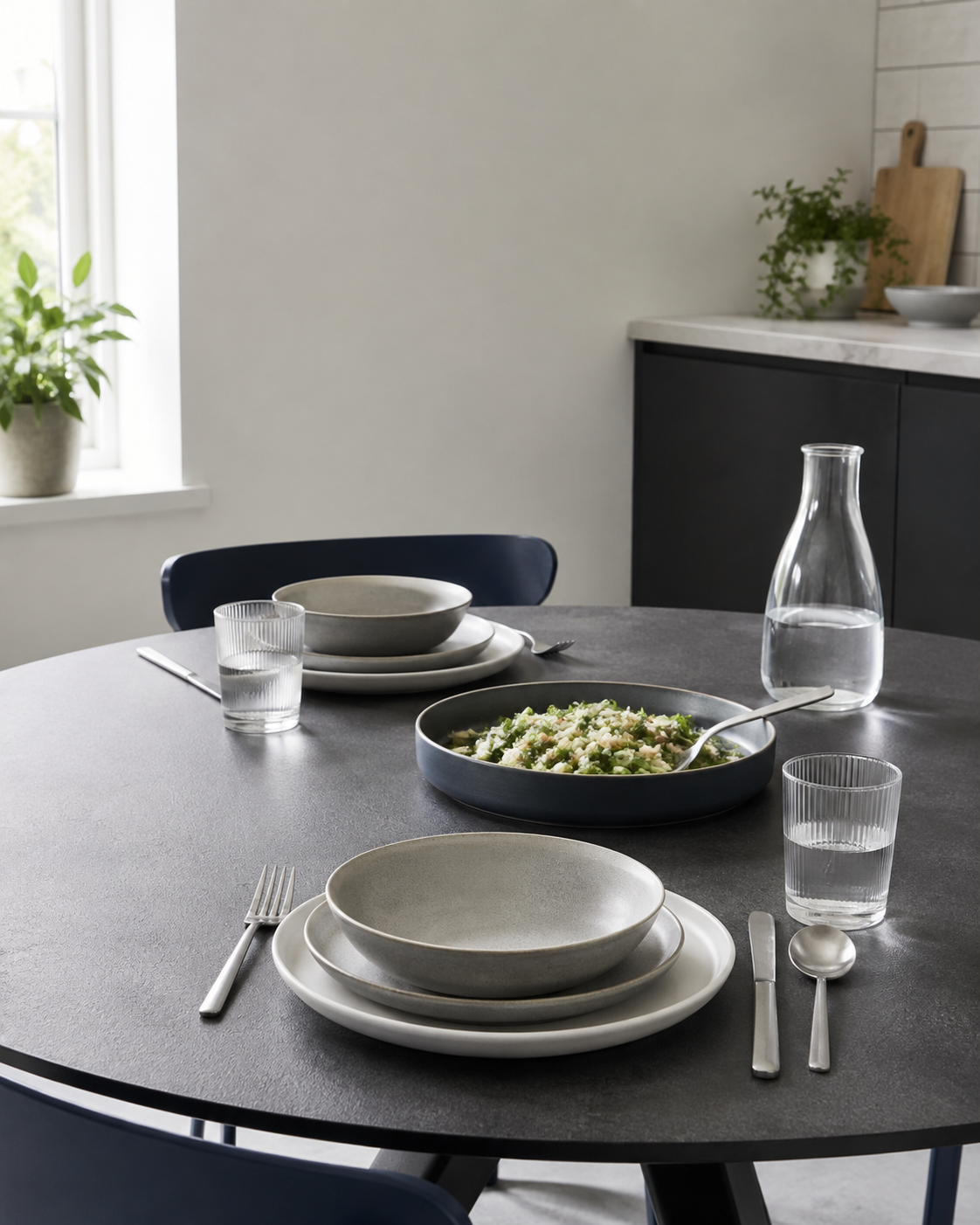
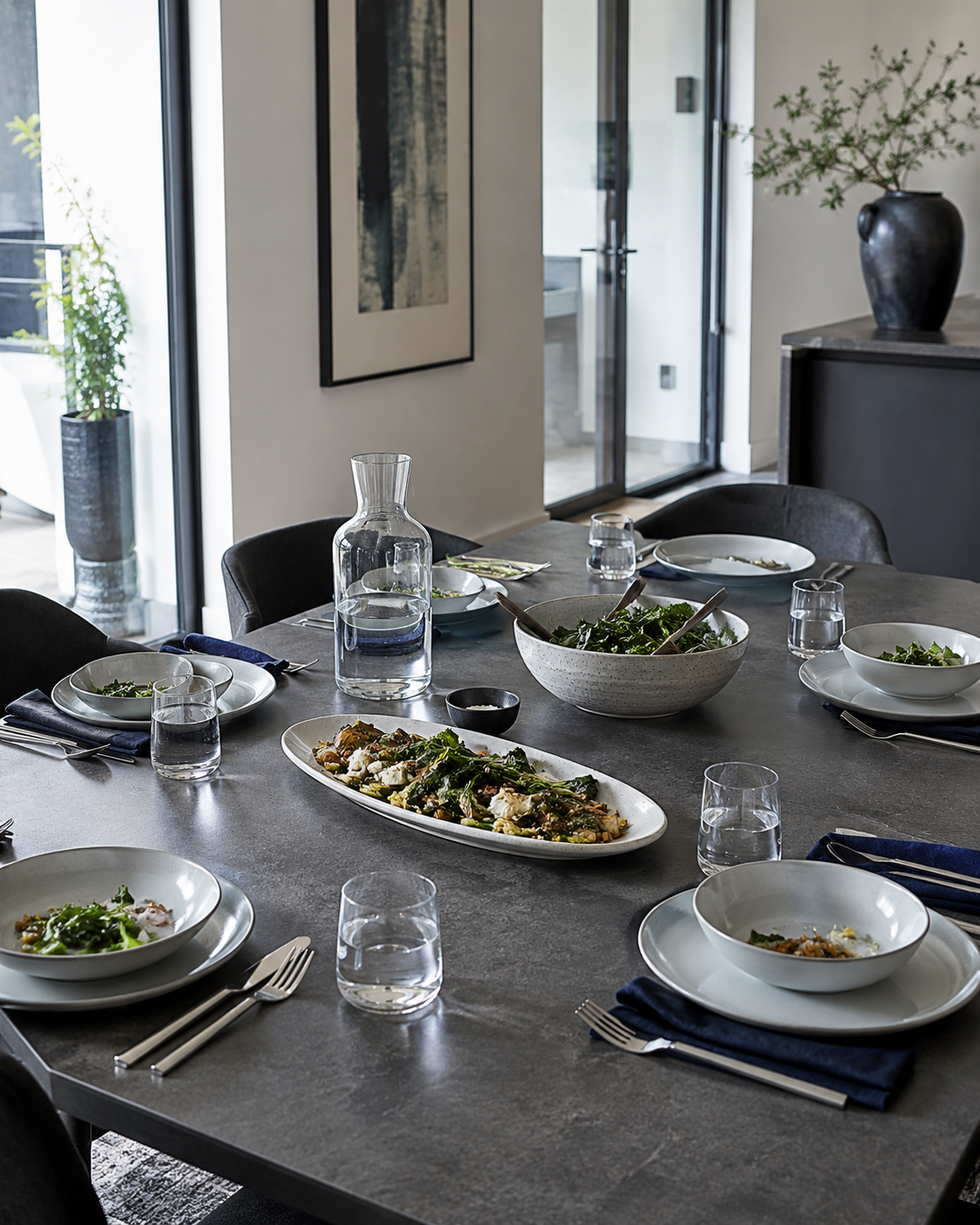
For ordinary meals, keep the table low, clear and easy to reset. One coherent seat plus one shared piece is enough to make daily use feel intentional.
FoundationUse the same core silhouette at every seat.
SharedChoose one main serving vessel instead of several small decorative ones.
HeightKeep everyday pieces low so conversation and passing stay easy.
Guest route
Expand the table. Not the visual noise.
Hosting should extend the same foundation instead of replacing it. Add capacity where the meal needs it: a larger service, one platter, one deeper bowl and a water route.
AddServing capacity and place settings.
KeepThe core plate shape, glass language and flatware direction.
AvoidExtra decorative height competing with shared food.
Base grows18-piece white porcelain service for 6Explore ↗
Add low lengthSpeckled stoneware serving platter setCheck options ↗
Add depthDeep white serving bowls, pairExplore ↗
Add waterGlass pitcher + tumbler setSee details ↗
Dessert & coffee
Clear, then elevate.
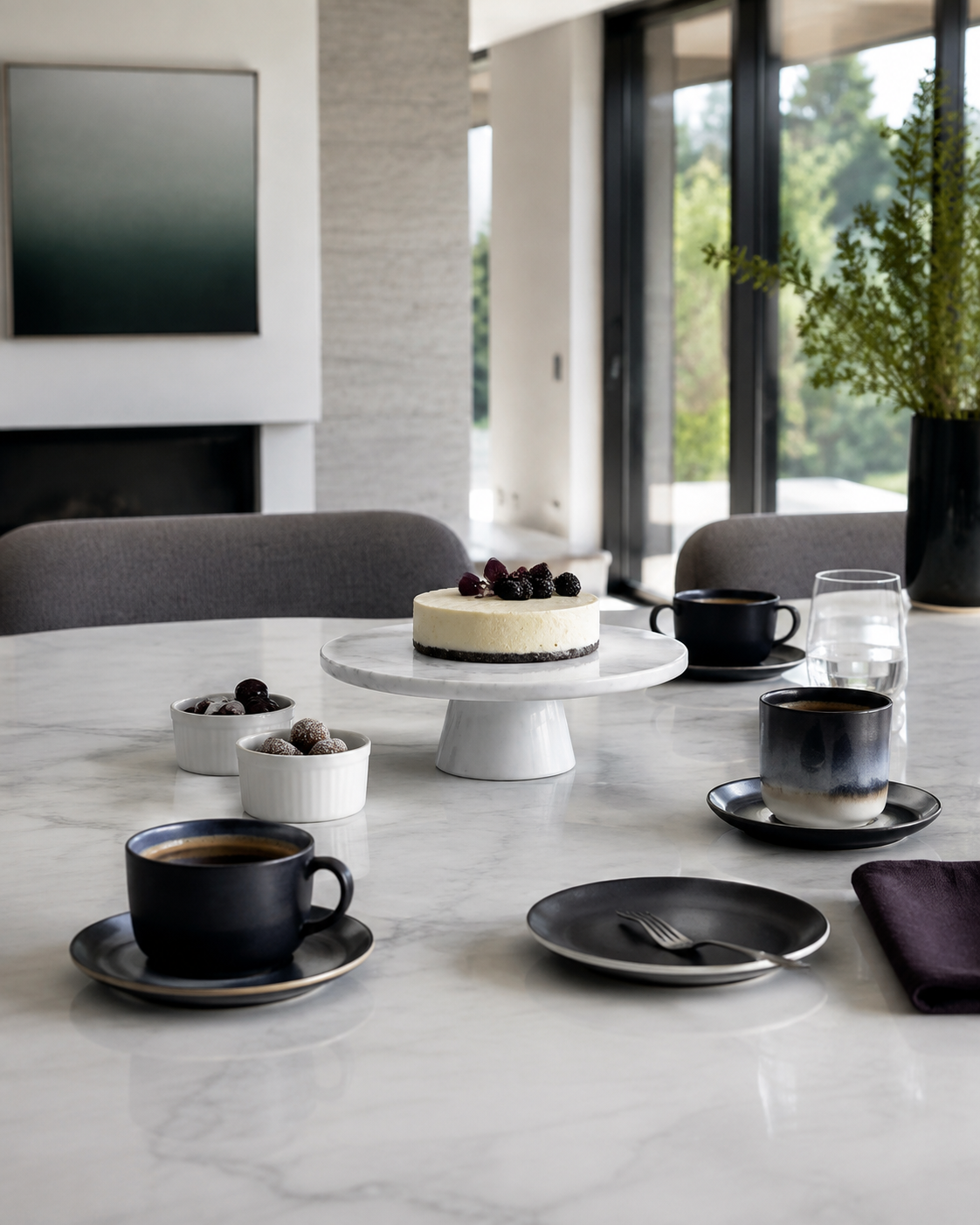
Dessert feels more intentional when the main-course pieces leave first. Reset the surface, then introduce one controlled height layer for cake, tiers or coffee service.
01 · ClearRemove large dinner serveware.
02 · ResetBring back small plates, ramekins and cups.
03 · ElevateAdd one pedestal or tiered presentation piece.
Material control
Let one texture lead.
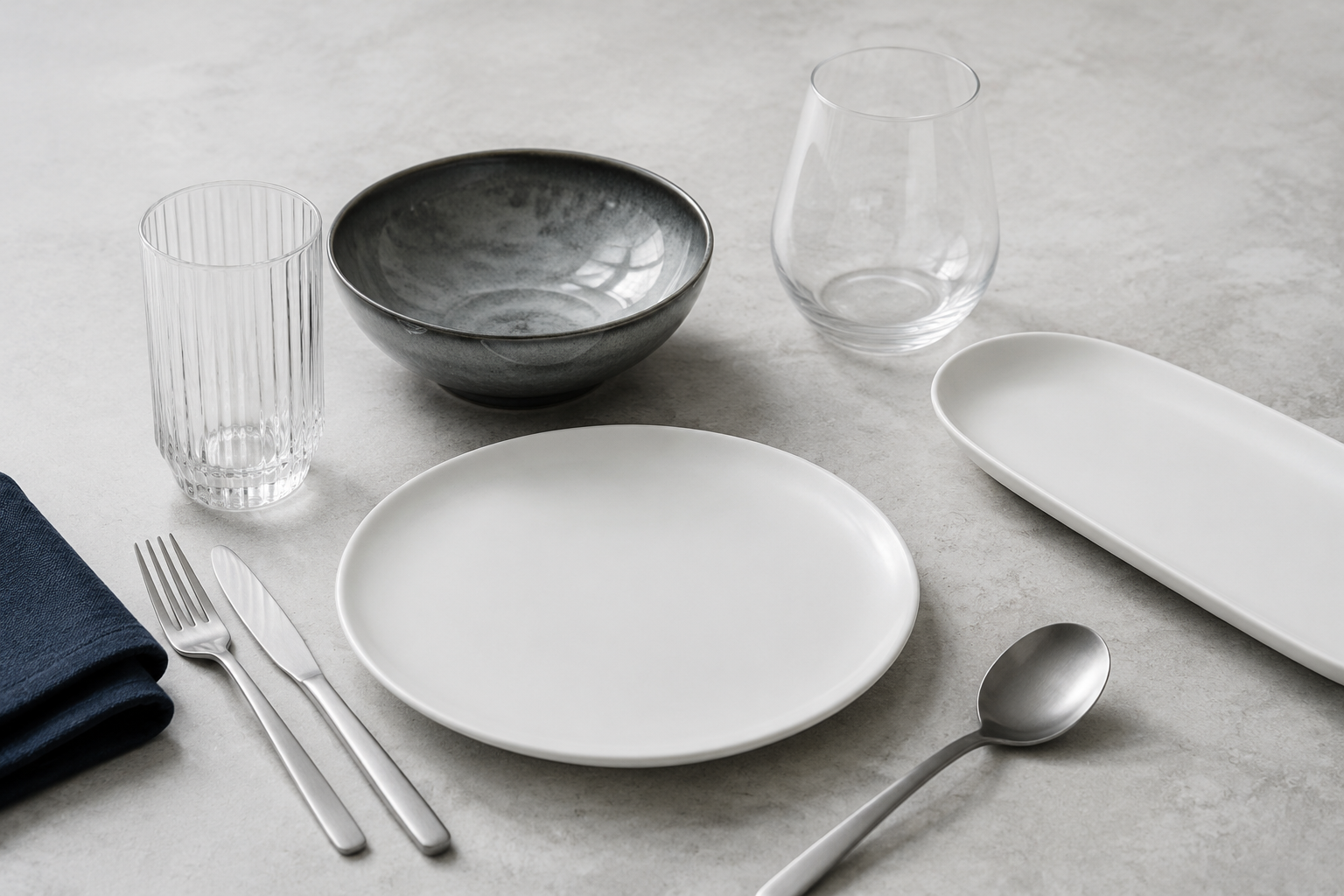
A table does not need every piece to match. Choose one surface with character, echo it once, and let the rest stay quiet.
Smooth · quiet baseReactive · leading textureRibbed · light echoBrushed · metal finish
The 8-piece curated edit
Dark reactive-glaze dinnerware setReactive ↗
White porcelain dinnerware setSmooth ↗
Ribbed highball glassesRibbed ↗
Clear highball glass setClear ↗
Extra-large glass serving bowl + serversGlass ↗
Stainless serving utensil setSteel ↗
Sculptural stainless flatware setShape ↗
Large oval ceramic serving bowlsCeramic ↗
Precision retrieval
Find every table piece.
Open only the family you need. The complete 30-product inventory stays compact so the page does not turn into a storefront.
Dinnerware10 pieces · foundations + individual vessels
D0112-piece neutral stoneware dinnerware setExplore ↗
D0216-piece white porcelain dinnerware setExplore ↗
D0316-piece dark reactive-glaze dinnerware setExplore ↗
D0418-piece white porcelain dinnerware set, service for 6Explore ↗
D05Wide matte-white pasta bowlsExplore ↗
D06Ivory ceramic cereal & soup bowlsExplore ↗
D07Handled ceramic soup bowlsExplore ↗
D08Small white ceramic dessert & side bowlsExplore ↗
D098.5-inch white salad & appetizer plates, set of 6Explore ↗
D1016 oz gray latte mugs, set of 4Explore ↗
Serveware10 pieces · bowls + platters + carry
S01Large white oval serving bowls, pairExplore ↗
S02Deep white ceramic serving bowls, pairExplore ↗
S03Speckled stoneware serving platter setExplore ↗
S04White rectangular appetizer platesExplore ↗
S05Two-tier appetizer & chip-and-dip serverExplore ↗
S066 oz white ceramic ramekins, set of 6Explore ↗
S07Compact stone dipping bowlsExplore ↗
S08Extra-large glass serving bowl with wood base & serversExplore ↗
S09Five-piece stainless serving utensil setExplore ↗
S10Large handled porcelain serving trays, set of 2Explore ↗
Drink + table6 pieces · glassware + carafe + flatware
Before you click
The 7-point table check.
Use the current listing—not memory—to confirm the details that determine whether the piece actually belongs on your table and in your cabinets.
Product details, variants and availability can change. Re-check the current Amazon listing before purchasing.
The memory rule
A table that can change without starting over.
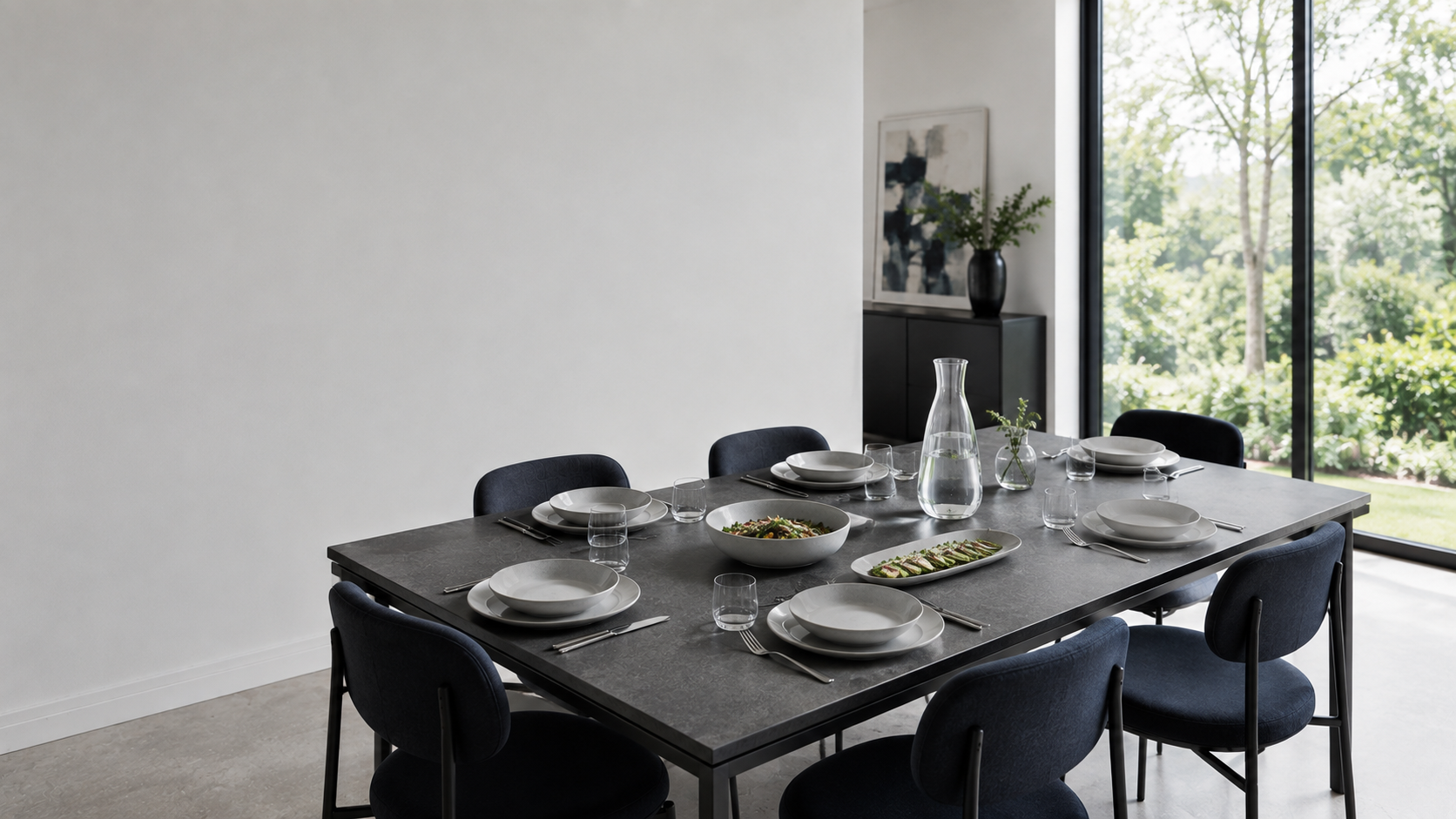
Build from the seat inward. Protect the pass line. Let one texture lead. Then add height only when the meal actually calls for it.