
Black marble counter anchor
For a small group that needs one visible boundary instead of several separate footprints.
ExploreIf the counter is full but still feels unfinished, protect one useful empty span and build one deliberate styling anchor around it.
Different problems need different fixes. Choose the description that looks most like your counter and the balance map will open on the right job.
Tap a job. The same surface reads differently when you protect width, contain a footprint, add backdrop depth, or introduce one taller element.
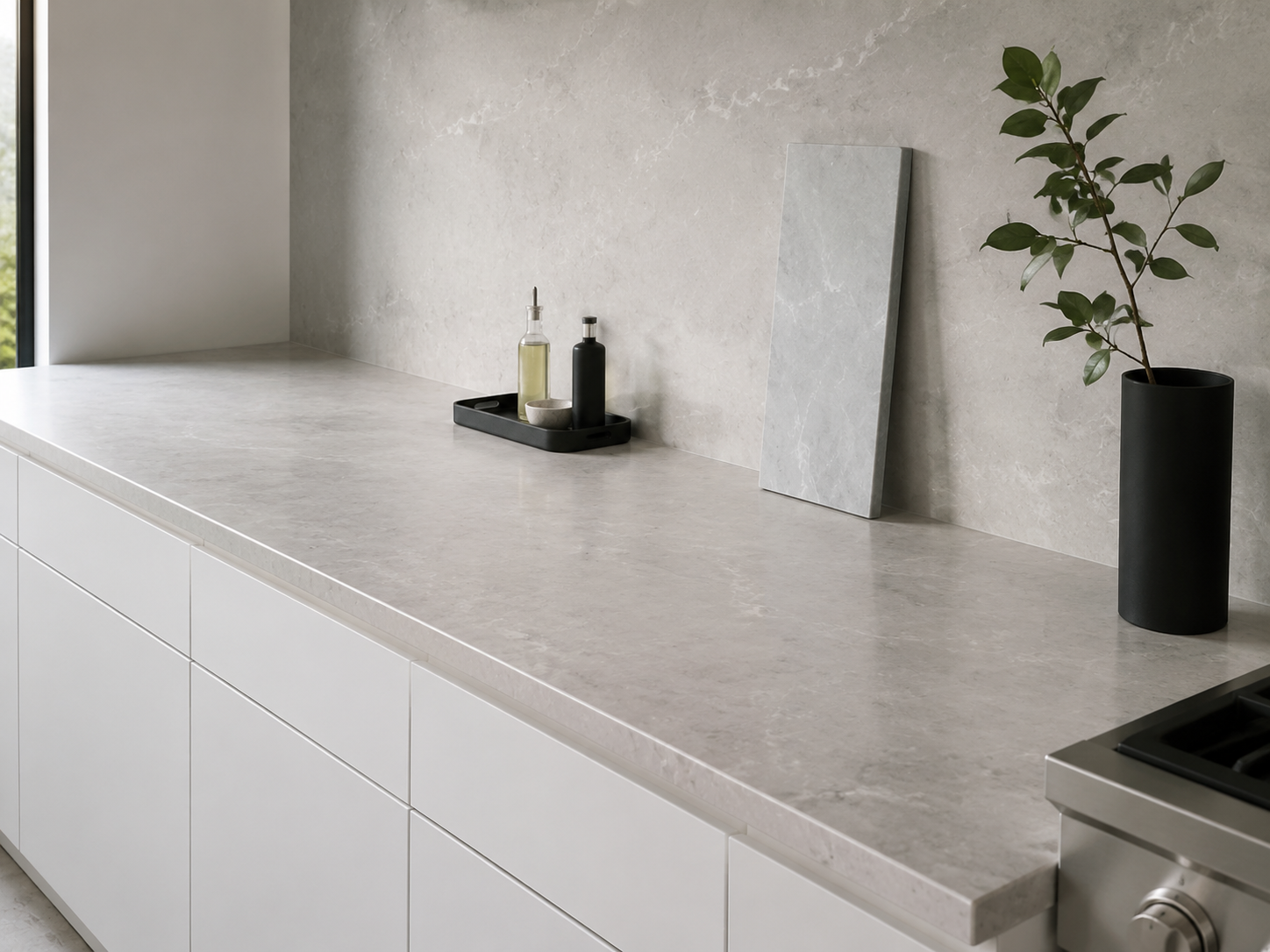
Choose the part of the counter that must stay genuinely usable. Every styling decision gets whatever space remains.
Do not buy a collection. Correct the dominant problem first, then reassess the surface.
For a small group that needs one visible boundary instead of several separate footprints.
ExploreFor a back counter that needs useful vertical structure without another wide object.
See detailsFor visible staples that should behave like one controlled group rather than random containers.
ViewFor mismatched pour bottles that are visually competing near the prep route.
Check fit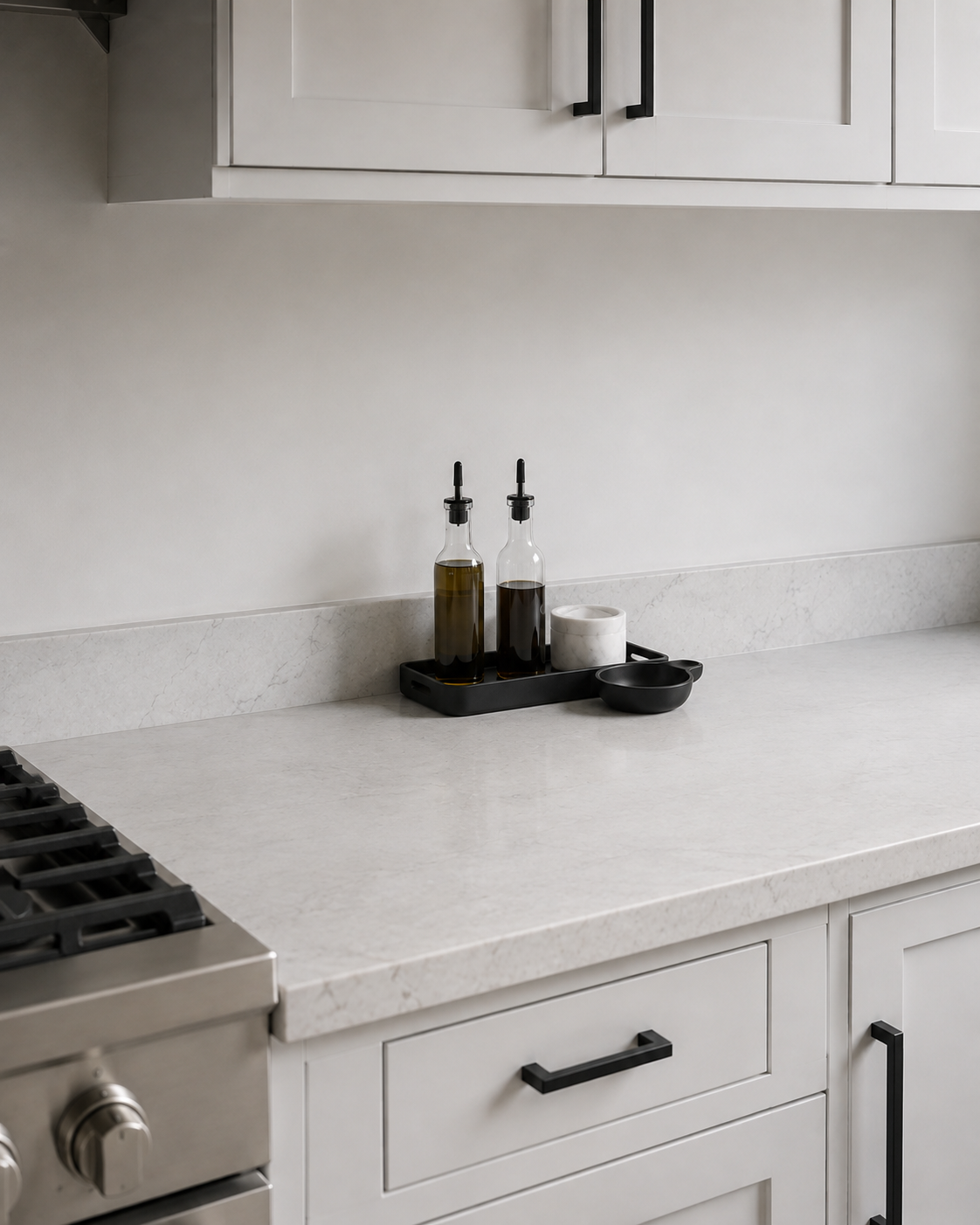
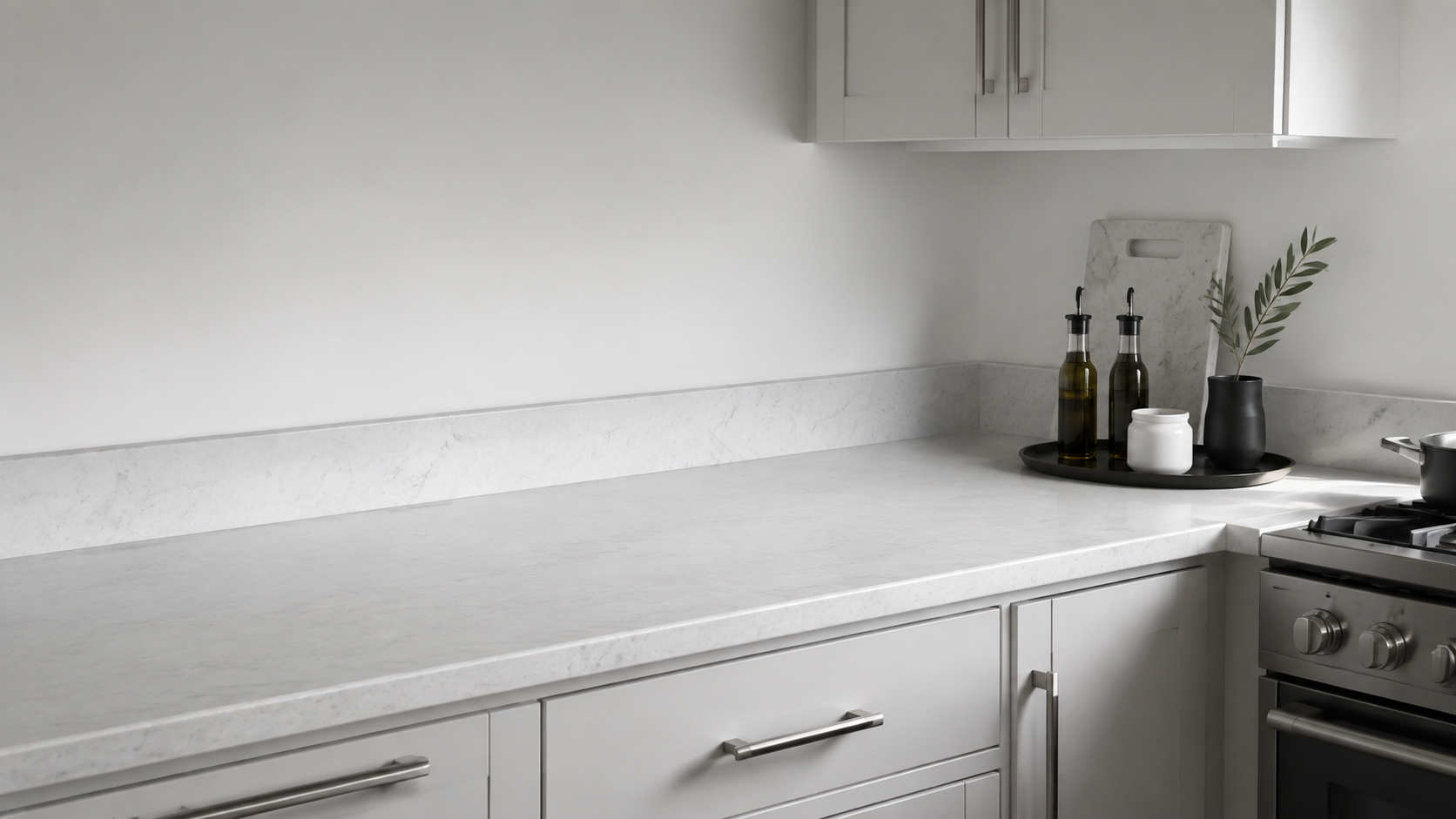
The cooking cluster works when it behaves like one station and still leaves a visible buffer around the active cooktop area.
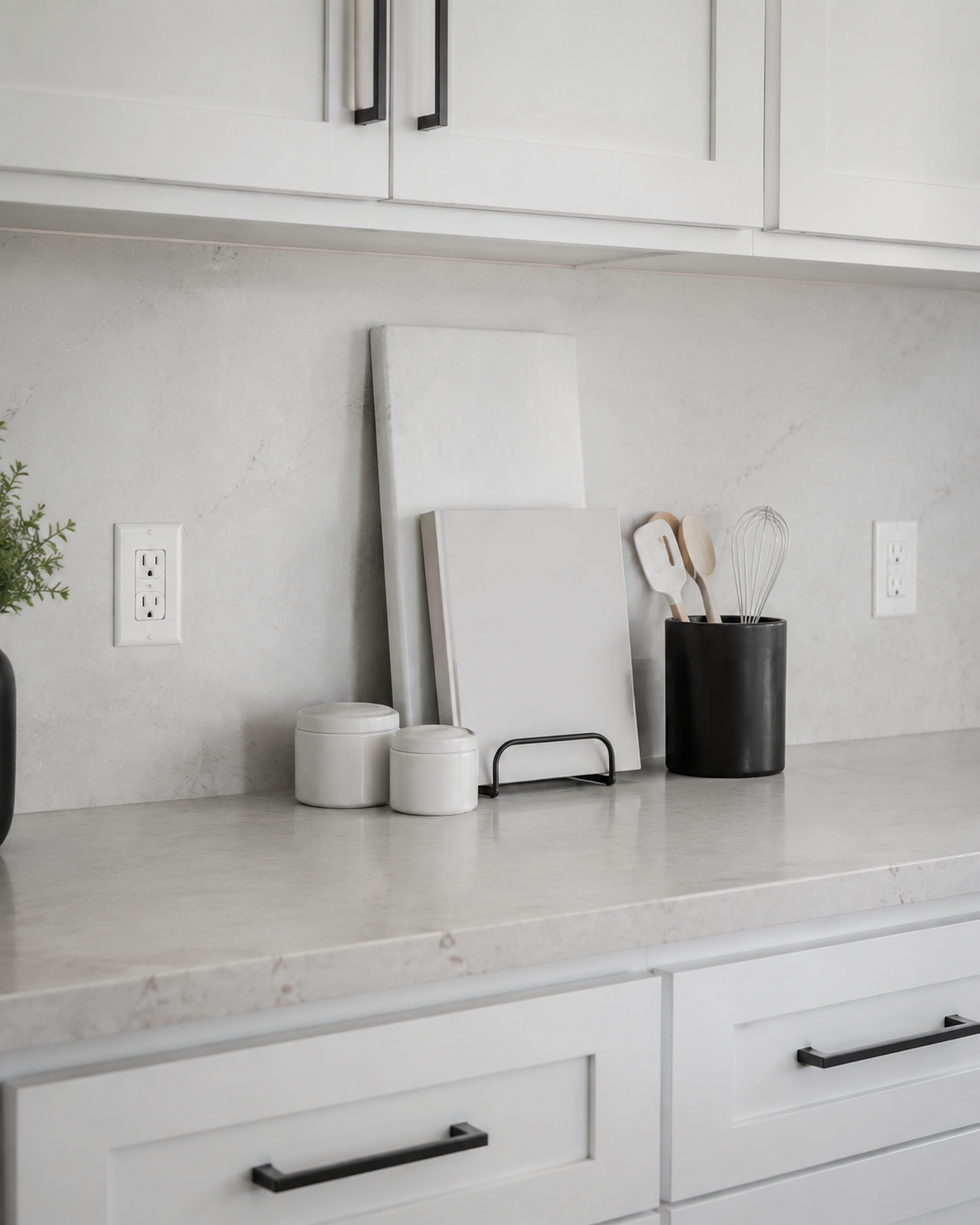
A counter feels styled when height is controlled near the back edge—not when more objects are pushed toward the front.
A single board gives the eye a backdrop without becoming a stack of boards.
A cookbook or holder creates the middle height and keeps the arrangement functional.
Canisters or tools stay grouped so the foreground counter can still work.
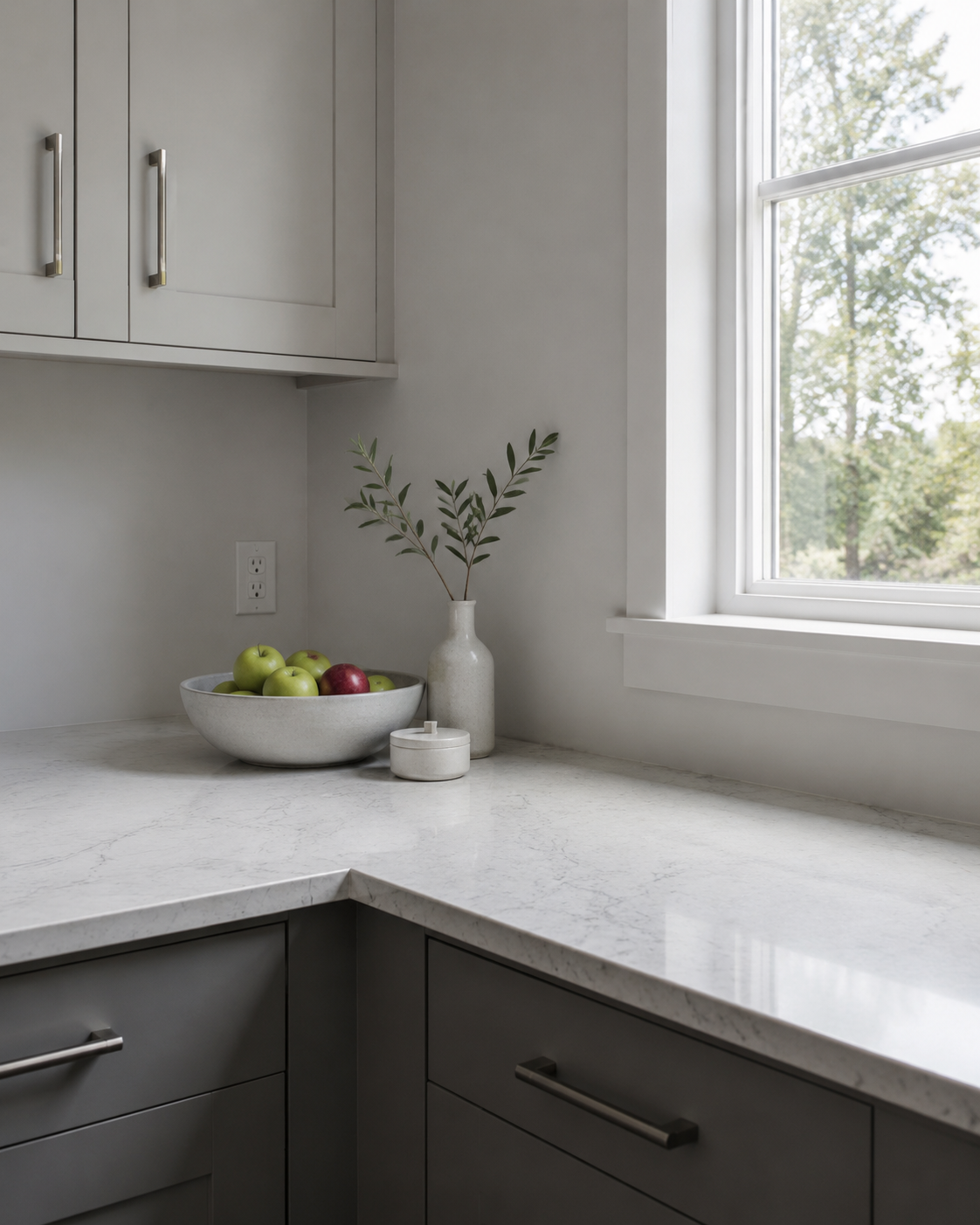
A non-prep corner can carry softness and height, but the counter should still read as mostly open surface.
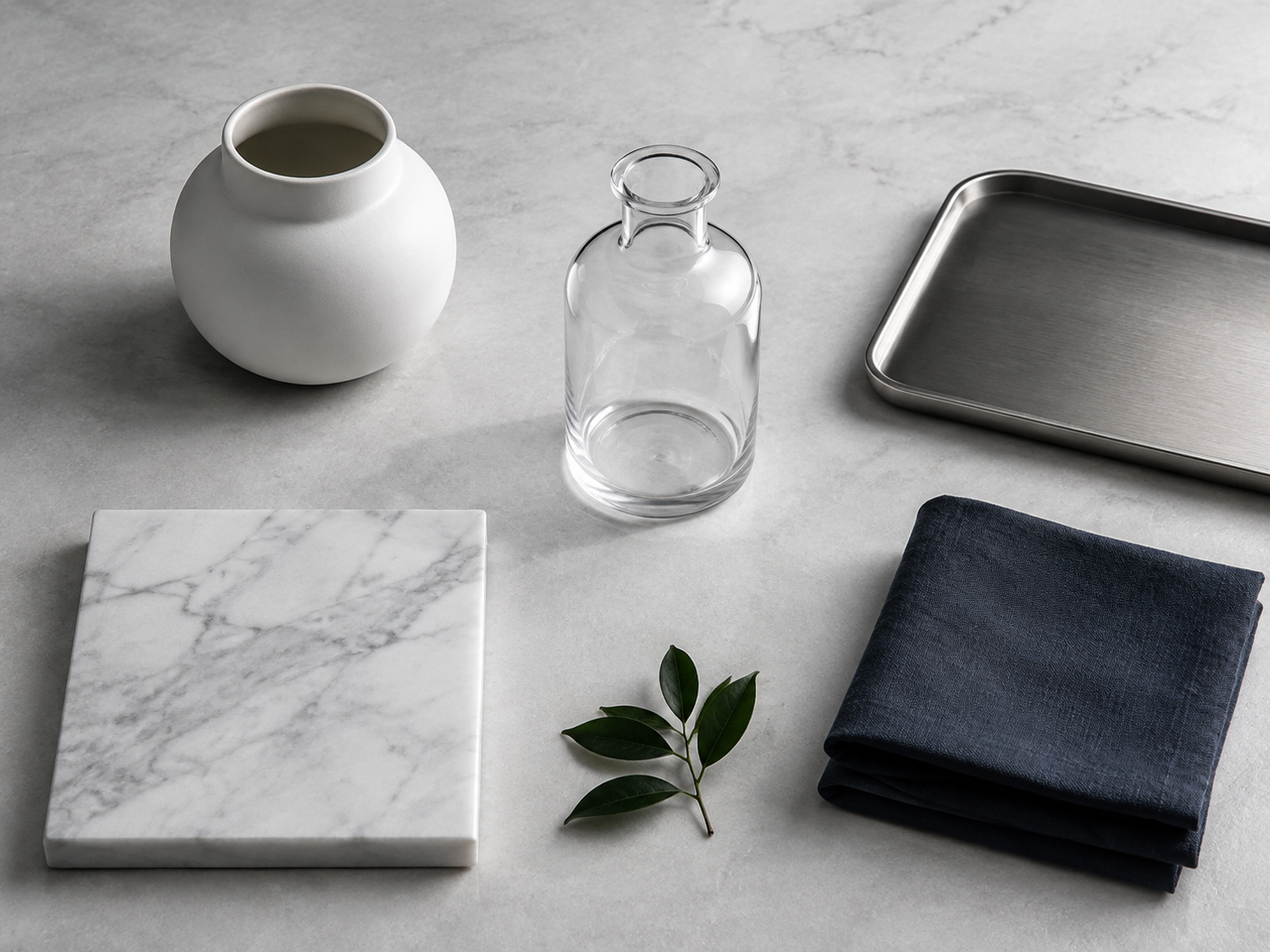
When every object is cream, beige, or wood, the counter can look flat even when the products are beautiful. Contrast materials before adding color.
One cool stone piece, one transparent element, one dark accent and one soft finish can feel more intentional than five matching accessories.
The exact boundaries change by kitchen, but the logic is constant: active use gets clearance, the main work patch stays open, and styling lives at a calmer edge.
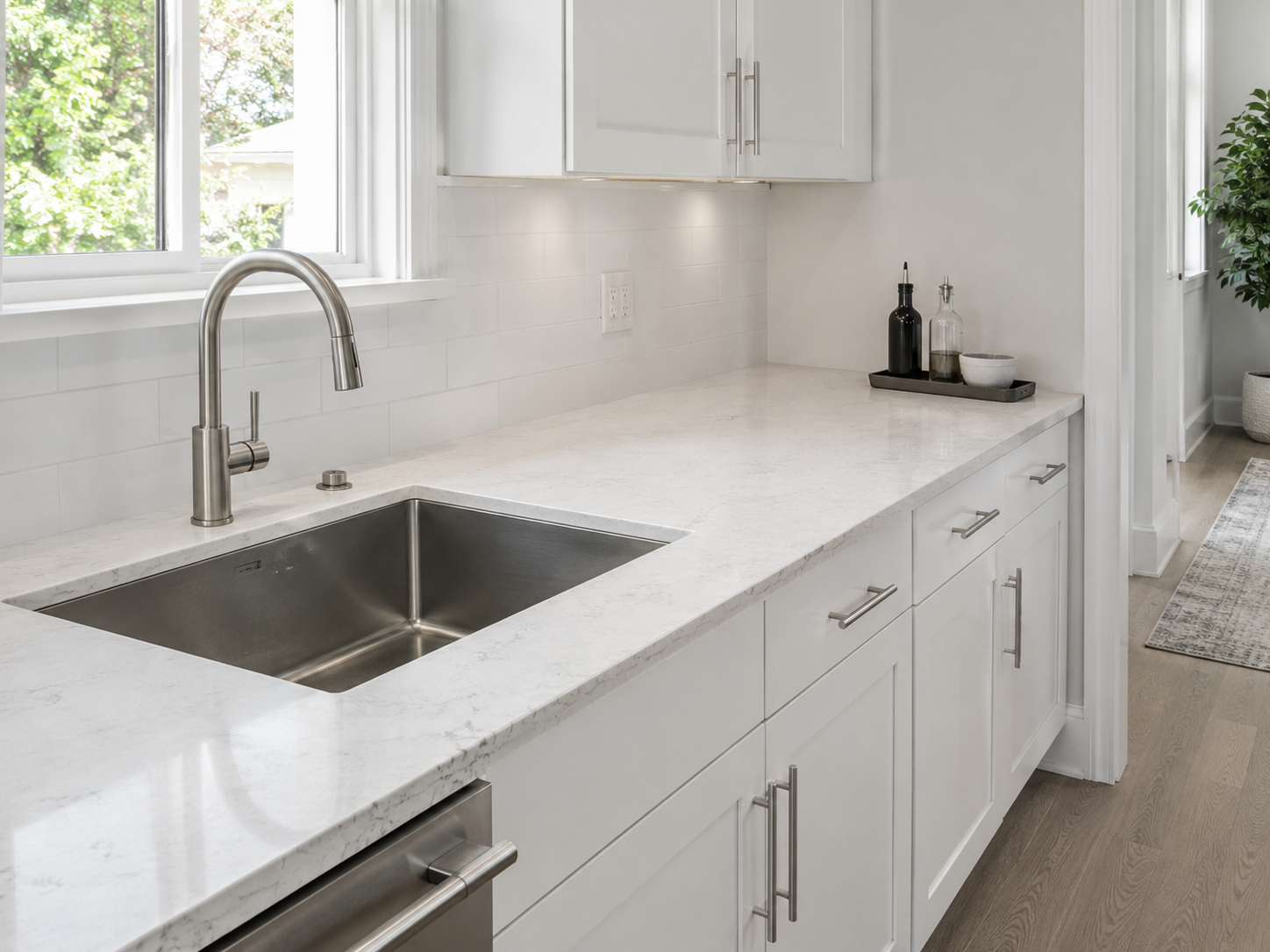
Give sinks, cooktops, controls and operating paths enough clearance for real use.
Protect the patch you actually need for chopping, mixing, plating or setting things down.
Let a compact anchor live where it does not interrupt the kitchen's main sequence.
These are not eight things to buy together. They are eight strong routes for the specific job your counter still needs.
Best when a small daily-use group needs one defined footprint.
Explore ↗Best when the room needs a cleaner, cooler material anchor.
View ↗Best when the backsplash needs one quiet vertical plane.
See details ↗Best when a book or tablet should become part of the vertical layer.
Check option ↗Best when seasoning pieces need a coherent cool-metal route.
Explore ↗Best when produce needs one deliberate display rather than several loose pieces.
View ↗Best when the counter needs a controlled organic color note.
See option ↗Best when hard stone, glass and metal need one restrained textile layer.
Check details ↗The visual sections make the decision. This library simply retrieves the exact product family without turning the page into a 25-card storefront.
For a small grouping that needs one clear edge.
For a compact dark visual base.
For subtle elevation without another wide display.
For a cooler, sharper material anchor.
One slim stone plane for a quiet background layer.
Useful middle-height structure for a back counter.
A deeper visual counterpoint for books or tablets.
For controlled dark depth without a multi-board stack.
For visible staples that should read as one group.
For storage that adds a restrained color route.
For cooking tools that need one vertical home.
For a softer utensil-zone alternative.
For one small controlled place during active cooking.
For a more graphic cooking-anchor route.
For transparent glass with a cool-metal finish.
For a visually lighter pour-zone alternative.
For a simple dark silhouette in the seasoning zone.
For produce that needs one low, quiet visual home.
For a controlled rise in a non-prep corner.
For a tiny useful finish inside a cooking anchor.
For one small daily counter finish.
For one restrained vertical finish.
For a controlled green accent rather than a full palette shift.
For softness against stone, glass and metal.
Use sparingly when one vessel needs movement and height.
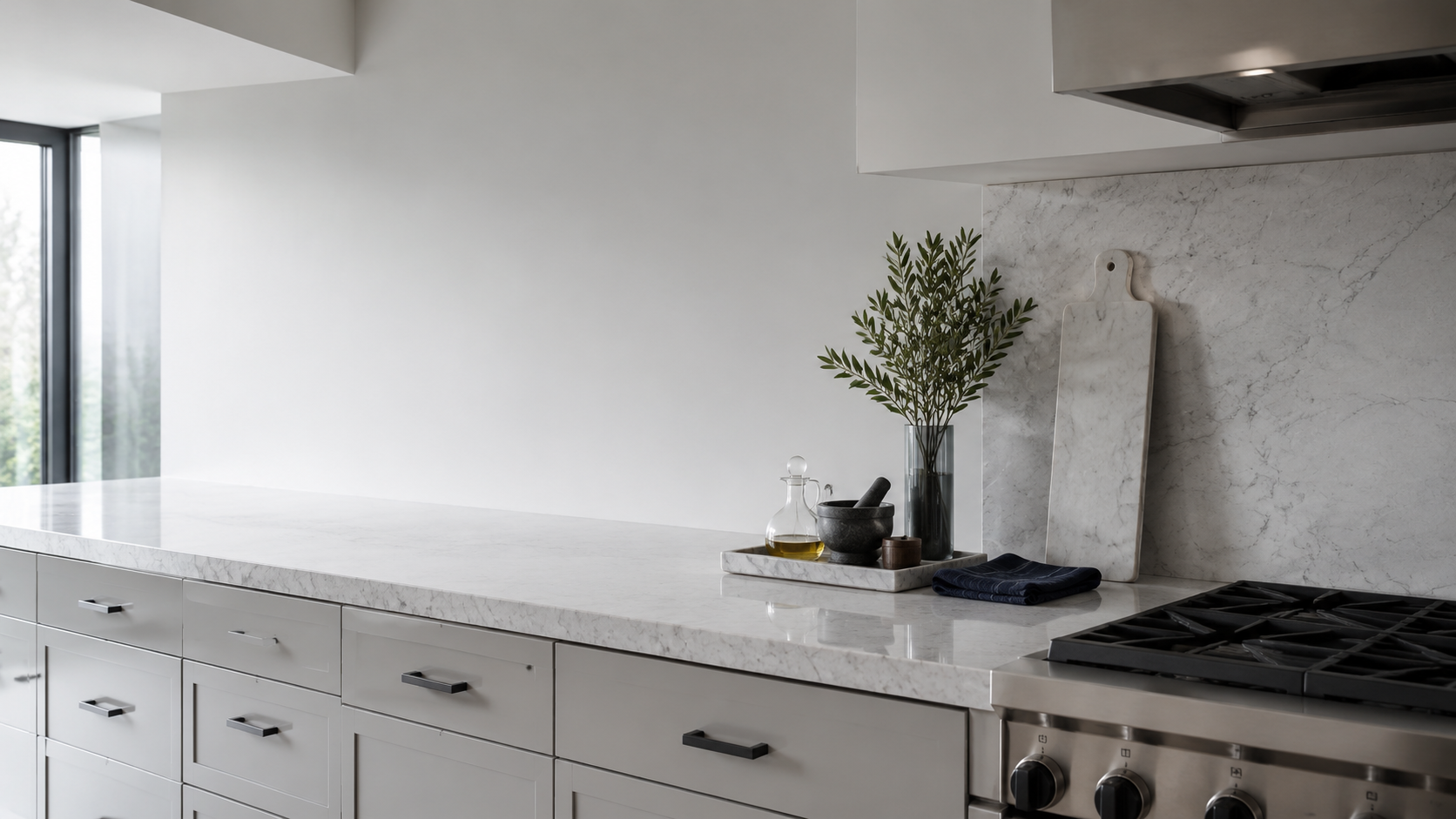
One anchor. One layer. One lift. One protected working span. That is the whole system.
Compare the product width and depth with the exact patch of counter you are willing to surrender.
Confirm the current variant, dimensions, quantity, materials and included pieces on the product page.
For functional or food-contact use, follow the current product and manufacturer guidance for intended use and care.