
When the missing piece is a stainless skillet.
Explore this pan ↗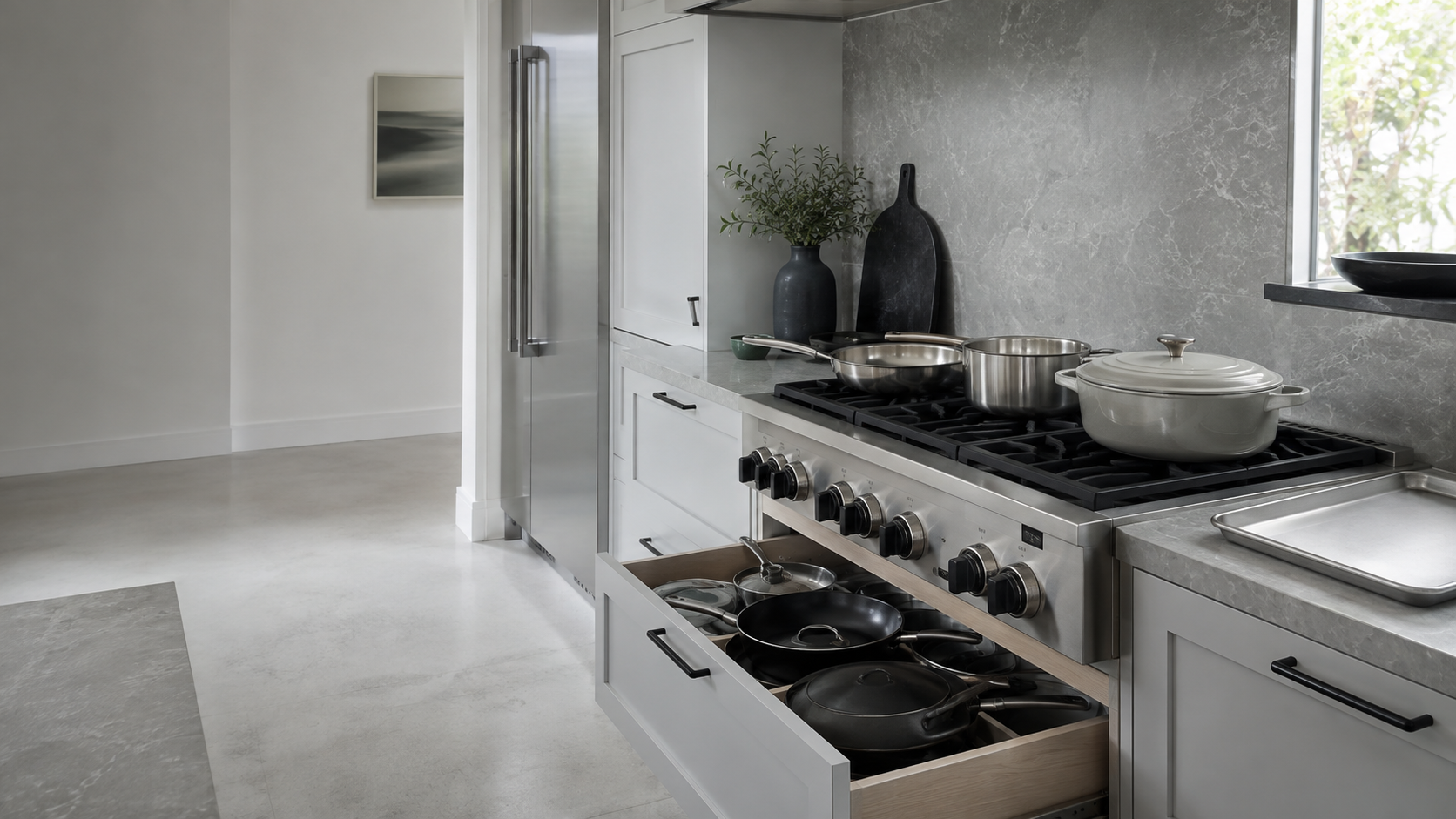
THE COOKING JOB MAP
Cookware & Bakeware Essentials by Cooking Job.
Choose cookware and bakeware essentials by the job you repeat: sear, simmer, roast or bake. Then check the vessel shape, oven fit and storage fit before you buy.
01 · DECIDE BY JOB
Pick the job before the pan.
Shape, depth and footprint matter more when they are tied to something you actually cook. Choose a job to reveal the most relevant starting points.
As an Amazon Associate, Ravnora Decor may earn from qualifying purchases. Product links may open on Amazon.
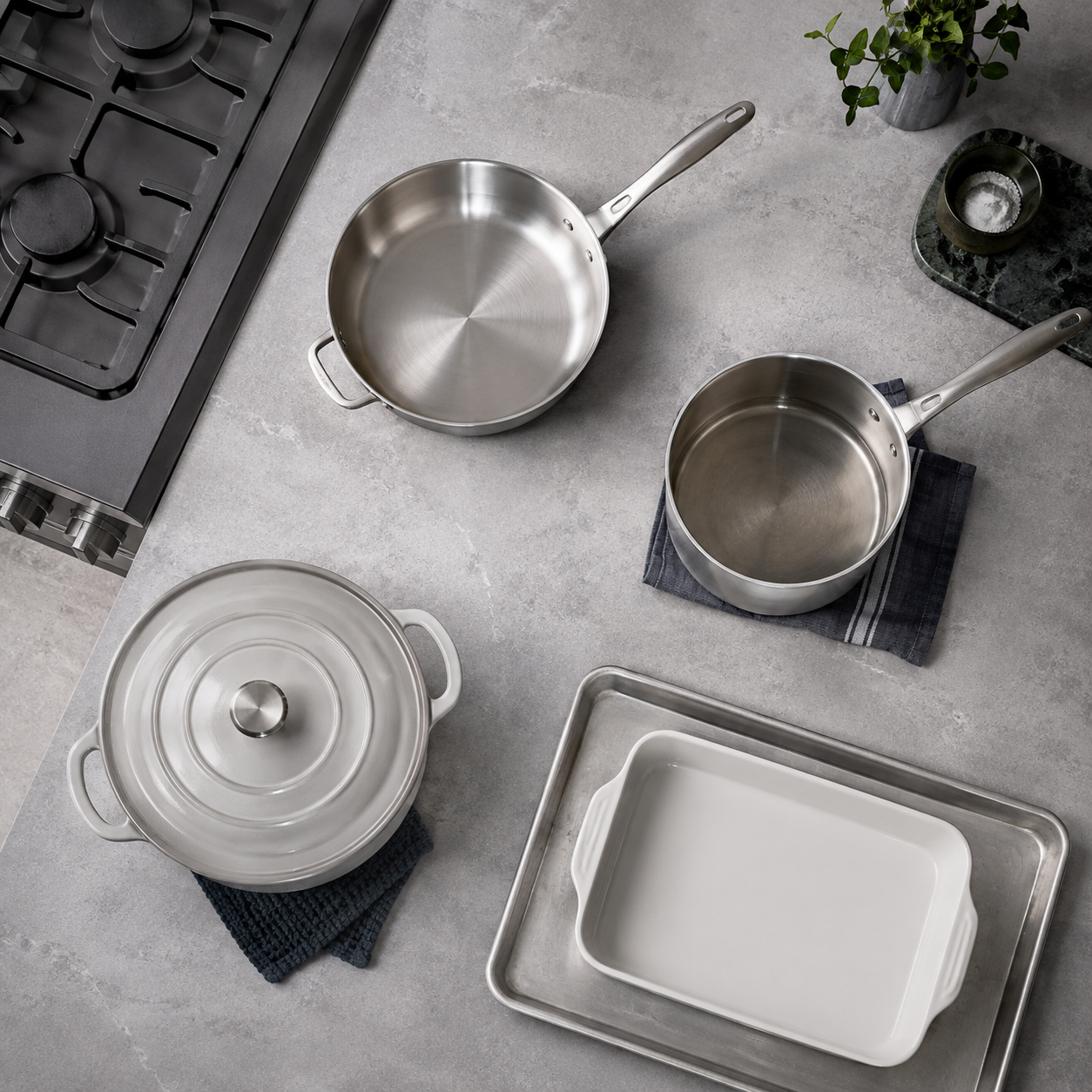
SEAR
Start with open surface area.
Then decide whether you want stainless, nonstick or cast iron, and verify the exact size and current care guidance on the listing.
A nonstick option without adding another full cookware set.
See this option ↗A heavier skillet option with different care and storage demands.
Check this skillet ↗SIMMER
Match vessel depth to batch size.
A smaller saucepan and a large stockpot solve different liquid-volume jobs. Verify selected capacity, lid and compatibility before buying.
For controlled smaller-batch simmering.
Explore this saucepan ↗For smaller batches when a 3-quart pan is more than the job needs.
Compare this size ↗For larger-volume cooking when a saucepan is too small for the job.
See the stockpot ↗ROAST
Choose depth before decoration.
Deep covered cookware, a shallow braiser and a straight-sided sauté pan each create a different working shape. Confirm current oven guidance on the selected listing.
A deep covered vessel for the jobs that need more depth.
Explore this vessel ↗A shallower covered shape that does not simply repeat the Dutch oven.
See the braiser ↗Broad base, taller sides: the bridge between skillet and deep pot.
Check this sauté pan ↗BAKE
Start with the finished shape and oven footprint.
Sheet, rectangular metal and glass/ceramic bakeware do different work. Check exact dimensions before assuming a pan will fit your rack or storage.
A flat open oven surface for sheet-pan work.
Explore the sheets ↗A deeper rectangular shape for baking and oven-to-table work.
See the baking dish ↗Transparent rectangular bakeware with lids for storage after baking.
Check the glass set ↗Room imagery illustrates decision concepts; linked products may differ in appearance. Verify the exact current Amazon variant, specifications and included pieces before purchasing.
02 · REDUCE THE OVERLAP
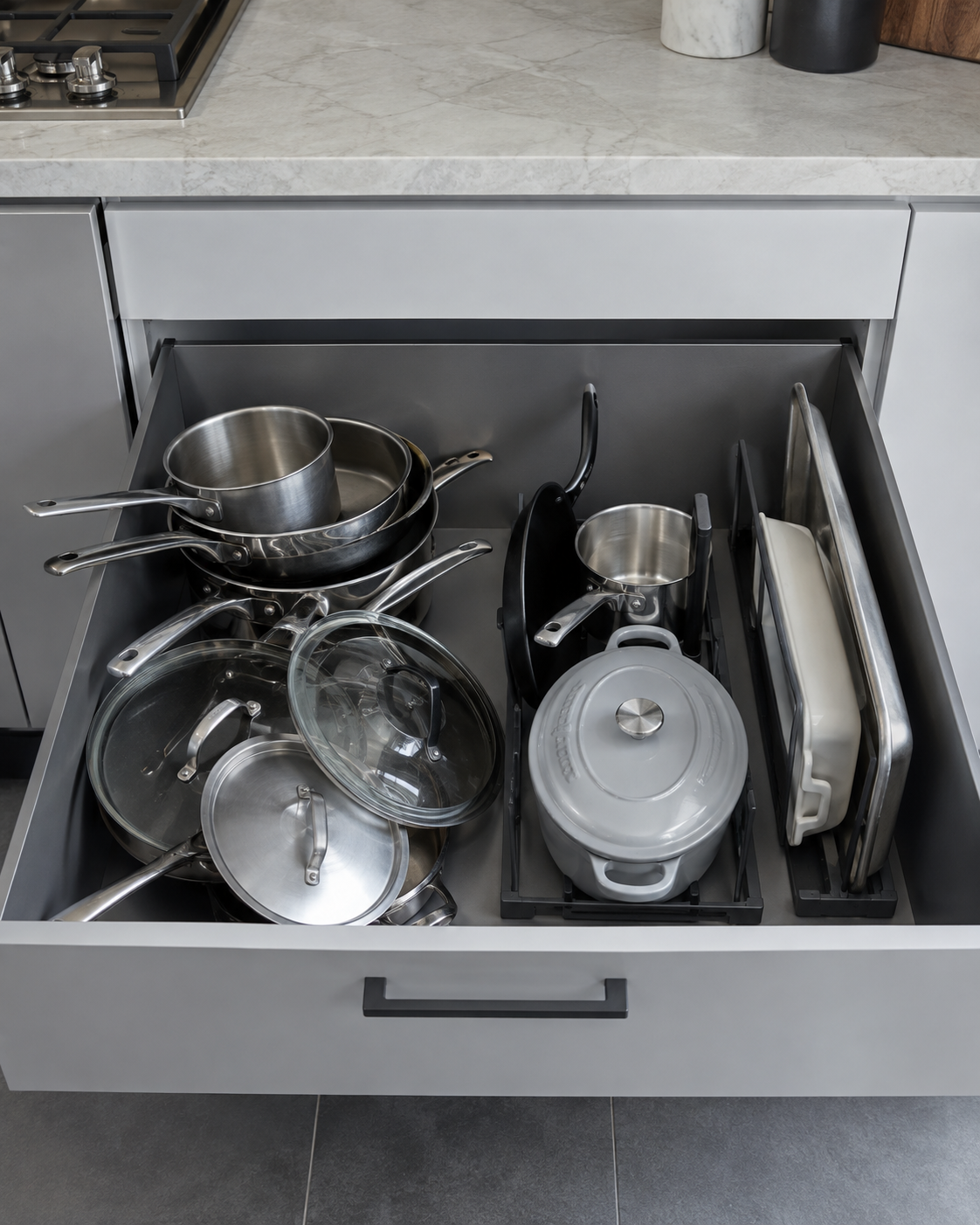
Start by checking five shapes.
This is not a mandatory five-piece kit. It is a fast way to see whether your cabinet has five different jobs—or five versions of the same job.
03 · MATERIAL UNDER HEAT
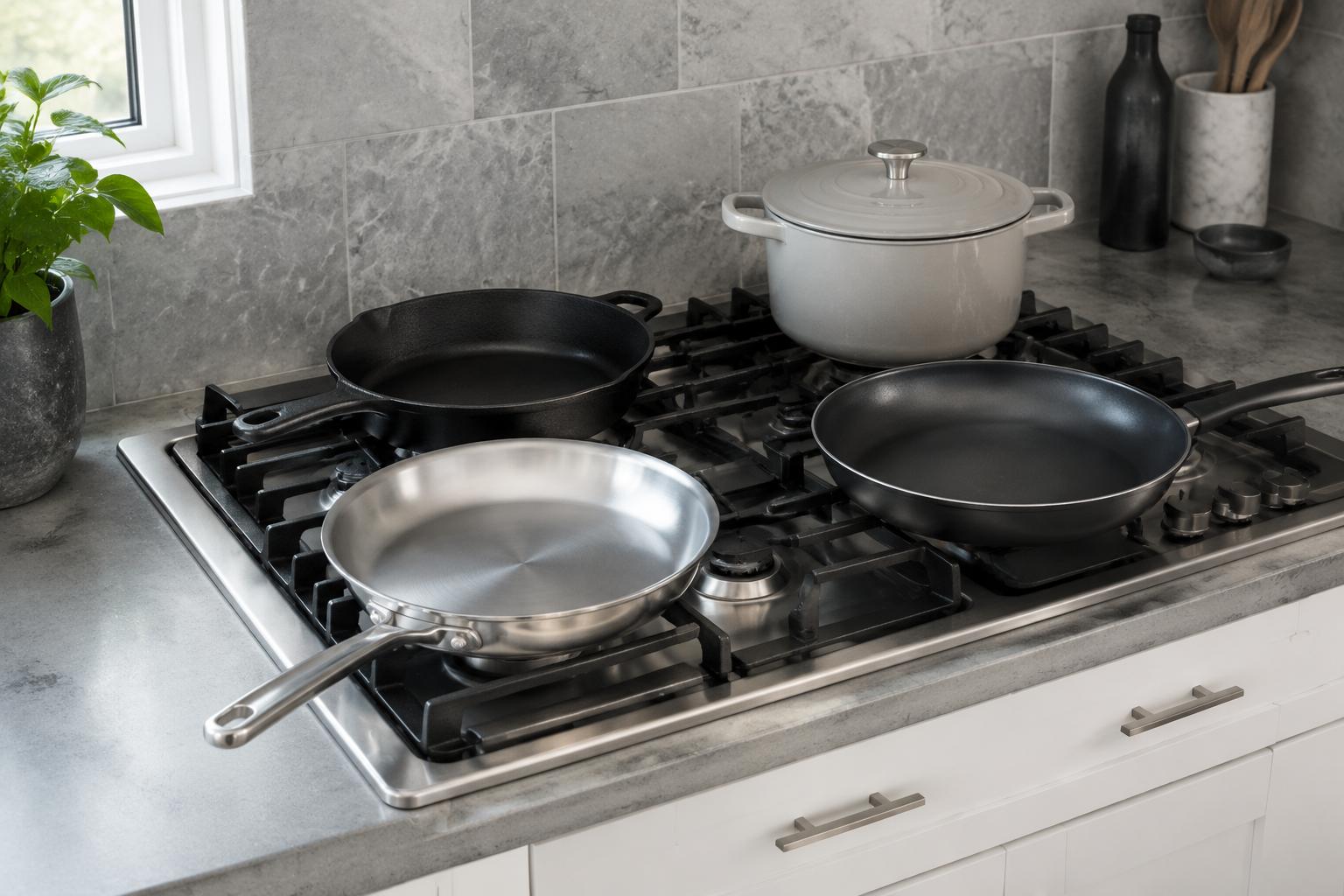
Choose material after you know the job.
Material changes the feel of the decision, but the job still comes first. Use the listing to confirm construction, care guidance and the exact selected variant.
Stainless: check the build
Check exact construction, handle geometry and compatibility on the listing.
Explore stainless ↗Nonstick: check coating + care
Verify coating, care instructions and current manufacturer temperature guidance.
Explore nonstick ↗Cast iron: plan for weight
Weight, care and storage are part of the decision—not just the cooking surface.
Explore cast iron ↗Enameled: check oven + care
Verify current oven-use guidance, dimensions and care for the exact vessel.
Explore enameled ↗04 · THE OVEN FIT TEST
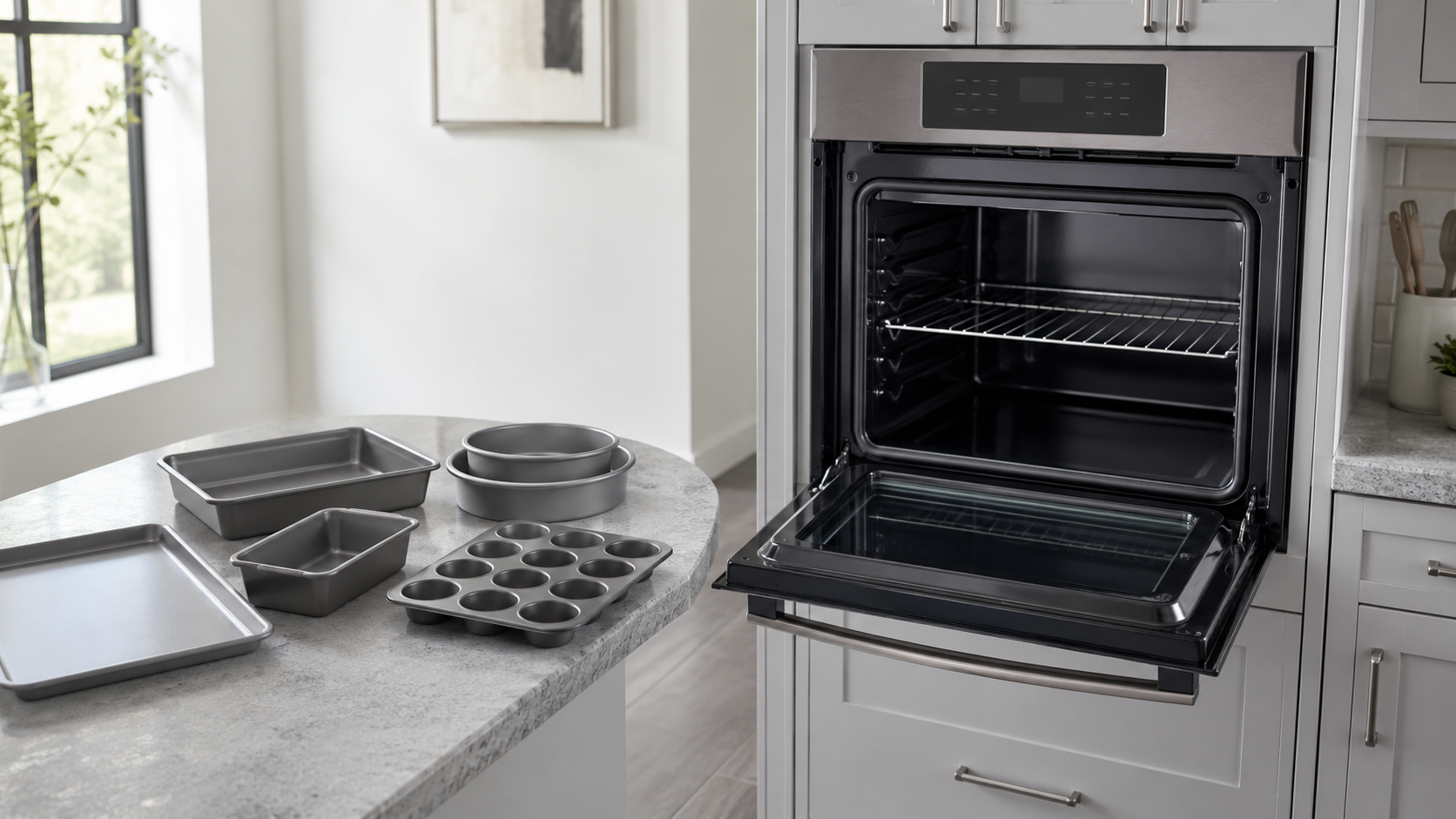
The pan has to fit more than the recipe.
Before buying bakeware, check the physical path from listing dimensions to oven rack to cabinet or drawer.
01
Read the external dimensions.
Do not rely on the category name alone.
02
Compare to usable rack space.
Account for the oven opening and the way you load the pan.
03
Check handles and edges.
They affect real footprint even when the cooking surface looks compact.
04
Plan the home position.
A pan still needs a drawer, rack or cabinet after baking is finished.
Check external sheet dimensions against your oven and storage.
Check fit ↗Confirm the exact listed dimensions for your selected variant.
See dimensions ↗A specialized footprint that earns its place only if the job repeats.
Explore the loaf pan ↗Check the whole tray footprint, not just cup count.
Check the tray ↗05 · WEEKNIGHT FLOW
Build the fast stovetop lane.
Prep → pan → saucepan → reset. This flow is about reducing the number of decisions between ingredients and dinner.
- Prep
- Pan
- Simmer
- Reset
Primary stainless skillet option.
Explore ↗Distinct nonstick option.
Explore ↗The principal smaller-volume pot.
Explore ↗Prep without adding another pan.
Explore ↗A compact utensil role in the workflow.
Explore ↗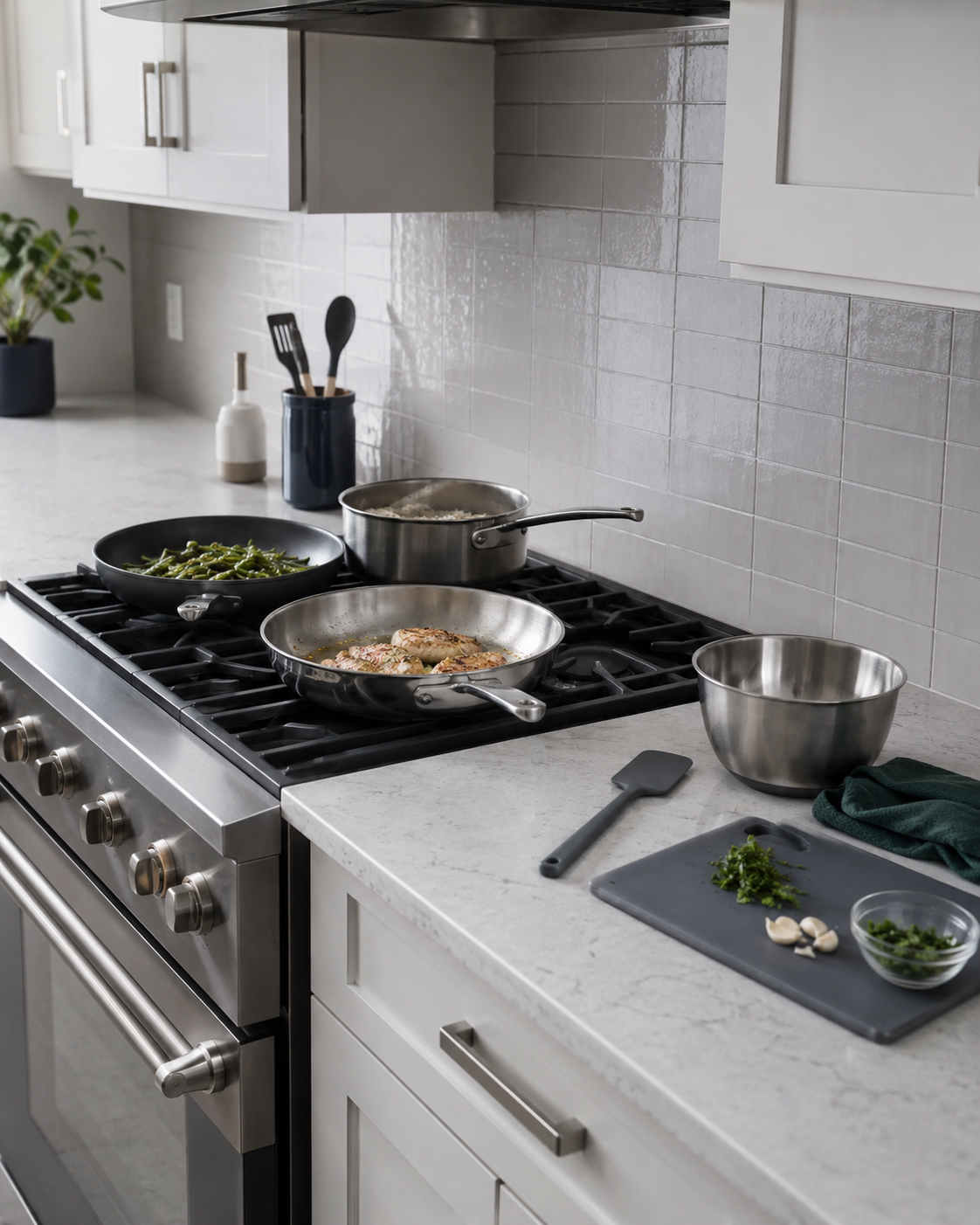
06 · DEEPER VESSEL CHOICE
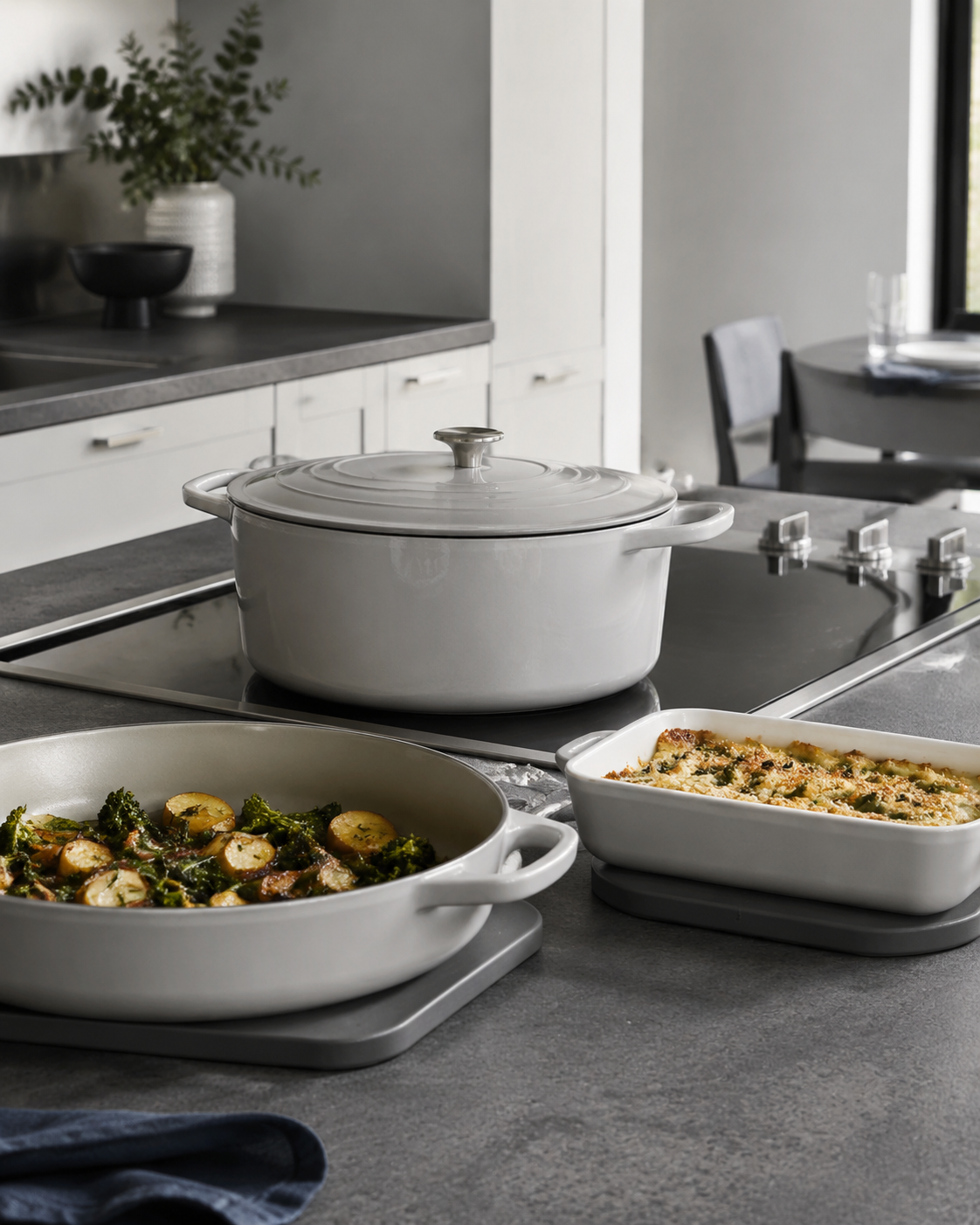
Cook → oven → serve.
The vessel becomes easier to choose when you first decide whether the job needs depth, a shallower braising form, or a rectangular baking shape.
- Cook
- Oven
- Serve
07 · WEEKEND BAKE FLOW
Mix → measure → shape → cool.
Baking gets easier to shop when each tool belongs to a stage instead of an endless bakeware category.
- Mix
- Measure
- Shape
- Cool
Stainless prep bowls for mixing and staging.
Explore ↗Glass prep bowls when visibility helps.
Explore ↗One dedicated measuring system.
Explore ↗Specialized loaf geometry.
Explore ↗Dedicated muffin geometry.
Explore ↗Rectangular glass bakeware with lids.
Explore ↗The final stage of the workflow.
Explore ↗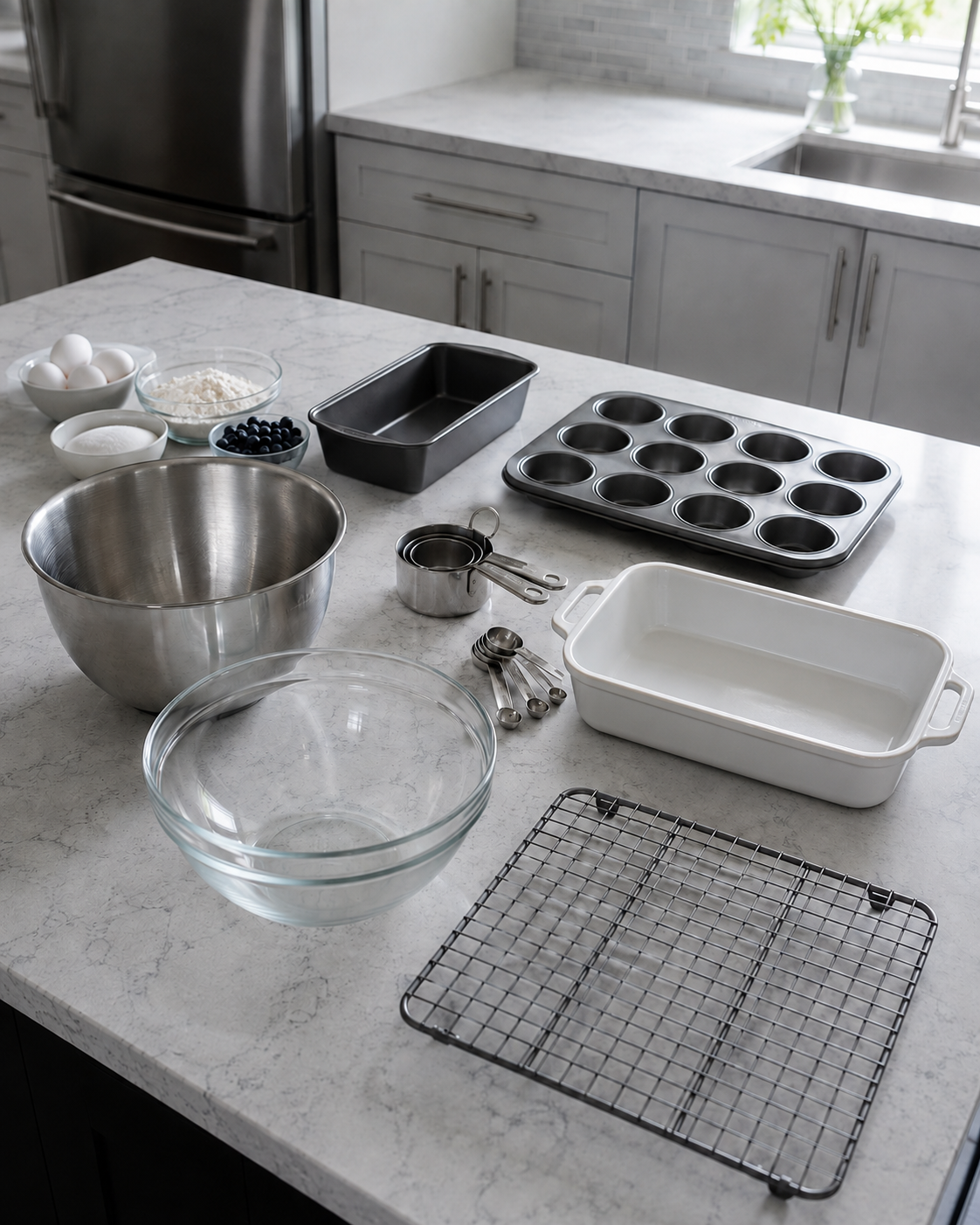
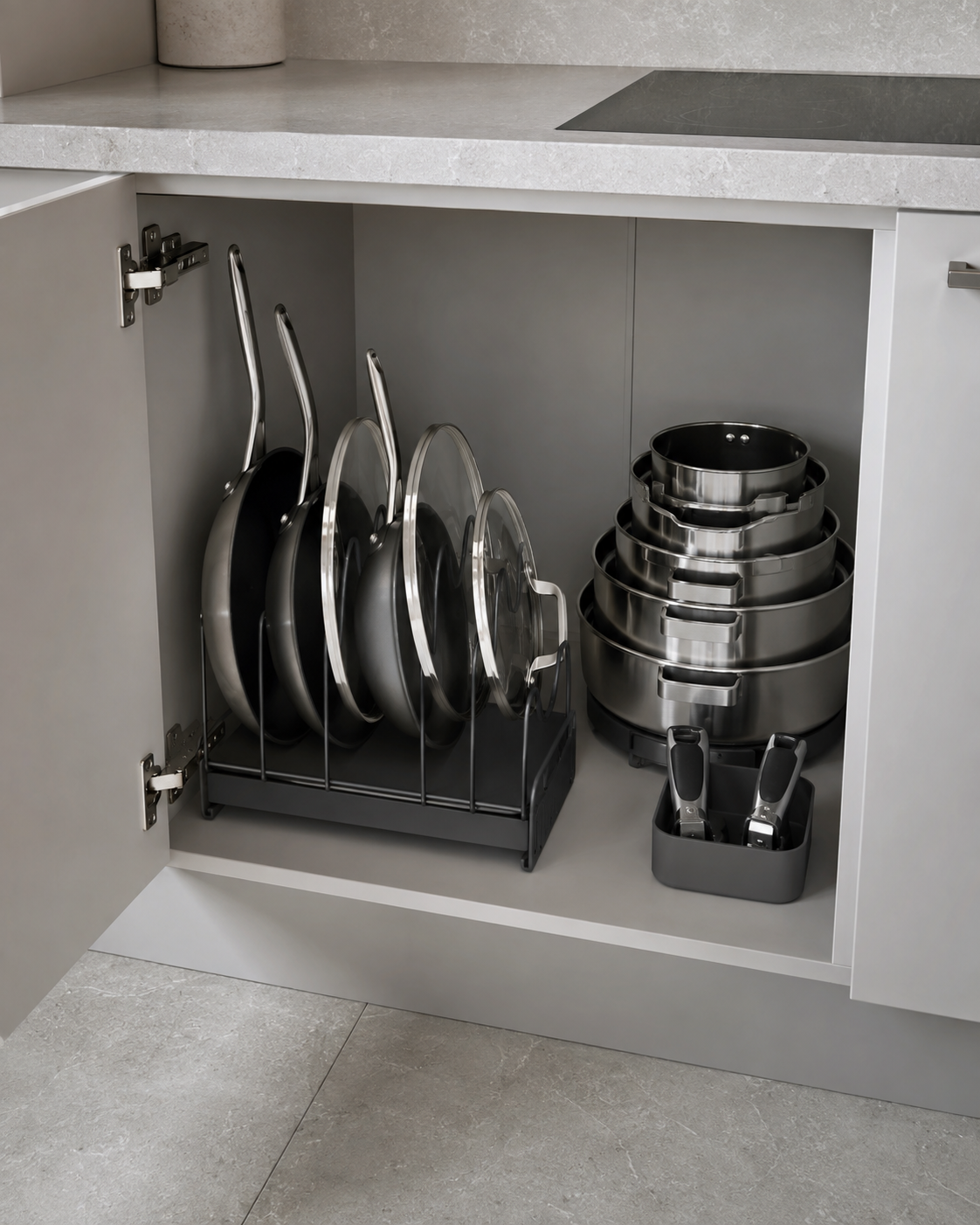
08 · STORAGE IS PART OF FIT
The cabinet is part of the cookware decision.
A pan can fit the cooktop and still fail the kitchen if lids collapse, handles tangle or every retrieval requires unloading the stack.
THE RESET TEST
Can you take one pan out without moving three others?
Use storage products to create retrieval lanes, not simply to make the cabinet look organized.
Vertical lanes
Plan the cabinet around retrieval →Useful when flat pans and lids collapse into one unstable stack.
For separating several flat cookware pieces into individual lanes.
Explore organizer ↗A smaller-footprint option for tighter cabinet storage.
Explore compact rack ↗09 · THE RAVNORA EDIT
A tighter edit for the gap you actually have.
Filter by what you need to do. These are the fastest starting points; the complete retrieval library follows when you want every option.
Showing all 10 starting points.
Choose this when the missing job is a stainless skillet.
See the skillet ↗A separate nonstick option without another full set.
See the nonstick pan ↗Choose only after accepting its weight, care and storage needs.
See the cast-iron pan ↗The principal smaller-volume pot in the system.
See the saucepan ↗Broad base plus taller straight sides.
See the sauté pan ↗Deep covered-cooking geometry.
See the Dutch oven ↗Flat oven footprint for sheet-pan work.
See the sheet pans ↗A deeper rectangular bakeware option.
See the baking dish ↗A prep foundation that crosses multiple cooking jobs.
See the bowls ↗For separating flat cookware into retrievable lanes.
See the organizer ↗10 · COMPLETE RETRIEVAL LIBRARY
Find every piece by the job it fills.
Thirty unique products, grouped for retrieval rather than displayed as one giant storefront. Open only the family you need.
Systems + foundation
Stainless cookware foundation setBroad multi-piece starting point when you truly need a set.
Explore ↗Fry + sear
Ceramic nonstick frying panSingle nonstick frying-pan option.
Explore ↗Large conventional nonstick frying panLarger nonstick frying-pan option.
Explore ↗Stainless frying pan + lidSingle stainless skillet option.
Explore ↗Ceramic nonstick skillet pairTwo-size skillet option.
Explore ↗Stainless sauté pan + lidStraight-sided bridge shape.
Explore ↗Classic cast-iron skilletHeavier traditional skillet option.
Explore ↗Sauce + simmer
Deep + oven cookware
Sheet + bake
Half-sheet pan pairFlat sheet-pan option.
Explore ↗Baking sheets + cooling racksSheet pans paired with cooling racks.
Explore ↗Rectangular ceramic baking dishSingle deeper rectangular dish.
Explore ↗Multi-piece ceramic bakeware setMultiple rectangular sizes.
Explore ↗Glass baking dishes with lidsTransparent bakeware with lids for storage.
Explore ↗Ceramic rectangular bakeware setRectangular bakeware for oven-to-table use.
Explore ↗Loaf panDedicated loaf geometry.
Explore ↗12-cup muffin panDedicated muffin geometry.
Explore ↗9×13-style metal baking panRectangular metal option.
Explore ↗Prep
Handle + cool
11 · BEFORE THE CLICK
Run the seven-point heat + fit check.
Amazon provides the listing. Ravnora's job is to make sure you know what to verify before you leave.
Confirm current cooktop compatibility on the exact listing or manufacturer guidance.
Check the stated oven-use guidance and temperature information when relevant.
Diameter, depth, pan footprint, rack fit and handle projection all matter.
Confirm lids, accessories, quantity and what is actually inside the selected set.
Use the current listing and manufacturer instructions for construction and care.
Confirm the exact size, finish, configuration and quantity before checkout.
Decide where the piece will live before it enters the cabinet.
THE MEMORY RULE
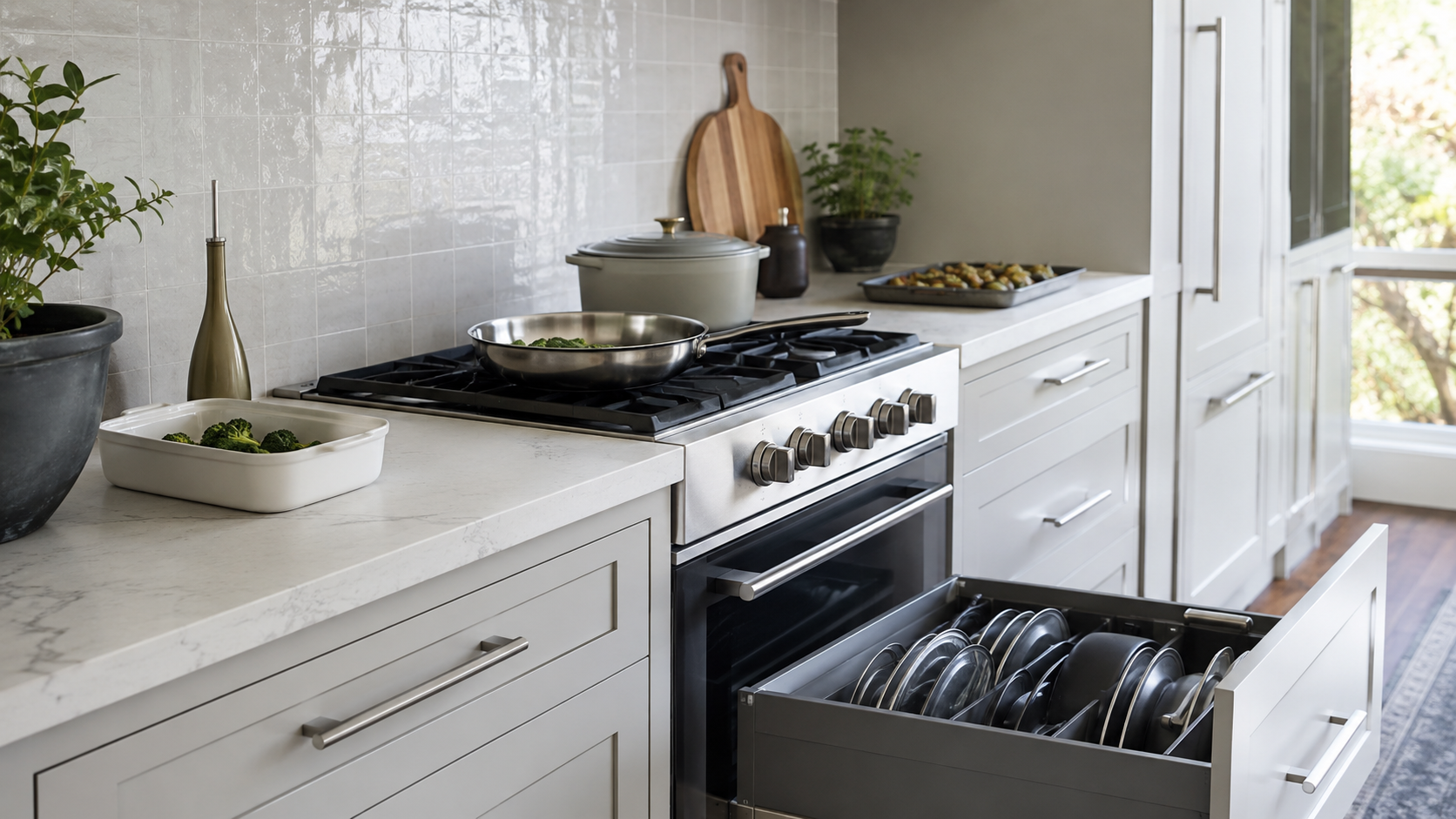
Fewer pieces. Better jobs.
When every pan has a reason, the cabinet gets easier to reset and the counter has room to work. The next problem is usually storage, speed or serving.