
Changeable Artwork Frame
Best when drawings deserve a defined place without becoming permanent decor.
Check first: frame size, opening method and mounting instructions.
See ↗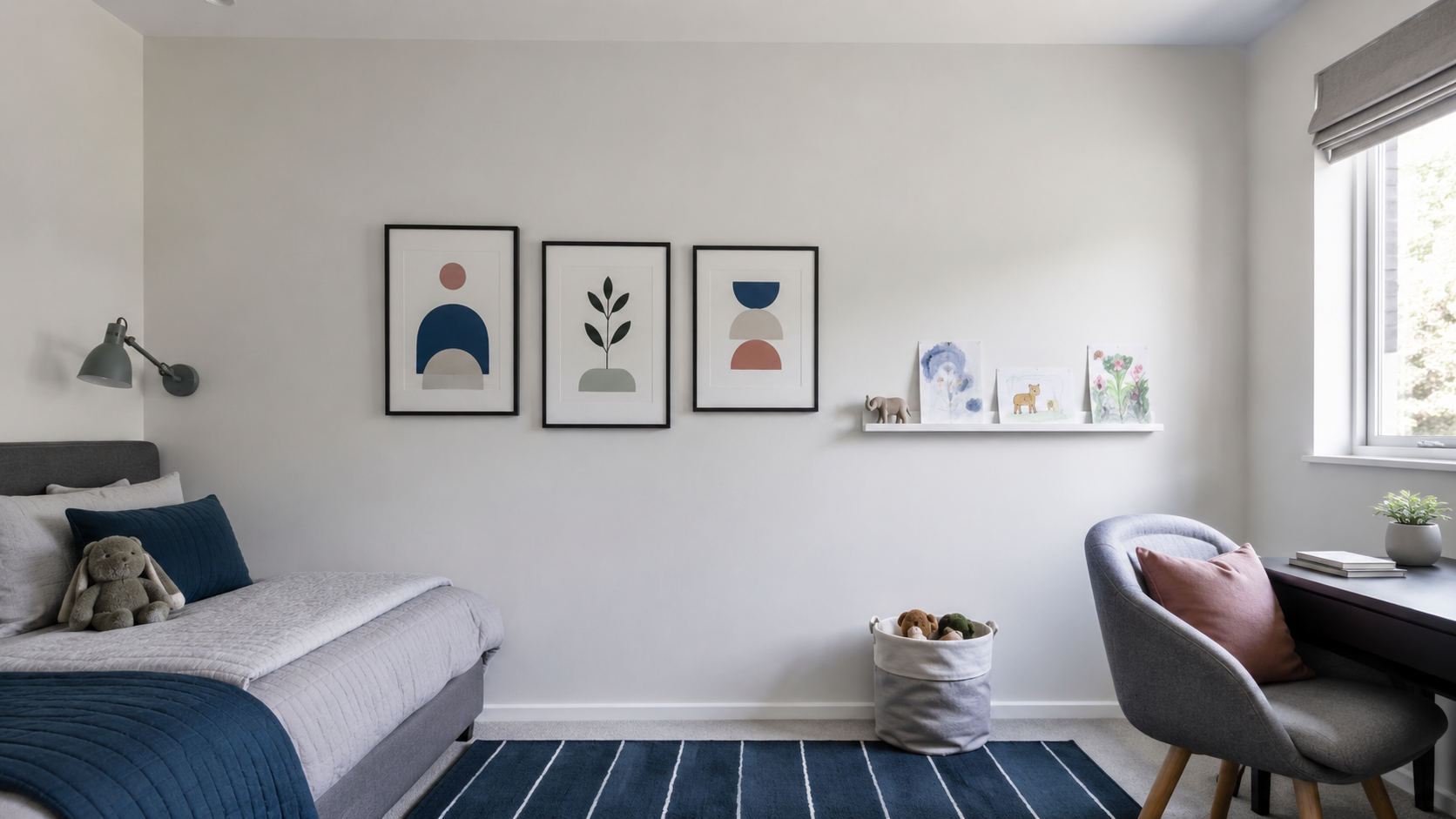
Kids wall decor
Blank, too babyish, or already too busy? Start with the wall you actually have—then decide what should stay, what should change, and what should work.
Start with the constraint
Do not choose the object first. Choose the wall condition first—the right composition changes with width, furniture, routine and how often the display needs to evolve.
Wall Fit Studio
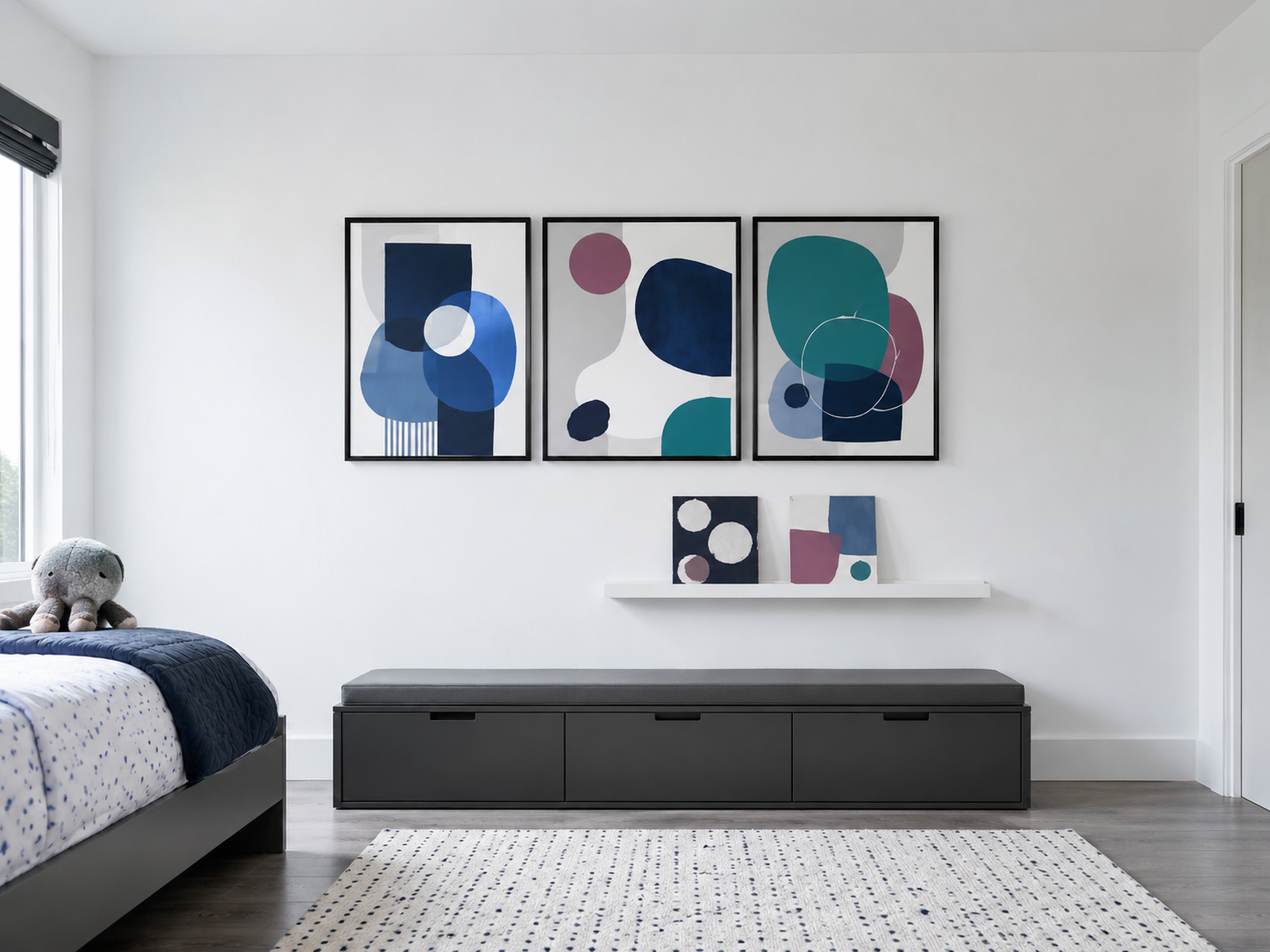
Use the width to create proportion, not to justify more objects. A fixed art group plus a shorter ledge keeps the wall open.
Give frequently used materials a controlled vertical home, then reserve one small area for rotating art.
A growth marker or compact hooks can give the strip a job without pretending it is a full display wall.
Keep the main composition stable while drawings, photos and small objects rotate through a defined display mechanism.
The composition rule
A strong kids wall rarely needs five unrelated decorative ideas. Give each layer a clear job—and leave room between them.
The density dial
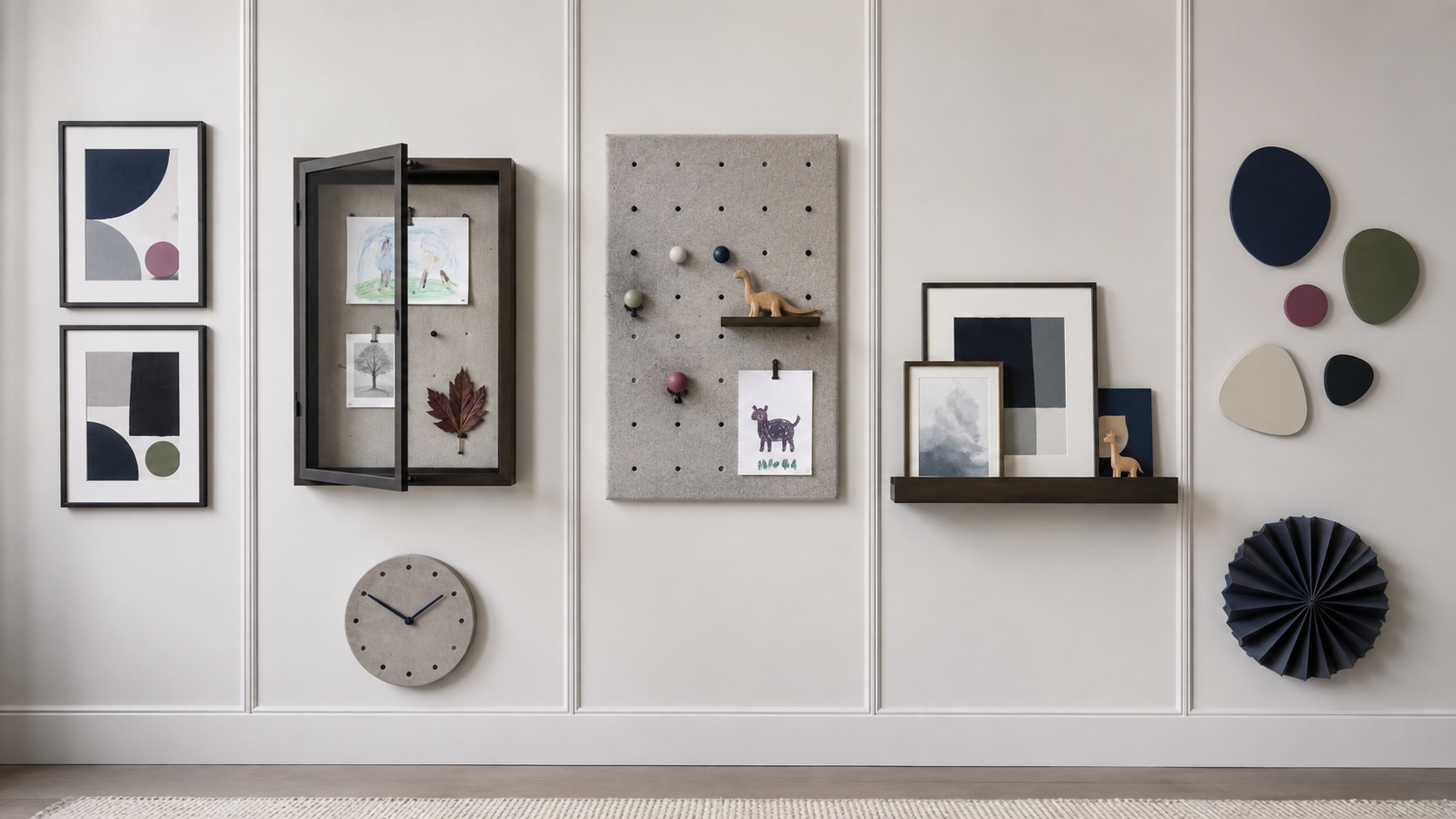
The useful target is not “more decorated.” It is enough visual weight to finish the zone without turning every open patch into another assignment.
Balanced: one dominant anchor plus one smaller supporting layer leaves enough open wall for the room to breathe.
Build for change
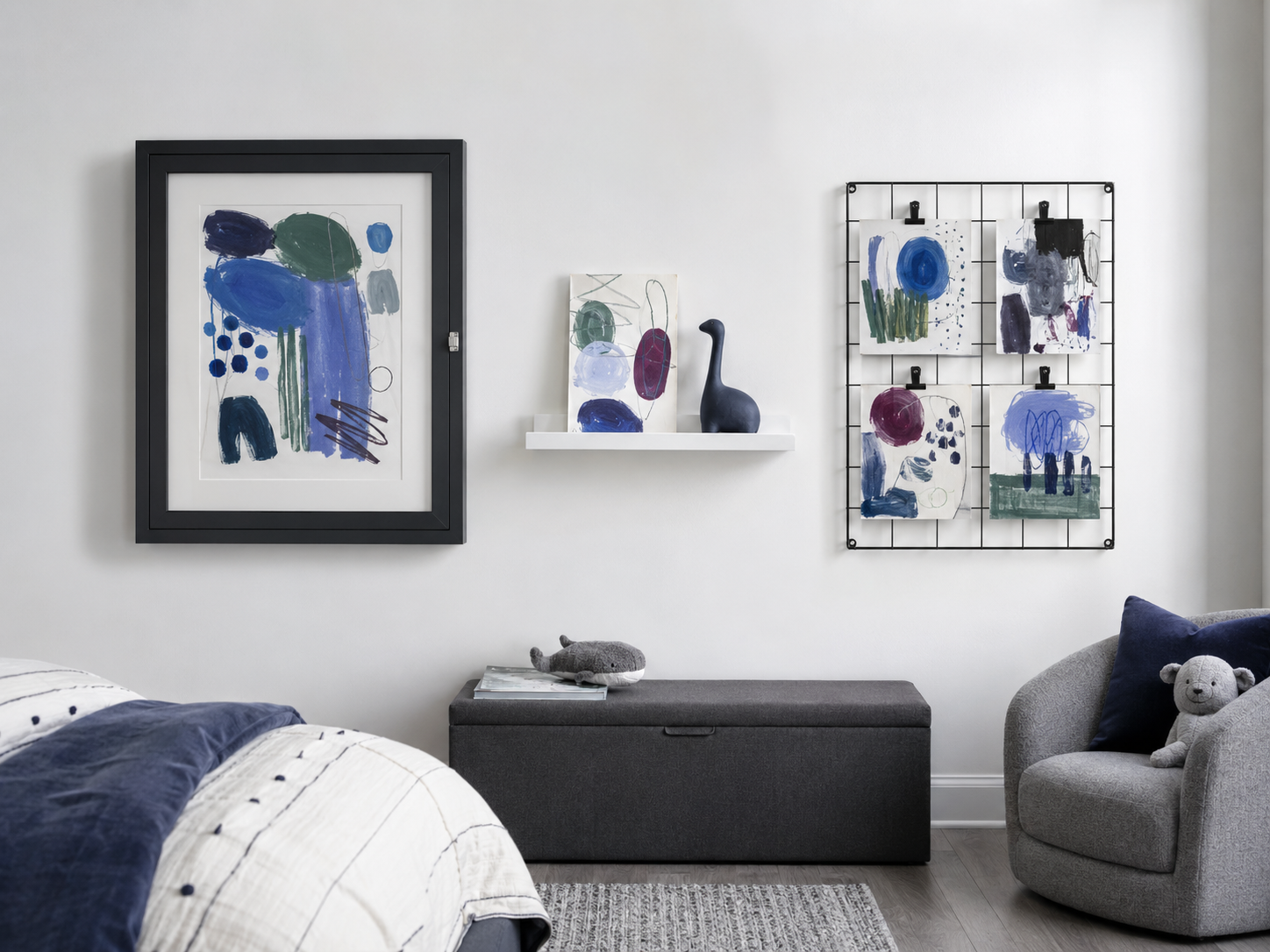
The wall does not need a redesign every time interests change. Keep the anchor stable and make one display mechanism easy to refresh.
Best when drawings deserve a defined place without becoming permanent decor.
Best when a few small pieces need to rotate without creating a full gallery wall.
Best for frequent rotation when many drawings need one controlled destination.
Curated wall edit
These are the strongest execution pieces for the page’s core system: establish the wall, give part of it permission to change, then add function only where it helps.
A clean structure for a coordinated art grouping.
A stronger visual starting point for a wide wall that needs immediate direction.
A defined home for artwork that changes without rebuilding the wall.
A lighter display layer for small art, books or objects.
A controlled working surface beside a desk or activity zone.
A structured grid for rotating drawings, photos and lightweight pieces.
Front-facing display that gives favorite books a visible wall role.
A modular surface for notes, drawings and changing interests near a desk.
Three room outcomes
The strongest composition is different beside a reading chair, above a working desk and near a more personal sleep zone.
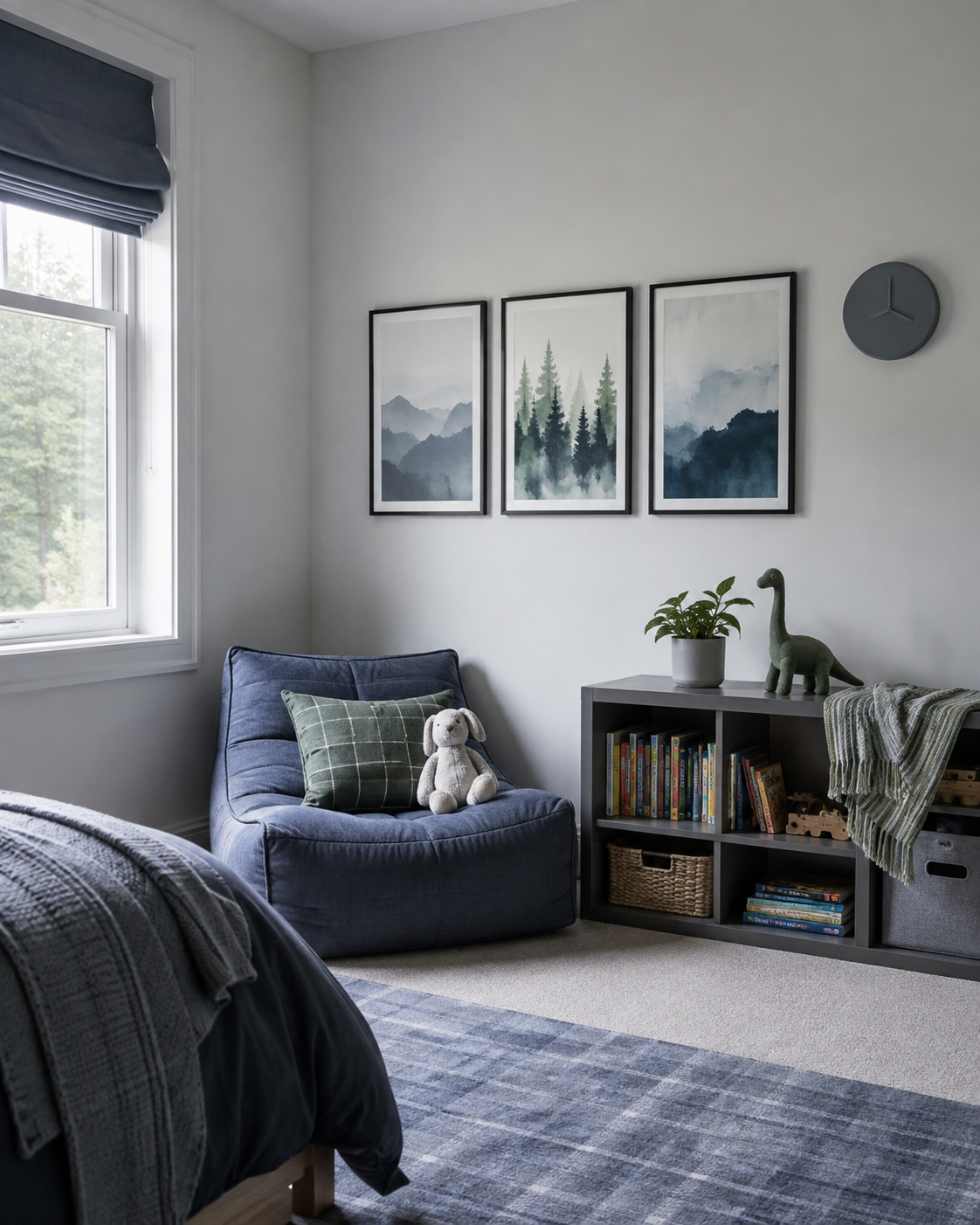
Keep the narrative concentrated near the reading zone. The rest of the wall can stay quiet.
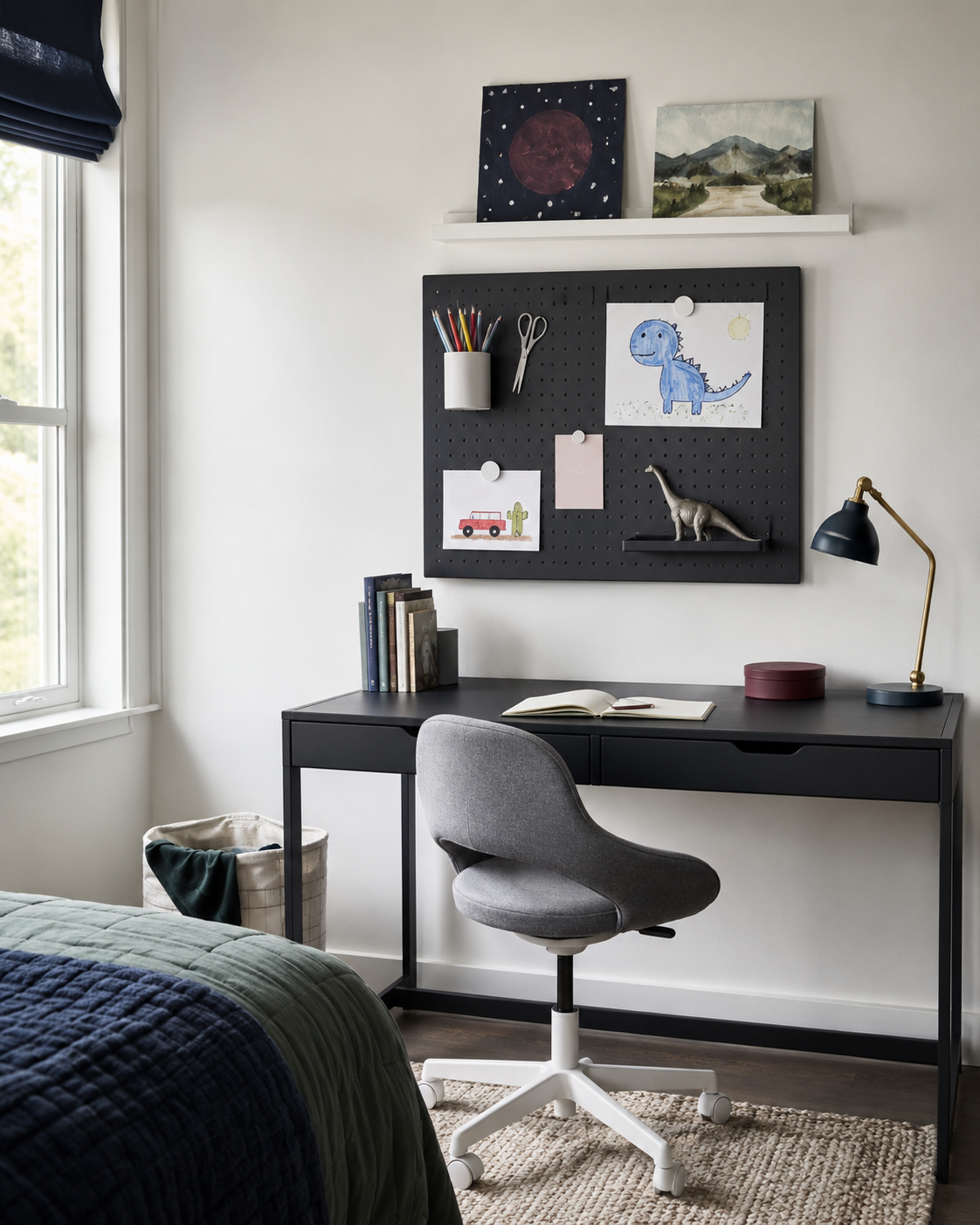
Let useful display dominate the working area. Decorative pieces should support the zone, not compete with it.
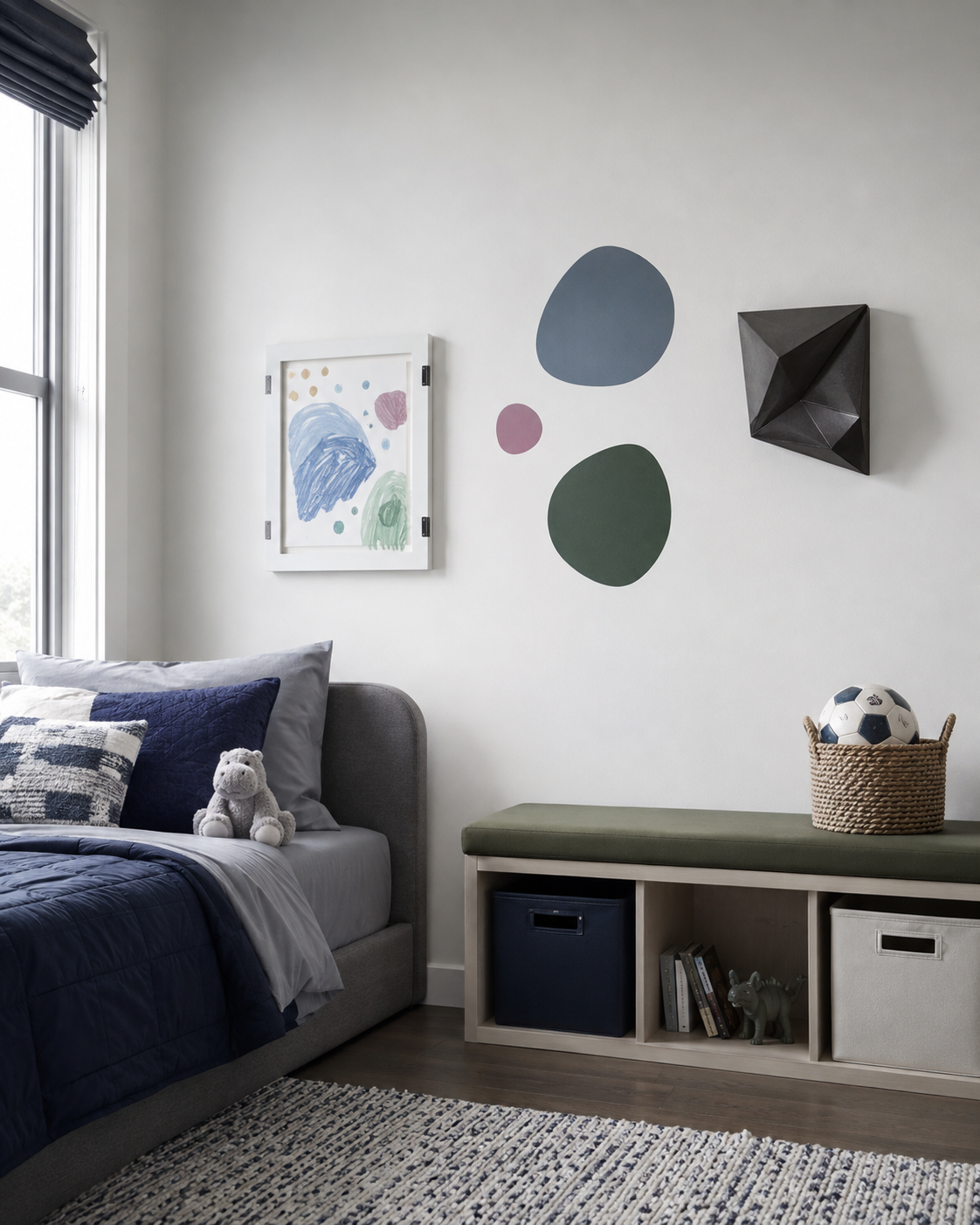
Personal does not have to mean full. One identity piece and one changing display can carry the story.
Before it goes on the wall
Dimensions, mounting and wall surface can change whether the same product is a smart fit or an awkward one. Recheck the current listing before buying.
Confirm whether the product or mounting method is suitable for the actual painted, textured or other wall surface.
Measure the usable wall width and height instead of judging size from styled listing images.
Check included hardware, installation directions and whether the wall or location requires a different approach.
For shelves, hooks, organizers and frames, confirm how far the product sits away from the wall and what is below it.
Verify current dimensions, configuration, finish, included pieces, installation guidance and availability on the product page.
Complete retrieval edit
The complete inventory is organized as a retrieval tool. Expand one family, then swipe horizontally through its products instead of opening a long vertical catalogue.
For a coordinated child-friendly grouping.
For a more narrative art moment near a reading or sleep zone.
For building a clean coordinated gallery structure.
For a wide wall that needs a stronger visual anchor.
For one larger focal statement instead of several small pieces.
For one broad illustrated wall transformation.
For a lighter illustrated treatment that does not require frames.
For a more graphic non-nursery wall layer.
For a child whose current interests deserve one defined visual zone.
For a larger visual shift when the wall itself should carry the scene.
For a narrow strip that can track change and still feel personal.
For a lighter vertical growth-marker format.
For one defined identity piece rather than many small personal objects.
For a more contemporary personalized statement where powered decor suits the room.
For rotating drawings through one defined visual position.
For swapping smaller art, books or objects without rebuilding the wall.
For frequent artwork rotation through one dedicated display line.
For a structured display that can change with drawings and photos.
For a softer modular display surface near a study or making zone.
For a smaller desk or activity wall that needs configurable vertical space.
For a broader working wall that needs more organized vertical capacity.
For a reading or study zone where favorite books should stay visible.
For papers and activity materials that otherwise spread across the desk.
For a small functional accent where a decorative silhouette fits the room.
For compact hanging where a removable mounting approach is preferred.
What still feels unfinished?
Ravnora Decor provides independent curation and room-planning guidance. Product details, dimensions, configurations, availability and installation requirements can change; verify the current Amazon listing before purchasing. As an Amazon Associate, Ravnora Decor may earn from qualifying purchases.