
Slim Task Bar
Start here when upper cabinets leave the daily preparation surface darker than the room around it.
See option →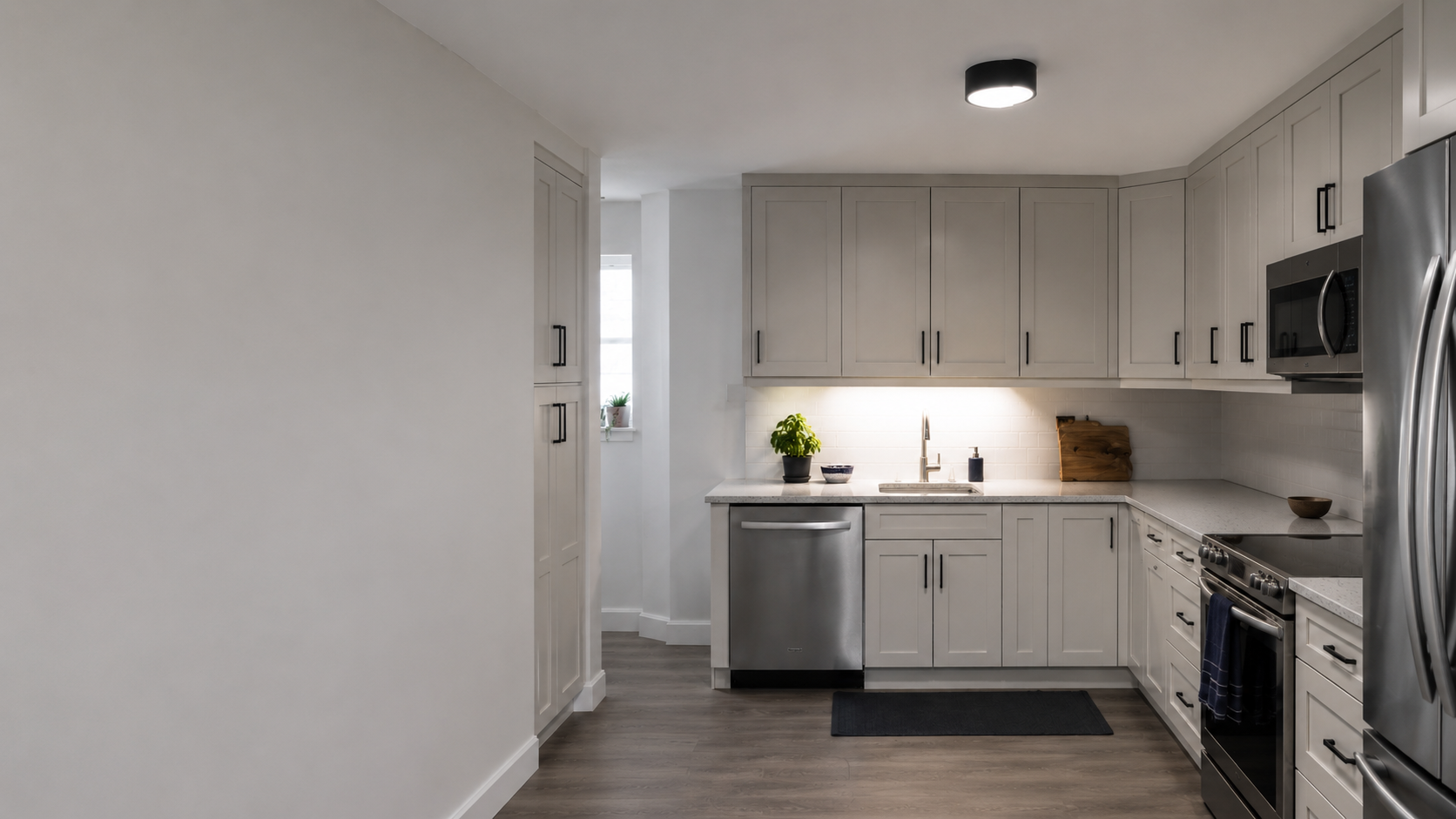
If the ceiling is bright but the counter is dark, you are missing a layer—not more brightness everywhere.
Do not begin with a fixture. Choose the surface, zone, or routine that still disappears after the main light turns on.
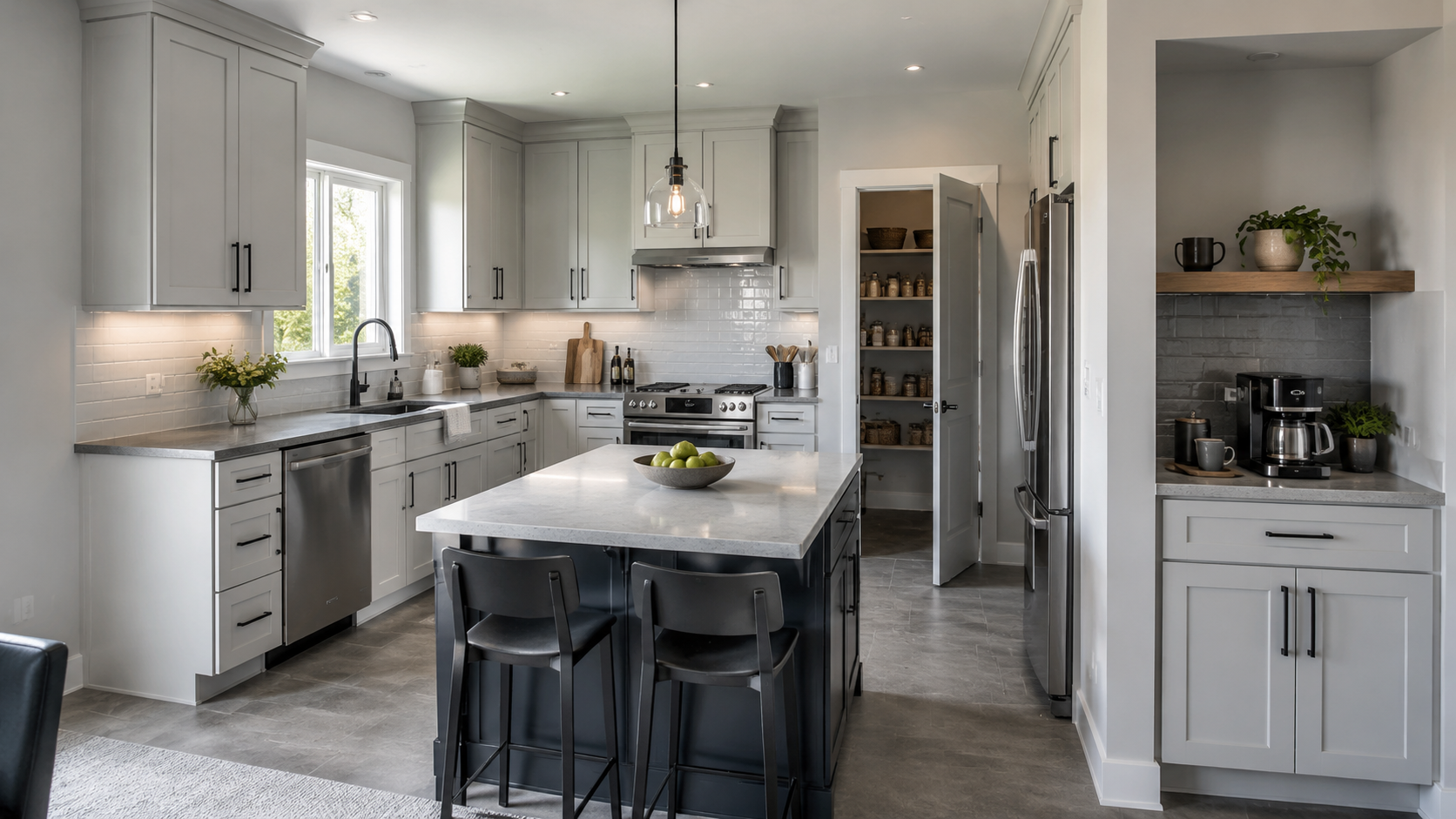
Upper cabinets can block ceiling light before it reaches your hands. Start with a task layer beneath the cabinet.
See the matching picks →Watch one kitchen change as the light moves from general visibility to actual work, then to a balanced finished room.
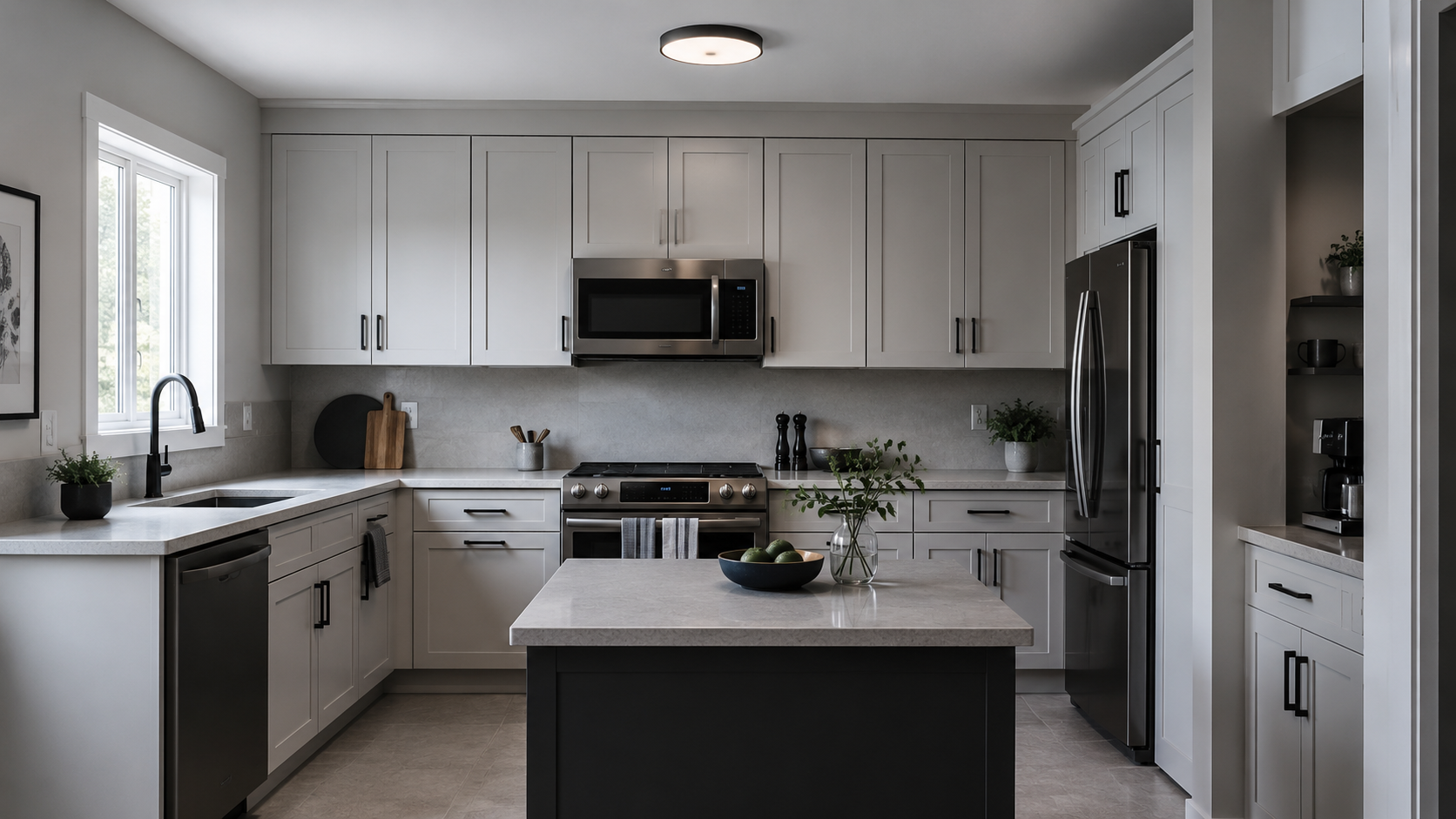
General light helps you move through the room, but cabinetry can still leave the work surface under-served.
Start here when upper cabinets leave the daily preparation surface darker than the room around it.
See option →Useful when a longer island needs repeated visual anchors instead of one isolated point of light.
Explore →Consider a compact general-light route when ceiling clearance matters more than decorative drop.
Check fit →For a dim pantry or storage zone that benefits from light appearing where short visits actually happen.
See details →Use a small accent source when the nook needs definition rather than more whole-room brightness.
View option →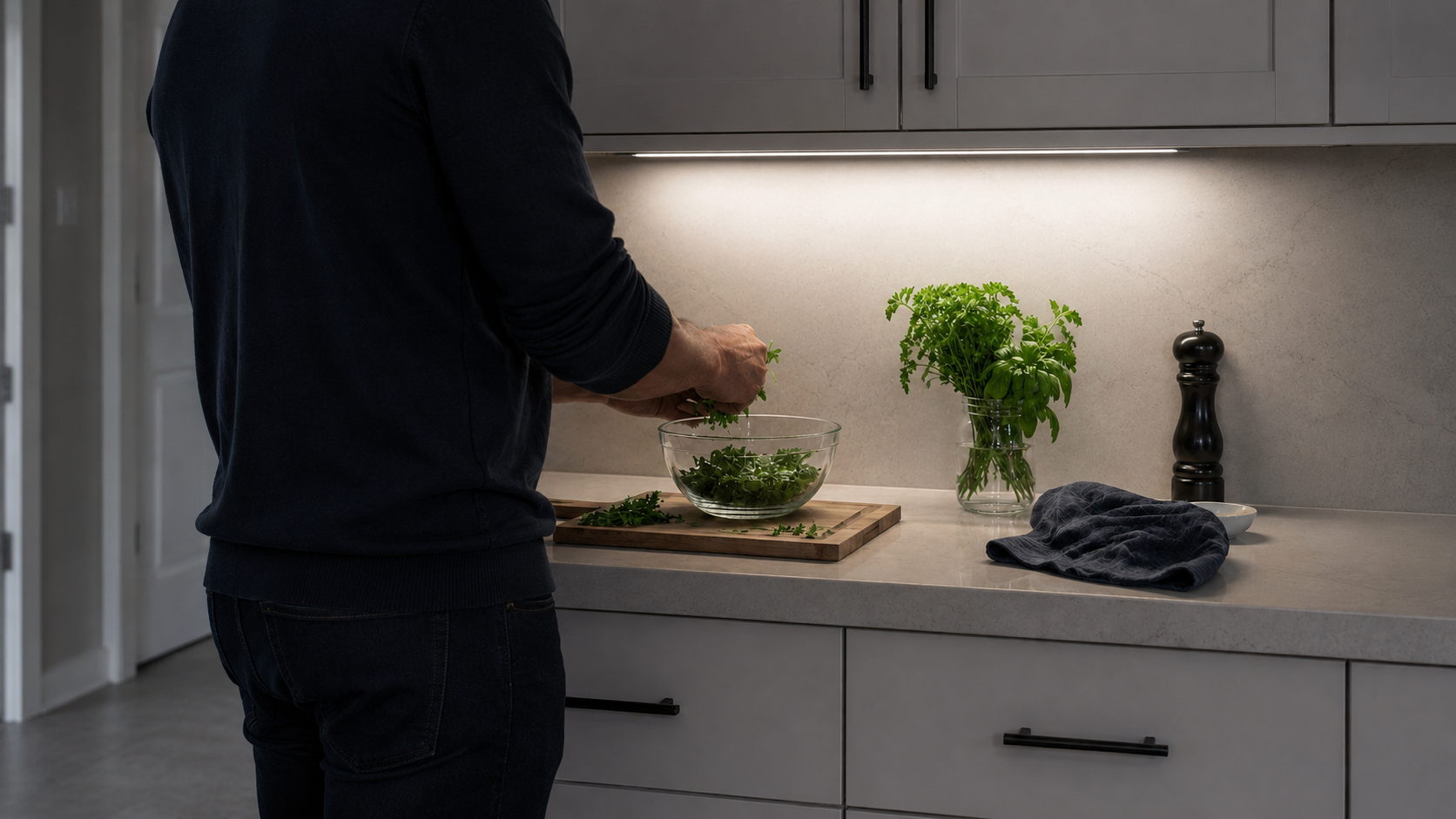
Solve this before falling for the fixture. Installation, cord location and charging behavior can change which option actually works.
Best when you want a built-in-looking task layer and are prepared to verify the fixture's installation requirements.
Check the option →The doorway can look bright while your own body still blocks useful light from reaching the counter.
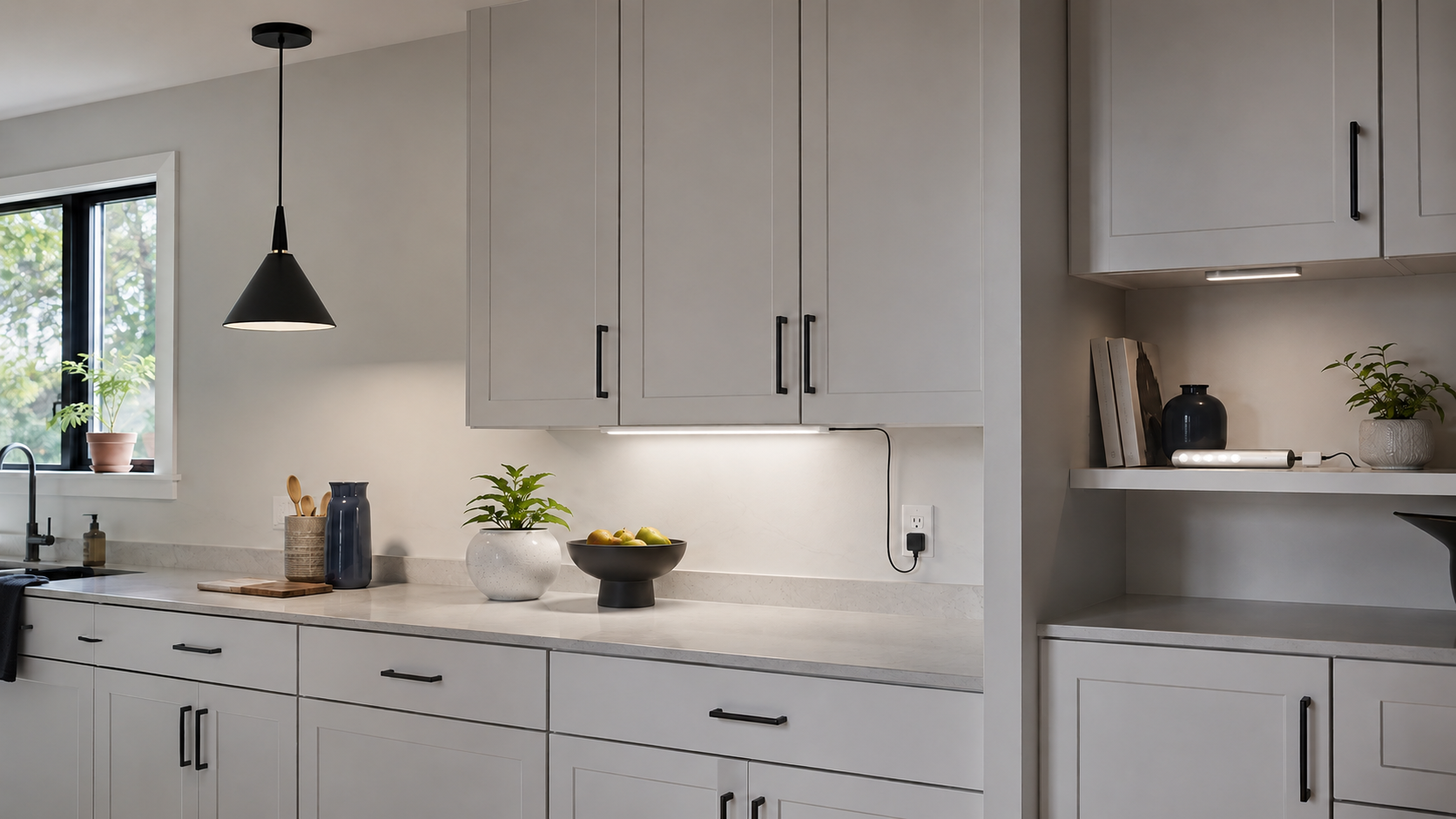
A closer task layer may solve more than increasing general room brightness.
Move to island balance, general light or accent depth instead of duplicating task light.
A dark counter, a flat island and a no-wire kitchen are three different lighting problems.
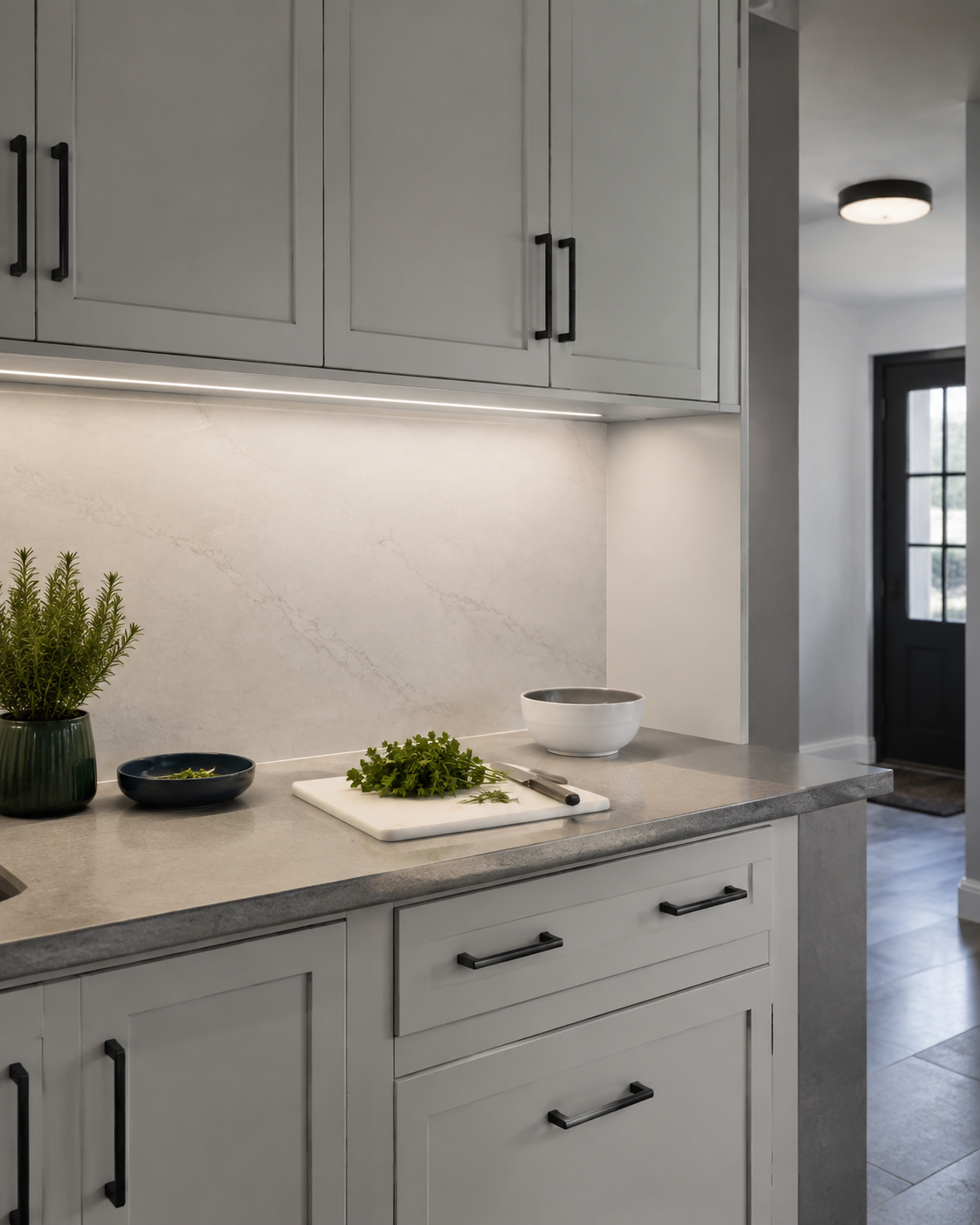
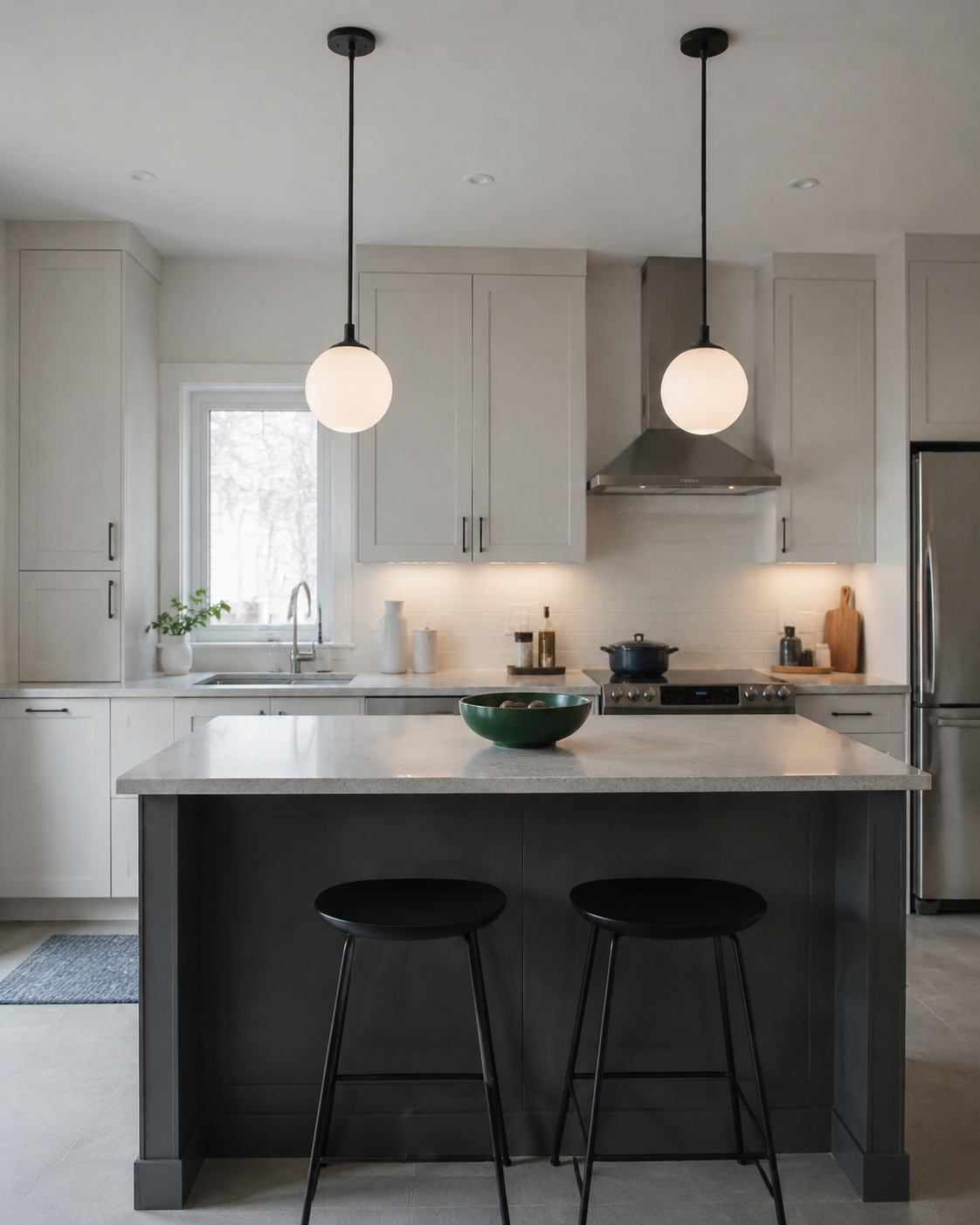
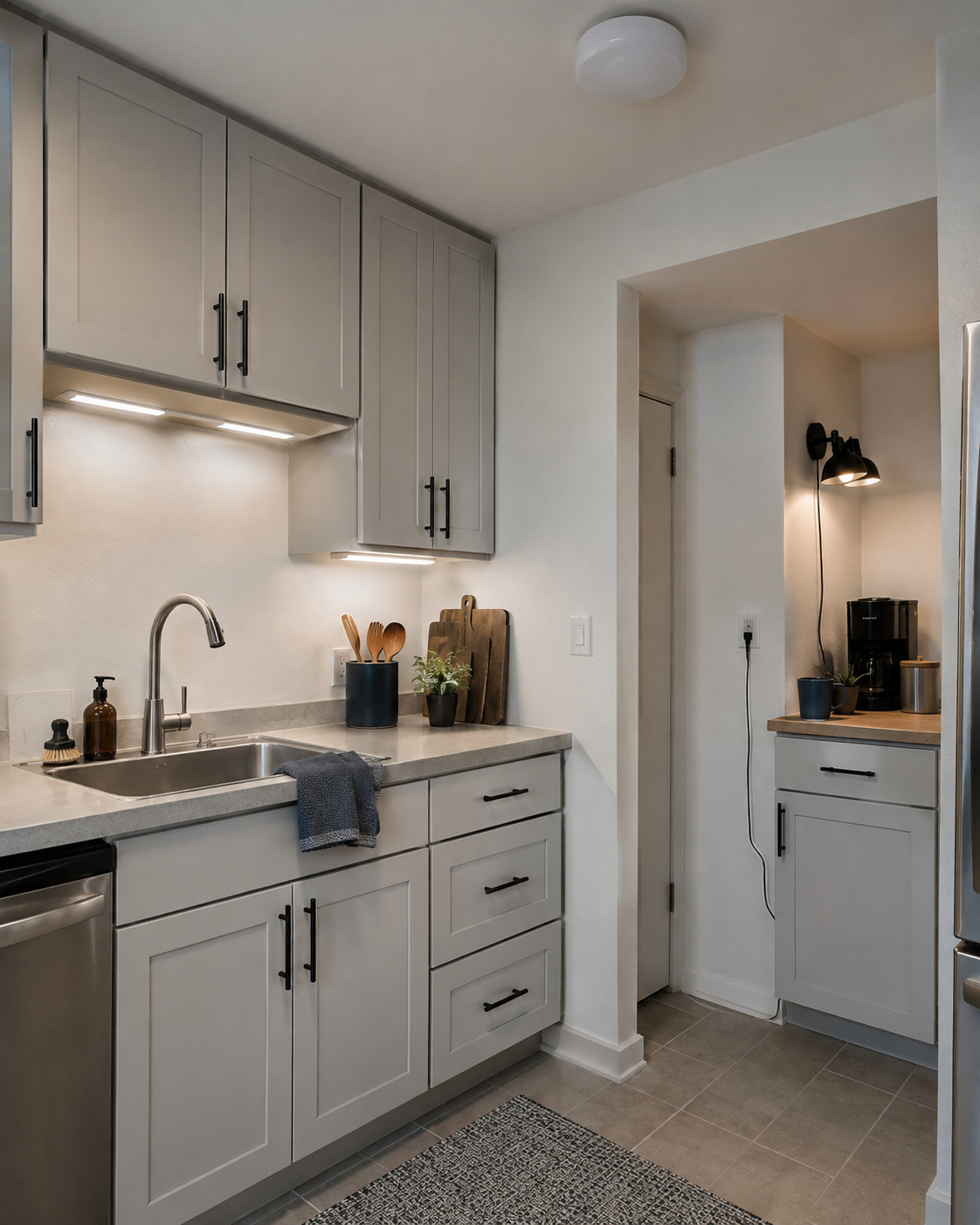
A good-looking fixture can still be wrong for the zone. These six details determine whether the idea works in your kitchen.
Confirm hardwired, plug-in, rechargeable or battery operation on the current listing.
Check the selected variant, dimensions and nearby cabinet, door or ceiling clearance.
Verify the bulb base and any included components instead of assuming compatibility.
Confirm dimmer, switch, remote or smart-control compatibility for the setup you intend to use.
Read the manufacturer's current mounting and installation guidance before choosing the route.
Check manufacturer guidance where heat, moisture, cabinet surfaces or other exposure may matter.
Choose by lighting job, not by how many fixtures can fit on a product grid.
A more textured single-pendant direction when clear glass feels too plain.
Check: size + hanging height Explore →A restrained general-light route where pendant drop is not the priority.
Check: fixture dimensions Check fit →Useful when one fixed general source cannot point toward the zone you need to emphasize.
Check: head movement + base View →A continuous-light route where one rigid task bar is not the preferred format.
Check: power + run length Explore →A rechargeable route for visitors who care about how removable lights return to charge.
Check: placement + charging routine See option →A compact point-light format when a long linear bar is unnecessary.
Check: control + battery use View →For a coffee nook, art moment or shelf zone that needs visual depth rather than task brightness.
Check: width + mounting surface Explore →For visitors who want the bulb itself to become part of the lighting-control decision.
Check: base + ecosystem Check details →For a longer island that benefits from repeated visual anchors.
For a single pendant with more visual texture.
For a smaller island, peninsula or focused hanging-light position.
For a softer visual shade treatment than clear glass.
For a deliberately stronger decorative focal point.
For general light where a compact ceiling profile matters.
For more fixture presence without full pendant drop.
Another semi-flush configuration for a different ceiling silhouette.
For a room shape that benefits from a longer overhead form.
For a ceiling source that needs a more directional relationship with the room.
For a focused daily preparation surface beneath cabinetry.
For a longer counter run that needs more continuous coverage.
For layouts where a flexible run suits the cabinet geometry.
For a permanent task route after installation requirements are verified.
For a broader no-wire task-light route beneath cabinets.
For a rechargeable route where charging behavior matters.
For smaller cabinet or localized task zones.
For compact cabinet areas where a linear bar is unnecessary.
For a compact point-light format with rechargeable operation.
For a dim pantry or utility zone that needs localized illumination.
For art, shelf or coffee-nook depth without another ceiling source.
An alternate accent route for a focused wall or display moment.
For a wall-light route where a nearby outlet is part of the plan.
Tap each item after you verify it against your room and the current product listing.
For hardwired electrical fixtures, follow the manufacturer's instructions and use appropriately qualified electrical help where required.
Once the light reaches the right surfaces, the next decision is usually the counter, the beverage zone, or the space available around it.
Back to the complete Kitchen Hub