
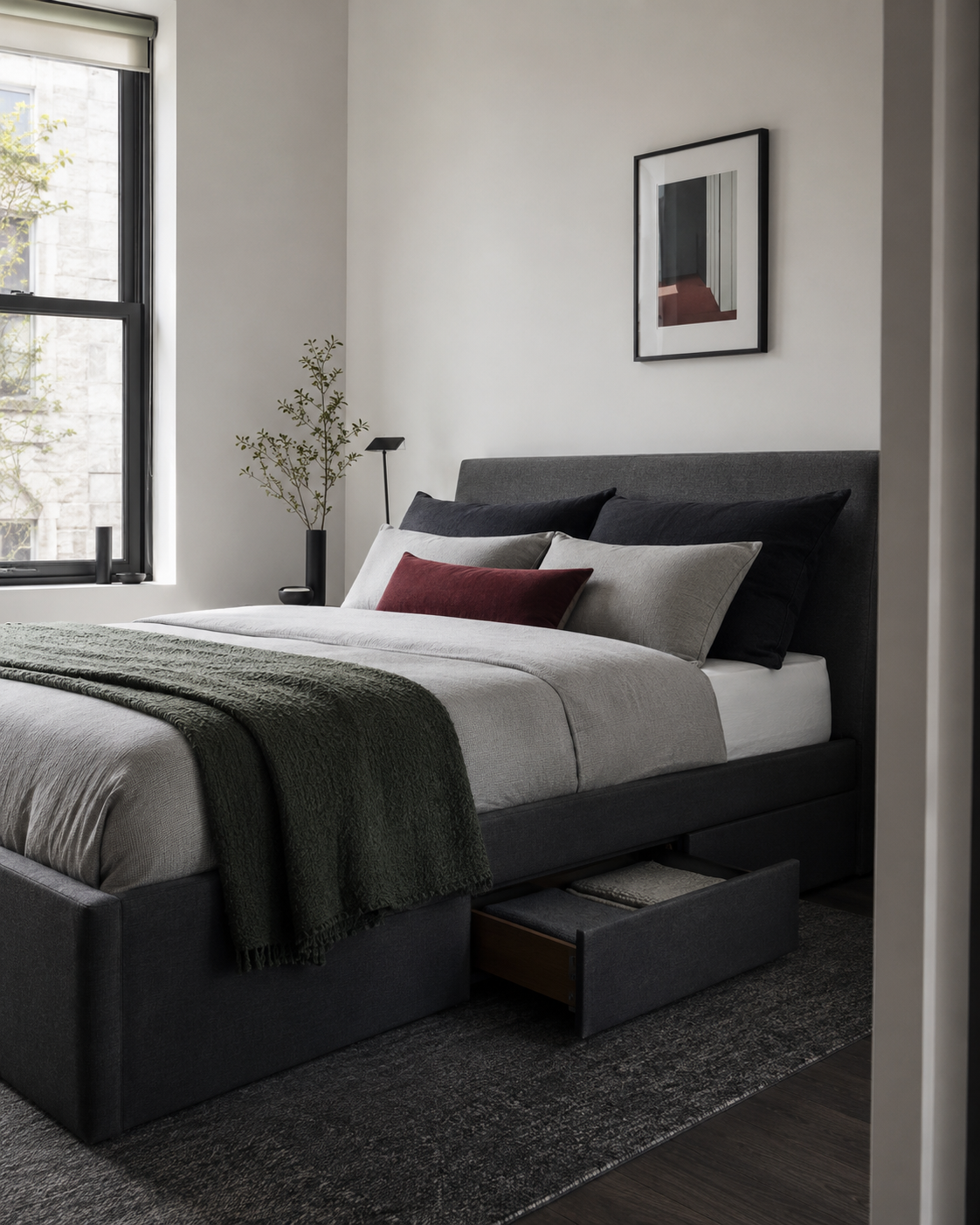
LIFT · Recover the bed
Make the largest object do a second job.
Use storage in or beneath the bed before adding another full-size cabinet.
Find the collision first. Then narrow it, lift it, hide it, fold it, or move it off the floor.
Affiliate disclosure: As an Amazon Associate, Ravnora Decor may earn from qualifying purchases. Product links may open on Amazon.
A small bedroom rarely has one “storage problem.” It has one or two zones competing for the same floor, wall or reach.
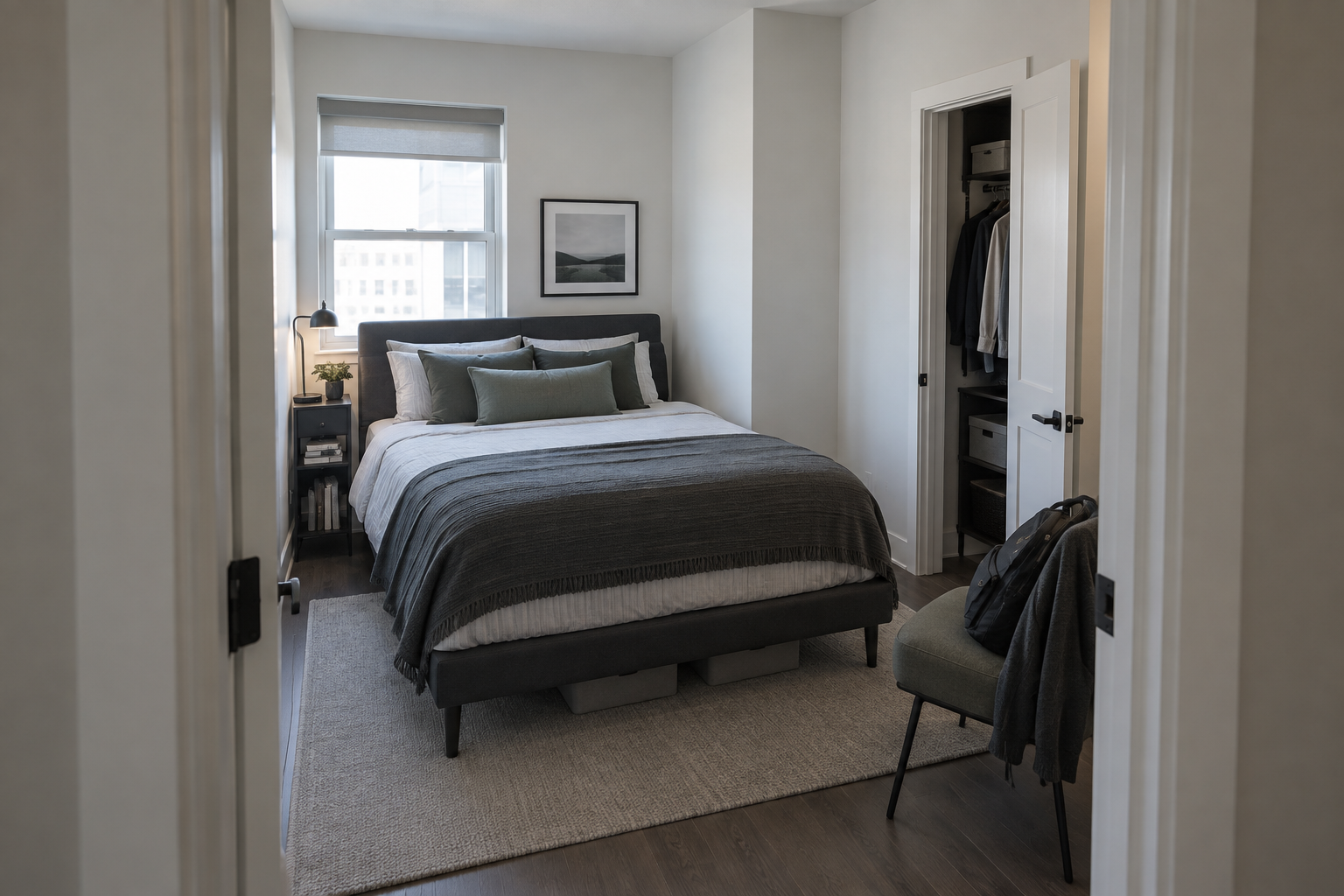
The footprint is only the closed position. Doors, drawers, chairs and people still need somewhere to go.
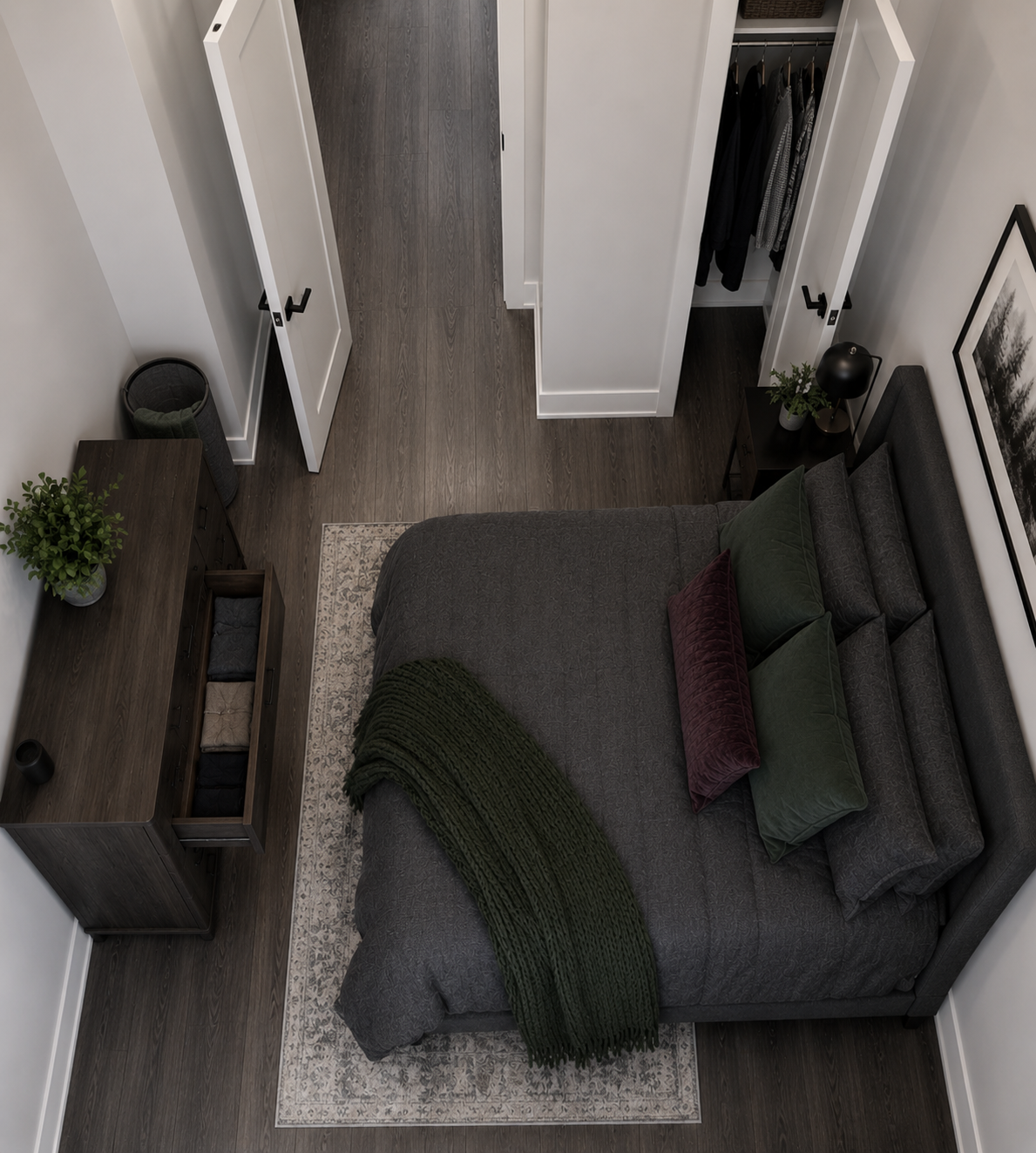
Enter room and bed dimensions, then choose the unit you measured in. The result separates total leftover space from the approximate side clearance of a centered bed.
The strongest product is the one that changes the exact relationship causing the room to feel tight.
Use storage in or beneath the bed before adding another full-size cabinet.
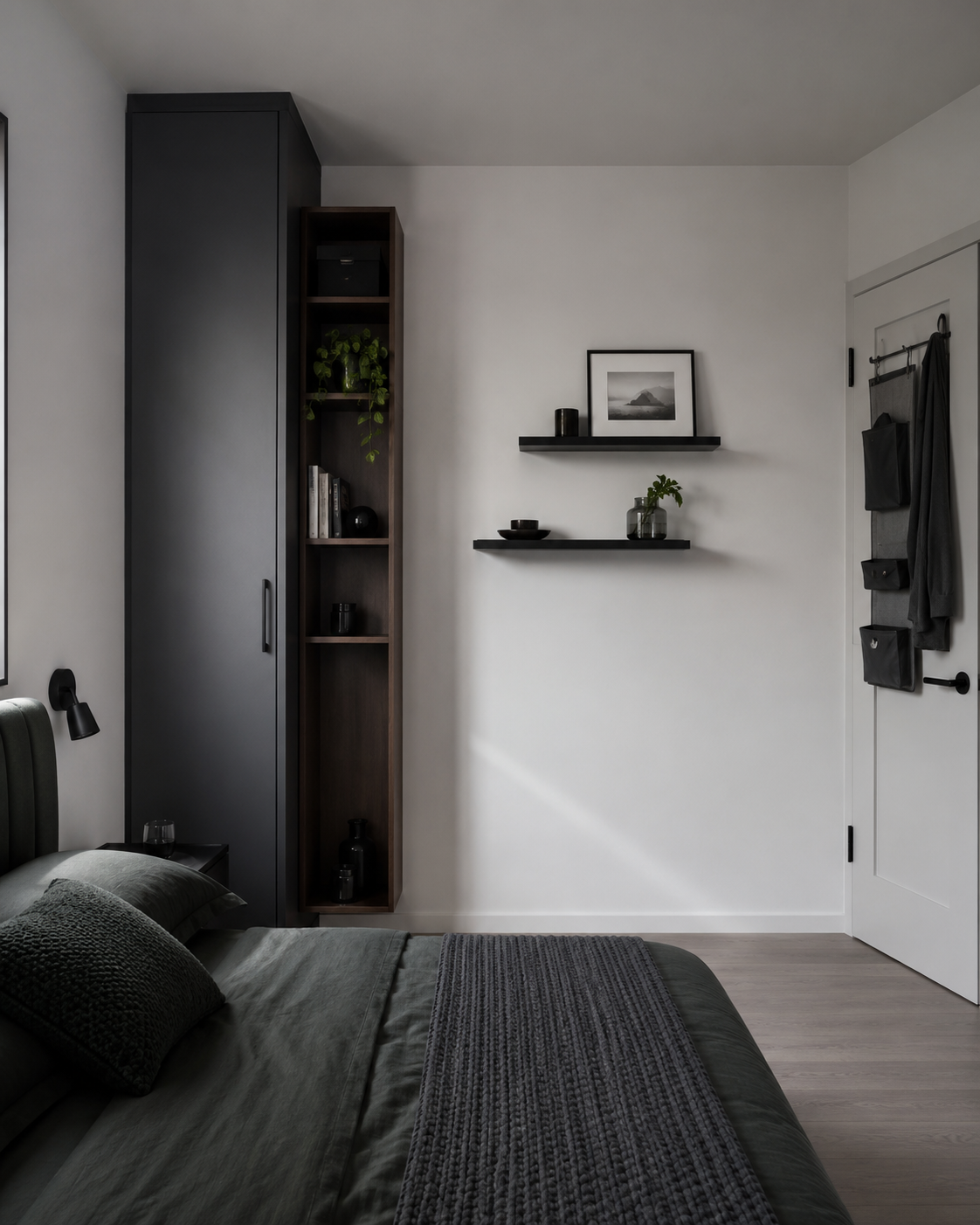
Use height, doors and narrow vertical strips instead of another broad footprint.
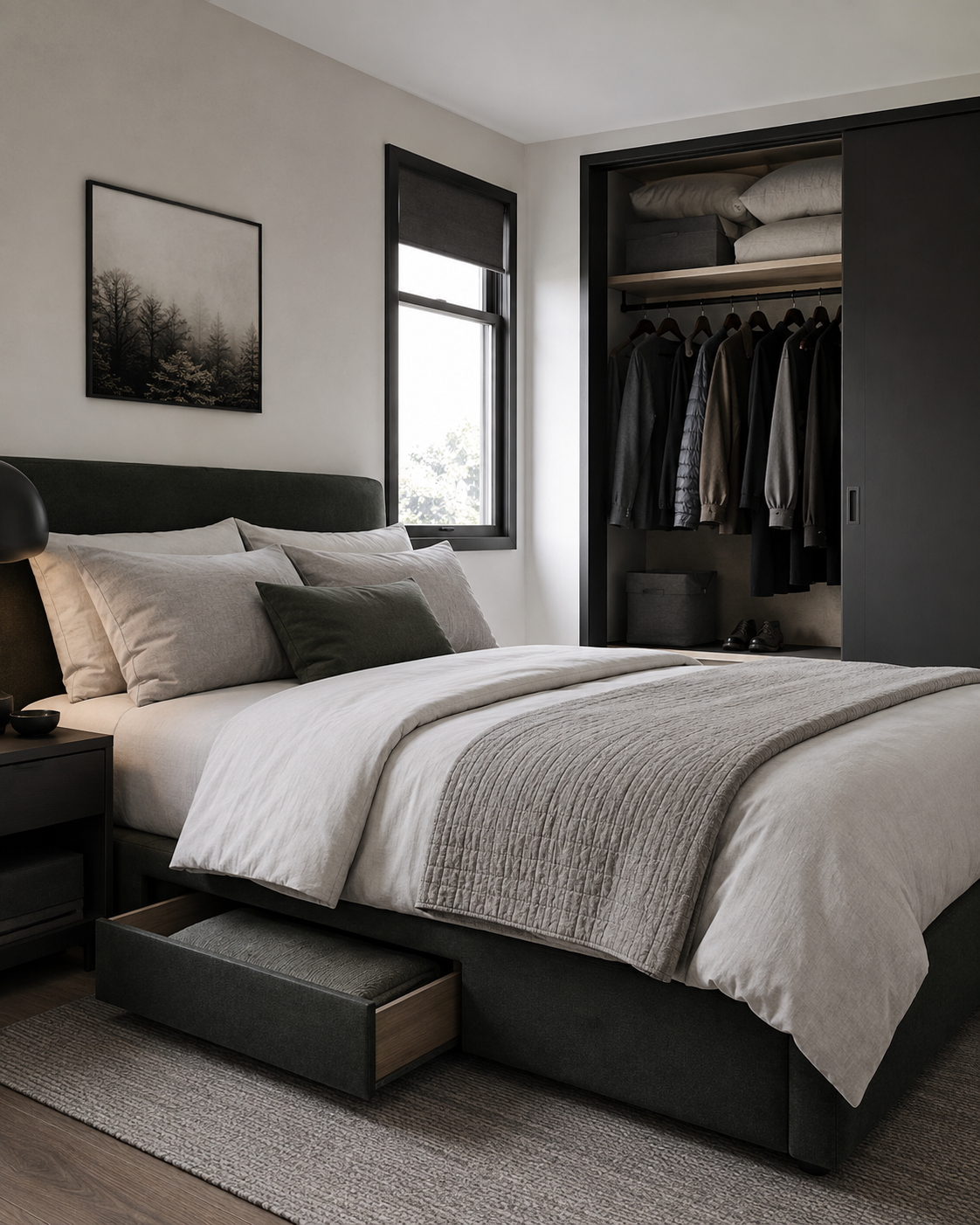
Seasonal and bulky belongings should consume cubic volume, not daily attention.
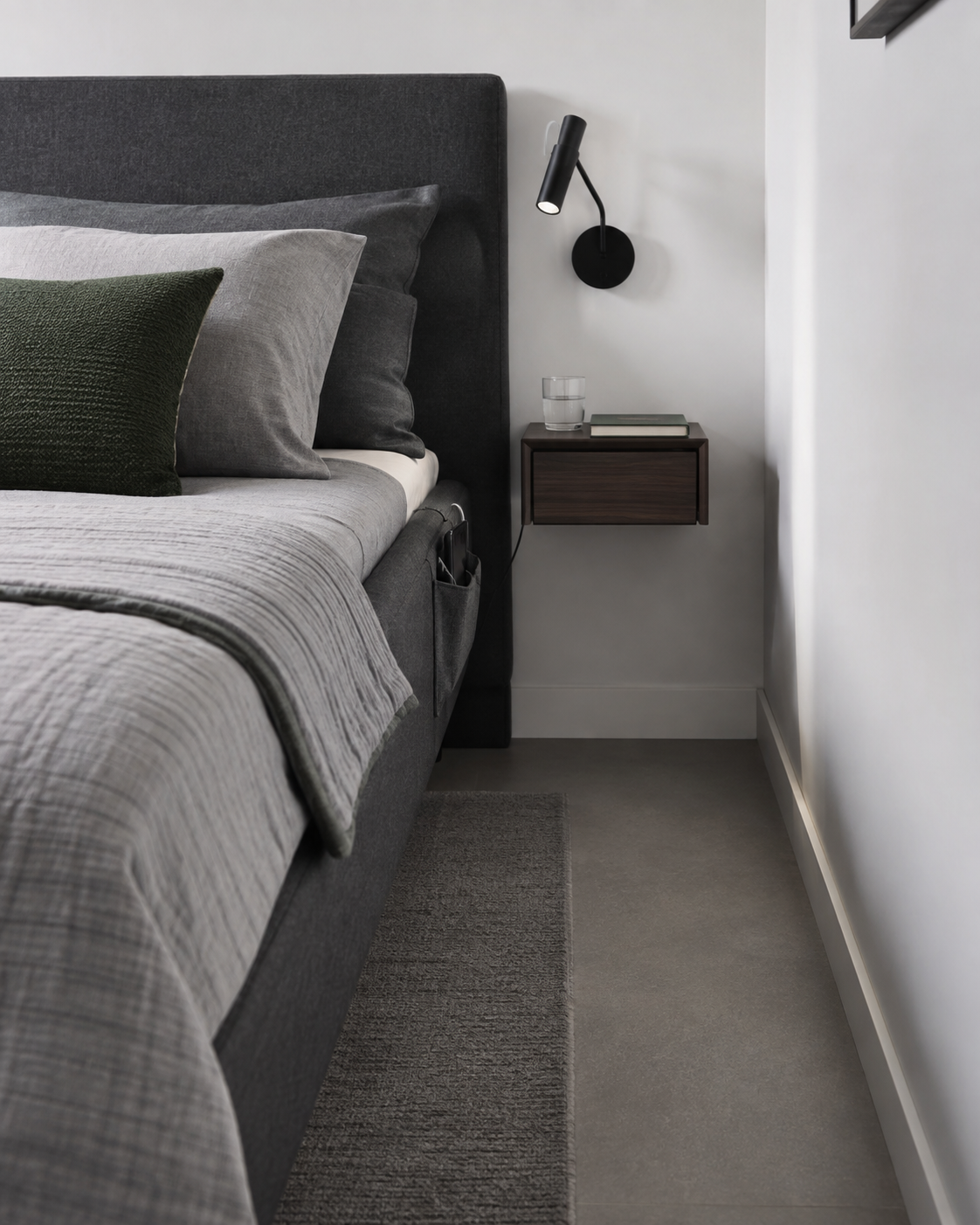
Water, charging and a book do not always require a conventional nightstand.
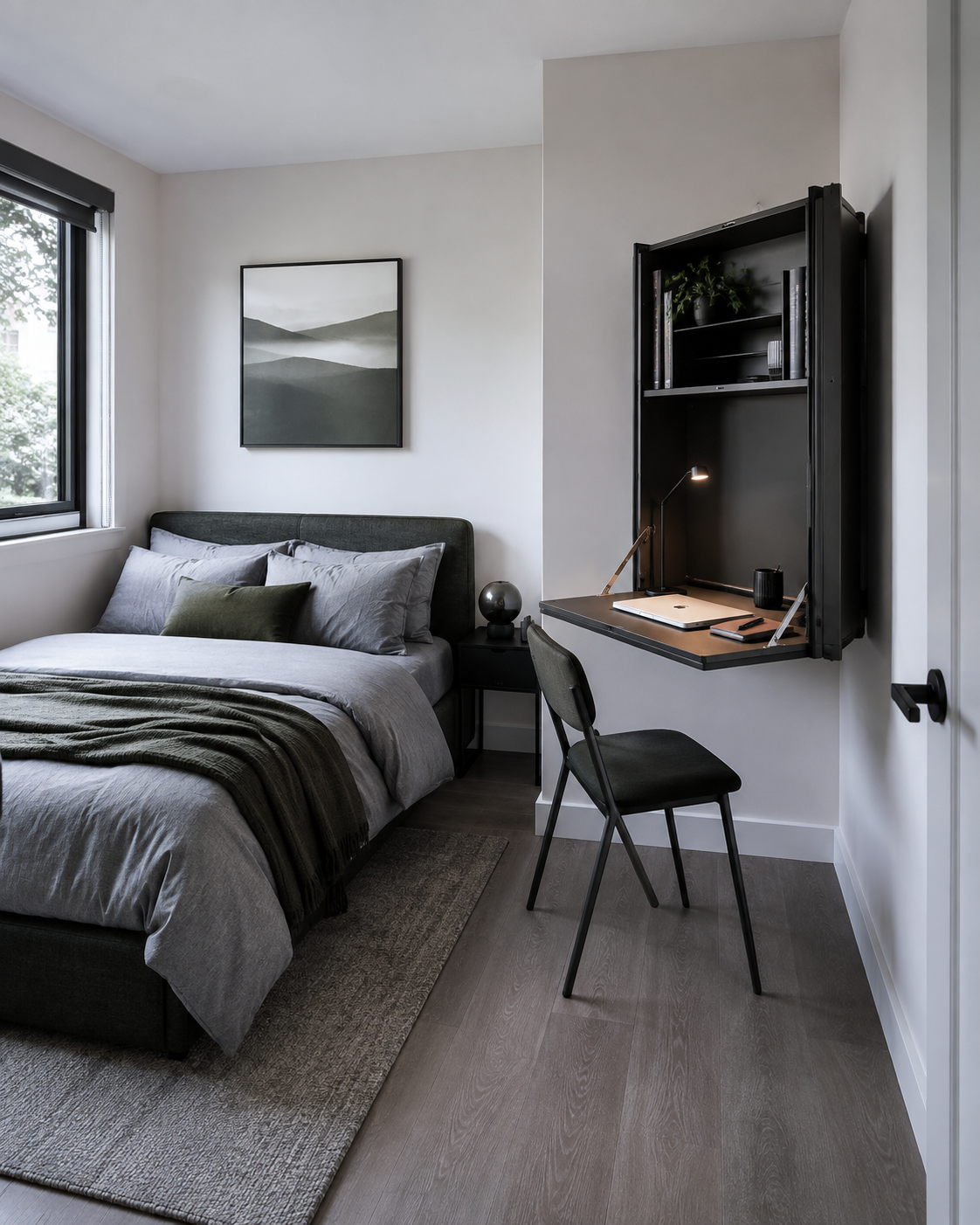
Fold, float or deliberately shrink the surface that supports occasional work.
Search by the problem you want gone. Compare only the fixes that solve it, then verify the exact listing before you buy.
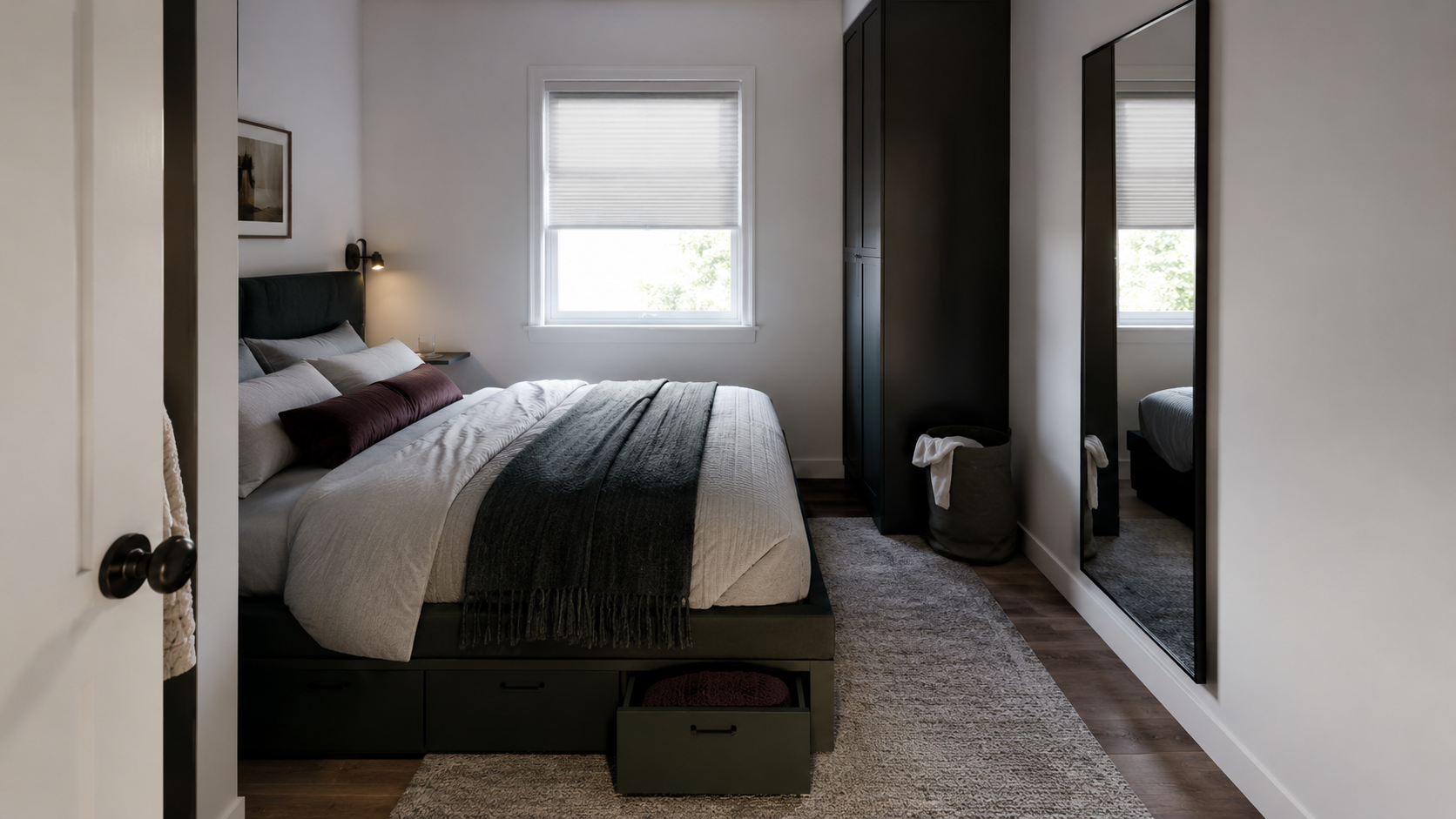
Use the room’s largest footprint for closed capacity instead of adding another broad storage piece.
Explore This FitKeep a drawer and bedside landing zone while preserving visible floor beneath it.
Check Current OptionsMove the landing surface onto the bed itself when the aisle cannot afford another piece of furniture.
Check CompatibilityUse dead volume beneath the bed for belongings that still need relatively easy retrieval.
See the DetailsConcentrate drawer capacity vertically when a wide dresser would consume the circulation zone.
Compare the FitIncrease usable hanging capacity inside the closet before giving the bedroom another freestanding footprint.
Explore This RouteGive occasional work a real surface without leaving permanent office furniture in the room.
Check the ListingKeep a compact permanent laptop surface while leaving the floor visually and physically open.
See Current ChoicesA dedicated slim laundry landing zone can stop worn clothing from colonizing the floor or chair.
Check the SizeTurn a slim wall strip into useful capacity before another broad piece takes over the floor.
Explore the Vertical FitNo shortlist item matches that search. Try a broader problem word or use the full 35-product library below.
Switch between three outcomes. The image, explanation and execution products change together.
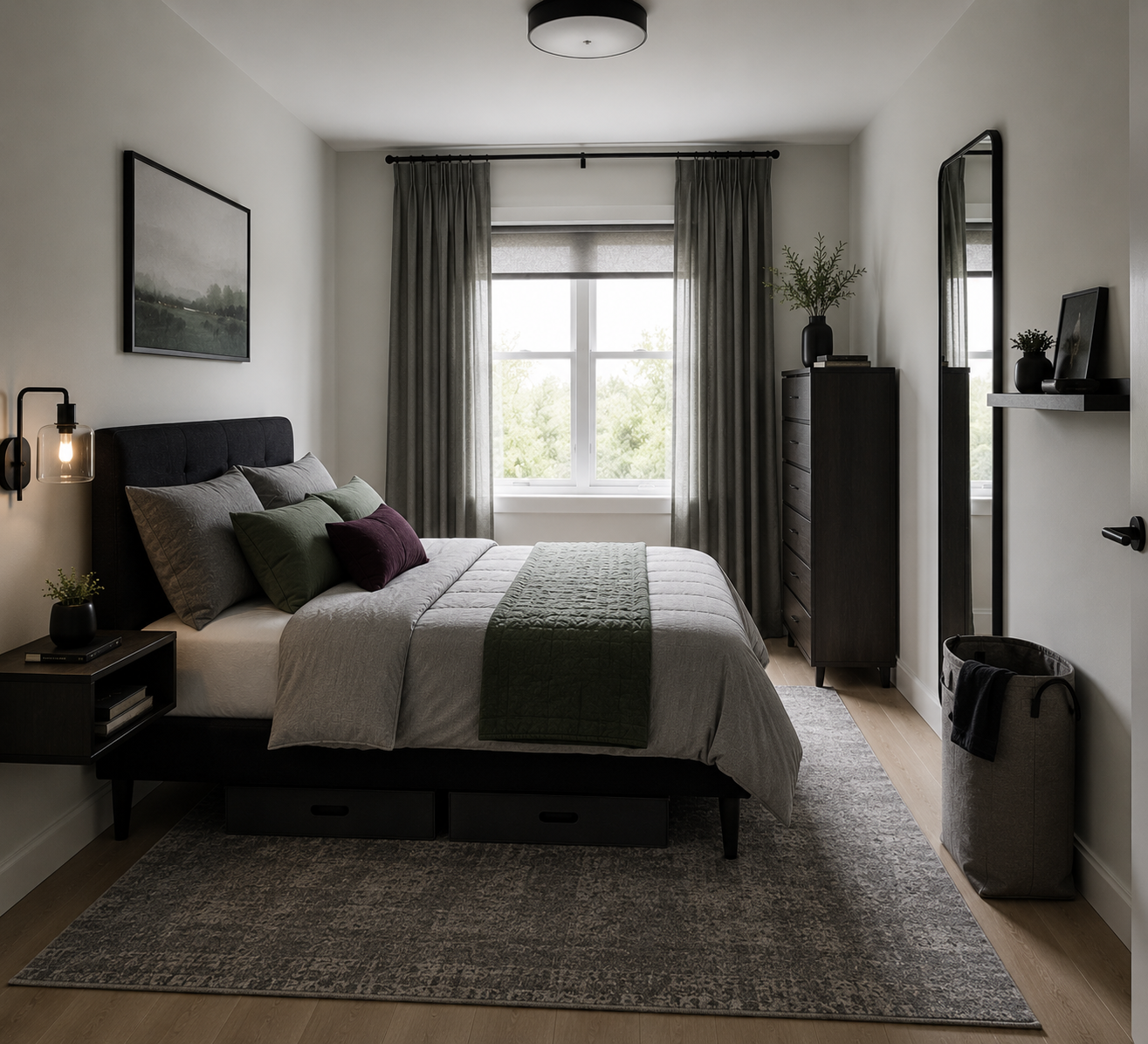
Choose this when the room technically works but feels crowded. Use only the storage that solves a real problem and let visible floor do some of the visual work.
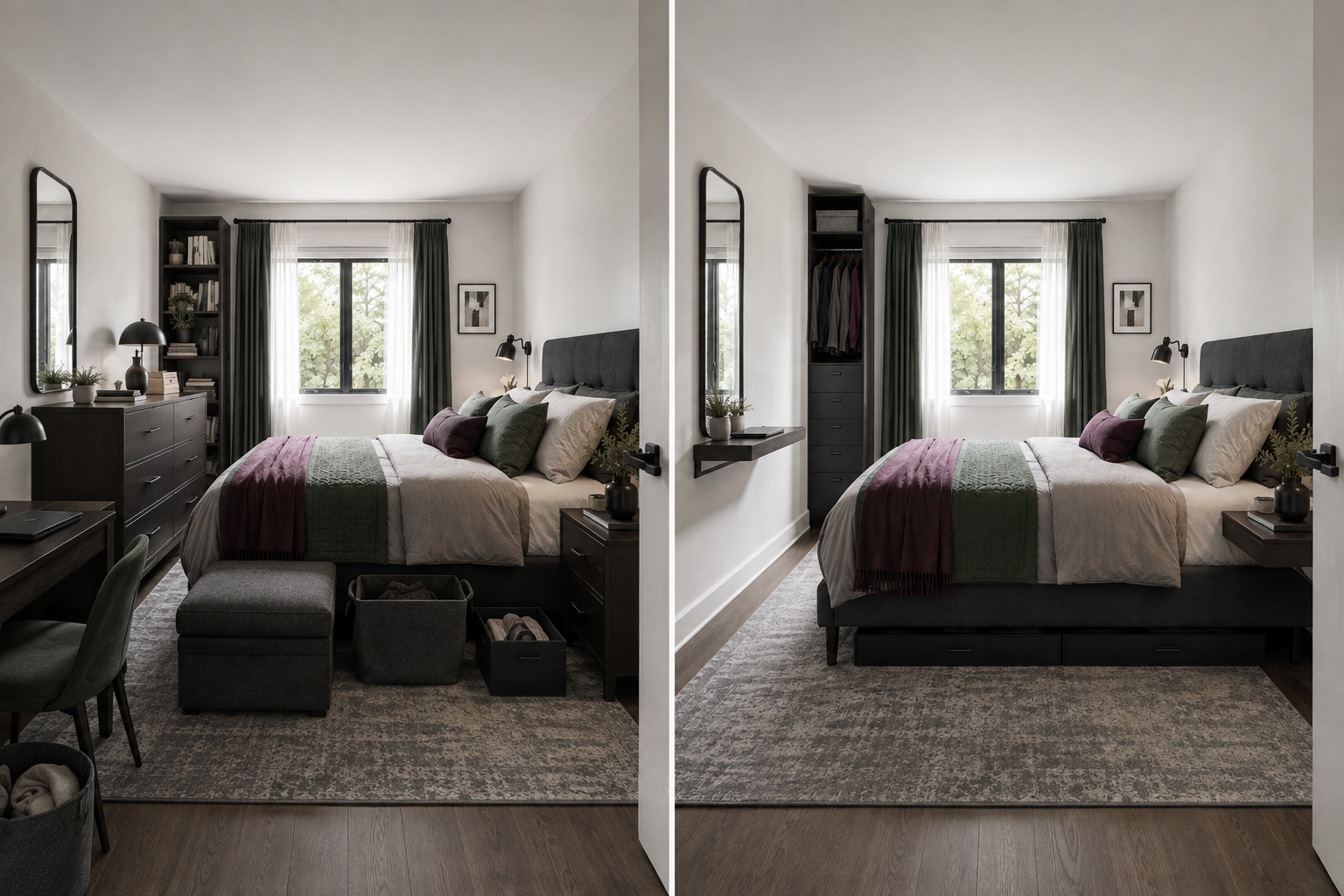
A generic checklist hides the real risk. Choose what you are buying and check the room around that mechanism.
Measure the bed in use—not only the rectangle shown in the listing.
Go straight to the bottleneck you already identified. Search across all 35, or open one product family at a time.
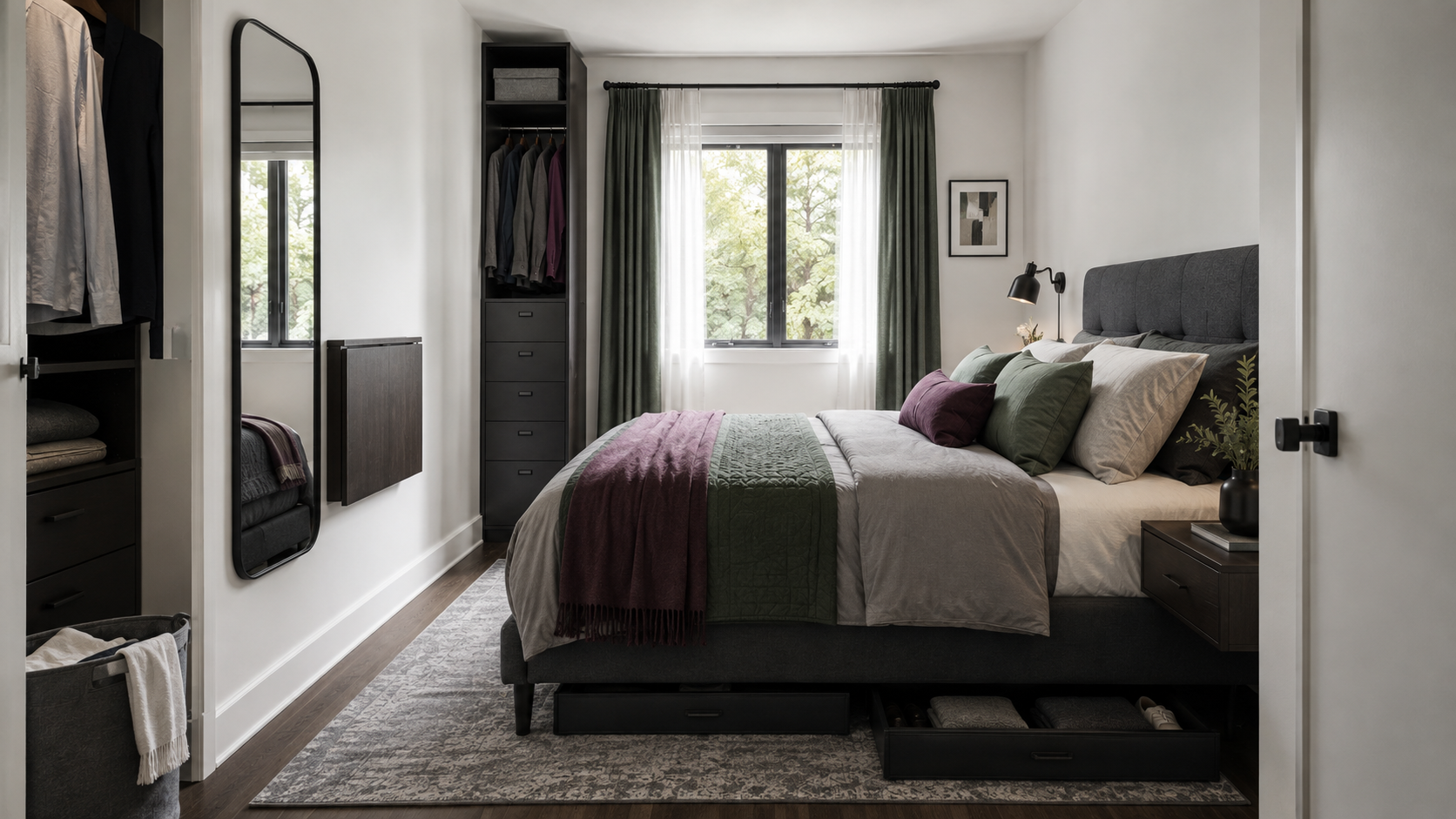
A small bedroom is resolved when the room stops making you negotiate with the furniture.