
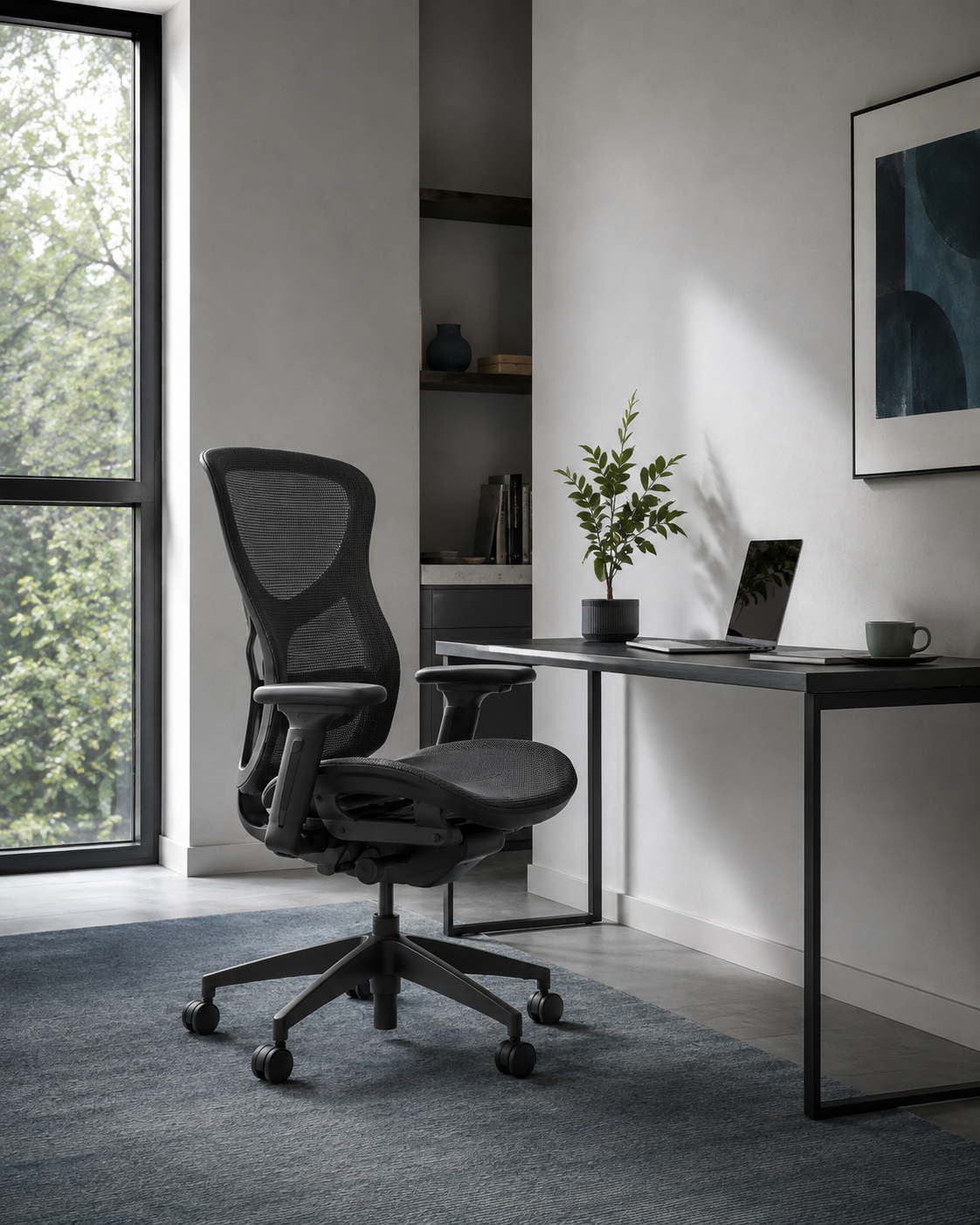
ROUTE 01
Adjustment-Led
Start here when the chair carries a large share of your working day.
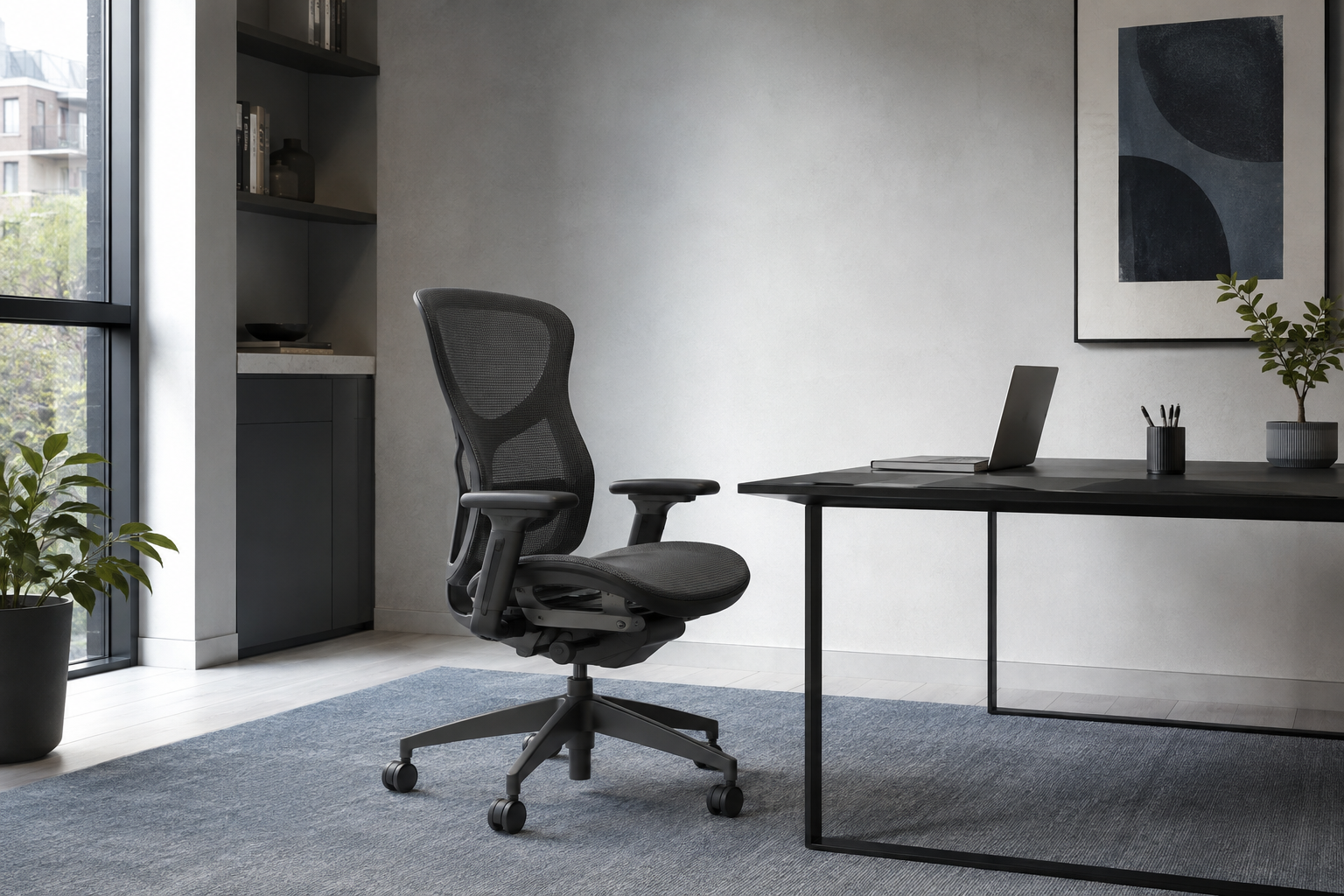
The Working Position
Start with the desk opening, session length and how much chair needs to move beneath the desk. Then compare only the routes that make sense.
30-Second Chair Read
One constraint can remove half the wrong chairs before you compare finishes.
Choose the situation closest to yours. You do not need to solve every chair decision at once.
The Ravnora Chair Fit Finder
This is a room-fit starting point, not medical or ergonomic diagnosis.
Always confirm the selected Amazon variant, dimensions and adjustment range before purchase.
Your starting route
Your desk leaves reasonable room for a standard task-chair footprint. Start with adjustment-led chairs, then confirm the arms against the underside of the desk.
Hard floor: if the existing casters fight the surface, verify wheel compatibility or define the rolling zone with a suitable chair mat.
See the Difference
The right route depends on what the chair needs to solve in your actual room.
Start here when the chair carries a large share of your working day.
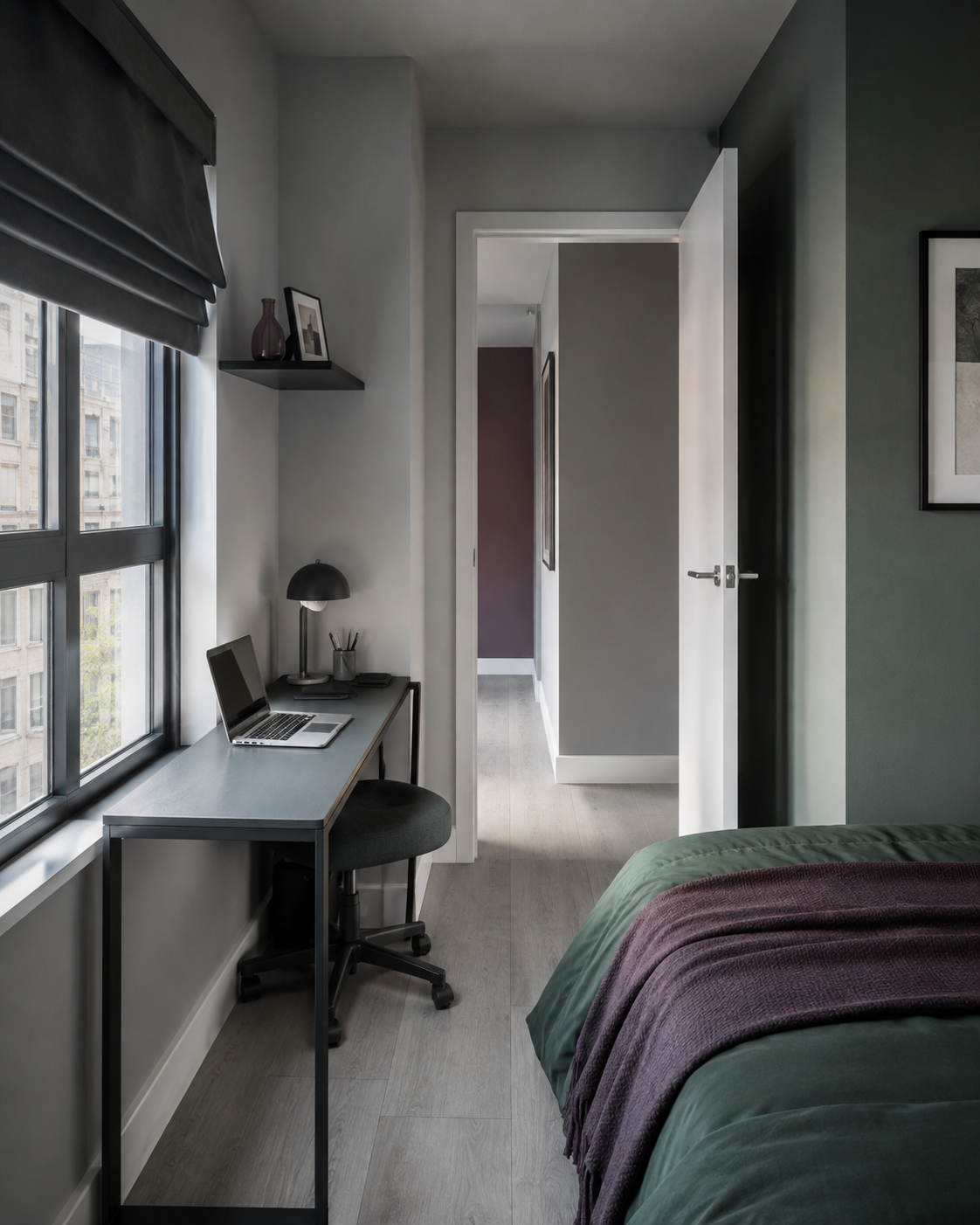
Use less chair when the room cannot afford a permanent visual or circulation obstacle.
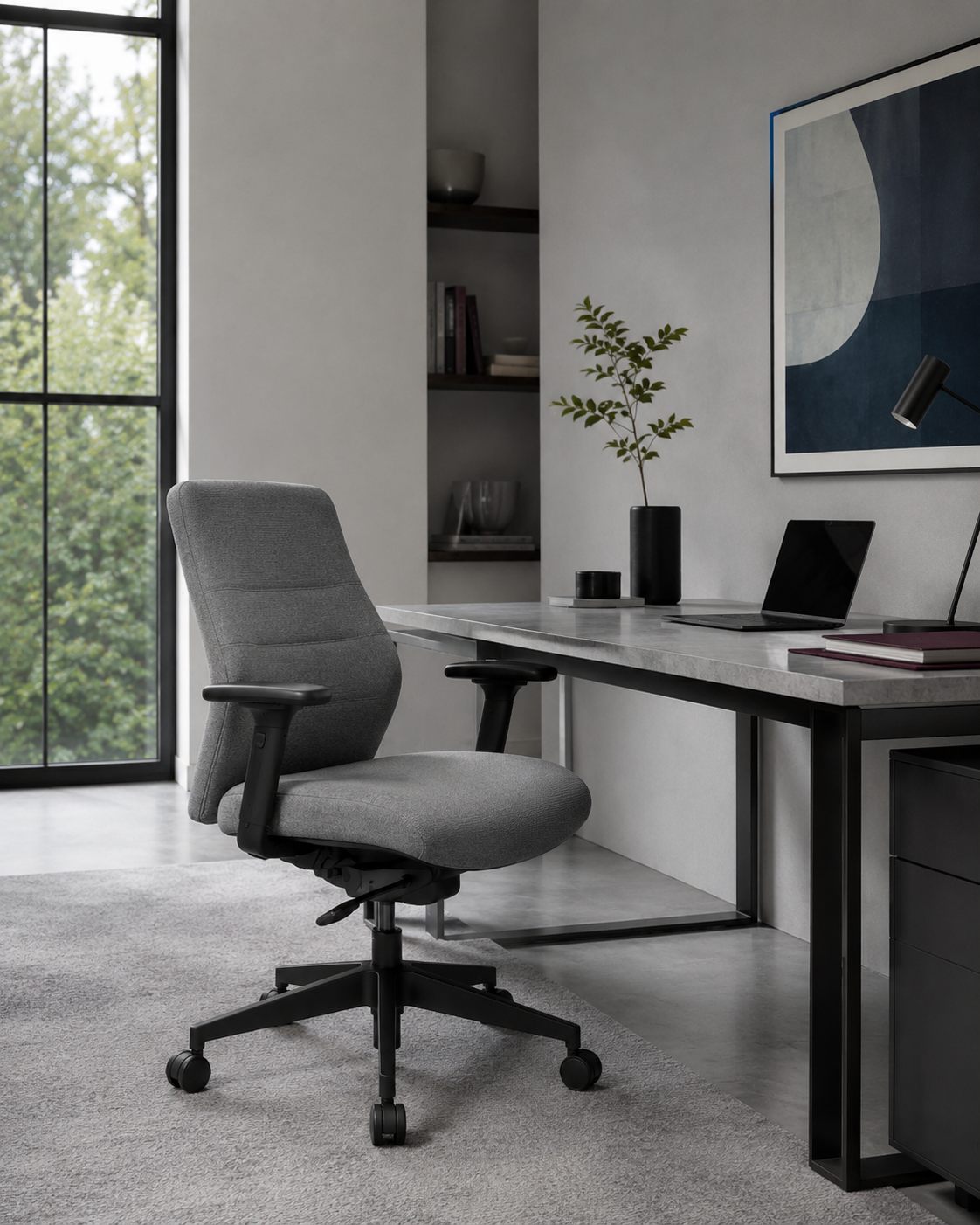
Keep the room residential when a conventional black mesh chair feels too visually dominant.
When the standard compact task-chair route is not the right physical or visual fit, measure the bigger chair deliberately.
The Ravnora Edit
We separated the principal picks by buying situation so twenty products never become one giant catalogue.
Best for: a compact premium task-chair route.
A strong starting point when you want several adjustment levers without moving into a visually oversized chair.
Check: selected variant dimensions, seat range and arm clearance against your desk.
Best for: longer work sessions and a breathable office-chair format.
This route makes sense when adjustment and mesh construction matter more than making the chair visually disappear.
Check: live dimensions, arm adjustment and selected configuration.
Best for: adjustment-led task work.
Its listed synchronized tilt and adjustable-arm format give the chair a clear practical role rather than another cosmetic variation.
Check: widest footprint and arm position against the desk opening.
Best for: someone prioritizing arm movement and a high-back mesh format.
The adjustment emphasis makes it more useful here than simply adding another ordinary mid-back mesh chair.
Check: current headrest, arm and overall dimensions on the selected listing.
Best for: a feature-rich high-back mesh alternative.
A useful comparison when you want more chair behind you and several listed adjustment points.
Check: assembly, live dimensions and how much pullback room the high back requires.
Best for: task-chair function with a more restrained contemporary presence.
This is the bridge between generic mesh-office styling and the softer decor-first route.
Check: current adjustment range, dimensions and selected color configuration.
Swipe horizontally to compare the long-session picks →
Best for: a desk where arms need a better chance of moving out of the way.
Flip-up arms give this chair a specific clearance job instead of merely another mesh-chair silhouette.
Check: the actual arm height and desk underside before assuming it will tuck completely.
Best for: lighter-use spaces where a large high-back chair would dominate.
Its lower visual profile makes it a useful baseline for compact-room decisions.
Check: current chair width, desk opening and the selected listing's adjustment details.
Best for: narrow desk openings and rooms where arm collision is the main problem.
Removing arms simplifies the tuck-under decision and reduces visual bulk around a small desk.
Check: caster-base width, seat height and remaining legroom beneath the desk.
Swipe horizontally to compare the clearance-first picks →
Best for: a polished home office where conventional mesh feels too corporate.
Its tailored padded silhouette gives this route a distinct residential visual language.
Check: current arm configuration, dimensions and selected upholstery.
Best for: a softer padded office-chair look without making the chair the room's statement piece.
Useful as a simple upholstered comparison to the more design-led home-office chairs.
Check: width, depth, arm clearance and the current finish before ordering.
Best for: a home-led room where visible upholstery matters.
It fills the gap between a true task chair and a decorative chair that happens to sit near a desk.
Check: arm configuration, upholstery and current dimensions on the chosen variant.
Swipe horizontally to compare the softer home-office picks →
As an Amazon Associate, Ravnora Decor may earn from qualifying purchases. Product links open Amazon in a new tab. Listing details can change by variant; verify the current product page before purchase.
The Measurement Most People Miss
Measure the desk at its narrowest usable opening. Then check the chair's arms and widest base separately. A drawer, apron or support rail can reduce the clearance that looked generous from the front.
Choose by How You Actually Sit
Use these when headrest preference, seat width or a secondary sit-stand position changes the brief.
Best for: mesh + high-back + headrest preference.
Verify the current headrest, width and desk-clearance dimensions.
Check on AmazonBest for: people intentionally prioritizing a wider seat and alternative sitting position.
Check seat width, caster/base footprint and knee clearance beneath the desk.
Check Wide-Seat FitBest for: a dedicated broader chair format rather than forcing a standard task-chair slot.
Confirm the live seat, overall footprint and desk-opening measurements.
Check DimensionsBest for: an active secondary position beside a sit-stand or flexible workstation.
Treat it as a specialist position, not an automatic substitute for a conventional task chair.
See the Active Route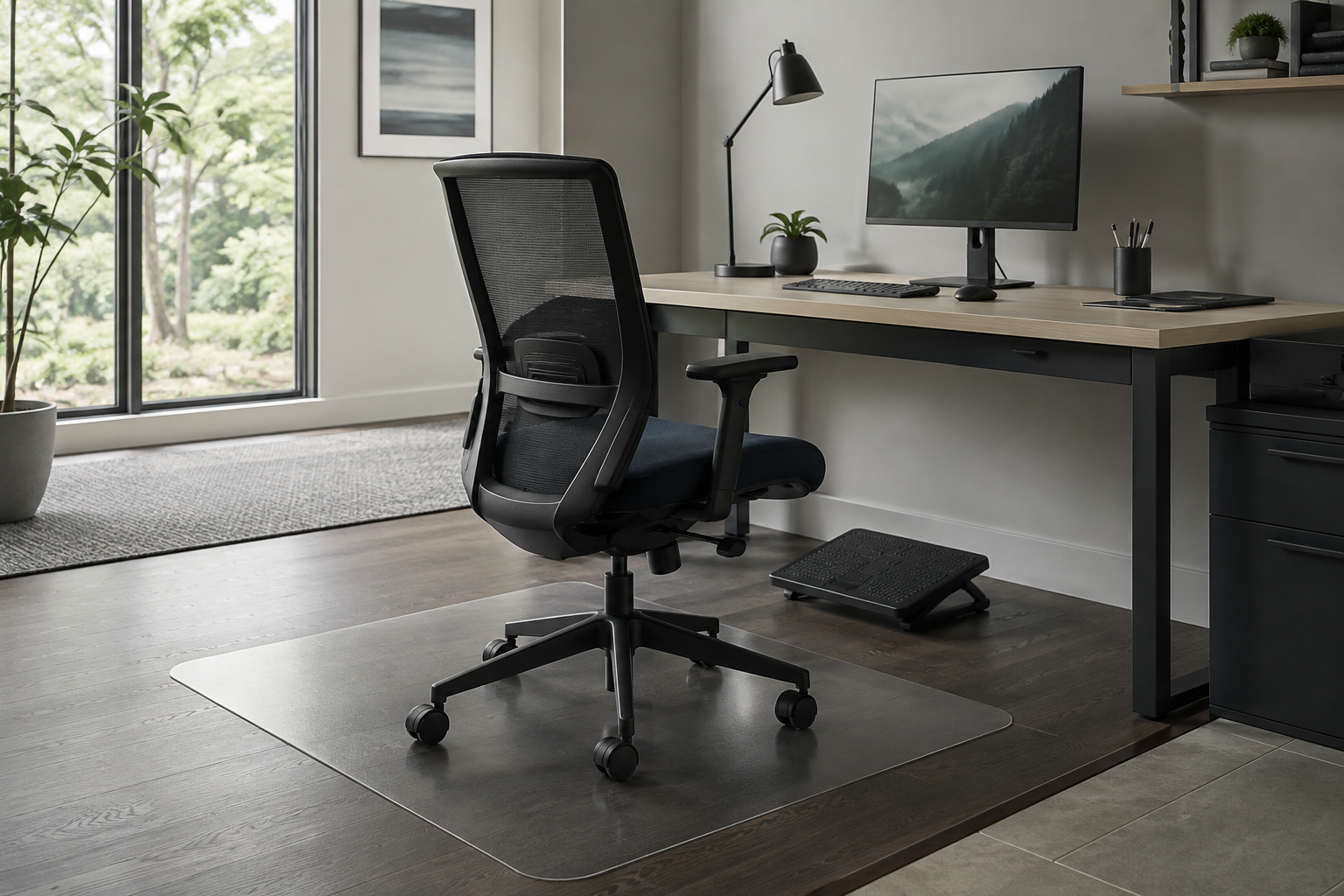
Build the Whole Working Position
Keep the chair you already own when one smaller correction solves the real problem. These four supporting pieces exist for specific situations—not as automatic add-ons.
Useful when you are keeping an existing chair and intentionally changing the seat surface.
Check cushion dimensions →Consider it when desk and chair height leave your feet needing a separate support surface.
Check under-desk fit →A targeted option when the current caster/floor relationship is the problem.
Verify wheel compatibility →Use a mat only when the size and floor type suit the chair's actual rolling path.
Check size & surface →Mistake → Better Move
The Ravnora Check
A thirty-second measurement check can prevent a chair that is good on paper from becoming awkward in the room.
Next Workspace Decision
The next purchase should solve the next constraint—not simply add another object to the room.