
Tiny-wall solution27.5-Inch Micro WorkstationA tiny wall with a compact screen setup.
Check the footprintHome Office Desks
Your desk has to fit more than the wall.
A desk can fit the measurement and still crowd the chair, swallow the walkway or make the whole room feel like an office. Start with what your room is asking for.
What feels wrong right now?
Ravnora starting pointSmall + flexible — protect floor space first.
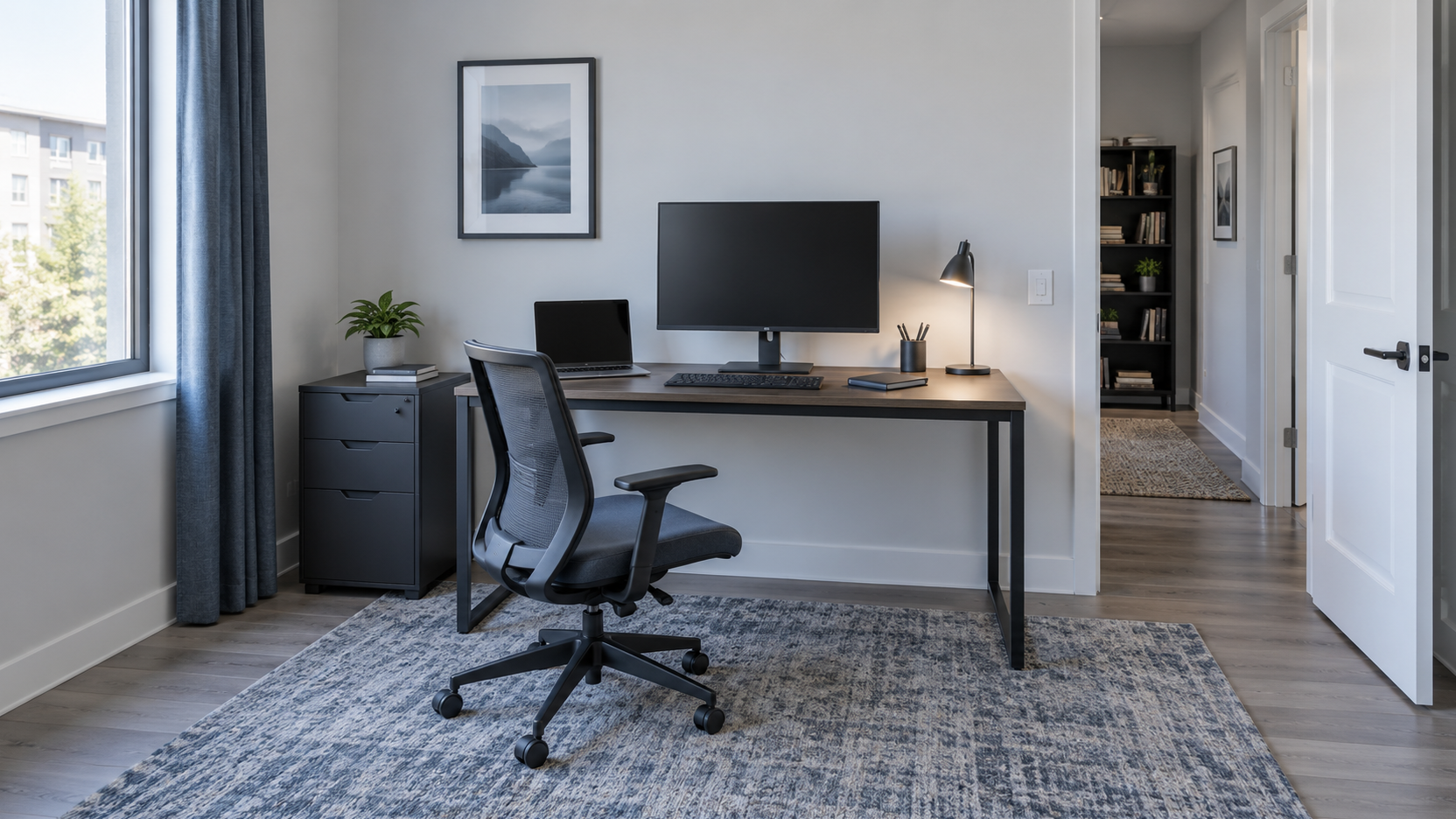
The Ravnora ruleProtect the working zone before filling the wall.
As an Amazon Associate, Ravnora Decor may earn from qualifying purchases. Product links may open on Amazon.
30-Second Room Read
What is the desk actually being asked to solve?
Choose the sentence that feels most familiar. We will narrow the geometry before you compare individual desks.
Your strongest starting point
Protect the room first. Start with a micro footprint or a workstation that can disappear.
Shared-room disappearing officeFold-Away Storage WorkstationBedrooms or living spaces where work needs to close away after hours.
See how it folds awayYour priority is movement. Compare a compact sit–stand route with a larger main workstation.
Straightforward height change48 × 23 Everyday Sit–Stand DeskA conventional single-monitor sit–stand setup.
See current optionsMonitor-heavy sit–stand55 × 28 Main Sit–Stand WorkstationA main adjustable workstation carrying more equipment.
Review the workstationGive the second surface a job: equipment, paperwork or a second person.
Compact corner route48 × 48 Reversible Corner DeskUsing a residential corner without adding heavy storage.
Check the corner fitTwo-person / long-wall route75-Inch Reversible Shared DeskA shared workspace or flexible long-wall setup.
Explore the layoutsLet storage earn the extra visual mass. Keep files or equipment inside the work zone.
Residential storage choice58-Inch Fluted Storage DeskAn office where useful storage should still feel like home furniture.
Explore this storage deskEquipment-led workstation63-Inch Desk with Printer SpaceKeeping a printer and tower equipment assigned to the work zone.
Review the equipment layoutKeep the desk visually light. Buy the surface you need, not storage you do not.
Main fixed workstation48-Inch Everyday WorkstationA dependable monitor-and-laptop setup when the room can support a conventional desk.
Explore this deskLaptop + handwriting40-Inch Desk with a Reset DrawerA straightforward work surface with one place to clear daily clutter.
Review the layoutIf the current desk fits, change working height before replacing the furniture.
Keep the desk you already own32-Inch Compact Desk ConverterAdding position change to a desk that already fits the room.
Check compatibilityLarger existing-desk upgrade36-Inch Larger Desk ConverterA larger current desk that can support a more substantial converter.
Check base dimensionsYour Workday Load
What actually lives on the desk?
A laptop needs surface. Screens need depth. Paperwork needs containment. Shared work needs zones.
Your workday read
01 · Laptop + notebook
Keep the desk visually light.
You need usable surface more than extra furniture. Start with a fixed desk that protects chair space and keeps storage minimal.
Best starting point · Main fixed workstation48-Inch Everyday WorkstationEnough surface for a monitor + laptop without turning the room into an office.
Explore this deskNeed a narrower wall?35.4-Inch Compact Solid-Wood DeskFor bedrooms and tighter wall runs where a conventional desk still needs to feel residential.
Check dimensions02 · Monitor-heavy work
Give the equipment more depth — or a second surface.
More screens change the geometry. Protect viewing distance first, then decide whether width or a purposeful return solves the load better.
Best starting point · Monitor-heavy sit–stand55 × 28 Main Sit–Stand WorkstationA main adjustable workstation with more room for equipment.
Review the workstationNeed a second working surface?48 × 48 Reversible Corner DeskUse the return only when it creates a distinct equipment or paper zone.
Check the corner fit03 · Paperwork + printer
Contain the load instead of buying empty acreage.
Paperwork, files and equipment need assigned places. Let storage earn its footprint instead of spreading clutter across a wider top.
Best starting point · Residential storage58-Inch Fluted Storage DeskUseful storage for a visible home office without making the workstation feel purely commercial.
Explore this storage deskNeed a printer / tower zone?63-Inch Desk with Printer SpaceAssign equipment to the workstation instead of letting it spill into the room.
Review the equipment layout04 · Two people / two zones
Split the work before you split the room.
Shared work needs two usable zones and a chair path that survives both. Give each surface a clear job before adding more furniture.
Best starting point · Shared / long-wall route75-Inch Reversible Shared DeskA long-wall setup that can divide two working positions.
Explore the layoutsNeed a compact two-zone route?48 × 48 Reversible Corner DeskA residential corner can create two working surfaces without requiring a very long wall.
Check the corner fitDesk Fit Lab
Measure the working zone, not the empty wall.
The desk still needs a chair zone, screen distance and a route through the room after it arrives.
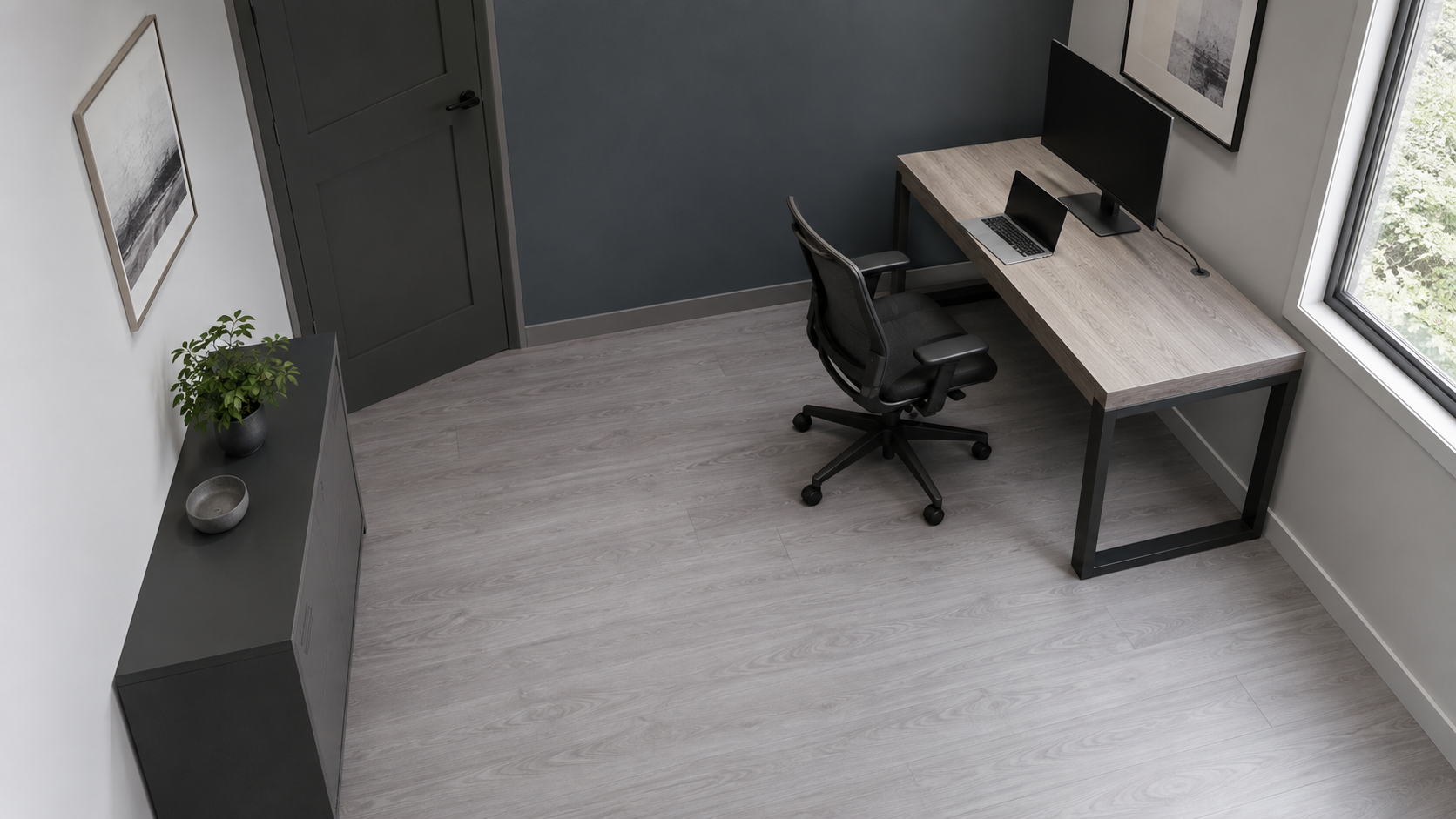
Working surfaceWhat screens, keyboard and daily tasks consume.
Chair zoneWhat sitting, standing and pulling away consume.
CirculationWhat the room still needs after work begins.
Desk Route Map
Six geometries. One should solve something real.
Do not begin with finish. Begin with what changes in the room.
What changes if this desk comes home?Choose the route with the clearest answer.
Three Real Rooms
The right desk changes what the room can still do.
See the whole work zone before choosing the object.
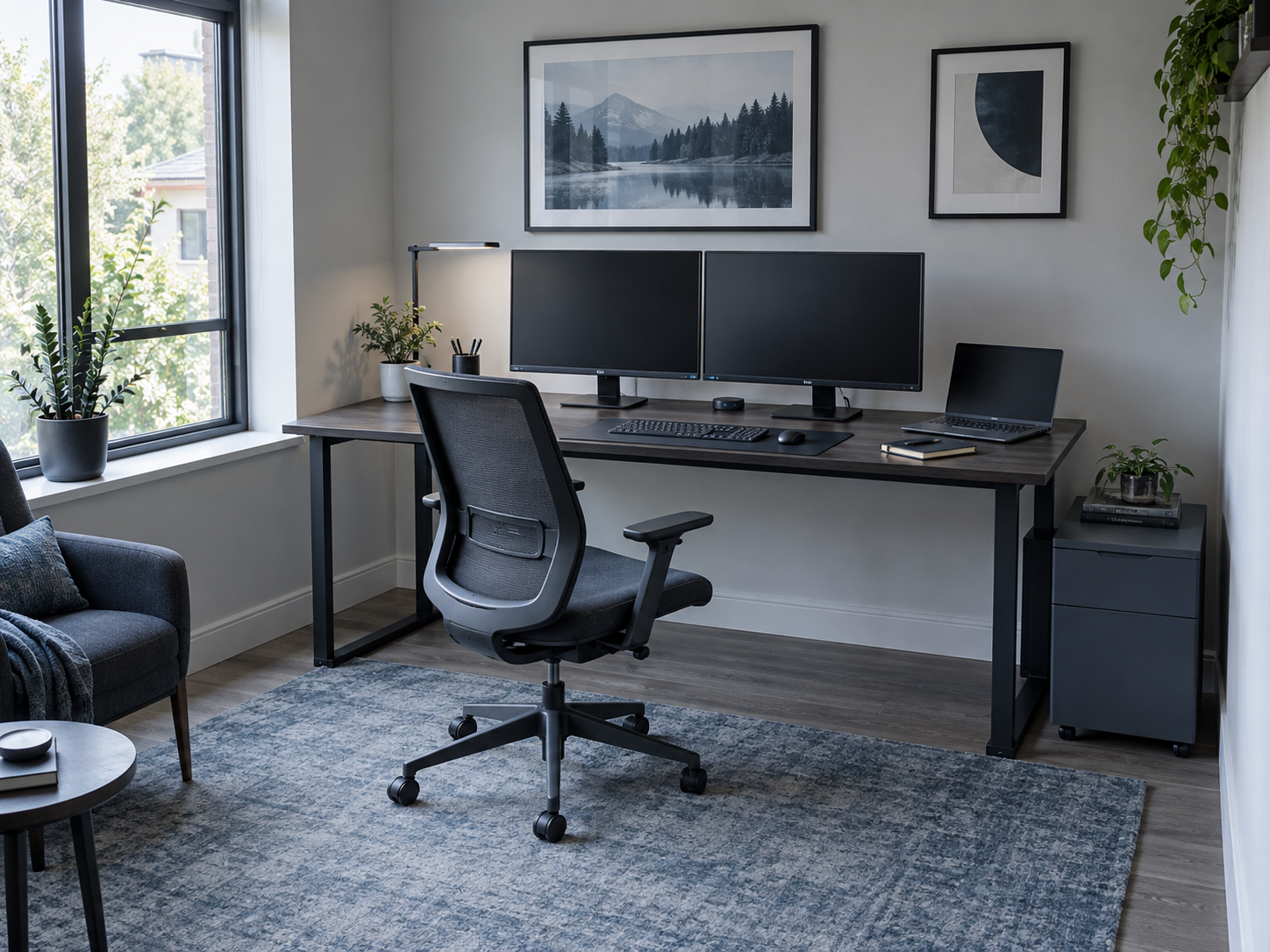
Room 01 · Main workstation
The Calm Wall
Serious work does not require the desk to visually consume the room. Give the screens enough surface, then protect the chair path.
Enough surface for real workNo unnecessary built-in mass
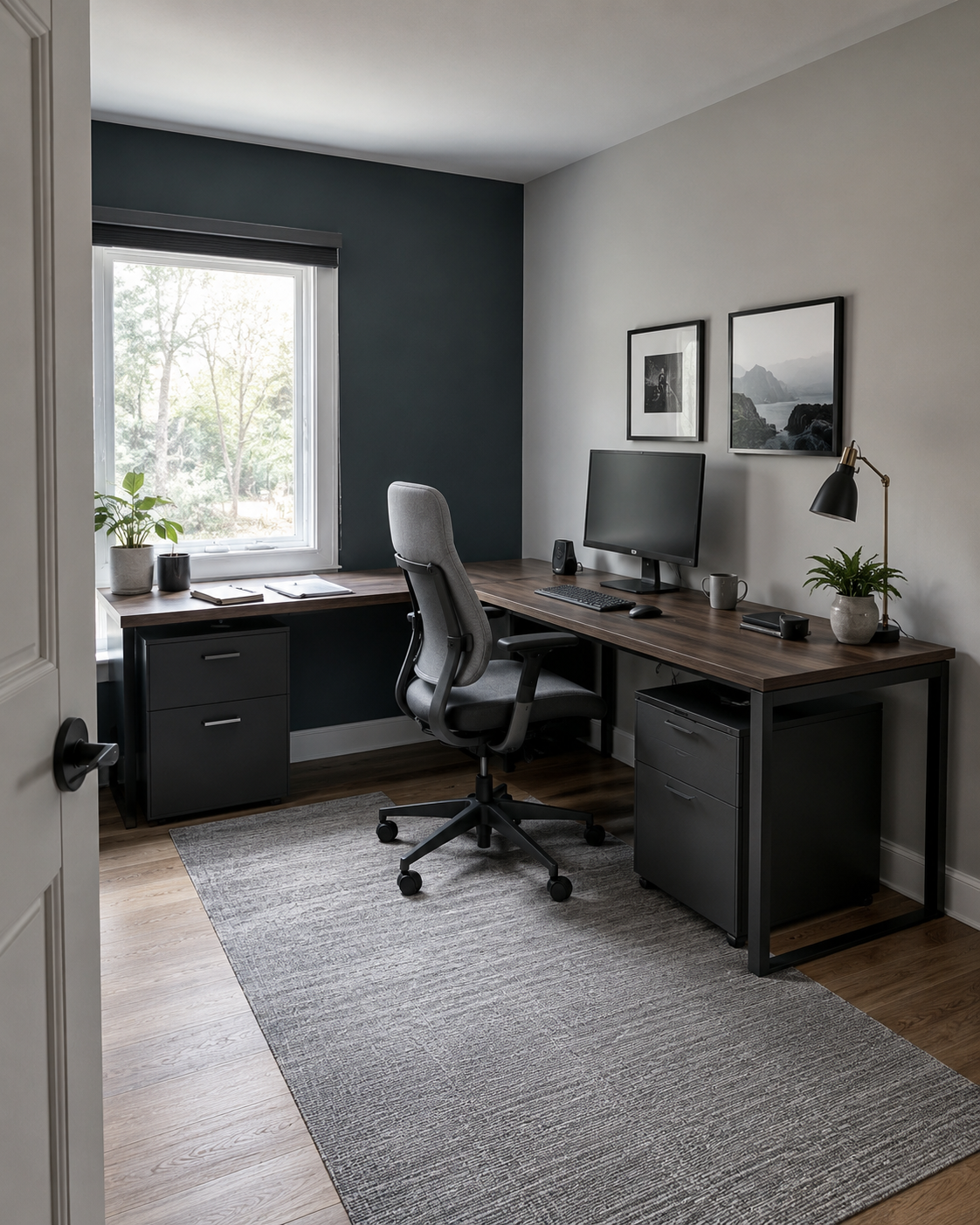
Room 02 · Two zones
The Corner Command
An L-desk earns its footprint only when the return does something distinct: screens here, papers there, or one surface per person.
Measure both wall runsGive the return a job
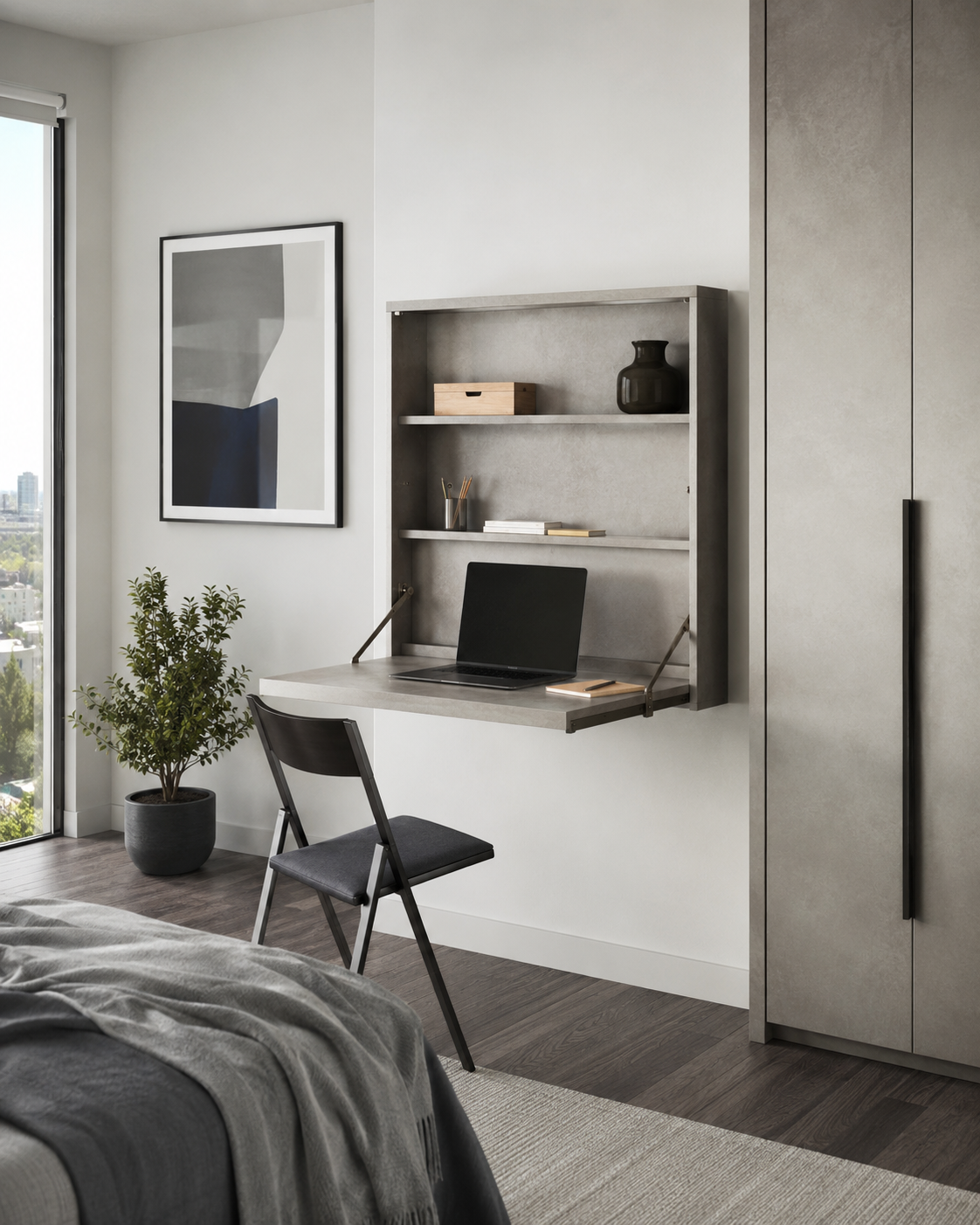
Room 03 · Shared space
The Office That Disappears
If work shares a bedroom or living room, the strongest desk may be the one that gives the room back when the workday ends.
Work closes awayFloor space stays useful
The Ravnora 8
Eight strong starting points — before the full library.
These are decision shortcuts, not a ranking. Verify the current size, finish, configuration and listing details before ordering.
01Main fixed workstation
48-Inch Everyday Workstation
A dependable monitor-and-laptop setup when the room can support a conventional desk.
Before you clickConfirm final depth, finish and doorway path.
Explore this desk02Straightforward height change
48 × 23 Everyday Sit–Stand Desk
A conventional single-monitor sit–stand setup.
Before you clickVerify the current height range and desktop configuration.
See current options03Compact corner route
48 × 48 Reversible Corner Desk
Using a residential corner without adding heavy storage.
Before you clickMeasure both wall lengths and confirm return direction.
Check the corner fit04Two-person / long-wall route
75-Inch Reversible Shared Desk
A shared workspace or flexible long-wall setup.
Before you clickConfirm total assembled span and chosen orientation.
Explore the layouts05Residential storage choice
58-Inch Fluted Storage Desk
An office where useful storage should still feel like home furniture.
Before you clickCheck drawer positions and legroom.
Explore this storage desk06Tiny-wall solution
27.5-Inch Micro Workstation
A tiny wall with a compact screen setup.
Before you clickCheck monitor dimensions before relying on the raised shelf.
Check the footprint07Shared-room disappearing office
Fold-Away Storage Workstation
Bedrooms or living spaces where work needs to close away after hours.
Before you clickVerify wall construction, mounting requirements and open depth.
See how it folds away08Keep the desk you already own
32-Inch Compact Desk Converter
Adding position change to a desk that already fits the room.
Before you clickCheck the supporting desktop depth.
Check compatibilityWrong Fit → Better Move
A bigger desk is not automatically a better office.
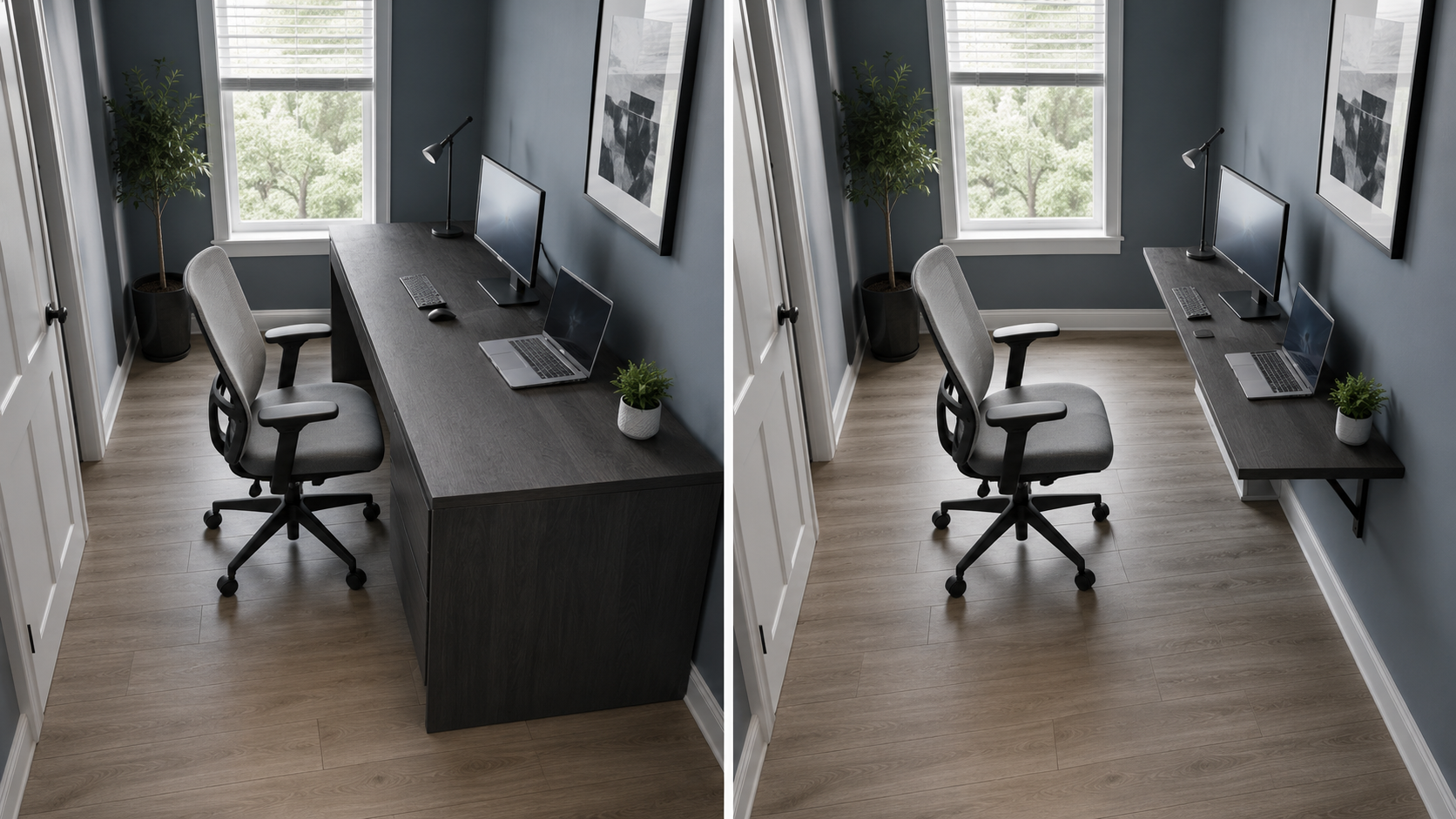
01
If the chair blocks the room, the desk is too deep.
Protect movement before buying more surface.
02
A long wall does not automatically justify an L-desk.
Measure both runs and decide what the return will hold.
03
Storage should not steal the knee space you use every day.
Keep daily items close; move occasional storage out of the chair zone.
04
If the current desk fits, replacing it may solve the wrong problem.
Compare a converter when working height is the only issue.
Spend Where It Matters
Put the budget where the workday can actually feel it.
Choose the part of the desk you are tempted to upgrade.
Movement
Spend more when the desk moves every day.
If height change is central to your routine, the moving system matters more than decorative storage.
Worth prioritizingDaily sit–stand use and equipment stability.
Where to stay restrainedExtra shelves you will rarely reach.
Surface
Pay for the surface only when the work actually needs it.
Large screens, drawing, paperwork or equipment can justify width and depth. A laptop does not automatically need an executive footprint.
Worth prioritizingUsable depth and enough room for your real equipment.
Where to stay restrainedEmpty acreage that steals circulation.
Storage
Pay for storage that removes daily friction.
A printer zone, files or one reset drawer can earn their footprint. Storage that is rarely used simply makes the desk heavier.
Worth prioritizingDaily-use files, printer and equipment.
Where to stay restrainedCabinets that consume legroom for occasional items.
Finish
Spend on finish when the desk is furniture first, office equipment second.
In a bedroom or visible living space, material and silhouette affect the whole room. In a dedicated office, function may deserve more of the budget.
Worth prioritizingHighly visible shared rooms.
Where to stay restrainedHidden work zones where function dominates.
Complete Desk Library
Now retrieve the exact family you understand.
The library stays compact until you open a route. Twenty-five unique solutions; no giant product wall.
Writing + FixedWhen the surface matters more than built-in machinery.04 choices+
Main fixed workstation48-Inch Everyday WorkstationA dependable monitor-and-laptop setup when the room can support a conventional desk.
Material-led compact choice39.3-Inch Solid-Oak DeskA compact room where a solid-wood surface matters.
Laptop + handwriting40-Inch Desk with a Reset DrawerA straightforward work surface with one place to clear daily clutter.
Narrow-wall fixed desk35.4-Inch Compact Solid-Wood DeskBedrooms and narrow walls where a conventional desk still needs to feel residential.
Electric Sit–StandWhen changing working height is part of the workday.04 choices+
Straightforward height change48 × 23 Everyday Sit–Stand DeskA conventional single-monitor sit–stand setup.
Monitor-heavy sit–stand55 × 28 Main Sit–Stand WorkstationA main adjustable workstation carrying more equipment.
Height change + reset drawer48 × 24 Glass Sit–Stand Desk with DrawerKeeping daily items off the moving surface.
Simple adjustable alternative48 × 24 Clean Sit–Stand DeskA clean adjustable workstation without added visual complexity.
Corner + SharedWhen a second surface has a clear job.04 choices+
Compact corner route48 × 48 Reversible Corner DeskUsing a residential corner without adding heavy storage.
Corner + filing55-Inch Corner Desk with DrawersKeeping files and supplies inside the work zone.
Dedicated-office workstation63-Inch L-Desk with File CabinetA substantial work zone that needs filing close at hand.
Two-person / long-wall route75-Inch Reversible Shared DeskA shared workspace or flexible long-wall setup.
Storage-LedWhen files, printer or equipment must stay inside the work zone.04 choices+
Broad dedicated-office surface72-Inch Full-Scale Straight DeskA dedicated office needing a broad work surface.
Use wall height55-Inch Desk with HutchStorage that rises instead of spreading across more floor area.
Residential storage choice58-Inch Fluted Storage DeskAn office where useful storage should still feel like home furniture.
Equipment-led workstation63-Inch Desk with Printer SpaceKeeping a printer and tower equipment assigned to the work zone.
Small + FlexibleWhen the room needs floor space back.07 choices+
Tiny-wall solution27.5-Inch Micro WorkstationA tiny wall with a compact screen setup.
Simple narrow-wall surface32-Inch Small Computer DeskA narrow wall where legroom matters more than built-in storage.
No-drill fold-away27 × 22 Freestanding Folding DeskRentals and temporary work zones that need to move or disappear.
Wall-mounted fold-awayFold-Down Wall Desk with StorageA work surface that closes against the wall after work.
Vertical-space routeTwo-Shelf Ladder DeskA narrow floor zone with useful wall height.
Shared-room disappearing officeFold-Away Storage WorkstationBedrooms or living spaces where work needs to close away after hours.
Non-electric position change38-Inch Lift-Top Hybrid DeskChanging working position without committing to an electric frame.
Keep the DeskWhen the furniture fits but the working height does not.02 choices+
Keep the desk you already own32-Inch Compact Desk ConverterAdding position change to a desk that already fits the room.
Larger existing-desk upgrade36-Inch Larger Desk ConverterA larger current desk that can support a more substantial converter.
Final Desk Fit Check
Six checks before you leave Ravnora.
A two-minute verification can prevent the mistakes that product photos rarely show.
0/6checked before you click
What Still Feels Unresolved?
Once the desk fits, solve the friction around it.
Move outward from the working surface instead of redesigning the entire room at once.
Ravnora helps you decide what works in the room. Product listings are where you verify the current configuration and complete the purchase.