
Tall Five-Drawer Storage Tower
Best when several small office categories need permanent homes without widening the desk.
Check: height and chair clearance.
Explore the Details →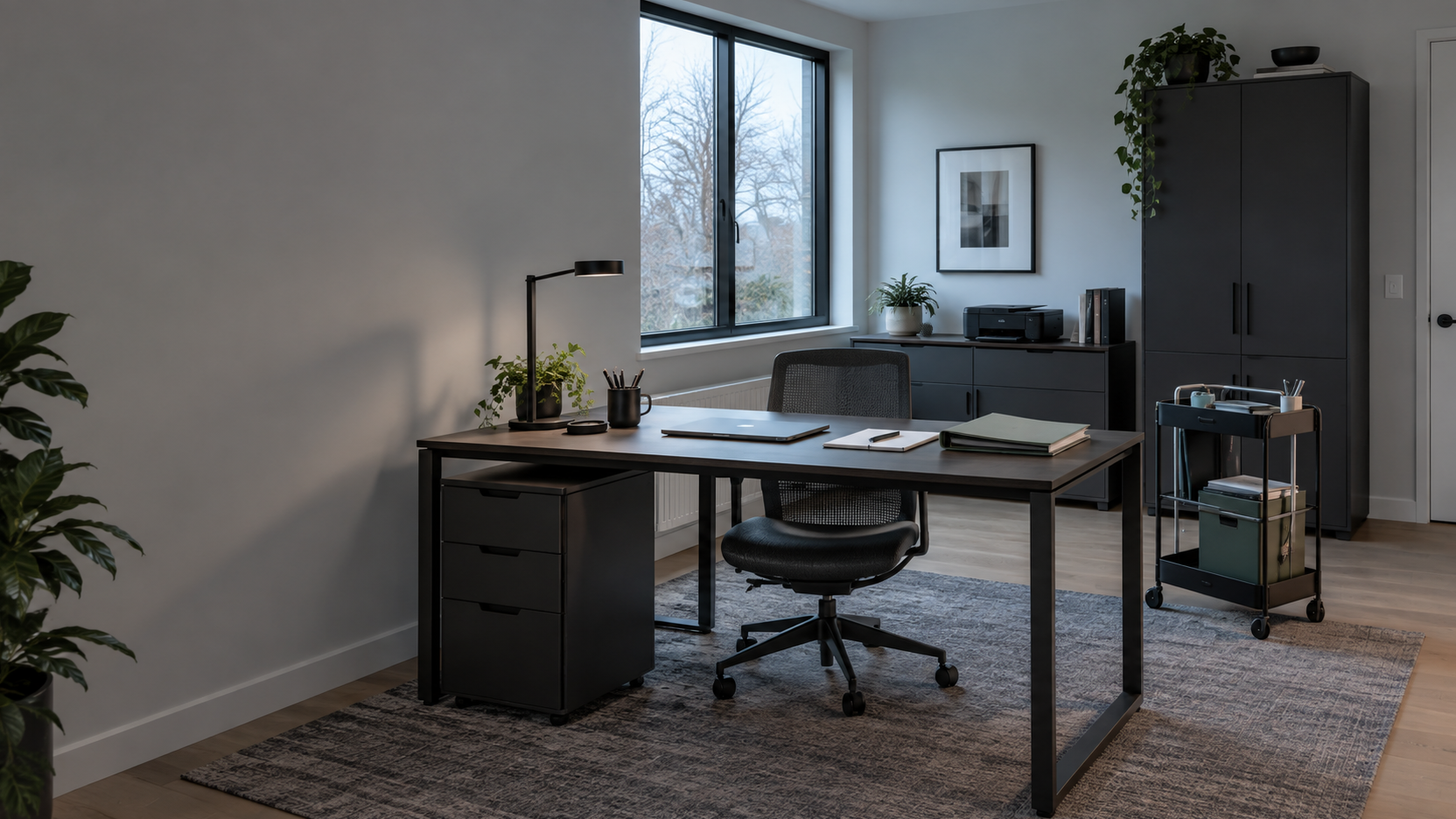
Keep today’s tools close, park current projects nearby, and move the archive out of sight—without turning the room into rows of containers.Keep today’s tools close. Move projects and paperwork somewhere they can return to when work ends.
Start with what keeps returning. The right storage usually becomes clearer after that.
The mess pattern matters more than the container. Choose the one that feels most familiar and we’ll move you to the right storage distance.
The things you touch most should require the least movement. The things you keep “just in case” should not dominate the room.
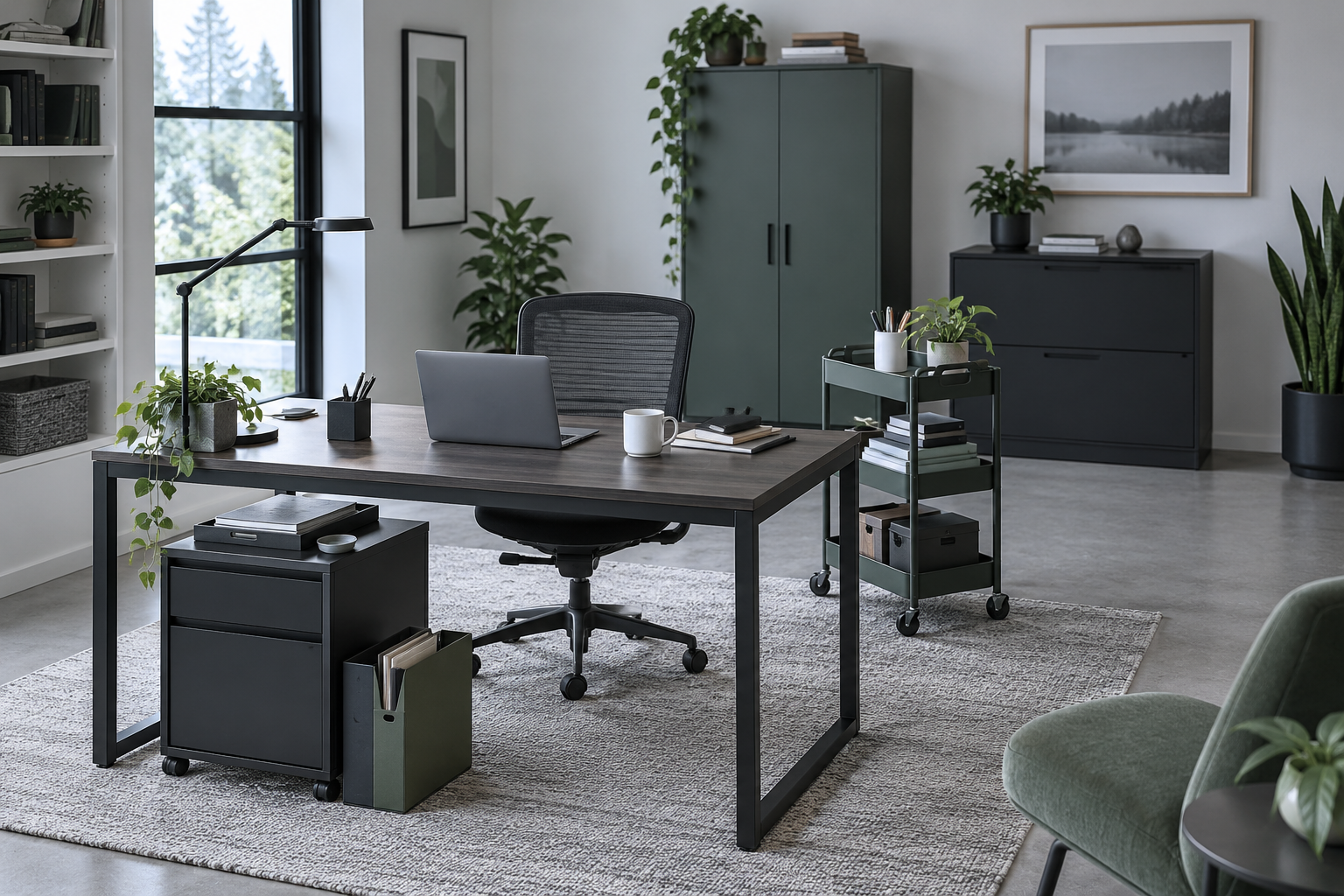
Drawers, paper flow and a small file zone should shorten the reset—not create another surface to maintain.
As an Amazon Associate, Ravnora Decor may earn from qualifying purchases. Product links may open on Amazon.
Two ways to execute it Tall Five-Drawer Storage TowerExplore → Supply + File PedestalCheck →Best when several small office categories need permanent homes without widening the desk.
Check: height and chair clearance.
Explore the Details →Best when stationery and small work categories need to move with the workstation.
Check: footprint beside or below the desk.
Check Current Options →Best when incoming, active and outgoing sheets keep collapsing into one pile.
Check: available vertical clearance.
Review This Pick →Best when reference folders need to stay visible during the week instead of lying flat.
Check: depth on the intended surface.
See the Configuration →Best when small supplies and hanging files need one compact footprint near the desk.
Check: the complete under-desk bay before choosing placement.
Check the Fit →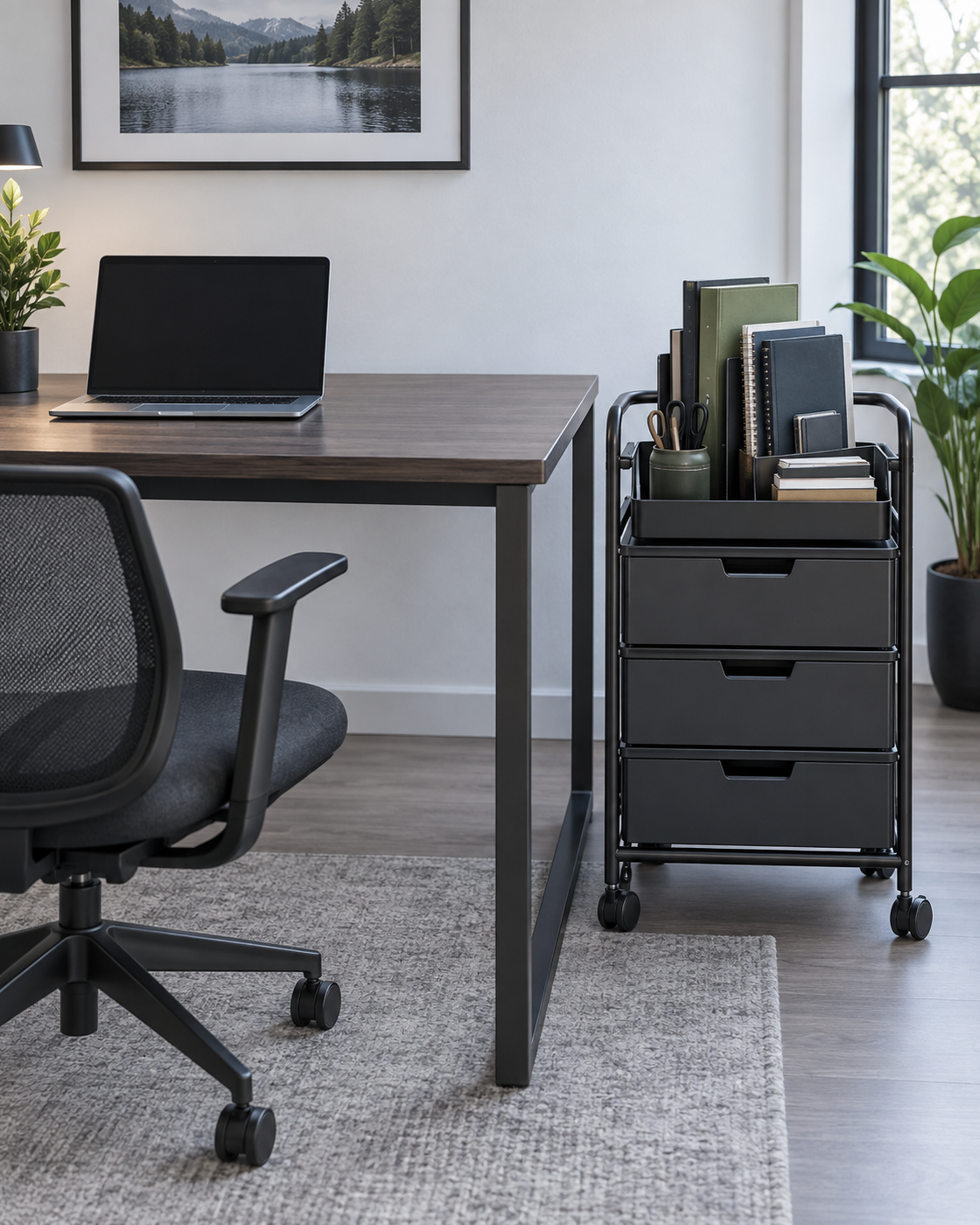
Keep the whole work-in-progress together. When the session ends, move the project—not five separate piles.Keep the whole work-in-progress together, then roll it away when the session ends.
Paper becomes easier to control when its home changes as its job changes.
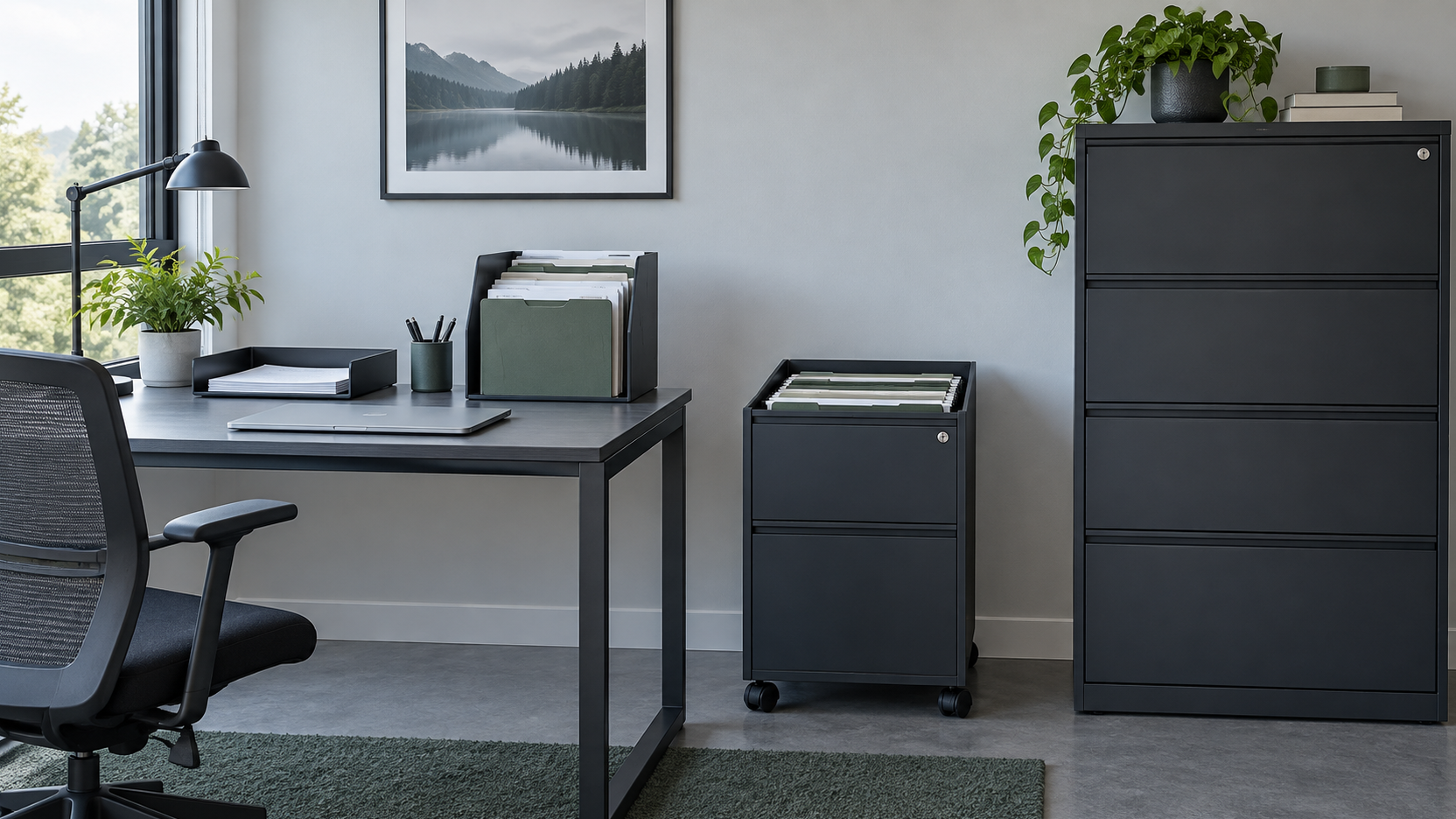
Use open storage for the things worth seeing and closed storage for the things you only need to keep.
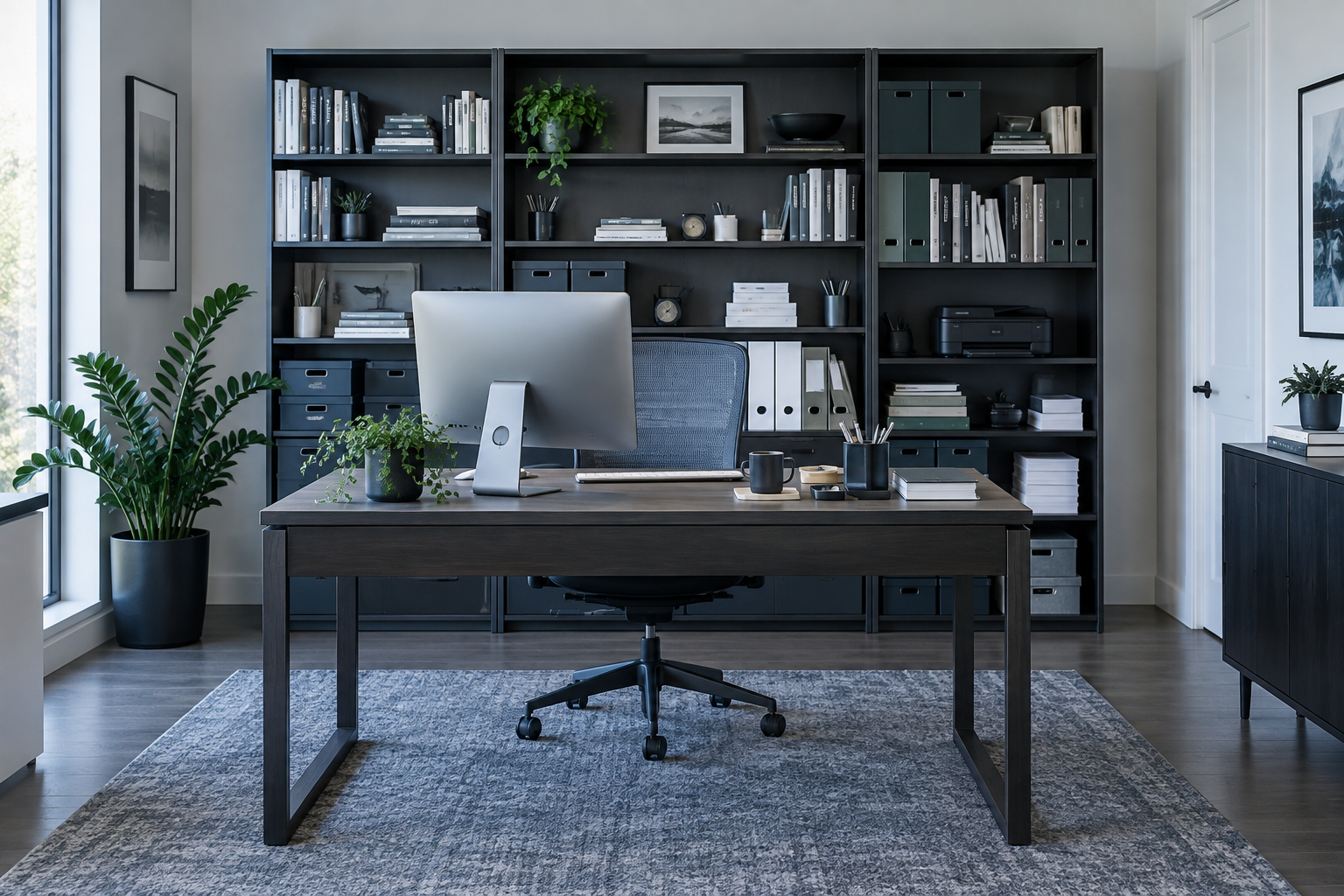
Open shelves work best when the contents are edited. Backups, archives and mismatched supplies are what usually make the room feel louder than it is.
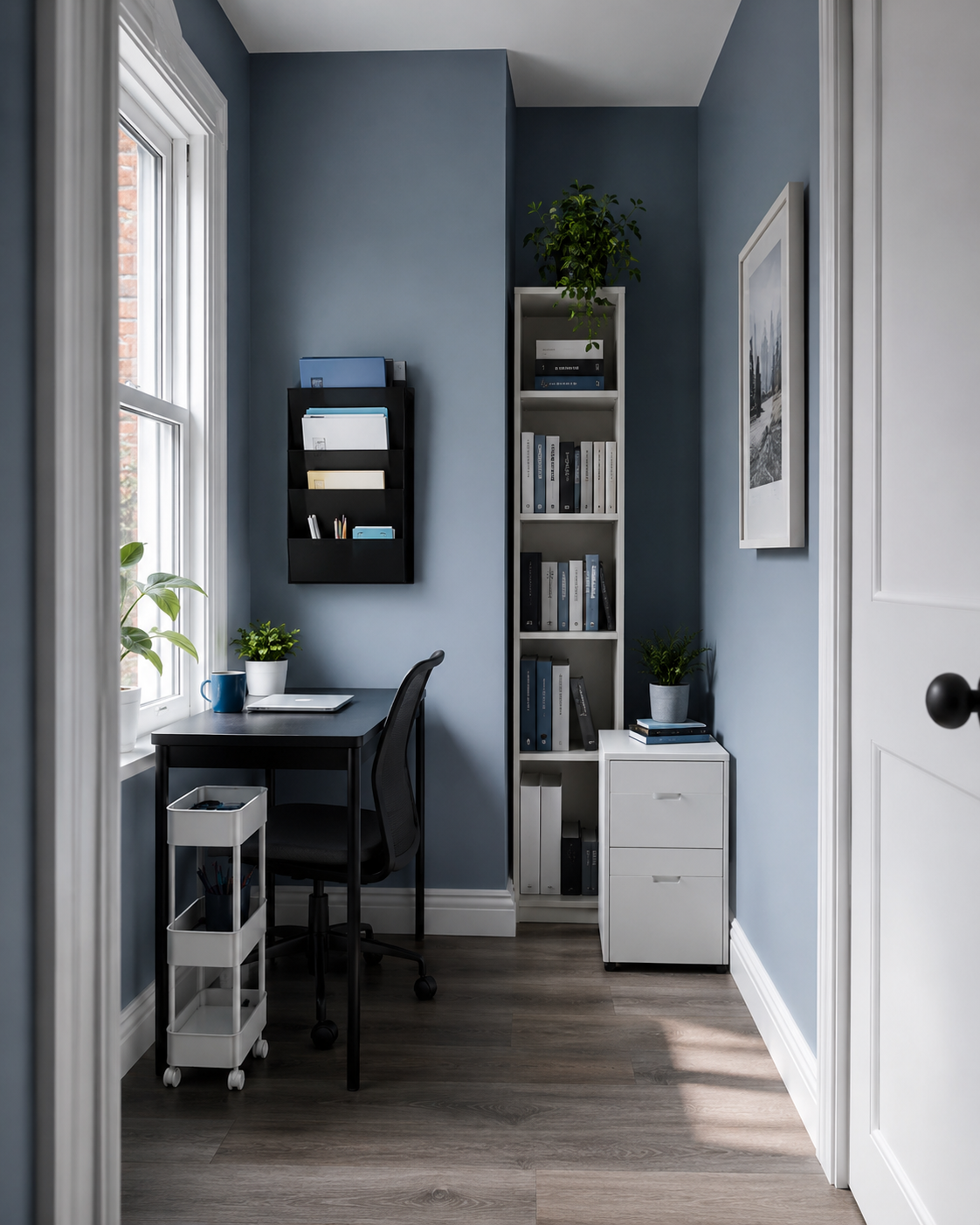
Before adding another wide cabinet, test the wall, the narrow gap, the area beneath the desk and the printer footprint.Try the wall, under-desk bay, narrow gaps and printer footprint first.
Use these as functional combinations—not as instructions to fill the room with matching containers.
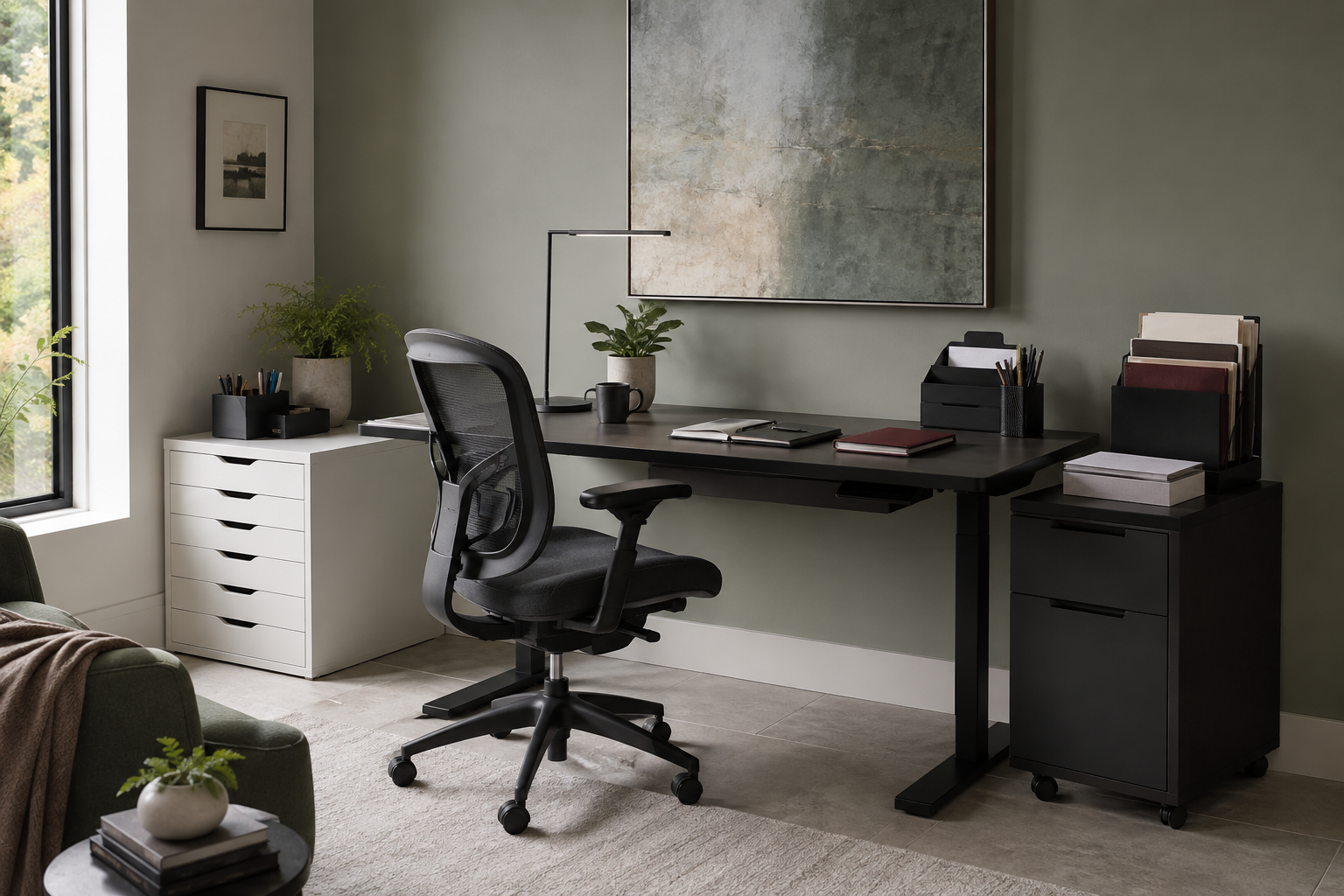
Everyday tools below. Active paper contained. The work surface gets to be a work surface again.
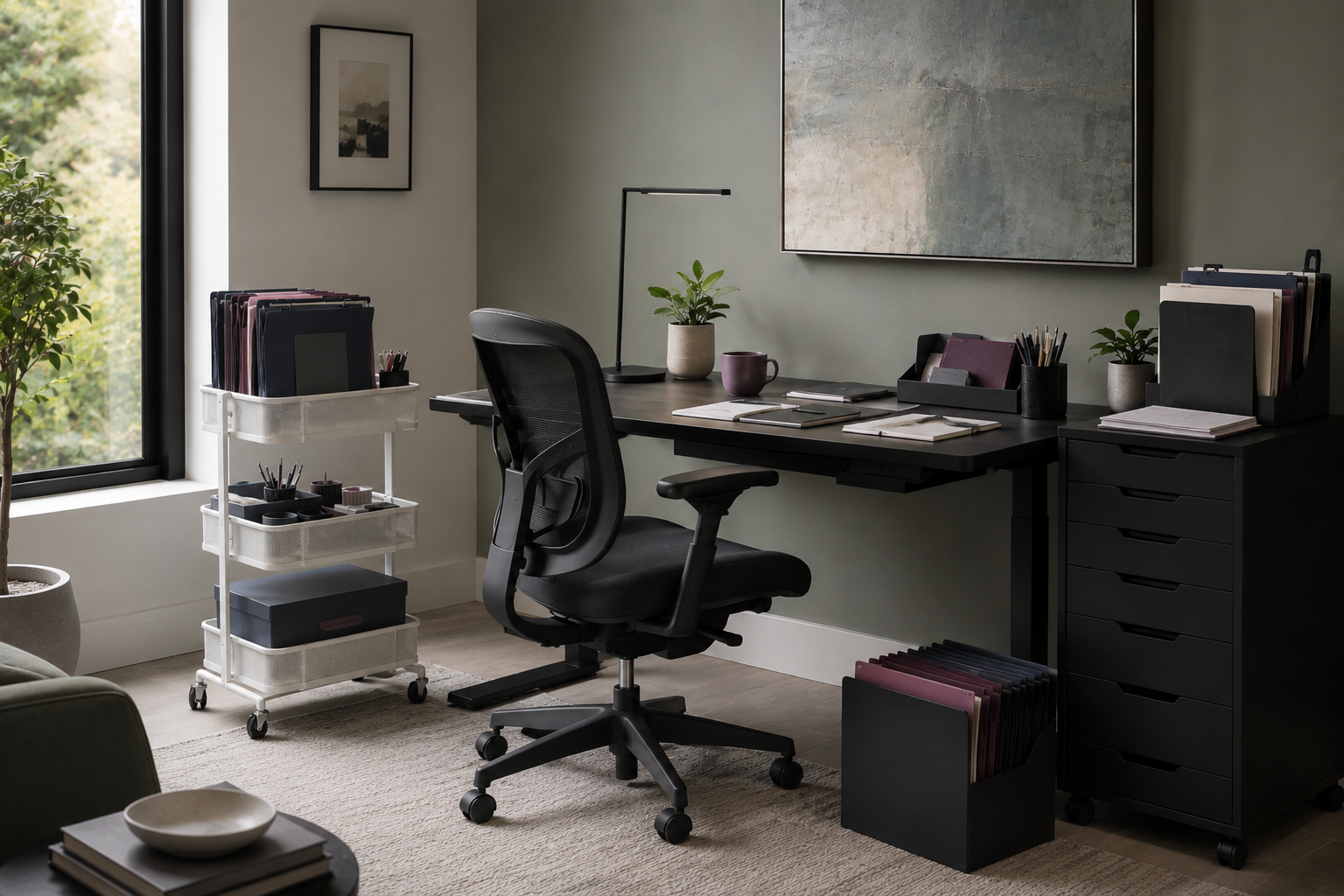
Current work stays together and stays movable, while the permanent workstation remains usable.
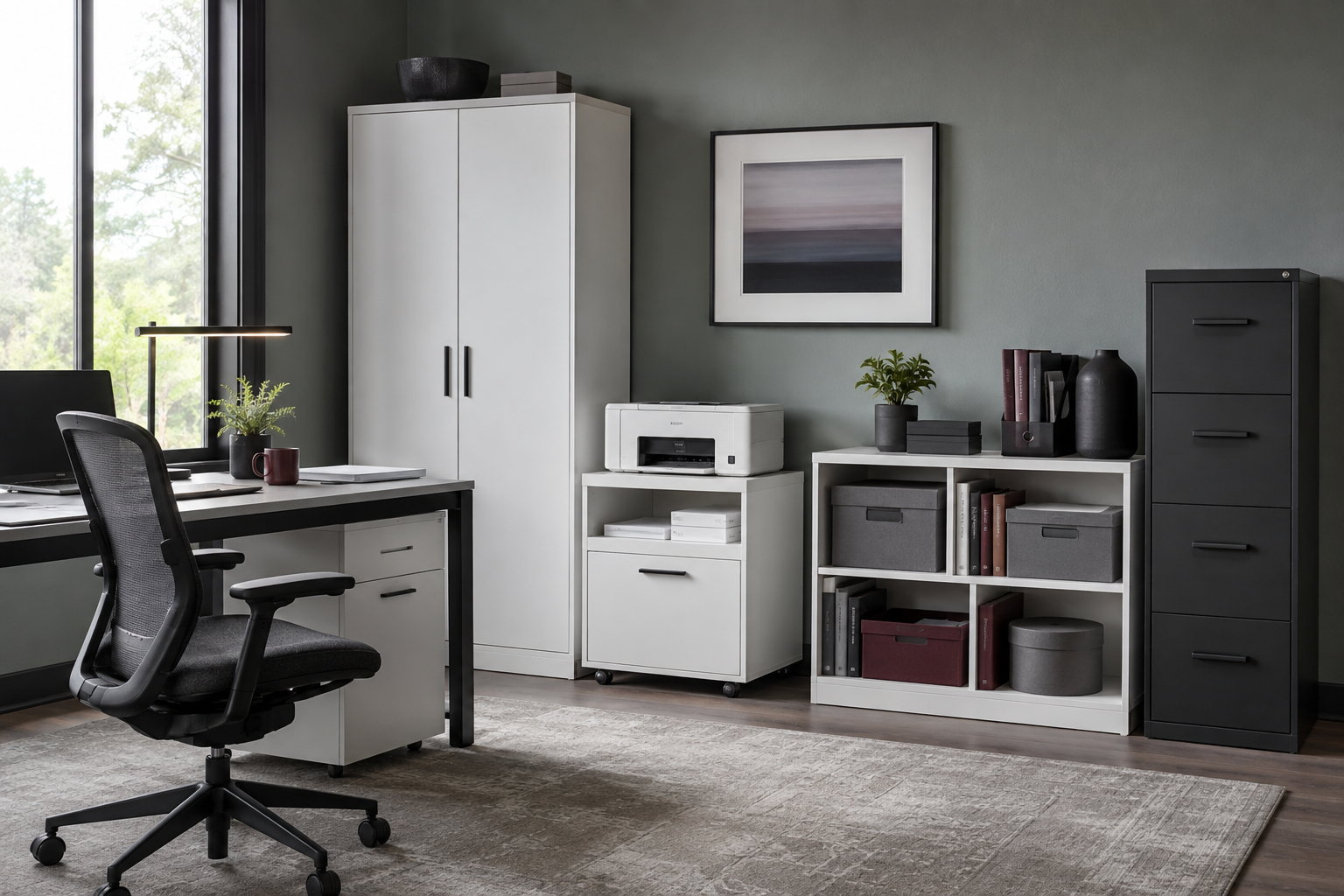
Permanent files, backup supplies and office equipment share one controlled side of the room.
Room scenes illustrate storage logic and visual direction. Linked recommendations are selected for function and are not presented as the exact products pictured.
Storage value is not about making every container premium. It is about getting the high-friction parts right.
You have already seen the logic. Use this section only when you want the exact family quickly.
Tap each item after you have checked it. Six confirmations turn “it should fit” into a much safer decision.
Start with the placement point—not the product photo.
Do not keep adding storage if the remaining problem is really vertical display, desk-surface control or a cramped room.