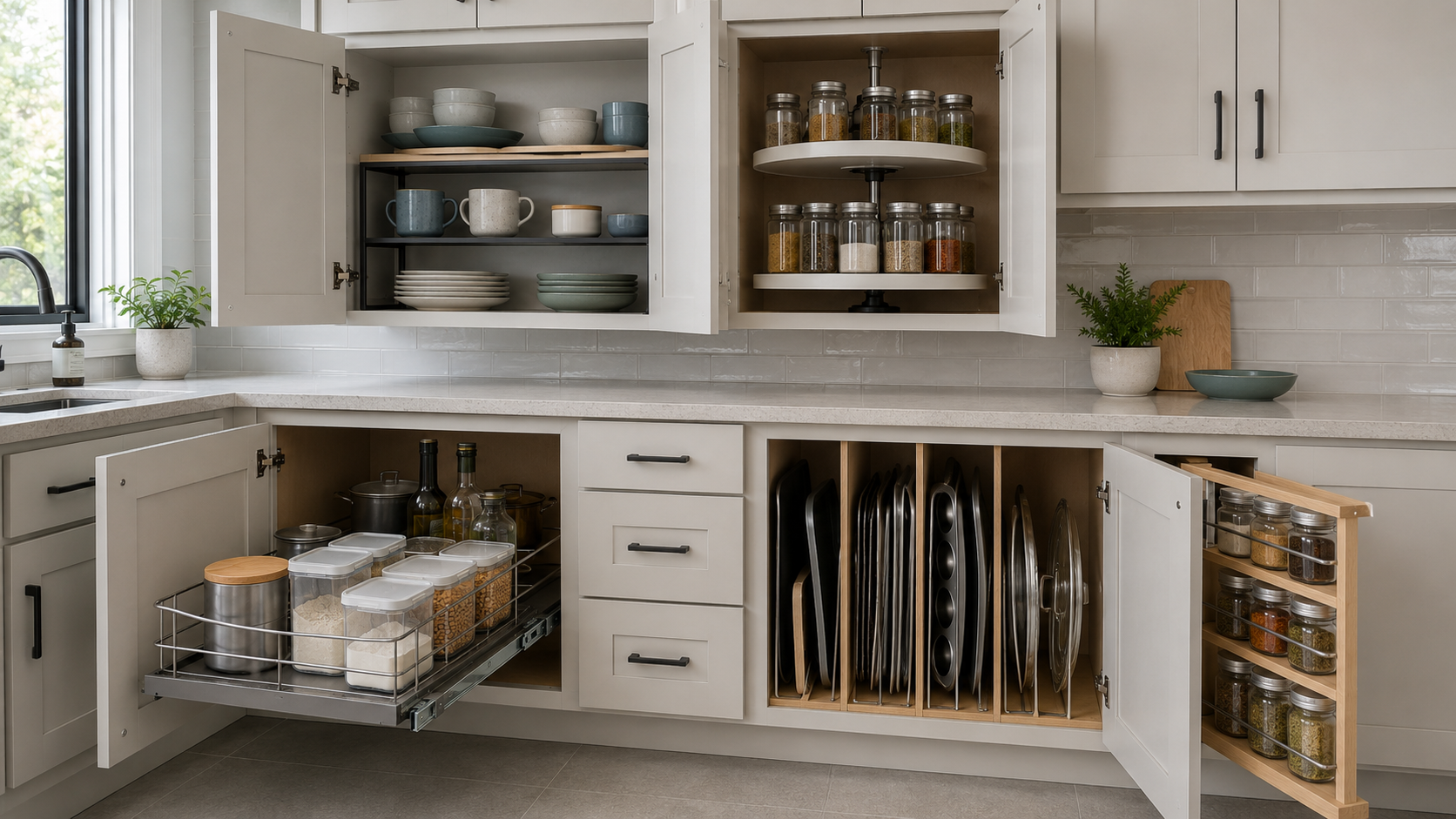
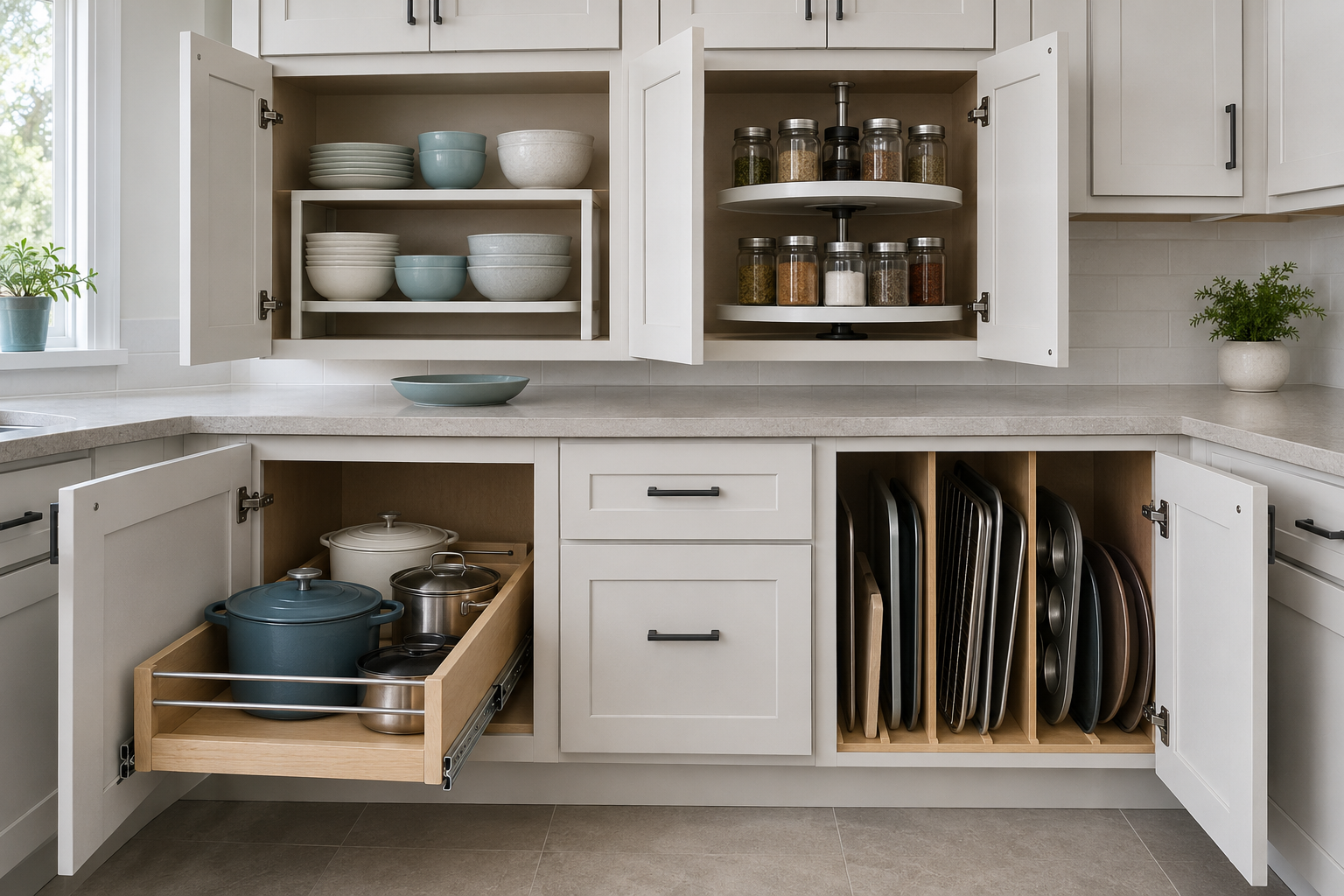
Spice route
Raise the rear row.Tier or pull small jars forward so the collection reads before you touch it.
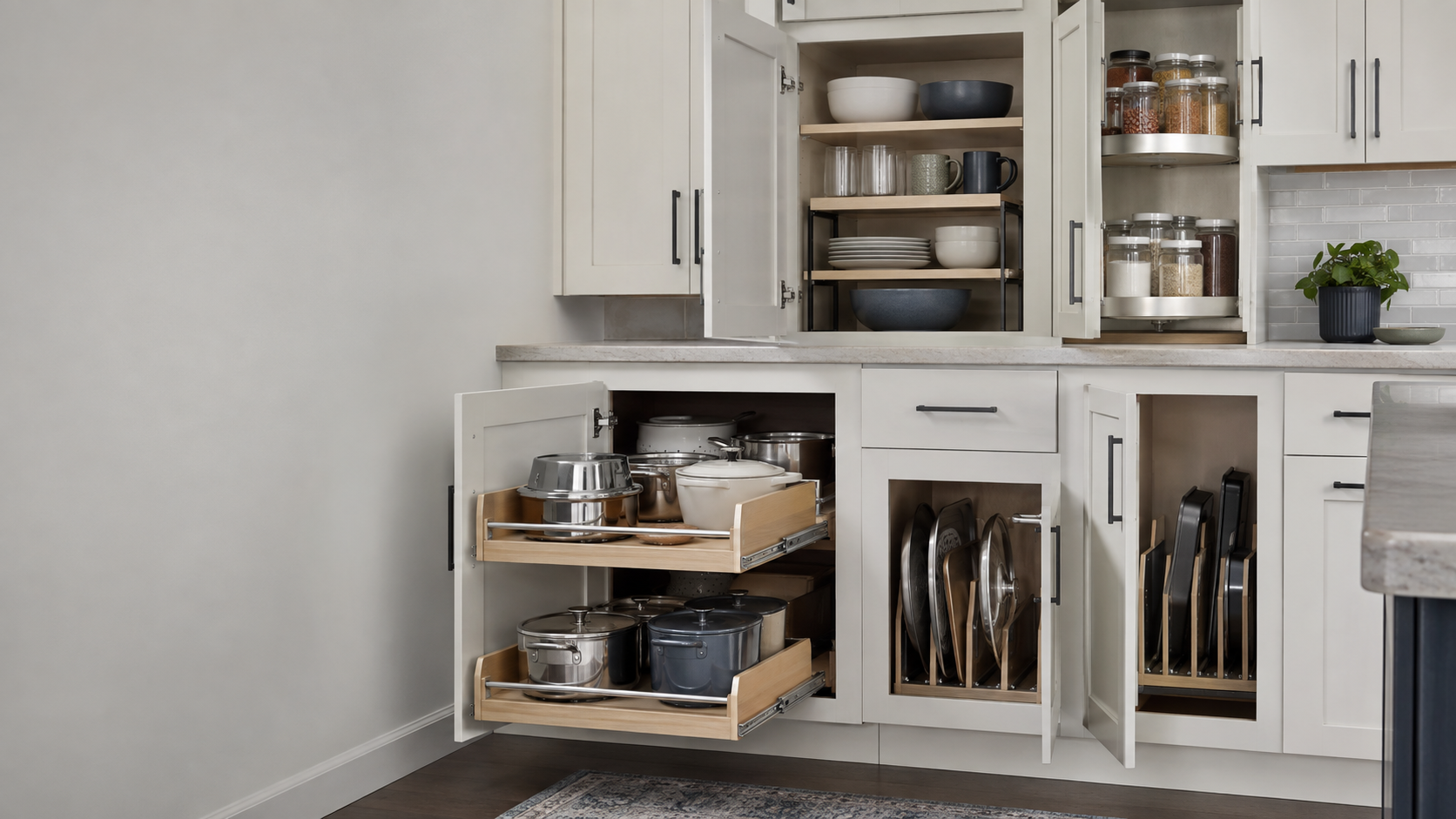
Kitchen cabinet organization
The back disappears. Shelf height goes unused. Pans collapse. Start with the motion that fixes the failure.
Every cabinet needs a motion
Depth needs to move forward. Empty height needs another level. Corners need rotation. Flat cookware needs a lane.
As an Amazon Associate, Ravnora Decor may earn from qualifying purchases. Product links may open on Amazon.
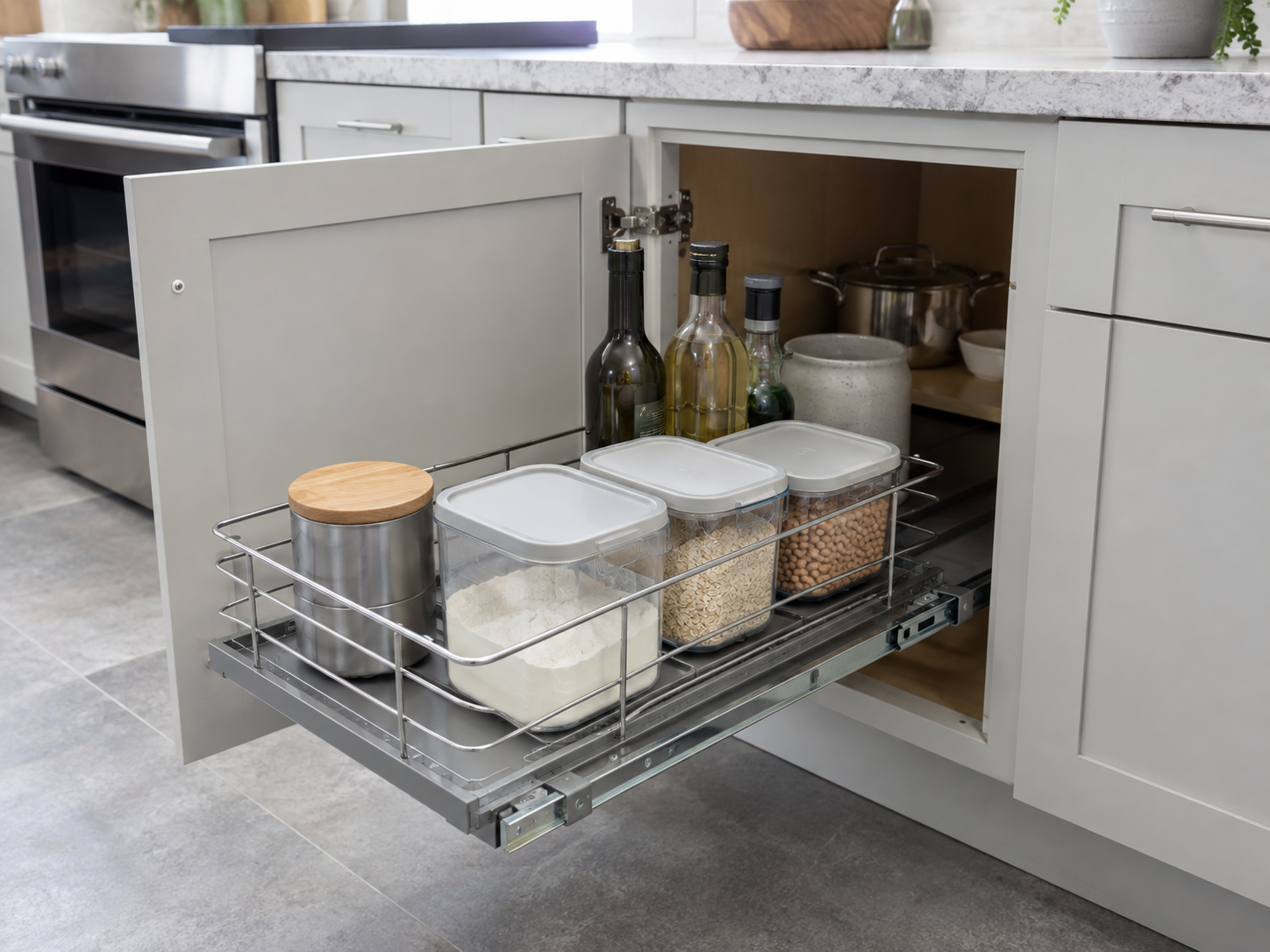
01 · Slide
Deep cabinets fail when the front row becomes a wall. A sliding mechanism turns depth into reachable travel.
If you have to unload the front to reach the back, the cabinet needs movement.
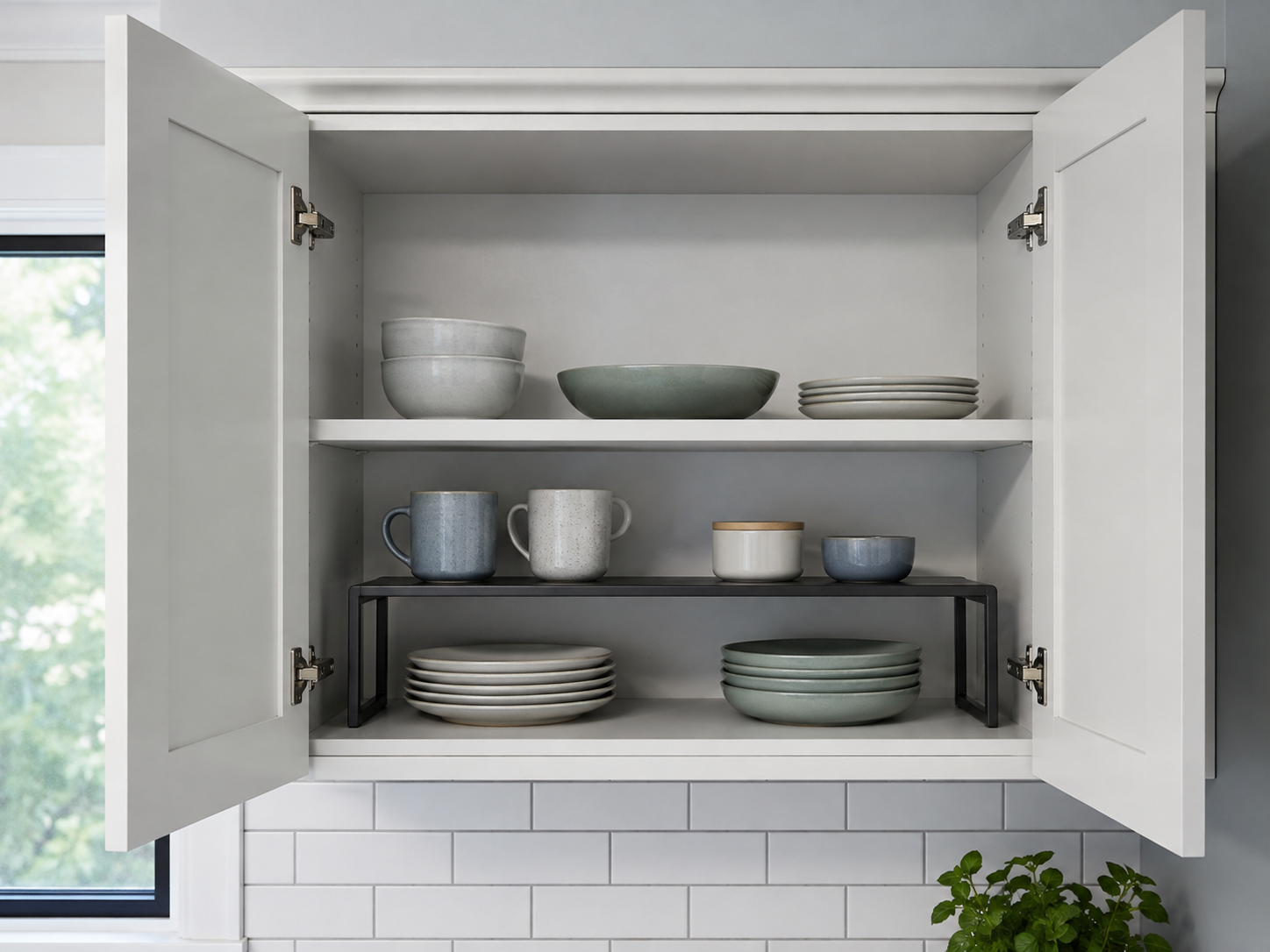
02 · Lift
A tall cabinet with one short stack is not full—it is vertically unfinished. Divide height before you add more piles.
Create levels you can retrieve from independently, not towers you have to dismantle.
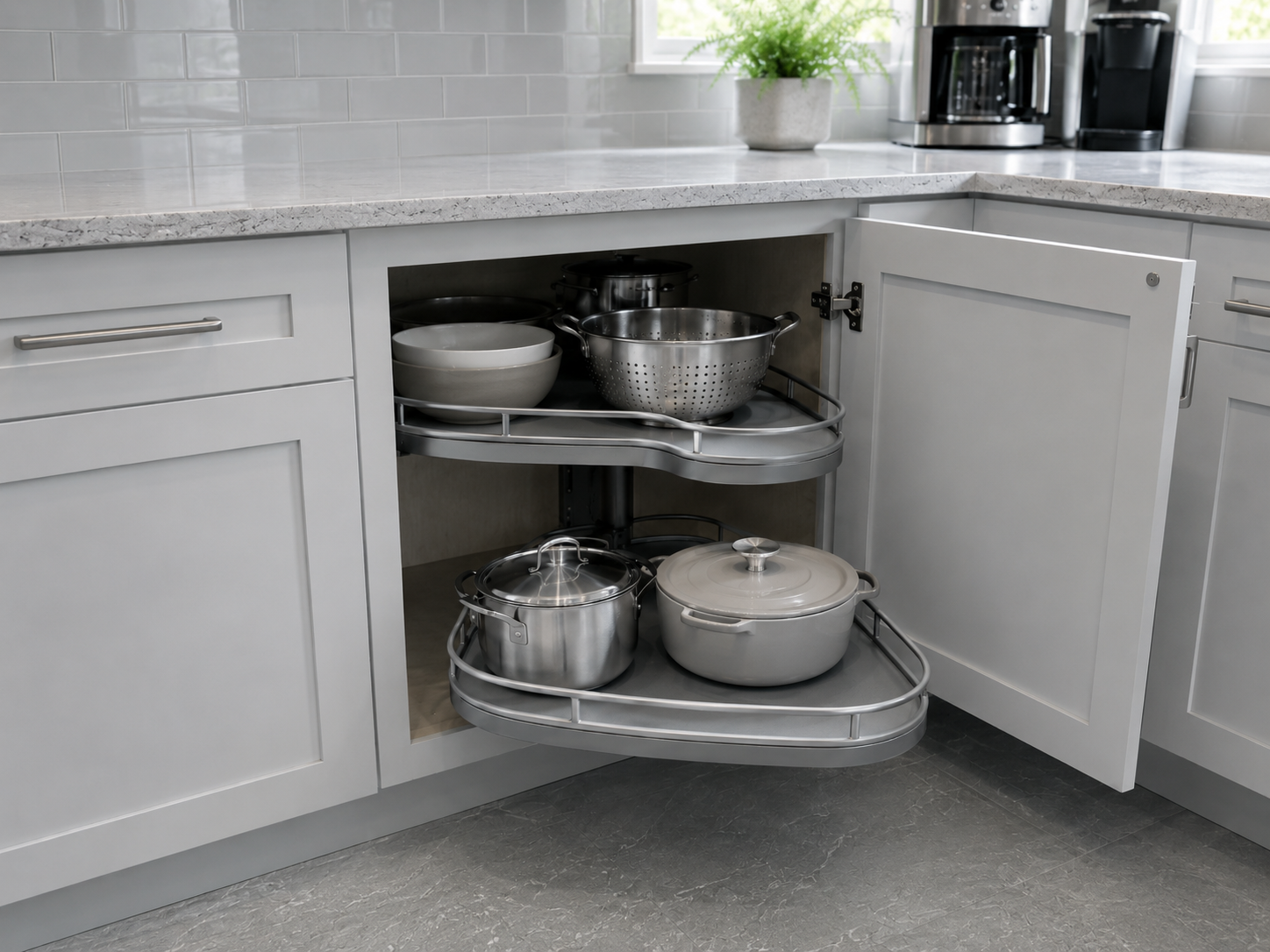
03 · Rotate
A corner is only useful if the stored item can enter your reach zone. Rotation converts hidden depth into visible choices.
Don't fill an awkward corner deeper. Give the corner a path back to you.
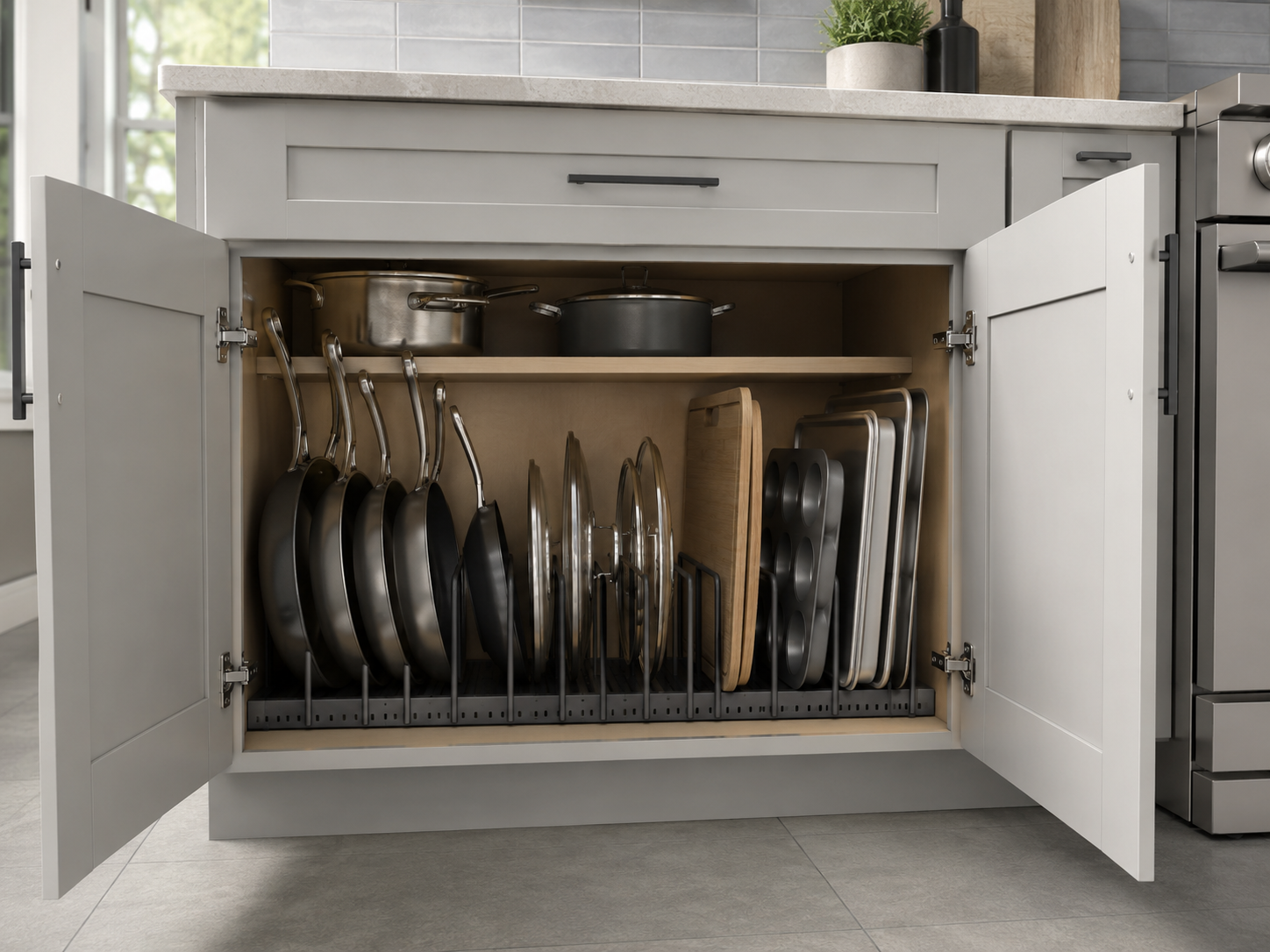
04 · Separate
Flat pieces create friction when they share one pile. Parking lanes let one pan, lid, board or tray leave without disturbing the rest.
If removing one pan rearranges the cabinet, stop stacking and start separating.
Small-item visibility
Spices and food-container lids fail for the same reason: the category is small enough to disappear but frequent enough to cause daily friction.
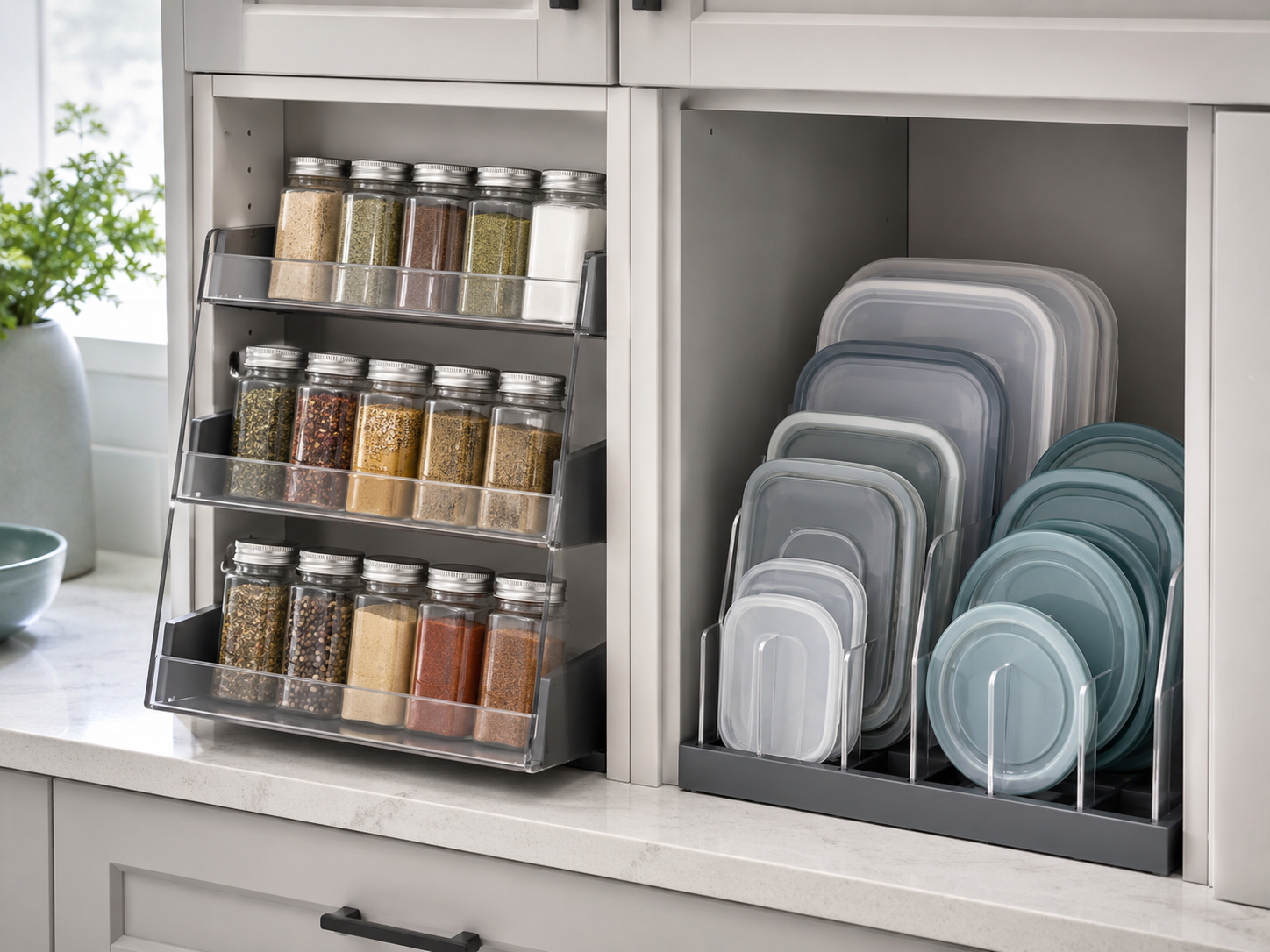
Spice route
Raise the rear row.Tier or pull small jars forward so the collection reads before you touch it.
Lid route
Give flat pieces a lane.A divided organizer stops food-container lids from drifting into the rest of the cabinet.
The frequency shelf
Organization should follow use frequency. The cabinet that looks perfect but slows breakfast every morning is still badly organized.
Keep the shortest reach and simplest motion for pieces you touch constantly.
Front · eye level · one motionAllow a little more depth or height when the item is useful but not part of every routine.
Middle · second levelReserve the highest and deepest zones for lower-frequency pieces—after the daily lane already works.
High · deep · deliberateMotion mixer
Use the lightest mechanism that solves the actual failure. More hardware is not automatically better.
Before the click
The organizer must fit while the cabinet is actually operating—not only while every door and pull-out is closed.
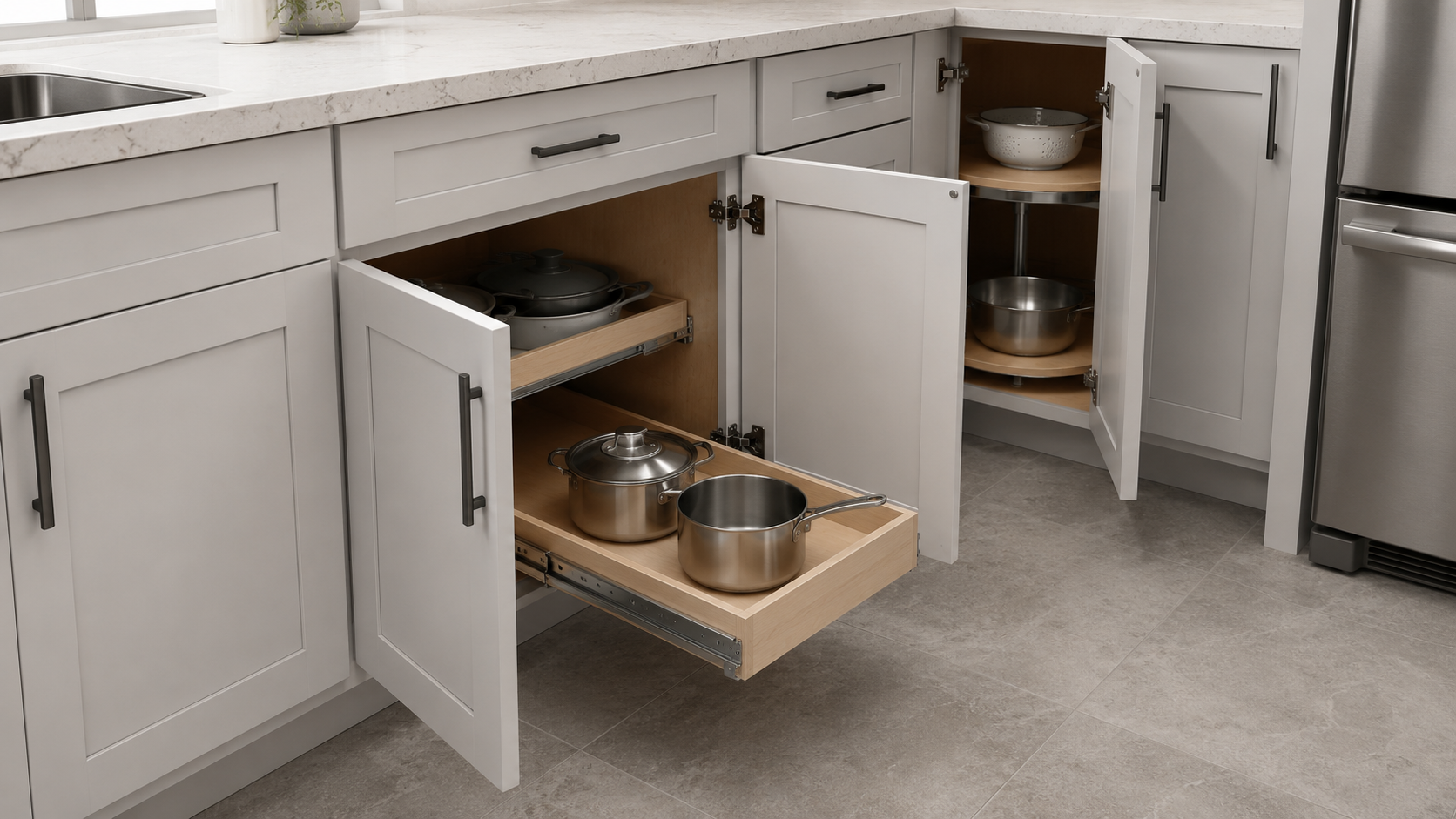
Measure the clear opening, not only the cabinet box.
Account for doors, rails, shelf lips and interior obstructions.
Check whether hinge hardware narrows the real travel path.
Open the neighboring door and extend the organizer at the same time.
Confirm current dimensions, configuration, mounting, materials and included pieces.
30-pick cabinet library
Open only the family your cabinet needs. Each rail stays compact, swipeable and tied to one physical job.
Bring deep cabinet storage toward you.
Explore ↗A stronger slide-out option for larger cabinet items.
Explore ↗Use when you want a deep shelf to travel forward.
Explore ↗Useful when cabinet width needs some flexibility.
Explore ↗Turns a slim cabinet lane into reachable storage.
Explore ↗Create a second usable level without tall stacks.
Explore ↗Split vertical air into two clearer storage levels.
Explore ↗Useful where shelf clearance varies by cabinet.
Explore ↗Add compact vertical levels for dishes and mugs.
Explore ↗Rotate small items into view instead of reaching behind them.
Explore ↗A smaller-footprint rotation option.
Explore ↗Combine vertical use with rotational access.
Explore ↗Give rotating storage cleaner category boundaries.
Explore ↗Separate pans and lids instead of nesting everything.
Explore ↗Create repeatable parking lanes for pans.
Explore ↗Store sheets and boards vertically for faster retrieval.
Explore ↗Keep loose lids from sliding through the cabinet.
Explore ↗Adapt slot spacing around mixed cookware.
Explore ↗A flat-item lane for boards, trays, and pans.
Explore ↗Use vertical height without building an unstable pile.
Explore ↗Give food-container lids a single visible home.
Explore ↗Useful when your lid collection changes width.
Explore ↗For households with a larger container rotation.
Explore ↗A smaller-footprint fix for tight cabinet shelves.
Explore ↗Bring a narrow spice row forward in one motion.
Explore ↗Increase small-jar visibility in a compact lane.
Explore ↗Use vertical space while keeping jars retrievable.
Explore ↗Raise rear jars so the cabinet reads at a glance.
Explore ↗The finished system
When depth moves forward, shelf height is divided, corners rotate and flat pieces get lanes, the cabinet finally behaves like usable space.