
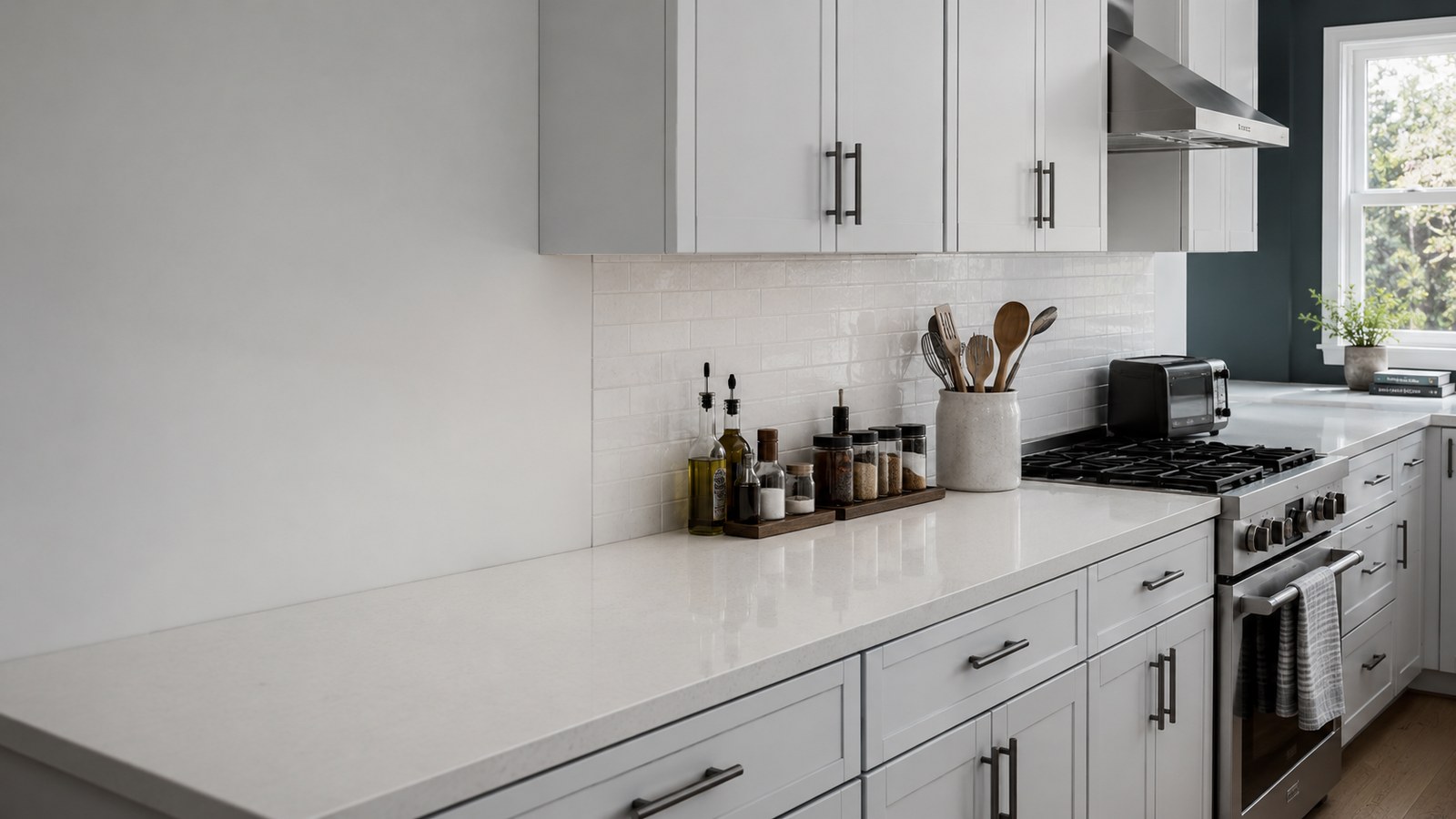
Kitchen Countertop Organization
Keep the Counter Working.
Daily essentials can stay. Give them an edge, a home base, and one prep lane that nobody gets to steal.
Start hereProtect one clear working lane before buying another organizer.
No prep spaceOils migrateAppliances stay outSpices spread
The residency test
Should it live on the counter?
Counter organization gets easier when every object earns one of three destinations instead of another organizer.
Signature counter mapper
Protect the work lane first.
Choose what this counter has to do. The protected work lane and the product family should change with the job.
As an Amazon Associate, Ravnora Decor may earn from qualifying purchases. Product links may open on Amazon.
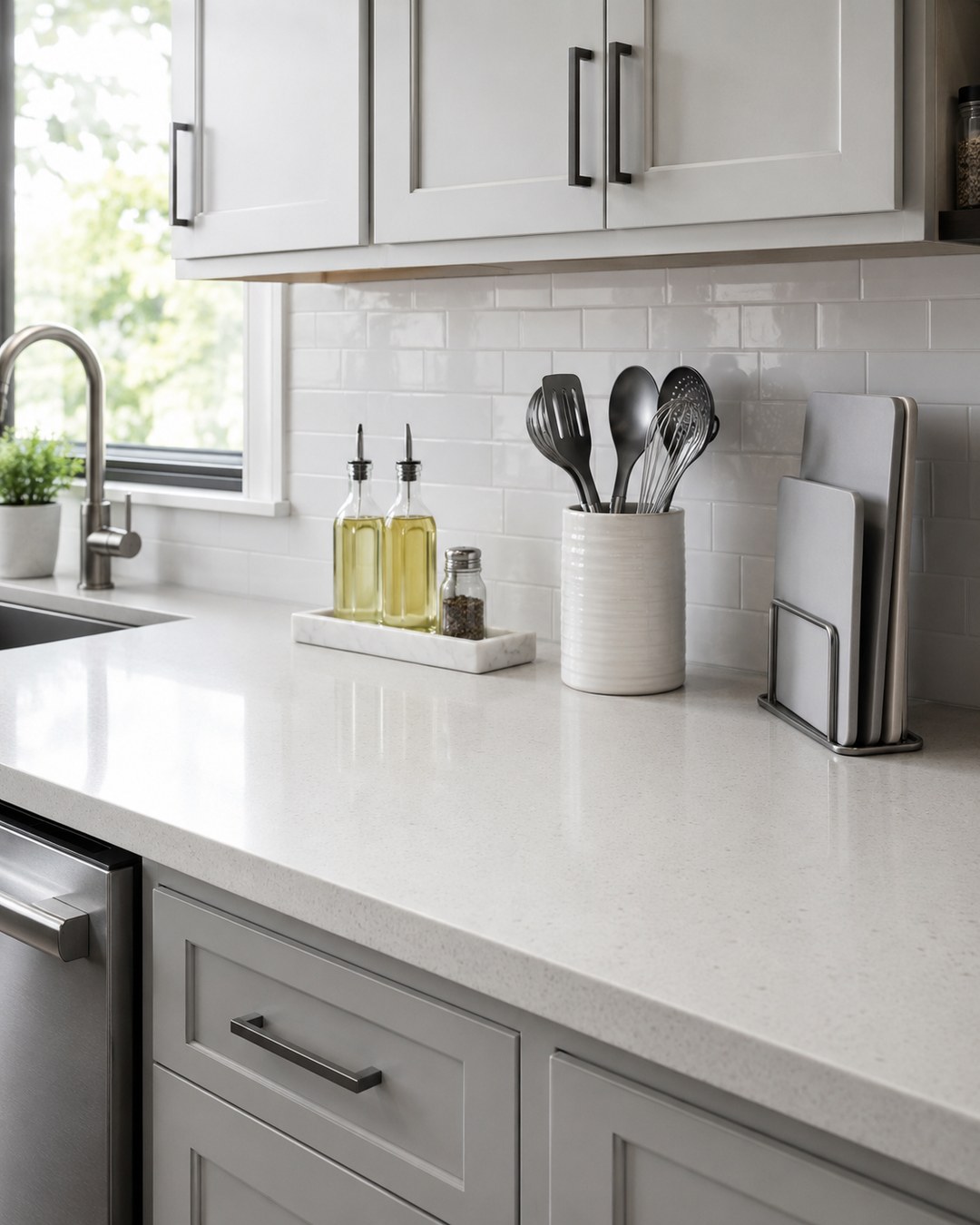
Cooking laneAnchorStone counter trayExplore pick → ToolsCeramic utensil crockSee option → PourGlass bottle pairCheck fit → StandCutting-board holderView pick →
Keep the center fast. Push permanent pieces backward.
Prep works best when oils, tools and boards have clear rear-edge homes while the front-center stays ready for chopping, mixing and plating.
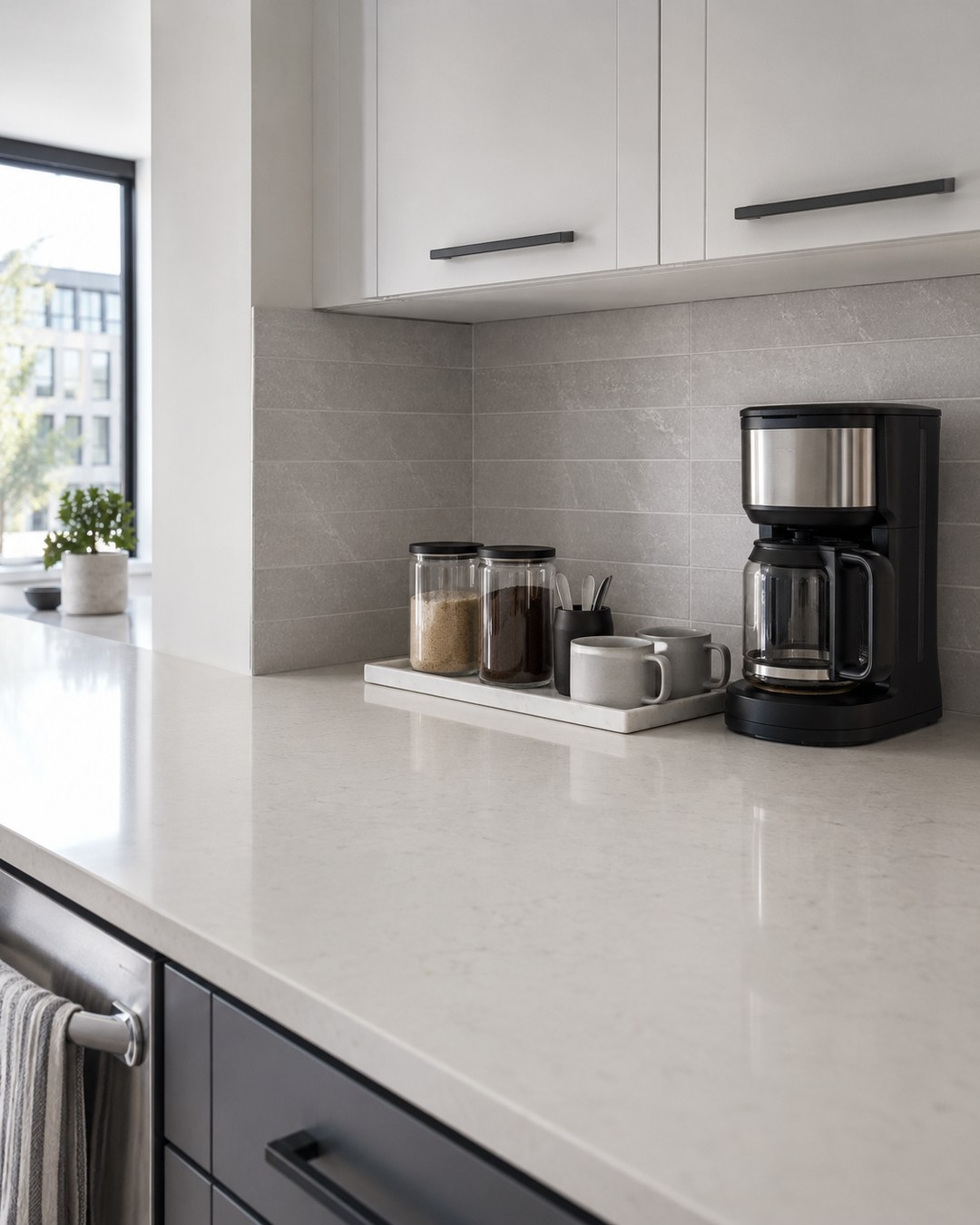
Morning laneGroupMorning station organizerExplore pick → StoreCompact clear containersSee option → MoveAppliance sliding trayCheck fit → SupportStanding napkin holderView pick →
Build one station — not a second kitchen.
The machine, coffee basics and cups should behave like one contained routine. The rest of the worktop still belongs to the kitchen.
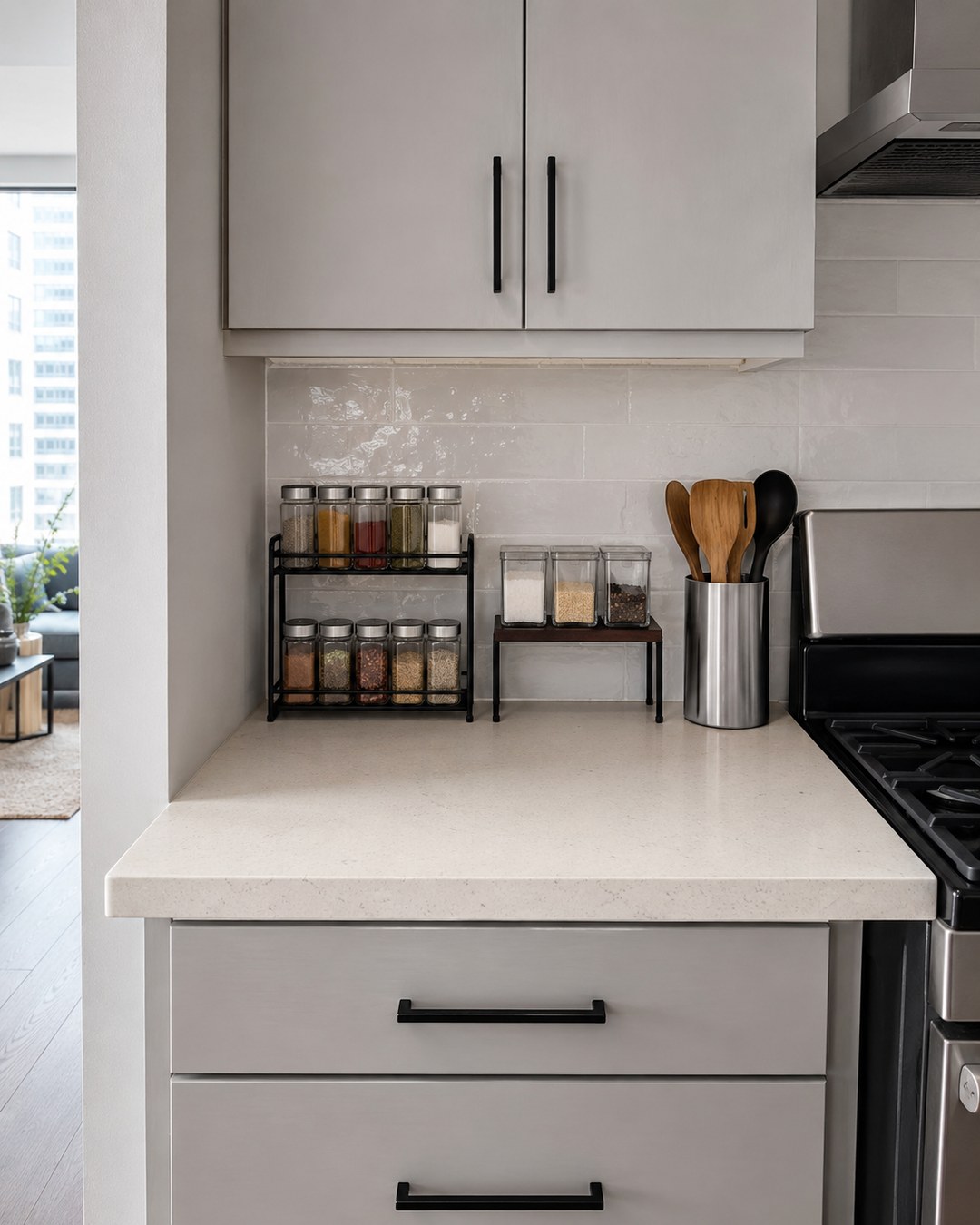
Small-space laneSlideSeasoning drawerExplore pick → RaiseAdjustable shelf riserSee option → StackSlim two-tier spice rackCheck fit → RotateRotating utensil holderView pick →
Use height before you spend width.
A tiny counter cannot afford several independent footprints. Stack the small repeated things, then keep one hand-sized work patch genuinely open.
The footprint rule
One home base. Less visual noise.
A counter can look organized and still lose too much usable surface. Consolidate related pieces into one deliberate footprint.
Explore the anchor tray →
Scattered
OilSaltSpoon
Three objects, three separate footprints, three places to clean around.
Home base
OilSaltSpoon
One visual island. One edge to wipe around. More counter stays free.
Clutter has a shape
Match the organizer to the mess.
Tap the shape that looks most like your counter. Each one needs a different kind of control.
Contain tall tools in one vertical reach zone.
See the fit →A structured utensil holder reduces the horizontal spread without hiding the tools you grab while cooking.
Build the prep counter
Build a counter that resets fast.
Treat the counter like a sequence: group, stand, park, then protect the empty working lane.
Anchor the pour zoneGroup oil and one small seasoning piece into a single footprint.
Explore →Stand the toolsMove utensils upward instead of letting them spread sideways.
Explore →Park flat piecesKeep boards upright at the backsplash edge, outside the work lane.
Explore →Protect the landing spotGive hot lids and active utensils one small, deliberate place to pause.
Explore →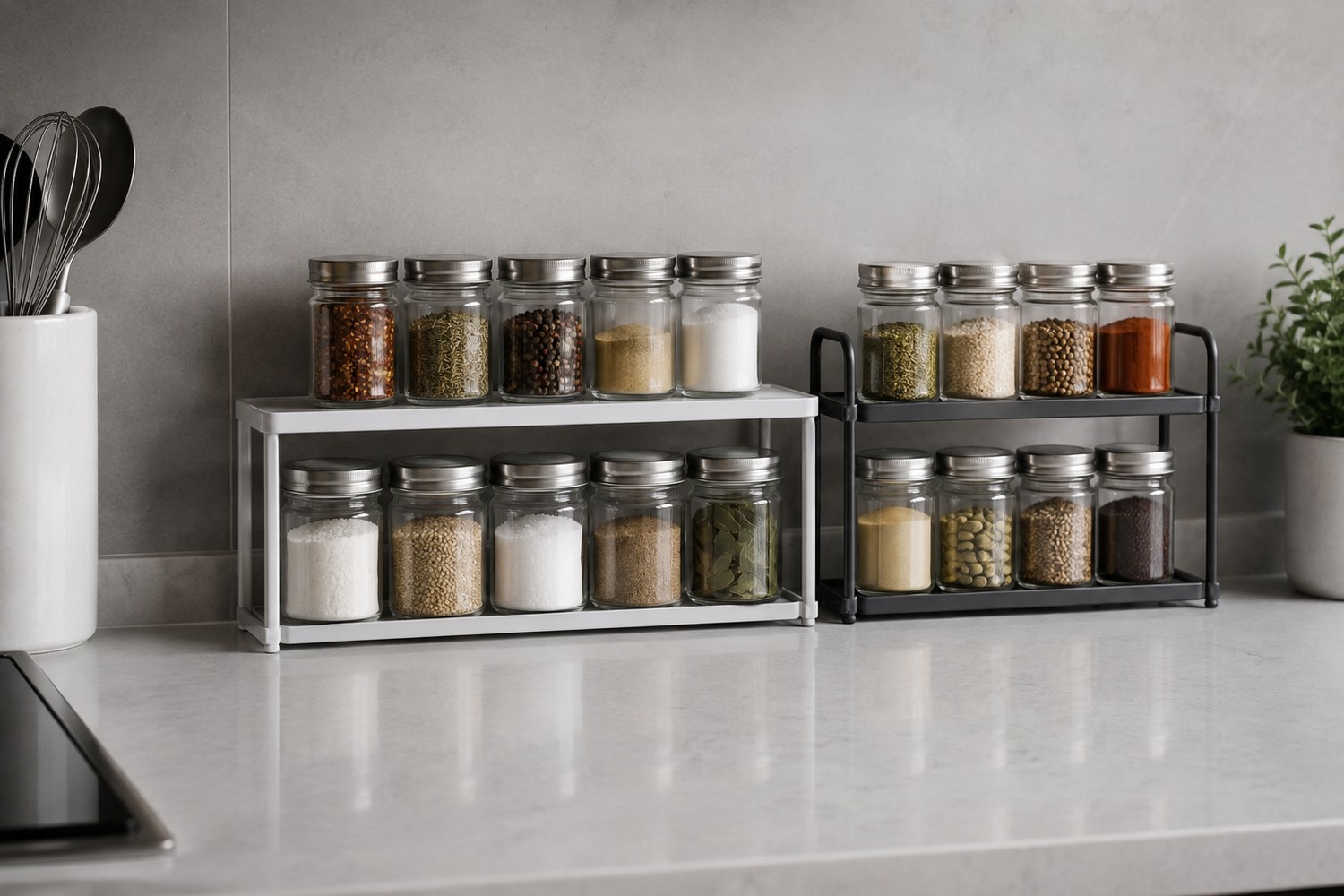
Depth vs height
RaiseAdjustable shelf riserSee option → TierSlim spice rackCheck fit →
Stack up, not across.
If small repeated items keep spreading sideways, the organizer should change the geometry — not just make the spread look neater.
Spread costs working width.
Several jars in a single row can look tidy while still claiming a long strip of counter.
Appliance parking
Park appliances at the edge.
A frequently used appliance can stay accessible without permanently occupying the most useful part of the worktop.
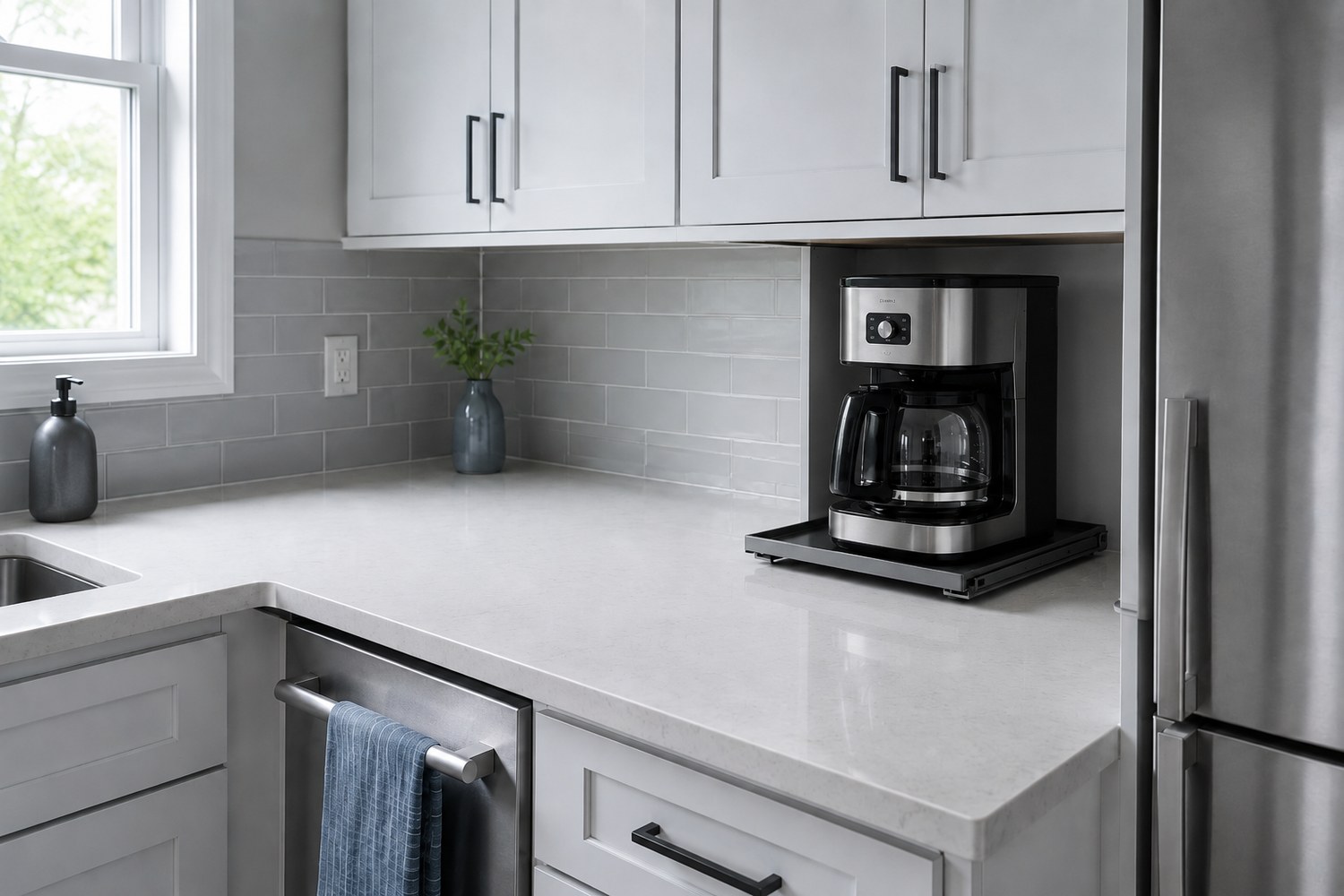
Movement is the storage feature.
Before choosing a slider, confirm the appliance footprint, upper-cabinet clearance, cord path and the product dimensions on the listing.
Check this option →
Precision product library
Find the right kind of control.
The visual sections make the decision. This library simply helps you retrieve the right product family without scrolling through a giant storefront.
Daily reachFour small pieces for the things you touch constantly.+
Group a small daily-use cluster into one footprint.
Explore →Best when cooking tools need a simple vertical home.
Explore →Creates one controlled oil-and-pour zone near prep.
Explore →Useful when active cooking creates a small but constant mess.
Explore →Spices + loose toolsFour routes for tiny repeated jars and tall utensil clutter.+
Best when small bottles need depth control rather than another row.
Explore →For a larger seasoning collection that needs one defined system.
Explore →Useful when tools need quick reach without spreading sideways.
Explore →For a larger loose-tool group that needs internal separation.
Explore →Vertical spaceFour products that change height, tiers or orientation.+
Adds another usable level before you spend more width.
Explore →For a visible seasoning system that prioritizes reach.
Explore →Best when a narrow counter needs more vertical capacity.
Explore →Turns flat, leaning boards into a controlled upright zone.
Explore →Visible storageFour ways to keep food or produce visible without random containers.+
For a small visible-storage group that needs matching structure.
Explore →For a broader visible-storage need when the counter truly has room.
Explore →For staples that deserve a restrained glass presentation.
Explore →Contains produce vertically instead of letting it spread.
Explore →Counter supportFour supporting pieces for routines, paper goods and bulky appliances.+
Best when coffee basics need to behave like one routine.
Explore →For a frequently used roll that needs one stable home.
Explore →Keeps a small paper-goods group upright and contained.
Explore →Best when a regular-use appliance needs to move rather than dominate.
Explore →
Counter clearance check
Measure what must stay empty.
The right organizer still fails if it steals too much depth, blocks an upper cabinet or puts a daily item outside comfortable reach.
Your non-negotiable
Measure the empty patch you refuse to lose.
protected working depth + width
Start with the work surface you actually need. The organizer gets whatever space remains — not the other way around.
↔
Footprint
Compare product width and depth with the exact counter area you can surrender.
↕
Upper-cabinet clearance
Confirm that risers, jars and appliances fit under cabinets in their real operating position.
↗
Reach + movement
Make sure frequently used items can move or rotate without blocking the work lane.
✓
Listing details
Verify dimensions, materials, included pieces, care requirements and compatibility on the current product page before purchasing.
The reset that lasts
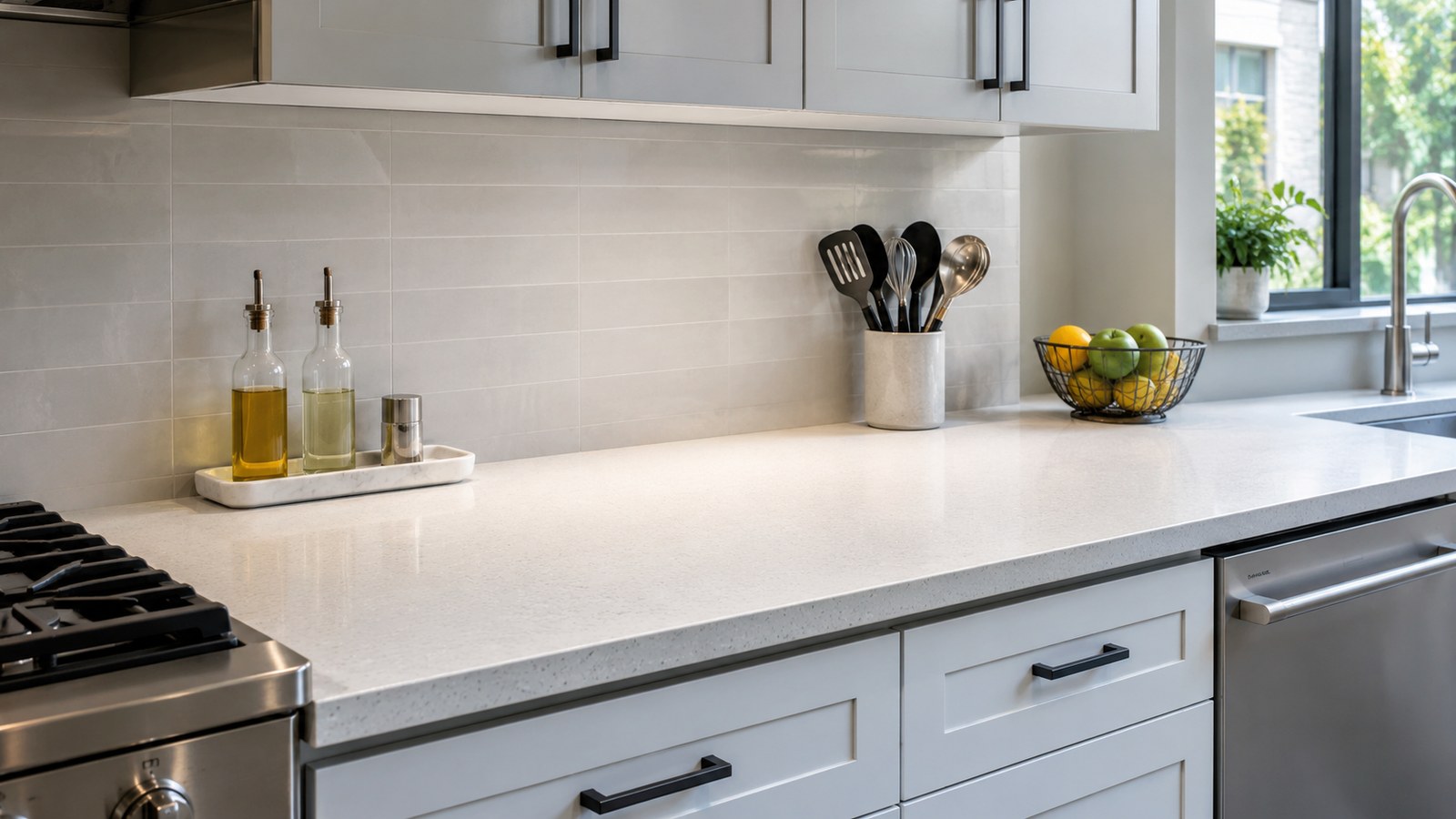
Leave one working patch empty.
ReturnWipeLeave clear
Continue the kitchen reset
What still gets in the way?
Once the counter has a working lane again, solve the nearest remaining friction instead of adding more countertop pieces.