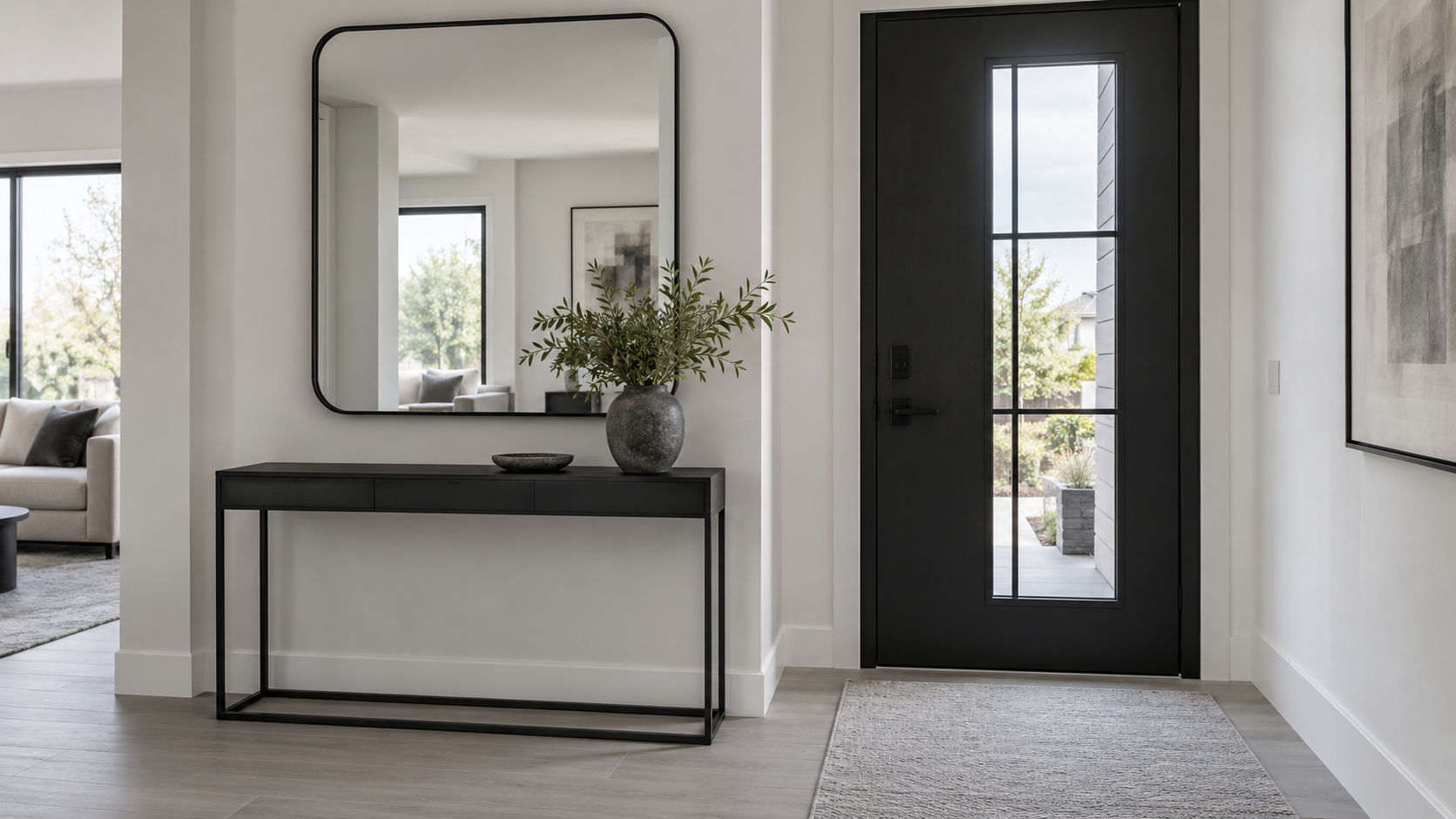
Keep the Walkway. Add the Final Check.
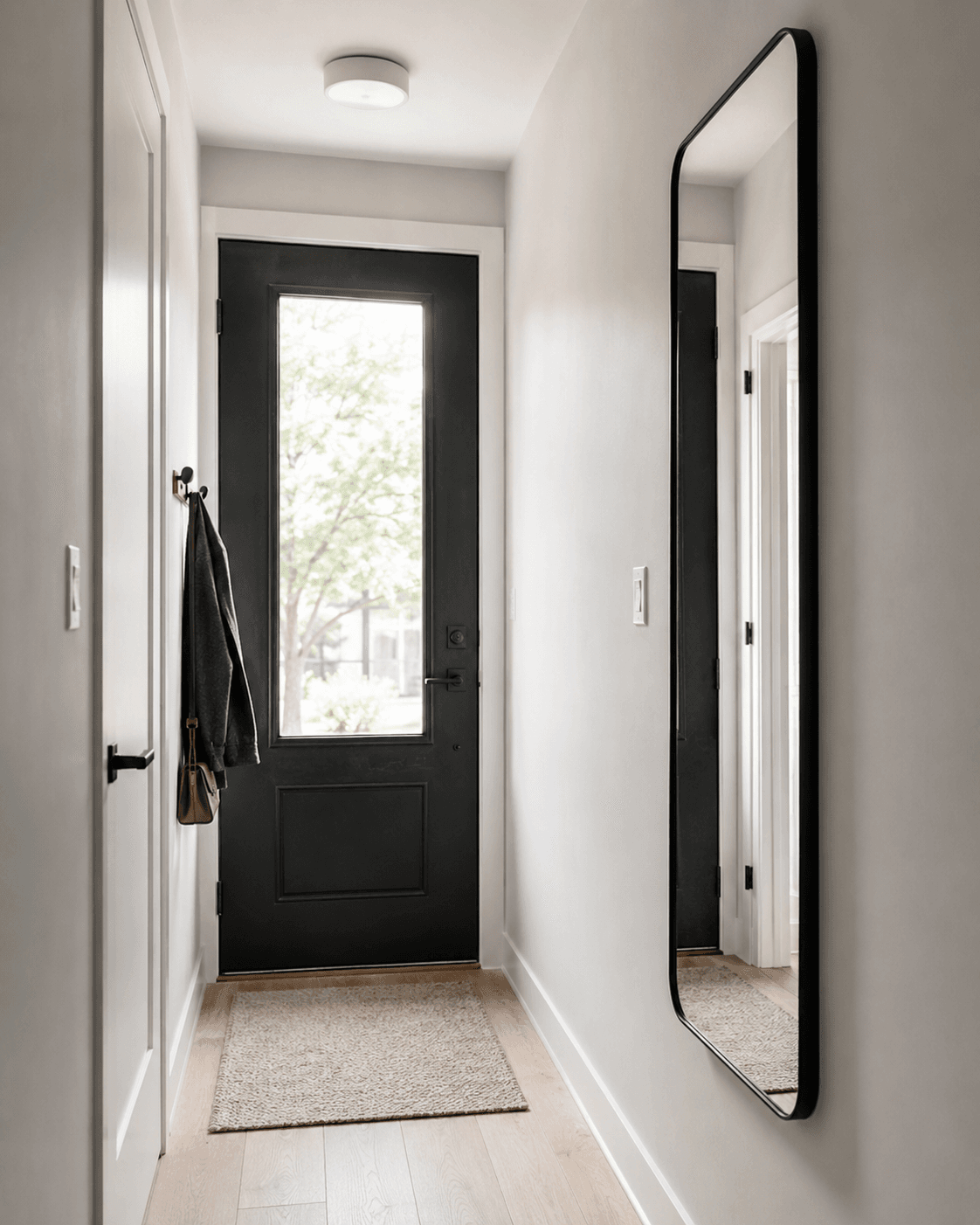
If furniture compromises circulation, let the wall carry the function instead.

An unfinished console wall, a tight hall, a missing final outfit check and zero spare floor space all point to different mirrors.

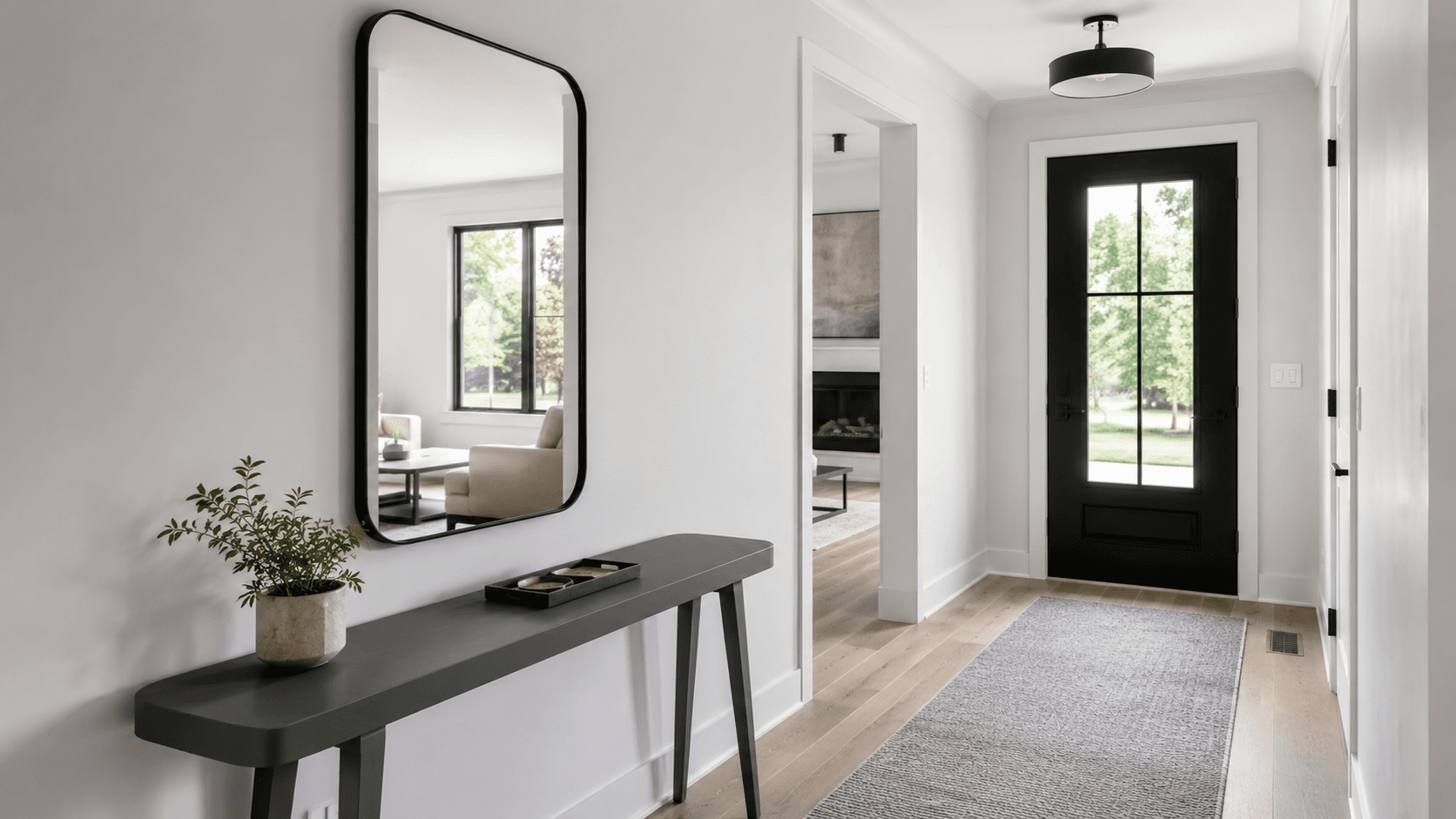
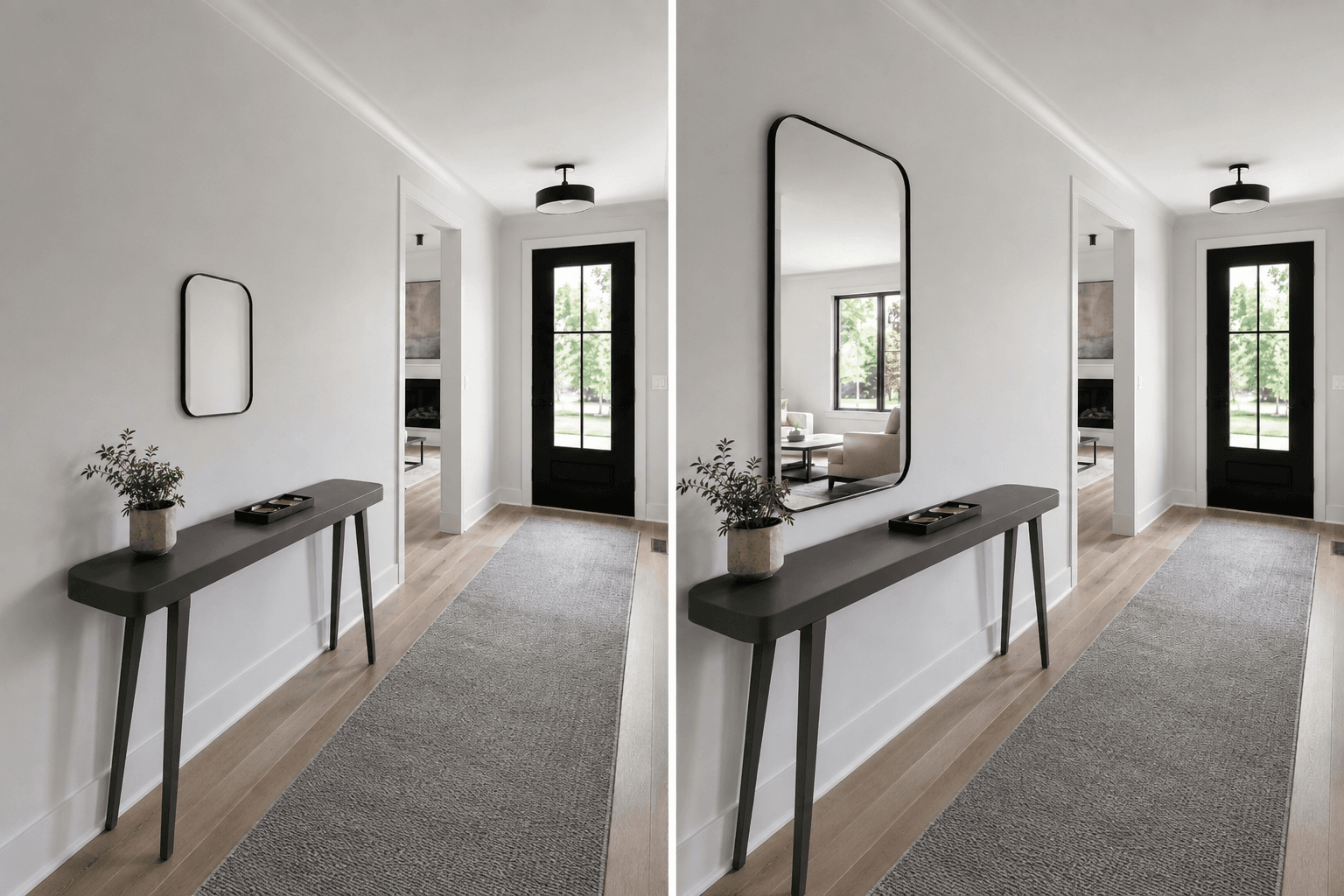
The comparison at left is the same room. The difference is not style. It is whether the mirror belongs to the wall below it.
Ravnora will surface the mirror family that best matches that room pressure.
This is where a mirror stops being a shape you like and becomes something that actually works in the room.
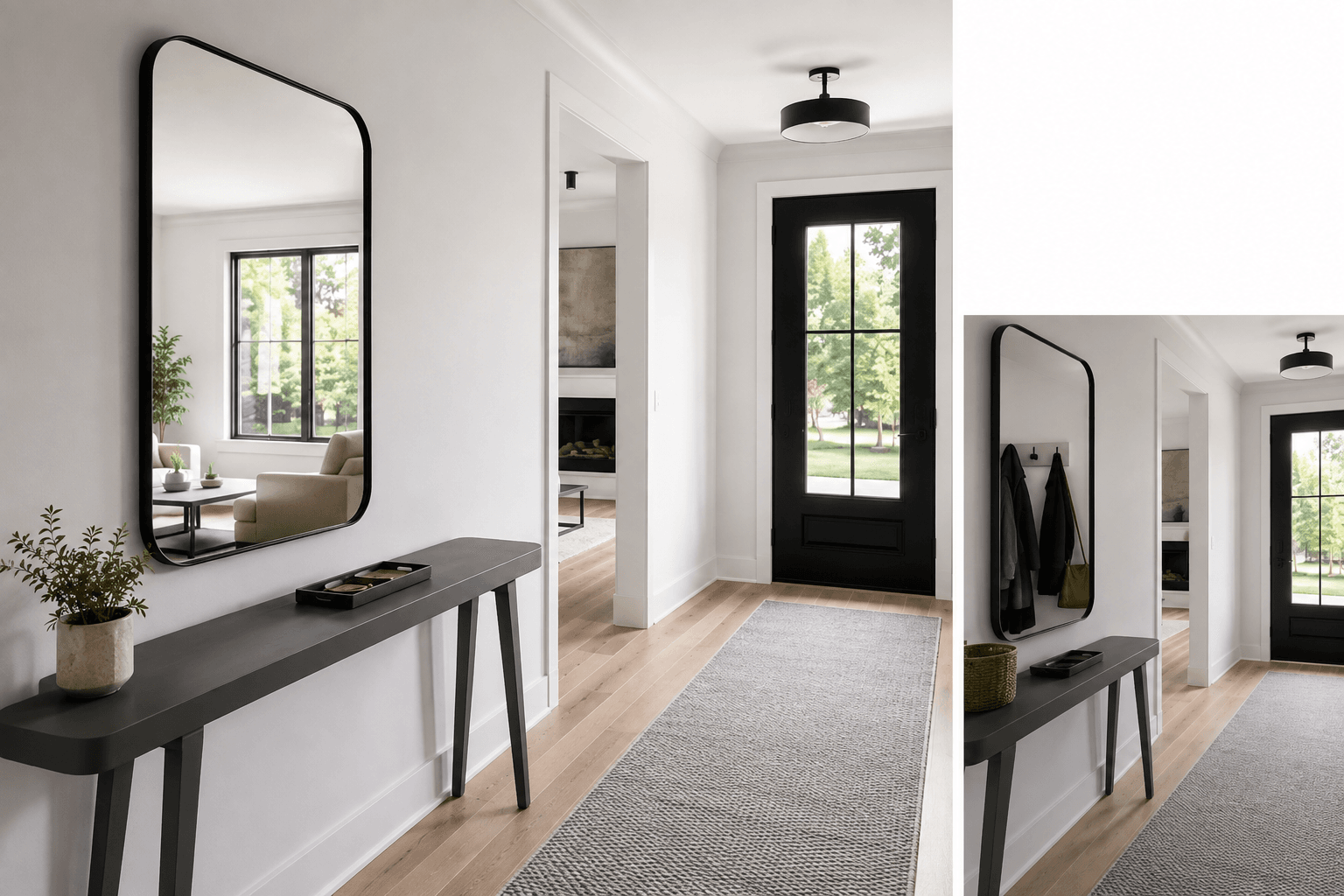
Switch between the three states and watch the relationship to the console change.

A strong sightline can send daylight and architectural depth back into the entry instead of magnifying clutter.
No seller names. No repetitive “best mirror” claims. Each pick earns its place by solving a different entryway problem.
For a console wall that needs enough visual width to feel finished without adding another pronounced arch.
The product changes because the room changes. Choose the route that looks closest to your real arrival zone.

If furniture compromises circulation, let the wall carry the function instead.
Once the mirror has the right job, use silhouette to tune the mood and frame finish to either reinforce or quiet the room.
Improve the visual relationship before adding another object to the wall.
A better sightline can improve the room more than a more expensive frame.
Let one shape lead instead of making the mirror, lamp, console and wall decor compete.
Use this after you understand your room. The library is designed for retrieval—not an endless product wall.
Best when a broad wall needs vertical architecture at real scale.
Check Options →Best when the entry needs softer geometry and warm-metal continuity.
Explore This Pick →Best when chrome, steel or nickel hardware already sets the material direction.
See Current Options →Best for a clean, composed console wall without another pronounced arch.
See This Pick →Best for medium-to-wide consoles that need a stronger warm frame.
Check Variants →Best when medium-scale mirrors keep reading too small on the wall.
Check the Larger Scale →Best when you want height and architecture without an oversized statement.
Explore the Arch →Best when black and gold both feel wrong for the hardware already in the room.
See Available Options →Best when the room already contains enough visible metal or dark linework.
Explore Frameless →Best when the entry needs soft geometry without introducing a warm frame.
See the Round Option →Best when you want vertical architecture that also connects to brass or gold details.
Check This Route →Best when another dark frame would make a small entry feel heavier.
Explore the Light Frame →Best when the entry can support a strong vertical architectural plane.
Check the Full-Length Option →Best when function matters but the wall cannot visually absorb a broad mirror.
See the Slim Option →Best when placement may change or permanent mounting is not the only plan.
Explore Placement Options →Best when you want head-to-toe function with a softer architectural top line.
See the Arched Option →Best for a smaller entry using brass or gold accents.
Check Current Variants →Best when personality matters more than symmetry and surrounding pieces can stay restrained.
Explore This Statement →Best when you want the same sculptural movement with a warmer frame direction.
See the Warm Version →Best when you want organic movement without giving up as much wall width.
Check the Tall Shape →Best when you want edge movement but still prefer a familiar central reflection.
Explore the Scalloped Route →Best when a circle feels too wide and an arch feels too architectural.
See the Oval Option →Best for narrow sections between trim, switches or adjoining doorways.
Explore the Compact Option →Best when you need reflection plus a small landing surface without adding floor furniture.
See the Shelf Mirror →Tap each one as you verify it. If one is still uncertain, the mirror decision is not finished yet.

The goal is not to fill a blank wall. It is to make arrival feel calmer: useful reflection, clear circulation, controlled landing space and one visual hierarchy.
There is no universal ratio that works for every wall. Compare the usable console width, wall width, surrounding trim and intended visual weight. The goal is for mirror and console to read as one intentional composition.
Round mirrors soften hard lines. Arches add vertical architecture. Rectangles prioritize usable reflective area. Organic shapes create a stronger statement. Choose shape after solving scale and function.
Yes. In many narrow halls, a slim wall-mounted or flexible-placement full-length mirror adds genuine function without taking additional floor area.
Prefer daylight, architectural depth or a calm adjacent room. If the intended position mainly reflects coats, cables or visual clutter, test another sightline before changing the mirror.
Prioritize a wall position that keeps the path clear, avoids door-swing conflicts and gives you a useful reflection from where you naturally pause before leaving.
Choose based on the viewing job. If face-and-torso reflection is enough, a wall mirror may be the better composition. If you routinely need a head-to-toe check, solve that directly with a full-length format.
Exact matching is not mandatory. Black creates clear contrast, warm metal adds warmth, cool metal supports chrome or nickel hardware, and frameless mirrors reduce visible linework when the room already contains several finishes.