
01 · HideClose the visual noise.Best when shoes or mixed small items make the first view feel busy.
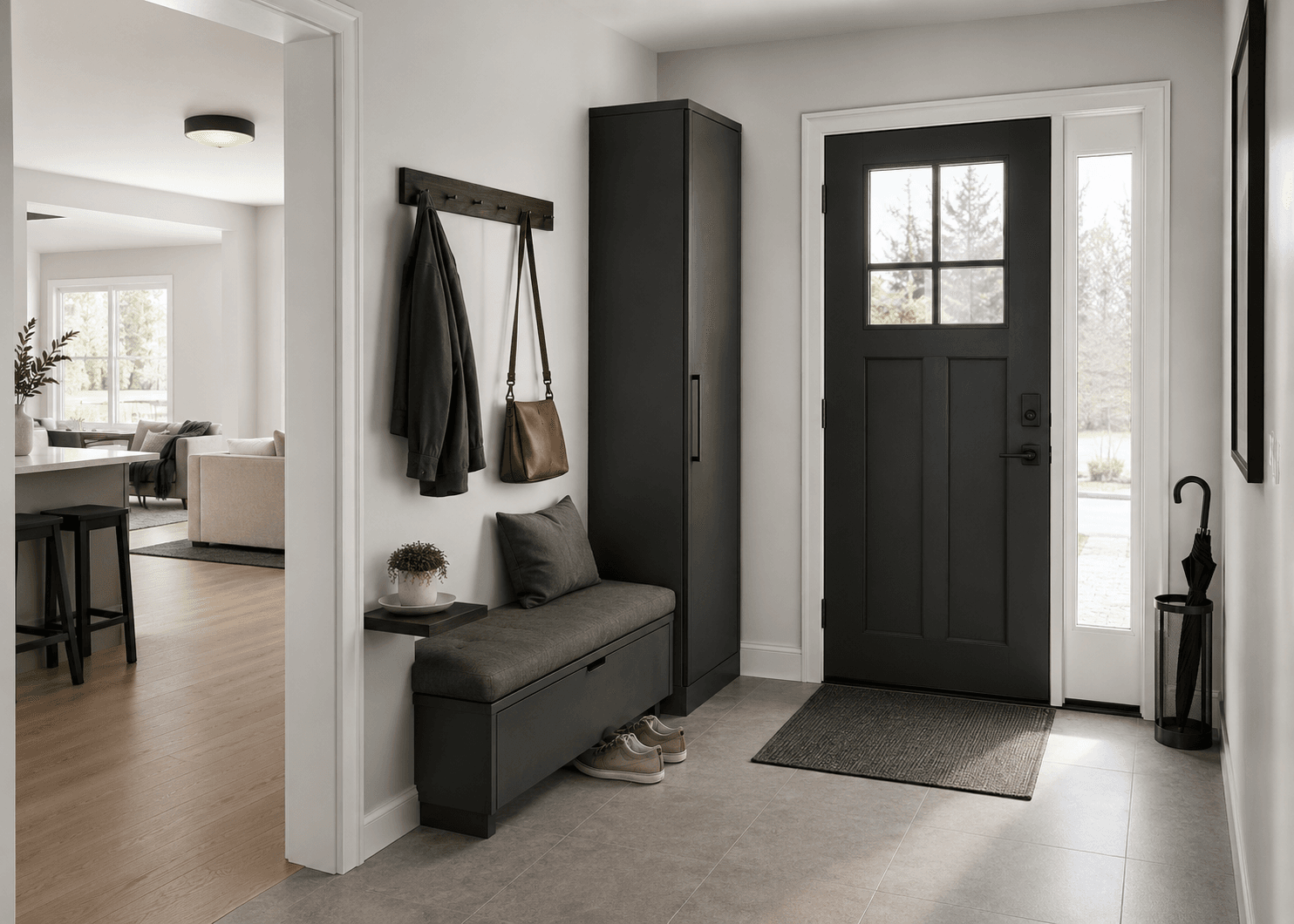
Entryway Storage · Reframed
Entryway storage for the 30 seconds after you walk in.
Shoes drop. A bag slides off your shoulder. Keys leave your hand. Build the landing around that sequence — not around a catalogue.
protect the walking path
hide the visual noise
make daily return automatic
The 20-second arrival
Give every repeated motion one obvious destination.
The most useful entryway is not the one with the most storage. It is the one where the next movement feels obvious.
Affiliate disclosure: As an Amazon Associate, Ravnora Decor may earn from qualifying purchases. Product links may open on Amazon.
FLOOR
Arrival job 01 · floor
Make shoes disappear from the walking line.
If shoes naturally come off at the door, storage should meet them there. Choose closed storage for visual calm or open storage when speed matters more.
Put itbeside the removal point
Protectthe path to the rest of the home
Decideopen access vs hidden fronts
The depth budget
How much wall can storage borrow without stealing the entrance?
First protect the path and door movement in your real room. Then use the slider to explore what your remaining storage depth can realistically support.
Usable storage depth10 inUltra-shallow zone
This is a planning aid, not a clearance standard. Measure your actual entry, door swing, baseboards and circulation before buying.
One wall, four behaviors
Choose the storage behavior before the furniture shape.
The same entryway wall can hide, seat, hang or catch. Start with the job you need most.
02 · SitMake one footprint do two jobs.Use seating only when the room has depth to spare.
03 · HangLet the wall carry the arrival.Ideal when floor area is precious but coats and bags are daily.
04 · CatchGive small things one address.Keys and mail need hand-height storage, not another large cabinet.
Real entryways, different rules
The room changes the answer.
A narrow hall, a family landing, a rental and a home with no formal foyer should not be asked to solve storage the same way.

Narrow HallProtect the center.One active wall. Minimal projection. No furniture island in the passage.

Shared ArrivalGive the routine more capacity.Seat, shoes and hanging can share one organized vertical system.

Rental / FlexibleLet the storage leave with you.Freestanding and over-door solutions keep the room reversible.
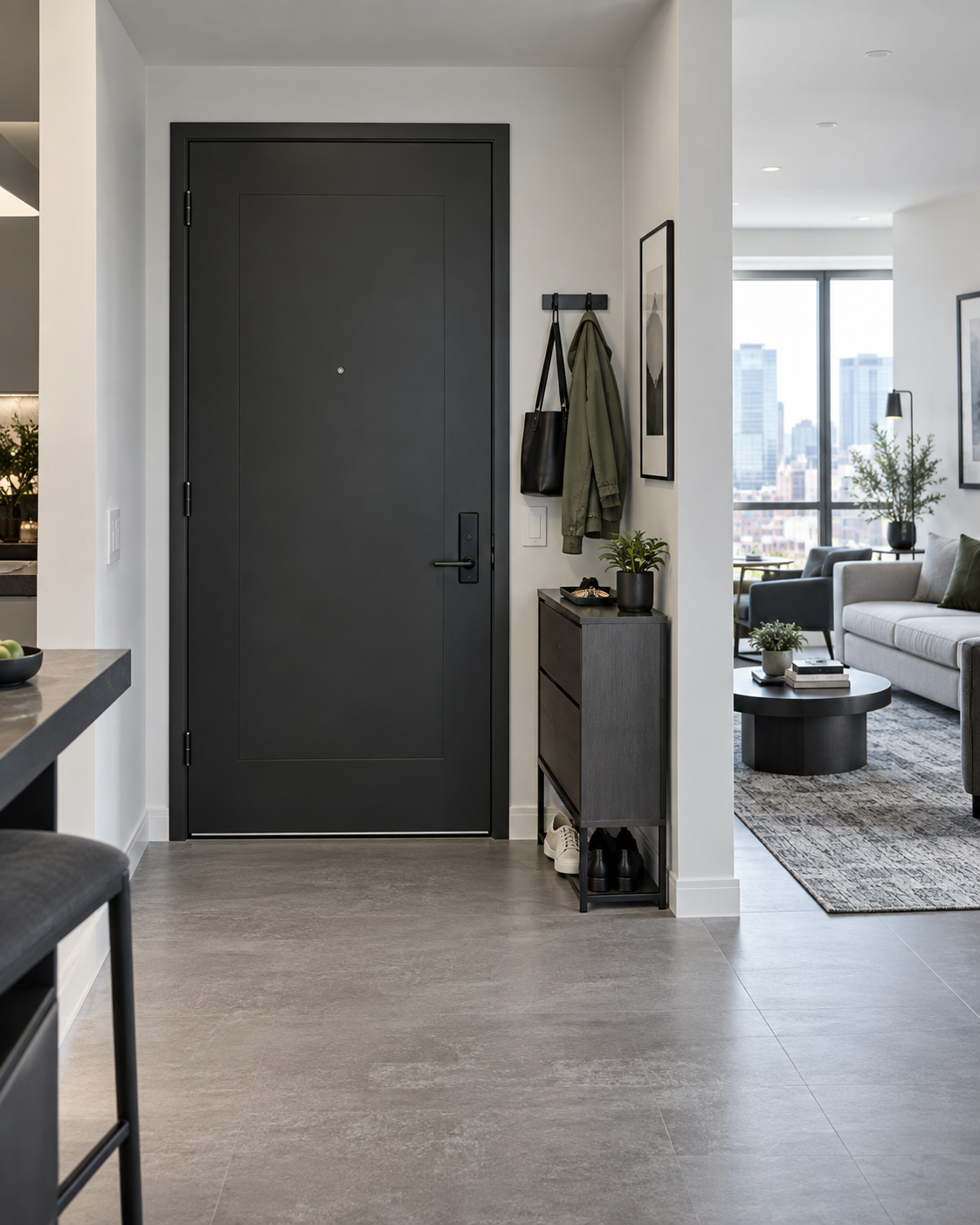
No Formal EntrywayCreate the boundary instead of waiting for one.A shallow landing wall can tell the home where the entrance ends.
The Ravnora Edit
Eight strong moves. Eight different reasons to click.
These are not eight versions of the same organizer. Each solves a different arrival behavior. The full 20-product finder comes later.
01
Floor · hiddenThe Floor-Clearing Slim Cabinet
When shoes are the problem but the walkway is non-negotiable.
Check: shoe fit, wall anchoring, baseboards and front clearance.
02
Floor · seatedThe Sit-Down Shoe Reset
When taking shoes on and off deserves one useful furniture footprint.
Check: depth, door movement and the footwear you actually use.
03
Wall · quietThe Hooks That Disappear
When coats and bags need a recurring wall destination without permanent visual clutter.
Check: wall type, install height and what you hang every day.
04
Hand heightThe Keys-and-Mail Landing Strip
When the smallest things create the most repeated searching.
Check: install it where your hands naturally empty, not across the room.
05
MovableThe Renter’s Coat Tree
When drilling is undesirable and your layout may change later.
Check: floor footprint and stability under the way you actually load it.
06
Higher capacityThe Higher-Capacity Shoe Wall
When one slim shoe cabinet is not enough but visual calm still matters.
Check: available wall width, front access and anchoring needs.
07
All-in-oneThe Compact Everything Station
When one dedicated wall needs hanging, shoes and a sitting point together.
Check: the entire footprint and required stability or anti-tip setup.
08
Weather edgeThe Wet-Shoe Containment Zone
When rain, snow or muddy soles need to stop before the rest of the home.
Check: tray footprint against the shoes or boots it needs to catch.
Same room. Different visual weight.
What deserves instant access — and what deserves to disappear?
Open storage reduces friction. Closed storage reduces visual noise. Most good entryways need some of both.
Open access
Quieter view
↔
Move the room
Slide from fast access to visual calm.
The goal is not to hide everything. Hide the category that creates the most visual noise, then leave genuinely frequent items easy to return.
more openmore hidden
Ravnora rule: if returning an item takes too many steps, it will eventually land somewhere easier. Concealment should calm the room without making the routine annoying.
Build one system
Choose one floor move, one wall move and one hand-height move.
That simple three-layer logic is often more flexible than trying to make one oversized organizer do everything.
Layer 01Floor
Layer 02Wall
Layer 03Hands
The edit that keeps storage working
The door is not a warehouse.
The everyday ruleKeep what leaves with you. Move what only lives near the door.
Entryway storage feels calm when it supports the current routine instead of becoming overflow for the rest of the house.
Earns a place here
Frequent arrival essentials
- Daily or near-daily shoes
- Current outerwear
- The bag you actually carry
- Keys and immediate-use small items
- Weather gear that is in season
Usually move elsewhere
Things that turn storage into backlog
- Off-season coats and footwear
- Old mail and accumulated paperwork
- Multiple unused bags
- Items waiting indefinitely to be returned
- Decor that steals the landing surface
The room check
Before you buy, test the room — not just the product.
Tap the final room to see the five checks that prevent a useful storage idea from becoming a daily obstacle.
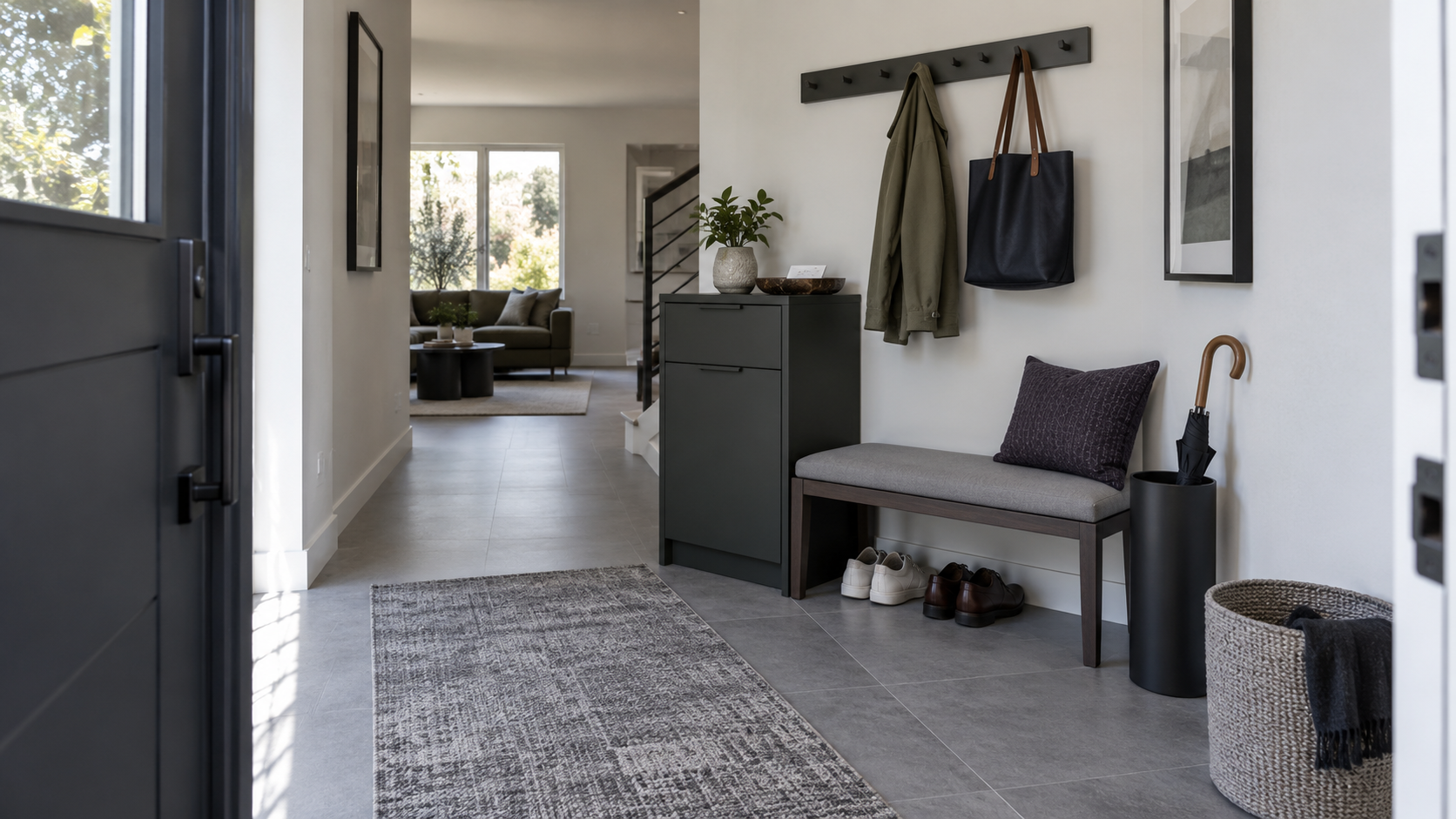
Check 01 · circulationCan the path still feel obvious?
Measure the piece in the room, not only against the wall. Door movement and everyday passing space matter as much as storage capacity.
01 · CirculationCan the path still feel obvious?
Measure the piece in the room, not only against the wall.
02 · Actual fitDo your real shoes fit the storage?
Bulky footwear, boots and larger sizes change the answer.
03 · HangingCan coats hang without crowding the door?
Check height, width, wall type and what is carried most often.
04 · Drop zoneIs the landing point where your hands already go?
Convenience is what turns storage into a habit.
05 · WeatherCan wet items stop before they travel?
Keep umbrellas and wet footwear contained at the edge of the route.
Complete storage finder
Twenty products, organized by the job you now understand.
This is retrieval, not another storefront. Open only the family that matches your room and routine.
Shoe storage + shoe seating5 options
The Floor-Clearing Slim CabinetClosed, shallow shoe storage for tighter passages.
Check fit ↗The Sit-Down Shoe ResetA seat and shoe landing in one footprint.
Explore ↗The Higher-Capacity Shoe WallMore concealed footwear capacity where wall width allows.
Compare ↗The Family Cubby BenchFast everyday access for several pairs.
See options ↗The Open Shoe ResetSimple open access when speed matters most.
Inspect ↗Wall hanging + small-item landing5 options
The Hooks That DisappearRetractable wall hanging for a quieter unused state.
See options ↗The Wall Rack That Reads Like DecorRestrained hidden-hook hanging for lighter daily loads.
Review ↗The Keys-and-Mail Landing StripA compact recurring destination for small essentials.
Inspect ↗The One-Wall Landing StationShelf, baskets and hooks where one wall must work harder.
Check options ↗The Small-Item DrawerKeys and mail with a little more visual concealment.
See details ↗Freestanding + no-drill2 options
The Renter’s Coat TreeMovable vertical hanging without permanent installation.
Review options ↗The Door-Back Storage MoveUses otherwise inactive door height without taking floor space.
Check compatibility ↗Complete hall-tree systems2 options
The Compact Everything StationShoes, hanging and a seat concentrated on one wall.
See the setup ↗The Corner That Finally WorksTurns otherwise awkward corner geometry into a landing zone.
Explore ↗Concealed + surface + bulk storage3 options
The Quiet Foyer CabinetFurniture-scale concealment for an entry with genuine depth.
Check scale ↗The Sit + Hide BenchSeating with concealed secondary storage.
Inspect ↗The Drawer Console LandingA surface plus drawers for homes with room to spare.
See options ↗Weather + flexible overflow3 options
The Umbrella DockA dedicated stop for umbrellas and wet-weather accessories.
Explore ↗The Soft Overflow CatchFlexible overflow after the primary landing jobs are solved.
Review ↗The Wet-Shoe Containment ZoneA defined edge stop for wet or dirty footwear.
Check dimensions ↗Quick answers
Entryway storage questions that change the purchase.
Short answers for the decisions most likely to stop a good-looking organizer from working in real life.
What should actually be stored in an entryway?
Prioritize items tied to arriving and leaving: frequently used shoes, current outerwear, a daily bag, keys, immediate-use mail or small items, and in-season weather gear. Move long-term overflow elsewhere so the entrance remains a transition zone.
How do I choose entryway storage for a narrow hall?
Protect circulation first. Wall-mounted hooks, compact landing shelves, over-door storage and shallow closed shoe cabinets usually make more sense than deep benches or large hall trees when floor projection is the limiting factor.
Is open or closed entryway storage better?
Neither is universally better. Open storage is faster to use and return items to; closed storage visually quiets shoes and mixed clutter. A useful system often keeps high-frequency items accessible and conceals the category creating the most visual noise.
What if my home has no formal entryway?
Create a visual and functional boundary using one shallow wall near the door. A small drop zone, wall hooks and narrow shoe storage can establish an entrance without needing a separate foyer.
What entryway storage works for renters?
Prioritize reversible pieces: freestanding coat racks, storage benches, baskets, over-door hooks and other no-drill solutions that can move when the layout or home changes.
How do I stop entryway storage from becoming clutter itself?
Give each storage piece a single primary job and edit the contents regularly. When every empty shelf becomes overflow, the system stops functioning as a landing zone and starts functioning as backlog.
Storage solved