
Tight hall
Check mounting The 7-Inch Floating Landing Shelf
For an entry where preserving visible floor and walking space matters more than maximizing storage.
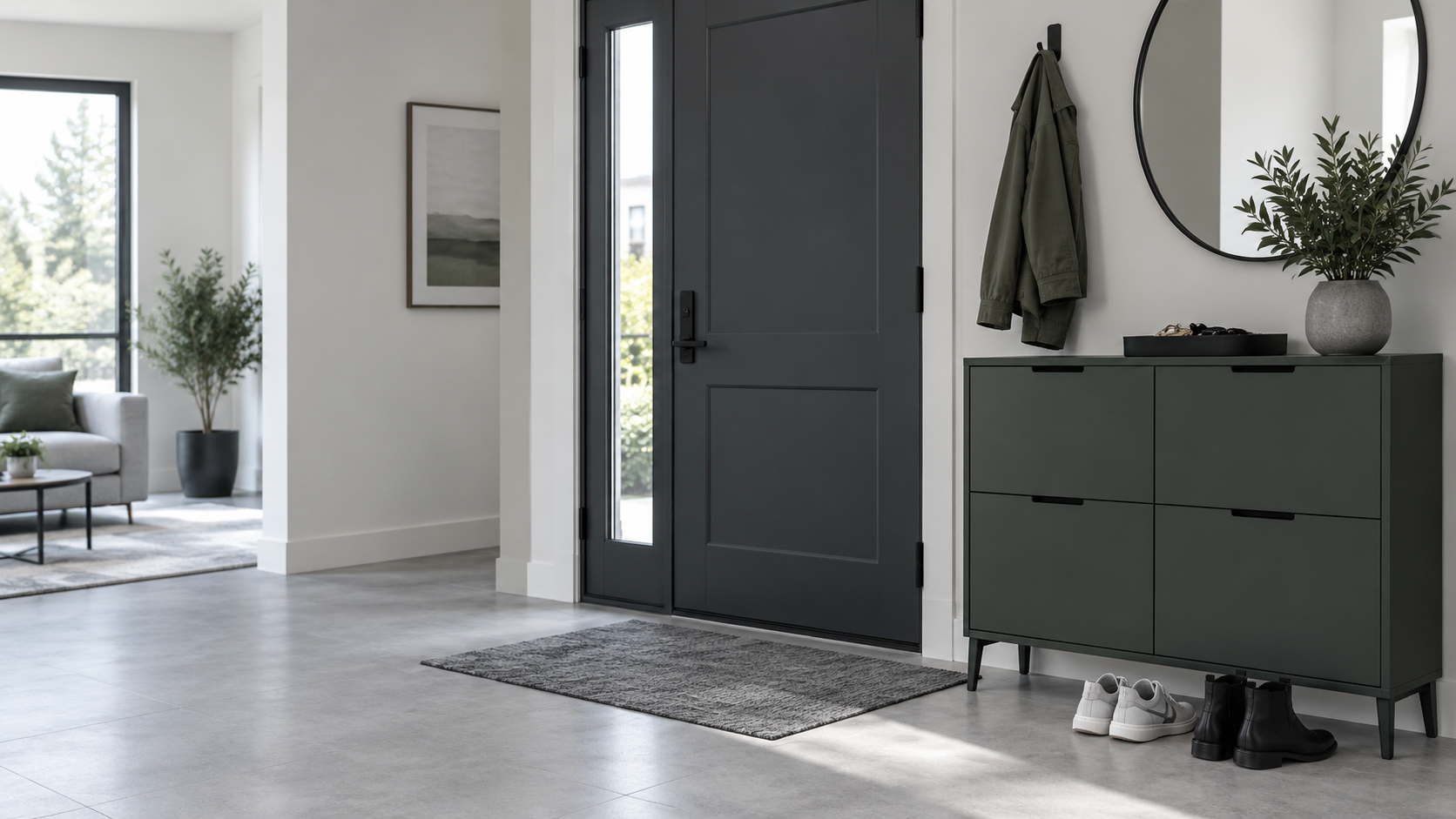
Entryway Furniture
The right piece stops shoes, keys and bags from choosing their own landing spots—without stealing the walkway.
Arrival Pressure Scan
Choose the moment that feels most familiar. The page will turn that frustration into a furniture route instead of another product list.
The Clearance Lab
Choose usable depth and the job that needs solving. This is about the space left after doors, baseboards and the walking route—not the empty wall alone.
You have enough depth for a useful landing surface, but the piece should still stay close to the wall and leave the arrival route visually open.
See matching starting points →One Anchor First
Start with the job that would make arriving feel easier tonight. Add another piece only if it solves a different problem.
For an entry where preserving visible floor and walking space matters more than maximizing storage.
For the household that genuinely sits by the door and wants everyday pairs to have a defined home.
For footwear that needs to disappear without giving a narrow arrival a full-depth cabinet.
For coats, bags, shoes and sitting that need to work inside one concentrated wall zone.
Three Real Arrivals
Recognize your arrival before you shop it. A narrow hall, a family landing and a polished foyer should never be solved by the same furniture formula.
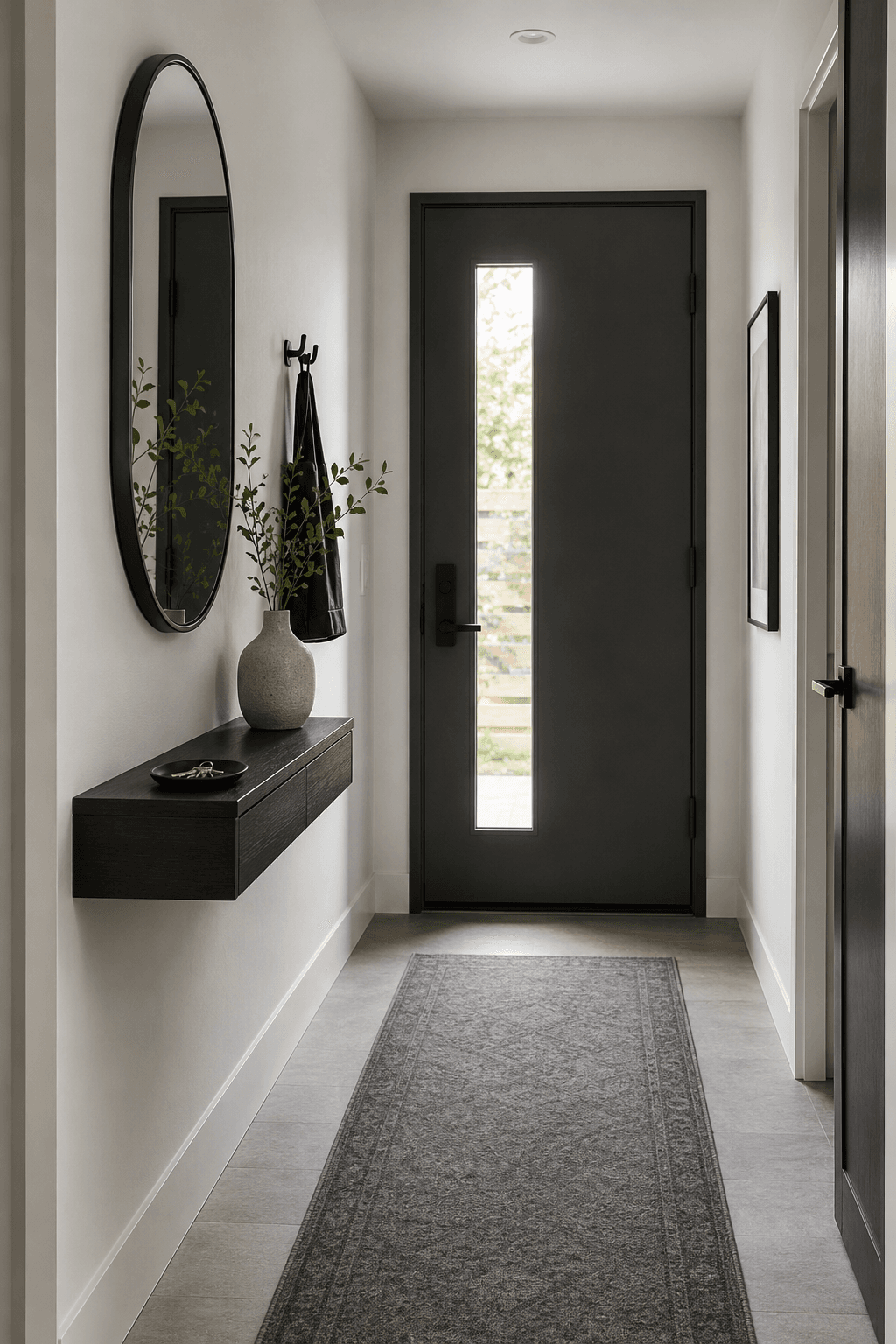
Reduce projection before adding capacity. Here, visible floor is part of the solution.
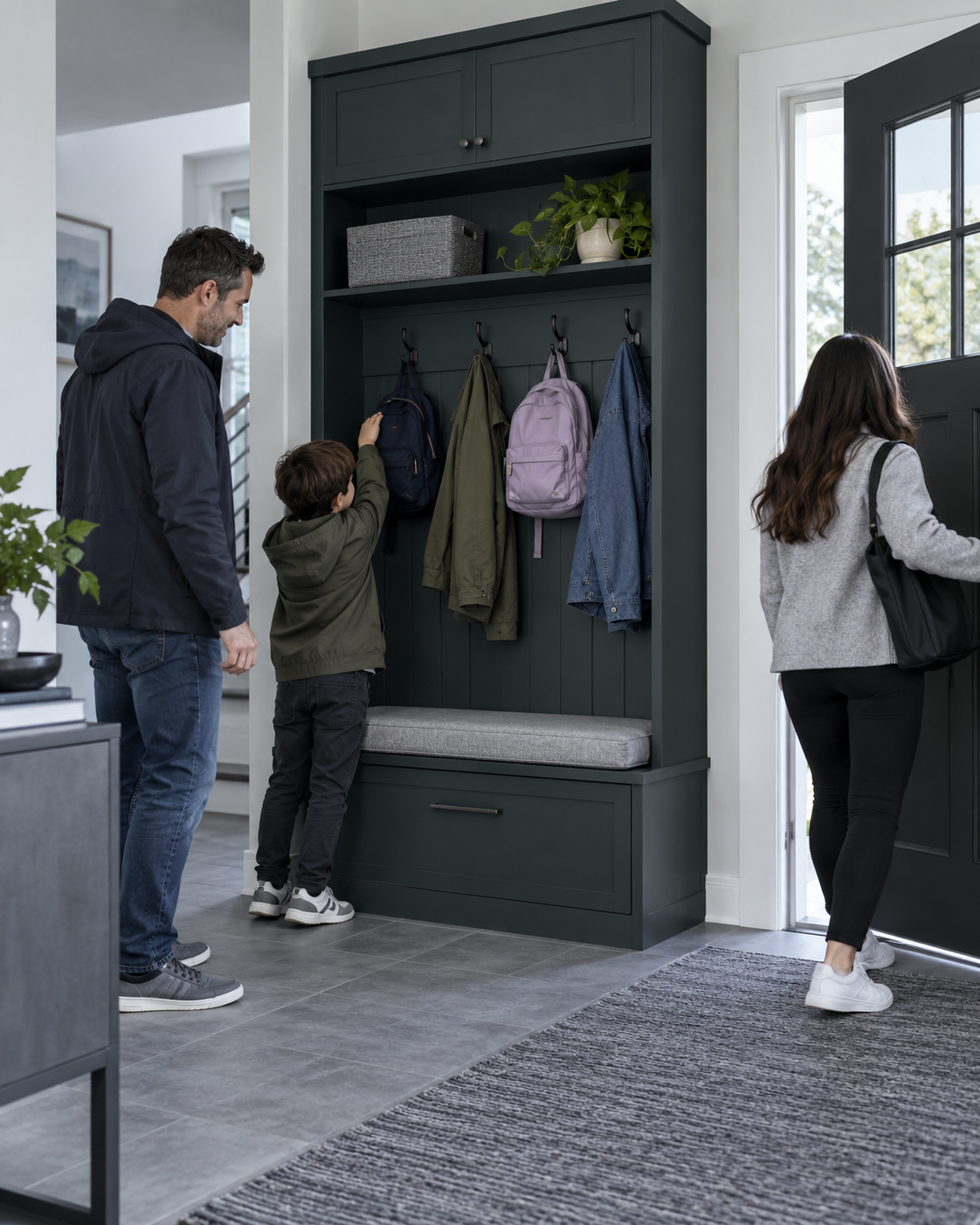
When several people arrive at once, one coherent vertical system can prevent the whole wall from becoming storage.

When appearance matters as much as storage, fewer pieces with stronger visual authority usually feel calmer.
Furniture Footprint Spectrum
Use the rail to compare footprint pressure. The strongest choice is the smallest furniture family that still fixes the behavior you came here to change.
Best when the walkway cannot spare ordinary console depth.
See matching picksThe 15-Piece Ravnora Edit
The full edit contains fifteen distinct roles. Choose your problem first and the shortlist becomes small enough to compare with confidence.
For a hallway that needs a real surface but cannot comfortably absorb a normal-depth console.
For the tightest passage, where preserving visible floor matters more than maximizing storage.
For keeping the floor visually open while giving keys, mail and smaller arrival items somewhere to disappear.
For a freestanding landing point that adds a drawer without moving into cabinet-level visual weight.
For everyday shoe changes when you want a real seat without turning the entry into a storage wall.
For a household where individual shoe slots solve more friction than hidden storage would.
For the entry where you need somewhere to sit but would rather not look at everything stored beneath it.
For high vertical shoe capacity when a normal-depth cabinet would crowd the passage.
For a smaller concealed-shoe route when the full height and capacity of a three-flip cabinet is unnecessary.
For shoes plus the keys, wallet and small arrival items that otherwise end up on top of the furniture.
For using wall height when coats, bags, shoes and sitting all need to share one concentrated zone.
For higher-volume households where more hooks, shoes and daily bags need one vertical home.
For a family entry that needs hanging, sitting and substantial closed storage in one furniture system.
For a foyer that has room for furniture with more visual authority and wants everyday contents to disappear behind doors.
For a smaller polished foyer that needs concealed storage but does not need the width of a substantial sideboard.
Open or Hidden?
This is the emotional decision behind “bench or cabinet.” Open storage wins on speed. Closed storage wins on visual calm.
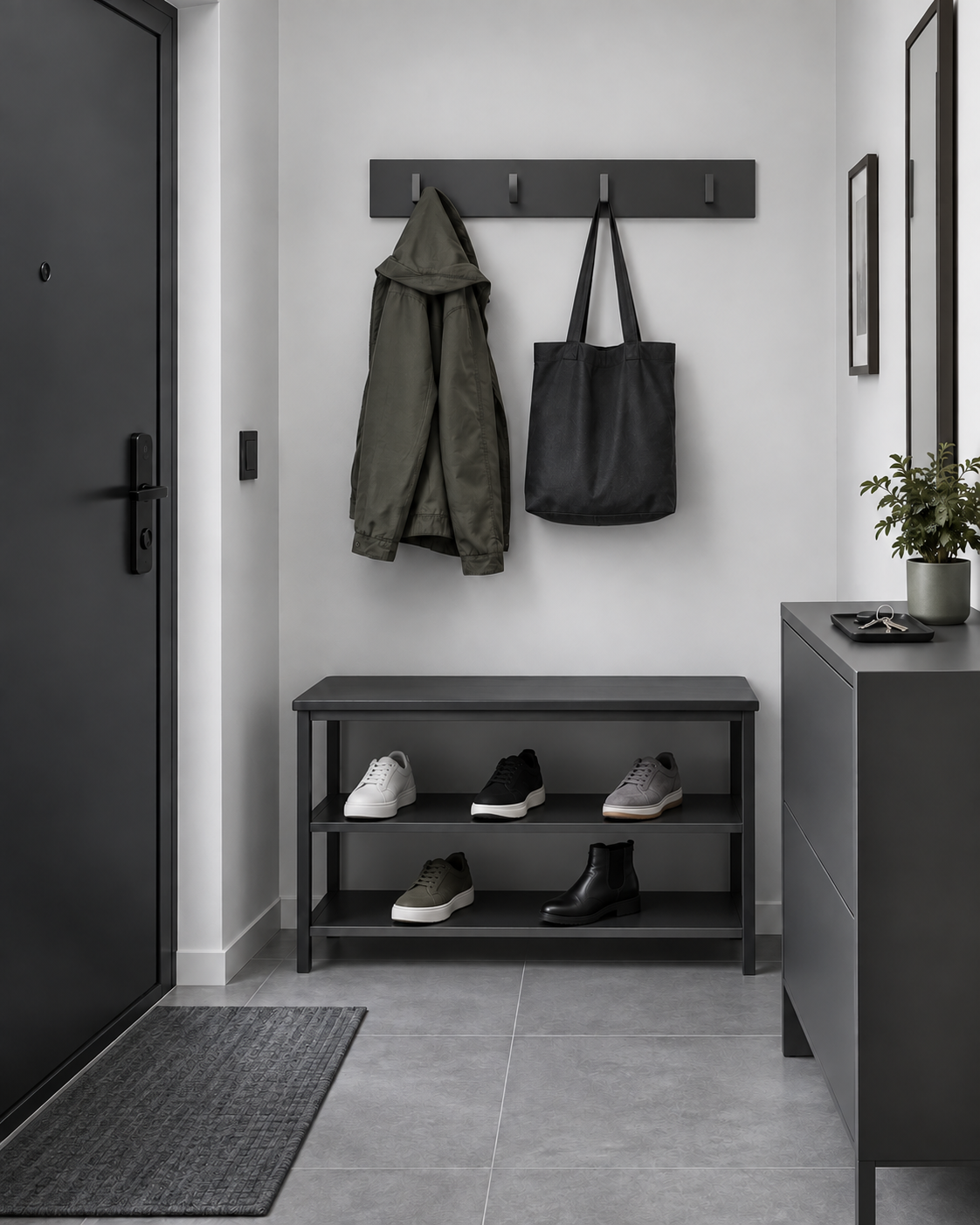
Choose this when the household will actually reset the visible storage and speed matters more than visual silence.
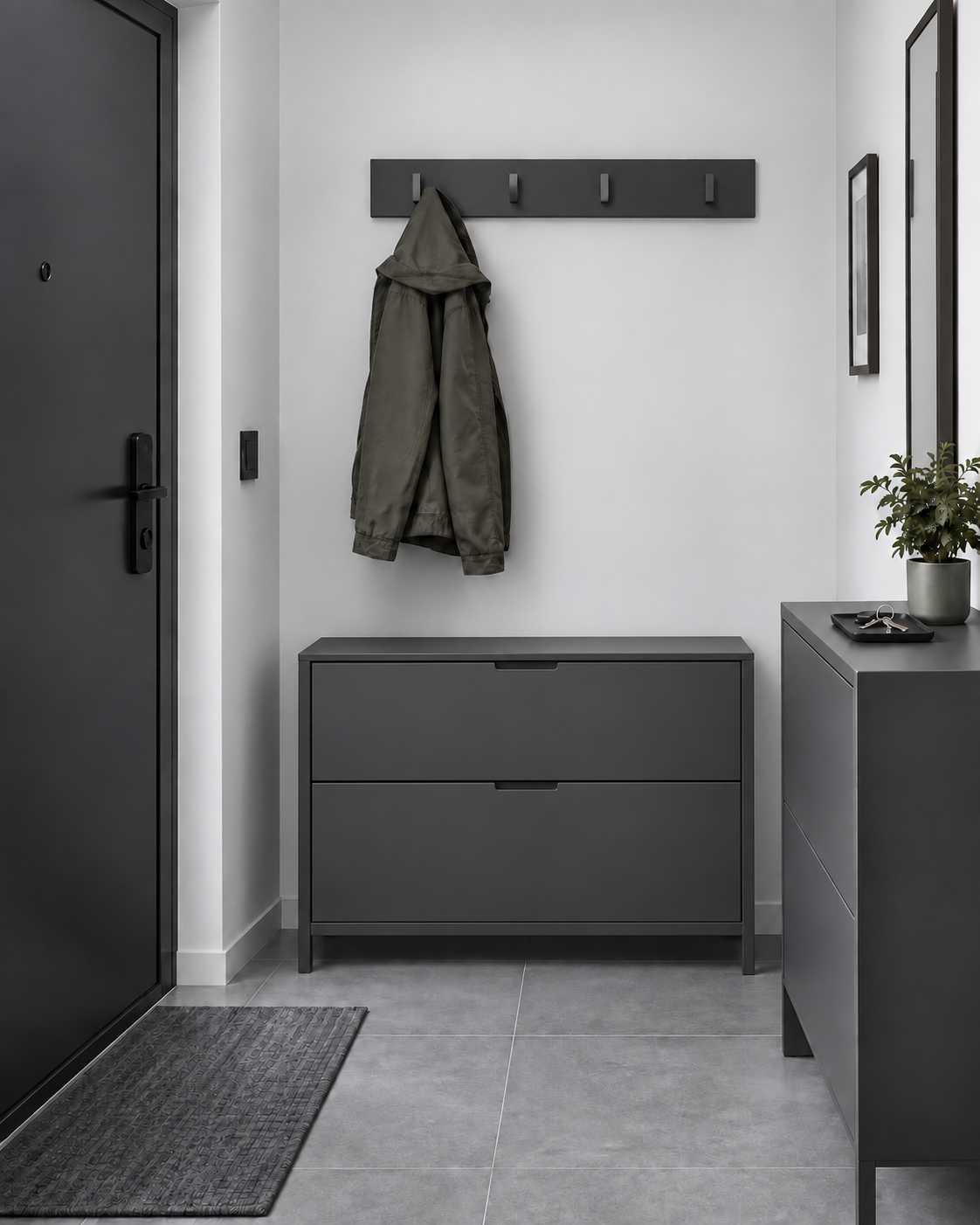
Choose this when seeing shoes and small daily items bothers you more than opening a door or drawer to reach them.
Four Red Flags at the Door
Protect the full opening arc before deciding that a piece “fits” the wall.
Reduce furniture depth before accepting a narrower walking route.
Storage only works emotionally if you are comfortable seeing what it stores.
Start with one anchor. Add another only when it solves a different arrival job.
Entryway Questions That Matter
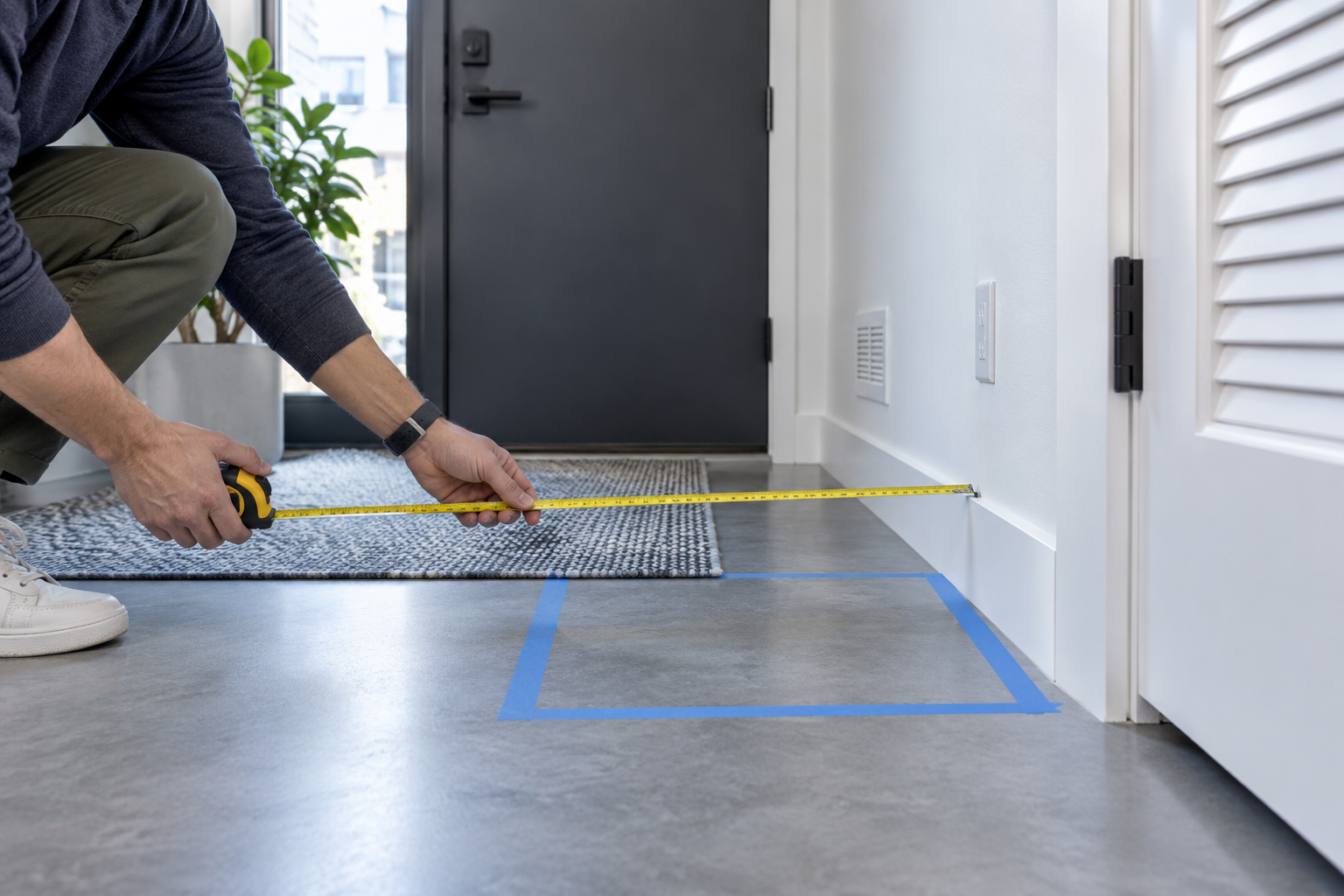
Measure the Arrival
A listing can tell you the dimensions. Only your floor can tell you whether those dimensions still leave arriving, opening doors and passing through feeling natural.
What Still Bothers You?