

Narrow hall
The long, clean line
Let the runner guide the eye through the entry while keeping an intentional floor border on both sides.
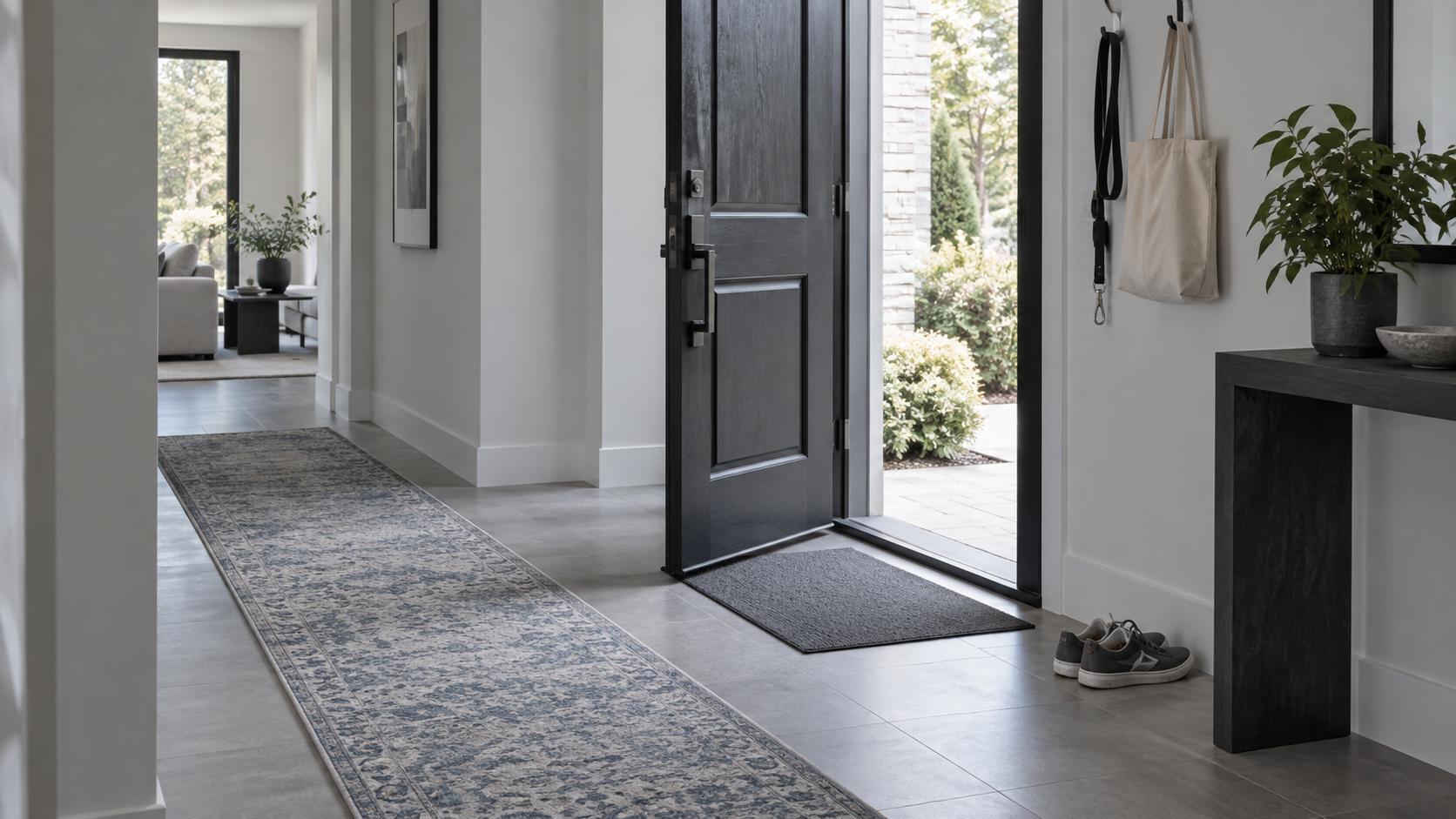
The arrival-path guide
A rug should survive the first five steps of real life — the opening door, wet shoes, daily traffic and the shape of the room — before it earns the right to look beautiful.
If the door crosses the rug, clearance is the first decision. Measure the lowest gap, then include every layer underneath.
Follow this routeAffiliate disclosure: As an Amazon Associate, Ravnora Decor may earn from qualifying purchases. Product links may open on Amazon.
The first five steps
A useful entryway rug solves the real arrival problem before it becomes decoration.

Use the lowest point of the entire door swing, then compare that gap with the rug plus any pad underneath. A lower-profile route is often smarter than forcing a favorite texture.
Door + runner fit lab
Use one mode at a time. The tool keeps a ⅛-inch breathing margin beneath a swinging door.
Entryway footprint studio
The same home can need four completely different shapes depending on where the usable floor begins.
Use a compact low-profile surface where dirt or moisture first enters. Keep it clear of any inward door sweep.
Verify profile, backing and door clearance on the exact listing.
Traffic + care selector
Pattern is the second decision. The first is whether the rug needs to scrape, absorb, wash easily or simply soften the room.
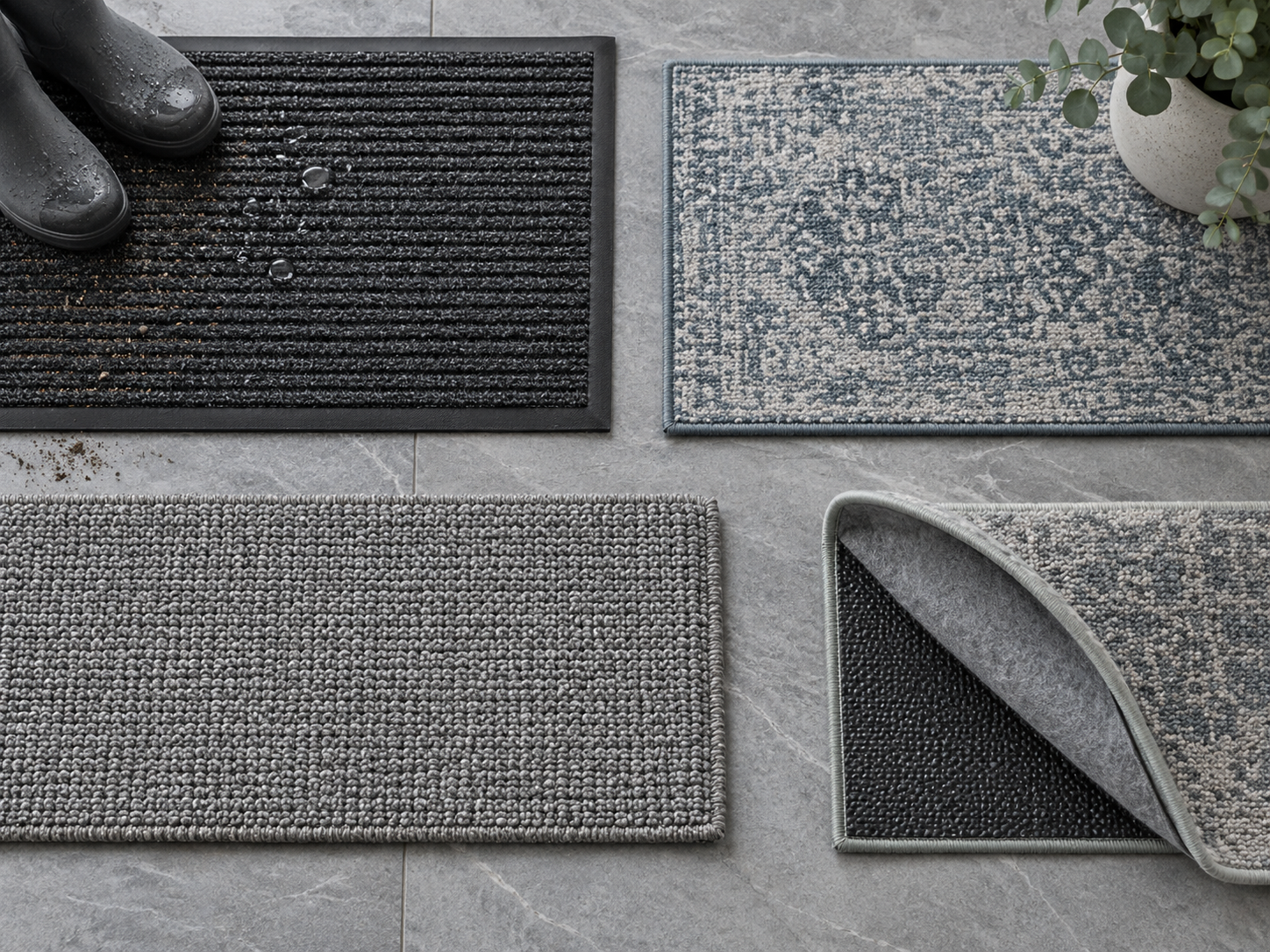
For mostly dry circulation, prioritize a low profile, stable placement and a pattern that can live with repeated foot traffic.
Explore the quiet runner ↗Four entries, four answers
The footprint should make the room feel calmer, not simply fuller.
Narrow hall
Let the runner guide the eye through the entry while keeping an intentional floor border on both sides.

Wet-shoe entry
Let the threshold do the messy work, then use a washable runner to carry the room inward.
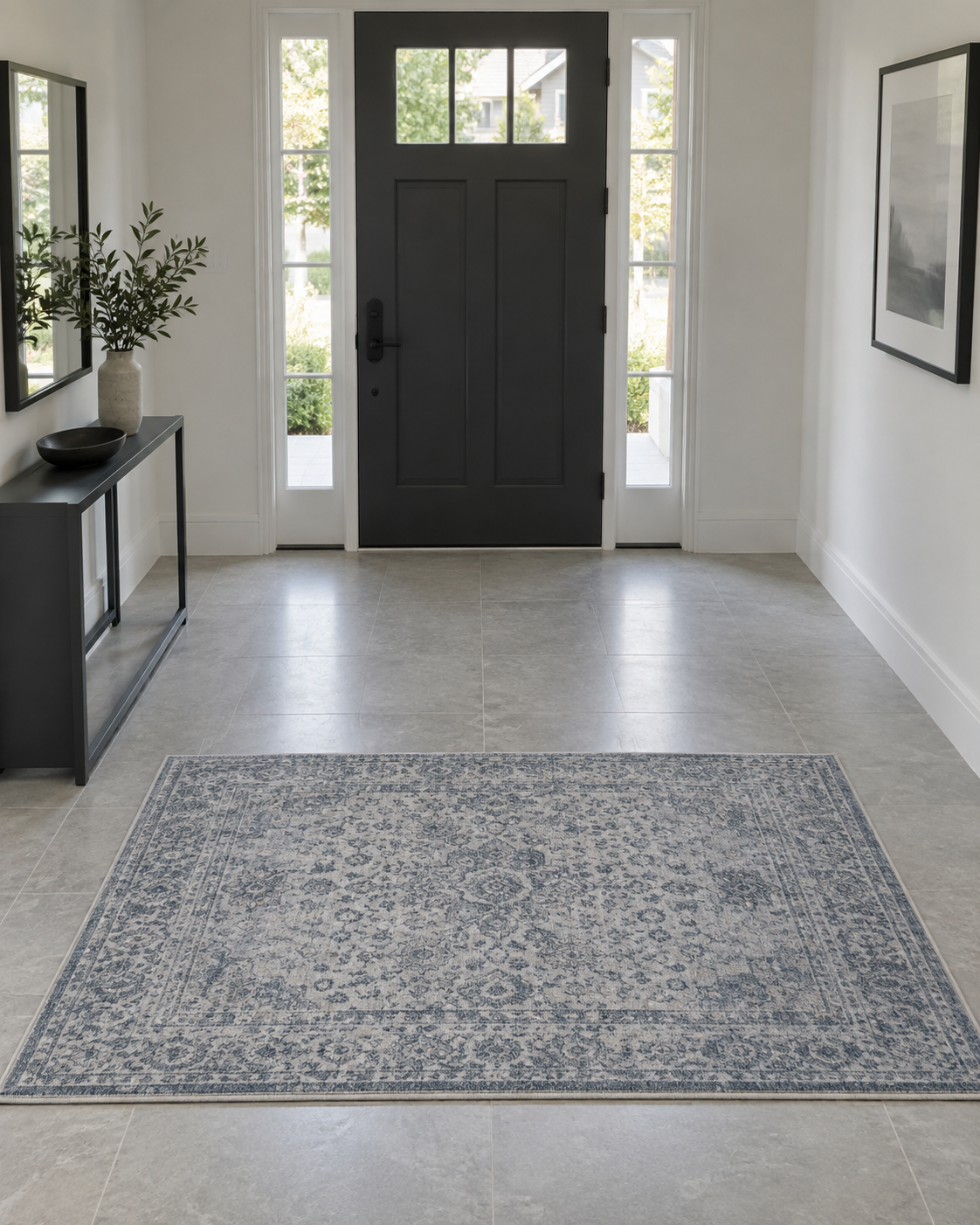
Open landing
A wider 3×5 or 4×6 can make sense when the entry opens into a landing instead of a corridor.
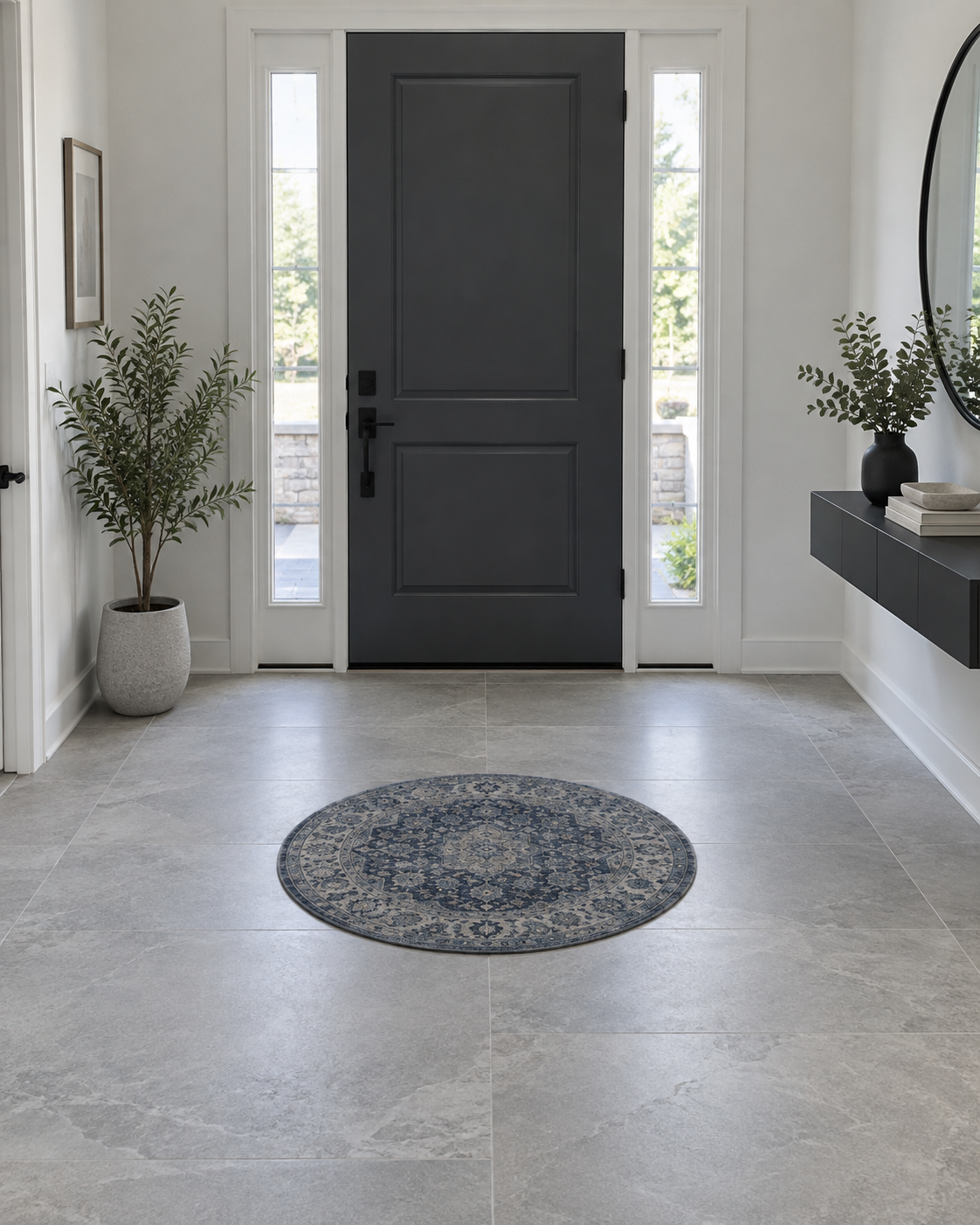
Square foyer
A compact round rug can center an open foyer while preserving circulation around every side.
What touches the floor matters too
Backing, pad and rug profile work as one stack. The smartest foundation is the one your floor and doorway can actually tolerate.


If the rug already stays put and the floor guidance permits the backing, extra cushion may solve nothing while raising the finished profile.
Compare foundation options ↓The short list
Three relevant executions at a time. Product names are written for the decision, not copied from marketplace titles.
Best when the first job is catching grit and moisture before it travels inward.
Best when repeated wet paws or shoes matter more than scraping texture.
Best for a compact everyday landing where clearance matters.
Best when a practical swing zone needs a restrained dark line.
Best for a softer long transition without turning the hall into the focal point.
Best when you want shape and character without a loud printed pattern.
Best for a small open foyer that needs an anchor rather than a corridor line.
Best when a pale foyer needs sharper contrast and a more graphic anchor.
Best for a wider landing where a 3×5 feels visually undersized.
Best for a square landing where a rectangle invents a hallway that is not there.
Best when movement needs controlling without a thick cushioning layer.
Best when the open foyer still needs a separate hard-working layer at the threshold.
Tiny choices, daily consequences
A few inches of placement often matter more than another round of styling.
The rug should not depend on a door barely clearing it.
A runner reads more intentional when the floor frames it.
A threshold mat and indoor rug can each do what they are good at.
Trim a pad inside every visible rug edge and corner.
Your entryway fit receipt
The checklist changes with the route you chose, so the final verification matches your actual entry.
Complete retrieval library
The full inventory stays collapsed so the page can help you decide before it asks you to browse.
Why this edit is narrower than Amazon
The page is designed to reduce the wrong kind of choice before you reach a marketplace full of variants.
Runners, threshold mats, landing rugs and foundations are kept separate so visually similar products are not treated as interchangeable.
No prices, ratings, discounts, review counts, shipping promises or false urgency are used to push a click.
Confirm size, profile, backing, care, floor compatibility, seller and return terms before purchase.
The right size depends on the usable floor after door movement and circulation are protected. A threshold mat suits the immediate arrival point, a runner suits a corridor, and a 3×5, 4×6 or round rug can suit an open landing.
Measure the clear hallway length first. The better size leaves an intentional beginning and end instead of crowding doors or stopping awkwardly in the route.
Only when the measured floor-to-door gap comfortably exceeds the complete rug-and-pad profile. This page keeps about a ⅛-inch breathing margin in its fit tool.
A 3×5 is often easier in a smaller landing. A 4×6 needs enough open floor to preserve circulation and a clear door-sweep zone around it.
A round rug is strongest in a square or open landing where the geometry needs a center point rather than a long directional line.
They can be useful when cleaning frequency matters, but washable construction does not automatically make a rug suitable for every door gap, floor finish or moisture condition.
No. Add a foundation when movement, curling or cushion requires it and your flooring guidance permits it. Remember that every added layer increases the finished profile.