
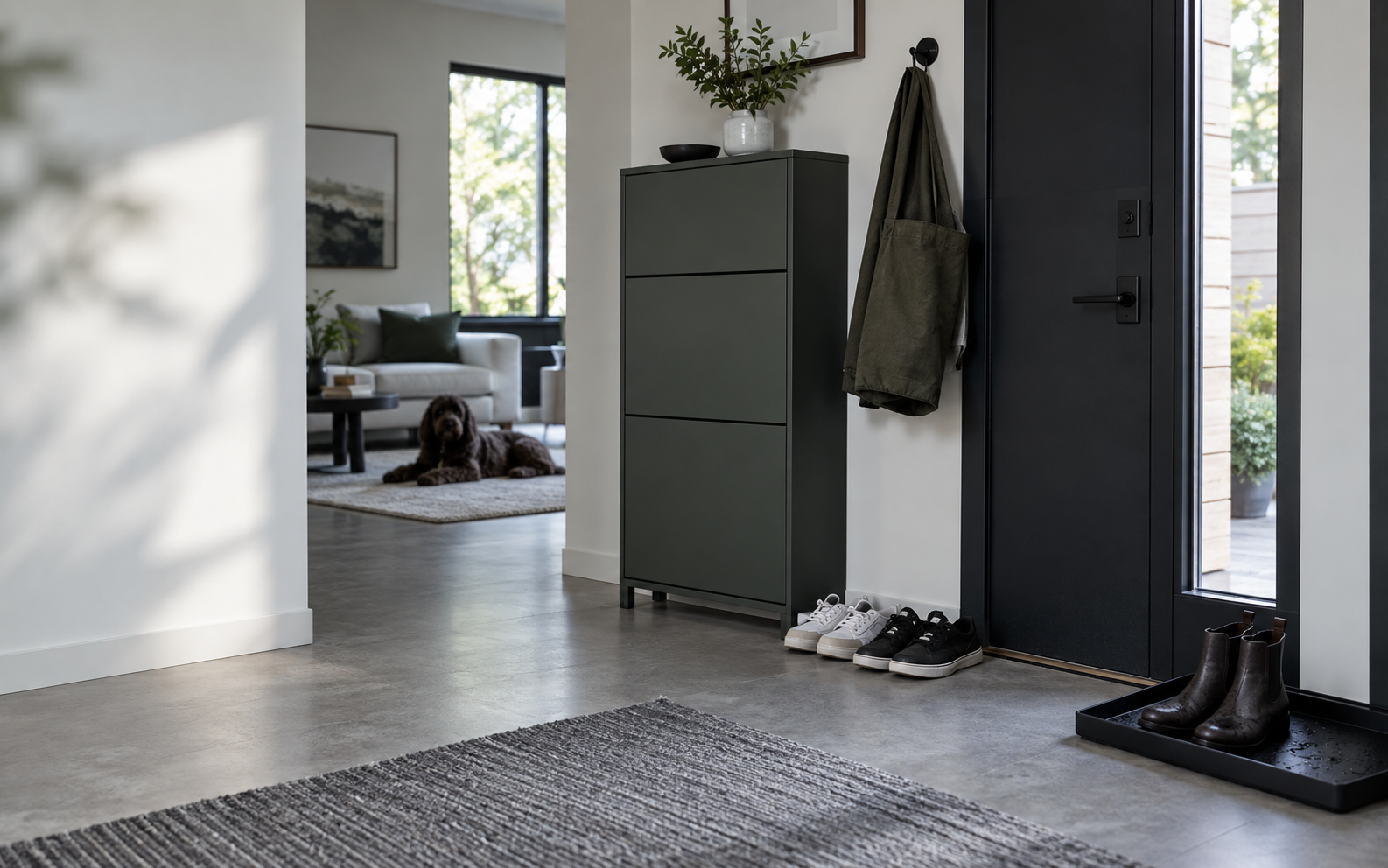
Entryway shoe organization
Entryway Shoe Organization That Stops the Floor Pile.
Start with what actually happens at your door—daily pairs, a narrow path, wet boots or shoes you want out of sight—then choose storage that is easier to use than the floor.
The useful shift
Do not organize every shoe equally. Protect the path and make today’s pairs the easiest to put away.
Start with the week
Keep this week’s shoes close. Move the rest.
If every pair competes for the easiest spot, the doorway never feels finished. Choose the routine that sounds most like your home.
Make the daily zone deliberately small.
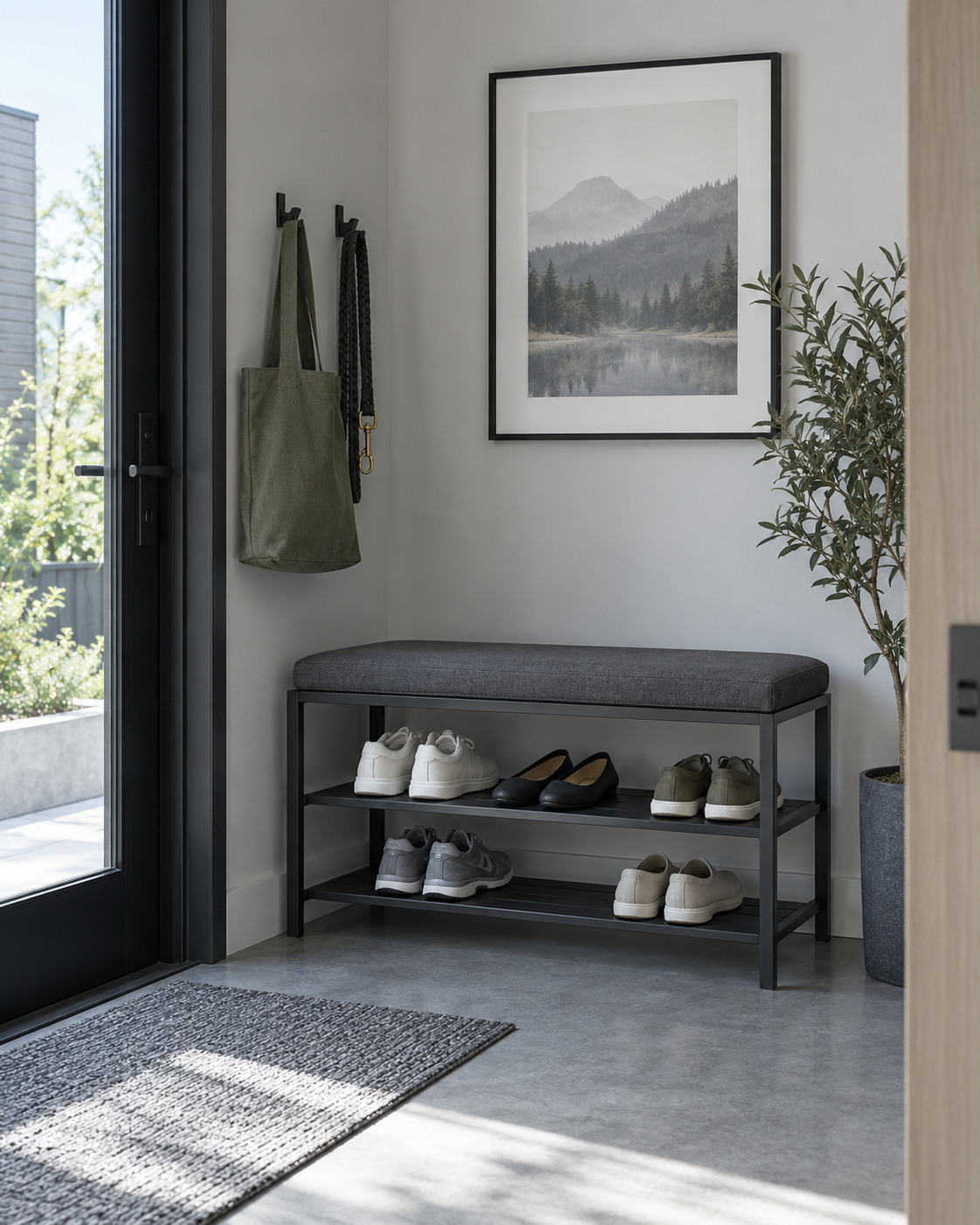
Use one easy-access rack or bench for the repeat pairs. Conceal or relocate everything that is not part of the current rotation.
As an Amazon Associate, Ravnora Decor may earn from qualifying purchases. Product links may open on Amazon.
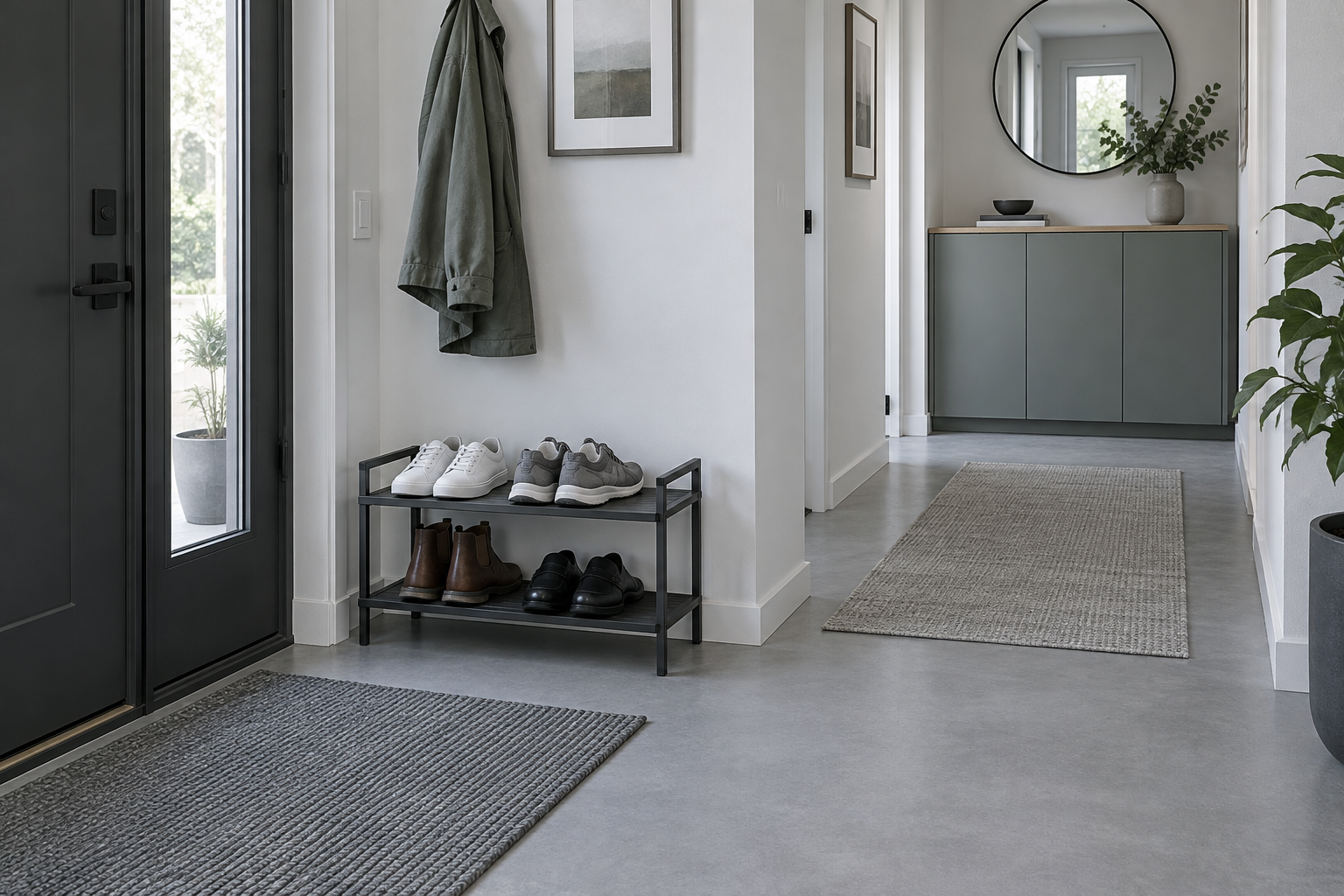 Easy reach: current rotation
Farther away: overflow

Measure the path with the organizer in place—not the empty hallway.
Clear-path lab
Will the storage still let the doorway breathe?
Enter the usable passage and the organizer depth. The useful number is what remains after the furniture arrives.
38 inches remain: comfortably clearA slim cabinet or bench may work. Confirm drawer-opening space and the full door swing.
Planning guidance only—not a building-code or accessibility determination. Verify local requirements where they apply.
Choose the behavior
The right storage depends on what you want the shoes to do.
Hide them, grab them, move them upward or give wet footwear its own boundary. One choice changes the whole setup.
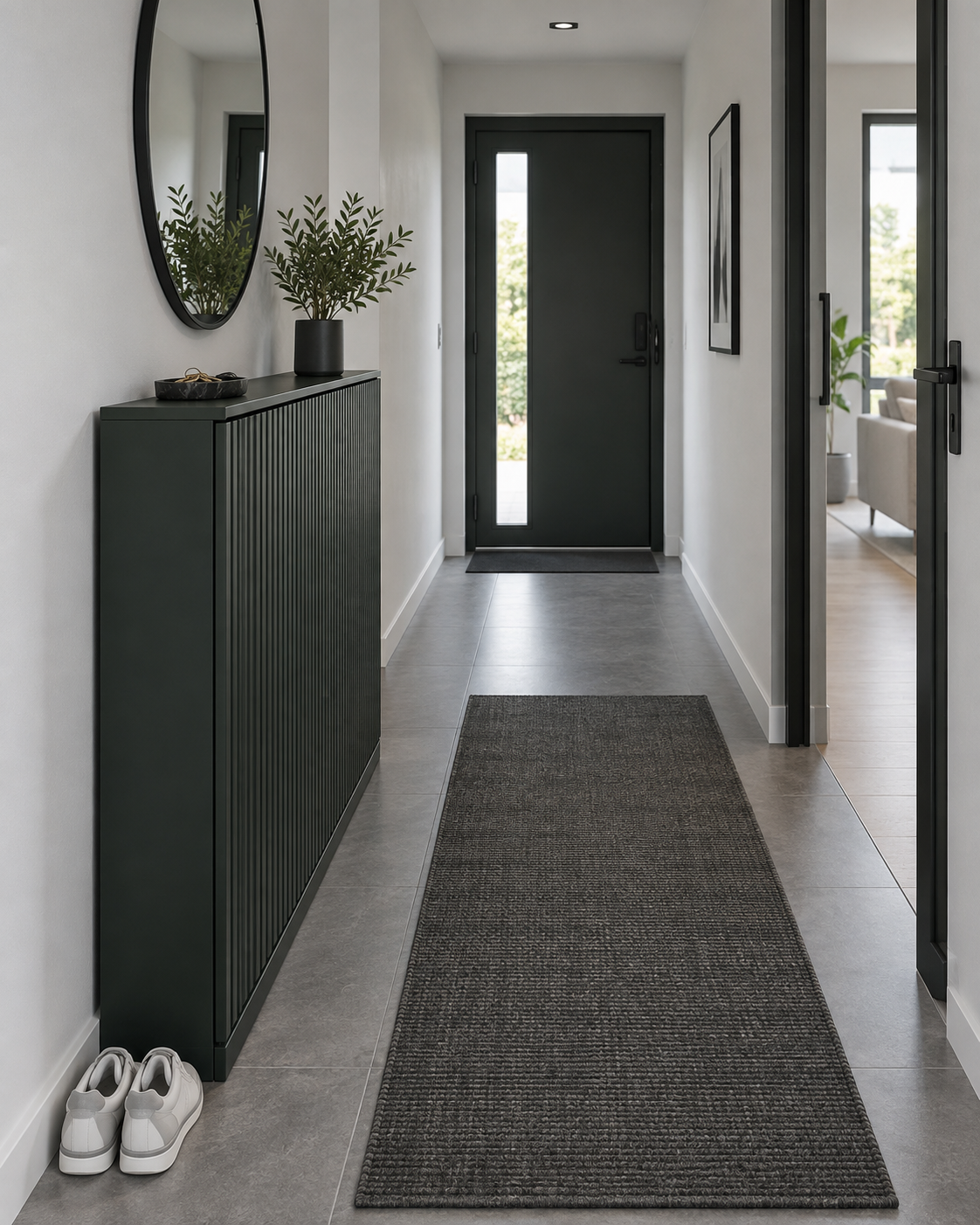
HideLet the entrance read as a room before it reads as storage.
Make the first view quieter.
Closed fronts work when the entrance is visible from the main room. Keep one discreet landing spot for the pair that is actually in motion.
Shallow concealedSlim Three-Drawer Flip Cabinet
Check the fit →Design-led concealedBlack Fluted Flip-Drawer Cabinet
Explore the cabinet →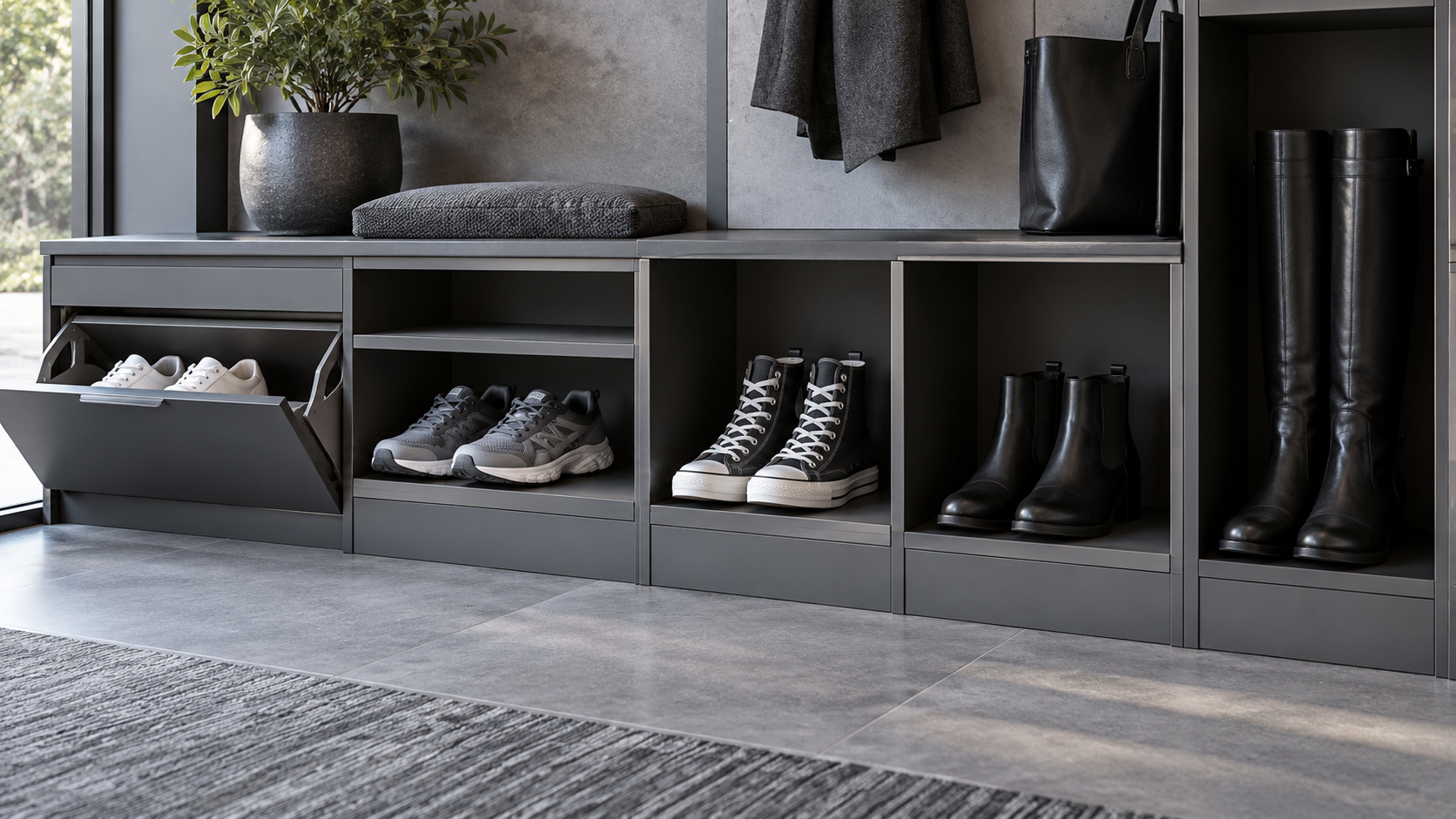
Shoe shape reality
A “pair count” can hide the thing that actually breaks the fit.
Your widest and tallest footwear sets the useful capacity. Tap the shoe that usually causes trouble.
Low sneakers usually favor shallow, easy-access storage.
They are the easiest footwear to place in flip drawers, open tiers or compact daily-access zones. Still check width before assuming the advertised count fits your shoes.
Two real doorways
The same category solves very different homes.
Use the room that feels closer to yours. The goal is not more storage; it is a system that survives the actual arrival routine.
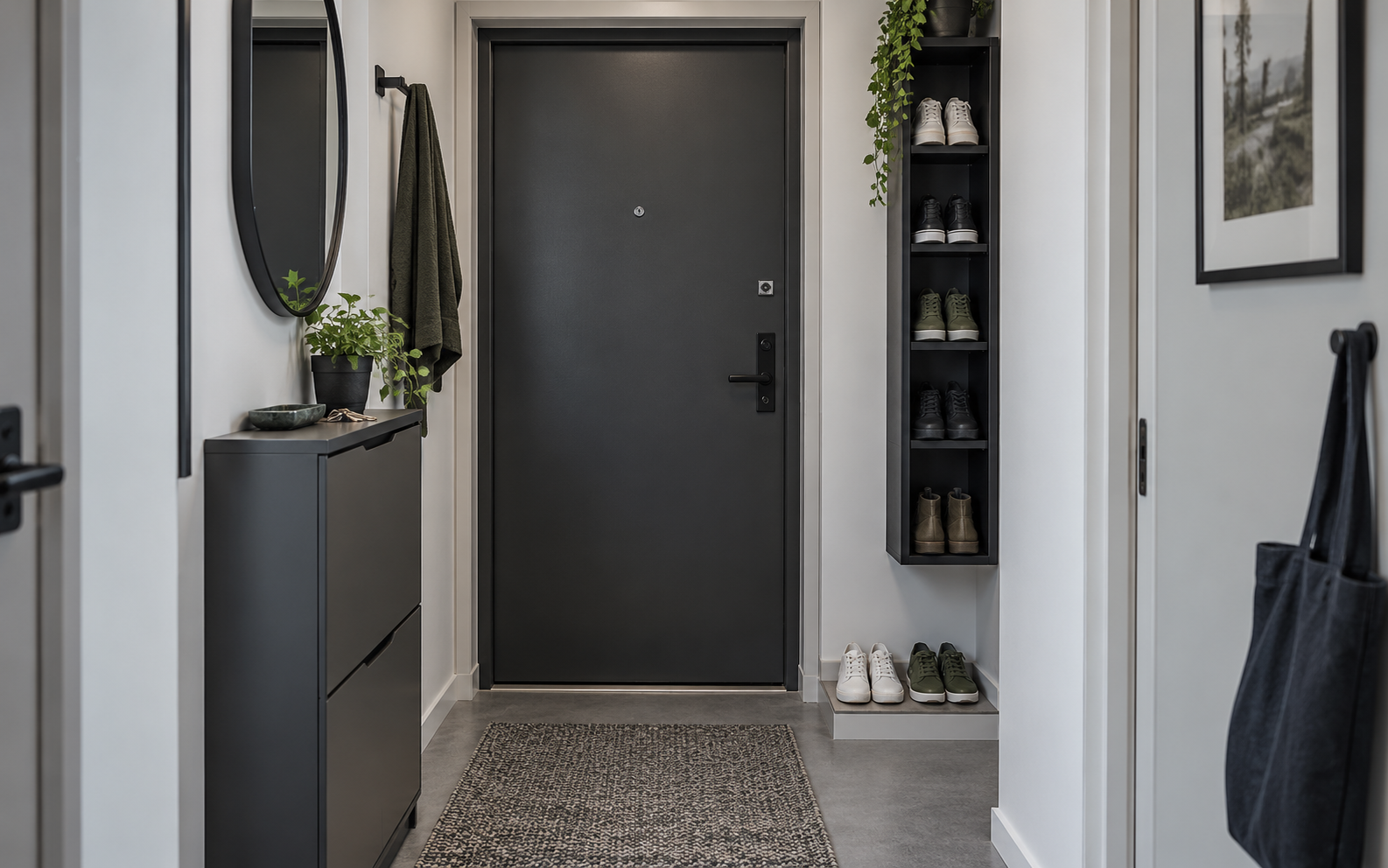 Compact apartment
Use depth once. Use height after that.
A narrow hallway rarely needs several small organizers. One shallow concealed piece plus a true vertical overflow route can protect the walking line.
01 · Conceal the main rotation
02 · Move overflow upward
03 · Leave the floor visually open
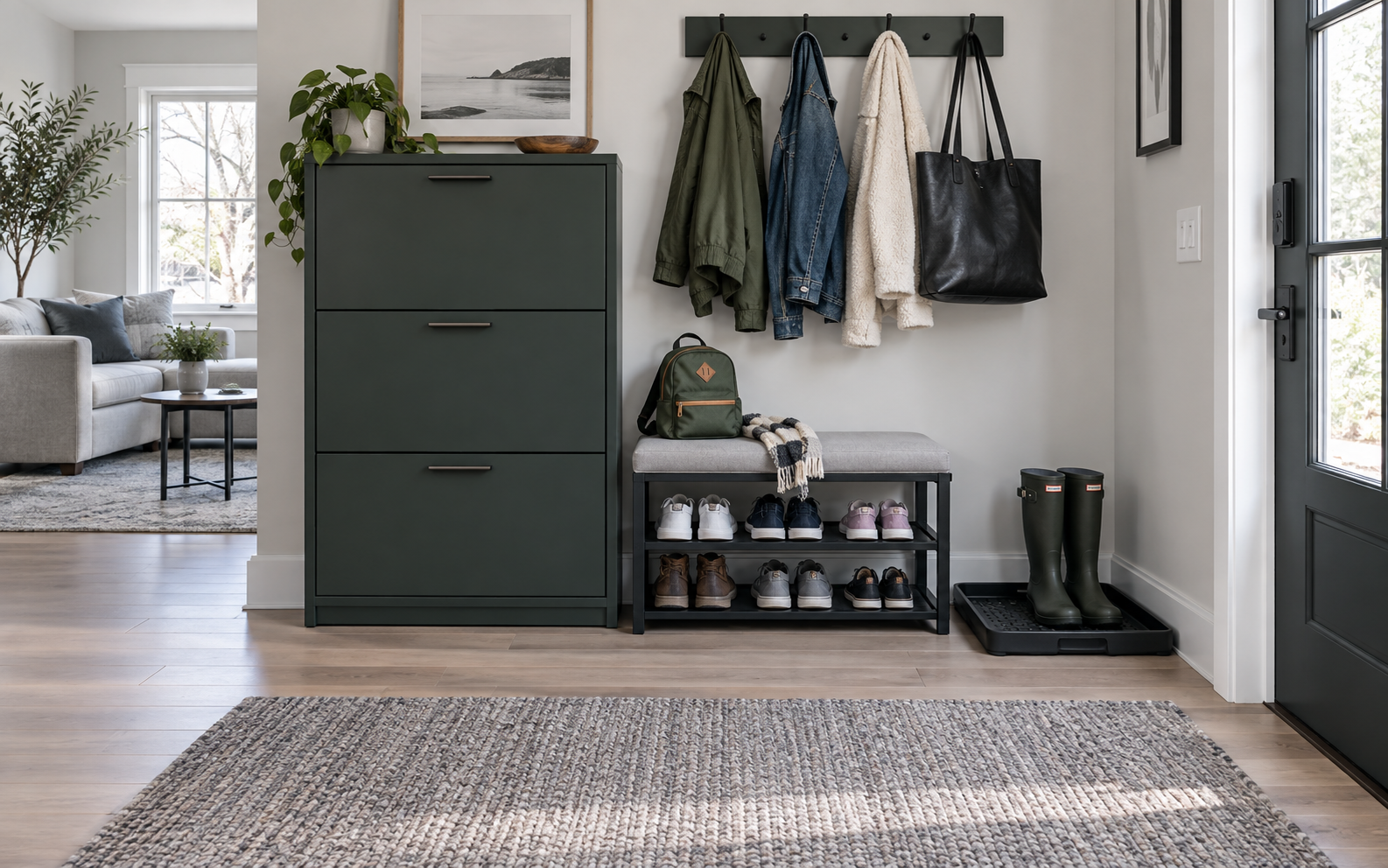 Busy household
Separate the routine before adding capacity.
Family entries work better when current pairs, stored pairs and wet footwear have different jobs instead of competing for one shelf.
01 · Hide most footwear
02 · Keep current pairs friction-free
03 · Give weather its own boundary
The Ravnora shortlist
Eight strong starting points. Each solves a different doorway problem.
This is the fast edit. The full 20-product finder comes later if you need a more specific configuration.
Slim Three-Drawer Flip Cabinet
For a narrow hall where the first view matters more than maximum open access.
- Why
- Shallow concealed rotation
- Check
- Wide shoes, baseboard and anchoring
Wide Stackable Metal Shoe Rack
For repeat pairs that need to go away in one motion rather than behind a door.
- Why
- Fast visible access
- Check
- Small-shoe support and heel fit
Open Bamboo Sit-and-Store Bench
Use when sitting is part of the daily shoe routine.
- Check
- Current load guidance and boot clearance
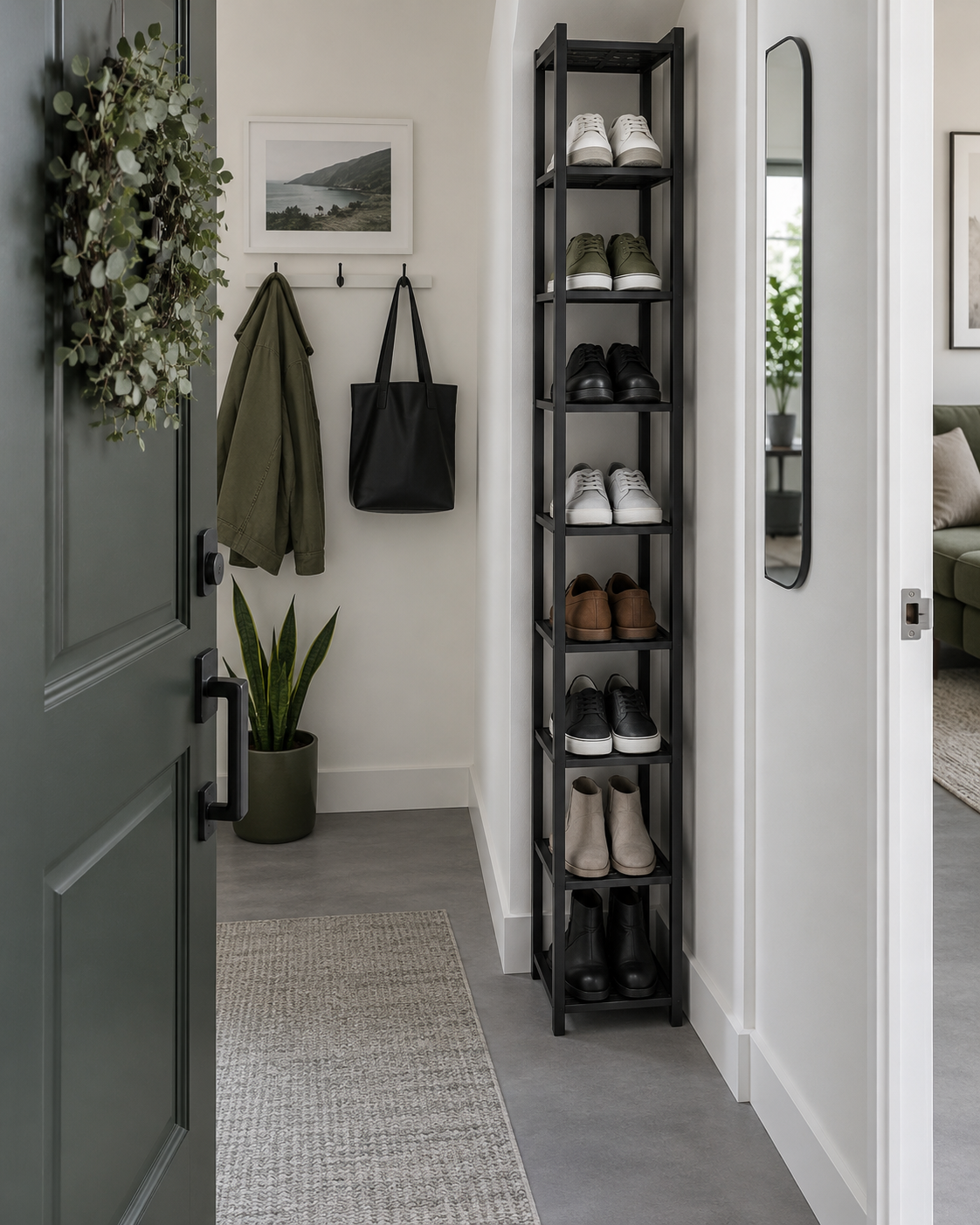
Narrow Eight-Tier Metal Tower
Use height when ordinary furniture depth costs too much floor.
- Check
- Stability, anchoring and shoe width
Behind-the-Door Shoe Organizer
A useful fallback when the floor and wall line are already spoken for.
- Check
- Door closure, hardware and shoe size
Clear Drop-Front Shoe Tower
Good after the doorway rotation has been edited down.
- Check
- Large-shoe dimensions and door clearance
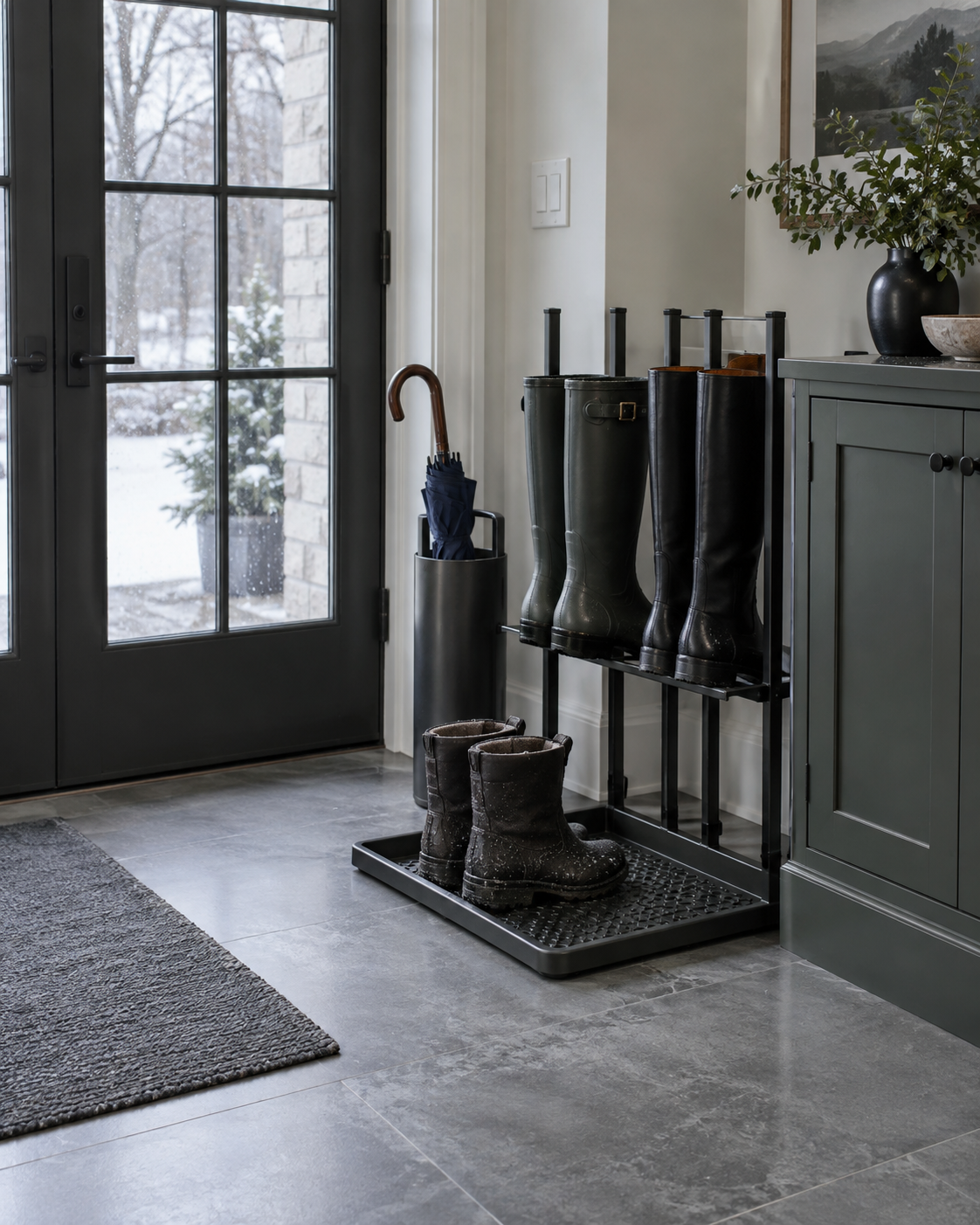
Raised-Edge Wet Shoe Tray
Contain water and soil before deciding where the shoes live dry.
- Check
- Boot fit and door sweep
Tall-Boot Organizer Rack
Give tall footwear upright space instead of forcing it into sneaker storage.
- Check
- Available height and floor footprint
One strong move
More containers can still leave the doorway feeling unsolved.
When every small problem gets its own bin, rack or box, the room gains storage but loses clarity. Compare the two systems.
Four organizers. Still no obvious place for today’s shoes.
One main storage decision + one daily landing + one weather boundary.
Complete product finder
Open only the storage family that matches your doorway.
The full 20-product set is kept compact on purpose. Use it as a retrieval tool after you know which behavior you need.
Hide the first view
4 concealed cabinets
Slim Three-Drawer Flip CabinetBest for: narrow hall, concealed rotationCheck: wide shoes and anchoringCheck the fit
Black Fluted Flip-Drawer CabinetBest for: design-led concealed storageCheck: shoe height, baseboard and wall fixingExplore this cabinet
Textured Rattan-Front CabinetBest for: softer concealed lookCheck: tall shoes, baseboard and anchoringReview the details
Clean White Slim Shoe CabinetBest for: light, narrow entrywaysCheck: current dimensions and shoe widthSee current options
Sit, put on, put away
3 entryway benches
Open Bamboo Sit-and-Store BenchBest for: quick sit and daily pairsCheck: current load guidance and boot clearanceSee the bench
Cushioned Closed Storage BenchBest for: family sit-and-store routineCheck: wall width and passage depthCheck configuration
Lift-Top Entryway Shoe BenchBest for: shoes plus small-item storageCheck: lid and wall-hook clearanceExplore this setup
Keep daily pairs visible
4 open-access racks
Wide Stackable Metal Shoe RackBest for: many frequently worn pairsCheck: heel and small-shoe supportExplore the rack
Expandable Three-Tier Metal RackBest for: changing wall widthCheck: extension range and level floorCheck the adjustable option
Modular Bamboo Three-Tier RackBest for: compact natural-finish routeCheck: stacking hardware and boot spaceExplore this pick
Long Four-Tier Open RackBest for: longer wall, higher daily capacityCheck: exact width and shelf clearanceSee the longer rack
Use the wall, door and height
4 zero-floor / vertical options
Narrow Eight-Tier Metal TowerBest for: narrow corner, vertical capacityCheck: stability, anchoring and shoe widthSee the vertical route
Vertical Shoe Tower with Side HooksBest for: corner plus small accessoriesCheck: hook clearance and anchoringExplore the tower
Behind-the-Door Shoe OrganizerBest for: no usable wall or floorCheck: door closure, hardware and shoe sizeCheck door fit
Adjustable Wall-Mounted Shoe RackBest for: very narrow hall, secure wallCheck: wall type and installation heightSee the wall option
Control the overflow
3 secondary-storage tools
Clear Drop-Front Shoe TowerBest for: visible, dust-controlled accessCheck: large-shoe dimensions and doorsCheck shoe fit
X-Large Clear Shoe Box SystemBest for: closet or secondary overflowCheck: stack height and level surfaceSee available options
Shelf-Multiplying Shoe Slot SetBest for: existing cabinet shelf overflowCheck: shelf height and sole widthExplore the shelf upgrade
Handle wet weather and tall boots
2 dedicated weather solutions
Raised-Edge Wet Shoe TrayBest for: two or three wet pairsCheck: boot fit and door sweepCheck tray size
Tall-Boot Organizer RackBest for: upright tall-boot storageCheck: available height and footprintExplore the boot setup
Doorway failure test
Five checks before the storage becomes part of the problem.
Use your real doorway, your biggest footwear and the actual wall. The page cannot verify those details for you—but it can make sure you remember them.
0 of 5 checkedStart with the physical doorway, not the product photo.
What the entryway needs next
Solve the next friction point—not the whole room at once.
Once shoes have a believable home, the next improvement is usually broader storage, a useful surface, floor protection or a tighter small-space plan.