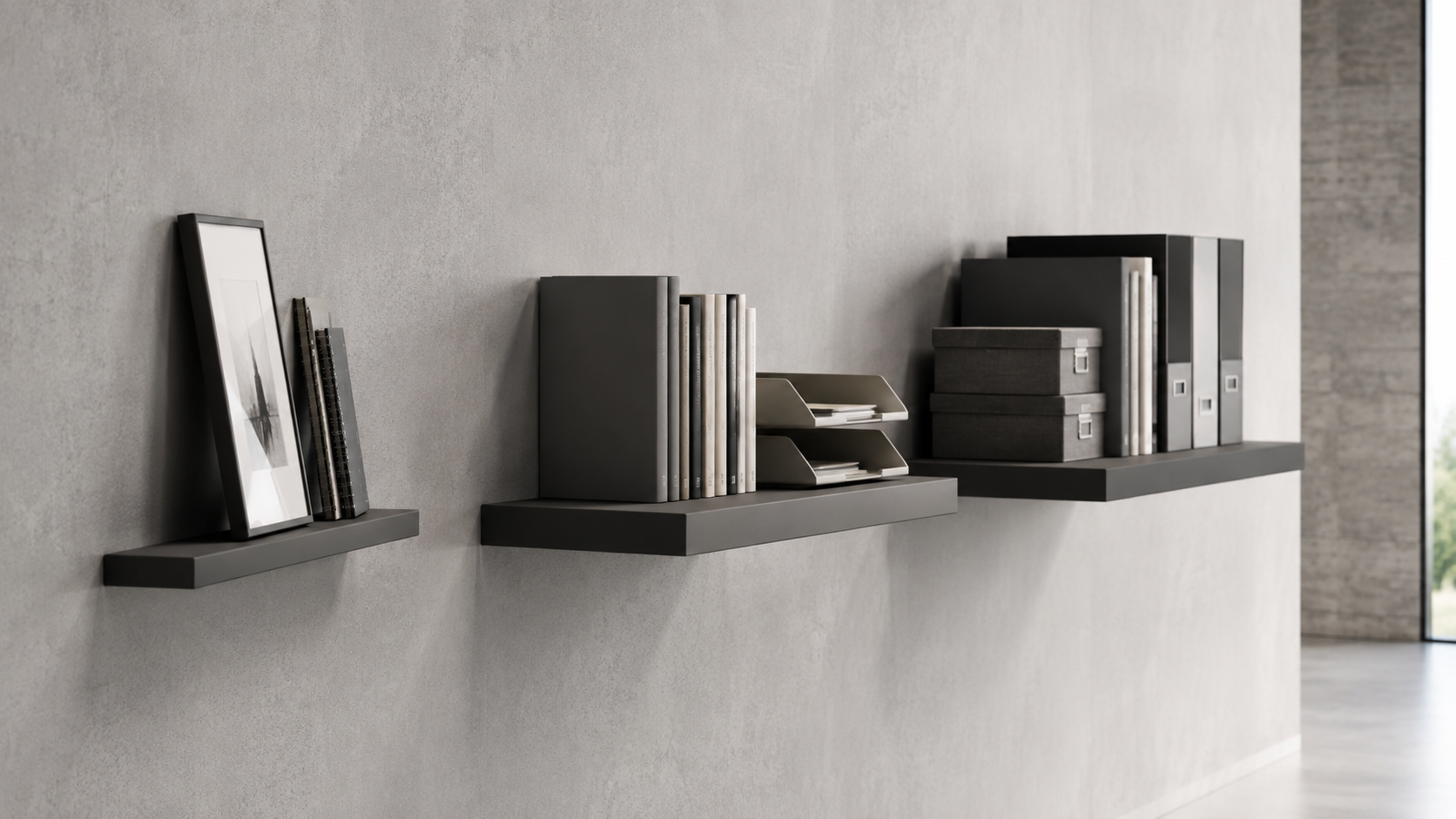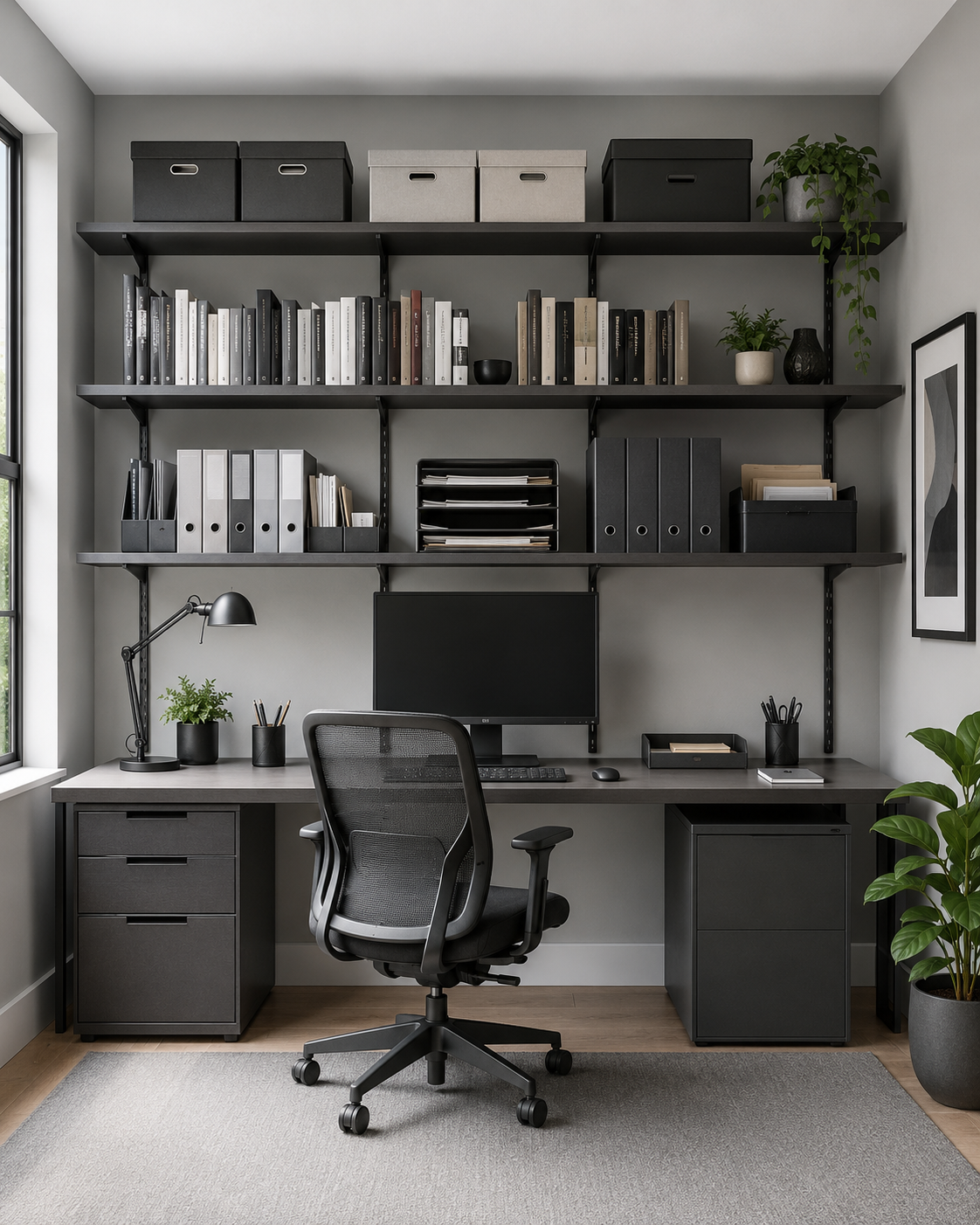
Your wall can work harder

Home Office ShelvingThat Gives Your Desk Back

Start with what keeps stealing the work surface—books, active papers or everyday tools—then choose the shelf by depth, reach and how permanent the wall can be.
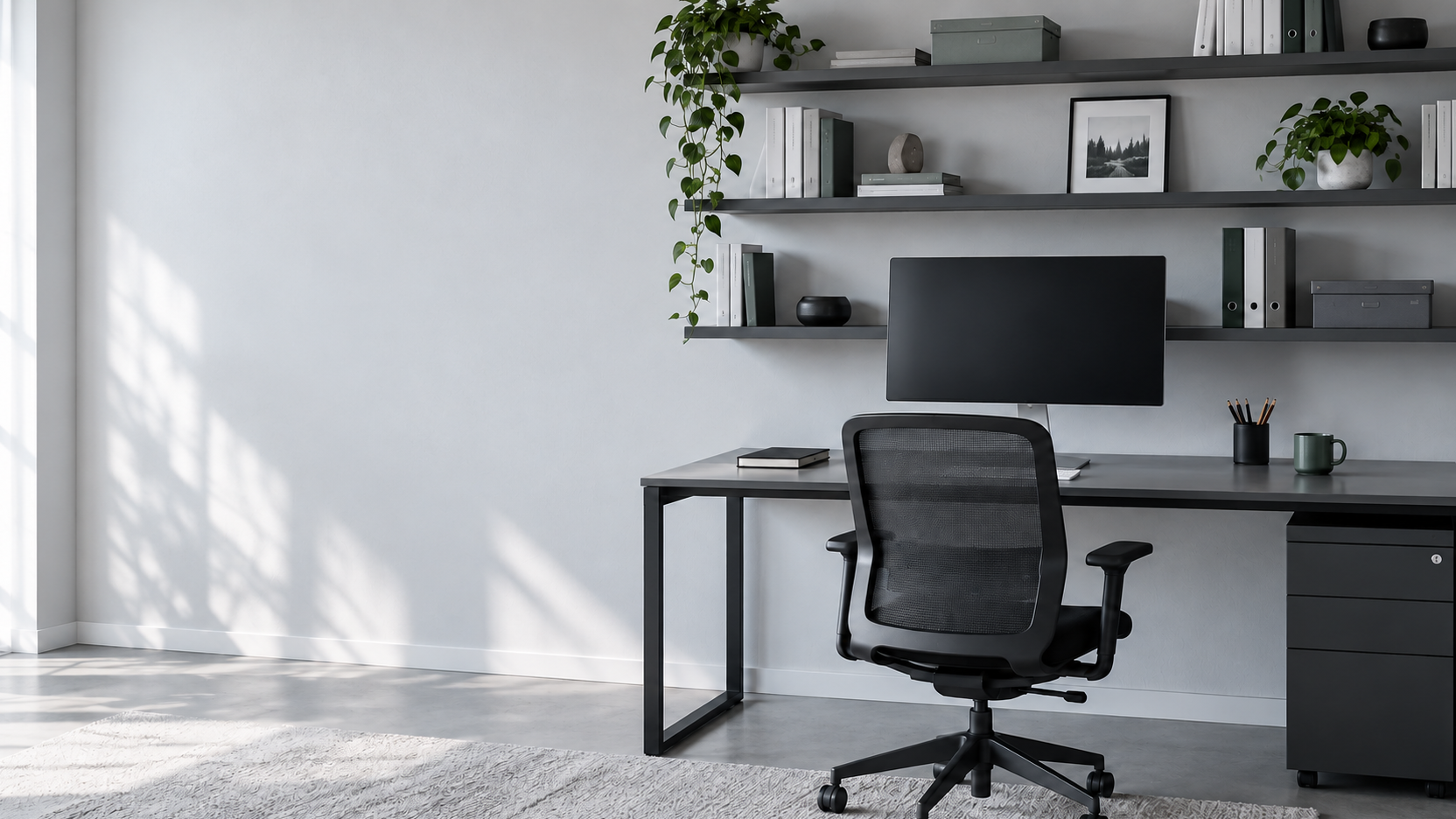
Cool-toned home office where wall shelving keeps books and active papers off a mostly clear working desk
The wall takes overReferences move up. The desk returns to active work.

The Shelf Route Builder

Choose the wall by what it must carry.

Style comes later. First decide the load, the projection and how much commitment the wall can take.
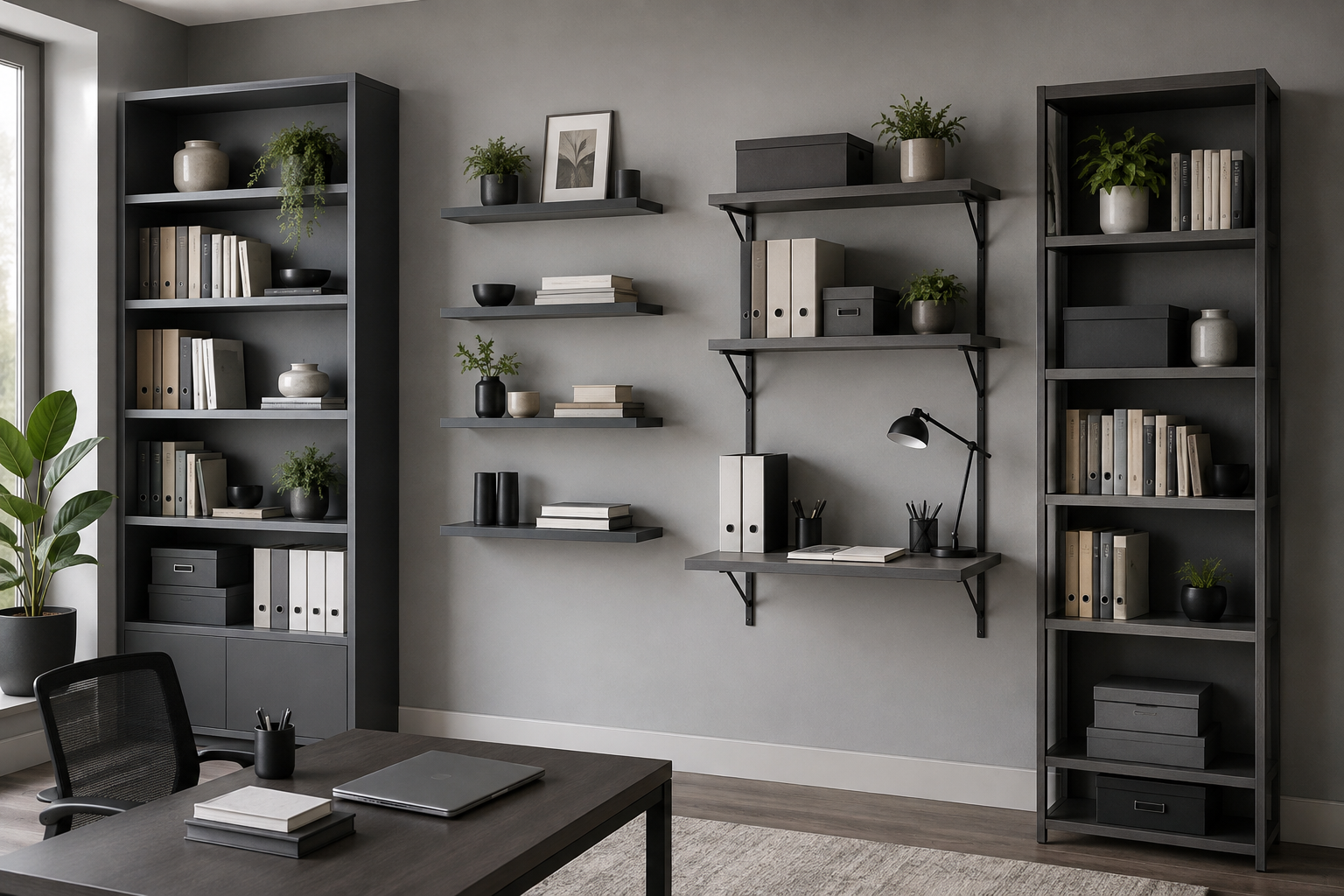
Visual comparison of floating, bracketed, modular and freestanding office shelving routes
Your current route Build a working library

Books justify real shelf depth and a stable vertical system. Keep the references you touch most often within an easy standing or seated reach.

1What keeps taking over?
2How much depth can the room tolerate?
3How permanent can the solution be?
As an Amazon Associate, Ravnora Decor may earn from qualifying purchases. Product links may open on Amazon.

Clearance before style

A shelf can look slim and still crowd the desk.

Picture what has to sit on the shelf, then picture what still needs to happen underneath it.

Comparison of shallow, medium and deeper office shelves with different storage uses

Which wall do you actually have?

Four office situations. Four different shelving answers.

Choose the wall condition that looks most like yours. The room changes first; the shelf recommendation follows.
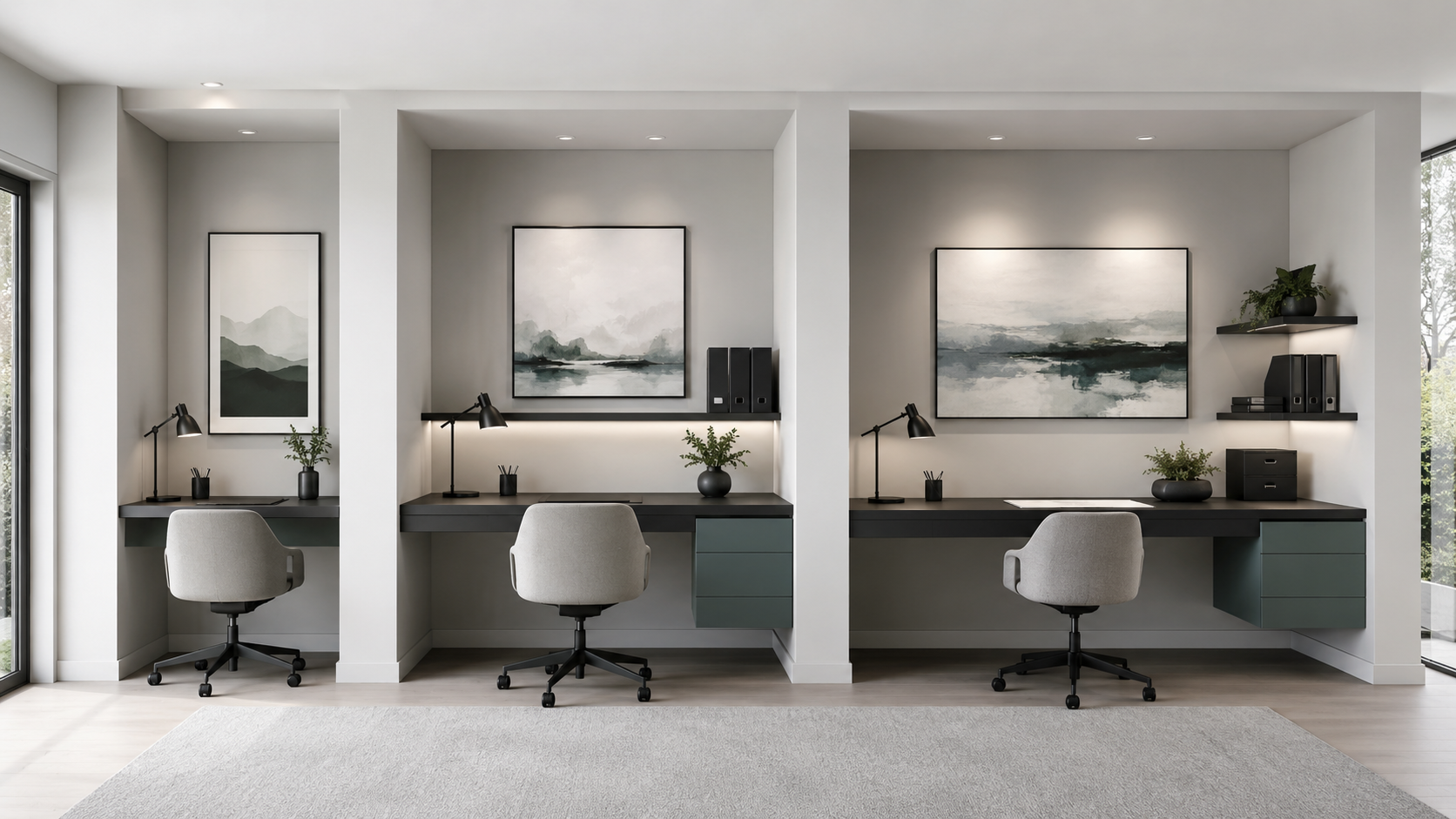
Home office using controlled shelving above the working desk
Route 01 · Above the desk

Use the wall when the floor cannot help.

Keep projection controlled and protect monitor, head and working clearance.

Explore the floating-shelf route →

Put frequency on the wall

The best shelf is partly a question of reach.

Home office wall illustrating archive, book, active file and desktop reach zones
Premium territory

Keep daily material one movement away.

Active notebooks, current references and working papers deserve the easiest seated or standing reach. The desk itself should stay reserved for today's session.

DeskToday only
Easy reachActive week
Higher upOccasional use

No spare floor?

Use the air around the desk.

When another bookcase would make the room feel smaller, choose the vertical zone the office is currently wasting.

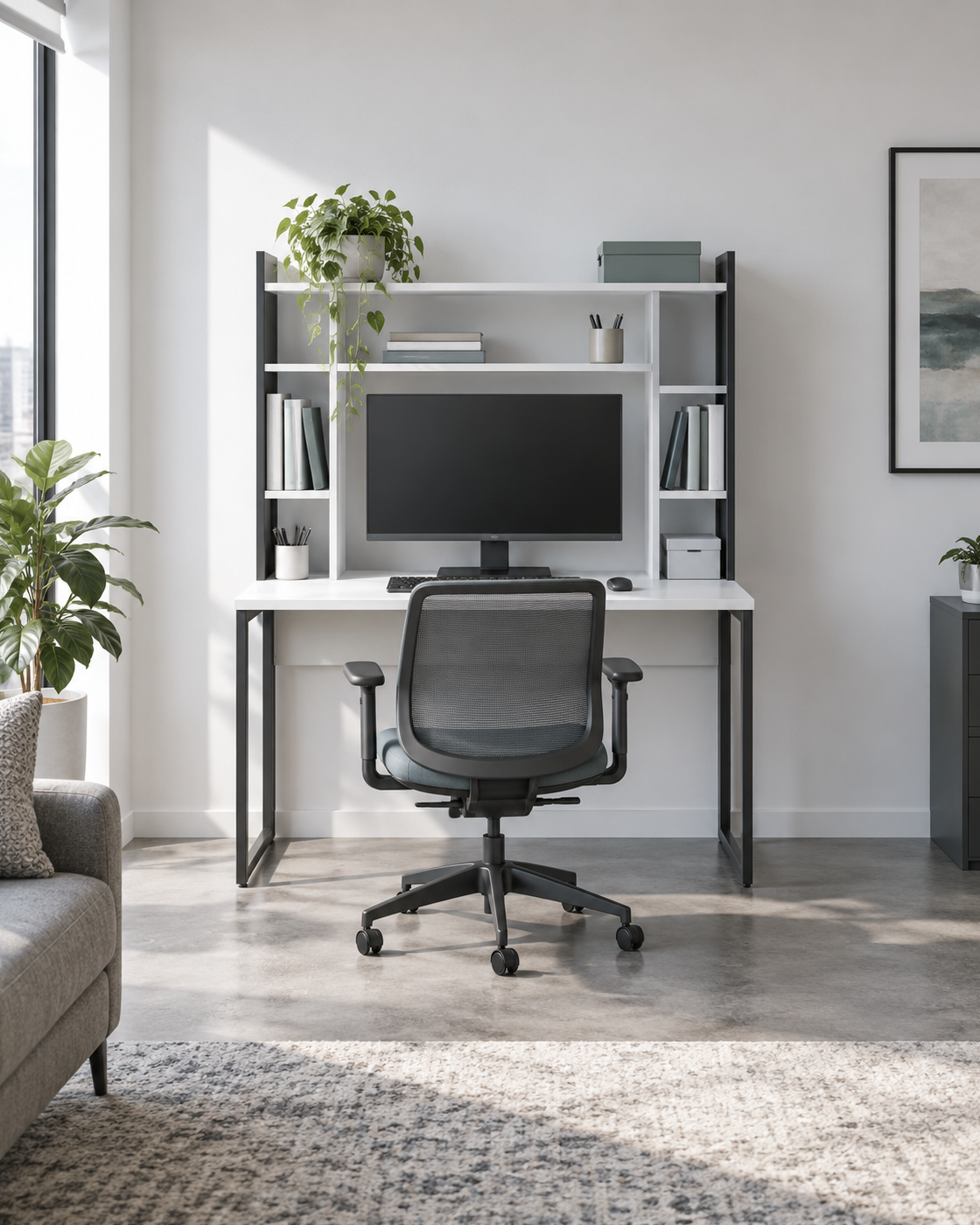
Compact renter-friendly home office using a freestanding desktop shelf hutch to add vertical storage without taking extra floor space

Three walls you can actually copy

See the finished direction before you choose the pieces.

A shelf makes more sense when you can see the room logic around it.
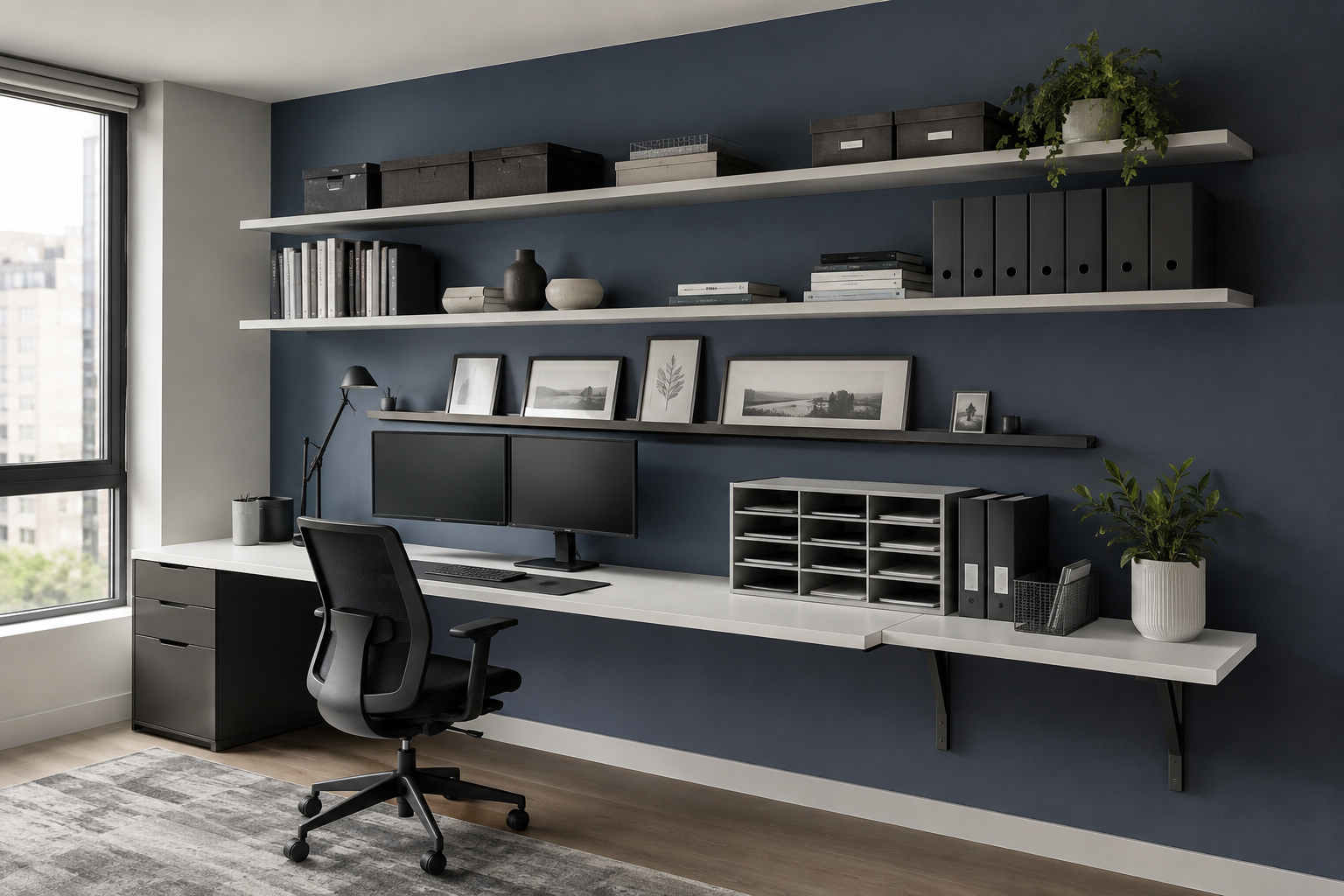
Complete floating reference wall with layered office shelves and contained paper storage
Complete wall 01

The Floating Reference Wall

Create one clear horizontal line for references, then keep smaller active material closer to the working edge.

The shelf can be right
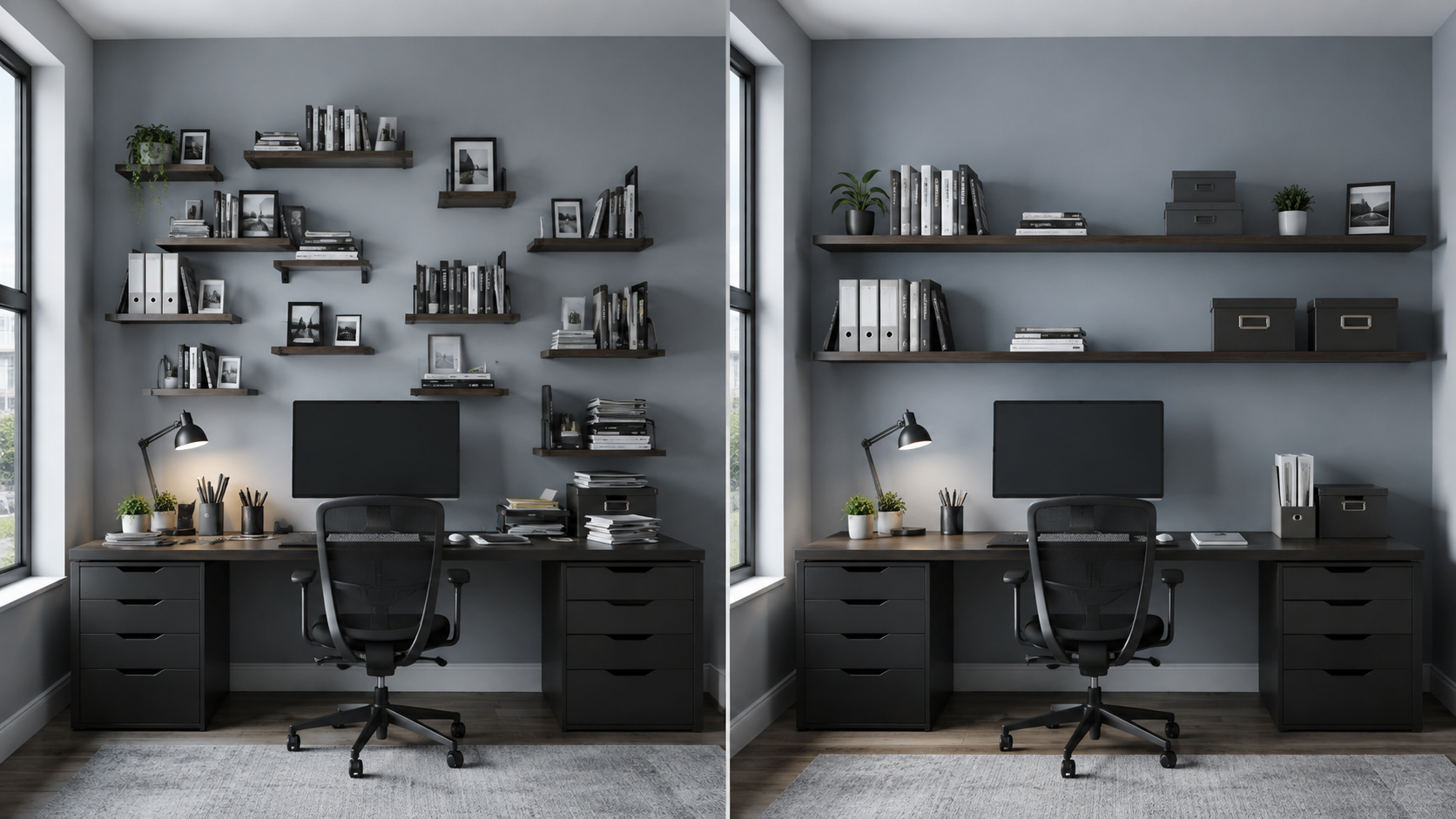
And the wall can still feel wrong.

Comparison between scattered cluttered office shelving and a calmer organized shelf arrangement
Do lessStop scattering tiny shelf fragments.

Where the wall allows it, fewer longer lines usually read calmer and are easier to organize.

Match the jobDo not ask display depth to carry the library.

Choose depth, mounting and current manufacturer guidance around the actual objects being stored.

Protect the work zoneDo not make the monitor fight the shelf.

Preserve comfortable head, equipment and visual clearance before adding more storage above the desk.

Every shelf route, one place

The complete 18-product shelving library.

Open only the family that matches your room. Product dimensions, included hardware, configuration and current availability should be verified on the current listing.

01
Wide 11-Shelf Working LibraryBroad wall, substantial reference volume
Check listing →
02
Tall 6-Tier Reference BookcaseTake a working library upward on a compact footprint
Explore options →
03
Adjustable 5-Shelf LibraryMixed book heights and flexible shelf spacing
Check listing →
04
Skinny-Wall 5-Tier BookcaseFor a genuinely skinny strip of wall
Explore options →
05
Low-Line 3-Tier BookcaseUseful storage without committing to a tall visual block
Check listing →
06
Open + Hidden 5-Tier BookcaseVisible references above, contained storage below
Explore options →
07
Airy Wall-Mounted Ladder BookcaseVertical reference storage that reads visually lighter
Check listing →
08
Long Floating Reference Shelf SetOne continuous horizontal reference line
Explore options →
09
Low-Projection Floating Shelf SetKeep the wall visually restrained where projection matters
Check listing →
10
Compact Bracketed Working Shelf SetVisible support for a shorter active-material zone
Explore options →
11
Long Bracketed Reference Shelf SetA longer supported shelf line for working material
Check listing →
12
Picture-Ledge Reference RailFrames, thin books and very shallow display
Explore options →
13
8-Cube Open Modular ShelfLarger modular footprint for books plus bins
Check listing →
14
6-Cube Compact Modular ShelfSmaller mixed-storage wall with open and contained zones
Explore options →
15
Compact Corner Shelf TowerFreestanding vertical storage for a lost corner
Check listing →
16
Floating Corner Shelf StackUse the corner wall while keeping the floor open
Explore options →
17
Desk-Topper Shelf HutchTurn the air above the work surface into storage
Check listing →
18
Compact Desktop Shelf HutchA lighter desktop route for a smaller setup
Explore options →

Before the wall gets hardware

Five checks before the click becomes a drill hole.

A shelf can look perfect and still be wrong for the object, wall or work zone. Verify the current listing and instructions for the exact product.

Measure the object that matters most, not the smallest thing you plan to display. Check usable shelf depth, width and opening dimensions on the current listing.
Wall construction and suitable fasteners vary. Follow the current manufacturer's instructions for the exact product and intended wall type.
Never infer capacity from appearance. Verify current load guidance, mounting requirements and anti-tip provisions where applicable.
Protect monitor, head, door, window and circulation clearance. Daily items should also stay within a comfortable reach without repeated stretching or climbing.
Confirm dimensions, finish, included pieces, current hardware guidance, mounting or anti-tip instructions and configuration on the current product listing before purchase.
Installation note: Ravnora is helping you choose the shelving route, not certifying a wall or installation. Follow the current manufacturer instructions and use appropriately qualified help when the wall or installation requires it.

What still feels unfinished?

Solve the next problem the shelving cannot.

The wall should make the rest of the office easier—not become the end of the plan.
Scroll to Top