
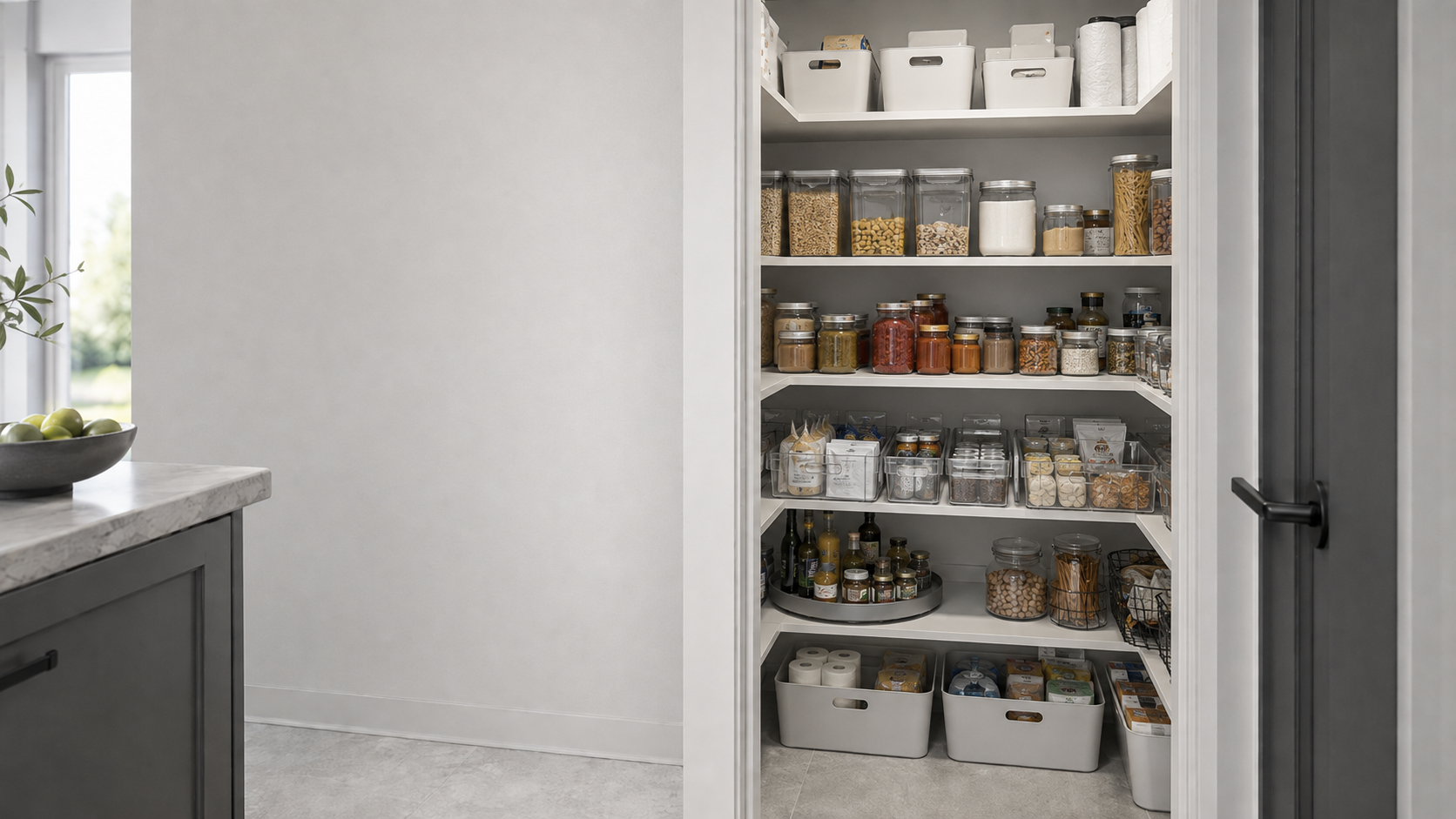
Kitchen pantry organization
Pantry Organization Starts With Access
Cans disappear at the back. Snack packets become one pile. Refills crowd the easiest shelf. Before buying another organizer, decide what the shelf needs to do.
See the shelf failure first. Then choose the organizer that fixes it.
ReachPullRotateReserve
The pantry access map
Choose the shelf problem before the organizer.
Tap the failure you recognize. The image, explanation and product family move together so the organizer has a reason to be there.
As an Amazon Associate, Ravnora Decor may earn from qualifying purchases. Product links may open on Amazon.
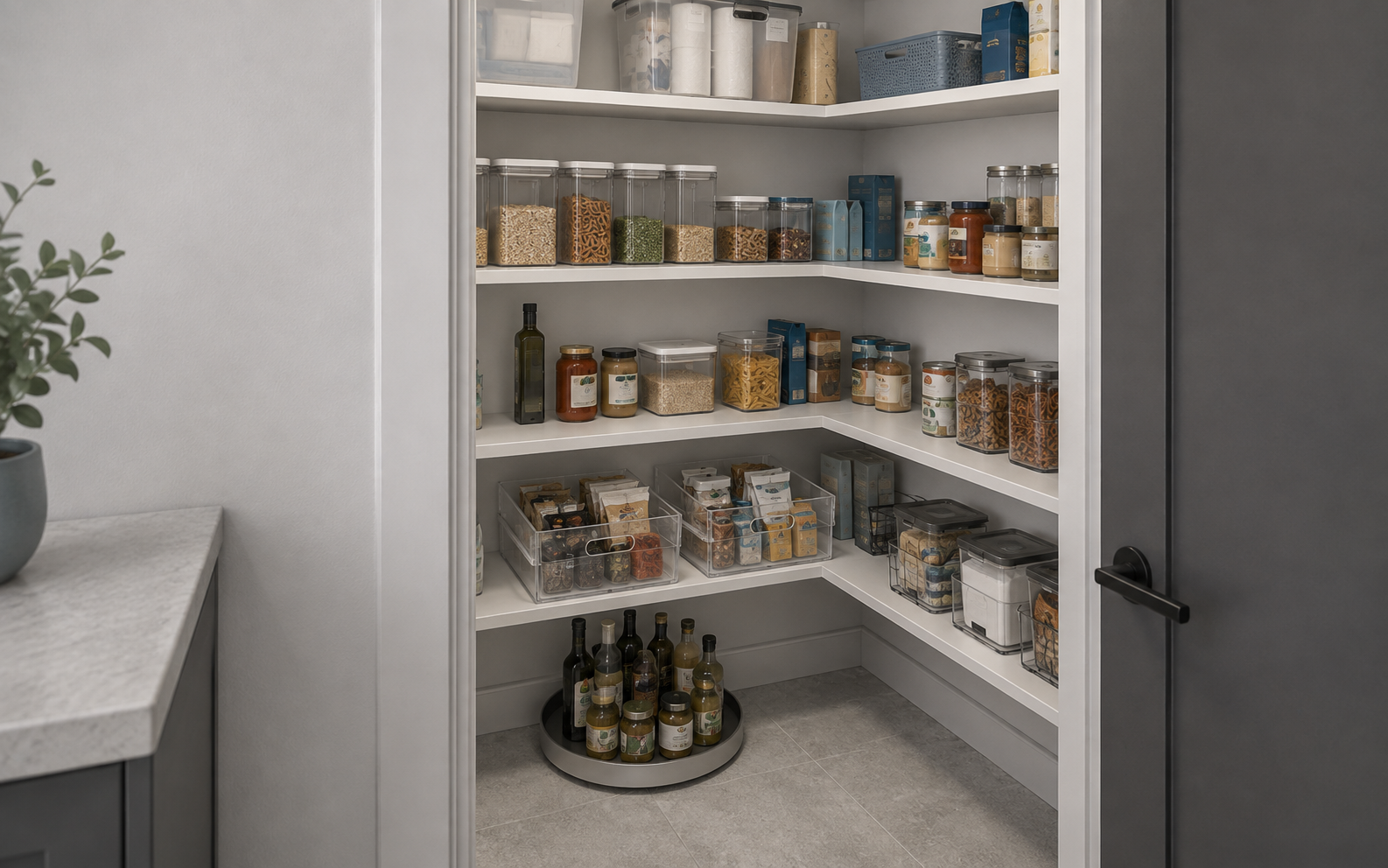
Make the daily shelf readable.
Frequently used food should not require a search. Use containers or risers only when they improve immediate recognition.
24-piece airtight dry-goods setExplore
20-piece pop-top pantry setSee option
3-tier shelf organizerCheck format
Bring deep categories forward.
If depth hides the category, use handles and a contained bin so the whole group moves toward you.
Medium clear pull-forward binsExplore
Large clear pull-forward binsSee larger format
Deep storage bins with lidsTry this route
Rotate clustered bottles or jars.
When several bottles share one deep footprint, rotation can recover the back without taking over the whole shelf.
12-inch turntableExplore
14.5-inch clear turntableCompare size
Rectangular turntableTry this footprint
Move refills out of prime reach.
Backstock needs capacity and identification, not the pantry’s easiest shelf. Keep it contained above, below or behind daily food.
12-quart clear lidded binsExplore
Large clear stackable lidded binsSee larger format
Clear lidded storage binsSee option
Depth changes the tool
Different shelf depths need different tools.
A shallow shelf needs visibility. A deep shelf needs movement. A reserve shelf can trade convenience for capacity.
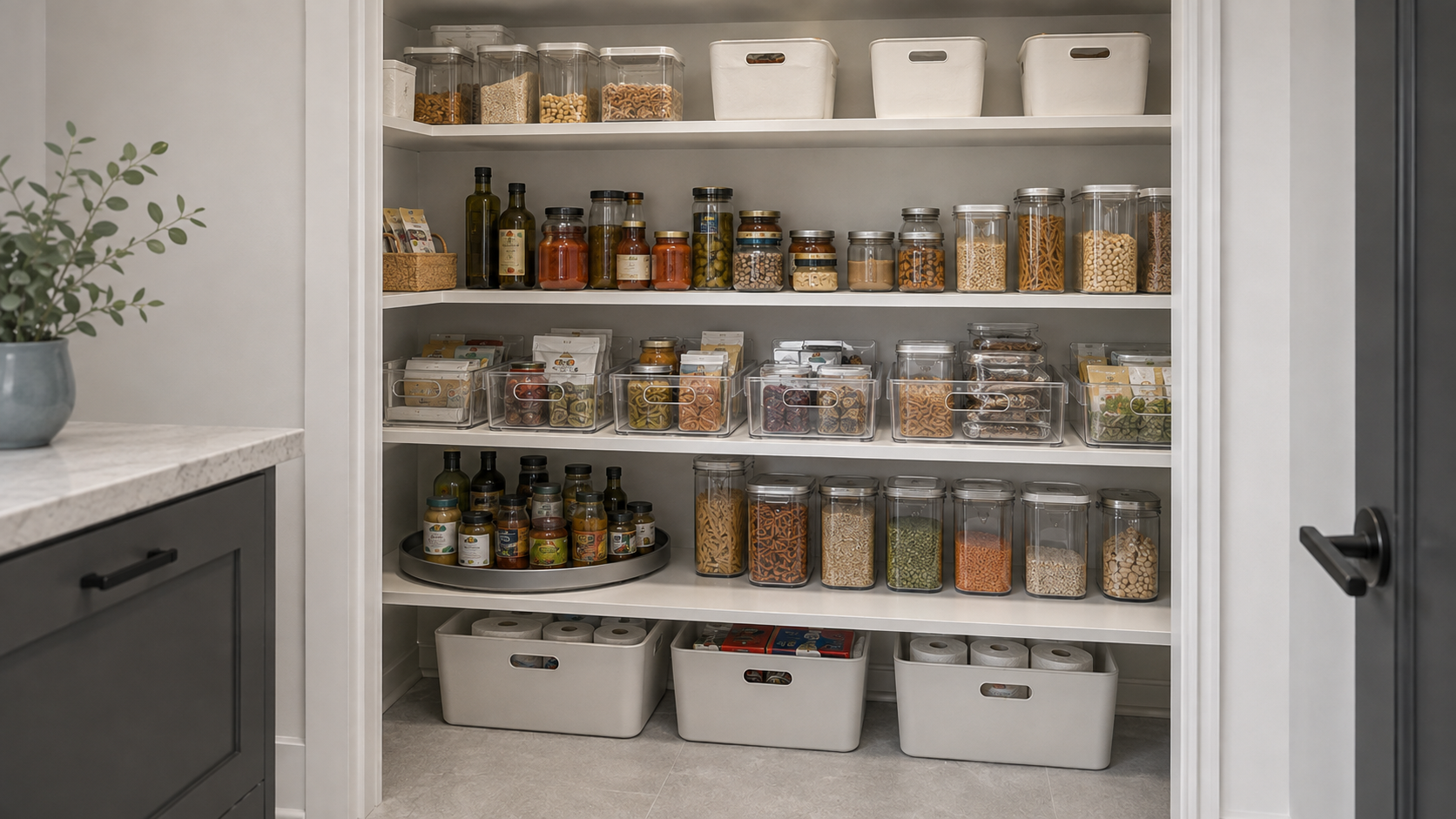
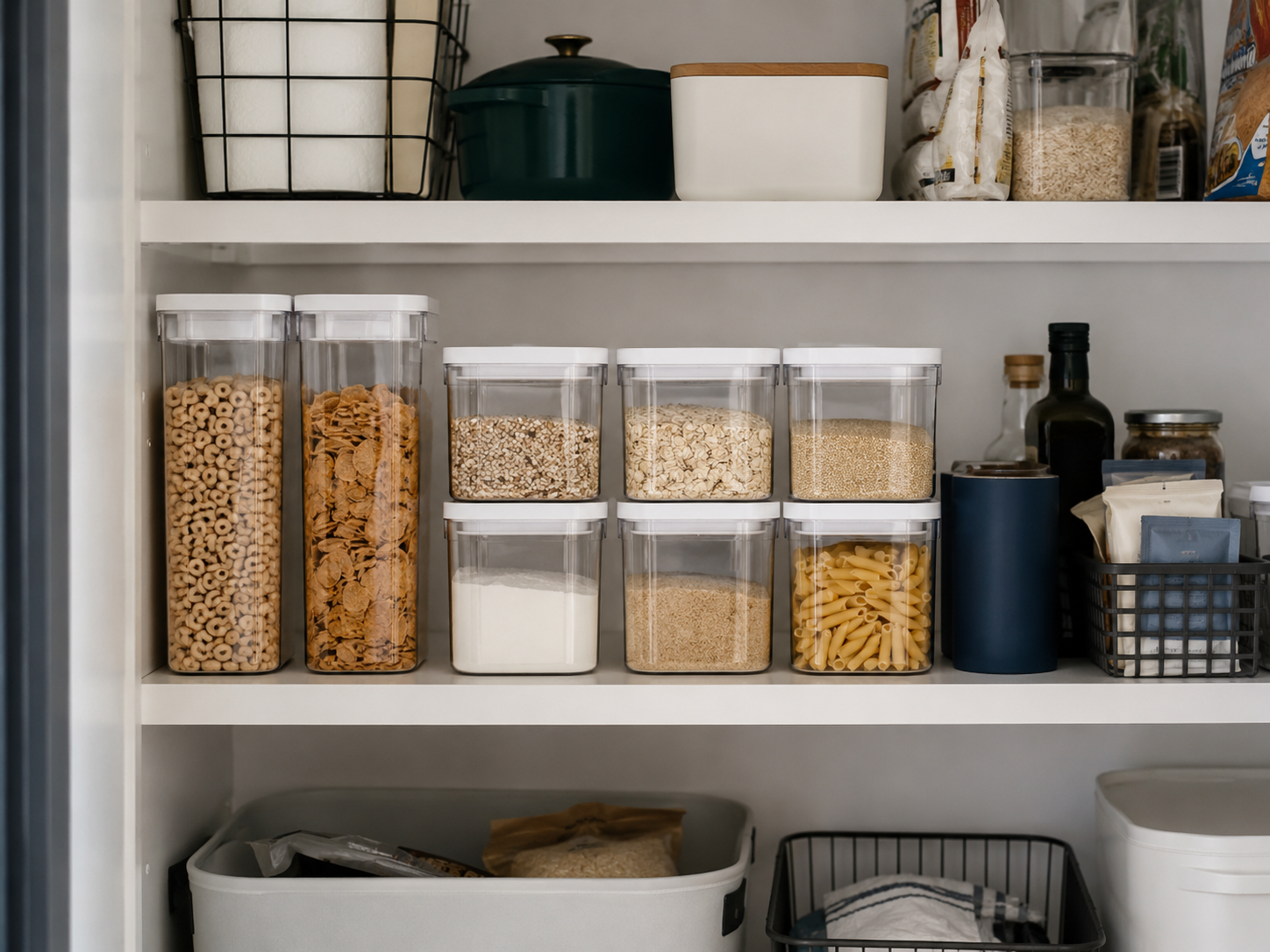
Breakfast route
Build one breakfast shelf that resets easily.
Use matching logic where repetition helps: tall cereal, modular staples and a separate place for refill stock.
Keep: variation in container height. Avoid: decanting every single pantry item just for symmetry.
Snack route
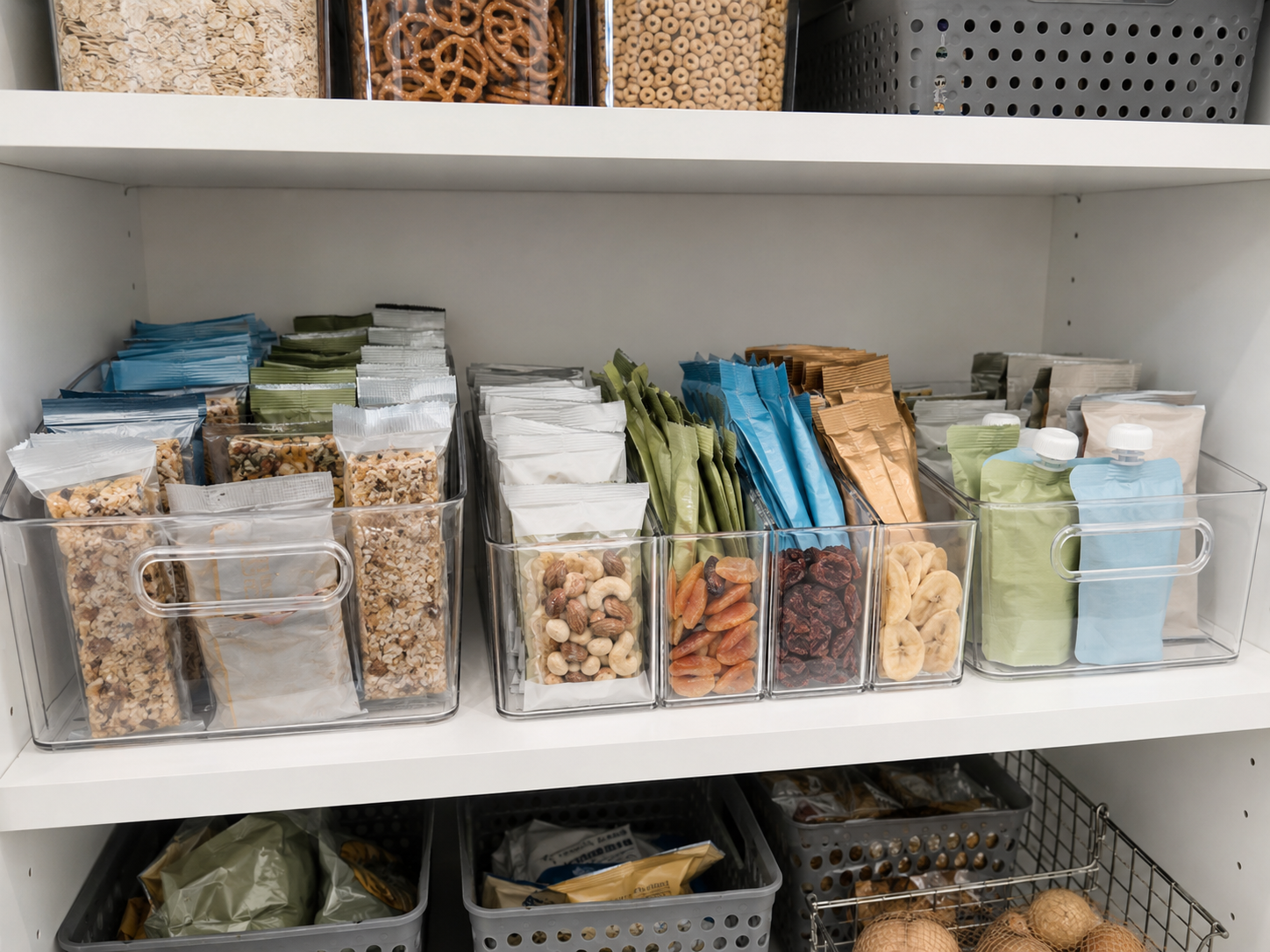
Give snack packets lanes, not a pile.
Separate grab-now snacks from packet categories and refill stock. The front stays readable even when packages are irregular.
If a category collapses as soon as one item is removed, add division before adding more capacity.
Deep shelf rescue
Lift. Rotate. Pull forward.
Depth is not one problem. Short cans need a sightline, bottles need movement, and loose categories need a handle.
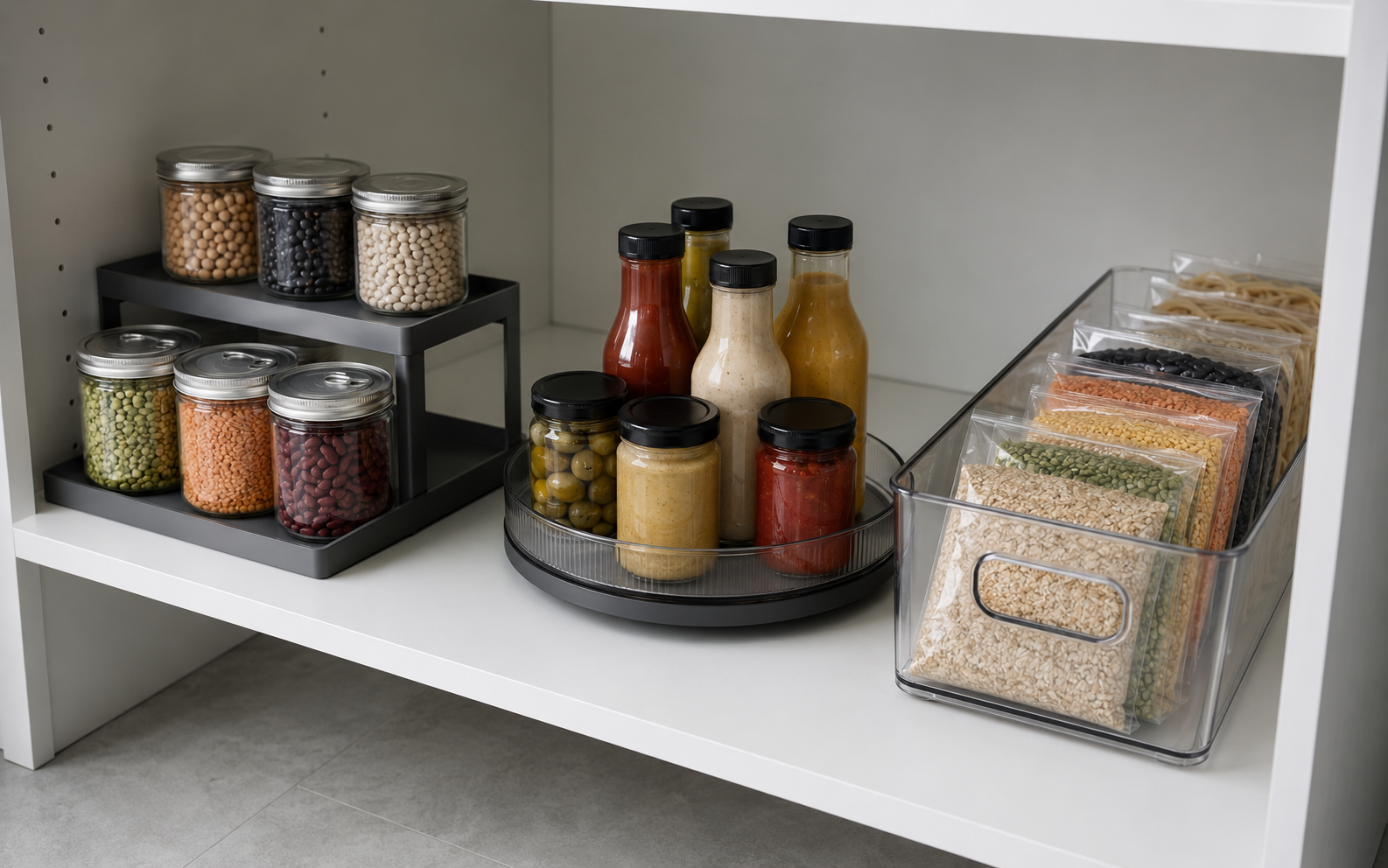
Raise short items so the back row can still be seen.
Explore tiered organizerBring jars and bottles at the rear around to the front.
Explore rectangular rotationMove a full category instead of reaching through the front row.
Explore large clear bins1 · Lift
Raise short items so the back row remains visible.
Explore riser2 · Rotate
Bring bottles or jars at the rear around to the front.
Explore turntable3 · Pull
Move the full category instead of reaching through the front row.
Explore clear binsBackstock route
Keep refills out of prime reach.
Door storage can recover shallow vertical space. Lidded bins can contain refills. Neither should interfere with the pantry while it is being used.
1
Daily reach stays calm.
Keep the easiest shelf for what gets used repeatedly this week.
2
Reserve moves out.
Store refills above, below or in a secondary zone where an extra opening step is acceptable.
3
The door still has to work.
Check hinge side, door thickness, trim, shelf collision and basket projection before ordering.
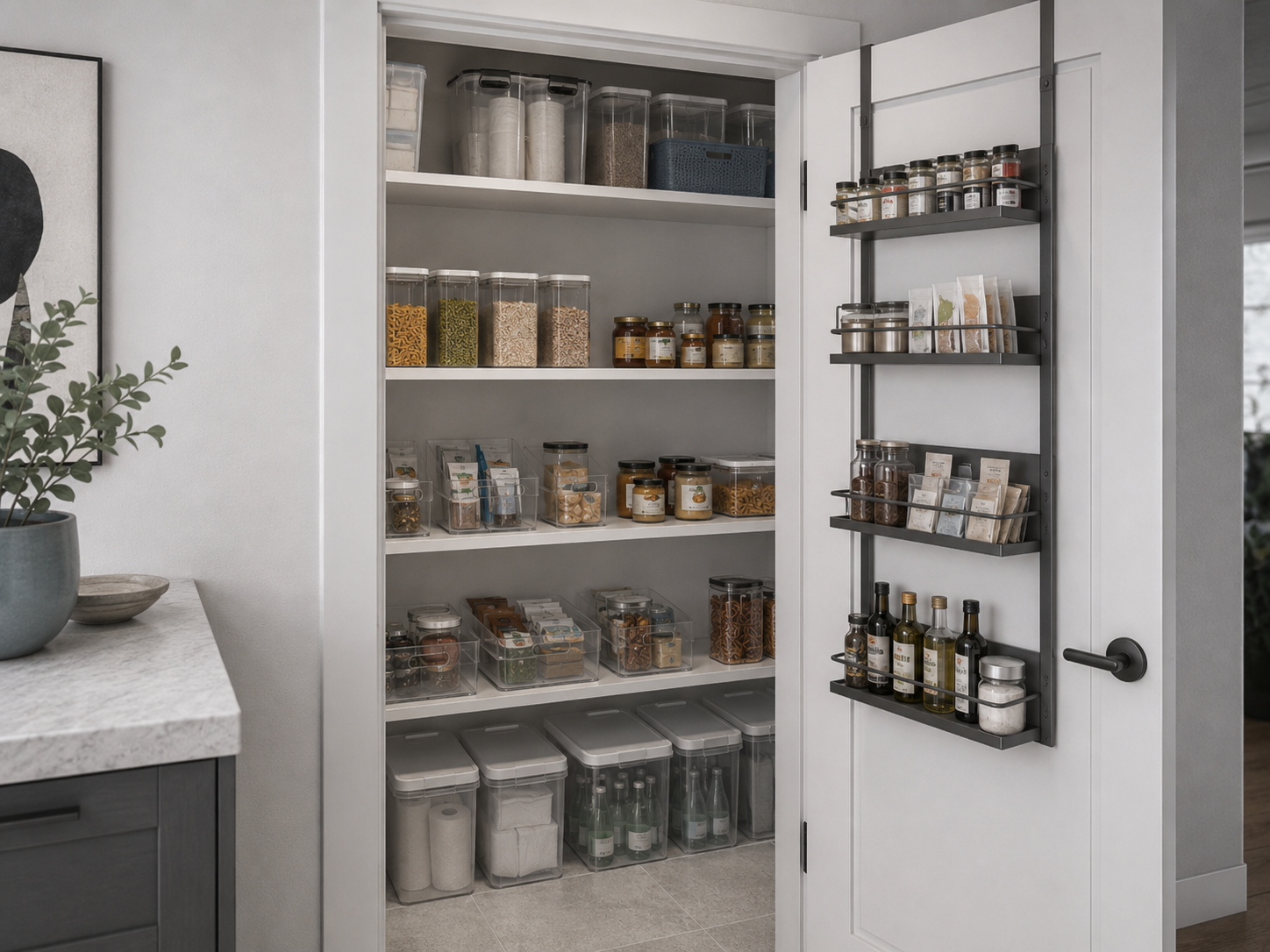
Small pantry proof
Small pantry? The access map still works.
The organizer changes with the footprint. The access logic does not. Use the pantry shape to decide which move deserves the most space.
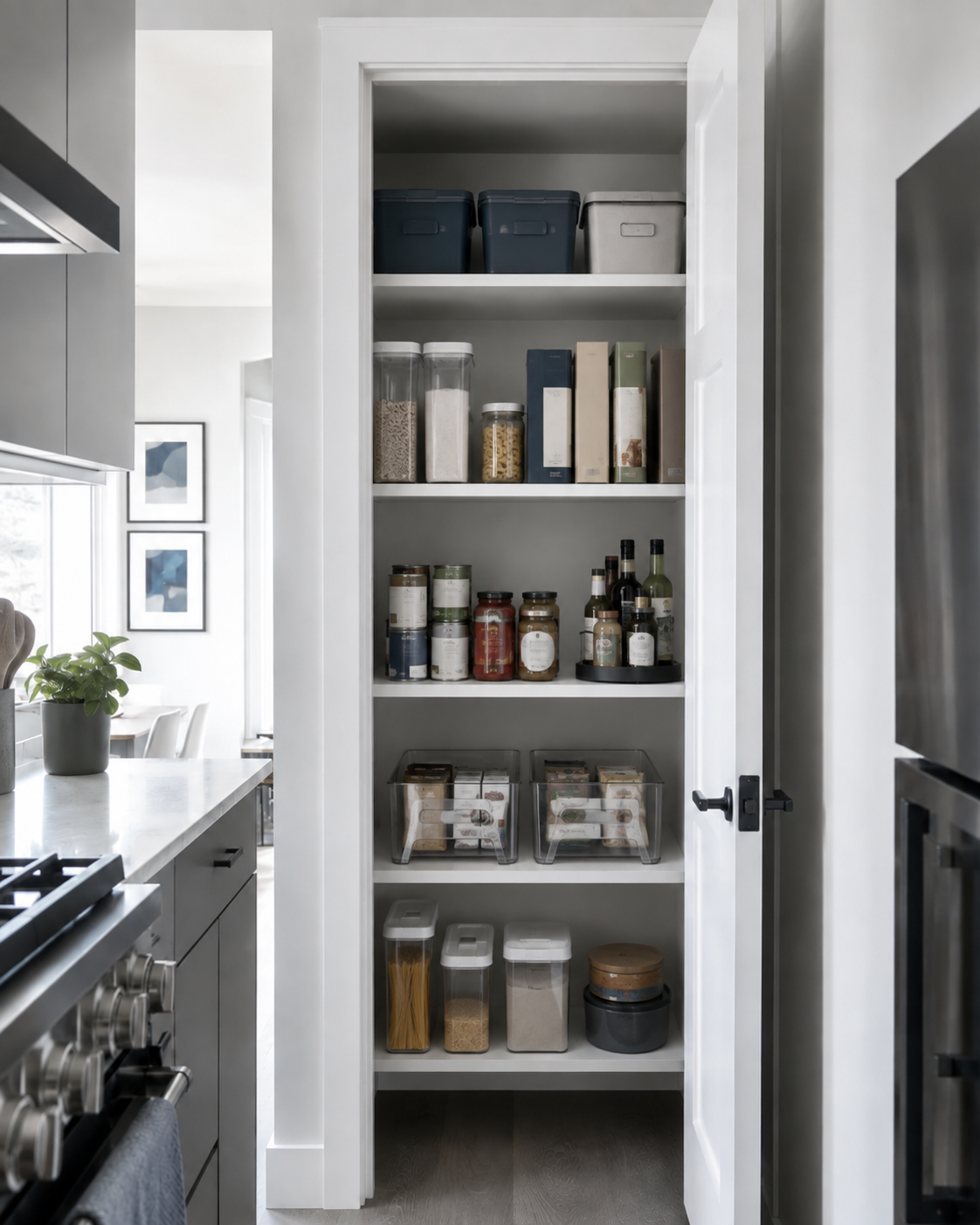
The curated pantry edit
Eight tools. Eight different jobs.
Use this shortlist only after you know the shelf problem you are solving. None of these belongs on every shelf.
Find every pantry tool
Find the pantry tool by the job.
Open only the family you need. Every expanded family becomes a horizontal product rail—never a long vertical product stack.
Dry goods · 5Repeatable containers for cereal, staples and everyday dry-food visibility.
Pull-forward bins · 5For deep shelves where the whole category needs to move toward you.
Shelf visibility · 4Raise short items and recover sightlines before the back row disappears.
Rotation · 4Best for clustered bottles and jars sharing one deep or corner footprint.
Can control · 3Dedicated can organization when stacked rows keep hiding what is in stock.
Snack + packet control · 3For pouches, bars and packets that become one messy mixed category.
Door expansion · 2Recover shallow vertical space only when door closure and trim clearance still work.
Reserve + backstock · 2Move refills out of prime daily reach without losing track of what is stored.
Labels + finishing · 2Useful only after the physical category logic already works.
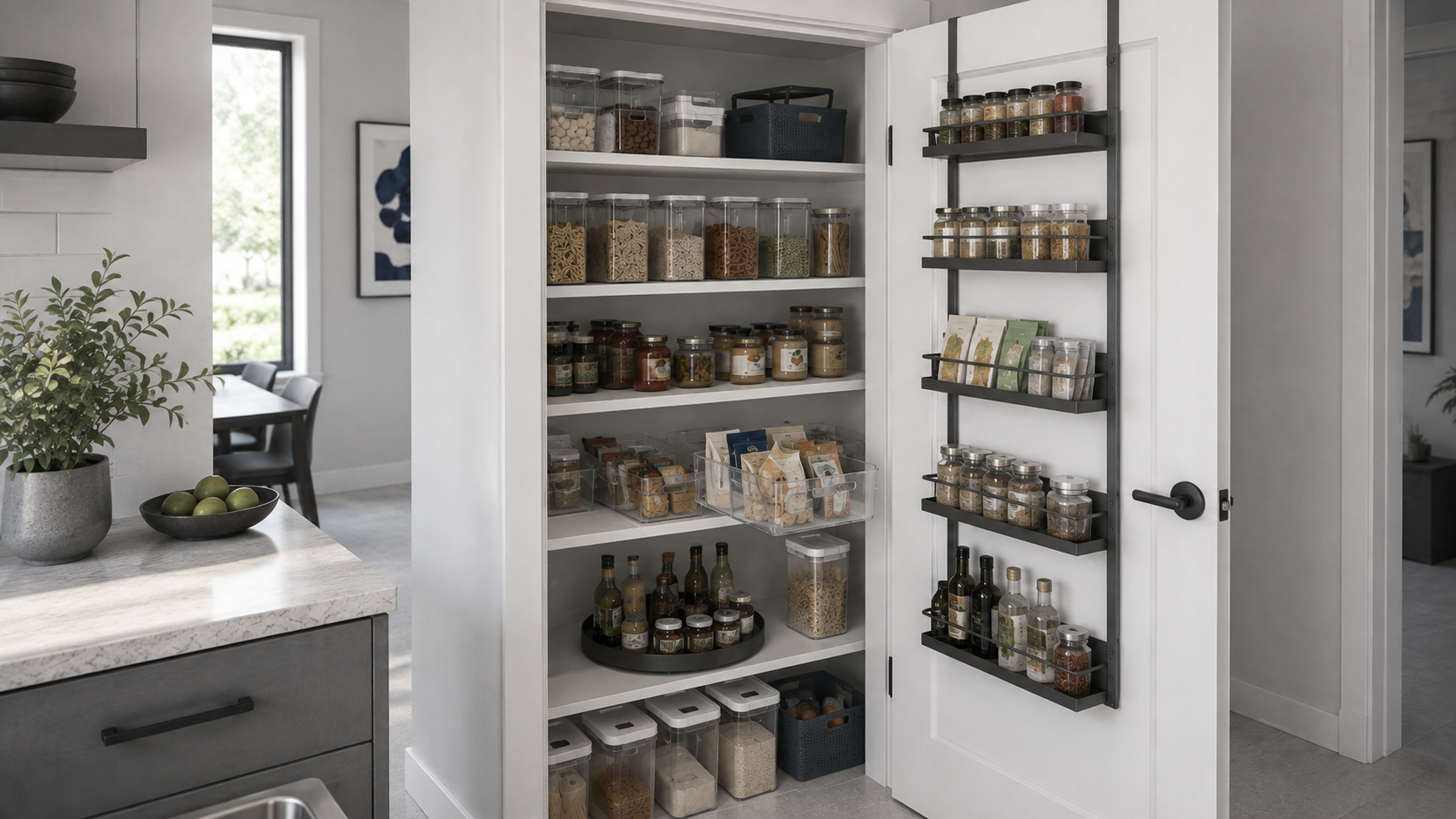
Before you click
Measure the pantry while it moves.
Static dimensions are only part of fit. Check what must pull out, rotate, open, clear the door or lift beneath the shelf above.
Interior shelfMeasure usable width, depth and vertical space.
Pull pathConfirm a bin can travel out without another organizer blocking it.
Rotation sweepVerify the selected turntable dimensions and surrounding clearance.
Door + lidCheck door closure and enough space to open or remove the container.
Keep the kitchen moving
Solve the next kitchen bottleneck.
A visible pantry usually exposes the next problem: cabinets, countertops or the total kitchen footprint.