
Route 01 · No foyer
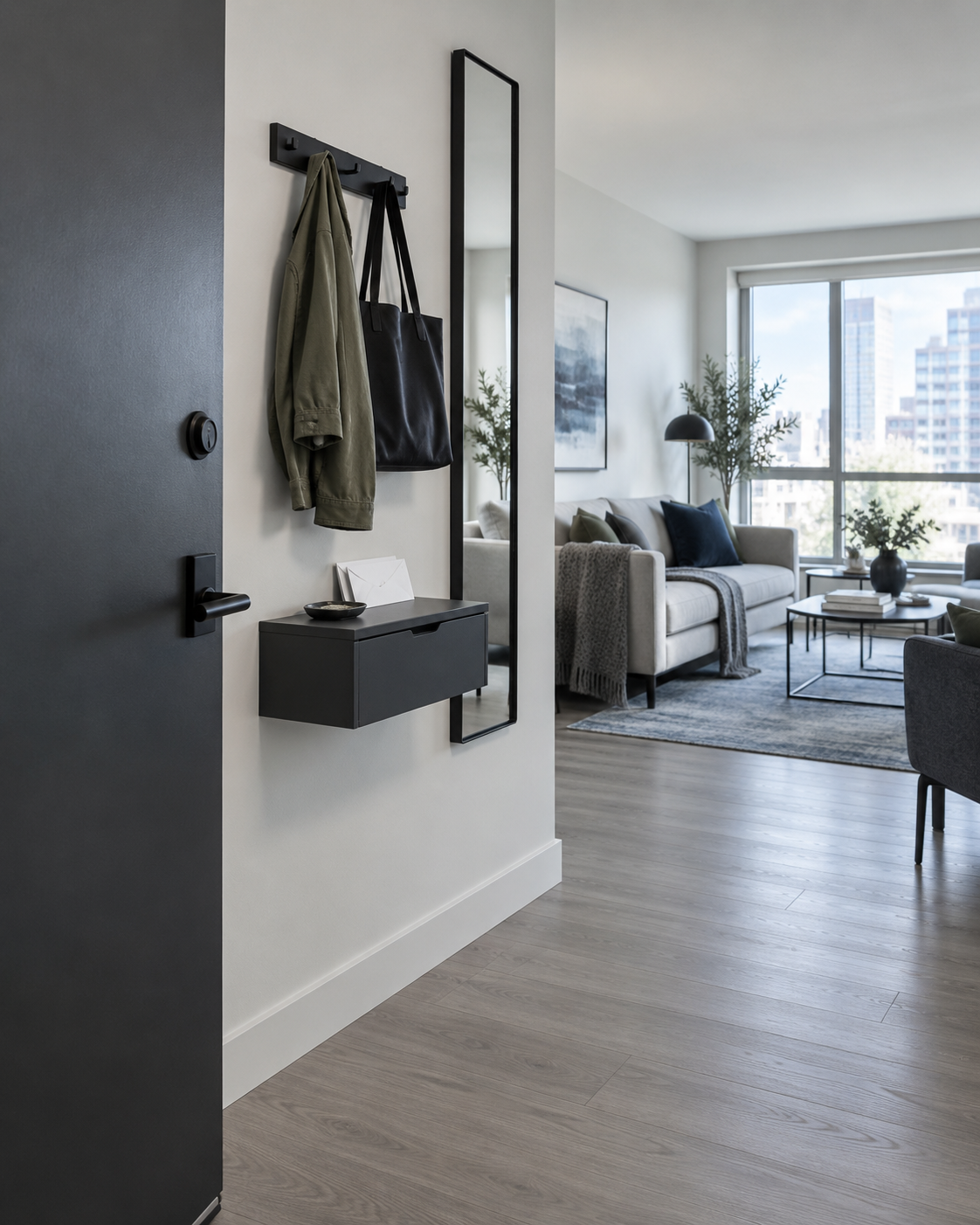
The front door opens into the room.
Let the wall become the entryway: one micro-landing, one hook line, one narrow mirror, no floor furniture unless the path can spare it.
Floor-free firstShoes, bags, keys and the door all compete for the same few inches. Protect the path first—then let the edges do the work.
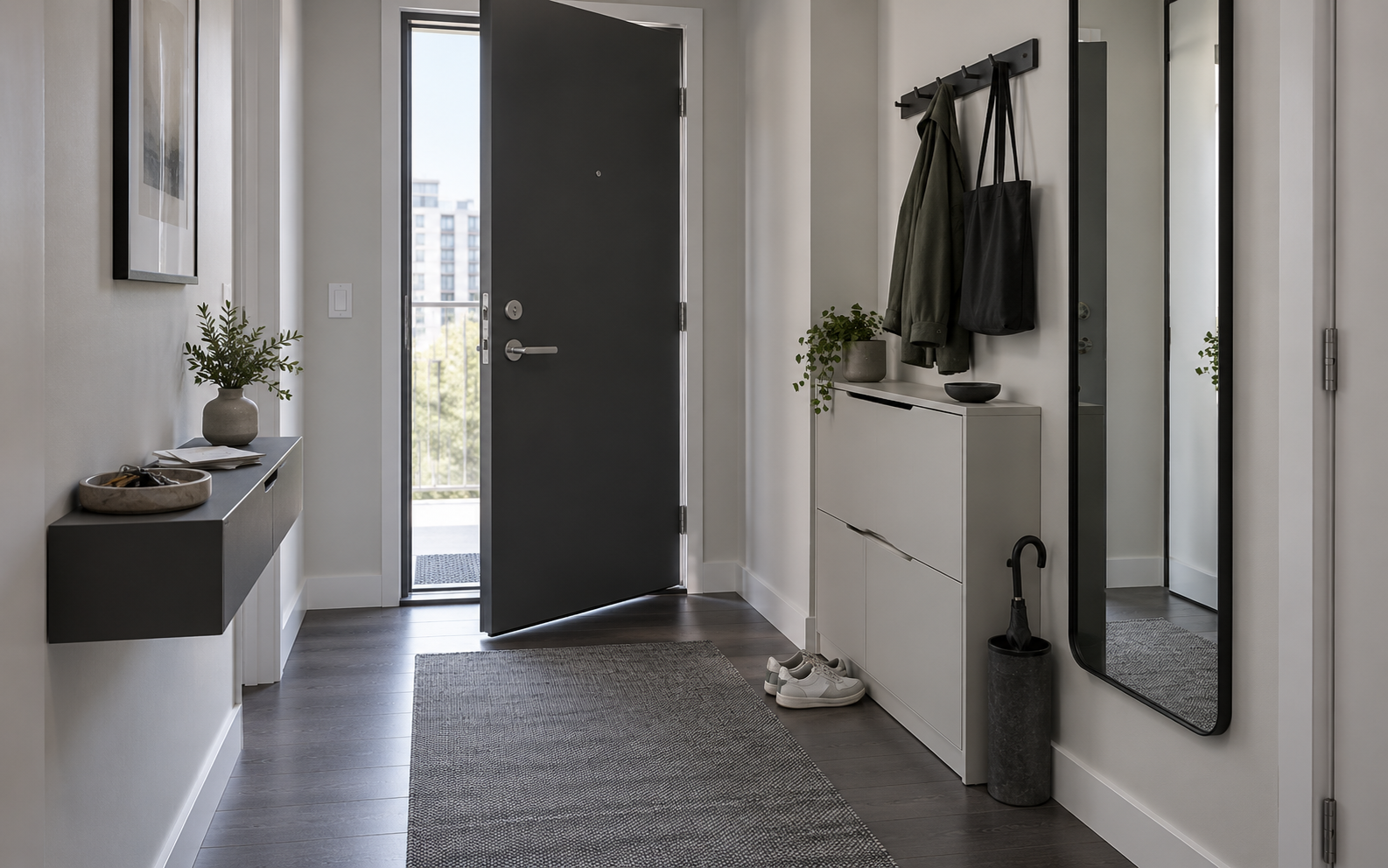
Conceal the daily pairs or stack them vertically before adding another surface.
Clear-Lane Lab
Start with the passage you want to preserve. The leftover depth is the space a product has to earn.
Your 10-inch candidate fits the numbers. Confirm the real door arc, trim and baseboard before buying.
Planning aid only—not building-code or accessibility advice. Preserve required egress and follow local safety requirements.
The edge map
A tiny entryway rarely needs more furniture. It needs one useful boundary to carry the daily load.
As an Amazon Associate, Ravnora Decor may earn from qualifying purchases. Product links may open on Amazon.
Tap the boundary your room can spare. The product type changes with the space.
A compact seated landing makes sense when one footprint can replace both loose shoes and a separate stool.
Review the fitRecognize your room
The best small-space move changes depending on whether you have no foyer, no depth, or one compact landing to spend.
Let the wall become the entryway: one micro-landing, one hook line, one narrow mirror, no floor furniture unless the path can spare it.
Floor-free first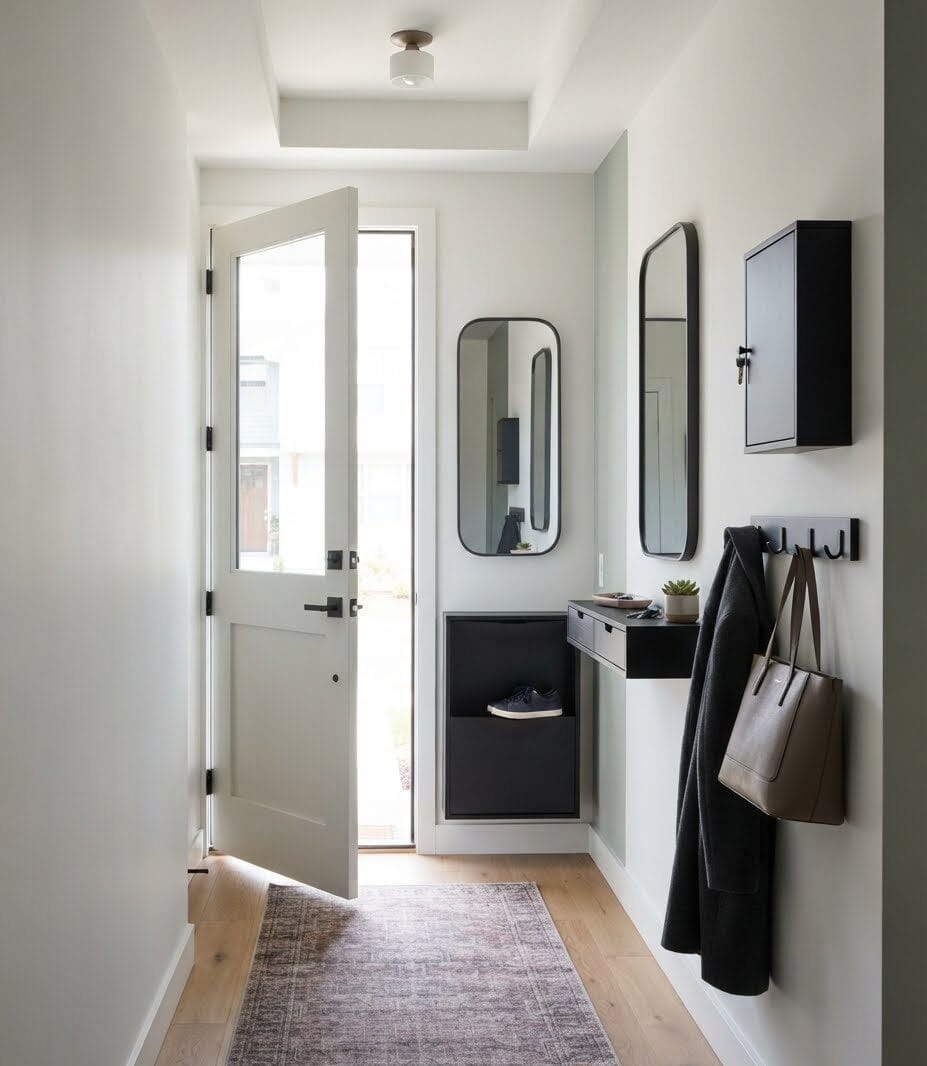
Choose shallow projection first. Long walls are useful only when the center lane still feels effortless to walk through.
Shallow-first
Make that footprint combine jobs: conceal shoes, offer a seat or surface, and keep the rest of the zone visually quiet.
One footprintPieces that earn their inches
This is the fast edit: different footprints, different jobs, no duplicate reasons for being here.
Use when you need a real drop surface without turning the passage into a furniture corridor.
Contains keys and mail while keeping the floor visually open.
Turns one compact footprint into a seated landing and concealed everyday shoe zone.
Use vertical concealed capacity when loose pairs are the biggest visual pile.
Useful when the wall should look quiet between arrivals rather than permanently full of hooks.
Hides keychains instead of turning them into another visible wall collection.
Add a final-check reflection without spending the width of a conventional statement mirror.
Gives wet footwear one contained drying point instead of spreading moisture through the doorway.
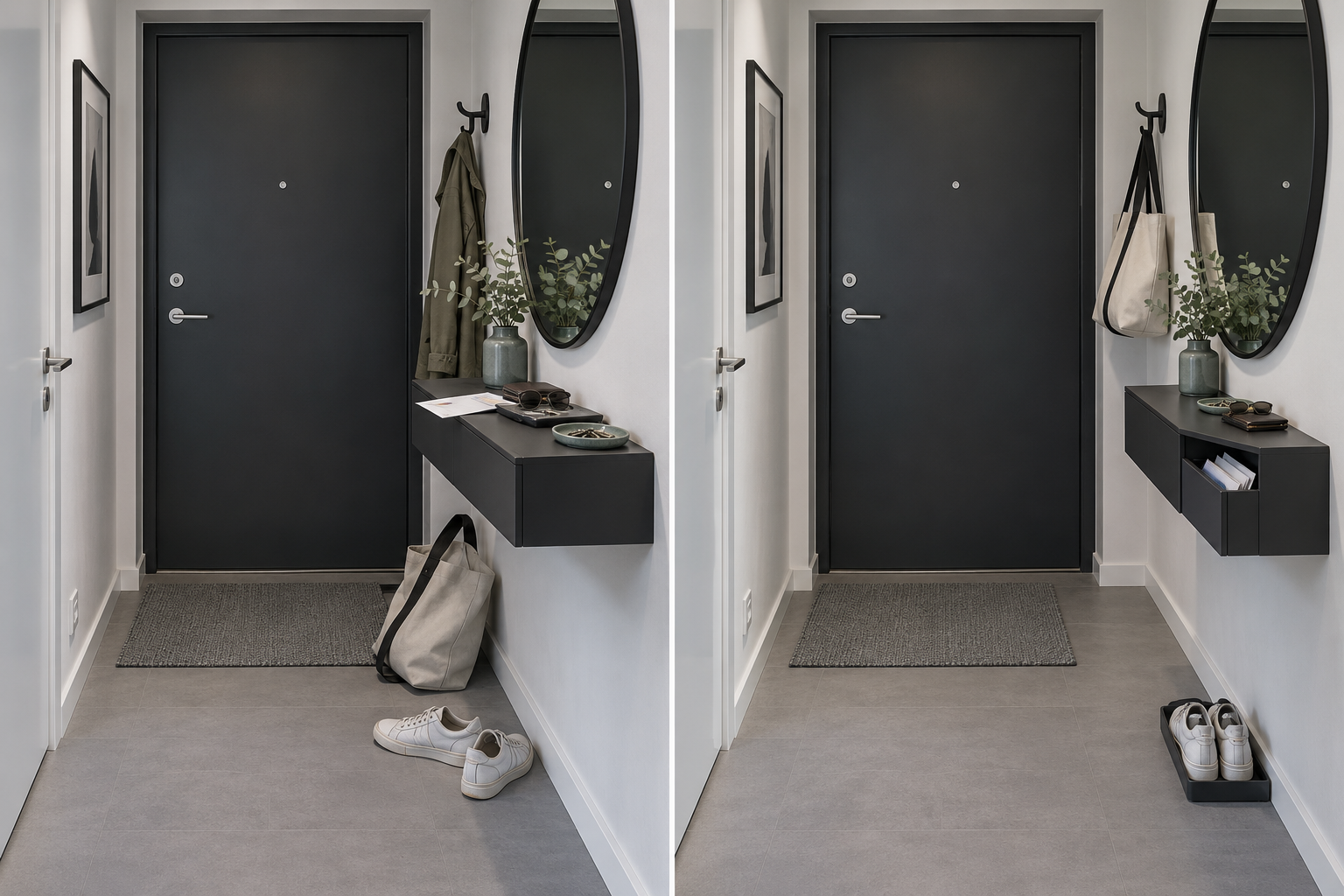
One-surface rule
The goal is not a perfectly empty entryway. It is knowing exactly where the things in your hands go when you walk in.
Build the arrival zone
Choose a formula based on what your room allows. Each piece should solve something the others do not.

A removable hook, adhesive key tray, door-back hooks and an over-door mirror create a functional arrival zone without adding furniture.
The last 10%
Once the primary clutter is controlled, weather and awkward leftover space are usually what still make the doorway feel unfinished.
Give a dead corner useful height without adding another piece of floor furniture.
Review dimensionsContains rain gear when a wall hook is not the right place for something wet.
Check the footprintDefines a long path and protects the floor without taking furniture depth.
Explore sizesCreates one deliberate drying point for wet shoes and boots beside the door.
Review the sizeComplete solution library
Open only the family your room needs. Twenty-four solutions are grouped into six jobs so comparison stays useful instead of becoming another form of clutter.
Before you click
A product can look perfect online and still create a new problem at home. Tap each point on the doorway before committing.
Include handles, cushions, open drawers and anything that projects beyond the main frame.
Then verify the current product details, included hardware and installation requirements on the product page.