
01
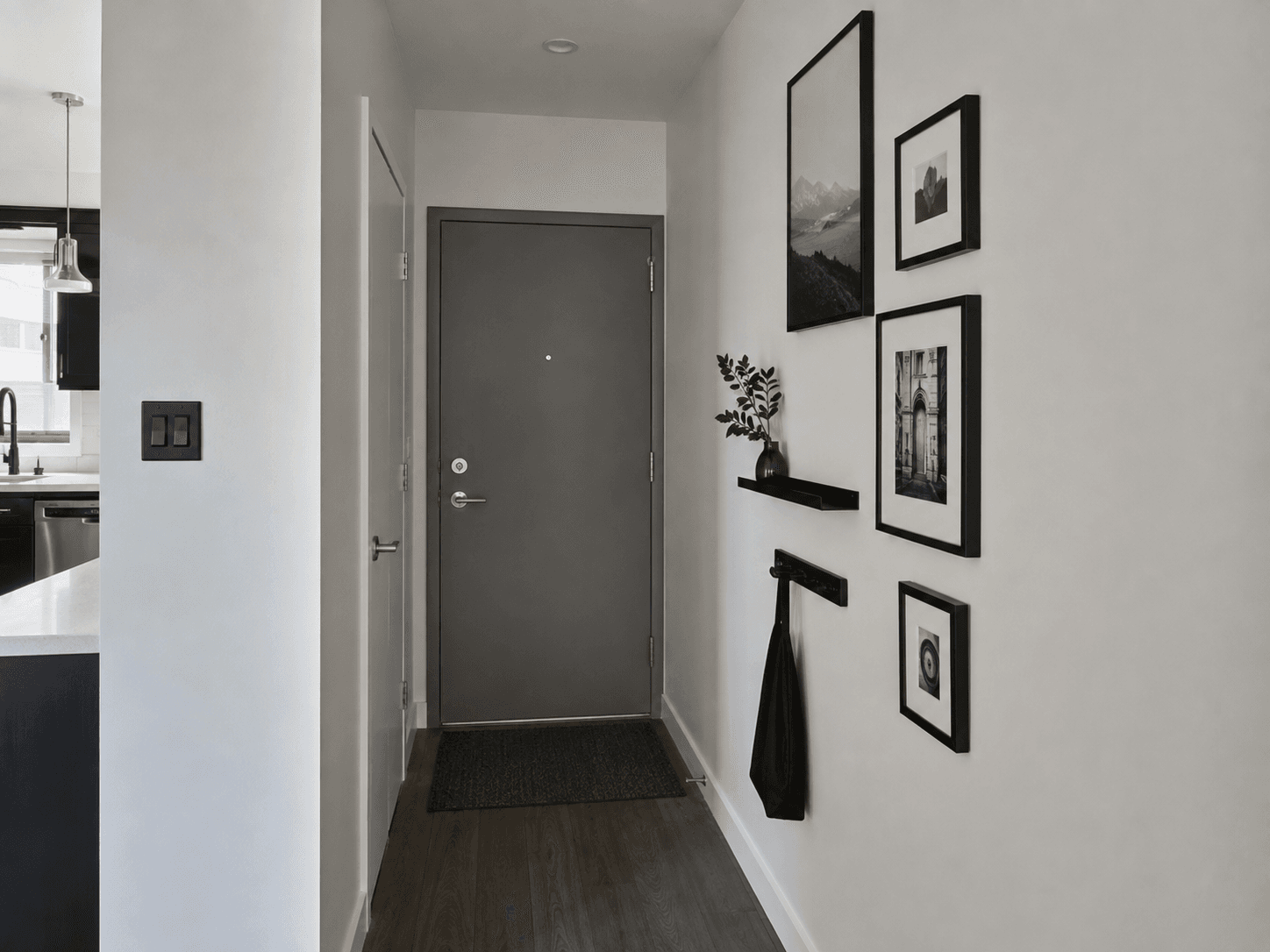
Vertical + edited
Keep the floor clear, build upward and stop before the wall starts behaving like storage.
Entryway Wall Decor
If the entry feels empty, underscaled or permanently cluttered, start with the wall's job—not another object.
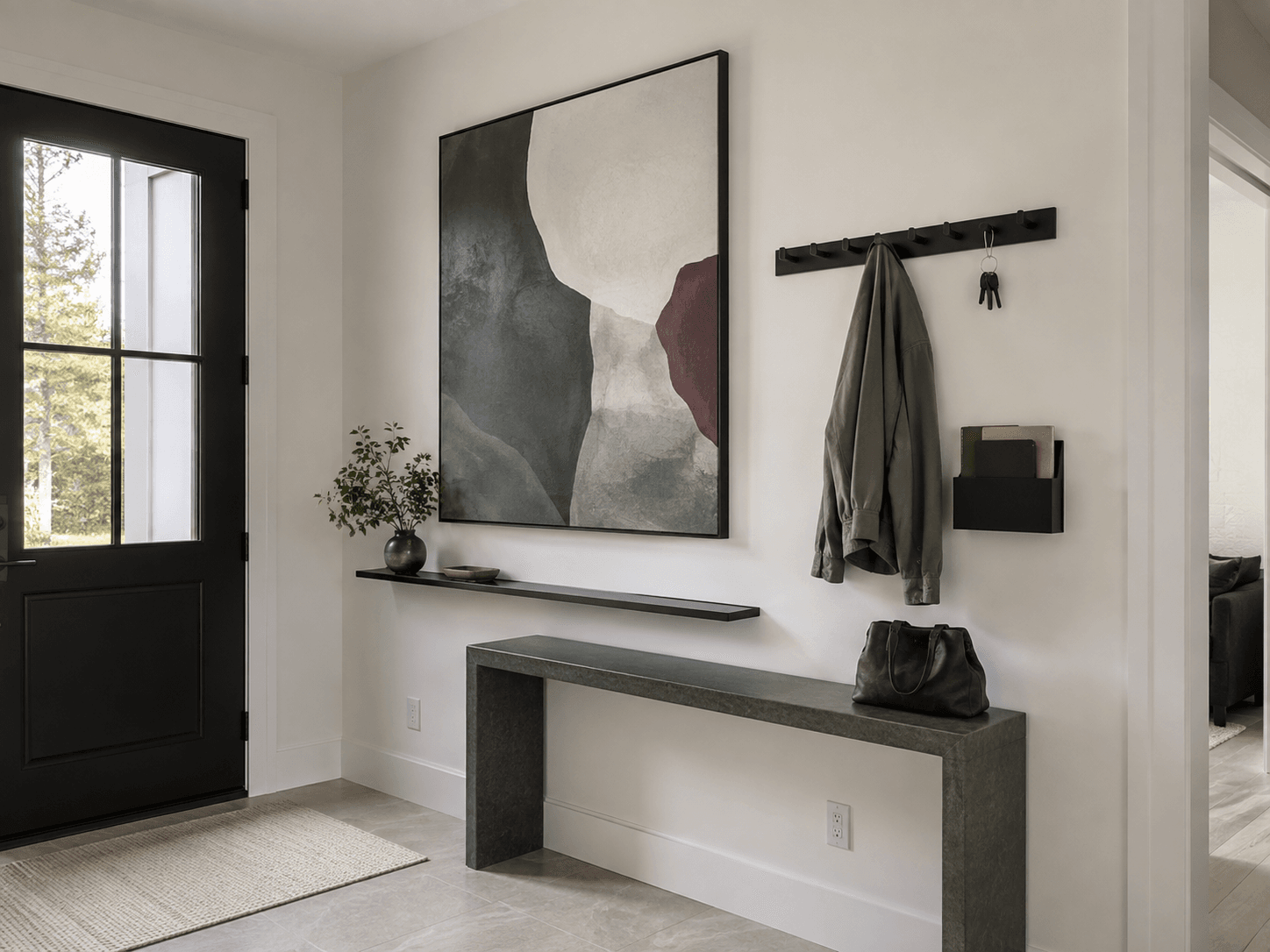
The wall usually tells you what it needs. Empty, underscaled, overloaded and open foyers all need different first moves.
A wall viewed from the front needs a different composition from one glimpsed while passing or read from two feet away.
Use one clear focal element that can hold the sightline before the visitor notices smaller details.
Choose the wall's job, its footprint and what sits below. The composition changes so you can see what should dominate—and what should stay quiet.
Before changing colour or buying three more accents, fix the relationship between the wall piece and what sits below it.
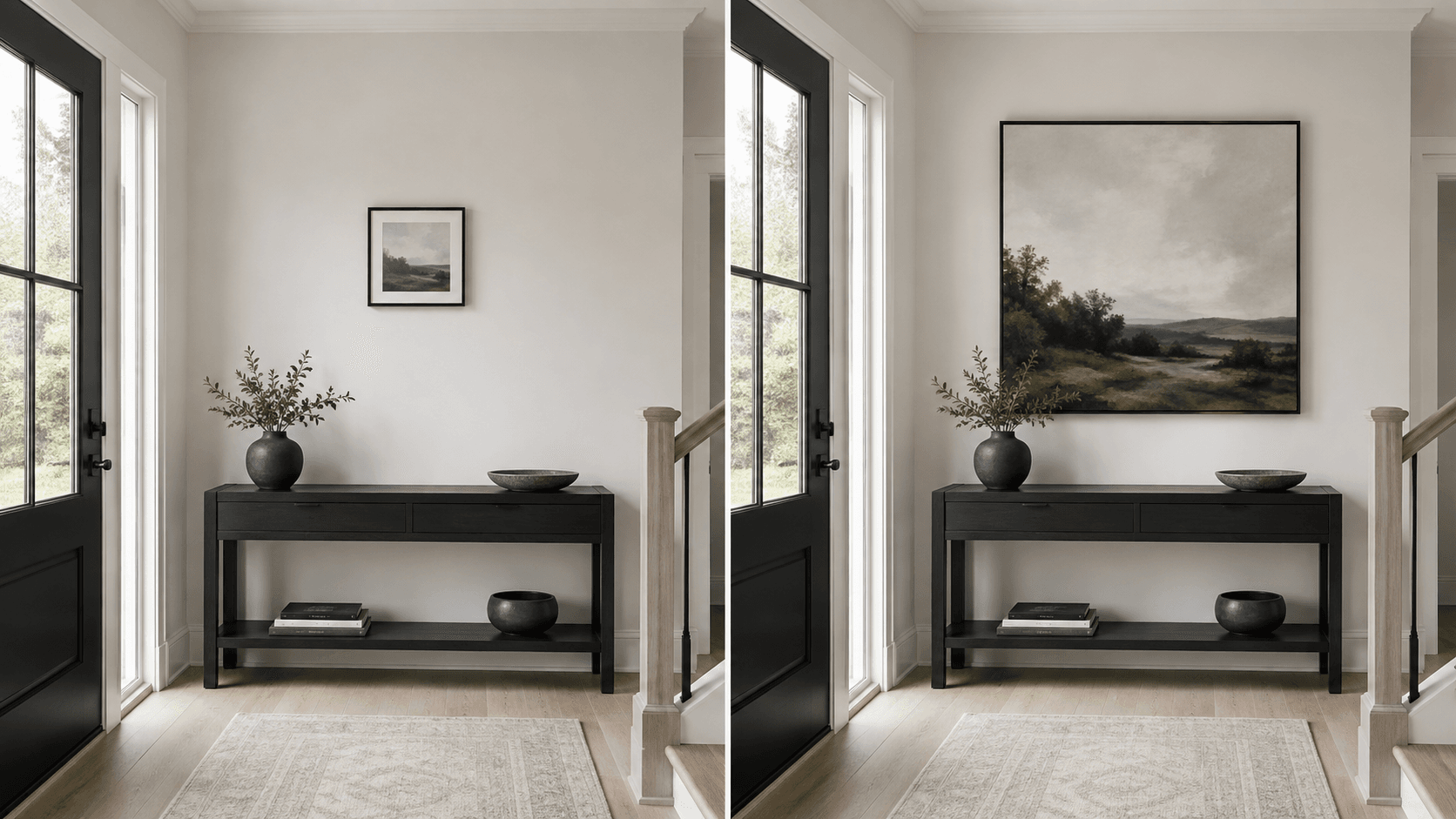
A long console with a tiny object above it often makes the entire wall feel unfinished.
More small decor usually adds noise when the real problem is a weak visual anchor.
Breathing room helps the focal piece read clearly from the entry sightline.
Each route solves a different physical problem. Use the picture to understand the composition, then use the three-step tray to execute it.
As an Amazon Associate, Ravnora Decor may earn from qualifying purchases. Product links may open on Amazon. Verify current dimensions, finish, included pieces and installation requirements before purchasing.
Keep the floor clear, build upward and stop before the wall starts behaving like storage.
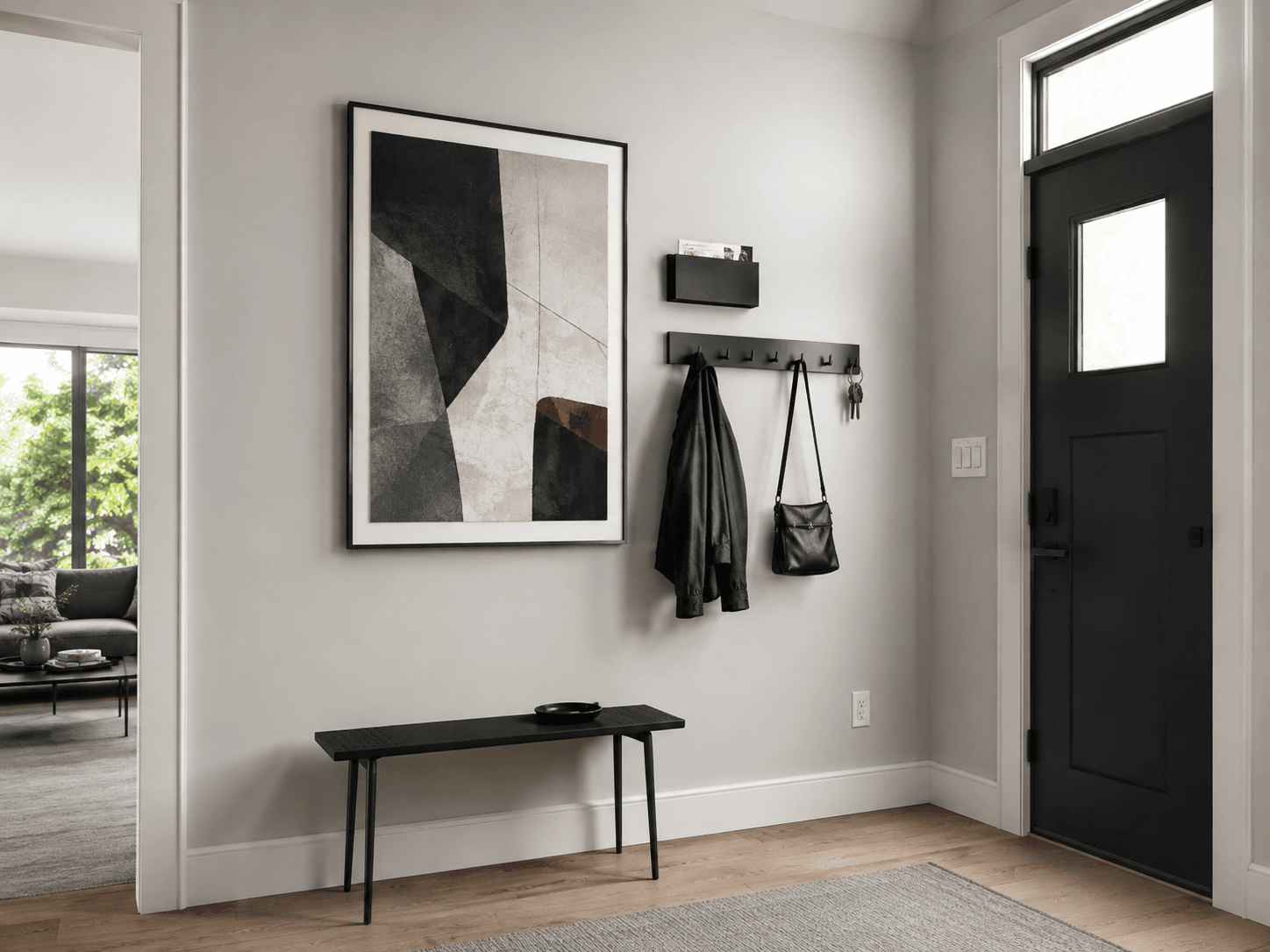
Art still leads visually, but everyday arrivals get one boundary instead of spreading across the wall.
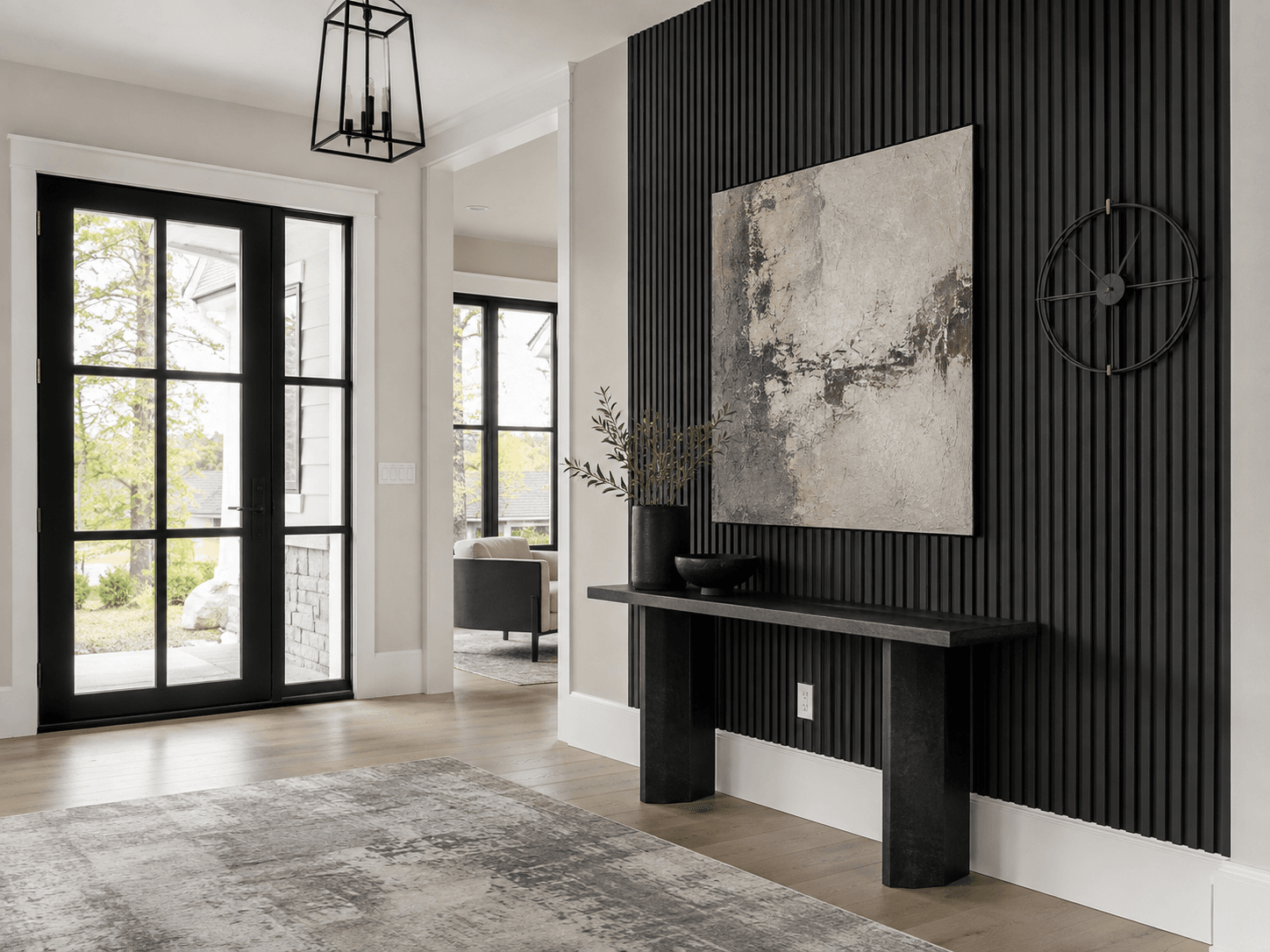
Wide sightlines usually need one decisive gesture and more breathing room—not more little things.
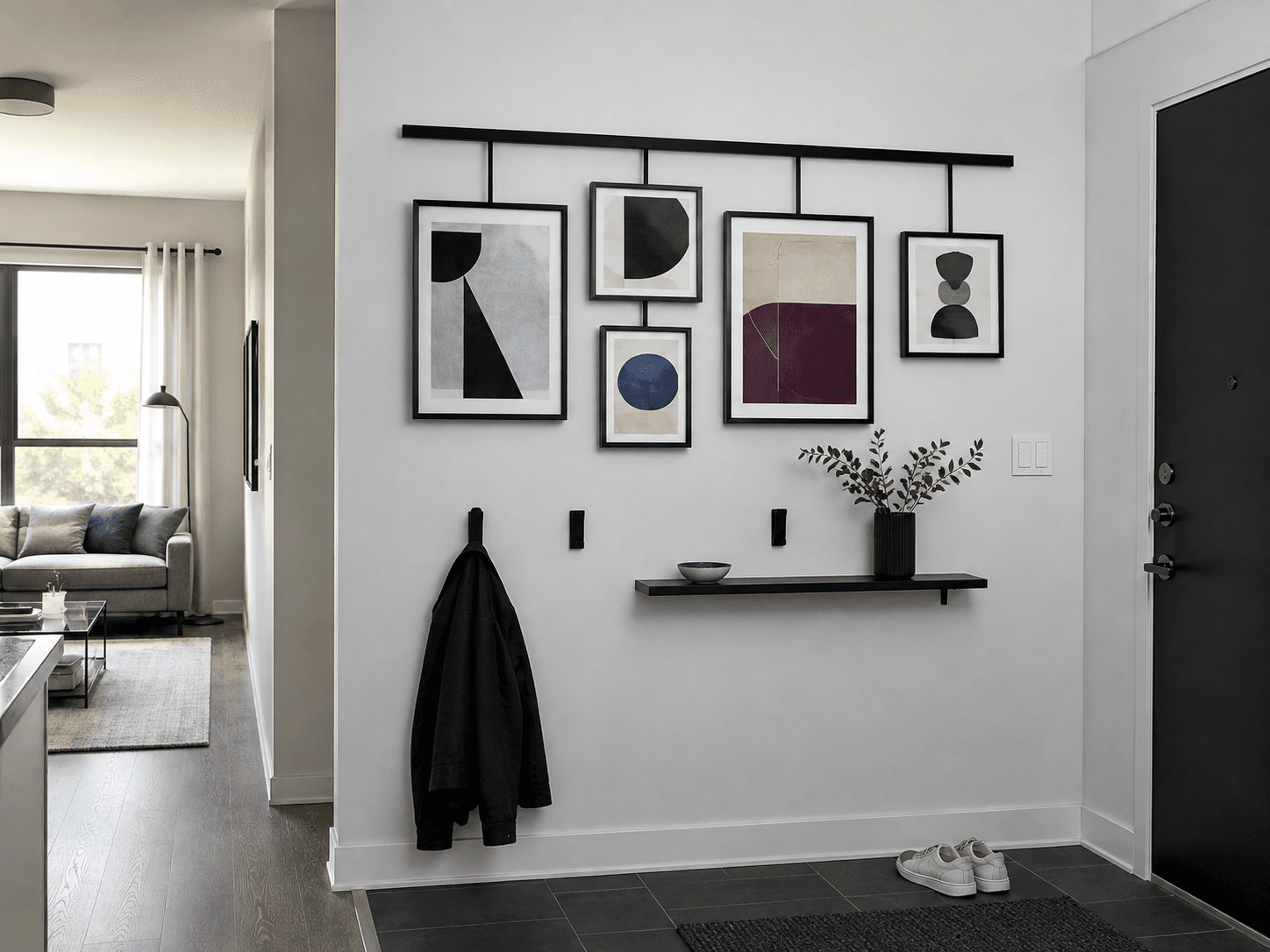
Use several frames only when their spacing, scale and finishes still read as one wall composition.
Choose the visual strength first. This prevents a quiet room from getting an overpowering wall—or a large foyer from getting an anchor nobody notices.
Best when the room already has strong furniture or hardware and the wall only needs a calm visual center.
Wall decor stops feeling intentional when keys, bags, shelves and focal pieces compete at the same visual level.
Use art, reflection or one sculptural accent here. This is the part of the wall that should read first from the room.
When one frame, hook or furniture edge repeats, separate objects start reading as one composition.
If the wall still feels weak, increase the anchor before adding another decorative object.
Function looks intentional when it has a clear boundary instead of spreading across the whole wall.
The number of pieces is less important than whether the arrangement reads as one visual gesture from your actual sightline.
Best when the wall needs clarity or the console already carries several visual details.
This is the retrieval layer—not another storefront. Open only the family that solves the decision you made above.
Mark the full footprint, step back to the actual arrival sightline and confirm the things Amazon cannot decide for your room.
Adhesive hanging products are not appropriate for every object or wall surface. Follow the current manufacturer preparation, compatibility and weight instructions for the exact product purchased.