
White Short Café Tiers
A simple lower-window starting point when you want softness without covering the upper glass.
View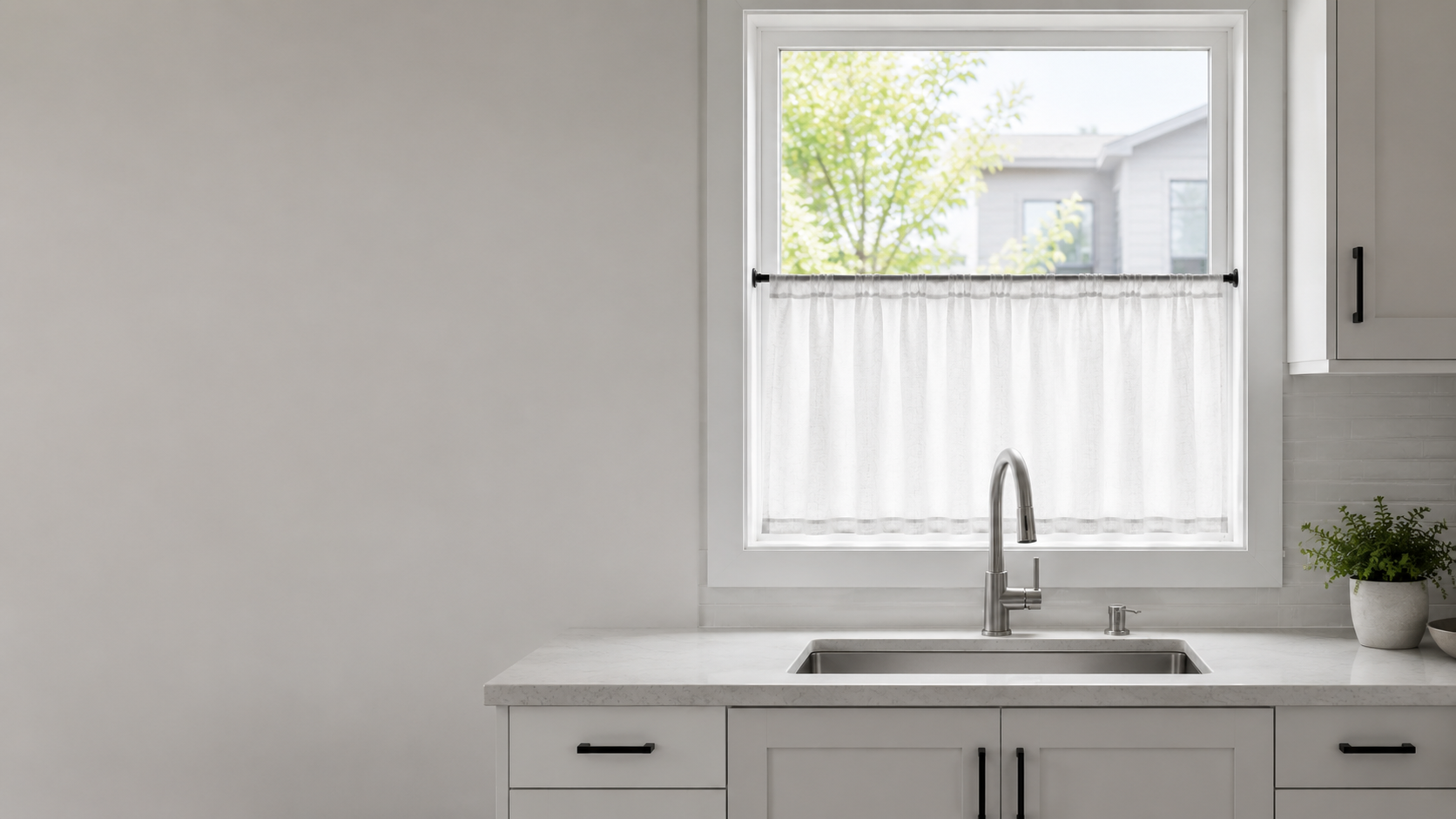
Most kitchen windows do not need to be covered top to bottom. Start with the part of the glass that actually needs privacy.
Ravnora starts with coverage, sightline and clearance—then chooses the treatment.
Choose the amount of coverage the room actually needs. The visual, rule and matching product route change together.
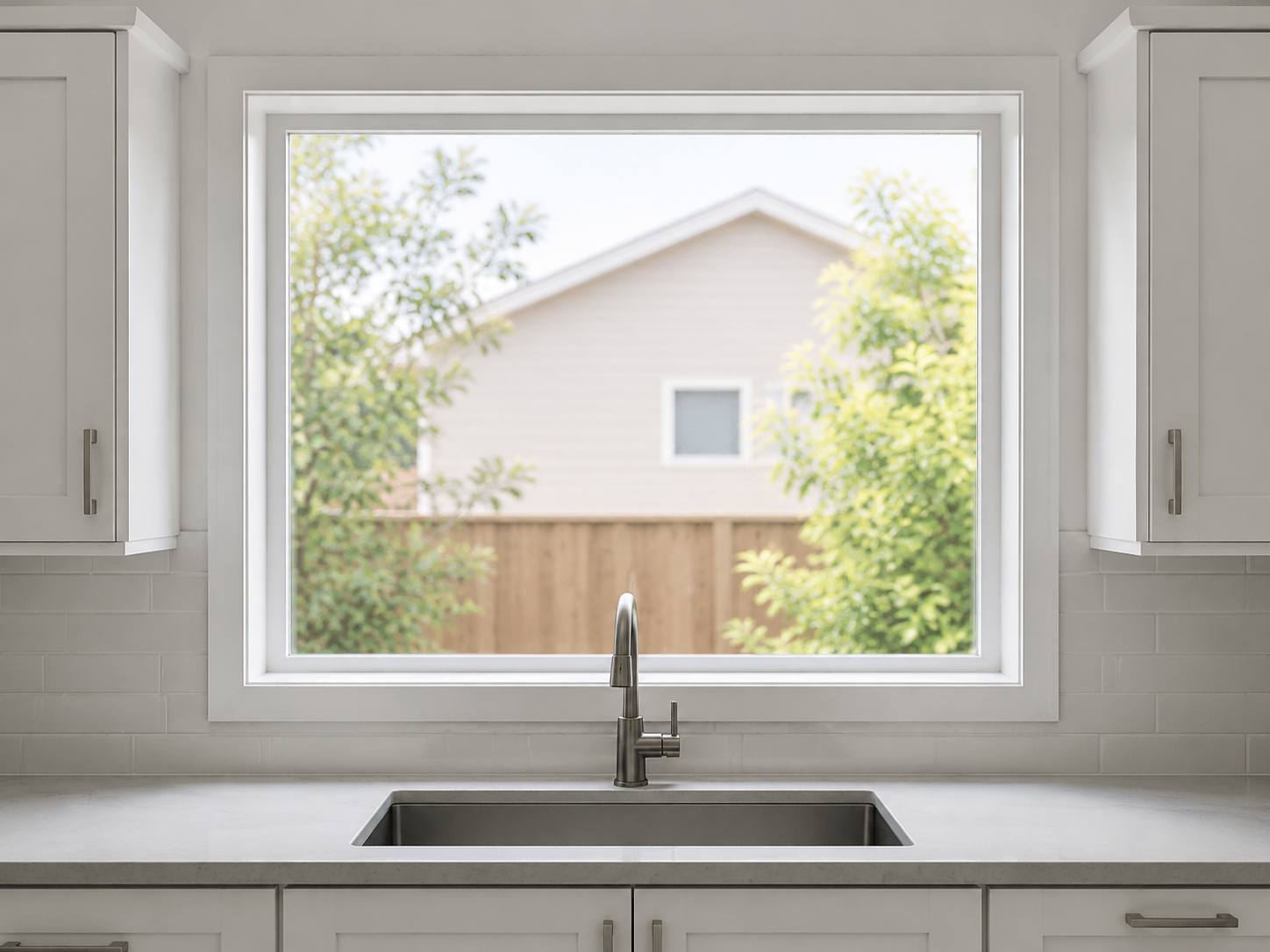
Use a short café treatment when privacy is needed lower down but the upper glass is doing valuable daylight work.
Shop this lineThese are execution options for the active coverage route—not a random curtain board.
As an Amazon Associate, Ravnora Decor may earn from qualifying purchases. Product links may open on Amazon.
Best when the privacy problem sits below eye level and daylight above should stay untouched.
A simple lower-window starting point when you want softness without covering the upper glass.
ViewUse when the lower half needs a stronger visual barrier than a very light sheer.
Check optionsA restrained alternative when plain white feels too flat but the window should still stay visually light.
ExploreBest when coverage needs to move up and down rather than stay fixed at one privacy line.
Use when you want a structured window treatment that can change with the time of day.
ViewA strong functional route when selective coverage matters more than a traditional Roman-shade silhouette.
ExploreUse when a clean fabric shade suits the room and the current listing's mounting method fits your window.
Check fitBest when fabric near the sink feels unnecessary and the glass itself can do the privacy job.
A quiet, fabric-free route when you want the privacy layer directly on the glass.
ViewAnother plain treatment for visitors who prefer an opaque-looking lower pane rather than a textile layer.
CompareUseful when the glass-only idea is right and a removable static-cling format suits the application.
See detailsBest when the window is away from the sink work zone and can carry a softer vertical frame.
Use on an appropriate side window where a longer panel has safe clearance and the room wants softness.
ViewA cooler side-window layer when bright white feels too crisp for the surrounding kitchen palette.
ExploreA restrained green accent for a nook or side window that can absorb a little more visual character.
See optionA window treatment can be the right type and still be the wrong fit. Record the installation width, coverage height and operating clearances before you choose a size.
Do not substitute one measurement for another. A shade needs the dimensions required by its current listing; a tension rod needs a compatible range; film needs the glass area you plan to cover.
The treatment changes because the room condition changes—not because one style is universally better.
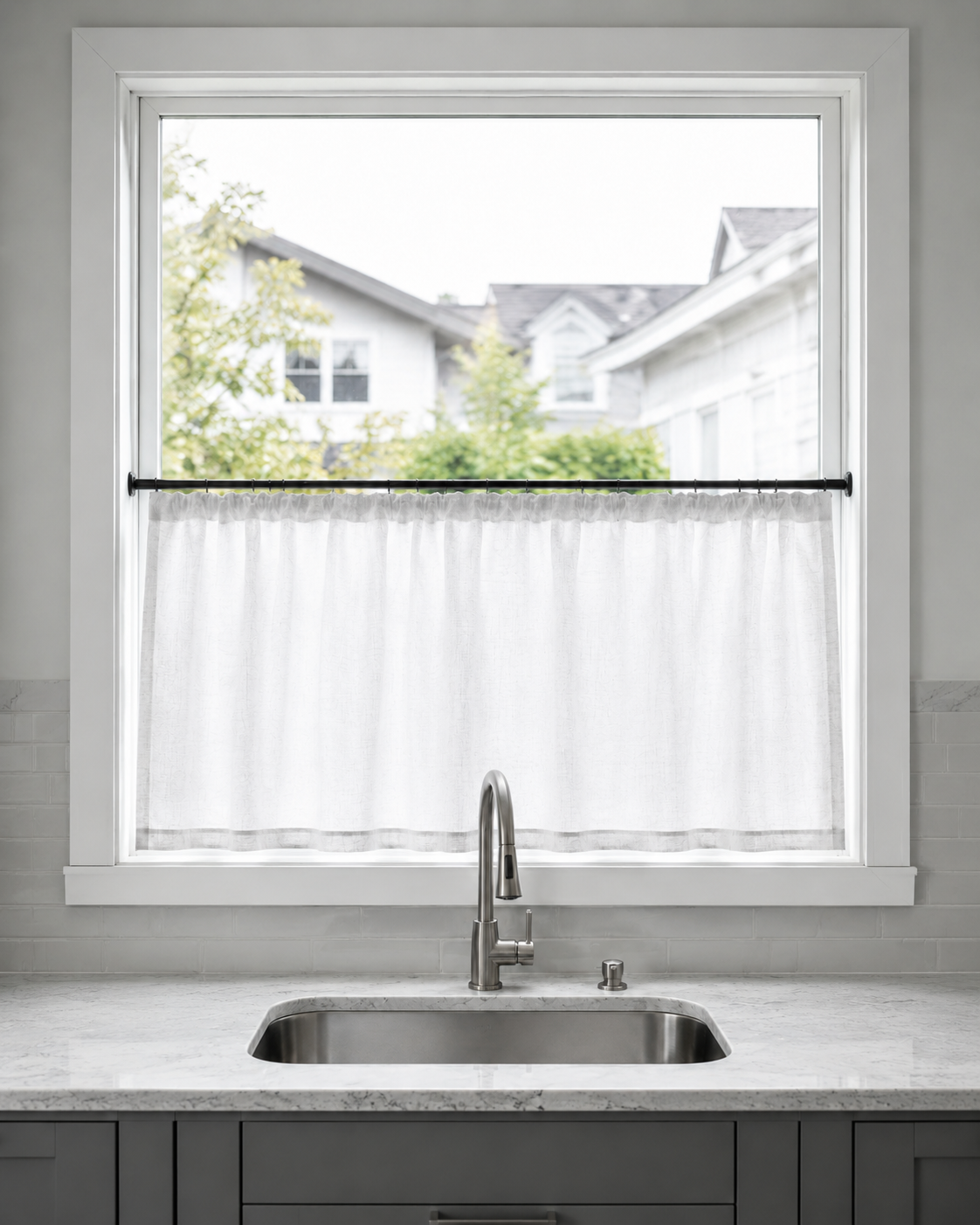
Use a short treatment when the lower glass needs coverage and the upper glass is still useful daylight.
Shop this line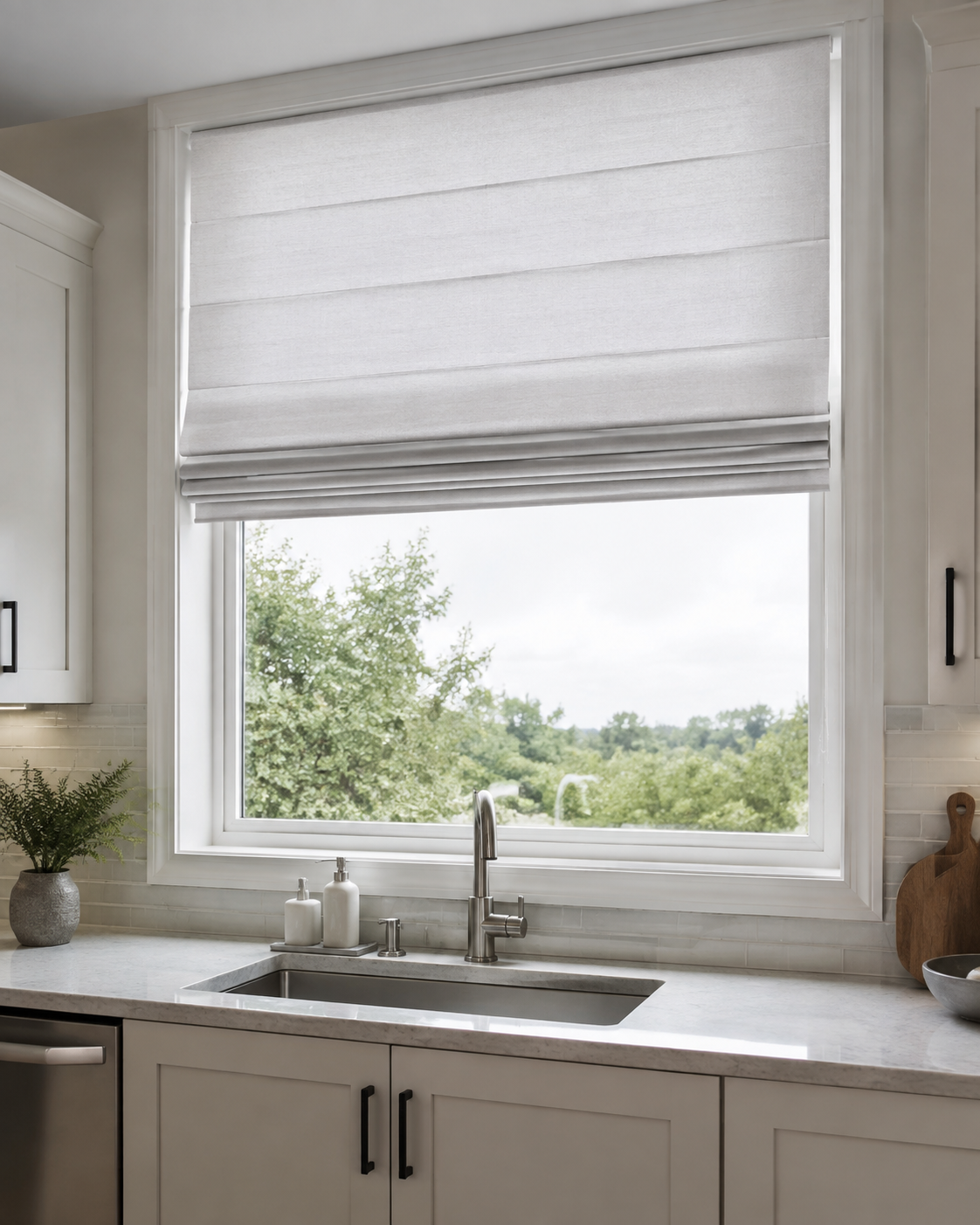
Choose an adjustable shade when coverage needs to change through the day instead of staying fixed.
See the shade route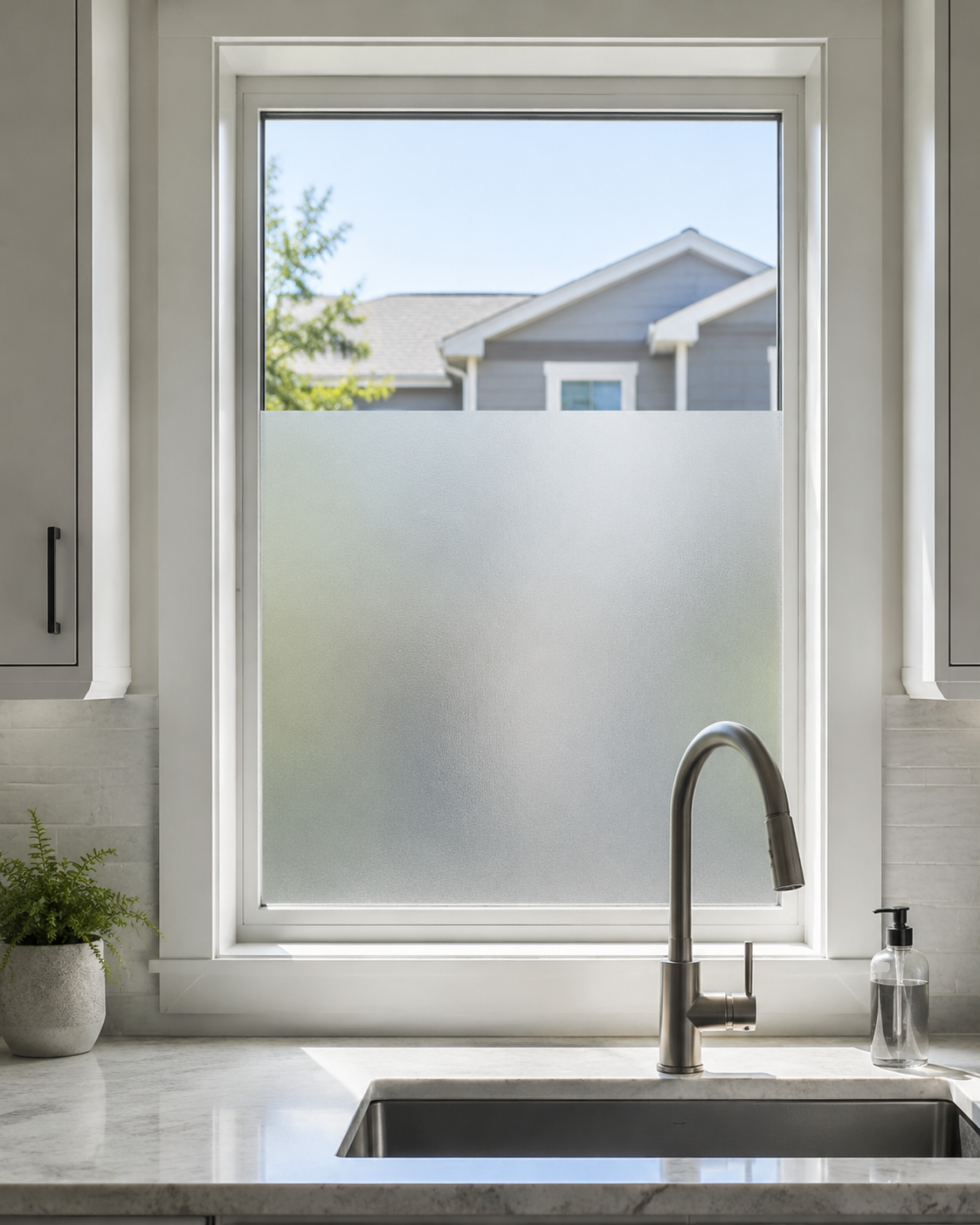
Let film do the privacy work when fabric near the sink adds more complication than value.
See film optionsUse the lightest hardware route that actually fits the window and treatment. Oversized rods can visually eat the glass you were trying to preserve.
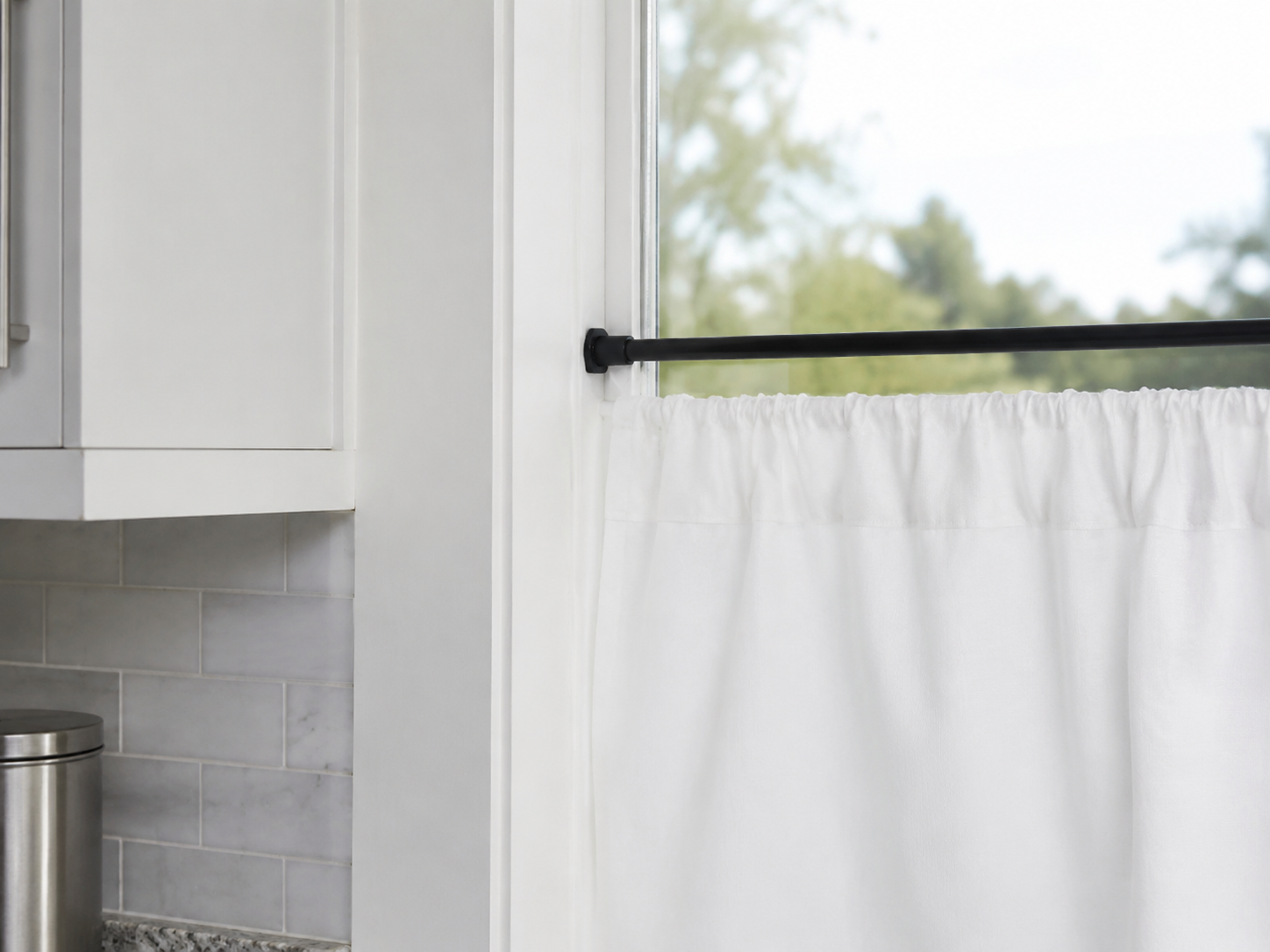
For a small compatible frame where a compact tension route makes sense.
A wider tension-route option; verify the current range against the installation point.
Use when an outside-frame single rod is the cleaner fit for the window.
Reserve layering for a side window or nook that genuinely benefits from two treatment layers.
The sink window is not a static wall. Faucets move, latches turn, cranks open and counters get used.
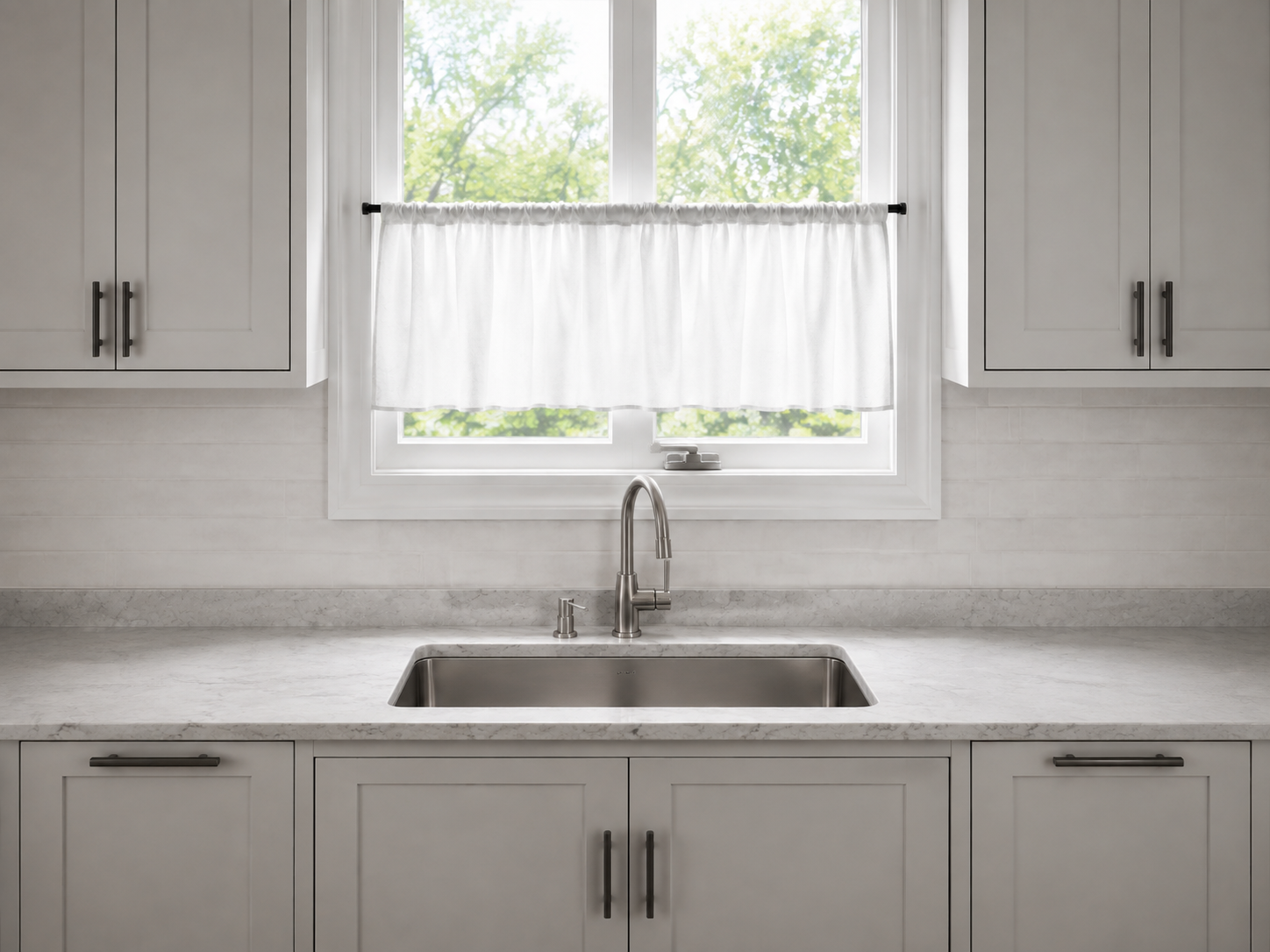
Keep the selected treatment clear of the latch, crank or handle you actually use.
Check the faucet's working position rather than judging the window while everything is still.
Short fabric should end deliberately, not drift into the sink or daily wipe-down zone.
Protect the counter area that still needs to hold, wash and move things every day.
Four families solve four different coverage jobs. Start with the job, then compare materials and finishes inside that family.
Fixed lower-half coverage that keeps the top of the glass visually open.
Go to café picksAdjustable coverage when the privacy or glare need changes through the day.
Go to shade picksGlass-only privacy when fabric is unnecessary or the sink zone needs visual simplicity.
Go to film picksA side-window or breakfast-nook route where longer fabric has proper physical clearance.
Go to panel picksA selective set of useful routes first; the complete 25-product retrieval library stays compact below.
For the clearest version of privacy below and daylight above.
Check: selected width, drop and package configuration.
ViewFor a little more surface texture without making the window visually heavy.
Check: selected size and header style.
ExploreFor a clean fabric layer that can move with the coverage need.
Check: exact width, drop and installation requirements.
Check fitFor selective coverage when the privacy line changes over the day.
Check: operating format and selected dimensions.
See optionFor a quiet privacy layer directly on the glass.
Check: current roll size and installation guidance.
ViewFor a more visible linear glass treatment than plain frost.
Check: selected roll size and pattern direction.
ExploreFor a breakfast nook or side window that can safely carry longer fabric.
Check: length, panel count and floor/counter clearance.
ViewFor a compatible frame where inside-window hardware keeps the silhouette simple.
Check: current adjustment range and mounting surface.
Check fitFor a side-window route where two treatment layers are genuinely justified.
Check: projection, width range and mounting clearance.
See detailsFor a tailored hanging route without buying an oversized bulk pack.
Check: ring diameter against the selected rod.
ViewOpen only the family you already understand. The library contains exactly 25 unique products.
Clean lower-half starting point.
Stronger lower-half screening.
More structured short-panel route.
Muted-green short treatment.
Quiet texture without a warm palette.
Soft adjustable fabric route.
Cool neutral with stronger coverage.
Selective privacy-line control.
No-drill adjustable treatment route.
Structured fabric alternative.
Simple neutral frost.
More opaque-looking plain finish.
Another static-cling glass route.
Restrained linear texture.
Airy vertical frame.
Cool-neutral side-window layer.
Muted-green accent route.
Use only where greater light control is actually wanted.
Small compatible frame route.
Wider tension-route option.
Outside-frame single-rod route.
Layered side-window route.
Tailored hanging hardware in a sensible quantity.
For a side-window panel that needs deliberate clearance.
Specialized route for a compatible magnetic metal surface.
Use the current product listing and manufacturer guidance to confirm the details that determine whether the idea actually fits your window.
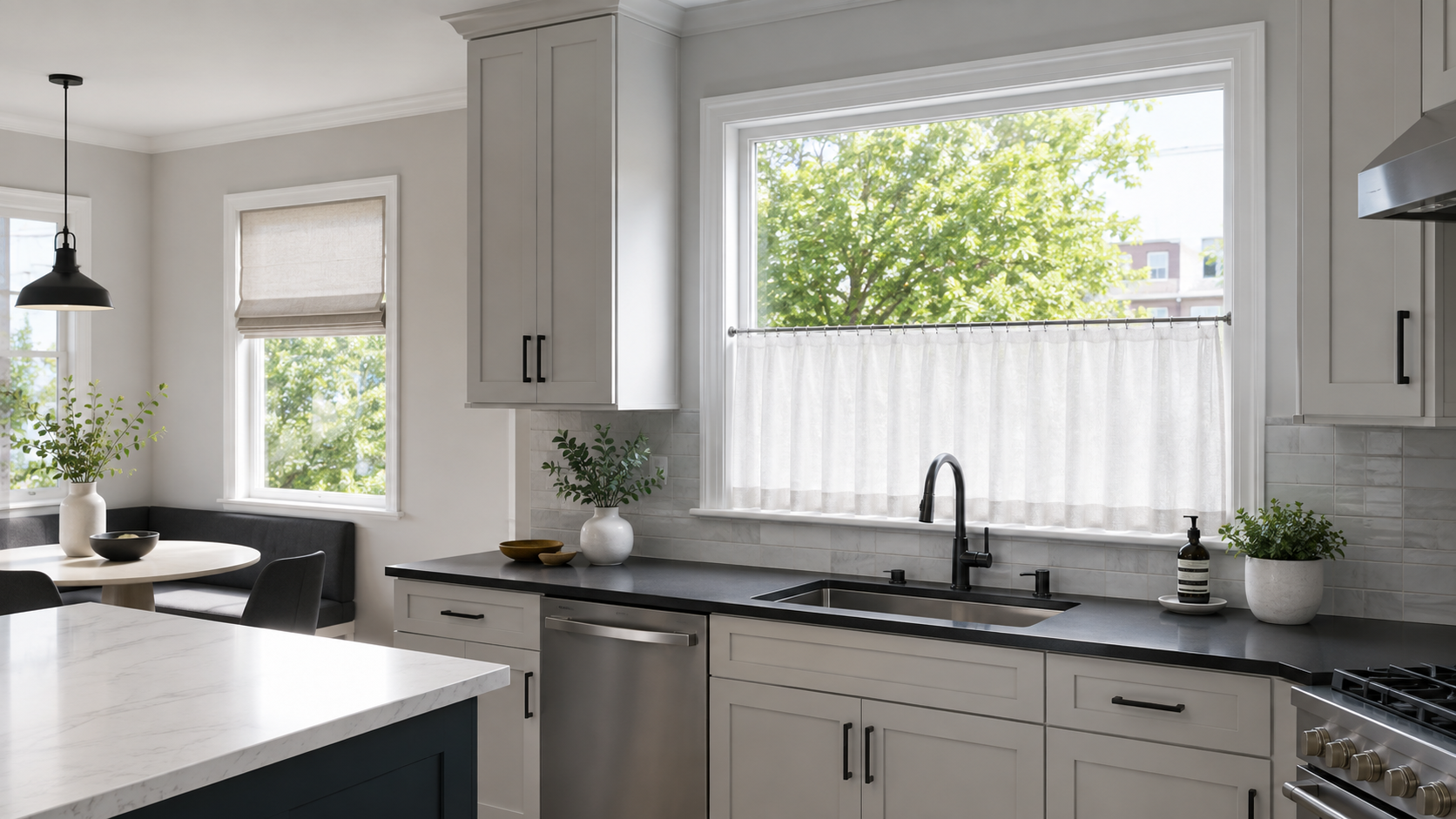
The window now has a job: cover only what needs covering. Continue with the kitchen problem that is still visible.